

What do you think?
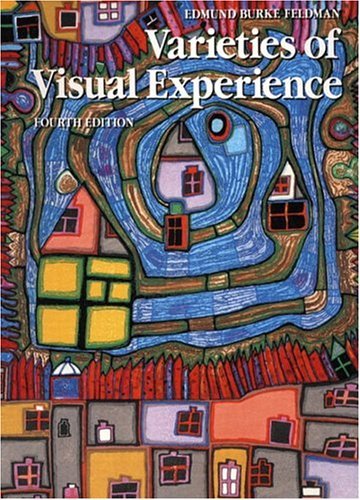
Varieties of Visual Experience
Discusses the functions, styles, structure, and themes of art, and describes the problems of art criticism.
- GenresArtNonfictionArt History
543 pages, Hardcover
First published January 1, 1972
About the author
Edmund Burke Feldman
21 books8 followersEdmund Burke Feldman is Alumni Foundation Distinguished Professor of Art at the University of Georgia. He holds degrees from Syracus University, UCLA, and Columbia University and has taught at Carnegie-Mellon University, the State University of New York, Ohio State University, and the University of California at Berkeley. Dr. Feldman is an Associate of the National Humanities Faculty and is past president of the National Art Education Association.
Ratings & Reviews
Friends & Following
Create a free account to discover what your friends think of this book!
Community Reviews
Displaying 1 - 6 of 6 reviews
March 25, 2025
This was the book that accompanied my college Art Appreciation class in 1970, and at that time was new and comprehensive. Coupled with an excellent teacher, it gave me a solid grounding in the overview of art, especially the more recent art of that time. I had only a disjointed understanding of contemporary art, at best, because it was an era of radical change and myriad trends and could be quite confusing. It was also an exciting time of innovation, starting the shift away from Abstract Expressionism (which I still love). I’m surprised how this book continues to be a mental reference for me in matters of art. It’s a testament to how the combination of the right book and teacher can turn a potential throwaway class into an understanding for life.
That being said, because it was originally published in 1967, I’m not sure if it aged well or, unless it has been revised, is relevant to today’s art scene. That was one of the most valuable things about this book back when it was newly published - it was able to speak to the contemporary scene of that time and give a little order (or at least insight) to it. So now, one of its better uses is probably as an overview of the art world up to 1967.
If there are newer books of this ilk, textbooks for the newer art appreciation classes, talking about the art scenes since 1970, I’d like to hear about them.
That being said, because it was originally published in 1967, I’m not sure if it aged well or, unless it has been revised, is relevant to today’s art scene. That was one of the most valuable things about this book back when it was newly published - it was able to speak to the contemporary scene of that time and give a little order (or at least insight) to it. So now, one of its better uses is probably as an overview of the art world up to 1967.
If there are newer books of this ilk, textbooks for the newer art appreciation classes, talking about the art scenes since 1970, I’d like to hear about them.

Want to Read
February 12, 2015Without art - which is to say, without the use by man of particular materials in particular ways - there would be no possibility of finding objective expression for certain states of feeling and consciousness.

September 15, 2015
Every page was filled with colorful reproductions of works by artists from the renaissance to the postmodern period. Alongside the works, the contents occupied art criticism, how each work was meant to be interpreted and in what context does the work of art represented.

October 26, 2009
A supplement to Janson in art history classes . . . adequate.

April 22, 2013
I learned a few things, but the sections on architecture, photograph, and film/tv are superficial.

June 9, 2009
A book I've had since high school, it has completely informed my knowledge of Art History.
Displaying 1 - 6 of 6 reviews