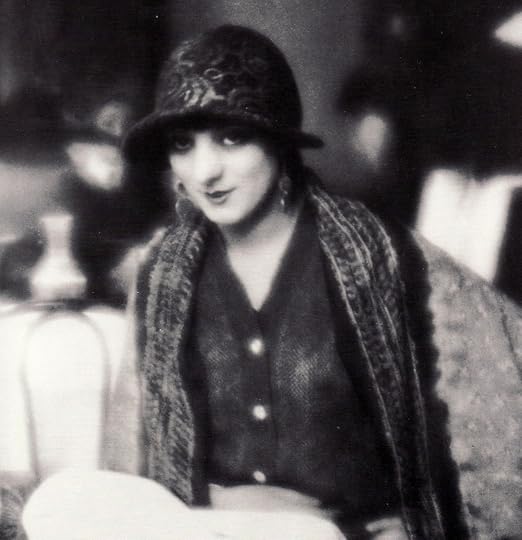
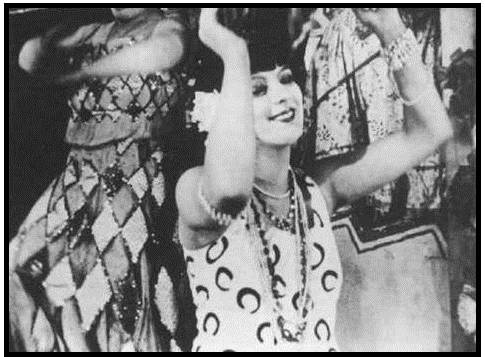
París, años veinte: época de Picasso, Matisse y Joyce. Son también los tiempos de Kiki de Montparnasse (seudónimo de Alice Prin) o la Reina de Montparnasse: musa de artistas, cantante, actriz y modelo. Tras pasar una infancia marcada por la pobreza, Kiki se muda a París, donde inicia su carrera como modelo a los catorce años. Entretanto, vaga por los cafés en busca de algo que comer. Es allí donde conoce a Modigliani, Jean Cocteau, Robert Desnos y muchos artistas más, como Soutine, Man Ray —del que sería no sólo modelo, sino también amante—, Fujita y Moïse Kisling, cuyos retratos se incluyen en el interior. Estos recuerdos —escritos en 1936 y literalmente recobrados en 2001— fueron censurados en los Estados Unidos hasta los años setenta, y nos revelan a una mujer libre e independiente en la primera mitad del siglo XX. Todo ello contado con una voz inocente, atormentada, entusiasta, agridulce y, por encima de todo, profundamente humana.
Kiki’s Memoirs has an introduction written by Ernest Hemingway — a rare honor. Writes Hemingway, “This is the only book I have ever written an introduction for, and God help me, the only one I ever will… It is written by a woman who, as far as I know, never had a Room of Her Own… you have a book here written by a woman who was never a lady at any time. For about ten years she was about as close as people get nowadays to being a Queen but that, of course, is very different from being a lady.”
Kiki was a Queen of the bohemian scene in the Parisian neighborhood of Montparnasse, where she eventually landed after moving from Burgundy to Paris when she was twelve. “Little by little, I made my way into artistic circles, so full of wayward charm… I was so very gay that my poverty didn’t make so much as a dent ; and such words as “kill-joy”, “gloom”, “the blues” were just so much Hebrew so far as I was concerned.” Kiki finds odd jobs and eventually begins posing for artists like Foujita –”the thing that astonished him about me was the lack of hair on my sexual parts — and Man Ray, the Philadelphia-born Jewish photographer with whom Kiki was romantically involved with for much of the 1920s, and whose loving photographs of Kiki –both posing and casual — are one of the book’s highlights.
Kiki’s Memoirs is a surprising sparse about Man Ray and the 1920s. She does not dwell on the details, leaving one with an incomplete picture of her life. Surely something is lost in the translation from the French, but I did get a vivid sense of Kiki’s flippant, spirited sweetness. Here is a typical passage in which Kiki discusses doing cocaine with a rich gentleman she just met: "Now and then, I could see him take a little box with a pretty little spoon in it and stick the spoon up his nose! I didn’t know what it was all about, until he went and left me alone. I then did the same thing he had done, and I suddenly felt very happy."
Weighed down by boorish introductions by boorish men. Their inclusion boggles the mind. Kiki is a woman who we know through the filters of other men - why are we mucking up her story & her voice with others?
This is an odd, but thoroughly enjoyable book. It was originally published as "Memoires" in France, then 20 pages or so were added, it was translated into English by Sam Putnam, and Ernest Hemingway (whom Kiki called "Papa Hemingway") wrote the introduction. Then, this English edition was banned as pornography in the U.S. when it was released, which isn't surprising given the inclusion of a dozen pages of nude photographs of "Kiki's friends." Alice Prinn is a fascinating character and this is a valuable document of Montparnesse's art scene. Recommended.
But if you're here for the love story between Man Ray and his muse Kiki, find that she decided to keep everything for herself, as a gem, and let the photos talk!
"To make long story short, Montparnasse is a village that is round as a circus. You get into it you don't know just how, but getting out again is not so easy." Kiki
I'm holding in my hand first english edition of Kiki's memoir from 1930! Early birthday present. I am simply delighted and overwhelmed! She is my little obsession since I've read graphic novel biography about her. And now I'm finishing memoir written by Kiki almost hundred years ago and published when she was only 30! Only 30 and already Queen of the Montparnasse. Love it! Love it! Love it! And I'm not objective at all, I am a fan!
This short (just over 100 pages of Kiki's text) makes a quick read. The prose is so simple, even in translation, that I couldn't help believing that Kiki was telling the truth about her life and the people she knew. And she seems to have known everybody in the arts, literature, and entertainment in Jazz Age Paris. Besides Kiki's own text of her "Memoirs" and "Kiki Talks Openly to You" there is a good selection of Man Ray's photographs of Kiki and her own drawings and paintings, as well as an entertaining introduction by Ernest Hemingway. Anyone interested in bohemian life in Paris during the Annees Folles will find this book by the Queen of Montparnasse well worth the time it takes to read.
Ever since I read Kiki’s Paris: Artists and Lovers 1900-1930, I’ve been inspired by the beautiful muse and bon vivant. Against Hemingway’s advice in the introduction (prior to the translation), I did not learn French adequately enough to read it in its original. I believe the translation was true to her because her openness allows the reader to feel as if she’s an old friend. Man Ray’s photographs and Kiki’s charming drawings enhance the text. It’s difficult to believe this autobiography was banned in the U.S. for decades.
A very good memoir from the Queen of Montparnasse. She keeps the tone light and fast, with an undercurrent of just how perilous and harsh and dramatic her life, especially the first eighteen or so years, must have been.
Kiki wrote these memoirs in 1929, when she was 28, and appended to them is an interview given when she was 50, providing some new detail and a more mature, serious reflection on her past.
The end notes are organized by chapter and give interesting background and commentary on the entire book including the forwards.
About the forwards, there are too many, in fact five. Only the forwards by the editors, and by Hemingway and by Fujita offer anything useful or interesting. The translator, Putnam, writes defensively about Hemingway's assertion that translating the book instead of reading it in the original French is a mistake. Then the publisher throws his hat in the forward ring and goes off on a tangent about biblical authority and translating scripture.
There are reprints of some of Kiki's art, and many photos of Kiki taken by Man Ray and others, including many full frontal nudes; so if that is an issue you are forewarned.
La prima parte sull'infanzia e la giovinezza di Kiki scorre rapidissima e scialba. La scrittura è minimale, priva di riflessioni. Non viene approfondito il rapporto con Man Ray nè quello con altri personaggi così come non c'è alcun succoso aneddoto sui vari movimenti artistici e sui personaggi dell'epoca. Zero dialoghi, zero descrizioni. Niente di niente.
La seconda parte si svolge negli USA, con una Kiki matura e in cerca di denaro. Questa parte, al contrario della prima, è piena di dialoghi che però paiono usati unicamente come riempitivi.
Un diario che dà l'idea di essere stato scritto dall'autrice per se stessa. O per tirar su soldi.
Nel complesso un libro sciatto, a mio parere completamente inutile.
Pas d'un grand intérêt littéraire mais follement intéressant et divertissant. Kiki nous raconte le Montparnasse des années 1910 au années 40, comme elle est y arrivée, les différents courants qui traversent le quartier (la guerre, les ateliers de peintres miteux, les surréalistes, le cabaret, la musette)
Le portrait qui en ressort est touchant. Toute sa vie est traversée d'hommes et d'ami.e.s qui l'aident a un moment ou un autre, tout comme elle n'hésite pas à dépenser les trois sous qui lui reste pour payer un café à un copain peintre. La fin nous raconte comment les nuits parisiennes auraient pu la tuer à travers la drogue, la fête et l'alcool.
Lu quasi d'une traite en écoutant les grands airs de musette et de cabaret des années 30.
Une lecture très efficace qui retrace la vie de Kiki, artiste émérite de Montparnasse dans les années 20.
On suit Kiki de son enfance aux débuts de sa vie d'artiste dans la misère, la fin et le froid jusqu'à devenir une grande dame, ayant posé pour tout un tas d'artistes très reconnus de cette période (Foujima et Kisling entre autres) et ayant chanté dans des cabarets renommés (Paris, Berlin...). Nous complètement plongés dans le Montparnasse de l'époque, à tel point que l'on s'y croirait.
Le tout est raconté par Kiki elle-même (autobiographie oblige) dans le langage maladroit et touchant des "cul-terreux", comme elle le dit.
J'ai beaucoup apprécié cette lecture, c'est passé très vite, je ne pouvais pas décroché, tellement que je l'aurais fini plus vite, si j'avais eu plus de temps !
Un'edizione ben curata che, alle memorie vivide e interessanti di Kiki, affianca foto d'epoca e note molto esplicative di personaggi, luoghi e dipinti.
Fascinating character and well worth knowing about and reading for the perspective but not the literary value. She either wasn't a writer or Hemingway was right and she simply couldn't not be captured in English.
Nonostante il tema interessante (chi non conosce "La regina di Montparnasse"? anche recentemente mi sono imbattuta nella sua figura), gli appunti della sua vita sono farraginosi e non ricreano l'ambiente brillante in cui visse e di cui fu, appunto, "regina". La prefazione di Hemingway sembra scritta sotto l'effetto di alcol :P
I read this book on the recommendation of my father. Maybe the book is better in French than it is in translation. There is a nice absurdist passage about a dead fish that she carries around with her named "Little Antoine" but otherwise it isn't that wonderful. I much preferred Defoe's Moll Flanders. The introduction by Papa Hemingway is fun - apparently Kiki's memoir is the only book to which he agreed to write the introduction. For that reason alone it might be required reading.
Après la lecture de la BD Kiki de Montparnasse, c'est naturellement que j'ai voulu aller un peu plus loin et lire les mémoires de la bouche même de "Kiki", alias Alice Prin. Si l'ambiance est bien là (le Montparnasse et ses peintres fauchés, ses lieux nocturnes), si la gouaille de Prin donne une saveur inimitable, son côté "moi-je" a tendance à énerver.