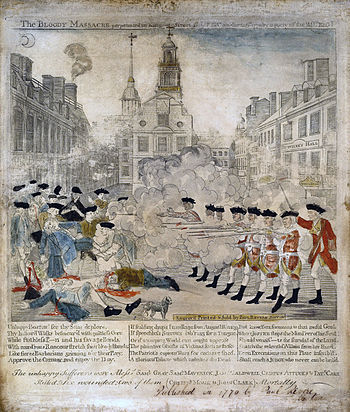
After refusing an arranged marriage, a young woman is thrust into a world of intrigue and danger in prerevolutionary Boston in this historical novel.Jane Clarke leads a simple yet rich life in the village of Satucket on Cape Cod—until her refusal to marry the man her father has picked out as his son-in-law causes irreparable tear in the family fabric. Banished to Boston to make her living as best she can, Jane enters a strange, bustling city awash with redcoats and rebellious fervor. And soon her new life is complicated by her growing attachment to her frail aunt, her friendship with the bookseller Henry Knox, and the unexpected kindness of British soldiers, which pits her against the townspeople and her own brother, Nate, a law clerk working for John Adams. But it is the infamous Boston Massacre—the killing of five colonists by British soldiers on a cold March evening in 1770—that forces Jane to question accepted truths as she confronts the most difficult choice of her life.Sally Gunning’s The Rebellion of Jane Clarke is an unforgettable story of one woman’s struggle to find her own place and leave her mark as a new country is born.Praise for The Rebellion of Jane Clarke“Blazing . . . There’s a history textbook’s worth of well-done cameos, but it’s Gunning’s fluid writing and attention to the larger issues of human nature that really make this move. Good historical fiction offers new perspectives on old stories. This book succeeds handily at the task.” —Publishers Weekly (starred review)“This well-researched and lively novel captures the mood of those turbulent [prerevolutionary] times.” —Library Journal
A lifelong resident of New England, Sally Cabot Gunning has immersed herself in its history from a young age. She is the author of six critically acclaimed historically themed novels: The Widow’s War, Bound, The Rebellion of Jane Clarke, Benjamin Franklin’s Bastard, Monticello: A Daughter and Her Father, and her latest novel, released June 2021, Painting the Light. Elected fellow of the Massachusetts Historical Society and president of The Brewster Historical Society, she has created numerous historical tours of her village.
Her work has appeared in The Washington Post, The Daily Beast, and an assortment of short story anthologies.
She lives with her husband Tom in Brewster, Massachusetts.
I began my journey with the author, Sally Cabot Gunning, with The Widow's War which was her first book in this trilogy. The Widow was such a strong, bold character that the two main female characters in the books that followed seemed only to pale in her presence. This book starts out slow. I actually checked to see if it was a YA book because of the simplistic initial storyline.
Jane Clarke is a female product of the times. Her future is being manipulated by the same cruel Nathan Clarke who dared to cross hairs with The Widow in the first book. Mr. Clarke insists that Jane marry a man of his choosing and pressures her in every way possible. We see a flicker of love for his daughter throughout the book, but Clarke's deep pride and territorial nature is the dominant force. Jane eventually stands up to him and, consequently, is sent to Boston to live with an aged aunt. And here is where Gunning's renowned historical talent takes flight.
Gunning does a vast amount of research for all of her books. She weaves the facts so adeptly throughout her books. At times, this same talent of presenting the factual information in its correctness creates a character who then becomes a mere reactionary to those very facts. That is how I found Jane Clarke. Jane does grow a backbone towards the end of the story. She is, indeed, the granddaughter of The Widow and yet we only see glimpses of that genetic feisty nature sprinkled toward the end.
The Rebellion of Jane Clarke sheds light on the role of women of that era. Jane does travel down roads that the average female of the times would never even consider. All in all, it was a good read. A book by Sally Cabot Gunning is a high step above others in this genre.
This is the third novel from Sally Gunning that revolves around members of the Clarke family and the people of Satucket, Massachusetts. The first is 'The Widow's War' the second is 'Bound'. I have read them all in order and recommend others do the same, I think it makes for a more enjoyable reading experience.
I really enjoyed the first two novels in this trilogy (or will it be a series?). And I liked this third novel as well. I really enjoyed the characters and even missed them when I was done. The history is very interesting and the historical note the author included in the back of the book is fascinating, in my opinion it gave greater meaning to the novel.
When Jane Clarke refuses an offer of marriage that her father wishes her to accept she is sent away from her home and family in Satucket to live with and care for her elderly Aunt Gill, in Boston.
The hustle and bustle of the city seems at first to overwhelm Jane but eventually she discovers that it also offers her new freedom and opportunity. She meets a handsome young man who entertains her but she finds herself conflicted when the political climate leads to a violent and deadly clash between the colonists and British soldiers who have been sent to keep the peace.
I really enjoyed much of this novel, especially the characters Gunning created. I liked the insight into the political unrest that was cultivated by the colonists and the more personal conflict that Jane finds herself struggling with.
I would have liked the story to have been more tightly drawn and more suspenseful. It seemed to stall in the middle a bit and there are some small events that didn't seem that likely to me. But overall I found it enjoyable and I liked the way Gunning ends Jane's story. If she continues with these characters I will certainly read whatever she writes. I'm hoping she'll come back to write about Sam Cowett who we got to know in 'The Widow's War'.
The book begins in 1769 as the Winslows and Clarkes battle over water rights and a horse – was it Jane’s father who whacked off the ears of the Winslow horse? Jane defies her father and despite the heated political sentiments decides to ship her off to tend to Aunt Gill in Boston. Jane settles in and cares for her elderly aunt, but her world is soon torn asunder when she witnesses British troops shoot down five civilians (the Boston massacre), inflaming the rest of the town to a heated frenzy. Jane’s brother was shot, but he survived and the two have different recollections of what really happened.
Will Jane’s relationship with her brother survive their disparate testimony at the subsequent trials? Will Jane find more than she bargained for living with Aunt Gill? Will she marry the man her father choses or find love with another in Boston?
I’m not sure if it was me or my current mood (life was a bit off-kilter the last week or so), but I never warmed to Jane nor cared much what happened to her. I really had a hard time keeping track of some of the lesser characters, as well as events as related by the author. Perhaps I’m a bit dense but I couldn’t always tell exactly what was going on – the writing was too obtuse for my tastes – and in the end the author just did not suck me into her world. A shame as the massacre and ensuing aftermath should make for gripping reading, but it just didn’t work for this reader – I didn’t feel the crowd’s anger nor the soldier’s fear of the crowd – I didn’t feel anything at all. A good book, just not a great one.
Perhaps a better title would be The Confusion of Jane Clarke. I give snaps for the depth of research and detail of pre-Revolution Boston, but the main character was too shallow for my taste. True, she does defy her father, but she doesn't know why - which is basically the motivation for everything she does; she doesn't know. I found her vapid and irritating. However, the surrounding plot and details make the novel readable.
I simply could not finish this book. I was pretty much bored to tears, which is a real shame because I was really looking forward to reading this book. I loved Sally Gunning's previous 2 books but this one felt like I was reading an embellished history book.
Unlike the two previous books in this series, The Widow’s War and Bound, this book is as much about the Boston Massacre and the events leading up to it as it’s about the title character trying to find her way in the world. It’s interesting from a historical perspective, but unfortunately, Jane’s story suffers.
After Jane turns down a marriage proposal her father supports, he packs her off to Boston as a companion to an elderly aunt; while there, she witnesses some historical events. I liked the historical parts, which I’d never read a book about before, and Gunning handles the conflict between the Bostonians and the British soldiers in a nuanced, interesting way. It was especially interesting to see Jane’s opinions evolve with the events she experiences. For instance, early on, some troublemakers turn a soldier’s greeting her into his “accosting” her, leading her to suspect that the newspaper stories about the soldiers’ wrongdoing are entirely fabricated. Then later events force her to rethink that position. It’s done well, with the exception that I never really felt the tension or the anger. While certainly competent, Gunning’s writing is not the most evocative or immersive.
The problem with Jane is that she’s so generically inoffensive. The title is clearly intended to have a dual meaning, referring to both the general rebellion Jane witnesses, and Jane’s personal rebellion against her father. But while she makes a couple of major life decisions against her father’s wishes, there’s nothing truly rebellious about Jane. She has no sense of adventure, no innate curiosity, few strong opinions. And unlike Gunning’s previous protagonists, Jane never really has to fight for what she wants--she's willing to accept the alternative to marriage that her father offers her: spending all her time nursemaiding her aunt. She has a few good moments, but mostly, she’s bland.
As for the other characters, it’s a mixed bag. If you liked Lyddie Berry and Eben Freeman in past books, their story continues here; Nate is also interesting and has changed since the previous book. Jane’s relationship with her father is well-done, and he gets more depth here than he did in previous books, as do the other members of Jane’s immediate family. On the other hand, there's a plot twist dealing with Aunt Gill that didn’t convince me at all, and all the characters’ having very poor social skills is bizarre. They’re always rushing out the door in the middle of dinner, or going to visit someone and then staying only long enough to exchange a few words, or walking off as soon as there’s an awkward pause. (I think this is the author’s way of only showing the reader the important things, but I’ve never seen a book be so noticeable about that before.)
After reading reviews accusing this book of having a “feminist agenda” I was expecting it to deal with gender issues, the way The Widow’s War does--but it doesn't. Despite defying her father, Jane stays within the roles her society has prescribed for women, and whatever "modern values" other reviewers saw did not stand out to me. Of course, Gunning’s choosing to write about a woman rather than a man, and furthermore about a woman who takes responsibility for her own life and whose story doesn’t follow the conventional girl-meets-boy arc, is a feminist decision, and one I fully support. But our literature is in a sad state when that seems remarkable.
Ultimately, this is a quick read, a competently told story with good historical detail. While the characters aren’t exactly memorable, it's an entertaining way to learn about American history. The Widow’s War is still the best of Gunning’s books, but if you like that one, I’d recommend trying this one too.
The story never seemed to get off the ground. The first 50_75 pages could have beefed summed up in about 10 pages to set the groundwork of the story. Not very meaty. I would recommend this book to older middle school or high school ages. I was very disappointed.
I loved the second book in this trilogy and I didn't want to read this one at first because I just didn't think it would measure up. I really enjoyed it though. Jane was a very like-able character. I learned more about the Boston Massacre. Plus there was an interesting twist. Overall a good read.
Set in the era proceeding the Revolutionary War in Massachusetts, this book has many themes that could be used in a book discussion. It's a coming-of-age story, a look at marriage and women's roles at that time, and historical fiction that shows history from many points of view.
Jane Clarke is a twenty-two year old living at home in Sawtucket, helping her stepmother with the household chores and younger children, and learning nursing from the local midwife/healer. She defies her overbearing father by refusing to marry the man he has picked out for her. She likes Phinnie Paine, but does not know him well or know what she wants in marriage. She sees her stepmother being treated like a housekeeper, acting meek without giving voice to any opinions of her own.
Her father sends Jane off to Boston to care her her aged Aunt Gill as punishment. Although her father is a loyalist, her brother Nate is a rebel and a clerk in the Boston office of John Adams. She meets people with strong opinions on both sides. British soldiers occupied the city, and British taxes were high. Colonists expressing opposition to British rule could be charged with treason and sent to England for trial. For recent arrivals, home was Great Britain. But for families that had been in the Colonies for several generations, this was their home and they did not have emotional ties to England. The rebels tried to instigate conflicts with the soldiers, and wrote up misleading propaganda in the newspapers. Historical figures are mixed in with fictional ones, and the Boston Massacre is a prominent event in the book. When some townspeople misrepresent the events at the Massacre, there is a question of whether the rebel cause is more important than the truth.
Jane also observed married couples, and was especially impressed by the partnership of her grandparents in Boston. While the women took care of hearth and home, the men were making the political decisions. But her grandfather would engage the grandmother and Jane in conversations about the unrest.
The ending was rather open-ended so I imagine the author, who has already written two other books about that period of history, probably has plans to write more about women of the Revolutionary War era. I would definitely consider reading another of her books.
Sally Gunning captures something very beautiful in this historical novel, which is the fundamental ambivalence of human wanting and human decision-making. Gunning's character, Jane Clarke, doesn't know what she wants and doesn't know who she wants to be, and she alternates between clinging to-- or feeling frustrated with-- her father, her brother, and various suitors. At times she's committed to telling the truth about her eyewitness account of the Boston Massacre; at other times, she's cowed by politics and wishes to stay home and be forgotten. Whereas other reviewers saw this ambivalence as either too wishy-washy (when Jane was being clinging or frightful) or too feminist (when she was being stubborn and her exploring her independence), I found this ambivalence both artful and truthful: no one is purely heroic, or purely autonomous, or purely foolish-- like Jane, we are the sum of these conflicting emotions and impulses. The other ambiguity the author deals with quite deftly surrounds the "occupation" of pre-revolutionary Boston by British troops, as the author describes incidences of provocation and compassion on both sides-- the novel is wrapped, in a sense, in a world of smoke and mirrors. This book felt very human to me, as its core theme was accepting the less-than-perfect version of ourselves, our loved ones, and the events around us.
I love the books written by Sally Gunning. She writes fluidly and with such evidence of thorough research, that I always learn something! I thought I knew so much about the Boston Massacre, but now I am even more informed. Jane Clarke, the woman whose experience this book is about, is truly a woman who has the desires of women of the future. She feels things we feel today and does not depend on old ways and traditions to carry her along. Her rebellion is forced, but she adapts and and becomes the woman who is right for the times. Her bravery and foresight are admirable and her common sense will ground her for the rest of her life! I highly recommend this book !
I've certainly been enjoying Sally Gunning's historical novels. She's done her research on the Colonial period and incorporates those historical details into her novels with deft grace. Sometimes the characters seem a little too conveniently aware of the buzz of the times, if innocently so, as is Jane in this novel. But it's a device that works. It's exciting to be thrown into Boston with Jane just as rebellion is brewing. And as Jane sorts through her emotions and relationships, the difficulties of living in such a turbulent time of differing opinions and clashing ethics become part of her daily life and infuse her character. I look forward to more from this talented Cape Cod author.
While it is best enjoyed as book 3 of a series, the author took pains to have each book stand alone as a self-contained story with beginning, middle and end. I completely loved Widow's War and liked Bound, and liked very much this one. Gunning has a natural storytelling gift and her MC always rings true. Lovely prose and turns of phrase. Some chapters near the middle that felt slow and full of dreary details of daily life cooped up in a house, but perhaps that was the author's device to get the reader to empathize with the heroine? If so, it worked. Depiction of what we now call the Boston Massacre and subsequent trial super interesting and authentic sounding. Thanks for a good read!
This book started off great but lost steam about half way through. I loved the Widow's War, also by this author, but this book wasn't nearly as good. I finished it only because I was more than half way done and I wanted to see how it ended.
Jane Clark lives back in 1770s when the colonies were still under British rule. Her father has her move in with her aunt in Boston because she refuses to marry Phinnie Paine. Her aunt pretends to be very defenseless but turns out to be more astute. The story includes several historical characters from that time & situations that happen during that time period like the Boston massacre.
Phinnie tells Jane: “ it has been my personal observation that reasonable women are no rarer than reasonable men. It has been my further observation that if man or woman should lose his reason for a time it is always possible to regain it again”
The last of the "Sautucket" series, based on Cape Cod and in Boston. A good read after going to the Museum of the American Revolution and learning more about that time period.
I didn't dislike this book, and for historical fiction it went superfast, but I also felt like it was trying to give me a feminist agenda. Sadly, it didn't even do that well, so was just sort of "meh". I mean, it was interesting. And the few twists in the plot caught my attention, but overall, I didn't even get what happened at the very end. I didn't really understand why the author wrote in such a convoluted manner. For example, when the aunt is "found out", it's all back assward in terms of how she writes it. I truly didn't understand her thought process there.
Another confusing thing to me was two different "childhood" memories of Jane's. In both, the author has Jane questioning her memory of the events. I thought she might be trying to say something, since her memory of the Boston Massacre is critical in the courtroom, but it doesn't really go anywhere. It's like she had a point, and then lost it. If it were a movie, I'd say her point ended up on the cutting room floor.
And Phinnie? Pleh. So lame and spineless and ... do we even know what his beliefs are? Did the author even ever say that Phinnie is short for Phineas? I don't know about other readers, but he was wholly uncompelling.
There were a few well-written parts where the author has keen insight into real life and people, like "... it being her experience that the tavern had never improved a bad mood and indeed often ate up a good one." And "Phinnie bowed deeply before Jane -- nothing like the quick dip of the head Jane had gotten used to in Satucket, but she responded with her usual country version and let him think of her as he liked. Jane's thought was that a person should be of one place or another..."
I felt like the author actually made a great point accidentally -- certainly it wasn't clear that it was her point, but I loved this part: "I was her concern. If they hanged a man for a thing he did not do, it might be because of a thing she did not say. It didn't matter who Captain Preston was or what he stood for or even whether or not Jane liked him, although, in fact, she did."
And my favorite part of this book was really the grandparents. These comments warmed my heart and made me think of my own husband: "Was this the thing that made her marriage what it was, this life in her, this strength? Was this what gave her such an unfettered voice in that marriage? Perhaps, Jane thought, but part must come from a husband strong enough in himself to greet such life without attempting to beat it down, to silence it."
This book was perfectly fine, but that's about it. And honestly, it really just made me want to re-read Johnny Tremain.
Jane Clarke is a young woman with a mind of her own. Living outside Boston before the Revolutionary War, she sees and hears many things. She is devoted to her family, loves her home and is planning on getting married. Jane suddenly turns down the man she is to marry because she does not feel she knows him well-enough to marry him. This angers her father, who in-turn sends her to Boston to care for an elderly aunt.
Boston is home to the Sons of Liberty and many a revolutionary. Jane meets Henry Knox, a bookseller, and becomes aware of the different loyalties those who inhabit Boston carry. Her brother Nate, an ardent revolutionary, tries distinctly to convince Jane of the righteousness of the cause. Jane wants to make the decision for herself. She sees British soldiers abused by people, and abuse people, but still she wants to know her own mind before following anyone. After the Boston Massacre and the beating of James Otis, Jane begins to support the Glorious Cause.
Throughout her political journey, Jane also takes a personal journey; one that lets her grows and matures, no longer being a girl but a woman. She returns to her home outside Boston and resumes her life independent of her father and a beau but definitely more aware of whom she is and what she wants.
I see this book as the coming-of-age of a woman set in a time when women had few rights. Jane wants to make her father happy with her actions, but realizes she is the one who needs to be happy with her own choices. She witness betrayal, happiness, love, horror and violence -- through it all, Jane does her best to do what she feels is right.
The research and background of Boston prior to the Revolution is quite good. The characters are developed well, and the story follows the history timeline wonderfully. I enjoyed the personal observations of Jane as a character – how John Adams loved children, how Henry Knox befriended British soldiers though they disagreed politically – she saw the whole picture not just one side. That leads the reader to do the same. I enjoyed this book quite a lot, though I would have liked a different ending.
This is the third novel I've read by Sally Gunning, and I hope she writes more. Its setting is Boston and Satucket (on Cape Cod) in 1769-1770 (the first of the three is in, I think 1761; the second, in 1765). The series' context and content remind me of two other equally good historical fiction series set in exactly that era. First, Barbara Hamilton (aka Barbara Hambly) has a historical fiction series (with only three entries so far, and I am anxiously awaiting a fourth, though two of her other series are also great) which features Abigail Adams as a quite convincing sleuth. Next, Diana Norman wrote a trilogy that starts with the American Revolution and finishes with the French Revolution, taking in along the way the infancy of the English Industrial Revolution. Finally, Margaret Miles has a series set in the Boston hinterlands in the 1760s which also features a female sleuth. All four series feature strong female characters who cannot be described as other than feminists, though I feel strongly that their actions and beliefs are not at all the anachronism that that term is, for the time. The writings of Mercy Warren (James Otis's daughter) and of Abigail Adams herself show clearly that women could be political thinkers at the time, if not recognized political actors. Anyway, this particular part of the Winslow-Clarke Massachusetts saga focuses on the events surrounding the Boston Massacre. It is a nuanced understanding of how people's beliefs evolved and shifted during that period, and does not demonize Tories or Redcoats. Well, it mostly does not. Read 5/31/13; re-read 12/7/14
This is a quick little story that packs a lot in. Young Jane decides, without really knowing why, that she doesn't want to marry the man her father chose for her. She can't quite reason it out, yet won't betray the depth of her feeling. Whereupon she gets packed off to be a nursemaid for a querulous invalid aunt in Boston, just before the Massacre.
There's a bit of romance here, but what the author is really doing is examining the black-and-whiteness that seems to be necessary to effect change, even though the world is shades of gray. Many of the Boston inhabitants want to think of the occupying soldiers as pure evil, even though they are a symptom and not a root cause of oppression. Refusal to see the Other as human escalates to violence, in a way frightening and familiar to us today. Yet, without that blindness and violence, would the United States exist? The morality of the behavior of most of the characters is quite gray, no matter what their black-and-white viewpoint.
Jane tries to maintain some semblance of reason and remain true to herself without much practice at being her own moral compass. Can she be truly independent? Does she want to be?
The story went quickly, I found it easy to immerse myself in colonial Boston, and the characters were interesting, if often exasperating. There was a lot to think about for a book of less than 300 pages. The bits about the Boston Massacre, which I know happened, but not much more, were interesting and based in fact.
Really enjoyed this book, as well as the other two in the trilogy--The Widow's War and Bound. Woven around documented historical events, these stories bring life and color to colonial America, an era that can seem stilted and one-dimensional, its story tied up neatly in a box.
The birth of the United States was surely messier than we like to acknowledge, with plenty of double dealing, incitement, and inflated rhetoric. This book shows the shades of gray in the politics of the time, dealing with the impact of that unsettledness on one young woman and her family. She reacts as many of us would--with caution and a certain amount of mental flip-flopping as she forms her opinions and sees that truth can be a wiggly thing.
Do these books as impose 21st century thinking on 18th century female minds? Surely women had minds and opinions in the colonial era, however restricted their horizons. Gunning's female characters live fully within the strictures of their era, dealing with the limitations placed on them by custom and family. Much of the delight of all three books springs from the characters' response to those strictures.
Sally Cabot Gunning has written another excellent historical fiction novel dealing with the challenges that women faced in 18th Century colonial New England. Jane Clarke is the daughter of a tough middle class Cape Cod businessman who rules his business and his family with an iron will. He adores his eldest child, his daughter Jane. First of all, she's survived into her twenties - a feat in itself; she is also the daughter of his first wife (he is married to his fourth!); she's hard working, obedient and intelligent. However, three events in Jane's life begin to give her pause. First, her tough step-grandmother is unconventional and has ruffled her father's feathers (read The Widow's War); second, her father is embroiled in a long-standing, unpleasant dispute with a local family; third, her father has chosen a young man for Jane to marry without much concern about how Jane feels about his choice. So, Jane rebels, which causes her father to be shaken to the core and he bans her to Boston. Here, Jane grows, changes, explores and turns into her own woman - all around her events are unfolding within her own sphere and the Boston-world at large that affect her deeply. Will she survive all this? What will her life become? Jane asks herself these questions as she deals with her circumstances and observes the actions of those around her. Fascinating!
I loved this character, both in her quiet strength of spirit and in the realistic way the author reveals her. The first interesting thing I read about Jane was that she had a "bubble in her chest" that indicated she felt disturbed by the contents of a letter she had received. Before knowing who she is, the context of the letter, or anything about the story, I knew that Jane was responding viscerally to something and taking the time to find out why.
And this is how the story is laid out - events are described, and Jane reflects on them and her reaction to them. as a reader, you participate in the mysterious nature of her colonial world, unraveling the intricacies of the characters around her, discerning. Jane hears something she trusts, but her gut responds with a twinge of warning or doubt - she comes to a conclusion about what her gut is telling her, and we find out over time if she was wrong or right.
In some ways, Jane Clarke is like an Elizabeth Bennet with the personality of a Jane Bennett, and the book, in its journey of self-discovery and development, is somewhat similar to Pride and Prejudice as well. Other interesting characters, such as Lydia and Eben Freeman, were intriguing enough in themselves to inspire me to find Gunning's earlier books, The Widow's War and Bound.
This is the third book in the series about Satucket, MA. The time period for the book is just prior to the revolutionary war. Jane is a young woman, living with her father, stepmother, and her younger siblings. She is being courted by young man put forward by her father. While she likes him, she wants more from her life, and shocks everyone when she turns down his proposal. Her father offers her the choice of reconsidering or going to Boston to be the caretaker for her elderly aunt. Jane decides to go to Boston and is happy about being closer to her brother, who is working as a clerk for Adams. Jane is an independent thinker and is puzzled by how both sides (loyalists like her father and revolutionaries like her brother) can distort the facts about the events surrounding them. While in Boston, she is courted by a bookseller, and also has the opportunity to spend some time with her grandmother and grandfather (whose story was told in the prior books). Jane must sort out her conflicting loyalties and feelings and decide what is right. This comes to the forefront after she witnesses the Boston Massacre. The book provides an interesting perspective on the time period.
Primarily set in pre-Revolution Boston, The Rebellion of Jane Clark does a fine job expressing the tension that existed at the time. Through the protagonist, a willful young woman from a rural background thrust into the events of the day rather unwillingly, we observe the political and revolutionary furor that had gripped the city in the months leading to the Boston Massacre. Author Sally Gunning skillfully uses notable historical figures such as John Adams, Henry Knox, and James Otis to involve her protagonist in not only the town gossip, but the momentous events themselves.
While Boston's civil disobedience occupies much of Jane Clarke's thoughts, there are a couple of subplots woven throughout the story which work to humanize Jane as more than just a witness to events and reveals her to be a woman that would be considered quite progressive for her time. Romance, familial tension, sense of purpose - all affect Jane as much as the part she plays on the world stage.
Sally Gunning's novel is an enjoyable read, with equal parts action, intrigue, and romance working together to create a work that will appeal to a wide-ranging audience.
I thoroughly enjoyed all the books in the Satucket trilogy. Gunning uses historical facts to create fascinating stories of strong and courageous women standing up for their beliefs. As the Boston Globe wrote "Historical fiction at its very best...Impeccably researched, this story is spellbinding, giving a realistic view of life in the 18th century coastal New England." The narrator, Jane Clarke, is faced with difficult choices regarding her family especially her father and brother, as she is sent away to Boston amidst the growing conflict between the Colonies and England. Caught up in the conflict called The Boston Massacre, Jane (and the reader) learn a shocking truth about a family member. I found the Gunning was able to build unique, three-dimensional characters with depth, personality, and clear motivations. In addition, most of the characters in the novel undergo believable changes as a result of their actions and experiences. Gunning weaves characters from her two previous novels, The Widow's War and Bound into the plot along with historical figures. I highly recommend this The Rebellion of Jane Clark.
Jane's Rebellion fizzled out for me as Gunning tried to infuse a coming of age story with famous characters from American's pre-Revolutionary Boston. Jane's character just didn't inspire me, although I did get taken for one twisted surprised I didn't see coming. Sure the Boston and the Freedom Fighters are invigorating and it's always fun to listen to John Adams, but Jane's story just didn't ring true even though it was based in part on little known facts surrounding the notorious events that ended up with Adams defending a British Soldier for murder.
The bones of the story, Jane's rebellion against her father, was just too predictable and well, unimaginative. And what young woman, in 1775, would walk the streets of Boston unescorted and flirt with British soldiers? Was she nuts?
I learned about Henry Knox the bookseller, and about the psychotic break of James Otis and those were fun things to learn about. But they aren't enough to get me to pick up the next book in Jane's continuing rebellion.