

What do you think?

Ask Burlefot #2
Song of the Red Ruby
«RUBINEN» - og rettssaken som fulgte - utgjør et eget kapittel i norsk etterkrigshistorie. Det ble reist sak mot Agnar Mykle og direktør Harald Grieg i Gyldendal for brudd på utuktsparagrafen i norsk lov. Ved dom i Oslo byrett, oktober 1957, ble restopplaget av boken inndratt. Mykle og Grieg ble frikjent. Selve inndragningen ble også senere opphevet av Høyesterett, juni 1958.
«Mykle-saken» var viktig fordi den reiste en debatt omkring seksualmoral versus ytringsfrihet. Fortellingen om den unge Ask Burlefots vei gjennom skam, nederlag og triumfer fram mot en dypere og redeligere forståelse av seg selv, åpnet øynene på en hel generasjon. Romanen er en intens og vital dannelsesberetning, rik på ungdommelig overmot og livsappetitt, men også på selvransakelser og bebreidelser.
«Mykle-saken» var viktig fordi den reiste en debatt omkring seksualmoral versus ytringsfrihet. Fortellingen om den unge Ask Burlefots vei gjennom skam, nederlag og triumfer fram mot en dypere og redeligere forståelse av seg selv, åpnet øynene på en hel generasjon. Romanen er en intens og vital dannelsesberetning, rik på ungdommelig overmot og livsappetitt, men også på selvransakelser og bebreidelser.
316 pages, Paperback
First published January 1, 1956
About the author
Agnar Mykle
26 books23 followersAgnar Mykle was a Norwegian author.
He became one of the most controversial figures in Norwegian literature in the 20th century after the publication of «Sangen om den Røde Rubin» («The Song of the Red Ruby») in 1957 which ignited what became one of the most famous court cases in Norwegian history.
Mykle and his publisher Harald Grieg were accused of writing and publishing immoral, pornographic, and obscene material. Mykle's defense attorney was Johan Bernhard Hjort. Mykle and Grieg were both acquitted, but the remaining copies of the book were ordered withdrawn from the market. The Norwegian Supreme Court overturned the ruling on the confiscation in 1958.
The translations of The Song of the Red Ruby gathered tremendous attention outside of Norway, especially in the USA. Huge sales followed, but Mykle nevertheless had financial difficulties for the rest of his life.
He became one of the most controversial figures in Norwegian literature in the 20th century after the publication of «Sangen om den Røde Rubin» («The Song of the Red Ruby») in 1957 which ignited what became one of the most famous court cases in Norwegian history.
Mykle and his publisher Harald Grieg were accused of writing and publishing immoral, pornographic, and obscene material. Mykle's defense attorney was Johan Bernhard Hjort. Mykle and Grieg were both acquitted, but the remaining copies of the book were ordered withdrawn from the market. The Norwegian Supreme Court overturned the ruling on the confiscation in 1958.
The translations of The Song of the Red Ruby gathered tremendous attention outside of Norway, especially in the USA. Huge sales followed, but Mykle nevertheless had financial difficulties for the rest of his life.
Ratings & Reviews
Friends & Following
Create a free account to discover what your friends think of this book!
Community Reviews
Displaying 1 - 30 of 68 reviews

May 30, 2015
Answers to test from part #1
Question 1
It is impossible to believe the author's claim that the Ask Burlefot novels are not based on incidents from his life. A large number of important plot points correspond well with facts readily available on the web; Heger's 1999 biography, Mykle: Ett diktet liv , provides many more confirming details, even though he also mentions several places where book and reality clearly diverge.
Question 2
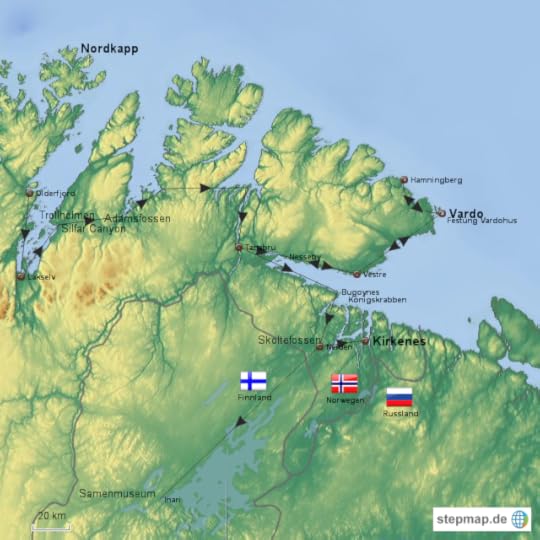
Europe, as Doris Lessing memorably calls it in Shikasta, constitutes "the north-west fringes of the major landmass"; Norway is at the edge of Europe; Kirknes is at the far end of Norway. I think D is most appropriate.
The following map may be useful:
Question 3
It is not at all easy to say which of the cited novels "Ask Burlefot" most closely resembles, and one can make a reasonable case for all four. I was initially most tempted to associate it with Fear of Flying. Mykle is as fascinated with cunts as Jong is with cocks, and even today one is startled by the detailed descriptions he provides; I'm almost having trouble remembering that I haven't in fact had sex with any of these women. The books sold well on their reputation as pornography, and the 1970 movie sounds as though it's been entirely reorganized along these lines.
But, as the story progressed, I began to feel that it was unfair to think of Mykle as a simple pornographer. Even though Ask spends a large part of his time seducing various women and the sex is described in great detail, the way in which it was presented increasingly reminded me of Updike's "Rabbit" books. Mykle wants to give you an unvarnished interior portrait of what an irresponsible sex addict is like, and, as with Rabbit, he is just as detailed in showing you the consequences of Ask's heartless behavior. At the beginning, you're probably identifying with him and enjoying his erotic adventures; by the end, you're identifying at least as much with the women and wanting to defend them. I'm sure this is intentional.
Comparing with the Kjærstad and Knausgård novels, both writers seem to have studied Mykle closely and developed his ideas in new and fruitful directions. Kjærstad has reworked the erotic themes in a more satisfying way, and created a book which is artistically and philosophically much deeper. He is rather touchingly explicit about his debt to Mykle, and in fact it was only because of his enthusiastic (though characteristically ambiguous) praise that I ever got around to reading him. But the most interesting comparison is Knausgård. Min kamp, in a way, starts where Mykle finishes, confronting the moral aspects head-on and making them the central theme. Throughout Mykle, you can never stop thinking that what he's doing is not right: the fact that he's going to use this as material for his novel surely doesn't permit him to behave so dreadfully to the various women in his life, and the passage in book #1 where he explicitly tries to excuse himelf in these terms is uncomfortable reading. Mykle's books take place in the late 1930s, with the Third Reich constantly in the background. Ask hates Hitler, but does nothing worth mentioning to oppose the many Nazi sympathizers he meets, and his own behavior is in a way just the same megalomaniac ruthlessness on a smaller scale. All of this is glossed over in Mykle, but Knausgård, to his credit, examines the questions with the seriousness they deserve.
Mykle's books have obvious flaws, but they are alive in a way few novels are. They have had a large influence, and it's odd that they've been forgotten outside Norway.
Question 4
I found myself constantly changing my mind about the extent to which Mykle's books are misogynistic. Many passages, at least on the surface, are shockingly misogynistic, but one is never quite certain what is ironic and what is not. Some passages almost have to be ironic, but others come across as pretty much straight. In particular, he tells us many times how much he hates his mother, and as far as I can see the obvious interpretation is the correct one. There are other passages where he sexually exploits women, without it in any way being obvious that the author thinks there might be something wrong with what he's done.
I did not find Mykle as misogynistic as Strindberg, but he easily stands comparison with the other authors.
Question 5
It's not a trick question: the imagery is to a large extent based on classical sagas of the Norse gods and business administration workbooks. Of these, the first works reasonably well, but I'm not too confident about the second. The author spent a lot of time working in business administration schools, and it is quite astonishing how often he makes detailed allusions to it. It's one of things that made me feel he really wasn't very sane.
Question 6
i) "Gunnhild" = B
ii) "Siv" = C
iii) Ask's mother = A
It's interesting to note that Ask's mother only has a very small role in the second volume and that the angelic Siv has completely disappeared. Gunnhild, on the other hand, is a constant shadowy menace in the background. Sometimes Ask feels sorry for her, but more often he expresses his utter disgust with the cheap, vulgar near-alcoholic prostitute who was cruel enough to have become pregnant by him. It is unpleasant to read.
Question 7
Another thing I constantly found myself wondering about was the extent to which the sex scenes were taken from life. They are described in an startlingly circumstantial way, but some of them are also very hard to believe.
I found myself swinging back and forward between two opposing views. It seems plausible that Mykle was indeed extremely attractive to women, and perhaps he was the tireless sexual athlete that's depicted here. On the other hand, there's the scene in volume #1 with the ageing Captain that Ask meets on the boat, who's so very explicit about his own adventures. It's suggested that the Captain is a boastful liar who's exaggerating the extent of his conquests because he feels his best years are over, and soon he'll be unable to satisfy the girls. When Mykle wrote the novels he would have been about the Captain's age. Maybe this is his sly way of telling you that he's an unreliable sexual narrator.
As usual in this odd novel, you aren't sure what's going on or how subtle the author is being. Mykle says in the foreword to volume #2 that his book should be read twice. Perhaps I'll have to do that.
Question 1
It is impossible to believe the author's claim that the Ask Burlefot novels are not based on incidents from his life. A large number of important plot points correspond well with facts readily available on the web; Heger's 1999 biography, Mykle: Ett diktet liv , provides many more confirming details, even though he also mentions several places where book and reality clearly diverge.
Question 2
Europe, as Doris Lessing memorably calls it in Shikasta, constitutes "the north-west fringes of the major landmass"; Norway is at the edge of Europe; Kirknes is at the far end of Norway. I think D is most appropriate.
The following map may be useful:
Question 3
It is not at all easy to say which of the cited novels "Ask Burlefot" most closely resembles, and one can make a reasonable case for all four. I was initially most tempted to associate it with Fear of Flying. Mykle is as fascinated with cunts as Jong is with cocks, and even today one is startled by the detailed descriptions he provides; I'm almost having trouble remembering that I haven't in fact had sex with any of these women. The books sold well on their reputation as pornography, and the 1970 movie sounds as though it's been entirely reorganized along these lines.
But, as the story progressed, I began to feel that it was unfair to think of Mykle as a simple pornographer. Even though Ask spends a large part of his time seducing various women and the sex is described in great detail, the way in which it was presented increasingly reminded me of Updike's "Rabbit" books. Mykle wants to give you an unvarnished interior portrait of what an irresponsible sex addict is like, and, as with Rabbit, he is just as detailed in showing you the consequences of Ask's heartless behavior. At the beginning, you're probably identifying with him and enjoying his erotic adventures; by the end, you're identifying at least as much with the women and wanting to defend them. I'm sure this is intentional.
Comparing with the Kjærstad and Knausgård novels, both writers seem to have studied Mykle closely and developed his ideas in new and fruitful directions. Kjærstad has reworked the erotic themes in a more satisfying way, and created a book which is artistically and philosophically much deeper. He is rather touchingly explicit about his debt to Mykle, and in fact it was only because of his enthusiastic (though characteristically ambiguous) praise that I ever got around to reading him. But the most interesting comparison is Knausgård. Min kamp, in a way, starts where Mykle finishes, confronting the moral aspects head-on and making them the central theme. Throughout Mykle, you can never stop thinking that what he's doing is not right: the fact that he's going to use this as material for his novel surely doesn't permit him to behave so dreadfully to the various women in his life, and the passage in book #1 where he explicitly tries to excuse himelf in these terms is uncomfortable reading. Mykle's books take place in the late 1930s, with the Third Reich constantly in the background. Ask hates Hitler, but does nothing worth mentioning to oppose the many Nazi sympathizers he meets, and his own behavior is in a way just the same megalomaniac ruthlessness on a smaller scale. All of this is glossed over in Mykle, but Knausgård, to his credit, examines the questions with the seriousness they deserve.
Mykle's books have obvious flaws, but they are alive in a way few novels are. They have had a large influence, and it's odd that they've been forgotten outside Norway.
Question 4
I found myself constantly changing my mind about the extent to which Mykle's books are misogynistic. Many passages, at least on the surface, are shockingly misogynistic, but one is never quite certain what is ironic and what is not. Some passages almost have to be ironic, but others come across as pretty much straight. In particular, he tells us many times how much he hates his mother, and as far as I can see the obvious interpretation is the correct one. There are other passages where he sexually exploits women, without it in any way being obvious that the author thinks there might be something wrong with what he's done.
I did not find Mykle as misogynistic as Strindberg, but he easily stands comparison with the other authors.
Question 5
It's not a trick question: the imagery is to a large extent based on classical sagas of the Norse gods and business administration workbooks. Of these, the first works reasonably well, but I'm not too confident about the second. The author spent a lot of time working in business administration schools, and it is quite astonishing how often he makes detailed allusions to it. It's one of things that made me feel he really wasn't very sane.
Question 6
i) "Gunnhild" = B
ii) "Siv" = C
iii) Ask's mother = A
It's interesting to note that Ask's mother only has a very small role in the second volume and that the angelic Siv has completely disappeared. Gunnhild, on the other hand, is a constant shadowy menace in the background. Sometimes Ask feels sorry for her, but more often he expresses his utter disgust with the cheap, vulgar near-alcoholic prostitute who was cruel enough to have become pregnant by him. It is unpleasant to read.
Question 7
Another thing I constantly found myself wondering about was the extent to which the sex scenes were taken from life. They are described in an startlingly circumstantial way, but some of them are also very hard to believe.
I found myself swinging back and forward between two opposing views. It seems plausible that Mykle was indeed extremely attractive to women, and perhaps he was the tireless sexual athlete that's depicted here. On the other hand, there's the scene in volume #1 with the ageing Captain that Ask meets on the boat, who's so very explicit about his own adventures. It's suggested that the Captain is a boastful liar who's exaggerating the extent of his conquests because he feels his best years are over, and soon he'll be unable to satisfy the girls. When Mykle wrote the novels he would have been about the Captain's age. Maybe this is his sly way of telling you that he's an unreliable sexual narrator.
As usual in this odd novel, you aren't sure what's going on or how subtle the author is being. Mykle says in the foreword to volume #2 that his book should be read twice. Perhaps I'll have to do that.

March 22, 2026
Visste jo at den har blitt sensurert, men undervurderte likevel graden av smutty!! Megaerotisk!! Flott. Ask er en enormt irr hovedkarakter, men er heldigvis ganske morsom. Kunne spart seg for en del sekvenser, men alt i alt en fornøyelse

January 17, 2024
Den tenkende kulturkonsuments American Pie

January 14, 2022
Jeg forstår at enkelte unge menn kan ha kjent seg igjen i denne boken: hovedkarakteren er ekstremt usikker på seg selv samtidig som han mener han har livets rett, og derfor oppfører seg som en drittsekk. Jeg prøver å se boken slik den er ment for denne tiden og som en bok som bør leses på ungdomsskolen, men feministen i meg reagerer med brekninger: I en scene «straffer» hovedkarakteren en kvinne seksuelt – i dag hadde det blitt kalt for en voldtekt. Gamle klassikere er ikke alltid slik vi ønsker at de skal være.

May 27, 2024
Som Håkon sa: Bergens kulturarv/sexbok

August 31, 2026
Hadd slappa hvis æ va 17!!! Men fortsatt bra

March 4, 2010
Awesome, awesome, awesome. I can't remember the last time that I read something so frickin' funny and moving. I suspect that people who rated it low expected more sex in it due to it being the subject of the world's most famous obscenity case. (Note: most U.S. editions are abridged for content, too. The 1967 mass market is supposed to be complete.)
It's a great bildungsroman and a very alive portrait of Norway in the 1930s. Song of the Red Ruby is also a nice reminder that a hilarious figgin' book can still be great literature, something that most contemporary authors have forgotten.
It's a great bildungsroman and a very alive portrait of Norway in the 1930s. Song of the Red Ruby is also a nice reminder that a hilarious figgin' book can still be great literature, something that most contemporary authors have forgotten.

September 24, 2026
3.5. Nostalgisk om studietiden i <3 Bergen <3 og noen fantastiske sitater av skildringer og indre dialog. Skildringene ble litt langtrekkelige for meg i perioder og kvinnesynet frustrerende til tider. Uvant og gøy med så seksuelle skildringer, og facinerende at boken ble forbudt i 1957 for å være "utuktig"

April 11, 2015
[continued from here]
Class Struggle of a Narcissist
Song of the Red Ruby is the second book of the trilogy(*) by Agnar Mykle. To me this book was a bit less compelling than the first. Again we have some sort of framing story although it is much closer to the main story, and also rather short. The main story picks up where the one from Lasso left off. Ask Burlefot is now a student and moves to Bergen in Norway to start his studies at the commercial college. The time frame is 1938 until May 1939. We learn about Ask's life there, about the growing number of conquests he makes (read: women who get laid by him), the co-students, professors, and last but not least about the members of the club of socialist he becomes a member of.
What this book doesn't deliver, at least not in the way the previous did, is the description of the Norwegian society in general. Maybe this is because the setting, Bergen, is not as "exotic" as the previous one, Kirkenes. Of Bergen you only learn that it is raining a lot there, a fact I already knew. I would have expected that the imminent war with Germany would be much more of a topic, especially within the political group of the socialists. It is true that the war, the conditions in Germany, and the Nazis do get mentioned on several occasions. However I had the impression that this was deliberately downplayed by the author. Perhaps these issues weren't discussed in Norway at that time and the writing merely reflects this situation? Perhaps it is also because Ask Burlefot is more interested in other things, and that is Ask Burlefot. In my eyes he is, if you take away his his rather romantic ideas about the socialist class struggle, nothing much more than a bigheaded narcissist. He also apparently has a rather excessive sexual drive. It never gets out of control though, except maybe once. Which brings me to the famous Mykle case:
What puzzles me about Mykle's books is the fact that they are in fact third-person narratives. Whenever I started a reading session it took a little while to tune in. In my mind it was always Ask telling me his story. I would imagine that the books would have worked better as a first-person account. The Ask Character alone deserves no better than a two star rating, but the books as a whole are still compelling enough, and satisfy the curiosity about other people's lives, even if those lives have not much to do with your own.
(*) In the series "Ask Burlefot" there are only two books. However, Agnar Mykle wrote a third novel with the telling title Rubicon whose Blurb reads like a sequel to the Red Ruby. Only the name of the protagonist is different.

This work is licensed under a Creative Commons Attribution-NonCommercial-ShareAlike 3.0 Unported License.
Class Struggle of a Narcissist
Song of the Red Ruby is the second book of the trilogy(*) by Agnar Mykle. To me this book was a bit less compelling than the first. Again we have some sort of framing story although it is much closer to the main story, and also rather short. The main story picks up where the one from Lasso left off. Ask Burlefot is now a student and moves to Bergen in Norway to start his studies at the commercial college. The time frame is 1938 until May 1939. We learn about Ask's life there, about the growing number of conquests he makes (read: women who get laid by him), the co-students, professors, and last but not least about the members of the club of socialist he becomes a member of.
What this book doesn't deliver, at least not in the way the previous did, is the description of the Norwegian society in general. Maybe this is because the setting, Bergen, is not as "exotic" as the previous one, Kirkenes. Of Bergen you only learn that it is raining a lot there, a fact I already knew. I would have expected that the imminent war with Germany would be much more of a topic, especially within the political group of the socialists. It is true that the war, the conditions in Germany, and the Nazis do get mentioned on several occasions. However I had the impression that this was deliberately downplayed by the author. Perhaps these issues weren't discussed in Norway at that time and the writing merely reflects this situation? Perhaps it is also because Ask Burlefot is more interested in other things, and that is Ask Burlefot. In my eyes he is, if you take away his his rather romantic ideas about the socialist class struggle, nothing much more than a bigheaded narcissist. He also apparently has a rather excessive sexual drive. It never gets out of control though, except maybe once. Which brings me to the famous Mykle case:
The publication of The Song of the Red Ruby in 1957 ignited what became one of the most famous court cases in Norwegian history. Mykle and his publisher Harald Grieg were accused of writing and publishing immoral and obscene material. [...] Mykle and Grieg were both acquitted, but the remaining copies of the book were ordered withdrawn from the market. The Norwegian Supreme Court overturned the ruling on the confiscation in 1958.There are quite a few sex scenes in this book, more than in Lasso, and they are quite explicit. I wouldn't consider those scenes "obscene" or "pornographic" though, and this book is not an erotic novel at all [BTW A search for "erotic novel" in the Amazon Kindle Store will give you 6400+ titles]. The sex is necessary to get an understanding of the Ask Burlefot character.
(source Wikipedia)
What puzzles me about Mykle's books is the fact that they are in fact third-person narratives. Whenever I started a reading session it took a little while to tune in. In my mind it was always Ask telling me his story. I would imagine that the books would have worked better as a first-person account. The Ask Character alone deserves no better than a two star rating, but the books as a whole are still compelling enough, and satisfy the curiosity about other people's lives, even if those lives have not much to do with your own.
(*) In the series "Ask Burlefot" there are only two books. However, Agnar Mykle wrote a third novel with the telling title Rubicon whose Blurb reads like a sequel to the Red Ruby. Only the name of the protagonist is different.
This work is licensed under a Creative Commons Attribution-NonCommercial-ShareAlike 3.0 Unported License.

January 17, 2026
måtte leses for å finne ut hvorfor den ble banned på 50-tallet. Siste kapittel bra men mye fornedrende kvinneskildringer av hovedpersonen her eller

October 31, 2018
Sangen om Den Røde Rubin er et psykologisk portrett av en seksuelt løssluppen og rasjonalistisk kvinnebedårer. et stykke inn i boka får vi høre en beskrivelse av Ask Burlefots psykologiske konflikt hvor han vurderer det etiske ved sin livsstil. siden Ask aldri kommuniserer med noen andre, spesielt ikke kvinner, men alltid spiller et spill med dem, så vinner hans rasjonalistiske side over hans moralske kompass. han rasjonaliserer sin oppførsel, og lærer aldri noe.
det positive ved boka er dette portrettet, som er et fascinerende innblikk i en realistisk psyke hos en bestemt type menn. det negative ved boka er at den legitimerer denne mannstypen, disse holdningene, og hele rasjonaliseringen, gjennom et dannelsesperspektiv hvor denne seksuelle løssluppenheten til slutt går over i et ektefølt kjærlighetsforhold med Embla. umoralen får altså ikke noen konsekvenser, men heller en rettferdiggjøring. faren med dette er at Ask kan fremstå som en idealmann, noe jeg opplever at motarbeider den interessante konflikten i Asks psyke tidligere i boka.
det positive ved boka er dette portrettet, som er et fascinerende innblikk i en realistisk psyke hos en bestemt type menn. det negative ved boka er at den legitimerer denne mannstypen, disse holdningene, og hele rasjonaliseringen, gjennom et dannelsesperspektiv hvor denne seksuelle løssluppenheten til slutt går over i et ektefølt kjærlighetsforhold med Embla. umoralen får altså ikke noen konsekvenser, men heller en rettferdiggjøring. faren med dette er at Ask kan fremstå som en idealmann, noe jeg opplever at motarbeider den interessante konflikten i Asks psyke tidligere i boka.

August 5, 2011
Etter min mening en av Norgeshistoriens beste bøker. En øm skildring av en ung manns liv og kvaler. Og boken har en utolig sterk, og om kjærligheten bevisstgjørende slutt som river hjertet mitt ut!

February 2, 2016
5-4 stjerner?? 4,5 kanskje

April 13, 2016
Hva skal man egentlig med utenlandsk litteratur når vi har bøker som denne her til lands?

October 30, 2025
Meget spicy. Ville ikke anbefalt høytlesing med mor av denne.

October 22, 2025
fikk nyss om denne gjennom strafferett; boken var gjenstand for en sedelighetssak på 50-tallet. interessant å lese om det indre sjeleliv fra en manns perspektiv den gang, men noe dvass lesing til tider. fremdeles usikker på hvorfor tittelen er det den er.

July 18, 2023
Dette må være noe av det fineste innen norsk litteratur. Skjønner kontroversen ved bokas utgivelse, men det hadde vært et stort tap å inndra alle eksemplarer på grunn av anklager for usedelighet. Det må nevnes at enkelte skildringer ikke hold seg særlig godt i dagens lys, men både seksualmoralen og feminismen ser da også helt annerledes ut i dag enn da romanen først utkom. Mykles språkbruk e helt nydelig, enkelte setninger og formuleringer feste seg i hodet. Slutten e den perfekte avslutning, både vemodig og fin.

January 23, 2014
Intense and fast-paced, some sentences will float in your head like you're singing them. A most interesting novel by Mykle on living in the ol' days and how, as a youngster, to come to terms with your own thoughts. Few parts stumble in political babbling, and the degree in which the protagonist is getting absorbed in his own feelings are sometimes bizarre. Nonetheless, it is dripping with strong, tactile emotions with lots of sexiness to keep your attention. If you want a stark-naked reading experience, go fetch!

June 23, 2007
I read banned books!
Young socialist/student beds women and questions everything. Lots of sexy bits.
Young socialist/student beds women and questions everything. Lots of sexy bits.

May 16, 2013
Langdryg. Meget langdryg.

August 16, 2025
Laulu punaisesta rubiinista ilmestyi norjaksi vuonna 1956 ja oli ilmestyessään suuri skandaali, jota puitiin oikeudessa niin Norjassa kuin Suomessakin. Norjassa kirja vapautettiin pannasta, mutta Suomessa kirja saatiin julkaista vasta vuonna 1970 uutena painoksena. Miksi? No, tietenkin suorasukaisten, yksityiskohtaisten eroottisten kohtausten kuvauksen vuoksi.
Mykle kuvaa kaiken todella yksityiskohtaisesti: kansantaloustieteen yliopisto-opintojen etenemisen, sosialististen nuorten tapaamiset ja puheet, kasvojen ilmeet, vaatetukset - jopa niin, että lukijaa alkaa väsyttää.
Kirjan tapahtumat sijoittuvat niinkin mielenkiintoiseen ajankohtaan kuin vuosiin 1938-1945 Norjassa. Kirjassa kuitenkin vain lyhyesti mainitaan Hitler ja juutalaisvainot kuten myös vuodet 1941-1945. Olisi ollut kiinnostavaa tietää mitä Norjan nuorille sosialisteille tapahtui natsi-Saksan vallan alla.
Hyvää on se, etteivät eroottiset kohtaukset täytä koko kirjaa ja, että ne ovat hyvin (inho)realistisia etenkin kuvatessaan nuorten miesten ajatusmaailmaa, jossa nainen on joko pyhimys tai vain esine - ja enimmäkseen jälkimmäistä lajia. Ärsyttävintä on se, että rakkaus on tässä yliromantisoitu äärimmilleen, kun rakkaus on oikeasti aika ihanan arkinen asia. Totta on kuitenkin tämäkin kirjan lopun toteamus: "Rakkaus on jotakin, josta muut eivät tiedä mitään. Rakkaus on jotakin yksinäistä."
Mykle kuvaa kaiken todella yksityiskohtaisesti: kansantaloustieteen yliopisto-opintojen etenemisen, sosialististen nuorten tapaamiset ja puheet, kasvojen ilmeet, vaatetukset - jopa niin, että lukijaa alkaa väsyttää.
Kirjan tapahtumat sijoittuvat niinkin mielenkiintoiseen ajankohtaan kuin vuosiin 1938-1945 Norjassa. Kirjassa kuitenkin vain lyhyesti mainitaan Hitler ja juutalaisvainot kuten myös vuodet 1941-1945. Olisi ollut kiinnostavaa tietää mitä Norjan nuorille sosialisteille tapahtui natsi-Saksan vallan alla.
Hyvää on se, etteivät eroottiset kohtaukset täytä koko kirjaa ja, että ne ovat hyvin (inho)realistisia etenkin kuvatessaan nuorten miesten ajatusmaailmaa, jossa nainen on joko pyhimys tai vain esine - ja enimmäkseen jälkimmäistä lajia. Ärsyttävintä on se, että rakkaus on tässä yliromantisoitu äärimmilleen, kun rakkaus on oikeasti aika ihanan arkinen asia. Totta on kuitenkin tämäkin kirjan lopun toteamus: "Rakkaus on jotakin, josta muut eivät tiedä mitään. Rakkaus on jotakin yksinäistä."

July 23, 2023
At first I wasn’t sure I’d like this book, and I couldn’t understand why it needed to be so terribly long. After half of it or so it does start to take on another depth and goes beyond unintentionally funny depictions of sex, and then it does make sense and it does justify the 400+ pages. I ended up liking it quite a lot, despite never sympathizing the slightest with the main protagonist and being somewhat bothered with parts of the language (“bjerg”; I hope I never have to read that word again to describe not just one but several women — and parts of their anatomy). Somewhere between 3 and 4 stars.

August 17, 2020
Jeg leste denne boken dagen før jeg selv, en student i den gode alder av 23 år, tok fatt på en flytteprosess. Vi snakker bokser, kasser, esker. Denne boken leste jeg dagen før jeg tok fatt på denne prosessen. Det gjør også dette til en dårlig anmeldelse i og med at man må ha lest boken for å forstå hva jeg sikter til.
I frykt for å ha for store forventninger til egen flytting må jeg nok gi denne boken 4 av 5.
Jeg koste meg når jeg denne her boken leste.
Fikk jeg Skrevet, jeg, at jeg flytter?
I frykt for å ha for store forventninger til egen flytting må jeg nok gi denne boken 4 av 5.
Jeg koste meg når jeg denne her boken leste.
Fikk jeg Skrevet, jeg, at jeg flytter?

June 28, 2025
Burde vært pensum for førstekullister på NHH. Boken hadde nok blitt møtt med kritikk i dag også.

July 4, 2024
En fortidens Sally Rooney som setter ord på så mange følelser de følelsesløse studentrundbrenderne føler på. Burde vært pensum

Read
September 2, 2022Litt langdryg men et spennende portrett av et angstfylt indre! Tidvis veldig morsom en gang frastøtende motbydelig (på dårlig) men alt i alt gøy å lese

September 19, 2021
litt langtekkelig, men en veldig fin studentbok=)

December 27, 2017
This Norwegian novel came out in 1956 and was under scrutiny due to its often erotic nature. The author and publisher were found not guilty of releasing pornographic fiction yet the novel would forever be seen through a veil of judgement. Agnar Mykle hid himself from the public during the trial and until his death in 1994, stating he only wished to write a masterpiece and wasn't expecting the public to misunderstand his works so gravely.
In the story, we follow the young and talented composer Ask Burlefot through his journey of regret, shame and realisations. Ask yearns for forgiveness through a deep connection and life shattering love yet only seems to find short bursts of empty romance along the way until he meets the mysterious and captivating Embla in which he finds an unspeakable connection.
This novel is beautifully written with constant and epic symbolism strewn throughout, it captivates the reader and brings you back to a time and place often forgotten through the decades. It's essentially a romance novel that covers complex feelings of inadequacy, worthlessness and shame yet fills your heart with hope, warmth and adoration for the characters.
I highly recommend this book for any romance reader but also to experience 1950's Norway through the eyes of the author.
In the story, we follow the young and talented composer Ask Burlefot through his journey of regret, shame and realisations. Ask yearns for forgiveness through a deep connection and life shattering love yet only seems to find short bursts of empty romance along the way until he meets the mysterious and captivating Embla in which he finds an unspeakable connection.
This novel is beautifully written with constant and epic symbolism strewn throughout, it captivates the reader and brings you back to a time and place often forgotten through the decades. It's essentially a romance novel that covers complex feelings of inadequacy, worthlessness and shame yet fills your heart with hope, warmth and adoration for the characters.
I highly recommend this book for any romance reader but also to experience 1950's Norway through the eyes of the author.

April 6, 2022
The hero of this book, Ash, is 21. I read this book many years ago when I was 18 and thought it was a marvellous novel that reflected some of my own experiences and bewilderment about life. I re-read it when I was 30. It still entertained me because it is amongst other things very funny. But I no longer strongly identified with Ash, who seemed to me to have become more callous and self-centred. This book is very Nordic and gloomy and cold. I shivered reading some descriptions of the weather. But Mykle is a wonderful writer who can be very witty at times. Still, I don't know if I will read the book a third time. I am too old. It was my best friend once. But I think we may have grown apart.

November 30, 2018
Noen sitater fra boken:
"Vi er ikke forenet i lengselen eter døde planeter
Vi er forenet i lengselen efter hendenes innside"
"Plutselig sitter han og hater Molly som kun den mann kan hate der aldri har møtt annet enn godhet hos sin pike, og rett opp i øynene på denne godhet øvet blodig urett mot henne."
"Jeg trodde at kroppenes forening var målet. Nu vet jeg at det er midlet. Jeg trodde at vellysten var alt. Nu vet jeg at vellysten bare er døren."
"Kjærligheten er noe som andre ikke vet om. Kjærligheten er en ensom ting."
"Vi er ikke forenet i lengselen eter døde planeter
Vi er forenet i lengselen efter hendenes innside"
"Plutselig sitter han og hater Molly som kun den mann kan hate der aldri har møtt annet enn godhet hos sin pike, og rett opp i øynene på denne godhet øvet blodig urett mot henne."
"Jeg trodde at kroppenes forening var målet. Nu vet jeg at det er midlet. Jeg trodde at vellysten var alt. Nu vet jeg at vellysten bare er døren."
"Kjærligheten er noe som andre ikke vet om. Kjærligheten er en ensom ting."
Displaying 1 - 30 of 68 reviews