

What do you think?

Bright Lights, Big City
With the publication of Bright Lights, Big City in 1984, Jay McInerney became a literary sensation, heralded as the voice of a generation. The novel follows a young man, living in Manhattan as if he owned it, through nightclubs, fashion shows, editorial offices, and loft parties as he attempts to outstrip mortality and the recurring approach of dawn. With nothing but goodwill, controlled substances, and wit to sustain him in this anti-quest, he runs until he reaches his reckoning point, where he is forced to acknowledge loss and, possibly, to rediscover his better instincts. This remarkable novel of youth and New York remains one of the most beloved, imitated, and iconic novels in America.
279 pages, Paperback
First published August 12, 1984
About the author
Jay McInerney
61 books1,204 followersJohn Barrett McInerney Jr. is an American writer. His novels include Bright Lights, Big City, Ransom, Story of My Life, Brightness Falls, and The Last of the Savages. He edited The Penguin Book of New American Voices, wrote the screenplay for the 1988 film adaptation of Bright Lights, Big City, and co-wrote the screenplay for the television film Gia, which starred Angelina Jolie. He is the wine columnist for House & Garden magazine, and his essays on wine have been collected in Bacchus & Me (2000) and A Hedonist in the Cellar (2006). His most recent novel is titled The Good Life, published in 2006.
Ratings & Reviews
Friends & Following
Create a free account to discover what your friends think of this book!
Community Reviews
Displaying 1 - 30 of 2,677 reviews

January 19, 2016

“Your brain at this moment is composed of brigades of tiny Bolivian soldiers. They are tired and muddy from their long march through the night. There are holes in their boots and they are hungry. They need to be fed. The need the Bolivian Marching Powder.” Quote from the opening scene of this 1984 Jay McInerney novel told in cool, hip, drug-hyped second person. But, alas, this is merely the surface.
Each time I read this book, I comprehend more clearly how the words on every page have sharp razor-like edges that cut into the heart of the narrator. However, to say specifically why this is so would be to say too much since the more complete story of what the narrator is going through is not disclosed until the closing chapters.
Below are my comments coupled with one-line snappers from the novel’s main character, a 24-year old coke-snorting would-be writer working as a fact-checker for a New Yorker-like magazine and living in a downtown apartment by himself after Amanda, his fashion model wife, called telling him she isn’t coming back and he will be hearing from her lawyer to settle the divorce:
“The girl with the shaved head has a scar tattooed on her scalp. It looks like a long, sutured gash. You tell her it is very realistic. She takes this as a compliment and thanks you. You meant as opposed to romantic. “I could use one of those right over my heart,” you say.”
The narrator’s words foreshadow how he really isn’t after the thrills of the hip scene but something emotionally deeper and much more personal. I can appreciate how many dislike the novel and the whining, distressed voice of the narrator since, in many respects, his emotional turmoil is similar to that other sensitive, distraught, whining 16-year old back in the late 1940s – Holden Caulfield in J. D. Salinger’s classic.
“It’s 10:58. You’ve worn out the line about the subway breaking down. Maybe tell Clara you stopped to take a free look at Kinky Karla and got bitten by her snake.”
Clara is the narrator’s boss at the fact finding department; Kinky Karla and her snake one of the thrills the old street hawkers hawk out on the street. Both of these worlds – the clock-driven, drab, humdrum office and the blaring girls-girls--girls sleaze – are exactly what the narrator in his current anguished state does not need.
“There was a cartoon you used to watch with a time-traveling turtle and a benevolent wizard. The turtle would journey back to say, the French revolution, inevitably getting in way over his head. At the last minute, when he was stretched out under the guillotine, he would cry out, “Help, Mr. Wizard!” And the wizard, on the other end of the time warp, would wave his wand and rescue the hapless turtle.”
Ha! A common wish, particularly among young adults, to be saved from the need to do a nine to five pressure cooker job. All of my education for this? Mr. Wizard, please get me the hell out of here! Sorry, life isn’t a cartoon – you will have to find your own way out.
“You insert another piece of paper, again you type the date. At the left margin you type, “Dear Amanda,” but when you look at the paper it reads, “Dead Amanda.” Screw this. You are not going to commit any great literature tonight.”
So telling. Writing fiction nearly always requires an emotional distance; when one is undergoing extreme personal upset, such as our novel’s narrator, it is next to impossible to move past drafting the first paragraph.
“Wade saunters in and stops in front of your desk. He looks at you and clicks his tongue. “What kind of flowers do you want on your grave? I already have the epitaph: He didn’t face facts.”
This exchange after the narrator, by his own admission, completely screwed up in performing his job. His refusal to face and deal with his life beyond the office gives an ironic twist to 'He didn’t face facts'.
“When you first came to the city you spent a night here with Amanda. You have friends to stay with but you wanted to spend that first night at the Plaza. . . . Your tenth-floor room was tiny and overlooked an airshaft; though you could not see the city out the window, you believed that it was spread out at your feet. The limousines around the entrances seemed like carriages, and you felt that someday one would wait for you. Today they put you in mind of carrion birds, and you cannot believe your dreams were so shallow."
Such is the truth of the city: if you have money and are on the rise, the Big Apple is a dream come true; if you are penniless and on the skids, it quickly turns into a cold, cruel deathtrap.
This was Jay McInerney’s first novel. He went on to write a half a dozen more, but none having nearly the hype and fame as this one. Curiously, from what I gather, Jay has spent much of the last thirty years attempting to separate his personal identity from the identity of this novel’s narrator. Such is the power of literature.

November 20, 2022
This was SO much better than I thought it would be. I expected some shallow tale of decadence and debauchery; what I got was a heartfelt tale of a young man's struggle to cope with the heartache of loss. Every page dripped with style, humour and empathy, and McInerny's portrayal of depression and loneliness, of desperation and grief, is one of the best I have encountered.

January 5, 2018
IL GIORNO COME SEMPRE SARÀ

Bright Lights, Big City – Le mille luci di New York.
Tu non sei esattamente il tipo di persona che ci si aspetterebbe di vedere in un posto come questo a quest’ora del mattino.
Questo è l’incipit, comincia proprio così.
E perché lui e il posto e l’ora del giorno non si accordano?
Perché a quell’ora, le 4 del mattino, lui dovrebbe essere a casa a dormire, la mattina dopo deve andare al lavoro.
Sarà uno straccio per aver passato la notte in piedi.
Averla passata sniffando coca boliviana.
Al punto da non sapere dove si trova.
Infatti, il “posto” a lui è poco chiaro: sa per certo che è un locale notturno, chiamiamolo nightclub, ma potrebbe essere l’Heartbreak, oppure il Lizard Lounge.
La coca boliviana e l’alcol, ingeriti in quantità allegre, gli annebbiano il cervello, e quindi, non è ben sicuro di sapere dove si trova.
Sa però che è appoggiato a un pilastro, che potrebbe non essere portante ma di sicuro per lui è importante perché se non ci fosse appoggiato sarebbe sul pavimento - e sta parlando con una ragazza che ha la testa rasata a zero e che forse gli ha detto come si chiama ma certo lui non se lo ricorda.

Michael J. Fox, inadatto al ruolo, miscasted, viene battezzato Jamie.
Chi è lui?
È quello che in Italia chiameremmo un giovane aspirante scrittore.
Invece, in US lo chiamerebbero solo aspirante scrittore, senza giovane, perché avendo superato i 25 anni, non ha più diritto a questo appellativo.
Non sappiamo come si chiama, il suo nome non compare mai, è l’unico che rimane ignoto, è un protagonista così depresso da non avere neanche un nome.
Lavora in un importante rivista (con chiaro riferimento al New Yorker) al reparto fact checking (verifica dei fatti), uno di quei lavori che in Italia non esistono, e non si pensa neppure di avviarli, uno di quei lavori fondamentali ma per nulla scintillanti.
E sì, gli piace scrivere, e ancor più gli piacerebbe pubblicare, magari una raccolta di racconti, cominciando da uno qui e uno là su qualche rivista, come di solito si inizia la carriera di scrittore da quelle parti.
Siamo all’inizio degli anni Ottanta (il romanzo è uscito nel 1984) e questo è importante: perché queste pagine rappresentano la quintessenza di quel periodo, ne sono figlie, e al contempo, lo illuminano, lo spiegano, lo raccontano.
E siamo anche negli anni dell’edonismo reaganiano, degli yuppie, dell’economia che andava a gonfie vele, e tutto sembrava in crescita, quando finalmente l’uomo bianco occidentale, forse per la prima volta, si trovava tra le mani una vita che sembrava senza aspetti negativi, anche in quel momento, dietro la copertina luccicante, scostando il velo…

Kiefer Sutherland è l’amico Tad che procura la cocaina al protagonista.
Come mai questo protagonista è così depresso da non avere neanche un nome?
Perché la sua bellissima moglie l’ha appena lasciato.
Lei è una modella, è andata a Parigi per sfilare, lo ha chiamato da lì per dirgli “non torno, rimango qui, tra noi è finita, grazie di tutto, bye bye”.
Prima di partire per Parigi, Amanda, ha prestato il suo viso come calco per un manichino: è stata un’ora e mezza col viso coperto da una maschera di lattice respirando attraverso due cannucce infilate nelle narici.
E adesso che è stato liquidato con una semplice breve telefonata, lui la vede in giro per la città, dietro le vetrine di Bloomingdale, nei manichini esposti.
E così, il nostro protagonista fatica a metabolizzare questo abbandono, non riesce a tenere la testa su quello che fa, si lascia andare, sniffa, beve, tira tardi, combina casini sul lavoro, che infatti finirà col perdere, sarà licenziato.
Come se non bastasse c’è che sua madre è morta da un anno di cancro, e le cose fra loro hanno cominciato ad andare meglio solo poco prima che lei morisse.

Il film è del 1988, diretto da James Bridges, che ne ha fatti di migliori.
Ma perché questo protagonista così depresso da non avere neanche un nome si esprime con la seconda persona, si rivolge a se stesso?
Beh, un motivo direi che è nella novità della cosa: narrare attraverso il ‘tu’ nel 1984 era pratica meno nota di ora – qualcuno direbbe che forse era la prima volta che si faceva, ma ho dubbi in proposito. In ogni caso, era un approccio letterario insolito. Spiazzante.
Nel caso di questo bel romanzo è perfettamente giustificato secondo me, non certo solo un mero esercizio stilistico: perché questo protagonista così depresso da non avere neanche un nome per la maggior parte della storia è come se fosse doppio, si guarda da fuori, non approva quello che fa, e solo nel finale, nel bel capitolo che chiude il libro, si riappacifica con se stesso in quello che si può definire una possibilità di happy ending.
Perché se fino all’ultimo capitolo il viaggio è sembrato senza speranza, marchiato dal fallimento, adesso si comincia ad avvertire l’inizio, o almeno il desiderio di una ribellione, si comincia a intuire una luce in fondo al tunnel.
Magari solo questa:
il profumo del pane ti avvolge come una pioggerella leggera. Inali profondamente, ti riempi i polmoni. Ti vengono le lacrime agli occhi, e provi una tale sensazione di tenerezza e pietà che sei costretto ad attaccarti a un lampione… Il primo boccone ti si ferma in gola e ti fa quasi vomitare. Dovrai cercare di andar piano. Dovrai imparare tutto daccapo.
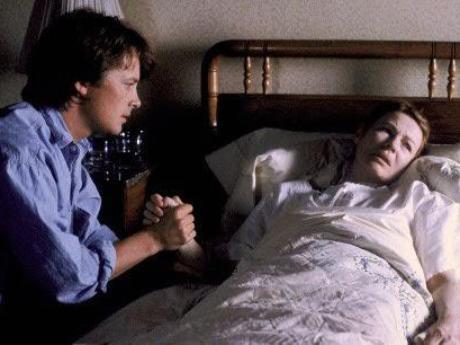
Dianne Wiest è la madre.
Il ‘tu’ è un martello che colpisce rigo dopo rigo (o meglio, visto che la coca è così centrale in questa storia, meglio usare il femminile riga), pagina dopo pagina: incalza, spinge, scandisce secco e bruciante.
La prima luce del mattino disegna contro il cielo i grattacieli del World Trade Center sulla punta dell’isola.
Da noi Bright Lights, Big City è arrivato nel 1986 pubblicato da Bompiani. Prima di Meno di zero e Ballo di famiglia.
E qui da noi si cominciò a parlare di minimalismo come mai prima.
Al punto da recuperare Carver, che da maestro di alcuni di questi scrittori, in Italia editorialmente parlando diventò quasi un loro discepolo.
Ci fu anche Tama Janowitz, da noi notata meno, e per un attimo anche Susan Minot.
In USA li definivano il literary brat pack, la banda di monelli (una forma di parodia del rat pack di Sinatra, Dean Martin&Co.), per differenziarli dalla banda di monelli del cinema (Sean Penn, Rob Lowe, Demi Moore eccetera).
Qui da noi a me pare che solo Tondelli sapesse intercettare il tempo e l’epoca con questo acutezza, profondità e qualità. Senza essere datato: sia i libri di Pier che questo esordio di Jay hanno conservato il loro valore letterario evitando di restare inchiodati al loro periodo storico (di costume).
PS
Del film non vale la pena parlare, mediocre sotto qualsiasi punto di vista.
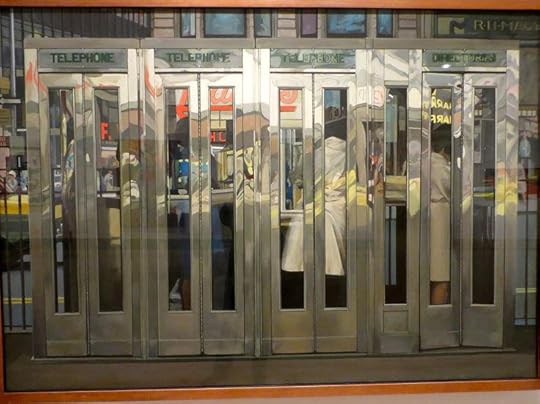
Richard Estes: Booths. 1967
Bright Lights, Big City – Le mille luci di New York.
Tu non sei esattamente il tipo di persona che ci si aspetterebbe di vedere in un posto come questo a quest’ora del mattino.
Questo è l’incipit, comincia proprio così.
E perché lui e il posto e l’ora del giorno non si accordano?
Perché a quell’ora, le 4 del mattino, lui dovrebbe essere a casa a dormire, la mattina dopo deve andare al lavoro.
Sarà uno straccio per aver passato la notte in piedi.
Averla passata sniffando coca boliviana.
Al punto da non sapere dove si trova.
Infatti, il “posto” a lui è poco chiaro: sa per certo che è un locale notturno, chiamiamolo nightclub, ma potrebbe essere l’Heartbreak, oppure il Lizard Lounge.
La coca boliviana e l’alcol, ingeriti in quantità allegre, gli annebbiano il cervello, e quindi, non è ben sicuro di sapere dove si trova.
Sa però che è appoggiato a un pilastro, che potrebbe non essere portante ma di sicuro per lui è importante perché se non ci fosse appoggiato sarebbe sul pavimento - e sta parlando con una ragazza che ha la testa rasata a zero e che forse gli ha detto come si chiama ma certo lui non se lo ricorda.
Michael J. Fox, inadatto al ruolo, miscasted, viene battezzato Jamie.
Chi è lui?
È quello che in Italia chiameremmo un giovane aspirante scrittore.
Invece, in US lo chiamerebbero solo aspirante scrittore, senza giovane, perché avendo superato i 25 anni, non ha più diritto a questo appellativo.
Non sappiamo come si chiama, il suo nome non compare mai, è l’unico che rimane ignoto, è un protagonista così depresso da non avere neanche un nome.
Lavora in un importante rivista (con chiaro riferimento al New Yorker) al reparto fact checking (verifica dei fatti), uno di quei lavori che in Italia non esistono, e non si pensa neppure di avviarli, uno di quei lavori fondamentali ma per nulla scintillanti.
E sì, gli piace scrivere, e ancor più gli piacerebbe pubblicare, magari una raccolta di racconti, cominciando da uno qui e uno là su qualche rivista, come di solito si inizia la carriera di scrittore da quelle parti.
Siamo all’inizio degli anni Ottanta (il romanzo è uscito nel 1984) e questo è importante: perché queste pagine rappresentano la quintessenza di quel periodo, ne sono figlie, e al contempo, lo illuminano, lo spiegano, lo raccontano.
E siamo anche negli anni dell’edonismo reaganiano, degli yuppie, dell’economia che andava a gonfie vele, e tutto sembrava in crescita, quando finalmente l’uomo bianco occidentale, forse per la prima volta, si trovava tra le mani una vita che sembrava senza aspetti negativi, anche in quel momento, dietro la copertina luccicante, scostando il velo…
Kiefer Sutherland è l’amico Tad che procura la cocaina al protagonista.
Come mai questo protagonista è così depresso da non avere neanche un nome?
Perché la sua bellissima moglie l’ha appena lasciato.
Lei è una modella, è andata a Parigi per sfilare, lo ha chiamato da lì per dirgli “non torno, rimango qui, tra noi è finita, grazie di tutto, bye bye”.
Prima di partire per Parigi, Amanda, ha prestato il suo viso come calco per un manichino: è stata un’ora e mezza col viso coperto da una maschera di lattice respirando attraverso due cannucce infilate nelle narici.
E adesso che è stato liquidato con una semplice breve telefonata, lui la vede in giro per la città, dietro le vetrine di Bloomingdale, nei manichini esposti.
E così, il nostro protagonista fatica a metabolizzare questo abbandono, non riesce a tenere la testa su quello che fa, si lascia andare, sniffa, beve, tira tardi, combina casini sul lavoro, che infatti finirà col perdere, sarà licenziato.
Come se non bastasse c’è che sua madre è morta da un anno di cancro, e le cose fra loro hanno cominciato ad andare meglio solo poco prima che lei morisse.
Il film è del 1988, diretto da James Bridges, che ne ha fatti di migliori.
Ma perché questo protagonista così depresso da non avere neanche un nome si esprime con la seconda persona, si rivolge a se stesso?
Beh, un motivo direi che è nella novità della cosa: narrare attraverso il ‘tu’ nel 1984 era pratica meno nota di ora – qualcuno direbbe che forse era la prima volta che si faceva, ma ho dubbi in proposito. In ogni caso, era un approccio letterario insolito. Spiazzante.
Nel caso di questo bel romanzo è perfettamente giustificato secondo me, non certo solo un mero esercizio stilistico: perché questo protagonista così depresso da non avere neanche un nome per la maggior parte della storia è come se fosse doppio, si guarda da fuori, non approva quello che fa, e solo nel finale, nel bel capitolo che chiude il libro, si riappacifica con se stesso in quello che si può definire una possibilità di happy ending.
Perché se fino all’ultimo capitolo il viaggio è sembrato senza speranza, marchiato dal fallimento, adesso si comincia ad avvertire l’inizio, o almeno il desiderio di una ribellione, si comincia a intuire una luce in fondo al tunnel.
Magari solo questa:
il profumo del pane ti avvolge come una pioggerella leggera. Inali profondamente, ti riempi i polmoni. Ti vengono le lacrime agli occhi, e provi una tale sensazione di tenerezza e pietà che sei costretto ad attaccarti a un lampione… Il primo boccone ti si ferma in gola e ti fa quasi vomitare. Dovrai cercare di andar piano. Dovrai imparare tutto daccapo.
Dianne Wiest è la madre.
Il ‘tu’ è un martello che colpisce rigo dopo rigo (o meglio, visto che la coca è così centrale in questa storia, meglio usare il femminile riga), pagina dopo pagina: incalza, spinge, scandisce secco e bruciante.
La prima luce del mattino disegna contro il cielo i grattacieli del World Trade Center sulla punta dell’isola.
Da noi Bright Lights, Big City è arrivato nel 1986 pubblicato da Bompiani. Prima di Meno di zero e Ballo di famiglia.
E qui da noi si cominciò a parlare di minimalismo come mai prima.
Al punto da recuperare Carver, che da maestro di alcuni di questi scrittori, in Italia editorialmente parlando diventò quasi un loro discepolo.
Ci fu anche Tama Janowitz, da noi notata meno, e per un attimo anche Susan Minot.
In USA li definivano il literary brat pack, la banda di monelli (una forma di parodia del rat pack di Sinatra, Dean Martin&Co.), per differenziarli dalla banda di monelli del cinema (Sean Penn, Rob Lowe, Demi Moore eccetera).
Qui da noi a me pare che solo Tondelli sapesse intercettare il tempo e l’epoca con questo acutezza, profondità e qualità. Senza essere datato: sia i libri di Pier che questo esordio di Jay hanno conservato il loro valore letterario evitando di restare inchiodati al loro periodo storico (di costume).
PS
Del film non vale la pena parlare, mediocre sotto qualsiasi punto di vista.
Richard Estes: Booths. 1967

June 7, 2016
So it remains to say, which one's better? This, or Bret Easton Ellis's smash mid-80s literary debut, "Less Than Zero"? These two novels are comparable because they crystallized the 1980's and with style to spare. They both have that quality that makes a reader almost fanatically impatient for their next written work.
My opinion is that THIS ONE gets top prize. (Although Ellis's "Rules of Attraction" is better than both of these). The protagonist gets some help from the ever-elusive second person narrator treatment... a fantastic writing feat! For you are the guy, YOU, & are trapped in your own particular time & space (obviously conveying the very way he feels trapped, just like the reader becomes trapped inside the narrative). This quality makes it especially endearing.
It's important, & a true page turner on top of it!
My opinion is that THIS ONE gets top prize. (Although Ellis's "Rules of Attraction" is better than both of these). The protagonist gets some help from the ever-elusive second person narrator treatment... a fantastic writing feat! For you are the guy, YOU, & are trapped in your own particular time & space (obviously conveying the very way he feels trapped, just like the reader becomes trapped inside the narrative). This quality makes it especially endearing.
It's important, & a true page turner on top of it!

April 27, 2013
You've been meaning to read BRIGHT LIGHTS, BIG CITY for years, ever since hearing that it's written in the second person. You were intrigued, understandably. Point of view in fiction has always been an area of interest, and you might be described as a sucker for narrative gimmicks.
While preparing for a trip to Manhattan, you entertained romantic fantasies of reading a novel set in New York during your stay. You forgot, as you always do, that you never manage to read while traveling, and that at best, you might get through a few chapters on the plane before falling asleep. You brought an optimistic two novels and didn't even open them, so it wasn't until after your return that you finally started BRIGHT LIGHTS, BIG CITY.
The second-person narration was strange at first. You kept stopping to stare at that word and analyze how it made you feel to be cast in the role of a coke-fueled, miserable young guy in early '80s New York. But these days you always focus too much on the words at the beginning of a book. When the writing is good -- and in this case it is -- you get pulled into the story soon enough.
Still, even as you were enjoying the breakneck ride through nightclub debauchery and the contrasting sobriety of a respected magazine's Department of Factual Verification, you did keep thinking about the effect. Were you drawn closer to the narrator and his muddled thoughts because the novel said that he was you? Or were you kept at a greater distance by a character in denial who refused to call himself "I"? You feel it's both at once somehow, and that it works for the story, and that you're glad you aren't a real book reviewer so you don't have to think about it harder than that.
You could never be a real book reviewer.
While preparing for a trip to Manhattan, you entertained romantic fantasies of reading a novel set in New York during your stay. You forgot, as you always do, that you never manage to read while traveling, and that at best, you might get through a few chapters on the plane before falling asleep. You brought an optimistic two novels and didn't even open them, so it wasn't until after your return that you finally started BRIGHT LIGHTS, BIG CITY.
The second-person narration was strange at first. You kept stopping to stare at that word and analyze how it made you feel to be cast in the role of a coke-fueled, miserable young guy in early '80s New York. But these days you always focus too much on the words at the beginning of a book. When the writing is good -- and in this case it is -- you get pulled into the story soon enough.
Still, even as you were enjoying the breakneck ride through nightclub debauchery and the contrasting sobriety of a respected magazine's Department of Factual Verification, you did keep thinking about the effect. Were you drawn closer to the narrator and his muddled thoughts because the novel said that he was you? Or were you kept at a greater distance by a character in denial who refused to call himself "I"? You feel it's both at once somehow, and that it works for the story, and that you're glad you aren't a real book reviewer so you don't have to think about it harder than that.
You could never be a real book reviewer.

February 10, 2009
You decide to read this book because it was written in the second person. This is interesting to you. You've never read a book written in that manner, at least you can't remember if you have. This seems like a pretentious idea to you, but you are curious. You like the book more than you expected to. It isn't all that dated. Sure, lots of NYC landmarks have changed, but the gist is still the same. You identify with the main character. You decide that if you lived in NYC in 1984, this would probably have been your life. You ignore the fact that dance clubs and cocaine still exist, and you could actually choose this life if you wanted but you actively avoid it.
McInerney, you realize, actually wrote that book that every 20 or 30 something guy with a liberal arts degree who spends their time wandering the city imagines they are constantly on the verge of writing. And it turned out pretty good. You are a little jealous. Except for the dialogue. Once again, it glares. You wonder if this is the most common problem with writing. Bad dialogue. People saying too much. Too much information in what would be a briefer conversation. Fictional people always seem to have too many words to say. That's why Cormac McCarthy did such a good job in his book. He doesn't make people say too much.
You consider writing a review in the second person. You decide this would be REALLY pretentious. That makes you happy, for some reason. You don't have anything better to do. You check the other reviews of the book. You realize that lots of other people have done the same exact thing. You decide you don't want to be a bandwagon reviewer. You are wittier than that. Then you realize that you actually are lazy and unoriginal and that's why McInerney had already worked at the New Yorker and published this book by 29 and you haven't written or published a damn thing and you're almost 31. You decide to leave the review as written.
McInerney, you realize, actually wrote that book that every 20 or 30 something guy with a liberal arts degree who spends their time wandering the city imagines they are constantly on the verge of writing. And it turned out pretty good. You are a little jealous. Except for the dialogue. Once again, it glares. You wonder if this is the most common problem with writing. Bad dialogue. People saying too much. Too much information in what would be a briefer conversation. Fictional people always seem to have too many words to say. That's why Cormac McCarthy did such a good job in his book. He doesn't make people say too much.
You consider writing a review in the second person. You decide this would be REALLY pretentious. That makes you happy, for some reason. You don't have anything better to do. You check the other reviews of the book. You realize that lots of other people have done the same exact thing. You decide you don't want to be a bandwagon reviewer. You are wittier than that. Then you realize that you actually are lazy and unoriginal and that's why McInerney had already worked at the New Yorker and published this book by 29 and you haven't written or published a damn thing and you're almost 31. You decide to leave the review as written.

December 7, 2007
Thanks to Bookface, you no longer get this book mixed up with American Psycho, and can now easily tell the difference between Bret Easton Ellis and Jay MacInerney. Good thing you cleared that right up before you embarrassed yourself at one of those writerly New York parties you're always getting invited to. It would've been awful to have spilled your drink on the wrong author, for the wrong reason.... whew!
This book is about how terrible people's lives were before the Internet was invented.
It is exactly what you expect it to be, only slightly more palatable. It's actually a fairly good substance abuse yarn (not normally your favorite genre), and it's a passable coming-to-ny/period-piece novel. It's not great or anything, but if you might as well pick up a fifty-cent copy at a garage sale to pull out on a slow day.... or you might as well not. You always give a certain grudging respect to a book that has you rooting for a character you'd normally hate in real life, and since you appreciate that sort of thing, you could do worse than this book.
Then again, you could also do better.
This book is about how terrible people's lives were before the Internet was invented.
It is exactly what you expect it to be, only slightly more palatable. It's actually a fairly good substance abuse yarn (not normally your favorite genre), and it's a passable coming-to-ny/period-piece novel. It's not great or anything, but if you might as well pick up a fifty-cent copy at a garage sale to pull out on a slow day.... or you might as well not. You always give a certain grudging respect to a book that has you rooting for a character you'd normally hate in real life, and since you appreciate that sort of thing, you could do worse than this book.
Then again, you could also do better.

November 9, 2011
perhaps the best things i can say about this one are that it perfectly captured a perfectly nauseating time period in the mid-80s and it certainly reinvigorated the use of second-person narrative with surprising elan; perhaps the worst thing i could say about this one is that It Drove Me Up The Wall With Its Pathetically Entitled Non-Entity Of A So-Called Protagonist And It Somehow Made It Okay To Be A Pretentious Whiny Twit And Nihilistic Fuck. well ok then. man i guess it's all about you mark, you're so Bright Lights, Big City.

October 8, 2014
This book is one I believe everyone should read. The subject matter is poignant, still relevant and (given the subject matter) extremely clean. Along with many, this book seems to me a prequel to Bret Easton Ellis‘s take on hip New York. While finishing it, I considered starting it over from the beginning immediately but have decided to reread American Psycho first. Bright Lights, Big City is a fast read and I think it is worth your time.

November 4, 2022
Your soul is as disheveled as your apartment, and until you can clean it up a little you don’t want to invite anyone inside.
…
You are on the anti-cline of your first rush. You are also experiencing the inevitable disappointment of clubs. You enter with an anticipation that on the basis of past experience is entirely unjustified. You always seem to forget that you don’t really like to dance.
…
You wanted an explanation, an ending that would assign blame and dish up justice. You considered violence and you considered reconciliation. But what you are left with is a premonition of the way your life will fade behind you, like a book you have read too quickly, leaving a dwindling trail of images and emotions, until all you can remember is a name.
I was a bit young (13) to have wanted to read Bright Lights, Big City when it was published in 1984. And somehow I never went back and read it until now. But I’m glad I didn’t read it then, in my teens, because I’m sure I would have focused on all the wrong things and missed the whole point of the novel.
The Goodreads description says that Bright Lights, Big City “follows a young man, living in Manhattan as if he owned it, through nightclubs, fashion shows, editorial offices, and loft parties as he attempts to outstrip mortality and the recurring approach of dawn. With nothing but goodwill, controlled substances, and wit to sustain him in this anti-quest, he runs until he reaches his reckoning point….” I mean, there are scenes in all those places, and there’s certainly an endless amount of casual cocaine use. But that description is so glib, making the narrator sound like a younger, coked-up, party boy version of “Master of the Universe” Sherman McCoy from The Bonfire of the Vanities.
Instead, Bright Lights, Big City is all about seeing past those glib facades and artificiality to get at what’s real. The story is told in the second-person so the narrator is you—you are the one putting on a facade, out at a club at six in the morning, high as a kite yet desperately lonely. You are only 24, yet somehow already at the end of a failed marriage, with even more sadness in your past, slowly letting everything in your life fall apart. It’s a very effective technique, quickly pulling the reader into the narrator’s predicament and providing a sympathy that you’re rooting for him to pull out of this tailspin before it’s too late.
Bright Lights, Big City is uniquely set mid-1980s Manhattan, but it’s a timeless—and ultimately moving and hopeful—story of a man who has lost his way. Recommended.

December 18, 2013
McInerney's best work by a country mile, and a masterpiece of 80's literature. New York is the setting, and it's awash with money, excess, fashion, music, clubbing, and of course, the most important ingredient of all...Bolivian Marching Powder!, or, for those not familiar - Cocaine. A brilliant comic morality tale told in a unique second person narrative that is sharp, witty and a whole lot of fun. Easily read in one go - think a much shorter American Psycho without the psychotic violence and dark humour and you're on the right path. Almost makes you wish for an 80's revival. Bring on the big hair, shoulder pads and cheesy pop songs!

December 28, 2024
Given that McInerney is, together with Bret Easton Ellis, considered the main representative of the literary brat pack, so a group of young authors who came to fame on the East Coast in the 1980's, this big city novel is rather tame and psychologically over-explained: The unnamed 24-year-old narrator is a fact-checker at a prestigious magazine in New York, but dreams of being a writer, and while his career is tanking, he struggles with the fact that his modelling wife has dumped him over the phone. As this is the Big Apple in the 80's, he drifts through bars and clubs and there is plenty of cocaine, but as this is also a novel with conservative morals (which sets it apart from Ellis, the passionate agent provocateur), the bad, bad hedonism in a world obsessed with consumer culture and superficiality is just a pointless distraction from his familial troubles...
BUT, and this is indeed a big but, while the whole thing is slightly simplistic and often heavy-handed (of course the wife has been the model for a mannequin doll displayed in a shopping window *metaphor alert!!!*), the book is also immersive, atmospheric, well-composed and just fun to read. There is humor in the protagonist's misadventures, but the slapstick never ridicules the psychologically believable characters, just their situation and its repercussions. McInerney writes successfully in the difficult second person singular ("you") and it never feels forced, but natural and elegant.
And hey, maybe not all books need Jesse Ball-level aesthetic experimentation, or super-political messages, or highly complex storylines, or unusual plot developments. This is just a very well written conventional story, set in a specific time and place that is expertly rendered. Sometimes, that's more than enough.
BUT, and this is indeed a big but, while the whole thing is slightly simplistic and often heavy-handed (of course the wife has been the model for a mannequin doll displayed in a shopping window *metaphor alert!!!*), the book is also immersive, atmospheric, well-composed and just fun to read. There is humor in the protagonist's misadventures, but the slapstick never ridicules the psychologically believable characters, just their situation and its repercussions. McInerney writes successfully in the difficult second person singular ("you") and it never feels forced, but natural and elegant.
And hey, maybe not all books need Jesse Ball-level aesthetic experimentation, or super-political messages, or highly complex storylines, or unusual plot developments. This is just a very well written conventional story, set in a specific time and place that is expertly rendered. Sometimes, that's more than enough.

August 28, 2009
I was almost tempted to give this five stars--an honor I've bestowed upon just two books all year. This book surprised me. Here was a character who, yes, snorts cocaine and passes out in bathrooms--but he has a conscience. The second-person narrative is effortless.
McInerney is a part of the "literary brat pack," so his work is lumped in along with Bret Easton Ellis's. I remember Less than Zero as a confusing jumble of drug-feuled ramblings about ex-girlfriends, overdoses, fast cars, and prostitution. Bright Lights, Big City is grown-up in comparison with its themes of love, work, and family; the party culture is more of a backdrop than the main stage for the events that take place.
The next time I read this I'll do it with a pen in hand--several lines struck me as poignant or funny. (I'll probably have to buy my own copy for this exercise.) Here's one such line, when he's trying to make sense of a break-up: "But what you are left with is a premonition of the way your life will fade behind you, like a book you have read too quickly, leaving a dwindling trail of images and emotions, until all you can remember is a name."
McInerney is a part of the "literary brat pack," so his work is lumped in along with Bret Easton Ellis's. I remember Less than Zero as a confusing jumble of drug-feuled ramblings about ex-girlfriends, overdoses, fast cars, and prostitution. Bright Lights, Big City is grown-up in comparison with its themes of love, work, and family; the party culture is more of a backdrop than the main stage for the events that take place.
The next time I read this I'll do it with a pen in hand--several lines struck me as poignant or funny. (I'll probably have to buy my own copy for this exercise.) Here's one such line, when he's trying to make sense of a break-up: "But what you are left with is a premonition of the way your life will fade behind you, like a book you have read too quickly, leaving a dwindling trail of images and emotions, until all you can remember is a name."

January 22, 2023
Bright Lights, Big City packed a lot into such a short novel. Our main character is a fact-checker at a highbrow NYC magazine in the 1980s, and the story follows him through a week in his life where he processes loss and grief. Even though it had a couple things that I didn’t think I would like (drug use descriptions and the second person narrative), it had great character development and fantastic imagery. The dialogue between the side characters and the protagonist was witty and relatable. The Talking Heads lyrics reference elevated the material as well.

July 23, 2026
A buddy read with my brilliant friend, Yalla
On the surface, Jay McInerney’s 1984 novel Bright Lights, Big City appears to be the quintessential artifact of its era—a frantic, neon-soaked sprint through the cocaine-fueled night life and yuppie excess of 1980s Manhattan. Yet beneath the glitz, the night clubs, and the Bolivian Marching Powder lies something much deeper and infinitely more fragile: a profound, sprawling study of grief, artistic paralysis, and human alienation. What elevates the novel from a period piece into a lasting work of fiction is its masterclass use of the second-person point of view. McInerney’s choice of "You" is far from a mere stylistic gimmick; it grabs you by the collar and drags you headfirst into the unhinged mind of its protagonist. You don't simply witness his descent from a safe, objective distance. You become an active accomplice to his chaotic decisions, feeling the disorienting haze of the dance floors, the creeping dread of the rising morning sun, and the crushing weight of real-time shame and regret.
When stripped of its 1980s American glamour, the emotional blueprint of Bright Lights, Big Cityreveals a striking literary kinship with Heinrich Böll’s classic post-war European novel, The Clown. Both works center on an alienated, hyper-sensitive artist figure spiraling out of control after being abandoned by a woman, using substances as a clumsy anesthetic against an unendurable emotional reality. Where Böll offers a static, claustrophobic freeze in post-war Bonn—where his protagonist sits in an apartment making desperate phone calls—McInerney provides a hyper-capitalist Manhattan burnout. Yet both protagonists share the same fatal flaw: an unarmored, hyper-observant sensitivity that makes them utterly unsuited for the cynical machinery of the worlds they inhabit.
This artistic identity is central to the narrator's tragedy. He is not an artist driven by ambition or status, but by a quiet, intrinsic urge to process the world through creation. Yet in his current state of paralysis, his artistic sensibility only exacerbates his vulnerability. There is a biting, tragic irony in his day job at the high-minded "Department of Factual Verification." While he spends his working hours obsessively auditing and cross-checking the literal truths of other writers, his own creative voice rots beneath night-club exhaustion, and his personal life becomes a web of denial and self-deception. Art, which should be his sanctuary and salvation, becomes another painful reminder of his potential versus his paralysis.
The female figures in both novels further illuminate the nature of each protagonist's internal crisis through stark archetypal contrast. In The Clown, Marie represents a Hera or Hestia figure—grounded in domesticity, the sanctity of the hearth, and a desire for moral stability. Her departure shatters Hans because she was his anchor to a grounded, normal existence. In Bright Lights, however, Amanda is an absolute Aphrodite: an idol of pure surface, allure, and vanity. As a model stepping into the global fashion machine, she offers no home or moral center; she offers a spectacle. The narrator’s obsession with her is not a mourning of a true partnership, but an addiction to a hollow illusion, revealing how thoroughly he has surrendered substance for surface.
Crucially, however, Amanda’s departure is merely a decoy for the novel's true, bleeding wound: the death of the protagonist's mother. It is infinitely easier for him to play the role of the glamorous, heartbroken ex-husband in the party circuits of New York than to confront the ugly, unvarnished reality of a mother lost to cancer. His mother was not a typical, suffocating, or traditional parent of her era; she was remarkably modern, open-minded, intellectually curious, and genuinely invested in who he was becoming. Her death was a double tragedy because he came to know her fully too late, when she was already on her deathbed. He didn't just lose a parent; he lost a rare, understanding friend and companion just as they were finally bridging the gap between them. Her heartbreaking line to him—"I wish I’d known a long time ago that I was going to die. We could’ve gotten to know each other a lot better. There’s so much we don’t know"—captures the raw cruelty of that truncated potential. Her memory represents the only source of absolute, unvarnished authenticity in his life, serving as a silent rebuke to the hollow performances of figures like Tad Allagash and the superficial world he uses to hide his grief.
This dense emotional landscape is beautifully woven together through a sequence of sharp, recurring symbols that track his movement from denial to ultimate reckoning. The "Coma Baby," a recurring headline in the tabloid papers he compulsively tracks, mirrors his own frozen emotional state; like the child, he is suspended in a realm between living and dying, refusing to wake up to his grief. The mannequin—a literal cardboard and plastic likeness of Amanda—represents his obsession with phantom surfaces; its eventual disappearance from his life marks the silent breaking of the spell and the first step toward letting go of his self-imposed delusion.
All of these threads converge in the novel's quiet, deeply moving climax. After days and weeks sustained by chemicals, alcohol, and artificial light, trading his Ray-Bans—his literal shield against the truth and armor against the morning sun—for a simple piece of warm, freshly baked bread becomes a sensory and spiritual sacrament. By giving up the sunglasses, he surrenders his denial. It is a moment of total stripping away—a return to basic human vulnerability, physical nourishment, and the quiet, honest desire to stop running and rejoin the living. Bright Lights, Big City may wear the flashy clothes of a 1980s party novel, but underneath, it is a timeless, brilliantly executed story about the courage it takes to shed your armor, face the dawn, and allow yourself to feel.
‘Are you still holding my hand?’
‘Yes. I am.’
‘Good. Don’t let go.’
On the surface, Jay McInerney’s 1984 novel Bright Lights, Big City appears to be the quintessential artifact of its era—a frantic, neon-soaked sprint through the cocaine-fueled night life and yuppie excess of 1980s Manhattan. Yet beneath the glitz, the night clubs, and the Bolivian Marching Powder lies something much deeper and infinitely more fragile: a profound, sprawling study of grief, artistic paralysis, and human alienation. What elevates the novel from a period piece into a lasting work of fiction is its masterclass use of the second-person point of view. McInerney’s choice of "You" is far from a mere stylistic gimmick; it grabs you by the collar and drags you headfirst into the unhinged mind of its protagonist. You don't simply witness his descent from a safe, objective distance. You become an active accomplice to his chaotic decisions, feeling the disorienting haze of the dance floors, the creeping dread of the rising morning sun, and the crushing weight of real-time shame and regret.
When stripped of its 1980s American glamour, the emotional blueprint of Bright Lights, Big Cityreveals a striking literary kinship with Heinrich Böll’s classic post-war European novel, The Clown. Both works center on an alienated, hyper-sensitive artist figure spiraling out of control after being abandoned by a woman, using substances as a clumsy anesthetic against an unendurable emotional reality. Where Böll offers a static, claustrophobic freeze in post-war Bonn—where his protagonist sits in an apartment making desperate phone calls—McInerney provides a hyper-capitalist Manhattan burnout. Yet both protagonists share the same fatal flaw: an unarmored, hyper-observant sensitivity that makes them utterly unsuited for the cynical machinery of the worlds they inhabit.
This artistic identity is central to the narrator's tragedy. He is not an artist driven by ambition or status, but by a quiet, intrinsic urge to process the world through creation. Yet in his current state of paralysis, his artistic sensibility only exacerbates his vulnerability. There is a biting, tragic irony in his day job at the high-minded "Department of Factual Verification." While he spends his working hours obsessively auditing and cross-checking the literal truths of other writers, his own creative voice rots beneath night-club exhaustion, and his personal life becomes a web of denial and self-deception. Art, which should be his sanctuary and salvation, becomes another painful reminder of his potential versus his paralysis.
The female figures in both novels further illuminate the nature of each protagonist's internal crisis through stark archetypal contrast. In The Clown, Marie represents a Hera or Hestia figure—grounded in domesticity, the sanctity of the hearth, and a desire for moral stability. Her departure shatters Hans because she was his anchor to a grounded, normal existence. In Bright Lights, however, Amanda is an absolute Aphrodite: an idol of pure surface, allure, and vanity. As a model stepping into the global fashion machine, she offers no home or moral center; she offers a spectacle. The narrator’s obsession with her is not a mourning of a true partnership, but an addiction to a hollow illusion, revealing how thoroughly he has surrendered substance for surface.
Crucially, however, Amanda’s departure is merely a decoy for the novel's true, bleeding wound: the death of the protagonist's mother. It is infinitely easier for him to play the role of the glamorous, heartbroken ex-husband in the party circuits of New York than to confront the ugly, unvarnished reality of a mother lost to cancer. His mother was not a typical, suffocating, or traditional parent of her era; she was remarkably modern, open-minded, intellectually curious, and genuinely invested in who he was becoming. Her death was a double tragedy because he came to know her fully too late, when she was already on her deathbed. He didn't just lose a parent; he lost a rare, understanding friend and companion just as they were finally bridging the gap between them. Her heartbreaking line to him—"I wish I’d known a long time ago that I was going to die. We could’ve gotten to know each other a lot better. There’s so much we don’t know"—captures the raw cruelty of that truncated potential. Her memory represents the only source of absolute, unvarnished authenticity in his life, serving as a silent rebuke to the hollow performances of figures like Tad Allagash and the superficial world he uses to hide his grief.
This dense emotional landscape is beautifully woven together through a sequence of sharp, recurring symbols that track his movement from denial to ultimate reckoning. The "Coma Baby," a recurring headline in the tabloid papers he compulsively tracks, mirrors his own frozen emotional state; like the child, he is suspended in a realm between living and dying, refusing to wake up to his grief. The mannequin—a literal cardboard and plastic likeness of Amanda—represents his obsession with phantom surfaces; its eventual disappearance from his life marks the silent breaking of the spell and the first step toward letting go of his self-imposed delusion.
All of these threads converge in the novel's quiet, deeply moving climax. After days and weeks sustained by chemicals, alcohol, and artificial light, trading his Ray-Bans—his literal shield against the truth and armor against the morning sun—for a simple piece of warm, freshly baked bread becomes a sensory and spiritual sacrament. By giving up the sunglasses, he surrenders his denial. It is a moment of total stripping away—a return to basic human vulnerability, physical nourishment, and the quiet, honest desire to stop running and rejoin the living. Bright Lights, Big City may wear the flashy clothes of a 1980s party novel, but underneath, it is a timeless, brilliantly executed story about the courage it takes to shed your armor, face the dawn, and allow yourself to feel.
‘Are you still holding my hand?’
‘Yes. I am.’
‘Good. Don’t let go.’

March 2, 2024
Bright Lights, Big City is hilarious and poignant. You follow a week in the life of a 20-something spiraling out of control in New York City. The writing is tight, the portrayal of the City is remarkably accurate, and the use of the second person is absolutely brilliant.

November 3, 2019
Bright Lights, big city really does capture the essence of New York City in the early 80’s. It’s got a great beat to it. Written in the second person our protagonist is still grieving his dead mother and his failed marriage and a fast crumbling career. To overcome his falling apart life he’s seduced by the bright lights of the party life, fast women and lots of drugs. The momentary escape provides lots of exciting times but as anything that is done in excess it all comes crashing down and he has to face up to his failures even when he’s trying so hard to run away from them. This is a fast paced book that leaves you wanting more.

March 5, 2016
Published in 1984, Bright Lights, Big City is famous for being a novel narrated entirely in the second person; although it's neither the first or the only book to do that, somehow it became one of the better known examples of this technique. Apparently, the novel began its life as a short story Jay McInerney published in a literary magazine, and which he later expanded into a full novel.
Aside from the neat narrative trick, there is not much that one can say about the contents of the novel itself. The anonymous narrator, obviously based on McInerey himself, spends his days working at the department of Factual Verification for a magazine in New York, and his nights partying at the local clubs. One of the first things which strikes the contemporary reader is how amusingly dated the book is. For obvious reasons, no one uses a computer; the narrator and others do their job the old way, finding information in actual records and via telephone calls to various sources. Despite little evidence of the narrator doing much actual work requiring actual skill, he somehow manages to live in Manhattan, go to parties and get high on cocaine most of the time.
There is little to say about the narrator - although unhappy, he remains resigned throughout most of the novel. Despite wanting to work at the fiction department, he never once tries producing any actual fiction; although he feels alienated and misses his former wife, there is little to suggest that he is actually willing or even capable of pursuing a real relationship with anyone. The few biographical snippets which aim to give us more insight into the narrator's character - a look at the early days of his marriage, a visit by his brother - ultimately turn out to not be enough to arouse any interest in someone who is thoroughly uninteresting, even if he is "you". It does not help that the background characters are entirely forgettable - including the narrator's wife, and his friend and mentor, Tad Allagash, about whom we learn little more than his name. Ultimately, there is little reason to care about anything that happens in the novel as the narrator does not care very much either, and in the end this was exactly my reaction: I did not care at all.
This is not a terrible book, but it's a period piece through and through. There are a few good lines throughout the text (my favorite being "You are a republic of voices tonight. Unfortunately, that republic is Italy."), but Jay McInerney is no Bret Easton Ellis, and Bright Lights, Big City is not Less Than Zero and definitely not American Psycho, both of which feature similar themes but are much better books.
Aside from the neat narrative trick, there is not much that one can say about the contents of the novel itself. The anonymous narrator, obviously based on McInerey himself, spends his days working at the department of Factual Verification for a magazine in New York, and his nights partying at the local clubs. One of the first things which strikes the contemporary reader is how amusingly dated the book is. For obvious reasons, no one uses a computer; the narrator and others do their job the old way, finding information in actual records and via telephone calls to various sources. Despite little evidence of the narrator doing much actual work requiring actual skill, he somehow manages to live in Manhattan, go to parties and get high on cocaine most of the time.
There is little to say about the narrator - although unhappy, he remains resigned throughout most of the novel. Despite wanting to work at the fiction department, he never once tries producing any actual fiction; although he feels alienated and misses his former wife, there is little to suggest that he is actually willing or even capable of pursuing a real relationship with anyone. The few biographical snippets which aim to give us more insight into the narrator's character - a look at the early days of his marriage, a visit by his brother - ultimately turn out to not be enough to arouse any interest in someone who is thoroughly uninteresting, even if he is "you". It does not help that the background characters are entirely forgettable - including the narrator's wife, and his friend and mentor, Tad Allagash, about whom we learn little more than his name. Ultimately, there is little reason to care about anything that happens in the novel as the narrator does not care very much either, and in the end this was exactly my reaction: I did not care at all.
This is not a terrible book, but it's a period piece through and through. There are a few good lines throughout the text (my favorite being "You are a republic of voices tonight. Unfortunately, that republic is Italy."), but Jay McInerney is no Bret Easton Ellis, and Bright Lights, Big City is not Less Than Zero and definitely not American Psycho, both of which feature similar themes but are much better books.

November 18, 2016
“Everything becomes symbol and irony when you've been betrayed”
― Jay McInerney, Bright Lights, Big City
Review to follow.
Gosh I loved this book when I was younger. I read it way too long ago to do a full plot review.
A friend of mine remarked it sounded like 'catcher in the Rye" but with drugs. Sort of I guess. This book was also a film and I saw the film first. Michael J Fox played the main character and was terrific.
This book was a part of a bunch of books around that time period all dealing with with addiction and drug use -- Less than Zero, Rush, Bright Lights, big city, The boost.
All of the above mentioned were films as well and only "The Boost" had no actual book and was just a film.
I liked all of them, Rush was perhaps the best of the books but I was touched by all of them and in this case, I really adored the film, maybe even more than the book.
It wasn't merely about a cliche, about a guy partying.
It had depth, soul and nuance and really was quite painful in parts. Another classic from the past I should really do reread of.
― Jay McInerney, Bright Lights, Big City
Review to follow.
Gosh I loved this book when I was younger. I read it way too long ago to do a full plot review.
A friend of mine remarked it sounded like 'catcher in the Rye" but with drugs. Sort of I guess. This book was also a film and I saw the film first. Michael J Fox played the main character and was terrific.
This book was a part of a bunch of books around that time period all dealing with with addiction and drug use -- Less than Zero, Rush, Bright Lights, big city, The boost.
All of the above mentioned were films as well and only "The Boost" had no actual book and was just a film.
I liked all of them, Rush was perhaps the best of the books but I was touched by all of them and in this case, I really adored the film, maybe even more than the book.
It wasn't merely about a cliche, about a guy partying.
It had depth, soul and nuance and really was quite painful in parts. Another classic from the past I should really do reread of.
February 2, 2020
A deeply personal book about grief that moved me to tears, holding up a broken mirror to my own life. I’ve loved the movie adaptation for years; I can’t believe it’s taken me so long to get around to reading the original book. Idiot...
August 6, 2018
Absolutely LOVED this little book and I only just read it for the first time in early 2018. What can I say? Its funny, its honest, its creative and amusing. I'd heard about this book for so many years and had never taken the time to read it. I really enjoyed how it was written in second person narrative voice and also the rumor that so much of it was based on Jay Mcinerny's life in New York. One of my favorite books, and a part of my permanent collection.

December 7, 2013
Qualche domenica fa, nell’inserto del Corriere della Sera sulla lettura c’era un’intervista a tale Gary Fisketjon, editor newyorkese scopritore di talenti come Cormac Mc Carthy ed anche di Jay Mc Inerney. Non avevo mai sentito parlare di questo scrittore, lo ammetto. Ma le parole entusiastiche dell’editor su questo scrittore enfant prodige, di cui pubblicò nel 1984 “Le mille luci di New York”, del quale dice che “occuperà sempre un posto speciale. Oltre ad essere impeccabile dal punto di vista letterario, il suo esordio rivoluzionò la scena letteraria in un momento in cui l’America aveva perso interesse per gli autori soprattutto nuovi…”, hanno destato il mio interesse e la voglia di leggerlo.
Purtroppo sono arrivata tardi, la novità letteraria che all’epoca rappresentò un romanzo in cui si parlava di dipendenza dalla droga, di fallimenti matrimoniali e della sfavillante vita della metropoli americana che nasconde il vuoto di valori della vita moderna è oramai superata da tanti successivi libri e film a riguardo. La delusione è stata più forte anche per il fatto che questo romanzo può ritenersi un bell’involucro esteriormente, un pacco dono con i fiocchi e i ricci ben confezionato –come dice Fisketjon, è impeccabile dal punto di vista letterario-, ma dentro c’è poco o nulla, nel senso che rimane in superficie, in generale non approfondisce i personaggi che ricordano i manichini delle luccicanti vetrine newyorkesi, messi nelle posizioni più strampalate. Non saprei, ma credo che lo scrittore potrebbe riuscire benissimo come sceneggiatore di film, lo avrei visto bene nella sceneggiatura di Sex and the city, ecco.
Purtroppo sono arrivata tardi, la novità letteraria che all’epoca rappresentò un romanzo in cui si parlava di dipendenza dalla droga, di fallimenti matrimoniali e della sfavillante vita della metropoli americana che nasconde il vuoto di valori della vita moderna è oramai superata da tanti successivi libri e film a riguardo. La delusione è stata più forte anche per il fatto che questo romanzo può ritenersi un bell’involucro esteriormente, un pacco dono con i fiocchi e i ricci ben confezionato –come dice Fisketjon, è impeccabile dal punto di vista letterario-, ma dentro c’è poco o nulla, nel senso che rimane in superficie, in generale non approfondisce i personaggi che ricordano i manichini delle luccicanti vetrine newyorkesi, messi nelle posizioni più strampalate. Non saprei, ma credo che lo scrittore potrebbe riuscire benissimo come sceneggiatore di film, lo avrei visto bene nella sceneggiatura di Sex and the city, ecco.

November 11, 2025
Great look at a NYC wannabe writer in 1984. Drinks and smokes are appetizers. Cocaine makes up the meals. It’s pretty damn funny in parts. Sad and touching later on.

February 23, 2019
I've no idea why I'd never read Bright Lights, Big City (1984), despite it being renowned as something of a classic. Or indeed anything written by Jay McInerney.
I loved it - from the first page to the last. It's a mere 192 pages and a quick and easy read. The story's narrator is a 24 year old would-be writer who works as a fact checker for a highbrow magazine. Most nights he is being led astray by his friend Tad Allagash: snorting cocaine, chasing the illusory nightlife dream, whilst also trying to come to terms with his wife leaving him, and the death of his mother.
Nothing much happens by way of drama and yet Bright Lights, Big City remains utterly compelling and a complete joy.
The moment I finished I bought a copy of Ransom (1985), Jay McInerney's next book which I am already really looking forward to.
5/5

I loved it - from the first page to the last. It's a mere 192 pages and a quick and easy read. The story's narrator is a 24 year old would-be writer who works as a fact checker for a highbrow magazine. Most nights he is being led astray by his friend Tad Allagash: snorting cocaine, chasing the illusory nightlife dream, whilst also trying to come to terms with his wife leaving him, and the death of his mother.
Nothing much happens by way of drama and yet Bright Lights, Big City remains utterly compelling and a complete joy.
The moment I finished I bought a copy of Ransom (1985), Jay McInerney's next book which I am already really looking forward to.
5/5

May 9, 2023
Il protagonista di questo romanzo è uno scrittore che fa il giornalista per una rivista di New York e scopriamo che la moglie lo ha lasciato di botto (con una telefonata!) e si è trasferita a Parigi a fare la modella. Per questo motivo sentimentale cade in depressione e così di notte si lascia trascinare da un suo amico in locali equivoci dove si ubriacano e fanno uso di tanta "polverina magica". Naturalmente queste notti brave avranno ben presto una conseguenza sul suo lavoro in ufficio che lo porteranno ad essere licenziato. Sarà l'incontro con suo fratello che in un certo senso gli cambierà la vita e lo farà riflettere su un possibile cambiamento e inversione di rotta.
Prima opera che leggo di Jay McInerney e devo dire che mi è piaciuto molto il suo stile, che potrebbe ricordare il Kerouac de "Sulla strada". La sua scrittura è ipnotica: non puoi fare a meno di continuare a leggere, ti incuriosisce ed è sempre ironico in tutto ciò che succede al protagonista. Questo senso di straniamento che ha il protagonista, poi, è reso perfettamente dall'autore che utilizza, quando parla di se, la seconda persona singolare e mai la prima.
Prima opera che leggo di Jay McInerney e devo dire che mi è piaciuto molto il suo stile, che potrebbe ricordare il Kerouac de "Sulla strada". La sua scrittura è ipnotica: non puoi fare a meno di continuare a leggere, ti incuriosisce ed è sempre ironico in tutto ciò che succede al protagonista. Questo senso di straniamento che ha il protagonista, poi, è reso perfettamente dall'autore che utilizza, quando parla di se, la seconda persona singolare e mai la prima.
July 19, 2025
Der Autor war bis dato ein blinder Fleck auf meiner Literaturlandkarte. Ich wusste zwar, dass es ihn gibt und dass er im Vergleich mit seinem Kumpel Bret nicht ganz so gut abschneidet, aber einige ihn durchaus lieber mögen als BEE.
Letzteres kann ich von mir nun nicht behaupten. Ich finde man kann BEE deutlich mehr Zeitungebundenheit attestieren, selbst wenn er über die 80er Jahre schreibt, wirkt BEE auf mich frischer, radikaler und vor allem sprachlich kreativer und risikofreudiger. JmcI schreibt recht traditionell und ringt sich manchmal ein paar pompös-humorvolle, überzeichnete Formulierungen ab, die er dem namenlosen Protagonisten in den Mund legt oder als ausformulierte Gedanken dessen Perspektive zuschreibt. Ein bisschen zuviel Effekthascherei.
Insgesamt habe ich den Roman nicht ungern gelesen und hatte vereinzelt meinen Spaß damit, musste gegen Ende sogar mal ein Tränchen vergießen. Alles in allem war es mir allerdings zu banal, zu kokslastig, zu angestaubt und leider ist die Hauptfigur ein etwas langweiliger und eher uninteressanter Typ.
Also irgendwo zwischen 3 und 3,5🌟.
Verspüre keine allzu große Lust noch mehr aus dem Oeuvre des Autors kennenzulernen.
Letzteres kann ich von mir nun nicht behaupten. Ich finde man kann BEE deutlich mehr Zeitungebundenheit attestieren, selbst wenn er über die 80er Jahre schreibt, wirkt BEE auf mich frischer, radikaler und vor allem sprachlich kreativer und risikofreudiger. JmcI schreibt recht traditionell und ringt sich manchmal ein paar pompös-humorvolle, überzeichnete Formulierungen ab, die er dem namenlosen Protagonisten in den Mund legt oder als ausformulierte Gedanken dessen Perspektive zuschreibt. Ein bisschen zuviel Effekthascherei.
Insgesamt habe ich den Roman nicht ungern gelesen und hatte vereinzelt meinen Spaß damit, musste gegen Ende sogar mal ein Tränchen vergießen. Alles in allem war es mir allerdings zu banal, zu kokslastig, zu angestaubt und leider ist die Hauptfigur ein etwas langweiliger und eher uninteressanter Typ.
Also irgendwo zwischen 3 und 3,5🌟.
Verspüre keine allzu große Lust noch mehr aus dem Oeuvre des Autors kennenzulernen.

May 3, 2017
I’m a little embarrassed to admit how much I love this book. Among other things, it’s a portrait of America, and especially New York, in the 1980s, and though it deals very much with the prickly theme of growing up, it suffered for its unfair comparisons to Catcher in the Rye, with many critics labeling Jay McInerney as a literary pretender. Whatever. I loved this book then, when I first read it, and I love it still. In terms of craft, McInerney’s inventive use of 2nd person narration ought to be studied in modern lit courses. Even allowing that it may be a candidate for a 1980s time capsule, I think it stands on its own as a book of substance, wit and character, and in those respects compares to works by writers as diverse as Charles Dickens, Joseph Heller and Irvine Welsh. It’s one of my all-time favorite books, and more than stands up to comparisons with other classic American fiction.

June 22, 2007
You get used to reading a novel in second person pretty quickly, so it's not really that annoying. You enjoy how quickly the pages turn, how quickly the plot flows. It's a fun read, if not a deep one. You recognize the parallels with your own life, but don't feel the need to dwell on this. You end up liking the main character, even though you know he's an asshole. You're a bit resistant to some implied moralizing at the end, but you let it go. And you will make use of the metaphor of cocaine use as Bolivian Marching Powder in future conversations. That's about it. Forgettable, but worth your time.

March 16, 2024
Bright Lights, Big City is a multi-layered treat. The novel initially follows the unnamed narrator through a series of often hilarious drug-fueled misadventures. At this point, it appears that we are reading about the exploits of a young carefree bon vivant. However, as the book progresses, more is revealed about the protagonist--including a bombshell towards the end-- which allows the reader to see everything that came before from a far different perspective. The book is clever, well executed, and told in a fascinating second-person POV. It should not be missed.
October 5, 2023
du coup j'ai fini et genre. ça se lit vite, forcément c'est très bien écrit. y a des petites fulgurances de-ci de-là (comparer des mouvements de danse hasardeux aux gestes représentés par les bas-reliefs égyptiens : ça m'a fait rire). mais alors qu'est-ce que c'est pauvre et prétentieux et plat et pédant et genre. tout ça pour ça ? ça ne raconte rien d'autre que "han lala la vie c'est absurde et genre quand on nous retire le taf qu'on nous vend comme raison de vivre et notre relation de couple stable ben on se rend compte que tout ça c'est juste des faux-semblants... quelque part l'autodestruction c'est la seule voie rationnelle dans tout ça... j'ai pas raison les gars ????? à méditer !!!!" et genre oui Jay si tu veux moi aussi j'ai pensé la même chose mais j'avais 15 ans et depuis, je sais pas, j'ai trouvé d'autres choses auxquelles consacrer mon jus de cerveau par exemple : prendre soin des gens que j'aime et : savourer les petits bonheurs de la vie et : me battre pour un monde meilleur alors ouais c'est sûr ça fait pas des romans dark et torturés et évanescents écrits à la deuxième personne en mode Holden Caufield qui prend de la COKE parce qu'il n'a plus foi en RIEN et genre le temps PASSE et lui il est TEMOIN DE LA VILLE je vous parie tout ce que vous voulez que y a déjà eu des critiques littéraires qui nous ont pondu un paragraphe entier sur ce bouquin pour expliquer que "New York n'y est pas un décor mais un personnage à part entière" je vous parie mon sang mes reins tout ce que vous voulez bref c'est très white men whitemening, très hanhanhan la condition humaine ça craint, semé de relents sexistes et racistes et antisémites de-ci de-là mais bon qui est étonné j'ai envie de dire ^^ ça ne raconte rien, ça ne m'a rien inspiré et ça ne m'a procuré aucun sentiment d'élévation, d'empathie ni d'envie. ah aussi pitié, message aux hommes écrivains :
arrêtez
d'écrire
des romans
qui parlent
du fait
qu'écrire
c'est difficile
et que ouin ouin
je voudrais écrire
je suis sûr que je suis super fort pour écrire
comment écrire ???
quand j'écris c'est nul
eh bien peut-être n'écris pas alors ??? conseil
tu verras ce n'est pas très grave !!!! écrire n'est pas un but en soi vraiment ta vie ne sera pas moins bien je crois même que ça vaut mieux si tu peux la préserver des pavés autocomplaisants que ton petit kiki te fera écrire en marmonnant "oh oui ça c'est super c'est brillant ça" bref allez je m'en vais je suis excédée
arrêtez
d'écrire
des romans
qui parlent
du fait
qu'écrire
c'est difficile
et que ouin ouin
je voudrais écrire
je suis sûr que je suis super fort pour écrire
comment écrire ???
quand j'écris c'est nul
eh bien peut-être n'écris pas alors ??? conseil
tu verras ce n'est pas très grave !!!! écrire n'est pas un but en soi vraiment ta vie ne sera pas moins bien je crois même que ça vaut mieux si tu peux la préserver des pavés autocomplaisants que ton petit kiki te fera écrire en marmonnant "oh oui ça c'est super c'est brillant ça" bref allez je m'en vais je suis excédée
Displaying 1 - 30 of 2,677 reviews