

What do you think?

The Rise and Fall of Communism
Winner of the 2010 W.J.M. Mackenzie Prize for Best Political Science Book of the Year 2010
The relentless rise of Communism was the most momentous political development of the first half of the twentieth century. No political change has been more fundamental than its demise in Europe and its decline elsewhere. In this hugely acclaimed book Archie Brown provides an indispensable history that examines the origins of the ideology, its development in different countries, its collapse in many states following the Soviet perestroika, and its current incarnations around the globe.
The Rise and Fall of Communism explains how and why Communists came to power; how they were able, in a variety of countries on different continents to hold on to power for so long; and what brought about the downfall of so many Communist systems. A groundbreaking work from an internationally renowned specialist, this is the definitive study of the most remarkable political and human story of our times.
The relentless rise of Communism was the most momentous political development of the first half of the twentieth century. No political change has been more fundamental than its demise in Europe and its decline elsewhere. In this hugely acclaimed book Archie Brown provides an indispensable history that examines the origins of the ideology, its development in different countries, its collapse in many states following the Soviet perestroika, and its current incarnations around the globe.
The Rise and Fall of Communism explains how and why Communists came to power; how they were able, in a variety of countries on different continents to hold on to power for so long; and what brought about the downfall of so many Communist systems. A groundbreaking work from an internationally renowned specialist, this is the definitive study of the most remarkable political and human story of our times.
720 pages, Paperback
First published June 1, 2009
About the author
Archie Brown
46 books84 followersArchibald Haworth Brown, commonly known as Archie Brown, is a British political scientist and historian. In 2005, he became an emeritus professor of politics at the University of Oxford and an emeritus fellow of St Antony's College, Oxford, where he served as a professor of politics and director of St Antony's Russian and East European Centre. He has written widely on Soviet and Russian politics, on communist politics more generally, on the Cold War, and on political leadership.
Ratings & Reviews
Friends & Following
Create a free account to discover what your friends think of this book!
Community Reviews
Displaying 1 - 30 of 123 reviews

January 21, 2025
Professor Archie Brown contemplates writing The Rise and Fall of Communism:
I could a tale unfold whose lightest word would harrow up thy soul, freeze thy young blood, make thy two eyes like stars start from their spheres, thy knotted and combined locks to part, and each particular hair to stand on end.
And it does. We know the road to hell is paved with good intentions. All the show trials, the tortures, the gulags, the democratic centralism, the dictatorship of the proletariat, the guiding hand of the party, the suffocation of millions which came after the liquidation of millions, the fake elections, the imprisonment of populations, all of it done with the best of, the purest intentions. Which was : to elevate human society to a state where all live together in perfect harmony, all are brothers and sisters, all share the world’s treasure in common – imagine there’s no countries, nothing to kill or die for, no greed or hunger, and no religion too. You may say I’m dangerously deluded, but I’m not the only one.
Communists aren’t alone in their willingness to use horrific methods to achieve a great and goodly end – the Christian church did that too, throughout all the rolling centuries, and still does, as we may see from the recent child abuse coverup scandal in the Church of England. It is so easy to think that it is better to overlook the suffering of a handful of children so that the people don’t begin to lose their faith in the church.
And when you have the entire capitalist world actively plotting to destroy you, it is so easy to become paranoid and see saboteurs and wreckers and spies everywhere. Eggs, omelettes.
This is an excellent book, highly recommended. Professor Brown is methodical and neutral in his stately chronological progress through the drama of the 20th century. Yes, this can get eyewateringly detailed at times – for every shocking gripping section on “The Cultural Revolution” there is a less dynamic one on “Transformational Leadership and Institutional Power” but it goes with the territory, the Communists loved to be violent and dull at the same time.
The coup against Gorbachev and the aftermath was, even as narrated by Prof Brown, really confusing. Then I realised that everyone involved in it was completely confused too. So it made sense!
****
To summarise :
From
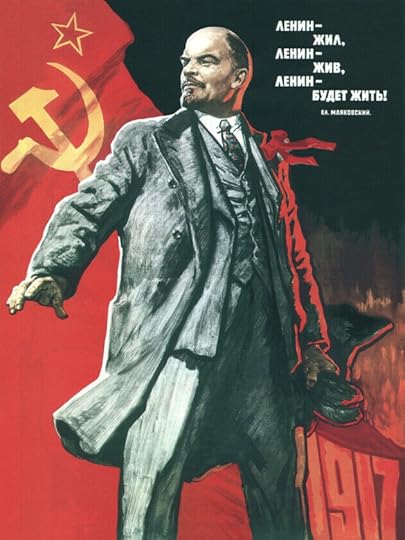
to

I could a tale unfold whose lightest word would harrow up thy soul, freeze thy young blood, make thy two eyes like stars start from their spheres, thy knotted and combined locks to part, and each particular hair to stand on end.
And it does. We know the road to hell is paved with good intentions. All the show trials, the tortures, the gulags, the democratic centralism, the dictatorship of the proletariat, the guiding hand of the party, the suffocation of millions which came after the liquidation of millions, the fake elections, the imprisonment of populations, all of it done with the best of, the purest intentions. Which was : to elevate human society to a state where all live together in perfect harmony, all are brothers and sisters, all share the world’s treasure in common – imagine there’s no countries, nothing to kill or die for, no greed or hunger, and no religion too. You may say I’m dangerously deluded, but I’m not the only one.
Communists aren’t alone in their willingness to use horrific methods to achieve a great and goodly end – the Christian church did that too, throughout all the rolling centuries, and still does, as we may see from the recent child abuse coverup scandal in the Church of England. It is so easy to think that it is better to overlook the suffering of a handful of children so that the people don’t begin to lose their faith in the church.
And when you have the entire capitalist world actively plotting to destroy you, it is so easy to become paranoid and see saboteurs and wreckers and spies everywhere. Eggs, omelettes.
This is an excellent book, highly recommended. Professor Brown is methodical and neutral in his stately chronological progress through the drama of the 20th century. Yes, this can get eyewateringly detailed at times – for every shocking gripping section on “The Cultural Revolution” there is a less dynamic one on “Transformational Leadership and Institutional Power” but it goes with the territory, the Communists loved to be violent and dull at the same time.
The coup against Gorbachev and the aftermath was, even as narrated by Prof Brown, really confusing. Then I realised that everyone involved in it was completely confused too. So it made sense!
****
To summarise :
From
to

March 1, 2017
The Rise and Fall of Communism by Archie Brown, is an in depth look at the history of communism as a form of political organization in the 20th century. The book begins with an examination of early communism, looking at radical Christian groups and theories of common ownership, for example. The Manifesto of Karl Marx and Friedrich Engels is then examined in detail, focusing on systems of organization, the "dictatorship of the proletariat", and the focus on socialist development and human welfare. Marx took a scientific approach to political theory, closely examining systems of collective production and ownership, as well as political economics as the main forces behind political change and the eventual evolution of political systems from Capitalist, to Socialist, to a Communist utopia.
The way communist states in the 20th century adapted Marx's theories, however, were not necessarily consistent with the source work, and adapted new systems to fill in the gaps that Marx missed. The distribution of power, an important part of any political system, is vague in Marx's work. The proletariat should take power, but the organization of such a system... well that one is a bit fuzzy. So when the first communist state in the world, the USSR in Russia and Central Asia, became a state, Marx's theories were liberally applied and adapted by politicians such as Vladimir Lenin, and Josef Stalin after him, to centralize power in the ruling communist party (or in Stalin's case, centralize power to himself). The USSR initially sought to utilize a system of "soviets" which were localized or national level committees of workers/citizens. Elections were supposed to determine who sat on the council. This democratic system of rule did not really take off, and instead, most of the power in the state was centralized in the ruling communist party, with the leading role being given either to the established leader (ie. Stalin as the Generalissimo), or to the First Secretary. The Politburo was the main meeting place for communist officials across the USSR, and the Presidium encompassed many politicians both in the Politburo, and within other organizations and committees.
This system was mirrored in Eastern Europe, especially in the countries the USSR helped liberate from Germany in WWII. The Soviet sphere post WWII included East Germany, Poland, Romania, Bulgaria and Hungary - all of which the USSR had set up communist governments within after WWII. Czechoslovakia joined the eastern bloc as well, although their communist party was elected locally, and shut down the nations democratic system to engage in Soviet style central planning. Yugoslavia and Albania both turned into communist states as well, but both systems set up their communist systems utilizing local support, with little Soviet interference. It is no surprise then that these two nations broke with the USSR and sought to develop their own systems outside the Soviet sphere of influence.
Asia also saw a number of communist states arise, including China, where the CCP defeated the Nationalist government and took power in 1949. China was initially closely aligned to the USSR, and Mao Zedong built a similar system of political organization in China. However, fundamental geopolitical and ideological differences led to the Sino-Soviet split, where Mao developed his own cult of personality, derided Nikita Khrushchev for his famous anti-Stalin speech, and sought closer ties to the United States as a result. Mao led brutal reform attempts like the Great Leap Forward, which caused millions of deaths due to starvation, or the Cultural Revolution, which saw gangs of communist youth attack reformers inside the CCP itself. These actions, Brown posits, may have led China to more quickly embrace reform after Mao's death as a form of political reaction. Figures like Deng Xiaoping sought to embrace slow economic and social reform, while maintaining a strong central government. This is the form China largely takes today, as one of the worlds remaining communist states.
Vietnam, North Korea and Laos are also examined. Vietnam's communists came to power as an anti-Imperialist force, fighting off first the French and then the United States. They succeeded in uniting North and South Vietnam, and created a system closely modeled on both China and the USSR. Vietnam's relationship with China was and remains rocky, with the two even fighting a small war at one point. Vietnam, however, also embraced a Chinese-style slow reform effort, and continues to do so today. North Korea was much different. The state itself was largely propped up by Soviet and Chinese assistance, and the Kim family has taken power in a dynastic way. Power is centralized within the body of the Supreme Leader, and little political opposition is allowed. Economic and social reforms are stagnant, and famine and economic hardship have been the norm in North Korea, as the government prioritizes funding the army over anything else, in order to maintain its grip on power in the face of a hostile South Korea. Laos is different still. The Laotian communists took power relatively bloodlessly (compared, at least, to most of the others). Laotian communists were inspired and supported by Vietnam, but remain isolationist in modern times. The US attempted to stop the Laotian communists taking power, but as with Vietnam, were unsuccessful.
Brown also examines states that have either been communist in the past (Cambodia, for example), or had strong communist influences, like Nepal and Indonesia. Cambodia's communists - the Khmer Rouge, took power in a brutal fashion, executing millions of citizens in urban centres. Cambodia's communists were unusually rural in fashion, and brutally extreme. Ironically, neighbouring Vietnam eventually invaded and overthrew the Khmer Rouge regime, installing a more moderate communist system in the nation (which was criticized, also ironically, by the United States and China, but supported by the Soviets). Nepal's communists fought a brutal guerilla war with the Nepali monarchy to try and establish a Maoist system, but were unsuccessful in taking full power. They eventually found success as a political party in a democratic Nepal, and are one of the more successful parties in the nation. Indonesia also had communist rebels to contend with, but under the dictator Sukarno, communist collectivism and central planning flourished. Sukarno however, was overthrown by another right wing dictator, Suharto, who initiated a massacre of communists in mass killings in the late 1960's. Communists have also found success in India, being popular political parties in regional election up to the present in two Indian states.
Brown also goes into detail on Cuba. Cuba under Fidel Castro is an interesting nation, at first not even espousing Marxist ideology, but eventually becoming a communist state after a few years in power. Cuba is famous as the little Communist nation off the coast of the ideologically opposite United States. Cuba was the centre of the missile crisis which was close to ending in nuclear war between the USSR and the USA. However, Cuba has had a complex relationship with the Soviets. Although they were heavily reliant on Soviet arms and aid throughout their history, they also explored their own independent path forward, even sending troops to Ethiopia and Angola to support Communist rebels in those nations. Cuba was and is still a large provider of medical aid to third world nations as well. However, the Cuban regime has been fairly repressive, and closely mirrored the Soviet system of political control. Their isolation due to a long standing embargo by the US has increased their isolation, and possibly cemented their political system, and they remain one of the few states still communist by definition.
Brown has done an excellent job chronicling the history of Communism. He examines the system nation by nation (as briefed above), and details the similarities and differences between communist systems throughout the world. He also goes in depth on the political changes that occurred in communist states worldwide, with a clear focus on the Soviet and Eastern European systems. Brown pulls aside the Iron Curtain moniker in exchange for a frank examination of the motivations of communist parties and leaders (mostly political power), and looks at the fractures within the communist bloc (ie. internal Soviet disputes, the invasion of Hungary, the Prague Spring, Sino-Soviet split etc.). This in depth analysis as a lot of interesting tidbits to offer on the way communist systems developed, stagnated and fell. Brown also looks at the clear differences between pure Marxist ideology, and the political reality of running a nation-state. These differences led to real world issues that could not be solved through the examination of Marxist theory, and instead required strong political will, reformation and evolution, and often, violence and brutality. I have briefly looked at communism around the world above, but Brown's book offers greater depth on many more subjects too vast to review here. Suffice to say, this was a fascinating book that should be of interest to anyone who enjoys reading about politics, or wishes for a deeper insight on the 20th centuries communist systems.
The way communist states in the 20th century adapted Marx's theories, however, were not necessarily consistent with the source work, and adapted new systems to fill in the gaps that Marx missed. The distribution of power, an important part of any political system, is vague in Marx's work. The proletariat should take power, but the organization of such a system... well that one is a bit fuzzy. So when the first communist state in the world, the USSR in Russia and Central Asia, became a state, Marx's theories were liberally applied and adapted by politicians such as Vladimir Lenin, and Josef Stalin after him, to centralize power in the ruling communist party (or in Stalin's case, centralize power to himself). The USSR initially sought to utilize a system of "soviets" which were localized or national level committees of workers/citizens. Elections were supposed to determine who sat on the council. This democratic system of rule did not really take off, and instead, most of the power in the state was centralized in the ruling communist party, with the leading role being given either to the established leader (ie. Stalin as the Generalissimo), or to the First Secretary. The Politburo was the main meeting place for communist officials across the USSR, and the Presidium encompassed many politicians both in the Politburo, and within other organizations and committees.
This system was mirrored in Eastern Europe, especially in the countries the USSR helped liberate from Germany in WWII. The Soviet sphere post WWII included East Germany, Poland, Romania, Bulgaria and Hungary - all of which the USSR had set up communist governments within after WWII. Czechoslovakia joined the eastern bloc as well, although their communist party was elected locally, and shut down the nations democratic system to engage in Soviet style central planning. Yugoslavia and Albania both turned into communist states as well, but both systems set up their communist systems utilizing local support, with little Soviet interference. It is no surprise then that these two nations broke with the USSR and sought to develop their own systems outside the Soviet sphere of influence.
Asia also saw a number of communist states arise, including China, where the CCP defeated the Nationalist government and took power in 1949. China was initially closely aligned to the USSR, and Mao Zedong built a similar system of political organization in China. However, fundamental geopolitical and ideological differences led to the Sino-Soviet split, where Mao developed his own cult of personality, derided Nikita Khrushchev for his famous anti-Stalin speech, and sought closer ties to the United States as a result. Mao led brutal reform attempts like the Great Leap Forward, which caused millions of deaths due to starvation, or the Cultural Revolution, which saw gangs of communist youth attack reformers inside the CCP itself. These actions, Brown posits, may have led China to more quickly embrace reform after Mao's death as a form of political reaction. Figures like Deng Xiaoping sought to embrace slow economic and social reform, while maintaining a strong central government. This is the form China largely takes today, as one of the worlds remaining communist states.
Vietnam, North Korea and Laos are also examined. Vietnam's communists came to power as an anti-Imperialist force, fighting off first the French and then the United States. They succeeded in uniting North and South Vietnam, and created a system closely modeled on both China and the USSR. Vietnam's relationship with China was and remains rocky, with the two even fighting a small war at one point. Vietnam, however, also embraced a Chinese-style slow reform effort, and continues to do so today. North Korea was much different. The state itself was largely propped up by Soviet and Chinese assistance, and the Kim family has taken power in a dynastic way. Power is centralized within the body of the Supreme Leader, and little political opposition is allowed. Economic and social reforms are stagnant, and famine and economic hardship have been the norm in North Korea, as the government prioritizes funding the army over anything else, in order to maintain its grip on power in the face of a hostile South Korea. Laos is different still. The Laotian communists took power relatively bloodlessly (compared, at least, to most of the others). Laotian communists were inspired and supported by Vietnam, but remain isolationist in modern times. The US attempted to stop the Laotian communists taking power, but as with Vietnam, were unsuccessful.
Brown also examines states that have either been communist in the past (Cambodia, for example), or had strong communist influences, like Nepal and Indonesia. Cambodia's communists - the Khmer Rouge, took power in a brutal fashion, executing millions of citizens in urban centres. Cambodia's communists were unusually rural in fashion, and brutally extreme. Ironically, neighbouring Vietnam eventually invaded and overthrew the Khmer Rouge regime, installing a more moderate communist system in the nation (which was criticized, also ironically, by the United States and China, but supported by the Soviets). Nepal's communists fought a brutal guerilla war with the Nepali monarchy to try and establish a Maoist system, but were unsuccessful in taking full power. They eventually found success as a political party in a democratic Nepal, and are one of the more successful parties in the nation. Indonesia also had communist rebels to contend with, but under the dictator Sukarno, communist collectivism and central planning flourished. Sukarno however, was overthrown by another right wing dictator, Suharto, who initiated a massacre of communists in mass killings in the late 1960's. Communists have also found success in India, being popular political parties in regional election up to the present in two Indian states.
Brown also goes into detail on Cuba. Cuba under Fidel Castro is an interesting nation, at first not even espousing Marxist ideology, but eventually becoming a communist state after a few years in power. Cuba is famous as the little Communist nation off the coast of the ideologically opposite United States. Cuba was the centre of the missile crisis which was close to ending in nuclear war between the USSR and the USA. However, Cuba has had a complex relationship with the Soviets. Although they were heavily reliant on Soviet arms and aid throughout their history, they also explored their own independent path forward, even sending troops to Ethiopia and Angola to support Communist rebels in those nations. Cuba was and is still a large provider of medical aid to third world nations as well. However, the Cuban regime has been fairly repressive, and closely mirrored the Soviet system of political control. Their isolation due to a long standing embargo by the US has increased their isolation, and possibly cemented their political system, and they remain one of the few states still communist by definition.
Brown has done an excellent job chronicling the history of Communism. He examines the system nation by nation (as briefed above), and details the similarities and differences between communist systems throughout the world. He also goes in depth on the political changes that occurred in communist states worldwide, with a clear focus on the Soviet and Eastern European systems. Brown pulls aside the Iron Curtain moniker in exchange for a frank examination of the motivations of communist parties and leaders (mostly political power), and looks at the fractures within the communist bloc (ie. internal Soviet disputes, the invasion of Hungary, the Prague Spring, Sino-Soviet split etc.). This in depth analysis as a lot of interesting tidbits to offer on the way communist systems developed, stagnated and fell. Brown also looks at the clear differences between pure Marxist ideology, and the political reality of running a nation-state. These differences led to real world issues that could not be solved through the examination of Marxist theory, and instead required strong political will, reformation and evolution, and often, violence and brutality. I have briefly looked at communism around the world above, but Brown's book offers greater depth on many more subjects too vast to review here. Suffice to say, this was a fascinating book that should be of interest to anyone who enjoys reading about politics, or wishes for a deeper insight on the 20th centuries communist systems.

July 23, 2019
Page 148 (my book) Mao Zedong
“Power comes out of the barrel of a gun”
Page 105-06
The defining feature of a Communist system is the monopoly of power of the Communist Party.
Page 467 June 1977 response to Eurocommunism
“There is only one communism – if we speak of true, scientific communism – namely, that whose foundations were laid by Marx, Engels and Lenin, and whose principals are adhered to by the present-day communist movement.”
This is a superb and comprehensive book on communism. In the 60’s and 70’s when I was growing up communism was the antithesis to the Western World. It was the big bugaboo!! In university settings it exerted a strange pull on some of us. I remember listening to my shortwave radio and picking up Radio Havana Cuba who announced themselves as “broadcasting from the free territory of America”. OK!
So, we get the whole history (even some early Christianity cults) from Marx through to Mao and then Gorbachev. Sometimes the style borders on the scholarly, but the multitude of leaders and countries under communist sway makes the reading exhilarating.
We can see that Marxism-Leninism became a religious creed with an international appeal to many of its followers – one could say more so to those in non-communist countries. The ruling communists had to deal with a reality that went beyond the dialectics of class struggle.
Page 20
Marx had a strong capacity for wishful thinking and even the utopianism which he scorned in others.
A telling communist term is “dictatorship of the proletariat” which means something along the lines of the development of socialism to communism when the working classes find the perfect classless society and institutions become irrelevant in this workers utopia. Instead communist countries all became stuck in a form of dictatorship. Most of these became hierarchical, intolerant of any criticism (deviationists), and ruthless.
Page 345-46
Between 1976 and 1979, under Khmer Rouge rule, Cambodia slaughtered a higher proportion of its own citizens than any other Communist or fascist state in the twentieth century.
Many successfully established their own cults of “ism” – Leninism, Stalinism, Maoism (long Live the Thoughts of Chairman – Mao ZeDong Thought).
Interestingly it was Khrushchev who started the slow downfall of communism by exposing some of Stalin’s brutal ways. Khrushchev posed a question on the validity of communist ideology. (It should be noted that he brought to light only the senseless purging of party members by Stalin, not the millions who died from forced collectivization.)
Gorbachev had a strong moral center, and more than other communist leader, brought about the downfall of the Soviet Union and the end of the Cold War. He refused to use the military option, as Khrushchev had done in Hungary and Brezhnev in Czechoslovakia to hold the Warsaw Pact countries together.
China with Deng Xiaoping, too, transitioned from an isolated country to an economic global power. But, China, unlike the Soviet Union, kept intact the political dictatorial branch of the Communist Party.
As the author points out communism had some good aspects as in education and health-care. Most of the communist societies – China, the Soviet Union, Cuba, and the Eastern Bloc countries established educational systems far superior to those that existed prior to communist rule. Even in Afghanistan in the 1980’s the Soviet Union wanted education, gender equality, an end to forced marriage… issues that continue to plague this sad country.
Education did become a double-edged sword because it eventually led to an elite who began to question and learn of the world outside. In fact, Gorbachev spent a great deal of time outside the Soviet Union where he was able to observe first-hand how advanced Western countries were.
In a sense Communism self-destructed never being able to succeed in building Marx and Engel’s perfect classless society. This book gives us a first-rate history of that failed struggle.
Page 111 Gorbachev joke
A certain lecturer, speaking about future communist society, concluded with the following remarks, “The breaking day of communism is already visible, gleaming just over the horizon.” At this point a peasant sitting in the front row stood up and asked, “Comrade Lecturer, what is horizon?” The lecturer explained that it is a line where the earth and the sky seem to meet, having the unique characteristic that the more you move toward it, the more it moves away. The old peasant responded: “Thank-you, Comrade Lecturer. Now everything is quite clear.”
“Power comes out of the barrel of a gun”
Page 105-06
The defining feature of a Communist system is the monopoly of power of the Communist Party.
Page 467 June 1977 response to Eurocommunism
“There is only one communism – if we speak of true, scientific communism – namely, that whose foundations were laid by Marx, Engels and Lenin, and whose principals are adhered to by the present-day communist movement.”
This is a superb and comprehensive book on communism. In the 60’s and 70’s when I was growing up communism was the antithesis to the Western World. It was the big bugaboo!! In university settings it exerted a strange pull on some of us. I remember listening to my shortwave radio and picking up Radio Havana Cuba who announced themselves as “broadcasting from the free territory of America”. OK!
So, we get the whole history (even some early Christianity cults) from Marx through to Mao and then Gorbachev. Sometimes the style borders on the scholarly, but the multitude of leaders and countries under communist sway makes the reading exhilarating.
We can see that Marxism-Leninism became a religious creed with an international appeal to many of its followers – one could say more so to those in non-communist countries. The ruling communists had to deal with a reality that went beyond the dialectics of class struggle.
Page 20
Marx had a strong capacity for wishful thinking and even the utopianism which he scorned in others.
A telling communist term is “dictatorship of the proletariat” which means something along the lines of the development of socialism to communism when the working classes find the perfect classless society and institutions become irrelevant in this workers utopia. Instead communist countries all became stuck in a form of dictatorship. Most of these became hierarchical, intolerant of any criticism (deviationists), and ruthless.
Page 345-46
Between 1976 and 1979, under Khmer Rouge rule, Cambodia slaughtered a higher proportion of its own citizens than any other Communist or fascist state in the twentieth century.
Many successfully established their own cults of “ism” – Leninism, Stalinism, Maoism (long Live the Thoughts of Chairman – Mao ZeDong Thought).
Interestingly it was Khrushchev who started the slow downfall of communism by exposing some of Stalin’s brutal ways. Khrushchev posed a question on the validity of communist ideology. (It should be noted that he brought to light only the senseless purging of party members by Stalin, not the millions who died from forced collectivization.)
Gorbachev had a strong moral center, and more than other communist leader, brought about the downfall of the Soviet Union and the end of the Cold War. He refused to use the military option, as Khrushchev had done in Hungary and Brezhnev in Czechoslovakia to hold the Warsaw Pact countries together.
China with Deng Xiaoping, too, transitioned from an isolated country to an economic global power. But, China, unlike the Soviet Union, kept intact the political dictatorial branch of the Communist Party.
As the author points out communism had some good aspects as in education and health-care. Most of the communist societies – China, the Soviet Union, Cuba, and the Eastern Bloc countries established educational systems far superior to those that existed prior to communist rule. Even in Afghanistan in the 1980’s the Soviet Union wanted education, gender equality, an end to forced marriage… issues that continue to plague this sad country.
Education did become a double-edged sword because it eventually led to an elite who began to question and learn of the world outside. In fact, Gorbachev spent a great deal of time outside the Soviet Union where he was able to observe first-hand how advanced Western countries were.
In a sense Communism self-destructed never being able to succeed in building Marx and Engel’s perfect classless society. This book gives us a first-rate history of that failed struggle.
Page 111 Gorbachev joke
A certain lecturer, speaking about future communist society, concluded with the following remarks, “The breaking day of communism is already visible, gleaming just over the horizon.” At this point a peasant sitting in the front row stood up and asked, “Comrade Lecturer, what is horizon?” The lecturer explained that it is a line where the earth and the sky seem to meet, having the unique characteristic that the more you move toward it, the more it moves away. The old peasant responded: “Thank-you, Comrade Lecturer. Now everything is quite clear.”

April 23, 2012
Roughly the first third of the book reads like the standard conservative interpretation of communism. 'Communism: The Early Years" is what that section should be called. I found this part fairly ho-hum. I was settling in for fairly well written but 'seen it all before' read.
Then it happened.
Brown starts to quote Soviet era archival sources. From this point the story of communism becomes interesting. We have human players representing societal interests who interact with each other. In other words we have politics.
Brown hits his straps with the Khrushchev era. This is when he can show that the USSR had real politics. Could you attack Stalin without the whole edifice coming down? Could the USSR evolve into a normal (well not totalitarian) country? The most surprising thing is the role of internal party reformists. Their role was crucial in the Czech Spring of 1968 and of the Gorbachev years. The party was not some undifferentiated mass that the leadership used as political cannon fodder.
His conclusions
For an academic like Archie Brown who has burrowed away at the hard scrabble mine of his professional subject, only being able to come up with the occasional nugget, to then have the mother load of the vast and, dare I say it meticulously maintained, Soviet era archives would be like a dream come true. With this new material he has capped off a life times study.
In a political discussion back in the early 80's with an old ex-com friend of mine about what the Soviet archives would contain I said that they would have well and truly beeen cleansed of all the incriminating evidence. My friend Peter Cook was right though when he said "Dear boy they are communists. They would keep everything...absolutely everything. "
Then it happened.
Brown starts to quote Soviet era archival sources. From this point the story of communism becomes interesting. We have human players representing societal interests who interact with each other. In other words we have politics.
Brown hits his straps with the Khrushchev era. This is when he can show that the USSR had real politics. Could you attack Stalin without the whole edifice coming down? Could the USSR evolve into a normal (well not totalitarian) country? The most surprising thing is the role of internal party reformists. Their role was crucial in the Czech Spring of 1968 and of the Gorbachev years. The party was not some undifferentiated mass that the leadership used as political cannon fodder.
His conclusions
For an academic like Archie Brown who has burrowed away at the hard scrabble mine of his professional subject, only being able to come up with the occasional nugget, to then have the mother load of the vast and, dare I say it meticulously maintained, Soviet era archives would be like a dream come true. With this new material he has capped off a life times study.
In a political discussion back in the early 80's with an old ex-com friend of mine about what the Soviet archives would contain I said that they would have well and truly beeen cleansed of all the incriminating evidence. My friend Peter Cook was right though when he said "Dear boy they are communists. They would keep everything...absolutely everything. "

April 28, 2014
I only read the first few chapters, dealing with the origins of communism (surprise: read Acts of the Apostles 4:32) and its history in the 1920s and early 1930s.
I am trying to understand the oft-stated argument that the Catholic Church's support and tolerance of Hitler and his agenda was primarily driven by a fear of international communism and the positioning of Hitler as an ally of the Church in the fight against it.
Here are Brown's points relevant to my question ...
*** the post-war period from 1917 to 1920 was indeed fraught with the threat and reality of communist-led insurrection throughout large swaths of Europe and Russia
*** in Germany, the radical communists (led by Karl Liebknecht & Roza Luxemburg) split from the German Social Democratic Party (SPD) ... revolutionary uprisings took place in different parts of Germany in November 1918 … these were brutally suppressed by the socialist-led government, supported by paramilitary groups … Liebknecht & Luxemburg were murdered on Jan 15, 1919 ... unrest continued through April 1919, when a Soviet republic was established in Bavaria
*** the Bavarian Soviet Republic was soon suppressed and by 1923 it was evident that Communists were not about to come to power in any European country apart from the Soviet Union.
RELEVANCE TO MY NOVEL ...
So why was the threat of Communism so overwhelming that it drove the Vatican into Hitler's hands? The facts about the actual Communist threat don't seem to support it.
It could be argued that the Church's perception of the communist threat in 1932-33 was related to Pacelli's experience in Munich in 1917-1920, when as the newly appointed Papal Nuncio he saw first-hand the terror in the streets and had no idea where it might stop. But ... Pacelli stayed in Germany through 1929 and he knew full well that the German Communist Party had no chance of ever coming to power. This reason has no resonance with me.
So what was the real reason? Consider the following POSSIBLE SCENARIO ...
1. Hitler of course knew that the Communist party in Germany was a paper tiger, but he exaggerated its strength so he would have targets for his SA thugs to attack and for Goebbels to direct propaganda against. In other words, Hitler was using the over-stated threat of the Communists to frighten people into seeing the Nazis as the lesser of two evils. This tactic succeeded very well.
2. One of the Church's main goals in the 1920s and early 1930s was the execution of a Reich Concordat, but Pacelli had come to understand that this could never happen so long as Germany remained a democracy. An agreement between Germany and the Vatican just did not have the votes in the Reichstag.
3. To get the Concordat, the Church needed Hitler to be Chancellor with dictatorial powers, thus eliminating the representative Reichstag as a factor.
4. The Church's series of actions in 1932-33 helped Hitler become Chancellor and then, by means of the Enabling Act, become an absolute dictator. For this to happen, the Vatican pressured the Center Party, over the objections of the German bishops who understood the implications of a Hitler regime and who communicated their fears to the Vatican.
5. Under this pressure from the Vatican, the Catholic Center Party (a) refused to make a collaborative relationship with the Socialist Party and others that could have denied Hitler the Chancellorship, and then (b) cast its votes in favor of the Enabling Act which made him a dictator, an act which could not have passed without those votes.
The Church thus accomplished both of the prerequisites to a Reich Concordat ... while paying no attention whatever to the consequences of Nazi violence and terror which it had been fully advised would ensue. The dissolution of the Center Party and the establishment of one-party rule in Germany soon followed.
Where do the Communists fit in all this?
The Church repeatedly articulated a fear of Communism and positioned Hitler as the Vatican's ally in the struggle to keep communism from taking over in Germany (something that probably had no chance to happen with or without Hitler). By exaggerating the threat of Communism, the Church thus justified an alliance with Hitler which it traded to achieve the elusive Reich Concordat. In other words, the Church, like Hitler, was using the threat of the Communists to frighten people into seeing the Nazis as the lesser of two evils. (Why did the Vatican so desperately want the Reich Concordat? A topic for another review.)
Did this scenario actually happen? Is there sufficient evidence to support it?
There is some, but the complete answer, to prove the scenario or refute it, to unequivocally explain why the Church helped bring Hitler to power, may never be known. It's a good bet, however, that some of the relevant materials are still locked in Vatican vaults.
I am trying to understand the oft-stated argument that the Catholic Church's support and tolerance of Hitler and his agenda was primarily driven by a fear of international communism and the positioning of Hitler as an ally of the Church in the fight against it.
Here are Brown's points relevant to my question ...
*** the post-war period from 1917 to 1920 was indeed fraught with the threat and reality of communist-led insurrection throughout large swaths of Europe and Russia
*** in Germany, the radical communists (led by Karl Liebknecht & Roza Luxemburg) split from the German Social Democratic Party (SPD) ... revolutionary uprisings took place in different parts of Germany in November 1918 … these were brutally suppressed by the socialist-led government, supported by paramilitary groups … Liebknecht & Luxemburg were murdered on Jan 15, 1919 ... unrest continued through April 1919, when a Soviet republic was established in Bavaria
*** the Bavarian Soviet Republic was soon suppressed and by 1923 it was evident that Communists were not about to come to power in any European country apart from the Soviet Union.
RELEVANCE TO MY NOVEL ...
So why was the threat of Communism so overwhelming that it drove the Vatican into Hitler's hands? The facts about the actual Communist threat don't seem to support it.
It could be argued that the Church's perception of the communist threat in 1932-33 was related to Pacelli's experience in Munich in 1917-1920, when as the newly appointed Papal Nuncio he saw first-hand the terror in the streets and had no idea where it might stop. But ... Pacelli stayed in Germany through 1929 and he knew full well that the German Communist Party had no chance of ever coming to power. This reason has no resonance with me.
So what was the real reason? Consider the following POSSIBLE SCENARIO ...
1. Hitler of course knew that the Communist party in Germany was a paper tiger, but he exaggerated its strength so he would have targets for his SA thugs to attack and for Goebbels to direct propaganda against. In other words, Hitler was using the over-stated threat of the Communists to frighten people into seeing the Nazis as the lesser of two evils. This tactic succeeded very well.
2. One of the Church's main goals in the 1920s and early 1930s was the execution of a Reich Concordat, but Pacelli had come to understand that this could never happen so long as Germany remained a democracy. An agreement between Germany and the Vatican just did not have the votes in the Reichstag.
3. To get the Concordat, the Church needed Hitler to be Chancellor with dictatorial powers, thus eliminating the representative Reichstag as a factor.
4. The Church's series of actions in 1932-33 helped Hitler become Chancellor and then, by means of the Enabling Act, become an absolute dictator. For this to happen, the Vatican pressured the Center Party, over the objections of the German bishops who understood the implications of a Hitler regime and who communicated their fears to the Vatican.
5. Under this pressure from the Vatican, the Catholic Center Party (a) refused to make a collaborative relationship with the Socialist Party and others that could have denied Hitler the Chancellorship, and then (b) cast its votes in favor of the Enabling Act which made him a dictator, an act which could not have passed without those votes.
The Church thus accomplished both of the prerequisites to a Reich Concordat ... while paying no attention whatever to the consequences of Nazi violence and terror which it had been fully advised would ensue. The dissolution of the Center Party and the establishment of one-party rule in Germany soon followed.
Where do the Communists fit in all this?
The Church repeatedly articulated a fear of Communism and positioned Hitler as the Vatican's ally in the struggle to keep communism from taking over in Germany (something that probably had no chance to happen with or without Hitler). By exaggerating the threat of Communism, the Church thus justified an alliance with Hitler which it traded to achieve the elusive Reich Concordat. In other words, the Church, like Hitler, was using the threat of the Communists to frighten people into seeing the Nazis as the lesser of two evils. (Why did the Vatican so desperately want the Reich Concordat? A topic for another review.)
Did this scenario actually happen? Is there sufficient evidence to support it?
There is some, but the complete answer, to prove the scenario or refute it, to unequivocally explain why the Church helped bring Hitler to power, may never be known. It's a good bet, however, that some of the relevant materials are still locked in Vatican vaults.

April 13, 2020
My co-instructor and I selected this book for our Communism in History course this year; while the coronavirus pandemic derailed most of our plans starting at spring break, I still worked through the book, looking for things to assign our students. It's really a solid history; not nearly as engaged with the ideas of communism (or socialism or anarchism, etc.) as I would have liked, and that failure I think sometimes limits its ability to fully engage the topic--but then, as someone sympathetic to radical politics, my measure of what counts as engagement is obviously different than that of someone who looks at any kind of collectivism as fundamentally suspicious. However, as a history of "Communism" as opposed to "communism"--that is, as a history of the parties, movements, and individuals who involved themselves with, fought over, established, and in some cases led to the downfall of regimes that identified themselves as communist, whether or not they actually adhered to socialism as an ideal--Brown is a wonderful guide. It's a very Eurocentric history, and that's arguably a justifiable approach; since the "Communism" that Brown is focused on is the ideology which Lenin drew out of Marx and which was established through the Russian Revolution as the Union of Soviet Socialist Republics, and from there inspired (or warped) the development of radical, anti-capitalist, and labor party politics all around the world, it makes sense to continuely look back to the USSR and all those arguments which took shape in the late 19th and early 20th-century European world. It does mean, though, that his treatment of Communism in China, Vietnam, Cuba, Angola, or elsewhere in the world is arguably less than complete. Still, as someone who is by no means an expert on this specifics of these movements and parties, etc., I learned a great deal from the book, and I'm appreciative of it.

April 18, 2020
This has been on my to-read shelf for years and I'm glad I finally got to it. I appreciate how it was super accessible to those without a poli-sci background (aka, me). Each chapter is detailed and thorough but not overwhelmingly so. The book is well organized and structured, and Brown's writing actually had me laugh out loud a few times (which was completely unexpected). Overall, an excellent overview, and I definitely recommend to anyone who is interested in learning more about the overall history of communism.

January 2, 2017
A very informative (at times too much) and interesting work. For most of the time I was really quite hooked. The only downside was that probably too much information is given even when there is no justification. But its natural that this happenes due to the scope of events that shaped communism and eventually led to its downfall.

September 22, 2024
This is a decent, albeit dry, historical account of the rise of Communism starting with the Bolshevik Revolution and proceeding through Stalinism, the Khrushchev thaw, the fundamental changes within the USSR until it's eventual fall. Brown also very much explores every other communist state including Vietnam, Laos, China, Cuba, Czech Republic, North Korea and others. This is a mostly disimpassioned accounting but of course it is a chiefly Western perspective. I don't believe the facts found in these pages can be refuted but one can certainly can and should question the narrative perspective that the author takes in a book like this.

January 7, 2013
Considering the topic, I didn't think a good overview of Communism could be done in just over 600 pages (discounting the bibliography, which alone is about 100 pages). Archie Brown proved my assumption very wrong. This book was a good overview of all of international Communism, though it may have missed a bit of Latin American's pseudo-socialist/Communist states, but it can be forgiven since the focus of the book was on outright Communism with the capital "C." Without getting caught in the trap of providing too much depth and not enough breadth, the book went right to the salient points and summarized them, creating a broad, sweeping picture of Communism's rise and fall in the twentieth century.
Eminently readable, cogent, and highly recommended for anyone wanting to understand the basics of Communism.
Eminently readable, cogent, and highly recommended for anyone wanting to understand the basics of Communism.

March 26, 2019
For most of the 20th century Communism was the great antagonist of the Western World, and even during the forced marriage of convenience against Nazism both sides knew it was only a temporary truce. It did not take long after the defeat of Germany for the Iron Curtain to come ringing down.
Those of a certain age remember it as the great bogey-man of the times, denounced from pulpit, classroom, boy scout camp, and dinner table with an apocalyptic fervor usually reserved for the devil and his angels. It was the implacable enemy of The American Way of Life, irredeemably dastardly and utterly evil. It was the perfect counterpoise to our humble, honest, pious, virtuous democracy, and against which we must be ever on our guard.
It was only when I reached the age when I started to question all of the received wisdom of my youth that I paused to wonder why Communism was so hated and feared. My childhood memories of it were long on revulsion and short on facts. The only explanation I can ever remember receiving was from a social studies teacher who told us that the Communists wanted to take our stuff and give it to their own kids. That’s a good way to to make a fervent anti-Communist out of a sixth grader.
The situation was, of course, far more complicated than that. I am no apologist for Communism, but I respect what it aspired to be, a stirring vision of a better future for all people, just, humane, and free, at a time when rising inequality and wage slavery ground down the vast majority of mankind. This ideal led it to attract many of the best and the brightest, generations of educated, dedicated, compassionate followers.
In the end Communism was betrayed by its leaders in the name of pragmatism and short term goals, and went down a dark path of repression, violence, and xenophobia from which it never recovered; it well deserved to be cast onto the rubbish heap of history, but to say that it was unregenerate, 100% evil is as much an oversimplification as to say that democracy is 100% good. The stratified societies it replaced had allowed little social mobility, and many farmers and workers lived no better than their ancestors of hundreds of years before. Smart and ambitious men and women suddenly found new opportunities, and even the poor benefited from access to education and healthcare. Communism may have been a disaster for the nobles and for much of the bourgeoisie, but many people from the lower classes embraced it wholeheartedly and supported it long after its leaders began showing their true natures.
This book is about Communism as it was practiced, what it did rather than what it said it was doing or claimed it would do eventually. For a look at its historical and theoretical underpinnings, an excellent source is Edmund Wilson’s magnum opus, To The Finland Station.
Most of the book is devoted to the Soviet Union and Eastern Europe, although there are chapters on China, Southeast Asia, and everywhere else the great experiment was tried, even as far away as Nepal. It also looks at the Communist parties of Western Europe as they moved from lockstep agreement with the Soviet Union to wary disengagement as the terror and repression of the Russians became known, and as the promised land of communism receded ever farther into the distant future.
It is said that up through the time of Khrushchev there were still Communists in the Communist Party, people who believed that they were working toward a bright shining classless society. With Brezhnev, however, came obvious and endemic corruption, and the careerism that comes from people who know they need fear no large scale changes in society anytime soon. From that point on they mouthed the words, and made sure everyone else did too, but it had just become totalitarianism with a fancy ideology, like China today. Unlike China, they could not break with the basic precepts of Communist theory and become capitalists in all but name, so their society fell further and further behind the West, and dissatisfaction grew at all levels. By the time Gorbachev arrived on the scene the situation was desperate, and his attempts to crack open the door to market reforms only caused the whole rotten edifice to collapse.
The book is particularly good at examining the inner workings of the Politburo and the post-Stalin struggles between reformers and conservatives, especially in their handling of the political crises in East Germany, Hungary, Czechoslovakia, and Poland, and in their relations with the irritatingly independent Yugoslavia and Albania. Questions about what might have been hang heavy over the book. What would have happened if they had compromised with the Hungarian and Czech reformers, or eased off on the dead hand of repression controlling the workers in East Germany and Poland? Their fear, of course, was that any cracks in the Soviet-style monoliths might spread and – oh horrors! – freedom and democracy might break out.
Okay, so that’s how it looks to us in the West. They saw it as an opening for chaos in a system that they knew was already dangerously fragile, imposed on top of an increasingly discontented populace. They had become men with a tiger by the tail, terrified that they would be devoured if they loosened their grip.
This book does an excellent job explaining how Communism stayed in power for so long. There is an interesting observation that one of the reasons for its longevity may have been the opposition it faced. They could hold up Capitalism as an existential threat and use the fear of it to prop up their tottering system. Perhaps if the West had treated it as the unsustainable historical absurdity it was rather than as an implacable enemy it might have faded away sooner, but that scenario misses the point that many in the West made successful careers pushing the idea that there were Communists behind every bush. They needed Communism as much as Communism needed them.
Those of a certain age remember it as the great bogey-man of the times, denounced from pulpit, classroom, boy scout camp, and dinner table with an apocalyptic fervor usually reserved for the devil and his angels. It was the implacable enemy of The American Way of Life, irredeemably dastardly and utterly evil. It was the perfect counterpoise to our humble, honest, pious, virtuous democracy, and against which we must be ever on our guard.
It was only when I reached the age when I started to question all of the received wisdom of my youth that I paused to wonder why Communism was so hated and feared. My childhood memories of it were long on revulsion and short on facts. The only explanation I can ever remember receiving was from a social studies teacher who told us that the Communists wanted to take our stuff and give it to their own kids. That’s a good way to to make a fervent anti-Communist out of a sixth grader.
The situation was, of course, far more complicated than that. I am no apologist for Communism, but I respect what it aspired to be, a stirring vision of a better future for all people, just, humane, and free, at a time when rising inequality and wage slavery ground down the vast majority of mankind. This ideal led it to attract many of the best and the brightest, generations of educated, dedicated, compassionate followers.
In the end Communism was betrayed by its leaders in the name of pragmatism and short term goals, and went down a dark path of repression, violence, and xenophobia from which it never recovered; it well deserved to be cast onto the rubbish heap of history, but to say that it was unregenerate, 100% evil is as much an oversimplification as to say that democracy is 100% good. The stratified societies it replaced had allowed little social mobility, and many farmers and workers lived no better than their ancestors of hundreds of years before. Smart and ambitious men and women suddenly found new opportunities, and even the poor benefited from access to education and healthcare. Communism may have been a disaster for the nobles and for much of the bourgeoisie, but many people from the lower classes embraced it wholeheartedly and supported it long after its leaders began showing their true natures.
This book is about Communism as it was practiced, what it did rather than what it said it was doing or claimed it would do eventually. For a look at its historical and theoretical underpinnings, an excellent source is Edmund Wilson’s magnum opus, To The Finland Station.
Most of the book is devoted to the Soviet Union and Eastern Europe, although there are chapters on China, Southeast Asia, and everywhere else the great experiment was tried, even as far away as Nepal. It also looks at the Communist parties of Western Europe as they moved from lockstep agreement with the Soviet Union to wary disengagement as the terror and repression of the Russians became known, and as the promised land of communism receded ever farther into the distant future.
It is said that up through the time of Khrushchev there were still Communists in the Communist Party, people who believed that they were working toward a bright shining classless society. With Brezhnev, however, came obvious and endemic corruption, and the careerism that comes from people who know they need fear no large scale changes in society anytime soon. From that point on they mouthed the words, and made sure everyone else did too, but it had just become totalitarianism with a fancy ideology, like China today. Unlike China, they could not break with the basic precepts of Communist theory and become capitalists in all but name, so their society fell further and further behind the West, and dissatisfaction grew at all levels. By the time Gorbachev arrived on the scene the situation was desperate, and his attempts to crack open the door to market reforms only caused the whole rotten edifice to collapse.
The book is particularly good at examining the inner workings of the Politburo and the post-Stalin struggles between reformers and conservatives, especially in their handling of the political crises in East Germany, Hungary, Czechoslovakia, and Poland, and in their relations with the irritatingly independent Yugoslavia and Albania. Questions about what might have been hang heavy over the book. What would have happened if they had compromised with the Hungarian and Czech reformers, or eased off on the dead hand of repression controlling the workers in East Germany and Poland? Their fear, of course, was that any cracks in the Soviet-style monoliths might spread and – oh horrors! – freedom and democracy might break out.
Okay, so that’s how it looks to us in the West. They saw it as an opening for chaos in a system that they knew was already dangerously fragile, imposed on top of an increasingly discontented populace. They had become men with a tiger by the tail, terrified that they would be devoured if they loosened their grip.
This book does an excellent job explaining how Communism stayed in power for so long. There is an interesting observation that one of the reasons for its longevity may have been the opposition it faced. They could hold up Capitalism as an existential threat and use the fear of it to prop up their tottering system. Perhaps if the West had treated it as the unsustainable historical absurdity it was rather than as an implacable enemy it might have faded away sooner, but that scenario misses the point that many in the West made successful careers pushing the idea that there were Communists behind every bush. They needed Communism as much as Communism needed them.

January 10, 2012
Simon Heffer's cover quote on this title was “SUPERB... A hugely readable book”, and although I can’t quite get behind this lengthy history with as much enthusiasm, this book does provide you with insights from the earliest days of communism through to the near present. Brown goes out of his way to distinguish between communism and “Communism”, the capital C moniker used when referring to political incarnations rather than broad ideological or philosophical principles. It is this political Communism that is of most interest to Brown, and relatively little time is given to the philosophy of Marx and Engels. Those wishing to get a more in depth understanding of Marxist thought should look elsewhere, as Brown is more concerned with political realities, mainly in the Soviet context.
Since so much of world Communism developed from the Soviet Union or was influenced by it, it is no surprise that much of this work deals with the development of the Soviet political system. From Lenin to Gorbachev, the Soviet leadership is analyzed, each leaders role in the development and transformation of the Soviet Communist system is discussed exhaustively. Unfortunately, although understanding of world Communism is underpinned by political developments within the Soviet Union, Brown leaves little room to discuss the many other Communist systems that have developed (aside from China) and asserted their own political will sans the influence of Moscow.
In particular, scant attention is paid to Vietnam, Cuba, and North Korea; all which have political systems based upon the Soviet model but who have leaders and a citizenry whose history is so divergent from the Soviet experience that new political and ideological concepts had to develop. The North Korean Kim dynasty is elaborated on poorly, Ho Chi-Min is barely mentioned, and the development of modern Cuba is not given enough mention. If one is looking for decent analysis of the few surviving Communist states (outside of China), than this book should not be your first choice.
Still, for a deeper understanding of Soviet Communism, its development and overarching influence on Europe, you cannot find a better introduction. Brown breaks down the Iron Curtain and examines with precision all the elements, internally and externally, which led to the disintegration of the Eastern European Communist states and the breakup of the Soviet Union itself. Gorbachev’s influence, and how the Soviet leadership came to instigate reform from the mid 1980's, is also treated with supreme precision, and it seems that no stone is left unturned by Brown. Readers hoping for a more thorough understanding of the Iron Curtains hoisting, certainly have a great starting point in The Rise and Fall of Communism.
Since so much of world Communism developed from the Soviet Union or was influenced by it, it is no surprise that much of this work deals with the development of the Soviet political system. From Lenin to Gorbachev, the Soviet leadership is analyzed, each leaders role in the development and transformation of the Soviet Communist system is discussed exhaustively. Unfortunately, although understanding of world Communism is underpinned by political developments within the Soviet Union, Brown leaves little room to discuss the many other Communist systems that have developed (aside from China) and asserted their own political will sans the influence of Moscow.
In particular, scant attention is paid to Vietnam, Cuba, and North Korea; all which have political systems based upon the Soviet model but who have leaders and a citizenry whose history is so divergent from the Soviet experience that new political and ideological concepts had to develop. The North Korean Kim dynasty is elaborated on poorly, Ho Chi-Min is barely mentioned, and the development of modern Cuba is not given enough mention. If one is looking for decent analysis of the few surviving Communist states (outside of China), than this book should not be your first choice.
Still, for a deeper understanding of Soviet Communism, its development and overarching influence on Europe, you cannot find a better introduction. Brown breaks down the Iron Curtain and examines with precision all the elements, internally and externally, which led to the disintegration of the Eastern European Communist states and the breakup of the Soviet Union itself. Gorbachev’s influence, and how the Soviet leadership came to instigate reform from the mid 1980's, is also treated with supreme precision, and it seems that no stone is left unturned by Brown. Readers hoping for a more thorough understanding of the Iron Curtains hoisting, certainly have a great starting point in The Rise and Fall of Communism.

June 25, 2017
Disclaimer: This is a personal review and should not be taken into consideration before taking up this book
Pros:
1. A comprehensive history of the vast vast and complex Communism , cold war and its fall.
2. Very neutral . He seems to have no emotions into it and is just recording the happening with a little insight (that history always provides).
3. Very well defined scope of what he is going to deal with.
4. The writer has included everything , even small incidences of communist rising.
5. Loved certain moments as it provided a kind of simplicity and happiness that makes me like a book. Basically loved the Rise and Fall of Berlin Wall , the naivety or simplicity of Che Guevera made my day and made me believe in goodness for sometime. As a whole , I love Cold War politics and this book didnot disappoint me in it .
Cons:
1. For non native speaker , it is a super tough read. The language does not follow a free simple flow.
2. Very Western world centric. I don't buy his proclamation that Communism has ended whereas there is A huge China to prove otherwise. Though he justifies his thoughts , stating that China is at best a hybrid Communist state is a faulty one; if you look at it every Communist country molded Marx-Engels idea to suit their concept of power.
3. Pt.[2] brings to this , he seemed to treat Non European or Western countries/entites to be third class citizen who has no contribution to the world politics and all ideas have originated from the West, to be later used by them.
4. The writer has not dwelled upon the reasons behind such drastic change in the ideologies of USSR leaders. This was a personal peeve for me , as it seemed very astonishing to see the U turns taken by Krushchev or Gorbachev , without understanding where it came from . Though Gorbachev was a little explained towards the end but Khrushchev remained a mystery.
5. He seemed to be very harsh towards the strong leaders and to the idea as a whole right from the beginning. I personally would have liked a gradual change in tone as the novel proceeded.
Loved and hated the book equally. Will 3 star it till I don't find a book that will either make this book stand's better or worse.
Pros:
1. A comprehensive history of the vast vast and complex Communism , cold war and its fall.
2. Very neutral . He seems to have no emotions into it and is just recording the happening with a little insight (that history always provides).
3. Very well defined scope of what he is going to deal with.
4. The writer has included everything , even small incidences of communist rising.
5. Loved certain moments as it provided a kind of simplicity and happiness that makes me like a book. Basically loved the Rise and Fall of Berlin Wall , the naivety or simplicity of Che Guevera made my day and made me believe in goodness for sometime. As a whole , I love Cold War politics and this book didnot disappoint me in it .
Cons:
1. For non native speaker , it is a super tough read. The language does not follow a free simple flow.
2. Very Western world centric. I don't buy his proclamation that Communism has ended whereas there is A huge China to prove otherwise. Though he justifies his thoughts , stating that China is at best a hybrid Communist state is a faulty one; if you look at it every Communist country molded Marx-Engels idea to suit their concept of power.
3. Pt.[2] brings to this , he seemed to treat Non European or Western countries/entites to be third class citizen who has no contribution to the world politics and all ideas have originated from the West, to be later used by them.
4. The writer has not dwelled upon the reasons behind such drastic change in the ideologies of USSR leaders. This was a personal peeve for me , as it seemed very astonishing to see the U turns taken by Krushchev or Gorbachev , without understanding where it came from . Though Gorbachev was a little explained towards the end but Khrushchev remained a mystery.
5. He seemed to be very harsh towards the strong leaders and to the idea as a whole right from the beginning. I personally would have liked a gradual change in tone as the novel proceeded.
Loved and hated the book equally. Will 3 star it till I don't find a book that will either make this book stand's better or worse.
December 23, 2010
Well-researched and masterfully written history of communism in the 20th century. Contains solid analysis of the reasons that communism lasted as long as it did, and why it finally collapsed in the end.

October 11, 2020
Geopolitics after the second world war was practically defined by the Cold War between two superpowers that were a contrast to each in terms of their world view. At a fundamental level, they differed on how the state and society should be organised. As a late 70s kid brought up in middle class India, I remember being mesmerised both by the radiant power of communist USSR and the lure of the gadgets and toys made by the capitalist US! Decades later, it is fascinating to read what was happening behind the "Iron Curtain", and its impact on geopolitics.
Archie Brown starts from the roots of the idea of socialism and communism, even before Marx and Engels. The origins lie in medieval times, when the enemy was not the state, but organised religion in the form of the Church. Later, the French Revolution was more radical form of direct action, and Marx and Engels paid close attention to it as it was deemed an epochal event that would transform politics and society. Étienne Cabet, in 1840 is credited with using the word 'communism' for the first time.
The first few chapters expand on the origins, and use the early years of socialism in Russia (and the Soviet Union) and some international examples to provide a framework of what a communist system is. The monopoly of power of the Communist party, democratic centralism, the non-capitalist ownership of the means of production, the dominance of a command economy (as opposed to a market economy), the declared aim of building communism as a goal, and the existence, and a sense of belonging to, an international Communist movement were the six political, economic, and ideological foundations.
Part 2 of the book follows how the idea took over Eastern Europe around the period of World War 2, and how even among them, there were differences. In that era, while Hungary, Bulgaria, East Germany, Albania Romania, Poland, and Czechoslovakia toed the USSR line, Yugoslavia, under Tito, was an exception. The extremities that Stalin took it to is also covered in this section.
Khrushchev' reign, and his revisionism, its impact on Eastern Europe, the rise of Castro in Cuba are documented in Part 3. This part also contains Mao Zedong's ascendancy in China, his "Hundred Flowers" and "Cultural Revolution", and the beginning of the ideological rift with USSR. Also notable is the Prague Spring, a prequel of what was to happen in the USSR a few decades later. Though the spread was relatively insignificant in Africa, this was also the time that Communism took roots in many East Asian countries - Laos, Cambodia, Vietnam, and Korea. As he said when he was ousted, the biggest difference that Khrushchev made was that "...they were able to get rid of me simply by voting. Stalin would have had all of them arrested." The 18 years of Brezhnev that followed Khrushchev brought some level of political stability and overtures in foreign policy, but it was also a period of economic stagnation, and towards the end (late 70s), the technology gap with the West began to widen.
In the meanwhile, as noted in Part 4, Deng Xiaoping set about reforming China from the damage Mao had done. Under his leadership, China took an economic direction quite different from the collectivism in Russia. "Red hat", in which private enterprise can function under the protection of state authority, led to material rewards for both. This also resulted in social changes, and much of what China is today, can be seen as the result of these reforms. In Europe, the ascendancy of Pope John Paul II, a Polish national, was a blow to the socialist credentials of the ruling party, and coupled with the influence of Czechoslovakia (the Prague Spring) from a few years ago, there was an uprising by students and workers. Though Solidarity (as it was called) had its moments, the regime managed to crush it.
The last section covers the fall of Communism, when Gorbachev ended up systematically dismantling the political, ideological and economic system that held the communist regime together. To be noted though, that splitting the USSR was definitely not his intent. But as education improved, and information began flowing freely (on a relative note) - glasnost, and his own perspective shifted from democratic centralism to social pluralism to political pluralism, the perestroika he envisioned ended up with him ceding political, military and ideological ground to his opponents within and outside the party. In the near-term, Yeltsin capitalised on it, even as Gorbachev tried his best to prevent the splintering of the USSR. Impossible not to feel for him, especially considering the blame which gets heaped on him by many. Meanwhile, Communism's collapse in Eastern Europe can be mainly attributed to the combined effects of nationalism, and the weakening resolve of the USSR to bring in its military might.
There are pockets of Communism left in the world, and it's interesting to note that from Cuba to N.Korea, the villain is still the US! China is a special case, as it is hardly a Communist state, at least by the definition mentioned earlier. It has forged its own path and it remains to be seen whether its economic success can counterbalance the rise of education and the spread of information (though controlled to a large extent), and thus retain the power of the centralist state machinery.
Archie Brown does a fantastic job of not just making the narrative accessible, but framing it in ways that enable the reader to understand the various contexts linked to it. It is hugely interesting to read about an alternative ideology that survived for more than five decades, but having said that, this is obviously not a book you should try if you're not very interested in the subject.
Archie Brown starts from the roots of the idea of socialism and communism, even before Marx and Engels. The origins lie in medieval times, when the enemy was not the state, but organised religion in the form of the Church. Later, the French Revolution was more radical form of direct action, and Marx and Engels paid close attention to it as it was deemed an epochal event that would transform politics and society. Étienne Cabet, in 1840 is credited with using the word 'communism' for the first time.
The first few chapters expand on the origins, and use the early years of socialism in Russia (and the Soviet Union) and some international examples to provide a framework of what a communist system is. The monopoly of power of the Communist party, democratic centralism, the non-capitalist ownership of the means of production, the dominance of a command economy (as opposed to a market economy), the declared aim of building communism as a goal, and the existence, and a sense of belonging to, an international Communist movement were the six political, economic, and ideological foundations.
Part 2 of the book follows how the idea took over Eastern Europe around the period of World War 2, and how even among them, there were differences. In that era, while Hungary, Bulgaria, East Germany, Albania Romania, Poland, and Czechoslovakia toed the USSR line, Yugoslavia, under Tito, was an exception. The extremities that Stalin took it to is also covered in this section.
Khrushchev' reign, and his revisionism, its impact on Eastern Europe, the rise of Castro in Cuba are documented in Part 3. This part also contains Mao Zedong's ascendancy in China, his "Hundred Flowers" and "Cultural Revolution", and the beginning of the ideological rift with USSR. Also notable is the Prague Spring, a prequel of what was to happen in the USSR a few decades later. Though the spread was relatively insignificant in Africa, this was also the time that Communism took roots in many East Asian countries - Laos, Cambodia, Vietnam, and Korea. As he said when he was ousted, the biggest difference that Khrushchev made was that "...they were able to get rid of me simply by voting. Stalin would have had all of them arrested." The 18 years of Brezhnev that followed Khrushchev brought some level of political stability and overtures in foreign policy, but it was also a period of economic stagnation, and towards the end (late 70s), the technology gap with the West began to widen.
In the meanwhile, as noted in Part 4, Deng Xiaoping set about reforming China from the damage Mao had done. Under his leadership, China took an economic direction quite different from the collectivism in Russia. "Red hat", in which private enterprise can function under the protection of state authority, led to material rewards for both. This also resulted in social changes, and much of what China is today, can be seen as the result of these reforms. In Europe, the ascendancy of Pope John Paul II, a Polish national, was a blow to the socialist credentials of the ruling party, and coupled with the influence of Czechoslovakia (the Prague Spring) from a few years ago, there was an uprising by students and workers. Though Solidarity (as it was called) had its moments, the regime managed to crush it.
The last section covers the fall of Communism, when Gorbachev ended up systematically dismantling the political, ideological and economic system that held the communist regime together. To be noted though, that splitting the USSR was definitely not his intent. But as education improved, and information began flowing freely (on a relative note) - glasnost, and his own perspective shifted from democratic centralism to social pluralism to political pluralism, the perestroika he envisioned ended up with him ceding political, military and ideological ground to his opponents within and outside the party. In the near-term, Yeltsin capitalised on it, even as Gorbachev tried his best to prevent the splintering of the USSR. Impossible not to feel for him, especially considering the blame which gets heaped on him by many. Meanwhile, Communism's collapse in Eastern Europe can be mainly attributed to the combined effects of nationalism, and the weakening resolve of the USSR to bring in its military might.
There are pockets of Communism left in the world, and it's interesting to note that from Cuba to N.Korea, the villain is still the US! China is a special case, as it is hardly a Communist state, at least by the definition mentioned earlier. It has forged its own path and it remains to be seen whether its economic success can counterbalance the rise of education and the spread of information (though controlled to a large extent), and thus retain the power of the centralist state machinery.
Archie Brown does a fantastic job of not just making the narrative accessible, but framing it in ways that enable the reader to understand the various contexts linked to it. It is hugely interesting to read about an alternative ideology that survived for more than five decades, but having said that, this is obviously not a book you should try if you're not very interested in the subject.

September 19, 2019
One of the ground breaking book about "The Rise and Fall of Communism". It is dense packed with all facts and history. Author explains :
>what is the reason behind retaining of communism only in five countries right from sixteen.
>how and why communism came to power.
> what was the reason of their spreading and subsequently collapsing
Author covers country wise analysis with detailing on two behemoths USSR and China. This book is for slow reading as it has complicate description of politics and history with lots of crucial characters.
>what is the reason behind retaining of communism only in five countries right from sixteen.
>how and why communism came to power.
> what was the reason of their spreading and subsequently collapsing
Author covers country wise analysis with detailing on two behemoths USSR and China. This book is for slow reading as it has complicate description of politics and history with lots of crucial characters.

March 2, 2021
This is a pretty massive book in scope and content, though it is important to mention that its focus is almost solely on Soviet communism. Very enlightening and thought provoking and filled with more information and knowledge than I can ever really keep in mind, but it was definitely worth the read. If anything, I feel incalculably more confident in thinking and talking about communism than I had been before reading this - perhaps really the only meaningful criterion for its success as a book. I look forward to keep reading more about its various manifestations, and I highly recommend this as a perfect (if quite dense) start for anyone else interested in 20th century history (with a focus on the Soviet Union).
June 9, 2011
The Rise and Fall of Communism
by Archie Brown
800 pgs
Throughout World History there have been many political revolutions but none like the world experienced in the 20th century. It was in this century that a new type of government arose--communism. Communism was developed in the 19th century but really took during most of the 20th century. The spread of communism was so quick that even the smartest of people could not see it coming. What were the reasons for this monumental rise in such a short period of time? How was did the communist sphere grow from just the Soviet Union to most of the Eastern Hemisphere? How did this system that won the hearts of many and seemed unstoppable cease to exist in the same century the revolution began? These are some of the many questions answered by Archie Brown's book.
The Communist revolution was born in 1917 when Lenin along with his followers had successfully taken power after disposing of the czar and his family. What happened afterwards is history. Communism gained many sympathizers in Eastern Europe, China, North Korea, Southeast Asia, and even the Western Hemisphere. By the start of the 1950's communism spread from Russia to China, North Korea, and most of Eastern Europe. However the influence over communism did not stop there, the US found itself in an increasingly desperate situation with the communist revolution in Cuba and various parts of Latin America. The thing that made communism so influential was that it appealed to the poor of a capitalist society. These peasants helped the communism revolution live because they were fed up with the flaws of capitalism. Eventually communism's appeal wore off as the very reason that separated communism from a democracy (command economy) failed. When people cried for change they had unknowingly transformed their communist government into a more capitalist one. In the end the capitalist economy was the better option.
This book reminded me of the rise of Islam and the Islamic Golden Age in Global History. Islam had spread from a tiny portion of the Arabian peninsula during Mohammed's lifetime to as far West as Morocco and as far East as China. The rise of Islam is the only thing that can compare to the spread of communism. No two ideological beliefs have ever been so contagious in the World's history. Through a wide scope of different communist societies Archie Brown shows how communism was not always interpreted the same way and how different nations had different ways of putting it in to use. This book is composed of a timeline of important events along with in-depth analysis' on certain communist nations such as China and USSR. This enables you to have an overview of communism and insight on specific communist nations. I recommend this book to anyone interested enough in History to read 800 pages and has the hours to put into.
by Archie Brown
800 pgs
Throughout World History there have been many political revolutions but none like the world experienced in the 20th century. It was in this century that a new type of government arose--communism. Communism was developed in the 19th century but really took during most of the 20th century. The spread of communism was so quick that even the smartest of people could not see it coming. What were the reasons for this monumental rise in such a short period of time? How was did the communist sphere grow from just the Soviet Union to most of the Eastern Hemisphere? How did this system that won the hearts of many and seemed unstoppable cease to exist in the same century the revolution began? These are some of the many questions answered by Archie Brown's book.
The Communist revolution was born in 1917 when Lenin along with his followers had successfully taken power after disposing of the czar and his family. What happened afterwards is history. Communism gained many sympathizers in Eastern Europe, China, North Korea, Southeast Asia, and even the Western Hemisphere. By the start of the 1950's communism spread from Russia to China, North Korea, and most of Eastern Europe. However the influence over communism did not stop there, the US found itself in an increasingly desperate situation with the communist revolution in Cuba and various parts of Latin America. The thing that made communism so influential was that it appealed to the poor of a capitalist society. These peasants helped the communism revolution live because they were fed up with the flaws of capitalism. Eventually communism's appeal wore off as the very reason that separated communism from a democracy (command economy) failed. When people cried for change they had unknowingly transformed their communist government into a more capitalist one. In the end the capitalist economy was the better option.
This book reminded me of the rise of Islam and the Islamic Golden Age in Global History. Islam had spread from a tiny portion of the Arabian peninsula during Mohammed's lifetime to as far West as Morocco and as far East as China. The rise of Islam is the only thing that can compare to the spread of communism. No two ideological beliefs have ever been so contagious in the World's history. Through a wide scope of different communist societies Archie Brown shows how communism was not always interpreted the same way and how different nations had different ways of putting it in to use. This book is composed of a timeline of important events along with in-depth analysis' on certain communist nations such as China and USSR. This enables you to have an overview of communism and insight on specific communist nations. I recommend this book to anyone interested enough in History to read 800 pages and has the hours to put into.
January 20, 2018
this book gives in-depth sight into the communism. we today don't know much about cold war and the spread of communism in Europe and Asia as our media portray it as something bad but this book gives an unbiased view of the communism, from the very staring of a simple idea in minds of like of Marx and Engel to the horrors of purges of Stalin and cultural revolution in China.
the author has 25 years of experience and it took him 2 years to write this book and the book it shows how much importance is given to details.this book will take your time but if you are interested in learning political ideas and beliefs then this is for you.
the author has 25 years of experience and it took him 2 years to write this book and the book it shows how much importance is given to details.this book will take your time but if you are interested in learning political ideas and beliefs then this is for you.

June 3, 2020
An excellent take on the history of Communism. Brown does a commendable job on defining the origins of communist thought; the characteristics of communist systems; its rise in Russia, Eastern Europe and Asia; and its eventual downfall.
However, the only thing which I find a bit problematic is that Brown spends little time discussing the reasons for the powerful appeal for communist ideology. It was so influential that despite the downfall of communist systems, the echoes of communist ideology are still heard wherever the crony capitalism is becoming too difficult to bear. I think that appeal and its reasons deserved a little bit more discussion.
However, the only thing which I find a bit problematic is that Brown spends little time discussing the reasons for the powerful appeal for communist ideology. It was so influential that despite the downfall of communist systems, the echoes of communist ideology are still heard wherever the crony capitalism is becoming too difficult to bear. I think that appeal and its reasons deserved a little bit more discussion.

December 10, 2013
Scholarship at its best - a very comprehensive and incisive - and at the same time, immensely readable - history and analysis of the global Communist movement with short but illustrative pen-portraits of leading figures worn-in seamlessly into the narrative

December 26, 2021
The moronic thoughts of a governmental leech. Brown's science is pretty much the CNN news feed. In the end the ”Communists” the leech is talking about are far less Communistic than the NHS.

May 2, 2020
This book entails the concept of communism, its appeal in the 18-20 century, the rise of communism in certain parts of the world and its downfall in the late 90s. Brown has very methodically explained how the idea of communism picked pace by starting with certain ideologies the church advocated moving on to Marx and Engels and then as we know it the world wide movement fervently hoping for a paradise with no class divisions, private ownership or exploitation.
Brown has done an excellent job in attempting to make the readers get a full-fledged understanding of ‘Communism’. He has bifurcated it into communism, which according to Marx is a Utopian non-hierarchical classless society and ‘Communism’ (with a capital ‘C’) which as we know today is described by features such as monopoly of power by the ruling party, democratic centralism and command economy.
Coming to power of Communists in Soviet Union signified the start of a new political movement in world history. The in depth analysis of Communist movement in Soviet Union majorly accounts early manifestations in the form of Bolshevik revolution, the rise of Leninism , the great purges of Stalinism , the downfall of Communism with Gorbachev’s reforms and finally the disintegration of Soviet Union in the hands of Boris Yeltsin.
The author pursues Communist movement in Soviet Union’s proteges that covers Eastern Europe and gives a glimpse of its reach to Asia, Africa, Cuba, France and Italy. The rise of Communism in China covers rise of Maoism and the major events namely ‘Hundred Flowers Movement’ and ‘Cultural Revolution’ that left the country in scraps. It then takes us through the journey of China stabilising its economy with the downfall of Mao, letting go of collectivisation of agriculture, capitalising most of the businesses while retaining only certain features of a Communist regime. While the allegiance of East Germany, Poland, Czechoslovakia, Hungary , Albania, Bulgaria and Romania symbolised Soviet hegemony the split with Yugoslavia and China meant that the Communist Movement was not entirely monolithic. The ideologies of these outlier states slightly varied from the Soviet defined ones. Communism in Cuba is explained mainly keeping Cold war in the background. The long drawn battle of deployment of missiles in Cuba and later their evacuation by the Gorbachev government leading to the removal of missiles from Turkey by the US government signifies the beginning of the end of Cold War.
The story of Communist regimes coming to power in other states without Soviet’s intervention makes us believe how class oppression had wreaked havoc on the lives of people and how widespread the faith was in communism. Only after a long stint of Communists being in power that lead to curtailing human rights, downtrodden economy, brutal policing and low living standards did the fervent admirers question their faith in the movement.
The downfall of Communism could only begin when the mighty USSR would succumb to it. This backed up by the fact that while there were protests and uprisings against Communist parties in Poland signified by the Solidarity movement and Czechoslovakia signified by the Prague Spring, when the USSR deployed their forces these movements sunk to the ground. Since the entire regime symbolized with monopoly of power and oppression of any uprisings against it, the only way to ensure its breakdown was if someone from the heights of power would have a reformist mindset. Gorbachev was the leader who changed the scripting of communist power subtly, by stating USSR would not use force of any kind against the uprisings in the Eastern European countries, starting talks and treaties with the US, UK and China eventually leading up to voting in the Communist states. When the fear of brutal force in the states vanished most of the Communist regimes toppled giving way to other forms of government. East Germany and West Germany unified as one entity embracing democracy. By the end of 90’s most of the communist states had given up their ideologies and moved to democratic forms of government that could lead to a boost in the economy. Only a few countries namely China, North Korea (more on the authoritarian side), Cuba, Laos and Vietnam could survive the wave of downfall of communist regime.
While Brown has done a great job in delivering a descriptive and captivating account of Communism and the historical events revolving around it this book sort of left me asking for more details of what happened after the downfall of Communism and how the countries could cope with the reforms in economy and government. He could also touch upon the socio-economic conditions during the communist times and give an account of how gender equality and religion fared in comparison with their western counterparts. However, all said and done this is a recommended book for anyone with an appetite to learn more about world history and what lead to the current world we are living in!
Brown has done an excellent job in attempting to make the readers get a full-fledged understanding of ‘Communism’. He has bifurcated it into communism, which according to Marx is a Utopian non-hierarchical classless society and ‘Communism’ (with a capital ‘C’) which as we know today is described by features such as monopoly of power by the ruling party, democratic centralism and command economy.
Coming to power of Communists in Soviet Union signified the start of a new political movement in world history. The in depth analysis of Communist movement in Soviet Union majorly accounts early manifestations in the form of Bolshevik revolution, the rise of Leninism , the great purges of Stalinism , the downfall of Communism with Gorbachev’s reforms and finally the disintegration of Soviet Union in the hands of Boris Yeltsin.
The author pursues Communist movement in Soviet Union’s proteges that covers Eastern Europe and gives a glimpse of its reach to Asia, Africa, Cuba, France and Italy. The rise of Communism in China covers rise of Maoism and the major events namely ‘Hundred Flowers Movement’ and ‘Cultural Revolution’ that left the country in scraps. It then takes us through the journey of China stabilising its economy with the downfall of Mao, letting go of collectivisation of agriculture, capitalising most of the businesses while retaining only certain features of a Communist regime. While the allegiance of East Germany, Poland, Czechoslovakia, Hungary , Albania, Bulgaria and Romania symbolised Soviet hegemony the split with Yugoslavia and China meant that the Communist Movement was not entirely monolithic. The ideologies of these outlier states slightly varied from the Soviet defined ones. Communism in Cuba is explained mainly keeping Cold war in the background. The long drawn battle of deployment of missiles in Cuba and later their evacuation by the Gorbachev government leading to the removal of missiles from Turkey by the US government signifies the beginning of the end of Cold War.
The story of Communist regimes coming to power in other states without Soviet’s intervention makes us believe how class oppression had wreaked havoc on the lives of people and how widespread the faith was in communism. Only after a long stint of Communists being in power that lead to curtailing human rights, downtrodden economy, brutal policing and low living standards did the fervent admirers question their faith in the movement.
The downfall of Communism could only begin when the mighty USSR would succumb to it. This backed up by the fact that while there were protests and uprisings against Communist parties in Poland signified by the Solidarity movement and Czechoslovakia signified by the Prague Spring, when the USSR deployed their forces these movements sunk to the ground. Since the entire regime symbolized with monopoly of power and oppression of any uprisings against it, the only way to ensure its breakdown was if someone from the heights of power would have a reformist mindset. Gorbachev was the leader who changed the scripting of communist power subtly, by stating USSR would not use force of any kind against the uprisings in the Eastern European countries, starting talks and treaties with the US, UK and China eventually leading up to voting in the Communist states. When the fear of brutal force in the states vanished most of the Communist regimes toppled giving way to other forms of government. East Germany and West Germany unified as one entity embracing democracy. By the end of 90’s most of the communist states had given up their ideologies and moved to democratic forms of government that could lead to a boost in the economy. Only a few countries namely China, North Korea (more on the authoritarian side), Cuba, Laos and Vietnam could survive the wave of downfall of communist regime.
While Brown has done a great job in delivering a descriptive and captivating account of Communism and the historical events revolving around it this book sort of left me asking for more details of what happened after the downfall of Communism and how the countries could cope with the reforms in economy and government. He could also touch upon the socio-economic conditions during the communist times and give an account of how gender equality and religion fared in comparison with their western counterparts. However, all said and done this is a recommended book for anyone with an appetite to learn more about world history and what lead to the current world we are living in!
April 26, 2022
A fascinating book covering the story of communism from its beginnings to the present day. For me the most interesting part, now more relevant than ever, was its analysis of the factors which can cause an authoritarian regime to collapse, and the observation that economic sanctions can in actually strengthen a regime (e.g. in Cuba).

May 27, 2022
Great overview of Communist states in the 20th Century. Not a fun read necessarily, but it conveys a ton of info. I found the portions about the fall of the USSR to be the most interesting because, while it happened in my lifetime, I never really understood why it happened. I don’t recommend this as a book to read from cover to cover. It works better as a reference to consult when questions about different parts of Communist history cross your mind (as they naturally do).
September 16, 2019
Ever since my school days, I now realise that 'communism' as a subject always puzzled me.
1. My first exposure to the subject was via a joke, the irony of which also escaped me at the time. The joke went like this. A young man in a communist state is writing an exam and is faced with the question - Is There A God? He is not sure of the answer but he answers: No. After the exam, worried and anxious, he checks if his answer is right - when he discovers that he has answered correctly, he exclaims, 'Thank God'!
2. Some years later someone explained to me the basic principle of communism as 'From each according to his capacity. To each according to his need'. Wow i said. What an utopian concept! Then I paused and asked - But who will decide what any man's need is and what his capacity is? A puzzled look followed.
3. The third recollection is also in the form of a joke. This time I remember comprehending it in full measure. Leonid Brezhnev (former head of the USSR) is being visited by his mother. He proudly takes her to his dacha and shows off the grandeur. The mother looks at him with concern and asks 'But son, what if the commies come back?'
I promptly dismissed the subject of communism with distaste and have stuck to my views since then. So when I came across this formidable looking thick book, I said to myself - Be non-judgmental and swallow the pill. To be fair, get to know more about the subject.
I have therefore plodded through this tome in the preceding periods and here is my review, which because of the academic nature of the book, is full of spoilers. It's long and arduous (like the book) and I will neither be surprised nor dismayed if you decide not to labour through it.
The first thing that strikes when you start reading the book is that the father of communism, Karl Marx's laudable vision of the universal liberation of humankind (borne out of his observation of the cruel exploitation of the have-nots by the haves,) did not include any safeguards for individual liberty and enterprise by those who would deal with the rectification of the exploitation, which by implication would have to be through revolutionary struggle pitted against forces of reaction and inevitable violence. As a result, Marx's vision got conveniently seen by Lenin, Stalin and Mao Zedong, as excuses for ruthless single-party dictatorships.
Marx wrote 'The class struggle necessarily leads to the revolutionary dictatorship of the proletariat; and that this dictatorship itself only constitutes the transition to the abolition of all classes and to a classless society.’
But astoundingly and disappointingly, he did not or could not explain how this would happen! The question of the political and legal institutions which should be formed following the revolution would apparently take care of themselves!! Just because he said so? The author leaves you pondering over this very fundamental question and because this vital question remains unanswered till the end, you start to gradually understand why, by and large, communism in the true sense of the term, has all but collapsed all over the globe..
It all began with the First World War. Lenin and many of the revolutionaries declared that this was an imperialist war and would have nothing to do with it. They therefore saw Russia's defeat as an opportunity to hasten the demolition of tsarist Russia . And this they did - replaced the Tsarist regime with a 'dictatorship of the proletariat' which till date certain 'intellectuals' do not comprehend is such an obvious oxymoronic phrase! (As history was to show the world, the 'proletariat' meant the Party and not the People and the dictatorship meant the Dictator!)
Stalin continued the Lenin saga and how! Blood letting and ruthless violence on a scale unseen. .The total number of lives destroyed by the Stalinist regime in the 1930s was about 10–11 million. He became more and more paranoid, more and more of a monster (much like Mao Zedong) and I for one can not help but quote Nietzsche here - "He who fights monsters, must see to it that he does not become a monster himself, for when you gaze long into the abyss, the abyss gazes back at you."
The author has defined communism for the reader to understand what exactly it is that he claims has collapsed or fallen. He lists out 3.distinct aspects namely Political, Economic and Ideological broken up into 6 main characteristics:
1) Monopoly of Power of the Communist Party - used conveniently/ necessarily as the starting point of the self-contradicting Marxist phrase "dictatorship of the proletariat" which I repeat no one knew or cared how to bring about, not even Marx!
(2) Centralism.
(3) Command (as opposed to Market) Economy.
(4) State ownership of sources of production or economic enterprises (as opposed to Private or Mixed ownership).
(5) The sense of belonging to an international Communist movement.
(6) The aspiration to build communism across the globe.
Since manual workers (the genuinely oppressed people whose highly exploited conditions triggered the Marxist ideology itself) formed the largest social group in developed western countries, it was hoped by the earliest Marxists that International communism between the two world wars would be easy to introduce. But this did not happen for the simple reason that people were distraught that ground realities in Russia, following the Lenin led revolution were nowhere near the new world that they hoped for. This false expectation of the spread of communism probably happened because the beacon holders, the Bolsheviks (Lenin/Stalin) represented not the workers but a small and ruthless minority whose beliefs had no place for real socialism. By 1923 it was evident that Communists were not about to come to power in any European country apart from the European republics of the Soviet Union, where their hegemony was now being strengthened.
Communists throughout most of Europe were far less successful electorally in gaining working-class support than were socialist parties which accepted the values of pluralist democracy.
Most East European Communist intellectuals were to move beyond revisionism - Poland, Hungary, Czechoslovakia - no longer believing that Marxism-Leninism, even when stripped of its Stalinist excesses, remained the best way of understanding the world. They finally concluded that communism was a doctrine which was fundamentally flawed and worthy of dismantling. The Soviet Union did try to crush any move to move away from communism in both Hungary (1956) and Czechoslovakia (1968) through brutal armed intervention but these were, in the long run, nothing but failures to read the writing on the (Berlin) wall!
While reading the book one gets to understand that the demise of communism (if I may say so in the context of the book) started with Nikita Khrushchev's famous 'secret' speech in 1956 during the 20th Congress, in which he laid bare the atrocities, megalomania and hypocrisy of Stalin. Under Khrushchev many thousand political prisoners were released / exonerated / rehabilitated and even consumer goods industrial development became part of the shift from hard-line policies. But sadly, that end was a long time (1989) in coming.
In the interim, youth culture became increasingly international in the relatively softer and rudderless Brezhnev era of the 60s. Cultural overseers fought prolonged battles against jeans and rock music, and lost both. Solzhenitsyn, in spite of all the suppression, was published outside the USSR and his Cancer Ward and even more so Gulag Archipelago unveiled the brutality of communism as it had inevitably been practiced (and continued to be practiced in China) due to the inherent defect in its ethos! To rub salt into the thus exposed sores of communism, Solzhenitsyn was awarded the Nobel Prize!
The victories of reformists (social-democrats) during the Brezhnev years were modest ones, but the fact that they had remained within the parameters of the system was crucially important when a reform-minded general secretary (Gorbachev) came to power in 1985.
The ‘Prague Spring’ of 1968 was in some respects a delayed reaction to Khrushchev’s attacks on Stalin at the Twenty-Second Congress in 1961. The Prague Spring under the reformist leadership of Alexander Dubcek (though insidiously crushed by the Soviet Union) had shown the natural inclination of human beings towards a democratic political process.
If the reformist Alexander Dubcek (The Prague Spring of Czechoslovakia in 1968) represented the rise of an 'intellectual' retaliation against communism in a highly courageous and internationally far-reaching way, then Lech Walesa in Poland represented the even more telling retaliation against communism by the proletariat (working class) itself! This was a real churning point in the sordid and infamous history of communism/Marxism/Leninism/Stalinism/Maoism - the people's resistance in Poland, the appointment of a Pole as the Pope (John Paul II) and the awarding of the Nobel Peace Prize to Walesa! The no-turning back stamp of Gorbachev in the latter half of the 1980s and his Glasnost and Perestroika which led to the break up of the Soviet Union into 15 successor states in 1991 tolled the death knell of Communism from Eastern Europe for sure if not from the International stage itself.
It was in China that the foundations were laid for Communist success in Asia. The clinching impetus resulted from the First World War, when in a secret deal made in 1917, Britain and France agreed that German colonies in China would become Japanese possessions after the allies had won. Mao Zedong, Zhao En Lai and Deng Xiaoping were all Communist by-products of this humiliating 'deal' the post imperialistic China had spinelessly acquiesced to.
Chinese communism was also fundamentally different from Soviet communism - peasantry vs working class. It's rise was also far more indigenous and therefore so much more independent of Soviet influence /domination.
The Second World War, so important for Communist parties coming to power in Europe, had weakened China immensely, Chiang Kai-shek's Kuomintang had borne the brunt of the fighting against the Japanese. The Communists had played a relatively modest part in the resistance to the foreign occupiers of their country. A higher priority for them, and for Mao Zedong in particular, had been to prepare for the coming struggle with the Nationalists for control of the entire Chinese state.
But in China too the same pattern of the absolute and ruthless autocrat unfolded in the form of Mao Zedong.
By 1957 Mao was attempting to lure his enemies and those who were opposed to the system into the open by hypocritically encouraging criticism. This would enable him, like Lenin in 1921, ‘to put the lid on opposition’ or, in Mao’s own words (as he continued to favour horticultural metaphors), to dig out ‘the poisonous weeds’.
The Great Leap Forward meant, among other things, the creation of backyard furnaces which were a waste of labour and economically useless. Mao applied a similar principle in agriculture. Farm equipments,technology and material aspirations were forced away and into utopian cooperation amongst farmers. Such idiotic principles were further blighted by drought and famine. 30 million Chinese perished in the process! This was a classic example of 'class struggle' condemning the strugglers to ruination and death.
This was followed by the Cultural Revolution through which Mao basically attempted to ensure that he went down in history as the undisputed master mind of Communist Thought. But it too led to nothing but the snuffing out of dissent and resultant deaths and destruction.
Ironically this led to a totally unintended consequence because following Mao's death, the twin failures paid for a resurgence of common sense and economic innovation finally got under way in China.
In China, as elsewhere in the Communist world at a time of change, the party intelligentsia began to play a more important role. Marxist and Maoist economic theory gradually gave way to socialist MARKET economy nudging itself towards 'market driven prices'. Shackles were removed from the peasantry by giving back their ownership over their erstwhile plots of land and giving them the freedom to 'use their INDIVIDUAL INITIATIVES including diversification into other sources of income. In this sense one can say that sense finally started to creep back into these communist states via the basic understanding of the very essence of human psyche and intelligence.
Significantly it must be noted here that this was not easily done in Russia because the population there was not agriculture based with individual holdings but Industry based with zero ownership (and therefore with zero or negligible scope to allow or encourage individual initiative).
These reforms of course had their birthing problems - unemployment, increasing prices, patriarchalism and the removal of the freebie (however feeble) but these have been but small prices to pay for freedom of spirit and enterprise.
However in China reformist thinking also led to a hardening of the Party conservatives who like their pioneer Deng looked at reforms but were not willing to let The Party be questioned. You see the reforms had inevitably given rise to even more strident demand for liberty and individual rights. Massive student demonstrations erupted across China's universities culminating in the Tiananmen Square demonstration of a million or more protestors. This gave muscle to hard line party conservatives for the imposition of martial law and subsequent massacre at the Square. Ironically, Gorbachev the greatest reformist to emerge from the communist world was visiting China those days and discussing the possibility of the coexistence of Democracy and The Party. The Chinese authorities waited for him to leave before imposing martial law and coming down ruthlessly on the protestors. Thus, even as Soviet Russia was on the anvil of shrugging off single party dictatorship, the fist of democracy was flattened in China by tanks on the 4th of June 1989.
The fact that later that year Communist systems collapsed in Eastern Europe further strengthened the conservative forces within the Party in China, as did the disintegration of the Soviet Union at the end of 1991. In a way this put brakes on China's movement towards similar liberalisation and democratic processes. But the fact remains that engagement with 'market economy' and capitalist enterprises have come to stay even in China, the last of the so called 'big pure bastions' of communism.
Corruption, appalling environmental pollution, and greatly increased inequality rank amongst the more dangerous consequences of China’s road to a market economy. But such are the accompanying pitfalls of market driven economies. Overall, China has gained spectacularly due to reforms.
The Chinese Communist Party leadership has survived a substantial marketization of the economy by not taking many risks with its monopoly of political power. China is not at present a democracy yet it would seem to many that it could be possible ‘to build a democratic country with the rule of law under socialist conditions’. It would, however, take a long time. These are but speculations....
In all the established Communist states left standing–China, Cuba, Laos, North Korea and Vietnam–the leading role of the party remains intact. Laos and in Cuba there has been modest movement away from the classical command economy which is now to be found only in North Korea. Laos nor Cuba has gone anything like as far down the road to the market as have China and Vietnam. In this context it is worth noting (with full implication) that both Cuba and Laos continue to be very poor countries.
(Broad comparative studies of authoritarian regimes have shown that personalistic or dynastic rule tends to last longer when it is linked to a ruling party. This is an interesting point indeed because it's not only applicable to communist nations.)
Very little is left of Communism in Europe where the movement began. As recently as the mid-1980s, half of Europe was controlled by Marxist-Leninist parties. Today, no state in that continent is ruled by Communists, nor are they remotely close to coming to power. The Russian Federation itself follows a multi-party system.
In sum total therefore only China remains a single party (the Communist Party of China) socialist state. It retains communism structurally but in terms of ideology, especially in the way it manages its economy, it follows the market not the 'command'! - a "Party-State Capitalism" - if ever was an oxymoron (other than "Dictatorship of the Proletariat") it would be this!)
In sum total therefore one could conclude that Market Driven economic reforms, prosperity through capitalism (individual enterprise) & improvement in education - these three markers enable a people to become more aware of what is happening internationally and all these therefore make its people look for and even demand reform and debate. The ironical corollary therefore would be that for communism to survive it must ensure its people remain poor, uneducated and therefore easier to keep close minded, docile and cattle like! Can an ideology that feeds on the impoverishment of its people survive? This book will make the average reader doubt it.
The idea of building communism, a society in which the State would have withered away, turned out to be a foolish illusion. What was built instead was "Communism", an oppressive Party-State which was authoritarian at best and ruthlessly totalitarian at worst.
Basic human nature demands for a people to hold their rulers accountable and to turn them out of office in free and fair elections. The good news is that democracies, once firmly established, are remarkably resilient. Consolidated democracies are hardly ever exchanged for a form of authoritarian rule, and however imperfectly they function, they have shown themselves more capable of delivering justice as well as freedom than any state built on the foundations laid by Marx and Lenin.
If I may be allowed to end on a lighter note (because the book is heavy, very heavy, in more senses than one), Karl Marx must have been a good man for having thought so deeply and genuinely about human oppression and suggesting ways to eradicate it in such forceful terms, but I am afraid, he seems to have been a lazy man too, because like 'demonetisation', he came up with a good idea but paid little heed to its implementation!
______________
1. My first exposure to the subject was via a joke, the irony of which also escaped me at the time. The joke went like this. A young man in a communist state is writing an exam and is faced with the question - Is There A God? He is not sure of the answer but he answers: No. After the exam, worried and anxious, he checks if his answer is right - when he discovers that he has answered correctly, he exclaims, 'Thank God'!
2. Some years later someone explained to me the basic principle of communism as 'From each according to his capacity. To each according to his need'. Wow i said. What an utopian concept! Then I paused and asked - But who will decide what any man's need is and what his capacity is? A puzzled look followed.
3. The third recollection is also in the form of a joke. This time I remember comprehending it in full measure. Leonid Brezhnev (former head of the USSR) is being visited by his mother. He proudly takes her to his dacha and shows off the grandeur. The mother looks at him with concern and asks 'But son, what if the commies come back?'
I promptly dismissed the subject of communism with distaste and have stuck to my views since then. So when I came across this formidable looking thick book, I said to myself - Be non-judgmental and swallow the pill. To be fair, get to know more about the subject.
I have therefore plodded through this tome in the preceding periods and here is my review, which because of the academic nature of the book, is full of spoilers. It's long and arduous (like the book) and I will neither be surprised nor dismayed if you decide not to labour through it.
The first thing that strikes when you start reading the book is that the father of communism, Karl Marx's laudable vision of the universal liberation of humankind (borne out of his observation of the cruel exploitation of the have-nots by the haves,) did not include any safeguards for individual liberty and enterprise by those who would deal with the rectification of the exploitation, which by implication would have to be through revolutionary struggle pitted against forces of reaction and inevitable violence. As a result, Marx's vision got conveniently seen by Lenin, Stalin and Mao Zedong, as excuses for ruthless single-party dictatorships.
Marx wrote 'The class struggle necessarily leads to the revolutionary dictatorship of the proletariat; and that this dictatorship itself only constitutes the transition to the abolition of all classes and to a classless society.’
But astoundingly and disappointingly, he did not or could not explain how this would happen! The question of the political and legal institutions which should be formed following the revolution would apparently take care of themselves!! Just because he said so? The author leaves you pondering over this very fundamental question and because this vital question remains unanswered till the end, you start to gradually understand why, by and large, communism in the true sense of the term, has all but collapsed all over the globe..
It all began with the First World War. Lenin and many of the revolutionaries declared that this was an imperialist war and would have nothing to do with it. They therefore saw Russia's defeat as an opportunity to hasten the demolition of tsarist Russia . And this they did - replaced the Tsarist regime with a 'dictatorship of the proletariat' which till date certain 'intellectuals' do not comprehend is such an obvious oxymoronic phrase! (As history was to show the world, the 'proletariat' meant the Party and not the People and the dictatorship meant the Dictator!)
Stalin continued the Lenin saga and how! Blood letting and ruthless violence on a scale unseen. .The total number of lives destroyed by the Stalinist regime in the 1930s was about 10–11 million. He became more and more paranoid, more and more of a monster (much like Mao Zedong) and I for one can not help but quote Nietzsche here - "He who fights monsters, must see to it that he does not become a monster himself, for when you gaze long into the abyss, the abyss gazes back at you."
The author has defined communism for the reader to understand what exactly it is that he claims has collapsed or fallen. He lists out 3.distinct aspects namely Political, Economic and Ideological broken up into 6 main characteristics:
1) Monopoly of Power of the Communist Party - used conveniently/ necessarily as the starting point of the self-contradicting Marxist phrase "dictatorship of the proletariat" which I repeat no one knew or cared how to bring about, not even Marx!
(2) Centralism.
(3) Command (as opposed to Market) Economy.
(4) State ownership of sources of production or economic enterprises (as opposed to Private or Mixed ownership).
(5) The sense of belonging to an international Communist movement.
(6) The aspiration to build communism across the globe.
Since manual workers (the genuinely oppressed people whose highly exploited conditions triggered the Marxist ideology itself) formed the largest social group in developed western countries, it was hoped by the earliest Marxists that International communism between the two world wars would be easy to introduce. But this did not happen for the simple reason that people were distraught that ground realities in Russia, following the Lenin led revolution were nowhere near the new world that they hoped for. This false expectation of the spread of communism probably happened because the beacon holders, the Bolsheviks (Lenin/Stalin) represented not the workers but a small and ruthless minority whose beliefs had no place for real socialism. By 1923 it was evident that Communists were not about to come to power in any European country apart from the European republics of the Soviet Union, where their hegemony was now being strengthened.
Communists throughout most of Europe were far less successful electorally in gaining working-class support than were socialist parties which accepted the values of pluralist democracy.
Most East European Communist intellectuals were to move beyond revisionism - Poland, Hungary, Czechoslovakia - no longer believing that Marxism-Leninism, even when stripped of its Stalinist excesses, remained the best way of understanding the world. They finally concluded that communism was a doctrine which was fundamentally flawed and worthy of dismantling. The Soviet Union did try to crush any move to move away from communism in both Hungary (1956) and Czechoslovakia (1968) through brutal armed intervention but these were, in the long run, nothing but failures to read the writing on the (Berlin) wall!
While reading the book one gets to understand that the demise of communism (if I may say so in the context of the book) started with Nikita Khrushchev's famous 'secret' speech in 1956 during the 20th Congress, in which he laid bare the atrocities, megalomania and hypocrisy of Stalin. Under Khrushchev many thousand political prisoners were released / exonerated / rehabilitated and even consumer goods industrial development became part of the shift from hard-line policies. But sadly, that end was a long time (1989) in coming.
In the interim, youth culture became increasingly international in the relatively softer and rudderless Brezhnev era of the 60s. Cultural overseers fought prolonged battles against jeans and rock music, and lost both. Solzhenitsyn, in spite of all the suppression, was published outside the USSR and his Cancer Ward and even more so Gulag Archipelago unveiled the brutality of communism as it had inevitably been practiced (and continued to be practiced in China) due to the inherent defect in its ethos! To rub salt into the thus exposed sores of communism, Solzhenitsyn was awarded the Nobel Prize!
The victories of reformists (social-democrats) during the Brezhnev years were modest ones, but the fact that they had remained within the parameters of the system was crucially important when a reform-minded general secretary (Gorbachev) came to power in 1985.
The ‘Prague Spring’ of 1968 was in some respects a delayed reaction to Khrushchev’s attacks on Stalin at the Twenty-Second Congress in 1961. The Prague Spring under the reformist leadership of Alexander Dubcek (though insidiously crushed by the Soviet Union) had shown the natural inclination of human beings towards a democratic political process.
If the reformist Alexander Dubcek (The Prague Spring of Czechoslovakia in 1968) represented the rise of an 'intellectual' retaliation against communism in a highly courageous and internationally far-reaching way, then Lech Walesa in Poland represented the even more telling retaliation against communism by the proletariat (working class) itself! This was a real churning point in the sordid and infamous history of communism/Marxism/Leninism/Stalinism/Maoism - the people's resistance in Poland, the appointment of a Pole as the Pope (John Paul II) and the awarding of the Nobel Peace Prize to Walesa! The no-turning back stamp of Gorbachev in the latter half of the 1980s and his Glasnost and Perestroika which led to the break up of the Soviet Union into 15 successor states in 1991 tolled the death knell of Communism from Eastern Europe for sure if not from the International stage itself.
It was in China that the foundations were laid for Communist success in Asia. The clinching impetus resulted from the First World War, when in a secret deal made in 1917, Britain and France agreed that German colonies in China would become Japanese possessions after the allies had won. Mao Zedong, Zhao En Lai and Deng Xiaoping were all Communist by-products of this humiliating 'deal' the post imperialistic China had spinelessly acquiesced to.
Chinese communism was also fundamentally different from Soviet communism - peasantry vs working class. It's rise was also far more indigenous and therefore so much more independent of Soviet influence /domination.
The Second World War, so important for Communist parties coming to power in Europe, had weakened China immensely, Chiang Kai-shek's Kuomintang had borne the brunt of the fighting against the Japanese. The Communists had played a relatively modest part in the resistance to the foreign occupiers of their country. A higher priority for them, and for Mao Zedong in particular, had been to prepare for the coming struggle with the Nationalists for control of the entire Chinese state.
But in China too the same pattern of the absolute and ruthless autocrat unfolded in the form of Mao Zedong.
By 1957 Mao was attempting to lure his enemies and those who were opposed to the system into the open by hypocritically encouraging criticism. This would enable him, like Lenin in 1921, ‘to put the lid on opposition’ or, in Mao’s own words (as he continued to favour horticultural metaphors), to dig out ‘the poisonous weeds’.
The Great Leap Forward meant, among other things, the creation of backyard furnaces which were a waste of labour and economically useless. Mao applied a similar principle in agriculture. Farm equipments,technology and material aspirations were forced away and into utopian cooperation amongst farmers. Such idiotic principles were further blighted by drought and famine. 30 million Chinese perished in the process! This was a classic example of 'class struggle' condemning the strugglers to ruination and death.
This was followed by the Cultural Revolution through which Mao basically attempted to ensure that he went down in history as the undisputed master mind of Communist Thought. But it too led to nothing but the snuffing out of dissent and resultant deaths and destruction.
Ironically this led to a totally unintended consequence because following Mao's death, the twin failures paid for a resurgence of common sense and economic innovation finally got under way in China.
In China, as elsewhere in the Communist world at a time of change, the party intelligentsia began to play a more important role. Marxist and Maoist economic theory gradually gave way to socialist MARKET economy nudging itself towards 'market driven prices'. Shackles were removed from the peasantry by giving back their ownership over their erstwhile plots of land and giving them the freedom to 'use their INDIVIDUAL INITIATIVES including diversification into other sources of income. In this sense one can say that sense finally started to creep back into these communist states via the basic understanding of the very essence of human psyche and intelligence.
Significantly it must be noted here that this was not easily done in Russia because the population there was not agriculture based with individual holdings but Industry based with zero ownership (and therefore with zero or negligible scope to allow or encourage individual initiative).
These reforms of course had their birthing problems - unemployment, increasing prices, patriarchalism and the removal of the freebie (however feeble) but these have been but small prices to pay for freedom of spirit and enterprise.
However in China reformist thinking also led to a hardening of the Party conservatives who like their pioneer Deng looked at reforms but were not willing to let The Party be questioned. You see the reforms had inevitably given rise to even more strident demand for liberty and individual rights. Massive student demonstrations erupted across China's universities culminating in the Tiananmen Square demonstration of a million or more protestors. This gave muscle to hard line party conservatives for the imposition of martial law and subsequent massacre at the Square. Ironically, Gorbachev the greatest reformist to emerge from the communist world was visiting China those days and discussing the possibility of the coexistence of Democracy and The Party. The Chinese authorities waited for him to leave before imposing martial law and coming down ruthlessly on the protestors. Thus, even as Soviet Russia was on the anvil of shrugging off single party dictatorship, the fist of democracy was flattened in China by tanks on the 4th of June 1989.
The fact that later that year Communist systems collapsed in Eastern Europe further strengthened the conservative forces within the Party in China, as did the disintegration of the Soviet Union at the end of 1991. In a way this put brakes on China's movement towards similar liberalisation and democratic processes. But the fact remains that engagement with 'market economy' and capitalist enterprises have come to stay even in China, the last of the so called 'big pure bastions' of communism.
Corruption, appalling environmental pollution, and greatly increased inequality rank amongst the more dangerous consequences of China’s road to a market economy. But such are the accompanying pitfalls of market driven economies. Overall, China has gained spectacularly due to reforms.
The Chinese Communist Party leadership has survived a substantial marketization of the economy by not taking many risks with its monopoly of political power. China is not at present a democracy yet it would seem to many that it could be possible ‘to build a democratic country with the rule of law under socialist conditions’. It would, however, take a long time. These are but speculations....
In all the established Communist states left standing–China, Cuba, Laos, North Korea and Vietnam–the leading role of the party remains intact. Laos and in Cuba there has been modest movement away from the classical command economy which is now to be found only in North Korea. Laos nor Cuba has gone anything like as far down the road to the market as have China and Vietnam. In this context it is worth noting (with full implication) that both Cuba and Laos continue to be very poor countries.
(Broad comparative studies of authoritarian regimes have shown that personalistic or dynastic rule tends to last longer when it is linked to a ruling party. This is an interesting point indeed because it's not only applicable to communist nations.)
Very little is left of Communism in Europe where the movement began. As recently as the mid-1980s, half of Europe was controlled by Marxist-Leninist parties. Today, no state in that continent is ruled by Communists, nor are they remotely close to coming to power. The Russian Federation itself follows a multi-party system.
In sum total therefore only China remains a single party (the Communist Party of China) socialist state. It retains communism structurally but in terms of ideology, especially in the way it manages its economy, it follows the market not the 'command'! - a "Party-State Capitalism" - if ever was an oxymoron (other than "Dictatorship of the Proletariat") it would be this!)
In sum total therefore one could conclude that Market Driven economic reforms, prosperity through capitalism (individual enterprise) & improvement in education - these three markers enable a people to become more aware of what is happening internationally and all these therefore make its people look for and even demand reform and debate. The ironical corollary therefore would be that for communism to survive it must ensure its people remain poor, uneducated and therefore easier to keep close minded, docile and cattle like! Can an ideology that feeds on the impoverishment of its people survive? This book will make the average reader doubt it.
The idea of building communism, a society in which the State would have withered away, turned out to be a foolish illusion. What was built instead was "Communism", an oppressive Party-State which was authoritarian at best and ruthlessly totalitarian at worst.
Basic human nature demands for a people to hold their rulers accountable and to turn them out of office in free and fair elections. The good news is that democracies, once firmly established, are remarkably resilient. Consolidated democracies are hardly ever exchanged for a form of authoritarian rule, and however imperfectly they function, they have shown themselves more capable of delivering justice as well as freedom than any state built on the foundations laid by Marx and Lenin.
If I may be allowed to end on a lighter note (because the book is heavy, very heavy, in more senses than one), Karl Marx must have been a good man for having thought so deeply and genuinely about human oppression and suggesting ways to eradicate it in such forceful terms, but I am afraid, he seems to have been a lazy man too, because like 'demonetisation', he came up with a good idea but paid little heed to its implementation!
______________
This entire review has been hidden because of spoilers.

February 5, 2021
Dream for “Different World/Society” or “Better World/Society”” arises in every individuals thought process but 99.9999 % of this thought process never see the light outside individual thought process.
Karl Marx sincerely believed a society where people would live more freely than ever before with the vision of universal liberation of humankind by abolition of all classes and to make a classless society where no one is exploited , oppressed and there is no struggle in the name of classes by a centrally owned economy.
“The history of all hitherto existing society is history of class struggle”
When we look at history of class struggle , we can have segregation that is a group who huts and the other group which gets hunted or being hunted. If we discuss it will be from the evolution, hunger for power , slavery, colonization, capitalism etc. From the day of inception the game of hunter and hunted exist and in passage of time our human intelligence got implanted with the idea of betrayal and the hunters instigated crowd which was being hunted with the idea of betrayal and made the world with the foul crowd of backstabber and betrayed.
When we say hunter, does he/she goes informing to their prey and hunt. No hunting is a process where hunter tracks his prey , traps and kills. (lifted from my review of “Communist Manifesto”)
Great man Marx conceived the idea of better society and the way to capture the current society “…the forcible overthrow of all the existing social condition. Let the ruling classes tremble a Communist revolution.” But what I believe is Marx never conceived the ideal/plan to execute to make the society classless. Because in paper its good to see Self-governing, Stateless , co-operative society but reality unless we have definite plan same cannot be executed. That’s where Communism became haywire.
Communism is fundamentally the ultimate stage of socialism where each human will be treated equally.
What we see in the history of Communism is , all the great leaders capture their the exploiting state and then implement their own ideas, till Lenin the pathway was more or less similar to the one which Great man Marx dreamed but post which the society was turned as ground for their love for power , bloodthirsty vindictiveness to control the society by becoming dictators rather than attaining the Communism by creating Self-governing, Stateless , co-operative society.
This was/is the case in most of the communist countries other than Cuba where Fidel Castro’s Marxist-Leninist regime has justice to on what real Communism means with increased GDP , HDI , Gender equality , public health system , education , transportation etc.
Cuba is still poor, but who is to blame – Communism or 50+ years of US blockade? People know only Cuba as shown in films from capitalist countries.
More or less all the communist countries has common agenda on below aspect of the society i.e., eradication of illiteracy , better health system .
Communist leadership certainly required reformation and it got reformed with the end of Cold war. In the current world centrally owned economy is just an utopia and any group who advocate this is insane. For betterment of the society the ideal way of economy is a mixed one or hybrid model. From my small state where I was born and brought up what I understand is, the way of communism has evolved long way, well beyond the boundaries of Marx and Lenin .
Those times were Golden Era; not because of communism, people were in real action. I mean in the peak time of communism when people didn’t really had the freedom to express thoughts that time also we had writers artist raising their voice and getting into real action but in our times we are just restricted to social media for raising our voices and protest and even when we all know our privacy and freedom is at stake we still continue with our mundane life.
The Rise and Fall of Communism by Archie Brown gives unbiased overview of communism from the inception of the idea till the post-cold war era in communism. 800+ pages of history analysis of Communism which you can read easily as political thriller if you are really interested in political history. I can confidently say Archie Brown has covered everything in the past and present of Communism till 2009 , since there is a discussion about a small state in the southern corner of Indian peninsula named “Kerala” and its progress during Marxist regime (still continue with Marxist regime) especially on the education and public health system. The state I was born and brought-up. If this has been covered then he would have certainly covered each part of the world.
Highly recommended for a political history enthusiast.
Karl Marx sincerely believed a society where people would live more freely than ever before with the vision of universal liberation of humankind by abolition of all classes and to make a classless society where no one is exploited , oppressed and there is no struggle in the name of classes by a centrally owned economy.
“The history of all hitherto existing society is history of class struggle”
When we look at history of class struggle , we can have segregation that is a group who huts and the other group which gets hunted or being hunted. If we discuss it will be from the evolution, hunger for power , slavery, colonization, capitalism etc. From the day of inception the game of hunter and hunted exist and in passage of time our human intelligence got implanted with the idea of betrayal and the hunters instigated crowd which was being hunted with the idea of betrayal and made the world with the foul crowd of backstabber and betrayed.
When we say hunter, does he/she goes informing to their prey and hunt. No hunting is a process where hunter tracks his prey , traps and kills. (lifted from my review of “Communist Manifesto”)
Great man Marx conceived the idea of better society and the way to capture the current society “…the forcible overthrow of all the existing social condition. Let the ruling classes tremble a Communist revolution.” But what I believe is Marx never conceived the ideal/plan to execute to make the society classless. Because in paper its good to see Self-governing, Stateless , co-operative society but reality unless we have definite plan same cannot be executed. That’s where Communism became haywire.
Communism is fundamentally the ultimate stage of socialism where each human will be treated equally.
What we see in the history of Communism is , all the great leaders capture their the exploiting state and then implement their own ideas, till Lenin the pathway was more or less similar to the one which Great man Marx dreamed but post which the society was turned as ground for their love for power , bloodthirsty vindictiveness to control the society by becoming dictators rather than attaining the Communism by creating Self-governing, Stateless , co-operative society.
This was/is the case in most of the communist countries other than Cuba where Fidel Castro’s Marxist-Leninist regime has justice to on what real Communism means with increased GDP , HDI , Gender equality , public health system , education , transportation etc.
Cuba is still poor, but who is to blame – Communism or 50+ years of US blockade? People know only Cuba as shown in films from capitalist countries.
More or less all the communist countries has common agenda on below aspect of the society i.e., eradication of illiteracy , better health system .
Communist leadership certainly required reformation and it got reformed with the end of Cold war. In the current world centrally owned economy is just an utopia and any group who advocate this is insane. For betterment of the society the ideal way of economy is a mixed one or hybrid model. From my small state where I was born and brought up what I understand is, the way of communism has evolved long way, well beyond the boundaries of Marx and Lenin .
Those times were Golden Era; not because of communism, people were in real action. I mean in the peak time of communism when people didn’t really had the freedom to express thoughts that time also we had writers artist raising their voice and getting into real action but in our times we are just restricted to social media for raising our voices and protest and even when we all know our privacy and freedom is at stake we still continue with our mundane life.
The Rise and Fall of Communism by Archie Brown gives unbiased overview of communism from the inception of the idea till the post-cold war era in communism. 800+ pages of history analysis of Communism which you can read easily as political thriller if you are really interested in political history. I can confidently say Archie Brown has covered everything in the past and present of Communism till 2009 , since there is a discussion about a small state in the southern corner of Indian peninsula named “Kerala” and its progress during Marxist regime (still continue with Marxist regime) especially on the education and public health system. The state I was born and brought-up. If this has been covered then he would have certainly covered each part of the world.
Highly recommended for a political history enthusiast.

June 30, 2012
Archie Brown has done a thorough job with The Rise and Fall of Communism and I'd definitely recommend it to almost anyone interested in the development (and the lack thereof) of Communist systems. Brown is, for the most part, looking at these developments from the top, from the cabinets of the highest leaders of communist countries. The Soviet Union, and especially the power play within the highest echelons of the Communist Party, is the focal point of the book. This feels a bit narrow at times, but if you're taking on the task of going through a century's worth of world history - encompassing everything from small European communist parties to Maoist China - you really need to narrow your focus, at least if you're trying to find any explanations.
So, a pronounced part of the book deals with the Soviet Union and its relationship with Eastern European countries and a specialist in, say, Asian communism would have probably written a completely different kind of book. Still, China does get a couple of full chapters of its own and internationally well-known cases like Vietnam are, of course, dealt with to some extent. And, in any case, all countries that have been under communist rule - states with a one-party communist government at some time or the other - receive some attention here, so regardless of the focus on the Soviet Union, the book does give you an overview of communism in the 20th century.
For the casual reader, the focus on leadership struggles and political relationships might seem a bit tedious, especially when encountering names after names of leaders that got demoted from the presidency of this institution to the secretary of that one - but who still retained their seat as the second secretary of a given important secretariat, thanks to some politician whose name was mentioned two pages ago. It is obviously easier if you're already well aware of most of the key players in say, the Polish solidarity, and know the way the Soviet-style Communist Party was structured.
The not-so-surprising focus on civil rights, and freedom of speech issues in particular, is both justified and interesting. At times, it also works as a counterweight to the heavy handling of political issues since it brings some of the discussion closer to the level of ordinary citizens. Brown writes, as I think pretty much every honest historian should, highly critically of the state of human rights in pretty much every communist country, yet he also makes temporal and spatial differences very clear. On many occasions, these issues make for the most narratively interesting parts of the book, and the same applies to some detailed stories on, say The Prague Spring (which is, of course, highly linked to civil rights issues).
Brown's book paints a believable picture of the key events and reasons for the collapse or degradation of communist systems and, suffice it to say, following the line presented in this book, the few remaining systems don't stand much of a chance in the future. The countries, of course, might thrive but they won't make it without sacrificing some key parts of the communist system, like the command economy or the one-party government. China, for example, attained its economic growth by embracing significant parts of the market economy.
After reading Brown's book, it feels really unlikely that communism would have another chance in any part of the world - at least if we're thinking about anything resembling the Marxist-Leninist(and -Maoist) systems of the past.
So, a pronounced part of the book deals with the Soviet Union and its relationship with Eastern European countries and a specialist in, say, Asian communism would have probably written a completely different kind of book. Still, China does get a couple of full chapters of its own and internationally well-known cases like Vietnam are, of course, dealt with to some extent. And, in any case, all countries that have been under communist rule - states with a one-party communist government at some time or the other - receive some attention here, so regardless of the focus on the Soviet Union, the book does give you an overview of communism in the 20th century.
For the casual reader, the focus on leadership struggles and political relationships might seem a bit tedious, especially when encountering names after names of leaders that got demoted from the presidency of this institution to the secretary of that one - but who still retained their seat as the second secretary of a given important secretariat, thanks to some politician whose name was mentioned two pages ago. It is obviously easier if you're already well aware of most of the key players in say, the Polish solidarity, and know the way the Soviet-style Communist Party was structured.
The not-so-surprising focus on civil rights, and freedom of speech issues in particular, is both justified and interesting. At times, it also works as a counterweight to the heavy handling of political issues since it brings some of the discussion closer to the level of ordinary citizens. Brown writes, as I think pretty much every honest historian should, highly critically of the state of human rights in pretty much every communist country, yet he also makes temporal and spatial differences very clear. On many occasions, these issues make for the most narratively interesting parts of the book, and the same applies to some detailed stories on, say The Prague Spring (which is, of course, highly linked to civil rights issues).
Brown's book paints a believable picture of the key events and reasons for the collapse or degradation of communist systems and, suffice it to say, following the line presented in this book, the few remaining systems don't stand much of a chance in the future. The countries, of course, might thrive but they won't make it without sacrificing some key parts of the communist system, like the command economy or the one-party government. China, for example, attained its economic growth by embracing significant parts of the market economy.
After reading Brown's book, it feels really unlikely that communism would have another chance in any part of the world - at least if we're thinking about anything resembling the Marxist-Leninist(and -Maoist) systems of the past.

February 20, 2023
(First, I have to say I have not gotten used to Goodread's new interface, or perhaps they just have not included the Audio version of this book in their listings, as I couldn't find it, so am using the hardback version for the review.)
The Rise and Fall of Communism by Archie Brown
BIBLIOGRAPHIC DETAILS:
Print: COPYRIGHT: 6/9/2009; ISBN 978-0061138799; PUBLISHER: Ecco; First Edition; PAGES 736; Unabridged
Digital: COPYRIGHT: 6/9/2009; ISBN 9780061885488; PUBLISHER: HarperCollins; PAGES 618; Unabridged FILE SIZE: 1520 KB FORMATS: Kindle, EPUB
*(This version) Audio: COPYRIGHT: 8/25/2020; ISBN: 97805933409636; PUBLISHER: Books on Tape; DURATION: 31:55:57; PARTS: 35; File Size: 910211 KB; Unabridged (Overdrive LAPL)
SUMMARY/ EVALUATION:
How I picked it: While reading Nixon’s memoirs, because so much of politics then, at least on the part of Republicans, was about saving the U.S., and other countries from falling into Communist rule, I decided I wanted to know more about Communism.
What’s it about? It’s an extremely comprehensive treatise on Communism with a primary, but not exclusive, focus on Russia, and the USSR.
What did I think? It’s long and it’s dry—and I’m sure I could re-listen to it multiple times and get even more from it with each listening. It is well organized, and I feel I learned a lot, so will probably be listening to more works by this author.
AUTHOR:
Archie Brown:
From Wikipedia: “Archie Brown (historian)
“Archibald Haworth Brown, CMG, FBA (born 10 May 1938) is a British political scientist. In 2005, he became an emeritus professor of politics at the University of Oxford and an emeritus fellow of St Antony's College, Oxford, where he served as a professor of politics and director of St Antony's Russian and East European Centre. He has written widely on Soviet and Russian politics, on communist politics more generally, on the Cold War, and on political leadership.
Career
Brown taught at the University of Glasgow from 1964 to 1971, during which time he was a British Council exchange scholar at Moscow State University for the academic year 1967-68.[1]
In 1998, he was a Distinguished Visiting Fellow of the Helen Kellogg Institute for International Studies at the University of Notre Dame[1] in Indiana.
He was Director of Graduate Studies in Politics for Oxford University between 2001 and 2003.[1]
The Human Factor: Gorbachev, Reagan, and Thatcher, and the End of the Cold War was published in 2020. It was awarded the Pushkin House Book Prize 2021. The Human Factor was described by the Chair of the panel of judges Dr Fiona Hill, former Senior Director for Russian and European Affairs in the US National Security Council, as representing "the very best in western scholarship on Russia and comparative politics" and containing "a lifetime’s achievement of wisdom and insight".[2]
A brief description of Archie Brown's career and contribution to political science can be found at: https://www.politics.ox.ac.uk/emeritu...
Honours
He was appointed as a Companion of the Order of St Michael and St George (CMG) in the Queen's Birthday Honours list in 2005 "for services to UK-Russian relations and to the study of political science and international affairs".[1]”
NARRATOR:
James Langton:
From MacMillan (.com)
“James Langton is an actor and narrator who has performed many voice-overs and narrated numerous audiobooks, including the international bestseller The Brotherhood of the Holy Shroud by Julia Navarro, Fire Storm by Andrew Lane, and An Old Betrayal by Charles Finch. He has won multiple AudioFile Earphones Awards for his work in narration. As a voice-over artist, he has worked with a host of industrial and commercial clients including Geico, Johnson&Johnson, and ask.com. He is also a professional musician who led the internationally renowned Pasadena Roof Orchestra from 1996 to 2002. Langton was born in York, England, and is now based in New York City.”
GENRE:
History; Nonfiction; Politics
SUBJECTS: (not comprehensive)
Communism; USSR; Asian Countries; Great Britain; Africa; Politics; Political Leaders
QUOTE:
From Part 1, “The Idea of Communism”
“From Chapter 1
‘A spectre is haunting Europe – the spectre of communism.’ When Karl Marx began his Manifesto of the Communist Party of 1848 with these famous words, he – and his co-author, Friedrich Engels – could have had no inkling of the way in which Communism would take off in the twentieth century. It became not merely a spectre but a living reality And not just in Europe, but for hundreds of millions of people spread across the globe – in places very different from those where Marx expected proletarian revolutions to occur. Communist systems were established in two predominantly peasant societies – the largest country in the world, Imperial Russia, which became the Soviet Union, and in the state with the largest population, China. Why and how Communism spread, what kind of system it became, how it varied over time and across space, and why and how it came to an end in Europe, where it began, are the central themes of this book.
Marx’s claim was an exaggeration when he made it in the middle of the nineteenth century. By the middle of the twentieth century it had become almost an understatement. That is not to say that the ‘Communism’ which held sway in so many countries bore much resemblance to anything Marx had envisaged. There was a wide gulf between the original theory and the subsequent practice of Communist rule. Karl Marx sincerely believed that under communism – the future society of his imagination which he saw as an inevitable, and ultimate, stage of human development – people would live more freely than ever before. Yet ‘his vision of the universal liberation of humankind’ did not include any safeguards for individual liberty.1 Marx would have hated to be described as a moralist, since he saw himself as a Communist who was elaborating a theory of scientific socialism. Yet many of his formulations were nothing like as ‘scientific’ as he made out. One of his most rigorous critics on that account, Karl Popper, pays tribute to the moral basis of much of Marx’s indictment of nineteenth-century capitalism. As Popper observes, under the slogan of ‘equal and free competition for all’, child labour in conditions of immense suffering had been ‘tolerated, and sometimes even defended, not only by professional economists but also by churchmen’. Accordingly, ‘Marx’s burning protest against these crimes’, says Popper, ‘will secure him forever a place among the liberators of mankind.’2 Those who took power in the twentieth century, both using and misusing Marx’s ideas, turned out, however, to be anything but liberators. Marxist theory, as interpreted by Vladimir Lenin and subsequently refashioned by Josif Stalin in Russia and by Mao Zedong in China, became a rationalization for ruthless single-party dictatorship.”
RATING:
4
STARTED READING – FINISHED READING
12-18-2022 to 2/19
The Rise and Fall of Communism by Archie Brown
BIBLIOGRAPHIC DETAILS:
Print: COPYRIGHT: 6/9/2009; ISBN 978-0061138799; PUBLISHER: Ecco; First Edition; PAGES 736; Unabridged
Digital: COPYRIGHT: 6/9/2009; ISBN 9780061885488; PUBLISHER: HarperCollins; PAGES 618; Unabridged FILE SIZE: 1520 KB FORMATS: Kindle, EPUB
*(This version) Audio: COPYRIGHT: 8/25/2020; ISBN: 97805933409636; PUBLISHER: Books on Tape; DURATION: 31:55:57; PARTS: 35; File Size: 910211 KB; Unabridged (Overdrive LAPL)
SUMMARY/ EVALUATION:
How I picked it: While reading Nixon’s memoirs, because so much of politics then, at least on the part of Republicans, was about saving the U.S., and other countries from falling into Communist rule, I decided I wanted to know more about Communism.
What’s it about? It’s an extremely comprehensive treatise on Communism with a primary, but not exclusive, focus on Russia, and the USSR.
What did I think? It’s long and it’s dry—and I’m sure I could re-listen to it multiple times and get even more from it with each listening. It is well organized, and I feel I learned a lot, so will probably be listening to more works by this author.
AUTHOR:
Archie Brown:
From Wikipedia: “Archie Brown (historian)
“Archibald Haworth Brown, CMG, FBA (born 10 May 1938) is a British political scientist. In 2005, he became an emeritus professor of politics at the University of Oxford and an emeritus fellow of St Antony's College, Oxford, where he served as a professor of politics and director of St Antony's Russian and East European Centre. He has written widely on Soviet and Russian politics, on communist politics more generally, on the Cold War, and on political leadership.
Career
Brown taught at the University of Glasgow from 1964 to 1971, during which time he was a British Council exchange scholar at Moscow State University for the academic year 1967-68.[1]
In 1998, he was a Distinguished Visiting Fellow of the Helen Kellogg Institute for International Studies at the University of Notre Dame[1] in Indiana.
He was Director of Graduate Studies in Politics for Oxford University between 2001 and 2003.[1]
The Human Factor: Gorbachev, Reagan, and Thatcher, and the End of the Cold War was published in 2020. It was awarded the Pushkin House Book Prize 2021. The Human Factor was described by the Chair of the panel of judges Dr Fiona Hill, former Senior Director for Russian and European Affairs in the US National Security Council, as representing "the very best in western scholarship on Russia and comparative politics" and containing "a lifetime’s achievement of wisdom and insight".[2]
A brief description of Archie Brown's career and contribution to political science can be found at: https://www.politics.ox.ac.uk/emeritu...
Honours
He was appointed as a Companion of the Order of St Michael and St George (CMG) in the Queen's Birthday Honours list in 2005 "for services to UK-Russian relations and to the study of political science and international affairs".[1]”
NARRATOR:
James Langton:
From MacMillan (.com)
“James Langton is an actor and narrator who has performed many voice-overs and narrated numerous audiobooks, including the international bestseller The Brotherhood of the Holy Shroud by Julia Navarro, Fire Storm by Andrew Lane, and An Old Betrayal by Charles Finch. He has won multiple AudioFile Earphones Awards for his work in narration. As a voice-over artist, he has worked with a host of industrial and commercial clients including Geico, Johnson&Johnson, and ask.com. He is also a professional musician who led the internationally renowned Pasadena Roof Orchestra from 1996 to 2002. Langton was born in York, England, and is now based in New York City.”
GENRE:
History; Nonfiction; Politics
SUBJECTS: (not comprehensive)
Communism; USSR; Asian Countries; Great Britain; Africa; Politics; Political Leaders
QUOTE:
From Part 1, “The Idea of Communism”
“From Chapter 1
‘A spectre is haunting Europe – the spectre of communism.’ When Karl Marx began his Manifesto of the Communist Party of 1848 with these famous words, he – and his co-author, Friedrich Engels – could have had no inkling of the way in which Communism would take off in the twentieth century. It became not merely a spectre but a living reality And not just in Europe, but for hundreds of millions of people spread across the globe – in places very different from those where Marx expected proletarian revolutions to occur. Communist systems were established in two predominantly peasant societies – the largest country in the world, Imperial Russia, which became the Soviet Union, and in the state with the largest population, China. Why and how Communism spread, what kind of system it became, how it varied over time and across space, and why and how it came to an end in Europe, where it began, are the central themes of this book.
Marx’s claim was an exaggeration when he made it in the middle of the nineteenth century. By the middle of the twentieth century it had become almost an understatement. That is not to say that the ‘Communism’ which held sway in so many countries bore much resemblance to anything Marx had envisaged. There was a wide gulf between the original theory and the subsequent practice of Communist rule. Karl Marx sincerely believed that under communism – the future society of his imagination which he saw as an inevitable, and ultimate, stage of human development – people would live more freely than ever before. Yet ‘his vision of the universal liberation of humankind’ did not include any safeguards for individual liberty.1 Marx would have hated to be described as a moralist, since he saw himself as a Communist who was elaborating a theory of scientific socialism. Yet many of his formulations were nothing like as ‘scientific’ as he made out. One of his most rigorous critics on that account, Karl Popper, pays tribute to the moral basis of much of Marx’s indictment of nineteenth-century capitalism. As Popper observes, under the slogan of ‘equal and free competition for all’, child labour in conditions of immense suffering had been ‘tolerated, and sometimes even defended, not only by professional economists but also by churchmen’. Accordingly, ‘Marx’s burning protest against these crimes’, says Popper, ‘will secure him forever a place among the liberators of mankind.’2 Those who took power in the twentieth century, both using and misusing Marx’s ideas, turned out, however, to be anything but liberators. Marxist theory, as interpreted by Vladimir Lenin and subsequently refashioned by Josif Stalin in Russia and by Mao Zedong in China, became a rationalization for ruthless single-party dictatorship.”
RATING:
4
STARTED READING – FINISHED READING
12-18-2022 to 2/19
December 29, 2012
"While China's Communist leaders have shown little or no inclination to move towards democracy in a Western sense, they have thought seriously about changing their political terminology as well as their Maoist inheritance. It is a little-known fact that the Chinese Communist leadership, having sidelined the notion of 'communism' in the utopian sense, came close even to jettisoning the name 'Communist.' In the earliest years of this century, serious consideration was given to the top leadership of the CCP to changing the name of their party, removing the word 'Communist' because it did not go down well in the rest of the world. In the end, a name-change was rejected. The argument against the change which carried most weight was not based either on ideology or on tradition - fealty to the doctrine developed by Marx, Engels, Lenin and Mao. It was the practical argument that some (perhaps many) members would say that this was not the party they had joined. The fear was that they would, therefore, set about establishing an alternative Communist Party. Thus, inadvertently, a competitive party system would have been created. The need for political control by a single party was the paramount consideration. The CCP leadership had no intention of embracing political pluralism, and the party's name remained the same. The contours of democratic centralism, though, are less tightly restrictive in contemporary China than they have often been in the past. There is discussion of what kind of reform China needs, and a lot of attention has been devoted to the lessons to be drawn from the collapse of Communism in the Soviet Union and Eastern Europe. The former head of the CCP propaganda department, Wang Renzhi, was by no means the only contributor to the intra-party debate to conclude that to follow 'the path of European democratic socialism' would be a step down 'the slippery slope to political extinction for the CCP.'"
Displaying 1 - 30 of 123 reviews