

What do you think?

Manazuru
Twelve years have passed since Kei’s husband, Rei, disappeared and she was left alone with her three-year-old daughter. Her new relationship with a married man—the antithesis of Rei—has brought her life to a numbing stasis, and her relationships with her mother and daughter have spilled into routine, day after day. Kei begins making repeated trips to the seaside town of Manazuru, a place that jogs her memory to a moment in time she can never quite locate. Her time there by the water encompasses years of unsteady footing and a developing urgency to find something .
Through a poetic style embracing the surreal and grotesque, a quiet tenderness emerges from these dark moments. Manazuru is a meditation on memory—a profound, precisely delineated exploration of the relationships between lovers and family members. Both startlingly restless and immaculately compact, Manazuru paints the portrait of a woman on the brink of her own memories and future.
Through a poetic style embracing the surreal and grotesque, a quiet tenderness emerges from these dark moments. Manazuru is a meditation on memory—a profound, precisely delineated exploration of the relationships between lovers and family members. Both startlingly restless and immaculately compact, Manazuru paints the portrait of a woman on the brink of her own memories and future.
219 pages, Paperback
First published January 1, 2006
About the author
Hiromi Kawakami
116 books3,868 followersKawakami Hiromi (川上弘美 Kawakami Hiromi) born April 1, 1958, is a Japanese writer known for her off-beat fiction.
Born in Tokyo, Kawakami graduated from Ochanomizu Women's College in 1980. She made her debut as "Yamada Hiromi" in NW-SF No. 16, edited by Yamano Koichi and Yamada Kazuko, in 1980 with the story So-shimoku ("Diptera"), and also helped edit some early issues of NW-SF in the 1970s. She reinvented herself as a writer and wrote her first book, a collection of short stories entitled God (Kamisama) published in 1994. Her novel The Teacher's Briefcase (Sensei no kaban) is a love story between a woman in her thirties and a man in his sixties. She is also known as a literary critic and a provocative essayist.
(from Wikipedia)
Born in Tokyo, Kawakami graduated from Ochanomizu Women's College in 1980. She made her debut as "Yamada Hiromi" in NW-SF No. 16, edited by Yamano Koichi and Yamada Kazuko, in 1980 with the story So-shimoku ("Diptera"), and also helped edit some early issues of NW-SF in the 1970s. She reinvented herself as a writer and wrote her first book, a collection of short stories entitled God (Kamisama) published in 1994. Her novel The Teacher's Briefcase (Sensei no kaban) is a love story between a woman in her thirties and a man in his sixties. She is also known as a literary critic and a provocative essayist.
(from Wikipedia)
Ratings & Reviews
Friends & Following
Create a free account to discover what your friends think of this book!
Community Reviews
Displaying 1 - 30 of 320 reviews

September 11, 2014
Kawakami writes with quite elegiac prose, painting not only a picturesque setting, but an entire world with a tangible emotion. The said "emotion" in this novel is difficult to define, but it is something including an isolated loneliness but also a desperation, as well as a supernatural, unsettling fearful aspect. This was a unique quality in this novel, not quite like a ghost story, but more than a psychological thriller. Definitely an uncomfortable aura that engenders apprehension.
However, I feel that this quality prose is not used to its full potential, with the confusing, somewhat excessive description of soul-searching adventures in Manazuru (especially those with the unnamed Woman). After all these said walks, readers are not provided with anything substantial that could not be conveyed in less words.
Not only was the vague, seemingly randomly timed ending unsatisfying, but many of the other scenes, passages, etcetera were confusing, left confusing, with little redeeming information even by the novel's conclusion.
Superb writing with an enviable quality that transports readers not on physically but emotionally... which almost overcomes the fact that the novel fails to narrate a relatable story.
However, I feel that this quality prose is not used to its full potential, with the confusing, somewhat excessive description of soul-searching adventures in Manazuru (especially those with the unnamed Woman). After all these said walks, readers are not provided with anything substantial that could not be conveyed in less words.
Not only was the vague, seemingly randomly timed ending unsatisfying, but many of the other scenes, passages, etcetera were confusing, left confusing, with little redeeming information even by the novel's conclusion.
Superb writing with an enviable quality that transports readers not on physically but emotionally... which almost overcomes the fact that the novel fails to narrate a relatable story.

January 14, 2015
Haunting, surreal, emotional and while somewhat vague and never directly confirmed, an outline of what happened 12 years previously can be glimpsed from Kei's mental and physical wanderings throughout the novel (which starts as mentioned 12 years later from the traumatic days of September when Kei's husband Rei disappears but develops across a period of close to 2 years) and the juxtaposition with real world and its pillars (officials, relatives, media etc)
An awesome novel though quite difficult and requiring the right mood/frame of mind to read it - I would highly recommend it when one's spirit is troubled and one reflects upon his or her relationships with the loved ones, with family and life generally, as otherwise it's unlikely the reader will really connect and this novel won't (fully) work otherwise for the many reasons outlined in various reviews here and in other places
And in a spoiler tag, what I think the book strongly suggest happened:
An awesome novel though quite difficult and requiring the right mood/frame of mind to read it - I would highly recommend it when one's spirit is troubled and one reflects upon his or her relationships with the loved ones, with family and life generally, as otherwise it's unlikely the reader will really connect and this novel won't (fully) work otherwise for the many reasons outlined in various reviews here and in other places
And in a spoiler tag, what I think the book strongly suggest happened:
June 23, 2024
Oszczędna, surowa, chłodna i nieoczywista.
Takie książki lubię najbardziej.
Takie książki lubię najbardziej.

March 10, 2021
This is a thoroughly engrossing story but also one that always seems to slip through your fingers when you think you have a grasp on it.
It is the story of Kei, a semi employed writer and mother of a teenage girl, who is profoundly unhappy. She feels her daughter emotionally slipping away from her, watches her mother age, is having a long term affair with a married man who has no intention of leaving his wife, and most importantly still carries scars from the sudden disappearance of her husband 10 years earlier. Perhaps it is the latter memory, in a story that at its core is about memory, that she has never been able to move forward from.
She tells herself she’s forgotten him at times, but only fleetingly.
She also has a female apparition who follows her (who alternately comforts and taunts Kei) and ultimately brings her to the seaside resort town of Manazuru.
It is at Manazuru where she sees (or believes she sees) her husband again and the story jumps back and forth with jarring cuts from the past and all of the moments that led up to her husband’s disappearance, to the the present.
Is Kei mentally disturbed and her psyche manifesting visions of things not based in reality? We do not know.
Whether she is alive or dead, we do not know.
She may have killed her husband. He may have killed himself. We do not know.
Kei is an incredibly unreliable narrator who constantly makes us question not only whether what she is seeing is real but whether she truly believes it is real either.
There also is by the end of the story, at least on the surface, not much resolution to any of the myriad questions she asks herself.
However as Kei attempts to start living again by questioning and examining her memories, perhaps resolution isn’t the ultimate goal. Maybe the questions are the point.
Life rarely wraps itself up neatly in packages we can easily make sense of. Memory is inherently unstable and colored by not only the passage of time, but by what truths we want to convince ourselves of. Perhaps it is Kei’s struggle with uncomfortable memories she wants to believe, that makes her for the first time since her husband’s disappearance start to truly live again. It is never easy to examine the darker fears and suspicions we all harbor within ourselves after trauma, perhaps however the pain associated with remembering is closer to life than the complacency of forgetting.
It is the story of Kei, a semi employed writer and mother of a teenage girl, who is profoundly unhappy. She feels her daughter emotionally slipping away from her, watches her mother age, is having a long term affair with a married man who has no intention of leaving his wife, and most importantly still carries scars from the sudden disappearance of her husband 10 years earlier. Perhaps it is the latter memory, in a story that at its core is about memory, that she has never been able to move forward from.
She tells herself she’s forgotten him at times, but only fleetingly.
She also has a female apparition who follows her (who alternately comforts and taunts Kei) and ultimately brings her to the seaside resort town of Manazuru.
It is at Manazuru where she sees (or believes she sees) her husband again and the story jumps back and forth with jarring cuts from the past and all of the moments that led up to her husband’s disappearance, to the the present.
Is Kei mentally disturbed and her psyche manifesting visions of things not based in reality? We do not know.
Whether she is alive or dead, we do not know.
She may have killed her husband. He may have killed himself. We do not know.
Kei is an incredibly unreliable narrator who constantly makes us question not only whether what she is seeing is real but whether she truly believes it is real either.
There also is by the end of the story, at least on the surface, not much resolution to any of the myriad questions she asks herself.
However as Kei attempts to start living again by questioning and examining her memories, perhaps resolution isn’t the ultimate goal. Maybe the questions are the point.
Life rarely wraps itself up neatly in packages we can easily make sense of. Memory is inherently unstable and colored by not only the passage of time, but by what truths we want to convince ourselves of. Perhaps it is Kei’s struggle with uncomfortable memories she wants to believe, that makes her for the first time since her husband’s disappearance start to truly live again. It is never easy to examine the darker fears and suspicions we all harbor within ourselves after trauma, perhaps however the pain associated with remembering is closer to life than the complacency of forgetting.

Read
July 14, 2023Well, several months after writing the paragraphs below, I, too made it to Manazuru:
https://subjectslashobject.blogspot.c...
and
https://subjectslashobject.substack.c...
My initial impression of Kawakami before this was of a generally fluffy, starry-eyed writer, one who was capable of achieving moments of real beauty, but it all felt a bit too fluffy, a bit too chaste. That's what I thought of Nakano Thrift Shop and Strange Weather in Tokyo, at least.
Then I read Manazuru and it hit me like a fucking brick to the head.
Maybe it's the state that I'm in, but this was so goddamn painful to read, each sentence a twisting of the knife of loneliness and desperation and inability to communicate one's innermost thoughts, to try to remain a functioning member of society. It's unrevealed exactly what pain there is, or what exactly draws our lead character back to the decaying beachside town of Manazuru, but it's all so, goddamn palpable.
Maybe it's that I have such a fondness for rundown beachside towns, and for Japanese expressions of loneliness. Maybe it's the abandonments that have marked my life as of late. Maybe it's the train that pulls up to the metro stop, its lights mysteriously off, its doors not opening, as I finish Manazuru.
https://subjectslashobject.blogspot.c...
and
https://subjectslashobject.substack.c...
My initial impression of Kawakami before this was of a generally fluffy, starry-eyed writer, one who was capable of achieving moments of real beauty, but it all felt a bit too fluffy, a bit too chaste. That's what I thought of Nakano Thrift Shop and Strange Weather in Tokyo, at least.
Then I read Manazuru and it hit me like a fucking brick to the head.
Maybe it's the state that I'm in, but this was so goddamn painful to read, each sentence a twisting of the knife of loneliness and desperation and inability to communicate one's innermost thoughts, to try to remain a functioning member of society. It's unrevealed exactly what pain there is, or what exactly draws our lead character back to the decaying beachside town of Manazuru, but it's all so, goddamn palpable.
Maybe it's that I have such a fondness for rundown beachside towns, and for Japanese expressions of loneliness. Maybe it's the abandonments that have marked my life as of late. Maybe it's the train that pulls up to the metro stop, its lights mysteriously off, its doors not opening, as I finish Manazuru.

May 9, 2017
Meine Meinung
Wer hätte gedacht, dass mich dieses dünne Bändchen emotional so mitnehmen würde? Ich habe „Am Meer ist es wärmer“ aus reinem Impuls in der Bücherei mitgenommen und war sofort begeistert vom außergewöhnlichen Schreibstil der Autorin. Hiromi Kawakami findet starke und eindrückliche sprachliche Bilder: Anstatt sich auf ausgelutschte Metaphern und Vergleiche zu verlassen, findet sie ganz neue und schafft es so, eigentlich un-fassbare Gefühle in Worte zu fassen. Mit viel Feingefühl und Kunstfertigkeit lässt sie Vergangenheit und Gegenwart, Traum und Wirklichkeit verschwimmen. Viele Ereignisse dieses Romans sind rational nicht zu erklären, aber was ist schon Rationalität, wenn der Ehemann nach 12 Jahren von einem Tag auf den anderen verschwunden ist?
Obwohl Rei eine Affäre mit dem verheirateten Seiji hat, liebt sie ihren Mann Kei weiterhin und kann nicht aufhören, nach einer Erklärung für das Rätsel seines Verschwindens zu suchen. Oder kennt Rei sie vielleicht schon und will sie nur nicht wahrhaben? Ich fand ihre komplexen Gefühle - Trauer, Wut, Liebe, Sehnsucht und so viele mehr – unheimlich glaubwürdig und eindringlich beschrieben. Toll fand ich auch die vielschichtige Darstellung der Beziehung zu ihrer Teenager-Tochter Momo.
Mein einziger Kritikpunkt ist, dass die Geschichte nicht wirklich zu einem runden Abschluss kommt. Das ist natürlich immer ein Stück weit Geschmackssache, aber mir waren es ein paar lose Enden zu viel. Da die Grenzen zwischen Wahn und Wahrheit hier wie gesagt sehr verschwommen sind, ist im Grunde bis zum Schluss nicht ganz klar, was eigentlich passiert ist.
Fazit
Ein kurzer, aber hochemotionaler und mitreißender Roman über eine Frau auf der Suche nach der Wahrheit.
Wer hätte gedacht, dass mich dieses dünne Bändchen emotional so mitnehmen würde? Ich habe „Am Meer ist es wärmer“ aus reinem Impuls in der Bücherei mitgenommen und war sofort begeistert vom außergewöhnlichen Schreibstil der Autorin. Hiromi Kawakami findet starke und eindrückliche sprachliche Bilder: Anstatt sich auf ausgelutschte Metaphern und Vergleiche zu verlassen, findet sie ganz neue und schafft es so, eigentlich un-fassbare Gefühle in Worte zu fassen. Mit viel Feingefühl und Kunstfertigkeit lässt sie Vergangenheit und Gegenwart, Traum und Wirklichkeit verschwimmen. Viele Ereignisse dieses Romans sind rational nicht zu erklären, aber was ist schon Rationalität, wenn der Ehemann nach 12 Jahren von einem Tag auf den anderen verschwunden ist?
Obwohl Rei eine Affäre mit dem verheirateten Seiji hat, liebt sie ihren Mann Kei weiterhin und kann nicht aufhören, nach einer Erklärung für das Rätsel seines Verschwindens zu suchen. Oder kennt Rei sie vielleicht schon und will sie nur nicht wahrhaben? Ich fand ihre komplexen Gefühle - Trauer, Wut, Liebe, Sehnsucht und so viele mehr – unheimlich glaubwürdig und eindringlich beschrieben. Toll fand ich auch die vielschichtige Darstellung der Beziehung zu ihrer Teenager-Tochter Momo.
Mein einziger Kritikpunkt ist, dass die Geschichte nicht wirklich zu einem runden Abschluss kommt. Das ist natürlich immer ein Stück weit Geschmackssache, aber mir waren es ein paar lose Enden zu viel. Da die Grenzen zwischen Wahn und Wahrheit hier wie gesagt sehr verschwommen sind, ist im Grunde bis zum Schluss nicht ganz klar, was eigentlich passiert ist.
Fazit
Ein kurzer, aber hochemotionaler und mitreißender Roman über eine Frau auf der Suche nach der Wahrheit.

August 5, 2014
If there's one thing I can suggest before reading this book: read this when you feel like it - if you're ridden by melancholy, sadness, or would like to just lie down and read about something profound.
I was feeling that way the night before, and started this book with so much expectations, especially because I loved The Briefcase so much. After the first chapter, I was struck by the thought that this book might exceed The Briefcase, that every sentence was so thoughtful I wished to highlight them in colors.
Then next morning came and I just wanted to get something breezy to read, a simple story with no complications. How I hated this book then, wanting to slug along just for the sake of it and finish it off quickly. Then I decided that it had everything to do with moods, like most books but not all are. It depends whether you want to be thrown into thinking mode, whether you want to be swept away in the sadness, the contemplation of loneliness.
I will say Hiromi Kawakami is definitely a wonderful writer, in a sense that she can bring her readers to feel the emotions her characters feel, be it confusion, anger, sadness, loneliness. In essence this is a book about those everyday feelings. Even though there's a mystical element that I think it can do without (but will never be the same book then), it is a lovely book that touches my heart. I probably do not understand Kei, the main character - well, but I can relate to her in some scenes.
I wish it's been less cryptic, more clear cut, but if you're looking for clear cut closure, this book might not satisfy you that. It has lovely proses with a slow, quiet pace that reminds me of most Japanese literature. I like it, but it's not something I can read anywhere, anytime.
I was feeling that way the night before, and started this book with so much expectations, especially because I loved The Briefcase so much. After the first chapter, I was struck by the thought that this book might exceed The Briefcase, that every sentence was so thoughtful I wished to highlight them in colors.
Then next morning came and I just wanted to get something breezy to read, a simple story with no complications. How I hated this book then, wanting to slug along just for the sake of it and finish it off quickly. Then I decided that it had everything to do with moods, like most books but not all are. It depends whether you want to be thrown into thinking mode, whether you want to be swept away in the sadness, the contemplation of loneliness.
I will say Hiromi Kawakami is definitely a wonderful writer, in a sense that she can bring her readers to feel the emotions her characters feel, be it confusion, anger, sadness, loneliness. In essence this is a book about those everyday feelings. Even though there's a mystical element that I think it can do without (but will never be the same book then), it is a lovely book that touches my heart. I probably do not understand Kei, the main character - well, but I can relate to her in some scenes.
I wish it's been less cryptic, more clear cut, but if you're looking for clear cut closure, this book might not satisfy you that. It has lovely proses with a slow, quiet pace that reminds me of most Japanese literature. I like it, but it's not something I can read anywhere, anytime.

August 25, 2023
Ovo nije Hiromi Kavakami kakvu znamo iz „Profesorove tašne“, ali meni se dopala!
Veoma čudan roman čija svrha nije da razumemo radnju ili da radnja uopšte postoji. Više je fokus na osećajima, emotivnom i spiritualnom nivou. Poput vode ili peska, ovo je priča koja nam isklizne iz prstiju taman kad smo pomislili da smo pohvatali niti. U centru priče je potraga jedne žene za odgovorima, godinama nakon nestanka njenog muža koga (očigledno) nikad nije prestala da voli. Ona živi sa majkom i ćerkom tinejdžerkom koja se oca maltene ni ne seća, ima posao, ljubavnika, naizgled uređen život koji je ipak večito ispresecan tim „zašto“ koje je proganja, poput primorskog mesta Manazuru koje je sve više vuče ka sebi i koje možda može da ponudi odgovore. U ovoj priči ima i duhova, koji su najverovatnije uobrazilja junakinje/naratorke i koji mogu biti metafora svega onoga što je godinama opseda, a što je suštinski čuveni closure koji nikada nije dobila.
Veoma čudan roman čija svrha nije da razumemo radnju ili da radnja uopšte postoji. Više je fokus na osećajima, emotivnom i spiritualnom nivou. Poput vode ili peska, ovo je priča koja nam isklizne iz prstiju taman kad smo pomislili da smo pohvatali niti. U centru priče je potraga jedne žene za odgovorima, godinama nakon nestanka njenog muža koga (očigledno) nikad nije prestala da voli. Ona živi sa majkom i ćerkom tinejdžerkom koja se oca maltene ni ne seća, ima posao, ljubavnika, naizgled uređen život koji je ipak večito ispresecan tim „zašto“ koje je proganja, poput primorskog mesta Manazuru koje je sve više vuče ka sebi i koje možda može da ponudi odgovore. U ovoj priči ima i duhova, koji su najverovatnije uobrazilja junakinje/naratorke i koji mogu biti metafora svega onoga što je godinama opseda, a što je suštinski čuveni closure koji nikada nije dobila.
July 10, 2017
Twelve years have passed since Kei’s husband, Rei, mysteriously vanished without a trace, leaving behind her and their 3-year-old daughter, Momo. Since then, Kei’s life has remained in a sort of limbo, populated by memories of Rei and their life together prior to his disappearance. She is ‘involved’ with a married man named Seiji, their decade-long affair offering a small measure of physical comfort, while at home Momo, now a budding teenager, is becoming increasingly distant with her.
Kei soon finds herself being drawn to the quiet seaside town of Manazuru, a place pulled from a page in her husband’s old diary. But with every trip to that town, Kei memories begin to take a life of their own, blurring the line between what is imagined and what is real.
Hiromi Kawakami first caught my attention with her offbeat and tender love story, Strange Weather in Tokyo, or The Briefcase, as it is originally known. I later followed it up with The Nakano Thrift Shop, a sly slice-of-life that quickly became one of my favorites. In Manazuru, Kawakami took me on a meditative and moody exploration of a woman seeking to unmoor herself from a moment in time. It is also a story of mothers and daughters, of what it means to love, and to let go. The story plays on Kei’s memory and perception, as every trip she takes to Manazuru begins to reveal things about her relationship with Rei that she hadn’t noticed before, suddenly calling into question her recollection of almost everything prior to him vanishing.
Out of the three books by Kawakami that I’ve read so far, Manazuru is the most poetic, and melancholic. As always, her prose is elegant in its minimalism, and yet so evocative. Her writing flows smoothly, almost rhythmically. It’s what I’ve come to appreciate and expect in her books, no matter what kind of story she chooses to tell.
Kei soon finds herself being drawn to the quiet seaside town of Manazuru, a place pulled from a page in her husband’s old diary. But with every trip to that town, Kei memories begin to take a life of their own, blurring the line between what is imagined and what is real.
Hiromi Kawakami first caught my attention with her offbeat and tender love story, Strange Weather in Tokyo, or The Briefcase, as it is originally known. I later followed it up with The Nakano Thrift Shop, a sly slice-of-life that quickly became one of my favorites. In Manazuru, Kawakami took me on a meditative and moody exploration of a woman seeking to unmoor herself from a moment in time. It is also a story of mothers and daughters, of what it means to love, and to let go. The story plays on Kei’s memory and perception, as every trip she takes to Manazuru begins to reveal things about her relationship with Rei that she hadn’t noticed before, suddenly calling into question her recollection of almost everything prior to him vanishing.
Out of the three books by Kawakami that I’ve read so far, Manazuru is the most poetic, and melancholic. As always, her prose is elegant in its minimalism, and yet so evocative. Her writing flows smoothly, almost rhythmically. It’s what I’ve come to appreciate and expect in her books, no matter what kind of story she chooses to tell.

July 6, 2019
Kei is obsessed with the disappearance of her husband some 12 years earlier, not clear about whether is he dead or he just left her. She keeps getting drawn back to Manazuru, the place they used to holiday. and also the place that somehow holds the key to the mystery. It’s a weird story that gets weirder as it progresses and she is joined by a mysterious woman who appears and disappears. It’s a story of connection and disconnection, about forgetting and remembering, and about relationships between mothers and daughters, between husbands and lovers. It’s beautifully written and quite haunting. The ending isn’t as ‘satisfying’ as ‘Strange Weather in Tokyo’, but I am giving it five stars in the hope of encouraging others to read her.

May 17, 2023
3.5
Ślicznie napisana, bardzo nostalgiczna, surrealizm, który nie jest duszny, a raczej mroźny i deszczowy. To nie będzie moja ulubiona książka Kawakami, ale naprawdę mi się podobała. Pół gwiazdki odejmuję za to, że jest niestety nieco rozwleczona i pełna zupełnie nieistotnych opisów, które nie są nieprzyjemne, ale jednak po czasie męczą
Ślicznie napisana, bardzo nostalgiczna, surrealizm, który nie jest duszny, a raczej mroźny i deszczowy. To nie będzie moja ulubiona książka Kawakami, ale naprawdę mi się podobała. Pół gwiazdki odejmuję za to, że jest niestety nieco rozwleczona i pełna zupełnie nieistotnych opisów, które nie są nieprzyjemne, ale jednak po czasie męczą

March 11, 2019
Feels like reading Amrita in between of Sputnik Sweetheart, with an empty lonely character like Toru Okada. A perspective story telling. Emotional and lyrical, so much feelings and vivid thoughts. Relationship that comes and go-- the after taste of a lost love. Kei sounds so mellow and reserved at certain point, but I love her character a lot. She did well in comforting herself, wandering inside her 'shell', a day life of reminiscing and self reflecting. Love all the other characters too. Momo and Kei's mom-- both interesting lovelies with contrast characters, Seiji even though he's an affair but so like a consolation and a person that Kei could trust-- he's a friend, and that 'mysterious woman' speaking in fragment-- she's so mystical, very peculiar, an escapism maybe.
The most thing I love about this novel would probably about how the plot goes. It has this heartwarming feeling even though with some empty sorrow vibe. Lost and wounded but comfortable narratives, it plays around smoothly-- bringing all the points and incidents together, wrapped it up beautifully. Chapters at Manazuru revolving in a surreal background, it might be a bit draggy and strange, I was drown in curiosity most of the time. Kei in remembering Rei, on what had happened at 21:00. Last three melancholy chapters focused more to both family and relationship-- Kei with her mother and daughter, Seiji and Rei. A bit colorless, and playing so much with character's own emotions-- scattered mood and broken, depressing, very odd. Love the ending anyway.
The most thing I love about this novel would probably about how the plot goes. It has this heartwarming feeling even though with some empty sorrow vibe. Lost and wounded but comfortable narratives, it plays around smoothly-- bringing all the points and incidents together, wrapped it up beautifully. Chapters at Manazuru revolving in a surreal background, it might be a bit draggy and strange, I was drown in curiosity most of the time. Kei in remembering Rei, on what had happened at 21:00. Last three melancholy chapters focused more to both family and relationship-- Kei with her mother and daughter, Seiji and Rei. A bit colorless, and playing so much with character's own emotions-- scattered mood and broken, depressing, very odd. Love the ending anyway.

April 30, 2021
Al igual que me sucedió con “El cielo es azul, la tierra blanca”, “Manazuru” es un libro que se lee a sorbitos. Aunque esta vez no de sake sino de té caliente. Porque tenía la sensación de que ya dijera Kei que hacía calor, ya dijera que hacía frío, yo estaba dentro de un frío y lluvioso tifón japonés. Y es un tifón que me llevaba de un lado para otro, entre los vivos y los espectros de Kei. Al estar narrado en primera persona sabemos qué pasa por la cabeza de la protagonista, sus miedos para con su hija, su miedo al abandono, su obsesión con su marido y, aunque no lo reconozca, el cariño que siente por Seiji con el que, curiosamente, mantiene una relación mucho más sana (a pesar de que él está casado con otra mujer). Kawakami no es una autora de acción vertiginosa y giros radicales pero aun con la calma, consigue dar esa sensación como de tener el corazón en un puño y no saber si se desea que Kei encuentre a su marido o no, si encontrará la paz o no. Solo queremos que sea capaz de seguir adelante, que deje de ser un barco a merced del viento. Queremos que deje de buscar.
En marzo pasado me enamoré de los textos de Kawakami y este libro lo confirma. Pero al contrario que sucedía con aquel, este no es para todo el mundo. Su mezcla extraña de elementos reales y espectrales tiene que ser del gusto del lector para apreciarla bien. Los fantasmas que Kei lleva a su alrededor duelen.
En marzo pasado me enamoré de los textos de Kawakami y este libro lo confirma. Pero al contrario que sucedía con aquel, este no es para todo el mundo. Su mezcla extraña de elementos reales y espectrales tiene que ser del gusto del lector para apreciarla bien. Los fantasmas que Kei lleva a su alrededor duelen.

April 8, 2013
I was walking through the library the other day when I happened upon this book while looking for Franz Kafka. I remembered seeing her name mentioned on a list of interesting Japanese authors, so I picked up the book and sat down to read a few pages.
I could tell from the beginning that this book was good, I mean really good. I read it in one sitting, at the library! Without describing too much of the plot or the author, I'd like to say that her writing feels similar to Banana Yoshimoto and Haruki Murakami, except the characters in this novel serve a different purpose. A much more unclear and clouded purpose.
Just like so many other talented writers, she is able to make the uninteresting and dull interesting and exciting. She points out the unordinary in ordinary situations, but more importantly, she points out the ordinary in unordinary situations. Simple emotions become misguided and confusing, and you are left feeling just so.
Maybe I am romanticizing my experience reading this book, but if you enjoy Japanese literature, especially the surreal and extraordinary, I highly, highly recommend you give this novel a try!
P.S. It seems I wrote my review on the Spanish translation. Oops.
I could tell from the beginning that this book was good, I mean really good. I read it in one sitting, at the library! Without describing too much of the plot or the author, I'd like to say that her writing feels similar to Banana Yoshimoto and Haruki Murakami, except the characters in this novel serve a different purpose. A much more unclear and clouded purpose.
Just like so many other talented writers, she is able to make the uninteresting and dull interesting and exciting. She points out the unordinary in ordinary situations, but more importantly, she points out the ordinary in unordinary situations. Simple emotions become misguided and confusing, and you are left feeling just so.
Maybe I am romanticizing my experience reading this book, but if you enjoy Japanese literature, especially the surreal and extraordinary, I highly, highly recommend you give this novel a try!
P.S. It seems I wrote my review on the Spanish translation. Oops.

August 18, 2019
Ciężko jest mi ocenić takie pozycje, bo pomimo szczerych chęci zatopienia się w takich historiach, za każdym razem mam z tym problem. Bez wątpienia takie oniryczne, melancholijne i pełne niedopowiedzeń historie to zupełnie nie moje klimaty.
Podobał mi się język tej książki, a przede wszystkim dość skąpy, a zarazem delikatny styl. Dzięki temu można było poczuć klimat tej książki i przenieść się w opisywany świat. To był dla mnie niestety jedyny plus tej pozycji. Mam wrażenie, że mimo starań, nie zrozumiałam do końca przesłania tej książki, jakiegoś drugiego dna, które pewnie gdzieś tam się kryje. Nie byłam też ciekawa zakończenia, a moją uwagę przykuło tylko kilka fragmentów.
Sama fabuła to co do zasady opis zmagań z przeszłością głównej bohaterki, radzenia sobie z nową rzeczywistością. Nie ukrywam, że miałam momentami wrażenie ciągłego marudzenia bohaterki, a nie "przetrawiania" rzeczywistości.
Nie wsiąkłam w tę historię (na co przede wszystkim liczyłam) i nie skłoniła mnie ona do przemyśleń, choć myślę, że to bardziej wina doboru lektury, a nie słabej książki.
Podobał mi się język tej książki, a przede wszystkim dość skąpy, a zarazem delikatny styl. Dzięki temu można było poczuć klimat tej książki i przenieść się w opisywany świat. To był dla mnie niestety jedyny plus tej pozycji. Mam wrażenie, że mimo starań, nie zrozumiałam do końca przesłania tej książki, jakiegoś drugiego dna, które pewnie gdzieś tam się kryje. Nie byłam też ciekawa zakończenia, a moją uwagę przykuło tylko kilka fragmentów.
Sama fabuła to co do zasady opis zmagań z przeszłością głównej bohaterki, radzenia sobie z nową rzeczywistością. Nie ukrywam, że miałam momentami wrażenie ciągłego marudzenia bohaterki, a nie "przetrawiania" rzeczywistości.
Nie wsiąkłam w tę historię (na co przede wszystkim liczyłam) i nie skłoniła mnie ona do przemyśleń, choć myślę, że to bardziej wina doboru lektury, a nie słabej książki.

October 5, 2024
Bardzo podobał mi się ten oniryzm, baśniowość i balansowanie na granicy ułudy. Mnogość interpretacji i brak jasnych, klarownych odpowiedzi, a wymuszanie myślenia czytelnika i pobudzanie jego wyobraźni, to coś co w literaturze bardzo mocno cenię! Plus motyw odejścia, opuszczenia, dorastania i zmian w relacjach (różnych relacjach ponownie dążę znaczną sympatią - a tu wykonane naprawdę bardzo dobrze!

August 10, 2026
Sve je nekako tiho, melanholično i uznemirujuće, a granica između stvarnosti, sećanja i nečega natprirodnog stalno izmiče.. obožavam!!!!

August 8, 2023
Massa simbolisme, pel meu gust.

April 27, 2023
Encara que no m'hagi agradat gaire, estic contenta d'haver-lo llegit, perquè vull descobrir absolutament tot el que ha escrit aquesta senyora. Manazuru és la pista que va deixar escrita al seu diari el marit de la Kei, que fa dotze anys que ha desaparegut. Kawakami ens parla de la pèrdua, el dol, els fantasmes i la solitud. És un llibre silenciós i misteriós, que es troba entre la realitat i els somnis.
De moment és l'únic llibre de l'autora que se m’ha fet avorrit, però perquè crec que ha intentat dir-me alguna cosa que no he entès. Tot i això, llegir-la sempre és preciós. Les seves paraules em transmeten calma i m’arriben al cor. Encara que el conjunt no m'hagi acabat, a cada pàgina hi he trobat algun fragment especial🤍
De moment és l'únic llibre de l'autora que se m’ha fet avorrit, però perquè crec que ha intentat dir-me alguna cosa que no he entès. Tot i això, llegir-la sempre és preciós. Les seves paraules em transmeten calma i m’arriben al cor. Encara que el conjunt no m'hagi acabat, a cada pàgina hi he trobat algun fragment especial🤍

April 20, 2015
Engaging to read from start to finish, but it's kind of like y'know a big long stream of consciousness moment with no real depth to really justify it's meandering.

February 22, 2015
We first meet Kawakami’s narrator, Kei, on a visit to the seaside town of Manazuru; it’s a quiet place, with its own rhythm of life – two hours from Tokyo, but it could just as well be a world away. Something keeps drawing Kei back here: it may have to do with the disappearance of her husband Rei twelve years earlier; maybe Kei could find out, if only she could grasp what seems to be hovering on the fringes of her memory.
Manazuru is a disconcerting combination of the precise and the hazy. Its structure is fragmented, sliding easily between past and present, between reality, memory and fantasy (Kei is followed by a woman-figure who may be some sort of spirit – or even a version of Kei herself – but often seems as real as any of the protagonist’s human interlocutors). But, even as those categories start to blur, the emotional detail remains pin-sharp and striking (a delicate balance achieved by Michael Emmerich in his translation).
Here, for example, is Kei describing how her mother felt about Rei:
Images of bodily form and perception of others recur throughout Manazuru. Kei tells how she always used to feel the edges of her body blurring, until she started her affair with Seiji, a married man (“I don’t blur with Seiji. My shape is always the same, contained,” p. 71); Kei’s relationship with Seiji is constricting and distant in some ways, but it fulfils a need. Kei may have felt close to Rei when they were together; but, reading his diary now, she realises that there was a side of him she didn’t know; looking at old photographs of herself and Rei, their relationship suddenly starts to seem real to Kei, as though it somehow wasn’t previously. Kei comments that her daughter Momo can hurt her more deeply than others can (“she presses, unconcerned, into the softest places,” p. 30) because, knowing that Momo came from her body, Kei is unable to erect her emotional defences. But it doesn’t necessarily work both ways, as Kei finds that the teenage Momo can be distant and inscrutable. So the novel continues, with these nuanced, shifting patterns of emotion.
Kei’s perception of reality is fluid as well: for example, she has a vivid memory of following Rei and seeing him meet another woman – but apparently it’s a false one. In the end, Manazuru is a portrait of a woman lost between the elusive past and the seemingly unreachable future – and whether or she finds her way is open to interpretation.
Manazuru is a disconcerting combination of the precise and the hazy. Its structure is fragmented, sliding easily between past and present, between reality, memory and fantasy (Kei is followed by a woman-figure who may be some sort of spirit – or even a version of Kei herself – but often seems as real as any of the protagonist’s human interlocutors). But, even as those categories start to blur, the emotional detail remains pin-sharp and striking (a delicate balance achieved by Michael Emmerich in his translation).
Here, for example, is Kei describing how her mother felt about Rei:
She never tried to look at him, at Rei, the man I was married to, except through a sort of fish-eye lens. I don’t mean she saw him from a prejudiced perspective. She was unwilling to regard him as a man with a form. She preferred to peer through her lens at his distorted, bulging toes, or at his ballooning head. Nothing else. She didn’t dislike him enough to look away. She didn’t hate him enough to stare. She chose to keep him indistinct. (p. 46)
Images of bodily form and perception of others recur throughout Manazuru. Kei tells how she always used to feel the edges of her body blurring, until she started her affair with Seiji, a married man (“I don’t blur with Seiji. My shape is always the same, contained,” p. 71); Kei’s relationship with Seiji is constricting and distant in some ways, but it fulfils a need. Kei may have felt close to Rei when they were together; but, reading his diary now, she realises that there was a side of him she didn’t know; looking at old photographs of herself and Rei, their relationship suddenly starts to seem real to Kei, as though it somehow wasn’t previously. Kei comments that her daughter Momo can hurt her more deeply than others can (“she presses, unconcerned, into the softest places,” p. 30) because, knowing that Momo came from her body, Kei is unable to erect her emotional defences. But it doesn’t necessarily work both ways, as Kei finds that the teenage Momo can be distant and inscrutable. So the novel continues, with these nuanced, shifting patterns of emotion.
Kei’s perception of reality is fluid as well: for example, she has a vivid memory of following Rei and seeing him meet another woman – but apparently it’s a false one. In the end, Manazuru is a portrait of a woman lost between the elusive past and the seemingly unreachable future – and whether or she finds her way is open to interpretation.

June 23, 2019
Długo myślałam o tej dziwnej książce, długo ją też czytałam, i muszę stwierdzić, że bardzo chciałabym obejrzeć film na podstawie "Manazuru" (mogłaby go nakręcić Kawase Naomi), ale czy faktycznie podobała mi się ta powieść...? Naprawdę nie jestem pewna.
September 12, 2012
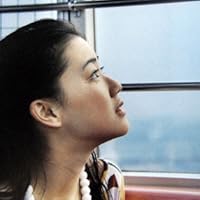
Manazuru... where she remembers. Her husband, her daughter, her youth.
Or does she forget?
Or does she forget?
June 11, 2013
Review of Manazuru
This is the first novel that I have read by Hiromi Kawakami and I’m not sure that I’m in any hurry to read another one. Kawakami can certainly turn a phrase and draw the reader into the world that her characters inhabit (in this case modern Tokyo). Our heroine, Kei, is a single mother whose husband disappeared 7 or 8 years ago, leaving a 3-year-old daughter and no explanation. Kei’s life is decidedly unsettled since her husband abandoned the family – she whiles away her days in a hazy funk punctuated by arguments with her daughter, conversations with ghosts and erotic sexual encounters with her lover, a married man.
Kei is unexplainably drawn to visit a seaside village named “Manazuru” (a real peninsula in Kanagawa with the distinctive shape of a crane with both wings open in flight) in hopes of finding…something. Answers about what happened to her missing husband? Some idea of whether or not her love affair should continue? A sense of direction or purpose in her life? Your guess is as good as mine. I honestly have no idea why the character was compelled to re-visit this tiny seaside village where nothing much happens except hallucinatory re-enactments of events that may or may not have actually happened. Similarly I have no idea why the characters do what they do when they are back home in Tokyo. There is definitely action happening – its just not clear why any of it is happening.
The characters seem to have some direction and sense of purpose and there seems to be some momentum and action-reaction between the characters, Kei and her lover Seiji in particular, but for the most part, the reader is left to wonder what the hell it all means? I think this is an example of Japanese “chick-lit”; essentially a novel written primarily for a female reader. We certainly get a great deal of exposition of what the main character thinks and feels, but none of it seems terribly important. I found myself reading a page or two and then suddenly realizing that I had no idea what it was I just read and I’d have to go back and re-read the pages again. Frustrating.
Kawakami makes some interesting and thoughtful observations on love and loneliness and memory, but they are few and far between. I’m afraid that I just didn’t really care very much about Kei or Seiji or Momo (the daughter) or the most intriguing character in the book – the missing husband. On the whole, the book was just really boring and didn’t affect me one way or the other. It was awarded the 2010 Japan-U.S. Friendship Commission Prize for the Translation of Japanese Literature, whatever that is. I guess the competition wasn’t too tough that year.
This is the first novel that I have read by Hiromi Kawakami and I’m not sure that I’m in any hurry to read another one. Kawakami can certainly turn a phrase and draw the reader into the world that her characters inhabit (in this case modern Tokyo). Our heroine, Kei, is a single mother whose husband disappeared 7 or 8 years ago, leaving a 3-year-old daughter and no explanation. Kei’s life is decidedly unsettled since her husband abandoned the family – she whiles away her days in a hazy funk punctuated by arguments with her daughter, conversations with ghosts and erotic sexual encounters with her lover, a married man.
Kei is unexplainably drawn to visit a seaside village named “Manazuru” (a real peninsula in Kanagawa with the distinctive shape of a crane with both wings open in flight) in hopes of finding…something. Answers about what happened to her missing husband? Some idea of whether or not her love affair should continue? A sense of direction or purpose in her life? Your guess is as good as mine. I honestly have no idea why the character was compelled to re-visit this tiny seaside village where nothing much happens except hallucinatory re-enactments of events that may or may not have actually happened. Similarly I have no idea why the characters do what they do when they are back home in Tokyo. There is definitely action happening – its just not clear why any of it is happening.
The characters seem to have some direction and sense of purpose and there seems to be some momentum and action-reaction between the characters, Kei and her lover Seiji in particular, but for the most part, the reader is left to wonder what the hell it all means? I think this is an example of Japanese “chick-lit”; essentially a novel written primarily for a female reader. We certainly get a great deal of exposition of what the main character thinks and feels, but none of it seems terribly important. I found myself reading a page or two and then suddenly realizing that I had no idea what it was I just read and I’d have to go back and re-read the pages again. Frustrating.
Kawakami makes some interesting and thoughtful observations on love and loneliness and memory, but they are few and far between. I’m afraid that I just didn’t really care very much about Kei or Seiji or Momo (the daughter) or the most intriguing character in the book – the missing husband. On the whole, the book was just really boring and didn’t affect me one way or the other. It was awarded the 2010 Japan-U.S. Friendship Commission Prize for the Translation of Japanese Literature, whatever that is. I guess the competition wasn’t too tough that year.

January 21, 2021
I've often heard Hiromi Kawakami's novels described as quirky. I also find that "quirky" seems to be a convenient, if not lazy and/or ignorant umbrella term for things that are Japanese and not conventional to a Western audience. For that reason, I've always taken the quirky classifier with a grain of salt.
I would not describe Manazuru as quirky, although given what I have heard from other readers, it does deviate from Kawamai's norms. This is a quiet meditation on grief. The protagonist's husband disappeared almost ten years ago, and while she has managed to carry on and bury her feelings, they refuse to be ignored in the lead up to the anniversary of his disappearance.
Is he dead? Did he leave her for another woman? These unanswerable questions plague the protagonist, Kei, who is unable to fully move on before she feels she has a definitive answer. You can see this inability to move on by the way she desperately asks about her husband's whereabouts to the ghost that keeps following her around, or by the fact that she's involved in a long-term affair with a married man who will never leave his wife for Kei. This feels distinctly unlike any other meditation on grief I had read before, but was still very resonant in the feelings it was clearly grappling with.
It was ultimately the execution that left me feeling a little cold. I understood it as a woman working through grief, but I did not feel like all of the pieces really came together, or that I was fully comprehending what was happening. And maybe that is intended to mirror how grief feels: how it displaces you, how it is nonlinear and confusing. But that left me with a disconnected and generally unsatisfied reading experience. However, I am interested to see how this compares to Kawakami's other works.
I would not describe Manazuru as quirky, although given what I have heard from other readers, it does deviate from Kawamai's norms. This is a quiet meditation on grief. The protagonist's husband disappeared almost ten years ago, and while she has managed to carry on and bury her feelings, they refuse to be ignored in the lead up to the anniversary of his disappearance.
Is he dead? Did he leave her for another woman? These unanswerable questions plague the protagonist, Kei, who is unable to fully move on before she feels she has a definitive answer. You can see this inability to move on by the way she desperately asks about her husband's whereabouts to the ghost that keeps following her around, or by the fact that she's involved in a long-term affair with a married man who will never leave his wife for Kei. This feels distinctly unlike any other meditation on grief I had read before, but was still very resonant in the feelings it was clearly grappling with.
It was ultimately the execution that left me feeling a little cold. I understood it as a woman working through grief, but I did not feel like all of the pieces really came together, or that I was fully comprehending what was happening. And maybe that is intended to mirror how grief feels: how it displaces you, how it is nonlinear and confusing. But that left me with a disconnected and generally unsatisfied reading experience. However, I am interested to see how this compares to Kawakami's other works.

March 29, 2021
I DNF this book.
This book makes no freaking sense to me, let me tell you why.
Kawasaki books are very popular on bookstagram and admittedly she writes elegantly. the world she creates remains a picture in your mind. A picture of emotion, a galaxy of healthy psychological intrigue which lays in the reader a foreboding apprehension (at least that is how I felt). I do believe that some things she wrote might have been lost in translation BUT one reason I did;t like this book was because nothing linked. There was no flow to the story. It was almost like cutting paragraphs from different stories and trying to mash them together (it didn't work).
I believe I was supposed to feel a sense of loss and then connect to the main character's grief but I just could not. There was too much weirdness going on with the mother describing getting companionship from her toddler than her husband "I felt no desire for the man, my husband. Momo was warmth enough. As long as I suckled her, my body had no desire for my husband. I had no tenderness for him". I can explain this away with postpartum anxiety or depression but since the book did not explore this I cannot confirm. It was just weird. Even with the walks, they go on in Manazuru, I got nothing substantial from the story. It was vague, random and honestly all over the place...
This book makes no freaking sense to me, let me tell you why.
Kawasaki books are very popular on bookstagram and admittedly she writes elegantly. the world she creates remains a picture in your mind. A picture of emotion, a galaxy of healthy psychological intrigue which lays in the reader a foreboding apprehension (at least that is how I felt). I do believe that some things she wrote might have been lost in translation BUT one reason I did;t like this book was because nothing linked. There was no flow to the story. It was almost like cutting paragraphs from different stories and trying to mash them together (it didn't work).
I believe I was supposed to feel a sense of loss and then connect to the main character's grief but I just could not. There was too much weirdness going on with the mother describing getting companionship from her toddler than her husband "I felt no desire for the man, my husband. Momo was warmth enough. As long as I suckled her, my body had no desire for my husband. I had no tenderness for him". I can explain this away with postpartum anxiety or depression but since the book did not explore this I cannot confirm. It was just weird. Even with the walks, they go on in Manazuru, I got nothing substantial from the story. It was vague, random and honestly all over the place...

December 19, 2014
One of the reasons for reading is to enjoy the creativity of writers who approach their work as a craft. There is plenty of craftsmanship in this book. The writing is poetic, melancholy, wishful and mysterious.
Our narrator grapples with with her husband disappearance 13 years ago, her fear of losing her now teenage daughter, her understanding of her mother and the meaning of her relationship with her lover.
Our narrator grapples with with her husband disappearance 13 years ago, her fear of losing her now teenage daughter, her understanding of her mother and the meaning of her relationship with her lover.

July 11, 2021
Possibly the worst of Kawakami.

May 12, 2025
4.5 rounding down to 4 - I've now read all of Kawakami's books published in English, and what a ride this has been. I'm glad Manazuru was the last stop, as fittingly, it's an evocative and poetic destination for the main character to come to terms with herself and her own past, present, and truth.
The writing is beautiful here, with many great quotes, that explores complex relationships between partners, and mother/daughter the perspective of both mother and daughter. There are some stunningly surreal passages here, namely in the trips to Manazuru, and my favorite part of the book looks at how we cope with loss and grief of a partner, but how we cope with loving someone again after the fact, and how that impacts new love for both people involved.
Kawakami is simply an incredible writer who speaks to my heart and sensibilities on matters of love, self, aging, sex, and meaning. I wouldn't suggest this to be your first book by her, but if you want a deep, melancholic, and brooding novel brimming with atmosphere that is rather ambiguous/open ended, you can't go wrong here.
The writing is beautiful here, with many great quotes, that explores complex relationships between partners, and mother/daughter the perspective of both mother and daughter. There are some stunningly surreal passages here, namely in the trips to Manazuru, and my favorite part of the book looks at how we cope with loss and grief of a partner, but how we cope with loving someone again after the fact, and how that impacts new love for both people involved.
Kawakami is simply an incredible writer who speaks to my heart and sensibilities on matters of love, self, aging, sex, and meaning. I wouldn't suggest this to be your first book by her, but if you want a deep, melancholic, and brooding novel brimming with atmosphere that is rather ambiguous/open ended, you can't go wrong here.
Displaying 1 - 30 of 320 reviews