

What do you think?
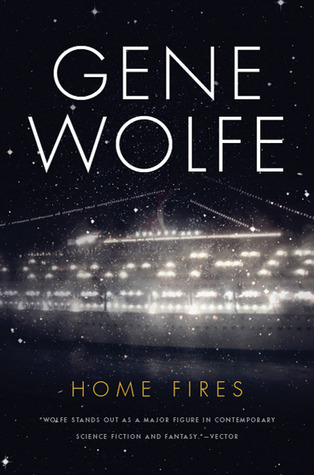
Home Fires
Marrying after college only to be separated by Chelle’s tour of duty in a war against aliens from distant solar systems, Chelle and Skip find their relationship further complicated by time differentials that cause an injured and war-weary Chelle to age only a few months while Skip reaches his 40s.
304 pages, Hardcover
First published January 1, 2011
About the author
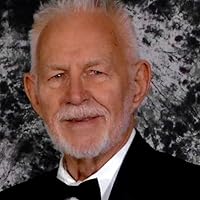
Gene Wolfe
528 books3,791 followersGene Wolfe was an American science fiction and fantasy writer. He was noted for his dense, allusive prose as well as the strong influence of his Catholic faith, to which he converted after marrying a Catholic. He was a prolific short story writer and a novelist, and has won many awards in the field.
While attending Texas A&M University Wolfe published his first speculative fiction in The Commentator, a student literary journal. Wolfe dropped out during his junior year, and was drafted to fight in the Korean War. After returning to the United States he earned a degree from the University of Houston and became an industrial engineer. He edited the journal Plant Engineering for many years before retiring to write full-time, but his most famous professional engineering achievement was a contribution to the machine used to make Pringles potato crisps. He lived in Barrington, Illinois, a suburb of Chicago.
A frequent Hugo nominee without a win, Wolfe nevertheless picked up several Nebula and Locus Awards, among others, including the World Fantasy Award for Life Achievement and the 2012 Damon Knight Memorial Grand Master Award. He was also a member of the Science Fiction Hall of Fame.
http://us.macmillan.com/author/genewolfe
While attending Texas A&M University Wolfe published his first speculative fiction in The Commentator, a student literary journal. Wolfe dropped out during his junior year, and was drafted to fight in the Korean War. After returning to the United States he earned a degree from the University of Houston and became an industrial engineer. He edited the journal Plant Engineering for many years before retiring to write full-time, but his most famous professional engineering achievement was a contribution to the machine used to make Pringles potato crisps. He lived in Barrington, Illinois, a suburb of Chicago.
A frequent Hugo nominee without a win, Wolfe nevertheless picked up several Nebula and Locus Awards, among others, including the World Fantasy Award for Life Achievement and the 2012 Damon Knight Memorial Grand Master Award. He was also a member of the Science Fiction Hall of Fame.
http://us.macmillan.com/author/genewolfe
Ratings & Reviews
Friends & Following
Create a free account to discover what your friends think of this book!
Community Reviews
Displaying 1 - 30 of 143 reviews

October 27, 2010
I know a book is not for me when around page 150 I start thinking of abandoning it. I very, very rarely abandon books. The only reason I finished this one was that it was such a quick read that I read it all in one sitting.
A book full of 'tell' and almost no show, the relationships of the characters and the adventure of the story are lost in the minute details and constant backtracking and explaining. Written like a lawyer doing a deposition, ultimately a book involving a romance and a hijacked cruise ship should be somewhat interesting/exciting, but I found this to be boring.The denouement was anti-climactic and I regret the time I spent reading this when I could have been sleeping instead.
A book full of 'tell' and almost no show, the relationships of the characters and the adventure of the story are lost in the minute details and constant backtracking and explaining. Written like a lawyer doing a deposition, ultimately a book involving a romance and a hijacked cruise ship should be somewhat interesting/exciting, but I found this to be boring.The denouement was anti-climactic and I regret the time I spent reading this when I could have been sleeping instead.

October 25, 2010
Very entertaining mind-bender from Gene Wolfe that ultimately makes full sense though for a long while keeps one guessing while adding new twists every page; the world building while scant in some ways is also excellent since we get all the little details we need about this future Earth split into several not-so-friendly blocks (NAU, EU, Eastasia, third world...) facing a war in space with the mysterious Os over habitable planets with no real inkling about the tech involved; a familiar but also strange future in which the author drops his little bombshells (sometimes in a literal sense too) quite often.
The structure of the novel is also quite interesting - and not dissimilar with Sorcerer's House except that here there is more conventional 3rd person action plus first person interludes rather than letters - with present action followed by interludes narrated except once by the main hero Skip Grisom, 49 year old managing partner of a well know law firm who keeps telling us he wants only one thing - that his "contracta" - civil law wife - master-gunner Chelle Blue coming back a bit earlier from space due to injuries - earlier being relative as 20+ years have passed on Earth, while only several for her - stays with him, age difference and all
So he has a plan to woo her including 'resurecting" her deceased mother (whom actually Chelle has divorced before enlisting but to whom she turns when back on Earth as a familiar presence as Skip guessed right) and taking her on a cruise, while dumping Susan his secretary and longtime lover in the process too
Things start going wrong soon, but Skip is nothing but inventive
A great ending - which in many ways it was the only one reasonable to boot - and a page turner you want to parse carefully when reading first time and immediately reread to see what you missed earlier
Another winner for Gene Wolfe and mind-bending sf-without-gadgets/tech/superscience at its best
Full Fbc Rv below:
INTRODUCTION: After last year's super fun The Sorcerer's House, I was very excited about the announcement for Home Fires, though the blurb below made me a bit unsure if we will get an entertaining mind-bender like last year or a mess like An Evil Guest which I found unreadable.
"Gene Wolfe takes us to a future North America at once familiar and utterly strange. A young man and woman, Skip and Chelle, fall in love in college and marry, but she is enlisted in the military, there is a war on, and she must serve her tour of duty before they can settle down. But the military is fighting a war with aliens in distant solar systems, and her months in the service will be years in relative time on Earth. Chelle returns to recuperate from severe injuries, after months of service, still a young woman but not necessarily the same person—while Skip is in his forties and a wealthy businessman, but eager for her return. Still in love (somewhat to his surprise and delight), they go on a Caribbean cruise to resume their marriage. Their vacation rapidly becomes a complex series of challenges, not the least of which are spies, aliens, and battles with pirates who capture the ship for ransom. There is no writer in SF like Gene Wolfe and no SF novel like Home Fires."
For anyone interested in collecting books, UK boutique PS Publishing has come up with some awesome-looking editions of both The Sorcerer's House and Home Fires and I have to include their cover of Home Fires here since it is much more suggestive than the bland US cover released for the general market, while in the US, Subterranean is also selling the PS editions in limited quantities.
OVERVIEW/ANALYSIS: "Home Fires" turned out to be a very entertaining mind-bender from Gene Wolfe that ultimately made full sense, though for a long while it kept me guessing while adding new twists every page.
The world building while scant in some ways, is sketched perfectly for the needs of the book since we get all the little details we need about this future Earth split into several not-so-friendly blocks - NAU, EU, Greater Eastasia, Third World - which faces a war in space with the mysterious Os over habitable planets with no real inkling about the technology involved. A familiar but also strange future in which the author drops his little bombshells - sometimes in a literal sense too - quite often.
The structure of the novel is also interesting - and not dissimilar with The Sorcerer's House except that here there is more conventional 3rd person action plus first person interludes rather than letters. The main storyline of the book is followed by interludes narrated - except once - by the main hero, Skip Grisom, a 49 year old managing partner of a succesful law firm who keeps telling us he wants only one thing - that his "contracta" - civil law wife - master-gunner Chelle Blue coming back a bit earlier from space due to injuries - earlier being relative as 20+ years have passed on Earth, while only several for her - stays with him, age difference and all.
So he has a plan to woo her including "resurrecting" her deceased mother Vanessa - whom actually Chelle has "divorced" before enlisting but to whom she turns when back on Earth as a familiar presence since after all Vanessa now still looks near the 40's she was when Chelle left Earth, while Skip at 49 is not instantly recognizable to his chagrin. The "wooing over" includes taking Chelle on a cruise, while dumping Susan, his secretary and longtime lover, in the process too, though of course things start going wrong soon, but Skip is nothing but inventive.
One of the narrative devices that confounded me in the beginning was that the introspective interludes in which we learn a lot about this future world and about Skip, are followed by forward jumps in the main action that pass over quite important happenings that are then mentioned. So, at least to start with, I was like: "Oh, this happened? When and how could I miss it?", only to realize that actually what we get now is everything we will know. So lots of space for misdirection, clues and disorientation, but done so well that the pages turn by themselves.
There is quite a lot of action with occasional unforgettable moments are just. The main draw of the novel is Skip Grissom who is one of the most compelling and unusual for the sff genre characterized by "young guns and old mentors" - sfnal characters in recent memory, with Vanessa also stealing the show in all her appearances. Chelle remains mostly an enigma though we get to see a little of her "true self" at some point.
Adding to the above we have a remarkable secondary cast, including the aforementioned Susan, the handless beggar Achille - a refugee from Sharia law EU with hands cut for stealing - who attaches himself to Skip, various other returning comrades of Chelle, cruise ship officers, hijackers, Skip's junior partner Mick and more...
Home Fires has also a great ending - which in many ways it was the only one reasonable to boot - and you want to parse it carefully when reading it the first time, followed by an immediate reread to see what you missed earlier. The title has also an interesting connotation, being explicitly linked to the situation of Skip (remained on Earth to "keep the home fires" going) and Chelle (went to fight in space to preserve humanity at great costs for her and her loved ones - and here there is this nice touch too, of the reversal of the usual sex roles), but also to the quite unsettled situation on Earth that is glimpsed in the action of the novel and the reminiscences of Skip.
All in all, Home Fires (A+/A++) is another winner for Gene Wolfe and mind-bending sf-without-gadgets/superscience at its best.
The structure of the novel is also quite interesting - and not dissimilar with Sorcerer's House except that here there is more conventional 3rd person action plus first person interludes rather than letters - with present action followed by interludes narrated except once by the main hero Skip Grisom, 49 year old managing partner of a well know law firm who keeps telling us he wants only one thing - that his "contracta" - civil law wife - master-gunner Chelle Blue coming back a bit earlier from space due to injuries - earlier being relative as 20+ years have passed on Earth, while only several for her - stays with him, age difference and all
So he has a plan to woo her including 'resurecting" her deceased mother (whom actually Chelle has divorced before enlisting but to whom she turns when back on Earth as a familiar presence as Skip guessed right) and taking her on a cruise, while dumping Susan his secretary and longtime lover in the process too
Things start going wrong soon, but Skip is nothing but inventive
A great ending - which in many ways it was the only one reasonable to boot - and a page turner you want to parse carefully when reading first time and immediately reread to see what you missed earlier
Another winner for Gene Wolfe and mind-bending sf-without-gadgets/tech/superscience at its best
Full Fbc Rv below:
INTRODUCTION: After last year's super fun The Sorcerer's House, I was very excited about the announcement for Home Fires, though the blurb below made me a bit unsure if we will get an entertaining mind-bender like last year or a mess like An Evil Guest which I found unreadable.
"Gene Wolfe takes us to a future North America at once familiar and utterly strange. A young man and woman, Skip and Chelle, fall in love in college and marry, but she is enlisted in the military, there is a war on, and she must serve her tour of duty before they can settle down. But the military is fighting a war with aliens in distant solar systems, and her months in the service will be years in relative time on Earth. Chelle returns to recuperate from severe injuries, after months of service, still a young woman but not necessarily the same person—while Skip is in his forties and a wealthy businessman, but eager for her return. Still in love (somewhat to his surprise and delight), they go on a Caribbean cruise to resume their marriage. Their vacation rapidly becomes a complex series of challenges, not the least of which are spies, aliens, and battles with pirates who capture the ship for ransom. There is no writer in SF like Gene Wolfe and no SF novel like Home Fires."
For anyone interested in collecting books, UK boutique PS Publishing has come up with some awesome-looking editions of both The Sorcerer's House and Home Fires and I have to include their cover of Home Fires here since it is much more suggestive than the bland US cover released for the general market, while in the US, Subterranean is also selling the PS editions in limited quantities.
OVERVIEW/ANALYSIS: "Home Fires" turned out to be a very entertaining mind-bender from Gene Wolfe that ultimately made full sense, though for a long while it kept me guessing while adding new twists every page.
The world building while scant in some ways, is sketched perfectly for the needs of the book since we get all the little details we need about this future Earth split into several not-so-friendly blocks - NAU, EU, Greater Eastasia, Third World - which faces a war in space with the mysterious Os over habitable planets with no real inkling about the technology involved. A familiar but also strange future in which the author drops his little bombshells - sometimes in a literal sense too - quite often.
The structure of the novel is also interesting - and not dissimilar with The Sorcerer's House except that here there is more conventional 3rd person action plus first person interludes rather than letters. The main storyline of the book is followed by interludes narrated - except once - by the main hero, Skip Grisom, a 49 year old managing partner of a succesful law firm who keeps telling us he wants only one thing - that his "contracta" - civil law wife - master-gunner Chelle Blue coming back a bit earlier from space due to injuries - earlier being relative as 20+ years have passed on Earth, while only several for her - stays with him, age difference and all.
So he has a plan to woo her including "resurrecting" her deceased mother Vanessa - whom actually Chelle has "divorced" before enlisting but to whom she turns when back on Earth as a familiar presence since after all Vanessa now still looks near the 40's she was when Chelle left Earth, while Skip at 49 is not instantly recognizable to his chagrin. The "wooing over" includes taking Chelle on a cruise, while dumping Susan, his secretary and longtime lover, in the process too, though of course things start going wrong soon, but Skip is nothing but inventive.
One of the narrative devices that confounded me in the beginning was that the introspective interludes in which we learn a lot about this future world and about Skip, are followed by forward jumps in the main action that pass over quite important happenings that are then mentioned. So, at least to start with, I was like: "Oh, this happened? When and how could I miss it?", only to realize that actually what we get now is everything we will know. So lots of space for misdirection, clues and disorientation, but done so well that the pages turn by themselves.
There is quite a lot of action with occasional unforgettable moments are just. The main draw of the novel is Skip Grissom who is one of the most compelling and unusual for the sff genre characterized by "young guns and old mentors" - sfnal characters in recent memory, with Vanessa also stealing the show in all her appearances. Chelle remains mostly an enigma though we get to see a little of her "true self" at some point.
Adding to the above we have a remarkable secondary cast, including the aforementioned Susan, the handless beggar Achille - a refugee from Sharia law EU with hands cut for stealing - who attaches himself to Skip, various other returning comrades of Chelle, cruise ship officers, hijackers, Skip's junior partner Mick and more...
Home Fires has also a great ending - which in many ways it was the only one reasonable to boot - and you want to parse it carefully when reading it the first time, followed by an immediate reread to see what you missed earlier. The title has also an interesting connotation, being explicitly linked to the situation of Skip (remained on Earth to "keep the home fires" going) and Chelle (went to fight in space to preserve humanity at great costs for her and her loved ones - and here there is this nice touch too, of the reversal of the usual sex roles), but also to the quite unsettled situation on Earth that is glimpsed in the action of the novel and the reminiscences of Skip.
All in all, Home Fires (A+/A++) is another winner for Gene Wolfe and mind-bending sf-without-gadgets/superscience at its best.

June 24, 2019
I have to wrap my thoughts around this and will need some time to do that. Considering this was my first Wolfe, I am not marvellously joyous but not disappointed either if that makes any sense. I think I should have started with his Sun series though.
January 29, 2011
Don't trust the blurb. It makes it sound like some sort of sci-fi romance; it's not. It's a gritty, dark, frightening cyberpunk novel.
In terms of plot: this novel falls in squarely with the Long Sun/Short Sun series. You will find here the very same themes, plot elements and tropes, only darker and rawer.
In terms of prose: this might be the best Gene Wolfe writing yet. It's as clear, vivid and emotionally charged as a punch to the head.
A very, very wonderful book.
In terms of plot: this novel falls in squarely with the Long Sun/Short Sun series. You will find here the very same themes, plot elements and tropes, only darker and rawer.
In terms of prose: this might be the best Gene Wolfe writing yet. It's as clear, vivid and emotionally charged as a punch to the head.
A very, very wonderful book.

January 28, 2011
Before Chelle left Earth to fight in the war against the alien Os, she contracted (entered into a civil marriage) with Skip. If she returned, more than twenty years would have passed for Skip but only a few years for her: Skip would be a successful, rich lawyer, and she’d be his beautiful, young contracta. Fast forward to the start of Home Fires, the latest novel by all-round genius Gene Wolfe: Skip is indeed a rich, successful partner in his law firm, and Chelle returns to Earth, still young and beautiful but physically and mentally affected by war’s traumatic experiences. To help welcome his contracta home, Skip sets up a meeting with her estranged and (more importantly) dead mother, arranging to have her brain scan uploaded into a new body. When Skip and Chelle go on a cruise to rekindle their relationship, Chelle’s mother shows up on the ship under an assumed name, and a complicated plot involving mistaken identities, spies, hijackers and cyborgs gets underway...
Home Fires is a good novel, but falls far short of what Gene Wolfe is capable of at his best. Part of the problem is that the vast majority of the story is told from the perspective of Skip Grissom, and Skip happens to be the least interesting component of this tale. A successful lawyer, he approaches his renewed relationship with Chelle and their wild adventures on the cruise in a very rational, almost distant way. Because of his cerebral approach and understated way of describing things, it feels as if there’s a filter between the reader and the novel’s events that mutes much of their impact, unfortunately making Home Fires more bland than it could have been. Here’s a story in which a traumatized soldier returns home from interstellar war, her mother is improbably returned to life, their cruise ship gets hijacked, numerous other wild adventures occur — and it occasionally feels as if you’re reading a deposition rather than the exciting SF story this could have been.
This is partly because Home Fires is filled with puzzles within puzzles, and you never quite know or understand everything that’s going on. Large chunks of dialogue consist of Skip or someone else patiently explaining how they figured out one particular mystery — why someone did something, or what someone else’s real identity may be, and so on. You can almost imagine the lawyer pacing back and forth, deliberately leading the members of the jury through his reasoning as he makes his case. As a result, the story sometimes feels too contrived: everything keeps getting explained after the fact, giving you the feeling you missed too much before and need the brilliant lawyer to unwrap it for you. Fortunately, Gene Wolfe softens the impact of this cross-examination style by following each chapter by a shorter “Reflections” sub-chapter featuring Skip’s private thoughts, which adds a more personal touch to the novel.
Home Fires has a complex and interesting plot that expands in scope as more details are revealed. As is usually the case with Gene Wolfe, he offers more hints than explicit descriptions of his characters and especially his novel’s setting, in this case a resource-depleted future Earth split into at least three large political entities. Wolfe is also a master at forcing his readers to dig a little deeper to realize how poignant some of the issues and events of his stories are. If you take a step back (or as the case may be, a step forward) to consider Home Fires a bit more deeply, you’ll see that there’s a lot of emotion roiling under the apparent calmness of the narration. Unfortunately, this technique didn’t work as well for me this time as it did with past novels by this author, leading me to rank Home Fires towards the bottom of Gene Wolfe’s impressive bibliography.
Regardless, even a minor Gene Wolfe is still a major event. As usual, there’s a lot of food for discussion here, and enough hidden or implied material to fill a much larger novel than Home Fires’ relatively modest 300 pages. Despite not working 100% for me, it still had my head spinning several times and kept me considering and re-considering elements of the story for days. Wolfe’s most recent novels have all ranged from good to great, but I can’t help but hope that, with his next work, he’ll reach the truly mind-bending ranges of his older classics again.
(This review was also published at www.fantasyliterature.com on 2/18/2011.)
Home Fires is a good novel, but falls far short of what Gene Wolfe is capable of at his best. Part of the problem is that the vast majority of the story is told from the perspective of Skip Grissom, and Skip happens to be the least interesting component of this tale. A successful lawyer, he approaches his renewed relationship with Chelle and their wild adventures on the cruise in a very rational, almost distant way. Because of his cerebral approach and understated way of describing things, it feels as if there’s a filter between the reader and the novel’s events that mutes much of their impact, unfortunately making Home Fires more bland than it could have been. Here’s a story in which a traumatized soldier returns home from interstellar war, her mother is improbably returned to life, their cruise ship gets hijacked, numerous other wild adventures occur — and it occasionally feels as if you’re reading a deposition rather than the exciting SF story this could have been.
This is partly because Home Fires is filled with puzzles within puzzles, and you never quite know or understand everything that’s going on. Large chunks of dialogue consist of Skip or someone else patiently explaining how they figured out one particular mystery — why someone did something, or what someone else’s real identity may be, and so on. You can almost imagine the lawyer pacing back and forth, deliberately leading the members of the jury through his reasoning as he makes his case. As a result, the story sometimes feels too contrived: everything keeps getting explained after the fact, giving you the feeling you missed too much before and need the brilliant lawyer to unwrap it for you. Fortunately, Gene Wolfe softens the impact of this cross-examination style by following each chapter by a shorter “Reflections” sub-chapter featuring Skip’s private thoughts, which adds a more personal touch to the novel.
Home Fires has a complex and interesting plot that expands in scope as more details are revealed. As is usually the case with Gene Wolfe, he offers more hints than explicit descriptions of his characters and especially his novel’s setting, in this case a resource-depleted future Earth split into at least three large political entities. Wolfe is also a master at forcing his readers to dig a little deeper to realize how poignant some of the issues and events of his stories are. If you take a step back (or as the case may be, a step forward) to consider Home Fires a bit more deeply, you’ll see that there’s a lot of emotion roiling under the apparent calmness of the narration. Unfortunately, this technique didn’t work as well for me this time as it did with past novels by this author, leading me to rank Home Fires towards the bottom of Gene Wolfe’s impressive bibliography.
Regardless, even a minor Gene Wolfe is still a major event. As usual, there’s a lot of food for discussion here, and enough hidden or implied material to fill a much larger novel than Home Fires’ relatively modest 300 pages. Despite not working 100% for me, it still had my head spinning several times and kept me considering and re-considering elements of the story for days. Wolfe’s most recent novels have all ranged from good to great, but I can’t help but hope that, with his next work, he’ll reach the truly mind-bending ranges of his older classics again.
(This review was also published at www.fantasyliterature.com on 2/18/2011.)

July 13, 2013
The premise of Gene Wolfe's Home Fires is that rich lawyer Skip Grison welcomes home his girlfriend Chelle, who has been in a distant star system fighting alien enemies. Due to relativistic effects, over twenty years have passed for Skip and he is now in his late forties, while for Chelle only a couple of years have gone by and she remains a young lady (but scarred by her military service). The two go on a cruise, and a variety of murders and other strange events occur, which turn Home Fires into a mystery novel as much as a vision of the future.
Wolfe made his name in the world of science fiction -- and literature in general -- through unreliable narrators and storytelling that only obliquely refers to dramatic events. You'll find this in spades in Home Fires, as nearly every chapter ends with a twist ("an explosion rocked the ship", "Vanessa screamed") that is abandoned at the start of the next chapter and not explained until sometime later. This has sadly become a trope in Wolfe's writing, and it tends to make each new book a cock and bull story à la Tristam Shandy, but without the deft prose. In fact, the writing is exceedingly ordinary, like an airport novel, and one regrets that Wolfe's powers have declined since the early 1980s, when his prose was as rich as Proust or Nabokov.
The future United States that Wolfe proposes in Home Fires is strange. A major downside of the novel is that the technology is no different than we had when the book was published: although civilization is capable of sending people thousands of light years away to fight aliens with space-age weaponry, everyone on Earth is still using 2008-era laptops and mobile phones. There are also some cranky right-wing themes: Skip claims the government doesn't want people to be able to defend themselves, and the European Union is ruled by sharia law (has Wolfe been reading one of those blogs that badly distort Europe's demographics?). On the other hand, Wolfe proposes an interesting solution to the problem of ensuring employment for everyone in a post-scarcity society: the government simply mandates that companies hire more people (with their wages paid by the state), to the point where even secretaries get their own assistant (who in turn has a helper or girl friday), and automation is reduced. On Skip and Chelle's cruise, for example, the ratio of staff to passengers in five to four, and the many tugboats that pull the ship into port are manned by many hundreds of oarsmen. There's a great deal of humour in Wolfe's depiction of this, and it is thought-provoking as well.
Still, I cannot recommend Home Fires even to those who love this author's classic work of the 1970s and early 1980s. It's really sad what happened to Wolfe, who was once one of the most impressive authors in the English language regardless of genre.
Wolfe made his name in the world of science fiction -- and literature in general -- through unreliable narrators and storytelling that only obliquely refers to dramatic events. You'll find this in spades in Home Fires, as nearly every chapter ends with a twist ("an explosion rocked the ship", "Vanessa screamed") that is abandoned at the start of the next chapter and not explained until sometime later. This has sadly become a trope in Wolfe's writing, and it tends to make each new book a cock and bull story à la Tristam Shandy, but without the deft prose. In fact, the writing is exceedingly ordinary, like an airport novel, and one regrets that Wolfe's powers have declined since the early 1980s, when his prose was as rich as Proust or Nabokov.
The future United States that Wolfe proposes in Home Fires is strange. A major downside of the novel is that the technology is no different than we had when the book was published: although civilization is capable of sending people thousands of light years away to fight aliens with space-age weaponry, everyone on Earth is still using 2008-era laptops and mobile phones. There are also some cranky right-wing themes: Skip claims the government doesn't want people to be able to defend themselves, and the European Union is ruled by sharia law (has Wolfe been reading one of those blogs that badly distort Europe's demographics?). On the other hand, Wolfe proposes an interesting solution to the problem of ensuring employment for everyone in a post-scarcity society: the government simply mandates that companies hire more people (with their wages paid by the state), to the point where even secretaries get their own assistant (who in turn has a helper or girl friday), and automation is reduced. On Skip and Chelle's cruise, for example, the ratio of staff to passengers in five to four, and the many tugboats that pull the ship into port are manned by many hundreds of oarsmen. There's a great deal of humour in Wolfe's depiction of this, and it is thought-provoking as well.
Still, I cannot recommend Home Fires even to those who love this author's classic work of the 1970s and early 1980s. It's really sad what happened to Wolfe, who was once one of the most impressive authors in the English language regardless of genre.

March 11, 2011
Famous for his "Book of the New Sun" series, Gene Wolfe's latest book, "Home Fires" is similar to that series in that it's something that really seems to defy description. However, the lack of words this book generates comes from the fact that there's essentially no plot whatsoever to talk about. When reading the product description for Home Fires, it gives the impression that this is a story of a love that transcends space and time. Sadly, that seems to be far from the case as there really seems nothing at the core of this story that really ties everything together. Instead, the majority of the book seems to be more about that one sentence at the end of the description regarding "challenges [...] of which are spies, aliens, and battles". Contrary to expectations, that in itself might have made an interesting read, but instead all the events occur at a 'stream of consciousness' pace that seems to lead readers somewhere, but leaves one high, dry, and puzzled instead. Granted, Wolfe is famous for the surreal nature of his stories, where events seem to be experience, not understood. But it just doesn't seem to work here, as everything is built up (a la Lost) only to have it fall to the wayside.
One gets the impression that this book just came of happenstance because Gene Wolfe had an old script laying around that normally wouldn't get published if written by a new author. Is it any coincidence that his name takes almost half the cover, while every blurb on the cover is about the author himself, not of the story?
While not terrible or awful, I would say readers expecting another classic would be in for a major disappointment.
One gets the impression that this book just came of happenstance because Gene Wolfe had an old script laying around that normally wouldn't get published if written by a new author. Is it any coincidence that his name takes almost half the cover, while every blurb on the cover is about the author himself, not of the story?
While not terrible or awful, I would say readers expecting another classic would be in for a major disappointment.

September 19, 2012
Noooot sure what I think of this one. In style and format it's very much what I expect from Gene Wolfe, having read a novel (or two?) and quite a few of his short stories, but I felt like there was something lacking. Not emotional involvement as such -- I haven't tended to have that with his writing. But, nonetheless, maybe some kind of vital spark?
Obviously Wolfe's a genius with narrators and the way he can spin a story round and round on itself is amazing, but Home Fires wasn't as good as I was hoping. Maybe a case of "not for me", maybe a case of having got my hopes up too much.
Still enjoyed it and read it pretty much in one go.
Obviously Wolfe's a genius with narrators and the way he can spin a story round and round on itself is amazing, but Home Fires wasn't as good as I was hoping. Maybe a case of "not for me", maybe a case of having got my hopes up too much.
Still enjoyed it and read it pretty much in one go.

May 22, 2011
The latest genre-bending exercise from Wolfe is based on an extremely interesting premise - how would relationships be effected by the time lags involved once we become space-faring folk?
Skip and Chelle Sea Blue (great name!) fall in love while students and become "contracted". She enlists in the military, there is an inter-galactic war being fought against the mysterious Os, and she must serve her tour of duty before they can settle down.
But her few months in active service are years in relative time on Earth. When she returns, she is still in her mid-twenties, an ebullient and strapping young lady, whereas Skip is a greying, diminishing 49 year old.
The sea cruise they take together while Chelle is on leave is packed full of incredible happenings, some of which Wolfe presents as action scenes and some of which are only portrayed by conversations the characters have about them retrospectively, in keeping with the author's usual style.
Unfortunately the premise became somewhat lost in a confusion of sub-plots and events, from resurrected mothers, to pirates, to suicide rings, and some very complicated espionage; and although it returned to the initial premise at the end, my initial impressions were of partial disappointment, which I have rarely felt after finishing a book by Wolfe.
I know I have to be careful though, this is a Gene Wolfe book, and he writes cleverly plotted puzzles that only really become clear on the second reading at the earliest. That said, I re-read the first 50 pages again before writing this review, and although one or two things became clearer I still can't see how it will lead to a completely satisfying whole when I read the entire thing again.
Therefore, if I wanted to convert people to Wolfe (and I do!) this novel is not one that I would recommend to get them hooked.
p.s. I have since read the book again and as anticipated understood and appreciated it so much more. The ending in particular, which I didn't like first time around, really pleased me.
Skip and Chelle Sea Blue (great name!) fall in love while students and become "contracted". She enlists in the military, there is an inter-galactic war being fought against the mysterious Os, and she must serve her tour of duty before they can settle down.
But her few months in active service are years in relative time on Earth. When she returns, she is still in her mid-twenties, an ebullient and strapping young lady, whereas Skip is a greying, diminishing 49 year old.
The sea cruise they take together while Chelle is on leave is packed full of incredible happenings, some of which Wolfe presents as action scenes and some of which are only portrayed by conversations the characters have about them retrospectively, in keeping with the author's usual style.
Unfortunately the premise became somewhat lost in a confusion of sub-plots and events, from resurrected mothers, to pirates, to suicide rings, and some very complicated espionage; and although it returned to the initial premise at the end, my initial impressions were of partial disappointment, which I have rarely felt after finishing a book by Wolfe.
I know I have to be careful though, this is a Gene Wolfe book, and he writes cleverly plotted puzzles that only really become clear on the second reading at the earliest. That said, I re-read the first 50 pages again before writing this review, and although one or two things became clearer I still can't see how it will lead to a completely satisfying whole when I read the entire thing again.
Therefore, if I wanted to convert people to Wolfe (and I do!) this novel is not one that I would recommend to get them hooked.
p.s. I have since read the book again and as anticipated understood and appreciated it so much more. The ending in particular, which I didn't like first time around, really pleased me.

September 15, 2011
I don't really know how else to put this: I didn't like Home Fires. I wanted to - it had a fascinating premise (a couple falls in love, the woman goes into space for 20 years and returns home without aging, her partner is now middle aged), a threatening space war, and a Dollhouse-like premise of putting the personalities of dead people into the bodies of "employees." There's a lot going on here...and yet nothing happens, not really. We rarely see any action - usually a character just mentions what happened. And Wolfe expects his readers to just take his protagonist's word that this is what happened. Skip, our hero, is kind of like a detective. He pulls together all sorts of information, seemingly from out of thin air, and is able to magically know what's going on. It's not believable and it doesn't make for good reading. Chell, his newly-returned love interest, is incredibly beautiful, witty, and fun to be around. We know this because Skip and every other secondary male character in the book keeps saying it. Over and over again. But none of her actions (aside from being a bad-ass soldier, which she is) show us any of these qualities. I found myself wondering why everyone thought she was so amazing - to me she felt flat. Indeed, most of the characters were two-dimensional. I got tired of hearing about what was happening or had happened from Skip. Why didn't Wolfe just write it in real time and flashbacks? Why didn't we ever see these dangerous aliens that were the reason Chell went into space in the first place?
In defense of Home Fries and Wolfe, I will say that it had a great ending. Maybe not worth the slogging it took to get there, but a good ending nonetheless.
In defense of Home Fries and Wolfe, I will say that it had a great ending. Maybe not worth the slogging it took to get there, but a good ending nonetheless.

January 27, 2011
Skip is a successful and rich lawyer who has waited 20 years for his Contracta to return from a military mission in space. Due to space-time dilation only few months have passed for her and it's unclear if the old promise holds and if they can start living together. Skip arranges a cruise and a chain of unexpected events begins...
Wolfe draws a detailed picture of the future, and it's a grim one. I liked the way how it unfolds. There are no long descriptions, instead we learn about it through the interaction of the characters with it.
The focus is clearly on the characters with their complex personalities and motivations. Each chapter is followed by a Reflection told in first person from Skip's point of view. This allows the reader to get to know him much better but later in the book the switch back to 3rd person became a little nuisance and always interrupted the reading flow.
The plot was interesting with mysterious figures in the background and a lot of sudden events. The final resolution didn't completely satisfy me though, it brought enough light to the romance between Chelle and Skip but the whole spy thing left me puzzled and the relation between Chelle and her mother remains a secret. Maybe the discussion in the Gene Wolfe mailing list (http://lists.urth.net/listinfo.cgi/ur...) reveals something new, who knows. I wouldn't be surprised, it's typical for Wolfe to hide hints in the subtext.
Nevertheless this could have been a 4-star book without the extreme talkativeness in the middle part. I don't mind that the book's plot is driven mainly by dialogs, but Skip is the kind of person who likes to hear himself talking and we get a lot of "Let me tell you how I knew this" or "I give you not only one but four reasons, ...." and his partners silently obey. This was too much and spoils the fun a bit.
Not Wolfe's best novel, but enjoyable with a very unique look into the future.
Wolfe draws a detailed picture of the future, and it's a grim one. I liked the way how it unfolds. There are no long descriptions, instead we learn about it through the interaction of the characters with it.
The focus is clearly on the characters with their complex personalities and motivations. Each chapter is followed by a Reflection told in first person from Skip's point of view. This allows the reader to get to know him much better but later in the book the switch back to 3rd person became a little nuisance and always interrupted the reading flow.
The plot was interesting with mysterious figures in the background and a lot of sudden events. The final resolution didn't completely satisfy me though, it brought enough light to the romance between Chelle and Skip but the whole spy thing left me puzzled and the relation between Chelle and her mother remains a secret. Maybe the discussion in the Gene Wolfe mailing list (http://lists.urth.net/listinfo.cgi/ur...) reveals something new, who knows. I wouldn't be surprised, it's typical for Wolfe to hide hints in the subtext.
Nevertheless this could have been a 4-star book without the extreme talkativeness in the middle part. I don't mind that the book's plot is driven mainly by dialogs, but Skip is the kind of person who likes to hear himself talking and we get a lot of "Let me tell you how I knew this" or "I give you not only one but four reasons, ...." and his partners silently obey. This was too much and spoils the fun a bit.
Not Wolfe's best novel, but enjoyable with a very unique look into the future.

February 12, 2011
In reading Gene Wolfe, the ground you stand on is as solid as an ocean swell, and when you find yourself sinking it will pick you up and throw you against the rocks if you're not careful. The book is a love story, a tragedy, a mystery, a pirate yarn, and a philosophical discourse at the same time. The plot centers around a couple Skip and Chelle. Chelle goes off to join the army while Skip stays home to mind the home fires (hence the title). The complication is that the enemy she is fighting is light years away, so while she travels there and back, he ages 20 years, while for her it has been just 2. As a present for his returning bride, Skip (who has become wealthy in the intervening 20 years) decides to re-animate her dead mother. After that things start to get weird.
In reading this, I was struck by the similarity in themes between this and the other book I am currently reading, "Self comes to mind" by Antonio Damasio.
From Damasio we hear, "We all have free access to consciousness, bubbling so easily and abundantly in our minds that without hesitation or apprehension we let it be turned off every night when we go to sleep ..."
and from Wolfe, "We sleep, and we believe we wake with the minds we carried into bed with us, bearing them as a bride borne in her grooms arms, the lifted, the treasured, the threshold flier, so we believe. But we do not. That weary mind has been dispersed in sleep, its myriad parts left behind on the tracks, lying upon the infinite concrete ties between endless gleaming steel rails. We wake and compose for ourselves a new mind (if some other does not compose it for us)......."
What does it mean to be human, to live, to love, to die? These are the themes of both books. One is a work of fiction, the other a scientific treatise. Which one tells more truth, I leave it for you to decide.
In reading this, I was struck by the similarity in themes between this and the other book I am currently reading, "Self comes to mind" by Antonio Damasio.
From Damasio we hear, "We all have free access to consciousness, bubbling so easily and abundantly in our minds that without hesitation or apprehension we let it be turned off every night when we go to sleep ..."
and from Wolfe, "We sleep, and we believe we wake with the minds we carried into bed with us, bearing them as a bride borne in her grooms arms, the lifted, the treasured, the threshold flier, so we believe. But we do not. That weary mind has been dispersed in sleep, its myriad parts left behind on the tracks, lying upon the infinite concrete ties between endless gleaming steel rails. We wake and compose for ourselves a new mind (if some other does not compose it for us)......."
What does it mean to be human, to live, to love, to die? These are the themes of both books. One is a work of fiction, the other a scientific treatise. Which one tells more truth, I leave it for you to decide.

May 30, 2019
I am marking this as "read" even though I still have 50 pages left in the book. I did my time on it. I picked this up after reading of Gene Wolfe's passing, not having read one of his books in a long time. I had the same issues with this as I did with The Wizard. I knew to expect craziness, but after a while I found myself singing the main theme from "Anything Goes" multiple times, since really just about anything could happen in this world with no relation to what happened before. There's a ton of ideas just floating around in the world space, sliding off of each other, and Wolfe gives no reason to care about any of it. There's a bunch of conflict and no one is doing anything about it that makes a lick of sense. I like a certain amount of weirdness, but this book just felt like an ice bath.
October 31, 2017
Ugh: finished about 60% and should have stopped much sooner. Despite its 2010 publication date, this book is totally the book version of "Yours Truly, Johnny Dollar", which is an incredibly stilted 1950s radio drama starring "The Man with the Action Packed Expense Account." I don't mean this book is about an insurance investigator, but rather that it reads like a plot from the 1940s or 1950s. The future is some kind of resource-depleted world where feminism died out and everyone talks like a character from "Mad Men". Maybe it's Art, but I just hated it.

June 18, 2011
I very much enjoyed Wolfe's Books of the New Sun and Books of the Long Sun so had great hopes for this one.
I found it very disappointing...a wandering plot line, casual but undeveloped reference to "aliens" with whom
humans are at war, a hijacking that seemed an excuse to add pages and another setting for a story that was
petering out. I guessed the ending midway through the book so nothing was surprising. Probably should not have
taken the time to finish it.
I found it very disappointing...a wandering plot line, casual but undeveloped reference to "aliens" with whom
humans are at war, a hijacking that seemed an excuse to add pages and another setting for a story that was
petering out. I guessed the ending midway through the book so nothing was surprising. Probably should not have
taken the time to finish it.

January 26, 2019
The way people approach Gene Wolfe books is as varied as the books themselves.
Early era Wolfe novels are VERY verbose. His descriptions are extensive, almost florid, and exceptionally intricate. Wolfe's latter novels are far more laconic. His language is Hemingway-esque and very Spartan (let's mix a few metaphors). When he deigns to describe something, you can drive a truck through the holes of things left unsaid. His later works rely far more on dialogue that often sounds stilted and unnatural (given the settings) but is often pregnant with meaning. It's a very different writing style than his earlier stuff.
Some people read Wolfe for the intricate puzzles, the references, the vague allusions to other works and mythologies. His earlier works really fit into this mold. For an author whose work has been described as "tricksy," this is almost expected. His latter novels have the same puzzles that are revealed on second (and third) readings, but they are presented differently.
But like Alice going down the rabbit hole, one can go too far. I find that reviewers that approach Wolfe novels as puzzles to be solved often miss out on just some beautiful, insightful, and impactful writing.
It's like someone that is good at Scrabble, jigsaw, or crossword puzzles. They're so technically proficient in the act that they lose sight of the beautiful picture they just created or the cleverness in the clues that led to the answers. Yes, there are puzzles to be solved, but there's also a wonderful novel to be read.
Home Fires is a wonderful novel. It tells the near-future story of Skip Grison and Chelle Blue, who "contract" with each other (get married) while in their 20s and in college but Chelle elects to join the Army in its intergalactic war with the alien Os. So, while Chelle will only age 2-3 years while on off world assignment due to relativistic time dilation, Skip will age 20.
How much does a person change in 2 years? In 20? Is Skip still in love with Chelle? Is Chelle the same person she was before (she has been to war, after all). Who are these people that are reuniting after so long/not-so-long?
Skip has become a prominent and wealthy defense attorney while Chelle has become a battle hardened Mastergunner. To reconnect upon her return, Skip books a cruise on an ocean cruise. Now it gets weird--and the weirdness is where many reviewers seem to have taken issue with the novel.
Because just as some people read Wolfe for the puzzles, other people read Wolfe expecting a straightforward science fiction tale. And it doesn't work that way. Wolfe occupies a literary space all his own. While his works are ostensibly genre fiction, they demand so much more from even the casual reader that you must pay attention. The story and characters are there, waiting for you on that first read-through. The puzzles are there the second time through. The revelations? Third time.
Here, we get the cruise ship being hijacked, submachine gun liberally employed, brain-scans, "reanimation," cyborgs, double-agents, faithfulness and faithlessness, all in a taut little 304 pages.
But at the center we still have a middle-aged defense attorney struggling to be the man his 20-something bride fell in love with so long/not-so-long ago--or, if she is now something completely different, to become something completely different himself.
Watching that journey, revealed in subtle and uneven ways, until an ending that is as hopeful as it is heartbreaking, it what makes this an outstanding novel.
I might be alone in this, but Wolfe writes some of the best love stories ever.... even if the people never quite end up together.
Early era Wolfe novels are VERY verbose. His descriptions are extensive, almost florid, and exceptionally intricate. Wolfe's latter novels are far more laconic. His language is Hemingway-esque and very Spartan (let's mix a few metaphors). When he deigns to describe something, you can drive a truck through the holes of things left unsaid. His later works rely far more on dialogue that often sounds stilted and unnatural (given the settings) but is often pregnant with meaning. It's a very different writing style than his earlier stuff.
Some people read Wolfe for the intricate puzzles, the references, the vague allusions to other works and mythologies. His earlier works really fit into this mold. For an author whose work has been described as "tricksy," this is almost expected. His latter novels have the same puzzles that are revealed on second (and third) readings, but they are presented differently.
But like Alice going down the rabbit hole, one can go too far. I find that reviewers that approach Wolfe novels as puzzles to be solved often miss out on just some beautiful, insightful, and impactful writing.
It's like someone that is good at Scrabble, jigsaw, or crossword puzzles. They're so technically proficient in the act that they lose sight of the beautiful picture they just created or the cleverness in the clues that led to the answers. Yes, there are puzzles to be solved, but there's also a wonderful novel to be read.
Home Fires is a wonderful novel. It tells the near-future story of Skip Grison and Chelle Blue, who "contract" with each other (get married) while in their 20s and in college but Chelle elects to join the Army in its intergalactic war with the alien Os. So, while Chelle will only age 2-3 years while on off world assignment due to relativistic time dilation, Skip will age 20.
How much does a person change in 2 years? In 20? Is Skip still in love with Chelle? Is Chelle the same person she was before (she has been to war, after all). Who are these people that are reuniting after so long/not-so-long?
Skip has become a prominent and wealthy defense attorney while Chelle has become a battle hardened Mastergunner. To reconnect upon her return, Skip books a cruise on an ocean cruise. Now it gets weird--and the weirdness is where many reviewers seem to have taken issue with the novel.
Because just as some people read Wolfe for the puzzles, other people read Wolfe expecting a straightforward science fiction tale. And it doesn't work that way. Wolfe occupies a literary space all his own. While his works are ostensibly genre fiction, they demand so much more from even the casual reader that you must pay attention. The story and characters are there, waiting for you on that first read-through. The puzzles are there the second time through. The revelations? Third time.
Here, we get the cruise ship being hijacked, submachine gun liberally employed, brain-scans, "reanimation," cyborgs, double-agents, faithfulness and faithlessness, all in a taut little 304 pages.
But at the center we still have a middle-aged defense attorney struggling to be the man his 20-something bride fell in love with so long/not-so-long ago--or, if she is now something completely different, to become something completely different himself.
Watching that journey, revealed in subtle and uneven ways, until an ending that is as hopeful as it is heartbreaking, it what makes this an outstanding novel.
I might be alone in this, but Wolfe writes some of the best love stories ever.... even if the people never quite end up together.

October 14, 2025
This is a very difficult book.
I love Gene Wolfe, and I wanted to love this novel as much as his others, but I could not. Not completely.
Mind: this is not a bad book at all.
It's a novel about love and alienation, and, at the same time, a sort of cryptic spy story.
It's got incredible prose, especially in the "Reflections" chapters.
Everything is, however, messy, confused, in a way that's meant to mirror the characters' own indecisiveness, their sense of uncertainty towards life and love.
Usually, I rate a book on the basis of "how could this very book be written better than this, if at all?". I don't think this book could have been written any other way, and yet, its pervasive sense of bitterness, of subtle meaninglessness, is so vivid, that it threatens the universality which should be cardinal to a major work of fiction.
Yes, that may be it: this book is too much of "one, single thing", to be rated better than three stars.
If anyone loved it more than I did, however, I could and would not criticise them at all.
I love Gene Wolfe, and I wanted to love this novel as much as his others, but I could not. Not completely.
Mind: this is not a bad book at all.
It's a novel about love and alienation, and, at the same time, a sort of cryptic spy story.
It's got incredible prose, especially in the "Reflections" chapters.
Everything is, however, messy, confused, in a way that's meant to mirror the characters' own indecisiveness, their sense of uncertainty towards life and love.
Usually, I rate a book on the basis of "how could this very book be written better than this, if at all?". I don't think this book could have been written any other way, and yet, its pervasive sense of bitterness, of subtle meaninglessness, is so vivid, that it threatens the universality which should be cardinal to a major work of fiction.
Yes, that may be it: this book is too much of "one, single thing", to be rated better than three stars.
If anyone loved it more than I did, however, I could and would not criticise them at all.

May 26, 2019
Gene Wolfe writes absorbing stories. This is a science fiction novel about a lawyer, his military wife, reanimation of dead people through brain scan downloads into news bodies, interplanetary warfare, and a hijacked cruise ship.
June 29, 2011
I thought this was really delightful, another book from my attempt to read some scifi. I guess I'd put it in the same category as Lethem's _Gun with Occasional Music_ at being one of those cross-genre books that really do need all the different approaches to work. Here, we get a scifi setting (future earth with certain genre trappings, like "reanimation" which allows dead people's personalities to be added to living hosts, and an intergalactic war) and certain noir elements, like lots of detectives running around and also what I think is probably critical to the noir narratives I'm less familiar with, the returning soldier and his struggles to reintegrate into a pre-war life. Only here, of course, the he is a she, and the reasons why integration are so hard are a mix of old-- PTSD, etc-- and new-- quantum time paradoxes of faster than light speed intergalactic travel. And it all takes place on a boat!
Really, this is a fun romp, and it's well-written in a way that was kind of surprising-- the alternating "reflection" chapters were quaintly Victorian in style, at least early on, and the main chapters were differently rendered but still written with flair and grace. Definitely a higher level of attention to the prose than you'd expect.
I think the book does have its limitations-- I feel like some elements of the resolution are unintentionally unclear, for example, and that the original hijacking storyline ran a little longer than it needed to; and though I recognize its roots in Maltese Falcon, Skip might get knocked unconscious here once too often.
Still, a really good book, stranger and more magically compelling than I would've guessed. I'm waiting for the "all Achille" spin-off hard-boiled hands-free detective sequel.
Really, this is a fun romp, and it's well-written in a way that was kind of surprising-- the alternating "reflection" chapters were quaintly Victorian in style, at least early on, and the main chapters were differently rendered but still written with flair and grace. Definitely a higher level of attention to the prose than you'd expect.
I think the book does have its limitations-- I feel like some elements of the resolution are unintentionally unclear, for example, and that the original hijacking storyline ran a little longer than it needed to; and though I recognize its roots in Maltese Falcon, Skip might get knocked unconscious here once too often.
Still, a really good book, stranger and more magically compelling than I would've guessed. I'm waiting for the "all Achille" spin-off hard-boiled hands-free detective sequel.

February 27, 2011
This book transcends genres - there are elements of sci-fi, spy thriller, love story, mystery, military, psychological, and maybe a few others. It starts out with a soldier coming home from a war, but most of it winds up being on a cruise ship! But the cruise turns ugly, and suddenly it's about survival. It's amazing that Wolfe was able to make create continuity out of all the disparate elements; I give him major props for that.
The thing that I didn't like about the book, and the reason I didn't give it five stars, is that marital infidelity is a major plot point. I just don't care for books where one partner never knows who his or her spouse is going to sleep with next. Technically Skip and Chelle are not married; they are "contracted" which seems to be something midway between marriage and being engaged. But I wouldn't like a story about people cheating on their fiances, either. Those parts were really an unpleasant read for me.
So, if you ignore the parts about Chelle's infidelity, it's an amazing book. But those parts spoiled it for me, and I probably won't seek out any more of Wolfe's work.
The thing that I didn't like about the book, and the reason I didn't give it five stars, is that marital infidelity is a major plot point. I just don't care for books where one partner never knows who his or her spouse is going to sleep with next. Technically Skip and Chelle are not married; they are "contracted" which seems to be something midway between marriage and being engaged. But I wouldn't like a story about people cheating on their fiances, either. Those parts were really an unpleasant read for me.
So, if you ignore the parts about Chelle's infidelity, it's an amazing book. But those parts spoiled it for me, and I probably won't seek out any more of Wolfe's work.

April 9, 2011
What an odd book. Home Fires is set at some indeterminate time in the future, when soldiers from Earth are engaged in battles on distant planets, fighting aliens for control of habitable worlds. Main characters Chelle and Skip are college lovers who become "contracted" (a legal construct which has replaced the more old-fashioned concept of marriage) right before Chelle ships out with the army. Her two years of service equate to twenty years on Earth, so Chelle returns at age 25 to a husband (contracto) 20 years her senior. Their relationship is potentially interesting, but is immediately subsumed into a very convoluted plot involved a cruise ship, hijackers, and all sorts of transplanted brain scans. The writing style is very choppy and abrupt, facts are dropped into place out of the blue, and the conversations sound more like scripts than actual talk between people. Still, the plot managed to hold my interest. Home Fires is a strange, strange book, which I recommend rather half-heartedly.

May 10, 2012
This novel was a scattered collection of a few good lines and ideas, lost in a tattered mess of an unnecessarily overwrought structure. To add insult to injury, Wolfe adds a few sh*tstains of crackpot conservativism: e.g. the EU of the future is offhandedly described as being governed by sharia law. Other aspects are simply archaic: racial minorities all speak in stereotypical 'funny accents' and every adult female character save one speaks in the same irritating childlike voice. It doesn't even work well as science fiction, since very little is described (the book is mostly dialogue) and what is described ranges from the derivative (e.g. differences in ages due to travel at relativistic velocity) to the laughably implausible (e.g. a former soldier who did a tour of duty in deep space expresses dislike and unfamiliarity with this who newfangled 'email' thing.)
Overall, this was a disappointingly weak work from an otherwise strong author.
Overall, this was a disappointingly weak work from an otherwise strong author.

December 10, 2012
This is a typical Wolfe book. So you will have to decide on a big part what really happened, fill the holes, decide on what parts the narrator was lying, how much other characters lied to the narrator, while at the same time discovering about a future that is somehow like our past, consequence of some energy crisis and an interplanetary war.
There are few explanations, the narrator jumps the action at times, and some parts are just not mentioned. In all, like making a puzzle with pieces missing, some blank and a few from a different puzzle.
I enjoyed it, a lot. It has been some time since I felt challenged by a Wolfe book, and this one does it.
I missed some more explanations on the science part of the science fiction, but I suppose you could not expect better from a lawyer narrator.
There are few explanations, the narrator jumps the action at times, and some parts are just not mentioned. In all, like making a puzzle with pieces missing, some blank and a few from a different puzzle.
I enjoyed it, a lot. It has been some time since I felt challenged by a Wolfe book, and this one does it.
I missed some more explanations on the science part of the science fiction, but I suppose you could not expect better from a lawyer narrator.

July 7, 2015
This book was kind of a mess from start to finish. It certainly had an interesting premise, but the actual story did not live up to it. Many of the chapters read like streams of consciousness straight from Skip's mind .... in other words, almost incoherent to someone who is not him. When Skip is speaking to others, he sounds like he is in a courtroom ... I understand that he is a lawyer, but most lawyers don't speak like they're on the job 24/7. The "story" part of the novel was really a cross between a whodunit and a romance. With a few simple changes, the sci fi element could have been eliminated (of course, the. I would never have picked up the book, which probably would have been a blessing).

October 8, 2013
Gene Wolfe has mastered a crystalline art of prose, precious, delicately strong, and increasingly unalterable. His trademark stylistic gestures are here – the conflicted, conservative male protagonist, the two-dimensional female cipher (object of male adoration / fascination and little else), the rapid dislocations of text to obscure plot points and the skilfully uncertain changed world of technological advances. But it's aging rapidly, like its author, and the increasingly conservative choices Wolfe makes in content & plot detract from his otherwise proficient explorations in the upper ranges of science fiction.

August 12, 2010
While I found it to be an entertaining read, this is somewhat disappointing by Wolfe's standards. The narrative was fairly straightforward, which, depending on your view, may or may not be a good thing. I prefer my Wolfe novels to be a little more challenging. The action was often bogged down by long passages of less-than-scintillating dialogue, unfortunately. I did find Wolfe's take on a future in which Earth is close to being overpopulated to be rather interesting.

September 15, 2019
Probably in the top 1% of the least enjoyable books I've ever read. If someone was to tell me that Wolfe had written most of this book while high as a kite I would nod and respond with something like "That makes a lot more sense". 302 pages, the final 200 pages I basically hate-read in an effort to finish the damn thing. Worst part was when I finally returned it I had $5 in late fees from the library. Oh well, lesson learned.
April 28, 2011
Very disappointing read from Gene, who usually writes such complex and misleading scenarios. This one is mostly blather, with characters lacking much emotive force. Instead of complexity I found complication, instead of nuance I found explicit and endless conversations that ate up pages without revelation. Perhaps I am missing something, but I expected better of him.

December 13, 2017
This book was dumb. I guess this guy has a certain writing style but it's choppy, sloppy and amateur. The story kept jumping all over the place and the constant stops between chapters to "reflect" were distracting and just added padding too a thin, dumb story. The only redeeming character was Chelle only because she was funny. Everything was not worth your time.

June 4, 2013
The author creates strange and fascinating scenes in an intriguing future world, and I wanted to like this science fiction love story. Unfortunately it was way too odd and fragmented for me. And it never pulled me in. Too distanced a narrative for me.
Displaying 1 - 30 of 143 reviews