

What do you think?

A Young Man's Guide to Late Capitalism
On his first assignment for a rapacious hedge fund, Gabriel embarks to Bolivia at the end of 2005 to ferret out insider information about the plans of the controversial president-elect. If Gabriel succeeds, he will get a bonus that would make him secure for life. Standing in his way are his headstrong mother, herself a survivor of Pinochet’s Chile, and Gabriel’s new love interest, the president’s passionate press liaison. Caught in a growing web of lies and questioning his own role in profiting from an impoverished people, Gabriel sets in motion a terrifying plan that could cost him the love of all those he holds dear.In the tradition of Martin Amis, Joshua Ferris, and Sam Lipsyte—set against the stunning mountainous backdrop of La Paz and interspersed with Bolivia’s sad history of stubborn survival—Peter Mountford examines the critical choices a young man makes as his world closes in on him.
304 pages, Paperback
First published January 1, 2011
About the author
Peter Mountford
7 books95 followersPeter Mountford's debut novel A Young Man's Guide to Late Capitalism won the 2012 Washington State Book Award in fiction, and was a finalist for the VCU Cabell First Novelist Prize. His second novel The Dismal Science was named a New York Times Editor's Choice, and was a finalist for a 2015 Washington State Book Award.
After reading The Dismal Science, Sam Lipsyte wrote: "The Dismal Science is exuberant art, a deep, moving comedy about grief, guilt, and the heart's geopolitics. Mountford writes with soul and style and makes the plight of his protagonist count."
An avid traveler, Mountford has lived in Washington, D.C., New York, and Los Angeles, as well as Scotland, Sri Lanka, Ecuador, and Southern Mexico. His fiction has won numerous awards, grants and fellowships. His short stories and essays have appeared in The Atlantic Monthly, Best New American Voices 2008, Granta, Southern Review, New York Times Magazine, Conjunctions, and Boston Review.
A fellow of Bread Loaf and Yaddo, he's currently on faculty at Sierra Nevada College's MFA program, and he's the event curator at Hugo House.
After reading The Dismal Science, Sam Lipsyte wrote: "The Dismal Science is exuberant art, a deep, moving comedy about grief, guilt, and the heart's geopolitics. Mountford writes with soul and style and makes the plight of his protagonist count."
An avid traveler, Mountford has lived in Washington, D.C., New York, and Los Angeles, as well as Scotland, Sri Lanka, Ecuador, and Southern Mexico. His fiction has won numerous awards, grants and fellowships. His short stories and essays have appeared in The Atlantic Monthly, Best New American Voices 2008, Granta, Southern Review, New York Times Magazine, Conjunctions, and Boston Review.
A fellow of Bread Loaf and Yaddo, he's currently on faculty at Sierra Nevada College's MFA program, and he's the event curator at Hugo House.
Ratings & Reviews
Friends & Following
Create a free account to discover what your friends think of this book!
Community Reviews
Displaying 1 - 30 of 90 reviews

May 4, 2011
Bolivia? Hedge funds?
You can't fault this book for being run-of-the-mill. None of that American suburban angst blah-blah-blah (go to the mall, have a drink, etc.), and none of that "If It's Tuesday, This Must Be Belgium" Europe yet again stuff, either. La Paz, of all places! And a young Americano who wants to make a lot of money in a hurry because he cannot believe his good luck, being newly-employed by a rapacious hedge fund (wait, is that redundant?).
Thing is, he needs information, and he tends to sleep with women who have access to it, and, you know, you don't shit where you eat and all that, so look out world, here comes a South American version of the morality play. Will he? Won't he? Will SHE? Won't she? God (or the Bolivian bellhop) only knows.
If you like plot, plot, plot, this book is not, not, not what you want. It's a characterization book and, considering Mountford is a first-time novelist, a pretty darn good one. Our young 20-something hero is a guy named Gabe who's always thinking the angles. He has two "love" interests as well as Mom dropping in on him after a little "accident" among Bolivia's restive natives. These women give him more than he bargains for. What's great, though, is the way Mountford resists the easy Aesop morals. Capitalism and greed, after all, makes excellent fodder for authors who want to teach us right from wrong. This book doesn't fall into that trap, however. Instead, we get no easy answers from characters who cannot be pegged so easily as "good" or "bad" -- just like life!
Finally, I think Peter Mountford is a writer to be watched. I, for one, will be reading his sophomore effort when it comes out. He's a descriptive writer who understands character. Every once in a while I found myself rereading a line just to enjoy its rhythm and nuance. No, it's not riveting reading, but it's pleasing.
So, if you like a little travel writing in your fiction reading and a little coming-of-age angle (and yes, 20-sorts are still "growing up" in our day and age because they take longer than they used to), then this just may be your book, gringo.
You can't fault this book for being run-of-the-mill. None of that American suburban angst blah-blah-blah (go to the mall, have a drink, etc.), and none of that "If It's Tuesday, This Must Be Belgium" Europe yet again stuff, either. La Paz, of all places! And a young Americano who wants to make a lot of money in a hurry because he cannot believe his good luck, being newly-employed by a rapacious hedge fund (wait, is that redundant?).
Thing is, he needs information, and he tends to sleep with women who have access to it, and, you know, you don't shit where you eat and all that, so look out world, here comes a South American version of the morality play. Will he? Won't he? Will SHE? Won't she? God (or the Bolivian bellhop) only knows.
If you like plot, plot, plot, this book is not, not, not what you want. It's a characterization book and, considering Mountford is a first-time novelist, a pretty darn good one. Our young 20-something hero is a guy named Gabe who's always thinking the angles. He has two "love" interests as well as Mom dropping in on him after a little "accident" among Bolivia's restive natives. These women give him more than he bargains for. What's great, though, is the way Mountford resists the easy Aesop morals. Capitalism and greed, after all, makes excellent fodder for authors who want to teach us right from wrong. This book doesn't fall into that trap, however. Instead, we get no easy answers from characters who cannot be pegged so easily as "good" or "bad" -- just like life!
Finally, I think Peter Mountford is a writer to be watched. I, for one, will be reading his sophomore effort when it comes out. He's a descriptive writer who understands character. Every once in a while I found myself rereading a line just to enjoy its rhythm and nuance. No, it's not riveting reading, but it's pleasing.
So, if you like a little travel writing in your fiction reading and a little coming-of-age angle (and yes, 20-sorts are still "growing up" in our day and age because they take longer than they used to), then this just may be your book, gringo.

January 12, 2011
Stunningly well written book that left me deep in thought at the conclusion. No doubt in my mind this one will be showing up on award lists as a winner.
I've rarely wished I knew someone who read the same book, but today I do. Incredible first novel, I will watch for his next, that's for sure! Will be recommending this one to our college's book club as one of those books that begs for discussion afterwards.
This book was so good, I'll make sure it is in our local library.
*Note: This book was provided through the GoodReads First Read program with the expectation of an honest review. My opinions are my own.
I've rarely wished I knew someone who read the same book, but today I do. Incredible first novel, I will watch for his next, that's for sure! Will be recommending this one to our college's book club as one of those books that begs for discussion afterwards.
This book was so good, I'll make sure it is in our local library.
*Note: This book was provided through the GoodReads First Read program with the expectation of an honest review. My opinions are my own.

February 27, 2012
My brother gave me this book to read because it's about an ambiguously Hispanic guy named Gaby. He said he thinks it's a "guy book", but I loved it - whatever that means. This is the best modern novel I've read in awhile. Just one of those can't-put-it-down, made me laugh then made me cry, really really care about the characters kind of books.

September 15, 2018
Not much of a guide but an excellent read, especially for a sidewalk find.

May 2, 2017
I remember reading bits of Liquidated: An Ethnography of Wall Street and thinking this was smart and good and maybe even liberatory: we'll use anthropology to study the culture of the filthy rich in order to better understand what they're trying to do, and maybe fight back.
But fiction is a step beyond 'studying' -- it's about relating. And that's where I grow angry and weary. There are already so many books asking me to understand and relate to the guy who has the most power in the situation, while their sweat-shop labor force and housemaids and sex workers are invisible or low-dimension plot-props.
And so even though I think Peter Mountford has written a book to show what's wrong with hedge-fund-hyper-capitalism -- not just from a macroeconomic sense, but on the level of human relationships -- the book was hard for me. It's still asking me to constantly relate to the protagonist, one more mediocre and morally lax guy making it big off of exploiting others.
I could forgive the fact that
But fiction is a step beyond 'studying' -- it's about relating. And that's where I grow angry and weary. There are already so many books asking me to understand and relate to the guy who has the most power in the situation, while their sweat-shop labor force and housemaids and sex workers are invisible or low-dimension plot-props.
And so even though I think Peter Mountford has written a book to show what's wrong with hedge-fund-hyper-capitalism -- not just from a macroeconomic sense, but on the level of human relationships -- the book was hard for me. It's still asking me to constantly relate to the protagonist, one more mediocre and morally lax guy making it big off of exploiting others.
I could forgive the fact that

April 1, 2011
In one chapter of my forthcoming biography of Robert Ripley, I recount the eccentric, world-traveling “Believe It or Not” cartoonist’s months-long journey through South America in 1925, during which Ripley writes that Bolivia’s sky-high capital, La Paz, looked as if someone had flung the city of Reno into the Grand Canyon. So when fellow Seattleite Peter Mountford, a friend of a former newspaper colleague, offered to send me an advance copy of his first novel, which takes place in La Paz in late 2005, I figured I’d skim the book and see what had become of the city Ripley called “the most startling sight I have ever seen!” What an unexpected treat, then, to discover that Mountford is a smart, gifted writer, and a real craftsman. He tells the story of a transformational month in the life of Gabriel de Boya, an eager but conflicted young researcher for a New York hedge fund posing as a freelance journalist and struggling with greed, love, lies, and desire. Mountford’s writing is admirably restrained, visual and visceral, and the result is taut, poetic, sad, and at times quite moving. Though set in 2005, the story feels fresh and relevant, deftly capturing the deceitful, manipulative world of hedge funds and foreign investment. Gabriel’s lover, Lenka Villarobles, the stunning press secretary to the newly elected president, emerges as the book’s heroine, it’s moral center. It’s often painful to be inside Gabriel’s head, rooting for him as he wrestles sloppily with his life's decision: love or money. He can’t have it both ways, and the tension builds as Gabriel’s deceptions mount and overlap. Mountford’s empathy (and, at times, sympathy) for Bolivia and its people shines through, and his sometimes loving descriptions of the gritty, impoverished city are aching and poignant - even more beautiful than Ripley’s.
Look for my upcoming interview with Peter at NealThompson.com.
In the meantime, trust me, buy this book.

Peter Mountford
Look for my upcoming interview with Peter at NealThompson.com.
In the meantime, trust me, buy this book.
Peter Mountford

January 25, 2011
This novel is beautifully written, replete with large themes and small insights, and Mountford’s deftly worded explanations about the workings of a hedge fund in a small third-world country is a college course in itself. I found myself fascinated by Gabriel, the main character—he reads to me, for much of the book, like the hero I want to be: smart, crafty, appealing and attractive, and able to succeed at making, in his words, “a s***load of money.” And while the reader hopes—and expects—that he’ll regain his morals, Mountford has something else in mind. I love the surprise, the real grit of this story. A Young Man's Guide to Late Capitalism has me finding a sudden, new curiosity in finance--a subject that only a very compelling narrative could get me interested in.

February 27, 2012
My complaints with the novel are really around the use of the women as stand-ins for the political conflicts, and sex as the vehicle for plot twists. This seems shallow and, even for someone with Gabriel's background, a bit too convenient, and too close to a Matt Damon or Tom Cruise movie.
Nonetheless, the novel seems dead-on in its description of the wearying life of the expatriate press and IMF/World Bank reps, who are always metaphorically in Joan Didion's or Pico Iyer's airport lounge, always booked on the next flight out.
My full review is at: http://sillyputtyreview.blogspot.com/...
Nonetheless, the novel seems dead-on in its description of the wearying life of the expatriate press and IMF/World Bank reps, who are always metaphorically in Joan Didion's or Pico Iyer's airport lounge, always booked on the next flight out.
My full review is at: http://sillyputtyreview.blogspot.com/...
August 19, 2011
I cruised through this book and I've been thinking about it a lot since I finished it. It's like a modernized Waiting for the Barbarians, but in reverse. I simultaneously love and am depressed by what Mountford has to say about globalized capitalism... and from a craft point of view, this novel did a fine job of creating a genuinely unlikeable narrator and still making me care about what happens to him. (I'm struggling with this on a project of my own so I took lots of notes on this point.)
Nat Kelly and Liz Johnson, you'll want to check this one out.
Nat Kelly and Liz Johnson, you'll want to check this one out.
November 7, 2011
Fantastic book -- great story and well written with an strong sense of place (in Bolivia).
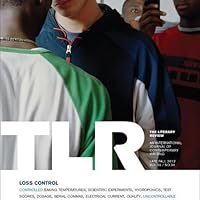
February 6, 2013
By Gabriel Blackwell
For The Literary Review
Volume 54 "Emo, Meet Hole"
I am as fascinated by A&E’s reality show Hoarders as I am terrified by it. I fear this
compulsion as I fear the cliff’s edge—I have no wish to throw myself off, but what if
I suddenly did? We say that compulsion is a slippery slope, as if we could ski to safety, but to me it seems a drop-off. Beware. The fascination is in watching people lose
the ground beneath their feet through a single moment’s inattention. Compulsion,
like gravity, carries them the rest of the way. I am not a hoarder, but neither were
they before the unthinkable happened: death or divorce, some sort of loss. They try
to fill the holes in their hearts with things, but keep coming up short, their homes
become unintended accumulations that crowd out life rather than welcoming it in.
Gabriel Francisco de Boya, the young man of Peter Mountford’s debut novel,
A Young Man’s Guide to Late Capitalism, seems to have fallen off the cliff some
time before the novel starts. He spends most of the narrative searching for the
exact site of his stumble: “[T]hough he wished it weren’t so, once certain college
buddies started buying giant condos in the Meatpacking District and kicking up
their midnight blue Prada sneakers on their burnished leather ottomans, he did feel
a many-pronged discontent.” His compulsion is not to hoard things but money. He
accepts a job with a “sleazy” hedge fund—“a poster child for the perils, and potential profits, of unchecked avarice”—in spite of the fact that his mother has called
that very same hedge fund, “the worst animal in this menagerie [of hedge funds].”
His justification? He will have made enough money in ten years to retire at forty.
Just a few million in the bank, and he can live off the interest for the rest of his life.
His first assignment is in La Paz, investigating the new Bolivian administration’s plans to nationalize the gas industry there. Mountford has not chosen South
America for its picturesqueness—Gabriel asks his driver what there is to see in
Bolivia on his way to the airport to catch his flight home to the US—but because
the echoes of the history of avarice are particularly loud there. As Mountford’s narrator reminds us: “When Hernán Cortés encountered Montezuma’s emissaries in
1519, he reportedly said, ‘Let your king send us more gold, for I and my companions
have a disease of the heart, which only gold can cure.’” In the jungles of what would
become Brazil and Bolivia, natives responded to similar requests by pouring molten
gold down the throats of captured conquistadors.
Gabriel undergoes a kind of alchemy, too, falling in love with, but betraying,
Lenka, the press liaison for the new president. The violence of A Young Man’s Guide
to Late Capitalism is psychic: “In Theravada Buddhism, the cause of all human suffering is . . . craving . . . The root of our problem, the cause of all human misery,
is tanha: our insatiable craving for more.” For Gabriel, that more is not more of
something, but more of everything; more for the sake of more. Even while Gabriel
is “trying to get up the gumption to kiss [Lenka]” Mountford writes, “he [is] still
taking notes for his next message to Priya,” the ruthless manager of the hedge fund
he works for. Those notes, as Gabriel knows, could cost Lenka her job, but they will
help him to keep his. He can’t see that in pursuing these mutually-exclusive goals,
love and work, he is nonetheless choosing between them, and not in Lenka’s favor.
This kind of narrative sleight-of-hand is what Mountford does so well. He can
show us Gabriel’s rationalizations and self-deceptions without also excusing them:
Gabriel had noticed that of all the cardinal sins, greed was the most uniformly
maligned . . . Envy, wrath, and pride flared once in a while in everyone, and so
they were easily appreciated. Greed however held purely pejorative implications.
Unlike the rest, it wasn’t seen as spawned of heart—of passions. It was seen as a
cold and cerebral sin, a schemer’s sin, one that had to be committed knowingly.
But Gabriel didn’t see it that way. To him, it was just as complex and obsessive a
vice as lust, envy, or wrath
Here is a fully-fleshed character, a character with flaws, neither a hero nor a villain.
We are tempted to agree with him, to see the world as an inherently greedy place.
But Mountford shows us the error in that logic: “The issue wasn’t that [Gabriel]
wanted to be rich, per se, but that he wanted to be done with so much wanting. It was a feedback loop . . . he needed to have enough money to be done with the issue
of money forever.” This is how collecting becomes compulsion. This is the step that
only a look back up the cliff will tell us was the wrong one to make. A Young Man’s
Guide to Late Capitalism is acid satire, a poison pen taken to the idealists who are
regularly loosed by liberal arts educations upon a world not bound by ideals, but by
commerce, where hoarders are much more common than humanitarians.
Mountford seems to say that capitalism itself is to blame, and perhaps he is
right. The final scene of the novel is preceded by a description of Gabriel’s New York
apartment reminiscent of the Xanadu of Citizen Kane:
The decorator had purchased art, furniture, and identified the places those objects
should reside. Gabriel had said he could take it from there, but he still hadn’t managed to unpack any of it. The items all stood around, swaddled in huge sheets of
plastic or bubble wrap, waiting to be put to use.
Charles Foster Kane died alone, with a word on his lips that no one could interpret
and a mansion filled with crated valuables bought but never opened. The inference
of the film, like Mountford’s novel, is clear: one lives life, or one wastes it trying to
purchase what cannot be purchased.
A Young Man’s Guide to Late Capitalism evinces a surprising and deep empathy for the sad condition of its protagonist without falling into a false or sentimental
sympathy—to understand avarice does not have to mean excusing it. As Mountford
writes:
The capitalist paradigm is predicated on an acceptance, if not a passionate
embrace, of that craving. When Gabriel first went to Bolivia, young and callow,
he wrote in his Moleskine, “The American dream has turned out to be just that:
a dream. It is an impossible fantasy.”
How much more does it seem a nightmare when the ugliest caricature of it is
broadcast directly into my living room by a television set surrounded by books,
magazines, furniture, art, DVDs, CDs—all the ephemera of the everyday that cease
to seem ephemeral when they begin to aggregate. For me, Mountford’s novel is a
reminder that the value of material goods is at best a temporary delusion, based on
supply and demand, and at worst a mental illness, a substitution of things for life.
Values—those that count, anyway—have to do with what things tend to make barriers against.
For more great reading
Subscribe to The Literary Review
For The Literary Review
Volume 54 "Emo, Meet Hole"
I am as fascinated by A&E’s reality show Hoarders as I am terrified by it. I fear this
compulsion as I fear the cliff’s edge—I have no wish to throw myself off, but what if
I suddenly did? We say that compulsion is a slippery slope, as if we could ski to safety, but to me it seems a drop-off. Beware. The fascination is in watching people lose
the ground beneath their feet through a single moment’s inattention. Compulsion,
like gravity, carries them the rest of the way. I am not a hoarder, but neither were
they before the unthinkable happened: death or divorce, some sort of loss. They try
to fill the holes in their hearts with things, but keep coming up short, their homes
become unintended accumulations that crowd out life rather than welcoming it in.
Gabriel Francisco de Boya, the young man of Peter Mountford’s debut novel,
A Young Man’s Guide to Late Capitalism, seems to have fallen off the cliff some
time before the novel starts. He spends most of the narrative searching for the
exact site of his stumble: “[T]hough he wished it weren’t so, once certain college
buddies started buying giant condos in the Meatpacking District and kicking up
their midnight blue Prada sneakers on their burnished leather ottomans, he did feel
a many-pronged discontent.” His compulsion is not to hoard things but money. He
accepts a job with a “sleazy” hedge fund—“a poster child for the perils, and potential profits, of unchecked avarice”—in spite of the fact that his mother has called
that very same hedge fund, “the worst animal in this menagerie [of hedge funds].”
His justification? He will have made enough money in ten years to retire at forty.
Just a few million in the bank, and he can live off the interest for the rest of his life.
His first assignment is in La Paz, investigating the new Bolivian administration’s plans to nationalize the gas industry there. Mountford has not chosen South
America for its picturesqueness—Gabriel asks his driver what there is to see in
Bolivia on his way to the airport to catch his flight home to the US—but because
the echoes of the history of avarice are particularly loud there. As Mountford’s narrator reminds us: “When Hernán Cortés encountered Montezuma’s emissaries in
1519, he reportedly said, ‘Let your king send us more gold, for I and my companions
have a disease of the heart, which only gold can cure.’” In the jungles of what would
become Brazil and Bolivia, natives responded to similar requests by pouring molten
gold down the throats of captured conquistadors.
Gabriel undergoes a kind of alchemy, too, falling in love with, but betraying,
Lenka, the press liaison for the new president. The violence of A Young Man’s Guide
to Late Capitalism is psychic: “In Theravada Buddhism, the cause of all human suffering is . . . craving . . . The root of our problem, the cause of all human misery,
is tanha: our insatiable craving for more.” For Gabriel, that more is not more of
something, but more of everything; more for the sake of more. Even while Gabriel
is “trying to get up the gumption to kiss [Lenka]” Mountford writes, “he [is] still
taking notes for his next message to Priya,” the ruthless manager of the hedge fund
he works for. Those notes, as Gabriel knows, could cost Lenka her job, but they will
help him to keep his. He can’t see that in pursuing these mutually-exclusive goals,
love and work, he is nonetheless choosing between them, and not in Lenka’s favor.
This kind of narrative sleight-of-hand is what Mountford does so well. He can
show us Gabriel’s rationalizations and self-deceptions without also excusing them:
Gabriel had noticed that of all the cardinal sins, greed was the most uniformly
maligned . . . Envy, wrath, and pride flared once in a while in everyone, and so
they were easily appreciated. Greed however held purely pejorative implications.
Unlike the rest, it wasn’t seen as spawned of heart—of passions. It was seen as a
cold and cerebral sin, a schemer’s sin, one that had to be committed knowingly.
But Gabriel didn’t see it that way. To him, it was just as complex and obsessive a
vice as lust, envy, or wrath
Here is a fully-fleshed character, a character with flaws, neither a hero nor a villain.
We are tempted to agree with him, to see the world as an inherently greedy place.
But Mountford shows us the error in that logic: “The issue wasn’t that [Gabriel]
wanted to be rich, per se, but that he wanted to be done with so much wanting. It was a feedback loop . . . he needed to have enough money to be done with the issue
of money forever.” This is how collecting becomes compulsion. This is the step that
only a look back up the cliff will tell us was the wrong one to make. A Young Man’s
Guide to Late Capitalism is acid satire, a poison pen taken to the idealists who are
regularly loosed by liberal arts educations upon a world not bound by ideals, but by
commerce, where hoarders are much more common than humanitarians.
Mountford seems to say that capitalism itself is to blame, and perhaps he is
right. The final scene of the novel is preceded by a description of Gabriel’s New York
apartment reminiscent of the Xanadu of Citizen Kane:
The decorator had purchased art, furniture, and identified the places those objects
should reside. Gabriel had said he could take it from there, but he still hadn’t managed to unpack any of it. The items all stood around, swaddled in huge sheets of
plastic or bubble wrap, waiting to be put to use.
Charles Foster Kane died alone, with a word on his lips that no one could interpret
and a mansion filled with crated valuables bought but never opened. The inference
of the film, like Mountford’s novel, is clear: one lives life, or one wastes it trying to
purchase what cannot be purchased.
A Young Man’s Guide to Late Capitalism evinces a surprising and deep empathy for the sad condition of its protagonist without falling into a false or sentimental
sympathy—to understand avarice does not have to mean excusing it. As Mountford
writes:
The capitalist paradigm is predicated on an acceptance, if not a passionate
embrace, of that craving. When Gabriel first went to Bolivia, young and callow,
he wrote in his Moleskine, “The American dream has turned out to be just that:
a dream. It is an impossible fantasy.”
How much more does it seem a nightmare when the ugliest caricature of it is
broadcast directly into my living room by a television set surrounded by books,
magazines, furniture, art, DVDs, CDs—all the ephemera of the everyday that cease
to seem ephemeral when they begin to aggregate. For me, Mountford’s novel is a
reminder that the value of material goods is at best a temporary delusion, based on
supply and demand, and at worst a mental illness, a substitution of things for life.
Values—those that count, anyway—have to do with what things tend to make barriers against.
For more great reading
Subscribe to The Literary Review

March 23, 2012
This is a review I wrote for Bookslut:
Peter Mountford’s debut novel, A Young Man's Guide to Late Capitalism, provides refreshing insight into the seemingly clear-cut stories of unchecked corporate greed which have become ubiquitous in recent headlines. Mountford’s portrayal of Gabriel de Boya, a young hedge fund lackey who is seduced by the ethically sticky world of Big Finance, brings a much-needed human element to the pervasive theme of big-business avarice.
Gabriel is on assignment in La Paz, posing as a political journalist as he scouts for Calloway, a ruthless New York hedge fund. In exchange for sniffing out information about the newly-elected progressive President Evo Morales’s plans for oil distribution, Gabriel gets $19,500 a month. The impressive salary also comes at the expense of his having to lie to the Bolivians he meets about his true purposes, in order to survive at the company. At the outset of the novel, the stakes are clear, but as Gabriel becomes more involved in his assignment, the risks become less foreseeable, the ethics stickier. Love, inevitably, enters and complicates things, when Gabriel becomes involved with Lenka, Evo’s press secretary: the woman he cares for most is the person to whom revealing his secret would be most dangerous.
The very premise of A Young Man’s Guide to Late Capitalism is a house of cards; we are aware of this as we clench our teeth and wait for Gabriel to make a false move, blow his cover, and the disaster which will inevitably follow. As the situation grows more immediate and more dire, so, too, do the emotional stakes; the climax approaches with the urgency of a political thriller, but their results resonate with the weight of a tragedy. This is Mountford’s triumph: he has created a commentary on contemporary economics that is as moving and genuine as it is biting and satirical.
As if the logistical demands of Gabriel’s assignment weren’t complicated enough, he must constantly wrestle with the morality of his chosen path. He is sworn to secrecy, for example, about the circumstances surrounding the fund’s unusually high profits following September 11, 2001, when his boss, fund manager Priya Singh, began setting up hedges against the subsequent crash as soon as the first plane hit. Gabriel does not quite share Priya’s indifference to the unfortunate intersection of moral irresponsibility and the business of making money, but he is awed by its power; his interpretation of such aggressive ambition is that “entire nations could, it turned out, be brought to their knee by the collective whim of a few dozen math whizzes in monochromatic cubicles in lower Manhattan.”
Gabriel’s complexity, and his relatability, lies in his resistance to simply aspiring to become one of those math whizzes. He is open about his attraction to money, but strives to rationalize it away. The real goal, he tells Lenka, is to make enough in a short amount of time that he doesn’t have to bother himself with the drudgery of work anymore and can focus on life’s more rewarding endeavors. Earlier, however, he laments the fate of being broke in New York, where “demonstrations, overt and implied, of the advantages of having heaps of money were so common that they ceased to register” -- this suggests a less pure motive, as does his discomfort with greed being the “most uniformly maligned” of the seven deadly sins. The more Gabriel defends his ambitions to himself, the more it seems that he is seeking forgiveness for them. Presumably, Mountford suggests, if the book were told from Priya’s point of view, we might find similar contradictions. Such in-depth analysis of the motives of six-figure earners seems like new territory; Mountford’s willingness to allow Gabriel to live in the gray area between what we would more commonly regard as pure altruism and pure evil is part of what makes us so invested in the decision he will ultimately make -- can he survive in the gray area, we wonder, or is he compelled to choose one path over the other?
The conundrum is illustrated quite literally in the form of Gabriel’s mother, a college professor and dyed-in-the-wool leftist who sees organizations like Calloway as the devil incarnate. When Gabriel deceives his mother, as with Lenka, there is more at stake than his professional future, and yet another layer of moral complexity is added to the mix: what are our duties to our loved ones, when they conflict with our political convictions? In the book’s heartbreaking final chapters, Mountford poses the question in a new way: is it a greater sin to side with evil, or to grow so impassioned against it that we ignore the responsibilities of unconditional love?
These questions are conspicuously absent from most modern fiction, and Mountford’s honest and carefully wrought meditation on the implications of wealth and those who pursue it fills that gap. A Young Man’s Guide to Late Capitalism will be remembered as a touchstone work of the Era of Twenty-First Century Economic Crises.
Click here for the accompanying piece, an interview with the author, Peter Mountford: http://www.bookslut.com/features/2011...
Peter Mountford’s debut novel, A Young Man's Guide to Late Capitalism, provides refreshing insight into the seemingly clear-cut stories of unchecked corporate greed which have become ubiquitous in recent headlines. Mountford’s portrayal of Gabriel de Boya, a young hedge fund lackey who is seduced by the ethically sticky world of Big Finance, brings a much-needed human element to the pervasive theme of big-business avarice.
Gabriel is on assignment in La Paz, posing as a political journalist as he scouts for Calloway, a ruthless New York hedge fund. In exchange for sniffing out information about the newly-elected progressive President Evo Morales’s plans for oil distribution, Gabriel gets $19,500 a month. The impressive salary also comes at the expense of his having to lie to the Bolivians he meets about his true purposes, in order to survive at the company. At the outset of the novel, the stakes are clear, but as Gabriel becomes more involved in his assignment, the risks become less foreseeable, the ethics stickier. Love, inevitably, enters and complicates things, when Gabriel becomes involved with Lenka, Evo’s press secretary: the woman he cares for most is the person to whom revealing his secret would be most dangerous.
The very premise of A Young Man’s Guide to Late Capitalism is a house of cards; we are aware of this as we clench our teeth and wait for Gabriel to make a false move, blow his cover, and the disaster which will inevitably follow. As the situation grows more immediate and more dire, so, too, do the emotional stakes; the climax approaches with the urgency of a political thriller, but their results resonate with the weight of a tragedy. This is Mountford’s triumph: he has created a commentary on contemporary economics that is as moving and genuine as it is biting and satirical.
As if the logistical demands of Gabriel’s assignment weren’t complicated enough, he must constantly wrestle with the morality of his chosen path. He is sworn to secrecy, for example, about the circumstances surrounding the fund’s unusually high profits following September 11, 2001, when his boss, fund manager Priya Singh, began setting up hedges against the subsequent crash as soon as the first plane hit. Gabriel does not quite share Priya’s indifference to the unfortunate intersection of moral irresponsibility and the business of making money, but he is awed by its power; his interpretation of such aggressive ambition is that “entire nations could, it turned out, be brought to their knee by the collective whim of a few dozen math whizzes in monochromatic cubicles in lower Manhattan.”
Gabriel’s complexity, and his relatability, lies in his resistance to simply aspiring to become one of those math whizzes. He is open about his attraction to money, but strives to rationalize it away. The real goal, he tells Lenka, is to make enough in a short amount of time that he doesn’t have to bother himself with the drudgery of work anymore and can focus on life’s more rewarding endeavors. Earlier, however, he laments the fate of being broke in New York, where “demonstrations, overt and implied, of the advantages of having heaps of money were so common that they ceased to register” -- this suggests a less pure motive, as does his discomfort with greed being the “most uniformly maligned” of the seven deadly sins. The more Gabriel defends his ambitions to himself, the more it seems that he is seeking forgiveness for them. Presumably, Mountford suggests, if the book were told from Priya’s point of view, we might find similar contradictions. Such in-depth analysis of the motives of six-figure earners seems like new territory; Mountford’s willingness to allow Gabriel to live in the gray area between what we would more commonly regard as pure altruism and pure evil is part of what makes us so invested in the decision he will ultimately make -- can he survive in the gray area, we wonder, or is he compelled to choose one path over the other?
The conundrum is illustrated quite literally in the form of Gabriel’s mother, a college professor and dyed-in-the-wool leftist who sees organizations like Calloway as the devil incarnate. When Gabriel deceives his mother, as with Lenka, there is more at stake than his professional future, and yet another layer of moral complexity is added to the mix: what are our duties to our loved ones, when they conflict with our political convictions? In the book’s heartbreaking final chapters, Mountford poses the question in a new way: is it a greater sin to side with evil, or to grow so impassioned against it that we ignore the responsibilities of unconditional love?
These questions are conspicuously absent from most modern fiction, and Mountford’s honest and carefully wrought meditation on the implications of wealth and those who pursue it fills that gap. A Young Man’s Guide to Late Capitalism will be remembered as a touchstone work of the Era of Twenty-First Century Economic Crises.
Click here for the accompanying piece, an interview with the author, Peter Mountford: http://www.bookslut.com/features/2011...

July 18, 2011
"[...]Despite being one of the safest and most prosperous countries in human history, the United States was actually a very bizarre place. Elsewhere in the world, the unattainability of great fame and fortune was more readily accepted, and so life was less driven by grandiose fantasies. Elsewhere, people wouldn't tell their children that they could achieve anything, because, of course, they couldn't."
I saw Peter Mountford's book while browsing through NetGalley and was intrigued by the title. Then I basically let it sit on my I-pad for a while, and had to download it again after it expired. One day, I was leafing through my college alumni magazine, and saw in the alumni updates, that Peter Mountford went to college with me, at the same time I did. This would be incredibly unremarkable, except for the fact that I went to a college with only 850 people and I'm the type of person that gets excited when I know someone that does something. So, I bumped the book up the queue, and boy am I happy that I did.
Mountford's novel takes place mostly over a few days in the life of Gabriel Francisco de Boya, the novel's protagonist, and a freelance journalist turned "researcher" for a predatory hedge fund. He has been sent to Bolivia by his new boss to investigate any potential impact that societies' politics and economy might have on the US markets. Gabriel pretends to be a journalist as he tries to get close to the "higher ups," both foreign and local, to find the information that will essentially keep him his brand new job: a job that he supposes will earn him enough money for early retirement after only a few years. Gabriel, as the son of a single mother who is a liberal professor, struggles with his identity as henchman for the dark specter of capitalism, but also with his tenuous position as a member of the New York elite with whom he graduated from Brown.
Mountford studied international relations and his father worked for the IMF (according to an interview at the Millions), and his book is heavy on the academics. The book contains lengthy discussion of South American economic policy, Bolivian history, the behavior of markets, game theory, and other things that I've never personally been super interested in (except for game theory, which is pretty cool). And yet, these mini-lectures flow seamlessly with the other aspects of the novel: the suspense of Gabriel's precarious situation, the romance between Gabriel and a member of the newly elected president of Bolivia's staff, and the internal struggles that Gabriel faces concerning his own family, his own economic and moral quandary, and his relationship with the culture of Bolivia and his own mixed ethnicity. The internal ruminations on his race and on his desire are some of the most interesting and provocative in the book. For example:
"Growing up, he never considered the possibility that his identity might be a fixed thing, that it might not be something that could or should be adjusted for each situation. He had been born with multiple identities, after all: Californian, Chilean, Soviet, bourgeois, only child of a single mother, Latino, Caucasian. In these, he saw options."
or
"Not that Gabriel was, or ever, had been, a greedy person; but money, in general -- the plain and unassailable acts of acquiring and spending it -- had turned out to occupy a more important role in adulthood than he'd expected. The issue finally wasn't that he wanted to be rich, per se, but that he wanted to be done with so much wanting. It was a feedback loop, and the only way out was deeper in: he needed to have enough money to be done with the issue of money forever."
In the end, it is these internal struggles that lie at the heart of the book. Near the end of the book, a member of the hotel staff where Gabriel is staying tells him that he is a "sh***y person" and that he, Alejo, "[is] not like [Gabriel]." In response Gabriel "envied the purity of that perspective, the tender idea that the world was place where good people and bad people were locked in an epic struggle -- what a gorgeous notion!" It is ambiguity that in the end forces some of the most difficult decisions for Gabriel in the book, and the decisions that he makes remain shrouded in the same ambiguity. There is something to say here about human nature and our paradoxical relationship to certainty and desire. In desiring to stop desiring, we still desire. In our quest for certainty, we find ambiguity.
Mountford is masterful at interweaving all of the elements that make this book educational, thoughtful and also really readable. Not much about this book disappointed me as a reader (maybe a couple moments where the dialogue was a little too clever), and I hope to see more from this promising debut novelist. I would highly recommend this book; it's one of my favorites of the year so far.
**Full disclosure: I received a copy of this book from the publisher for review
I saw Peter Mountford's book while browsing through NetGalley and was intrigued by the title. Then I basically let it sit on my I-pad for a while, and had to download it again after it expired. One day, I was leafing through my college alumni magazine, and saw in the alumni updates, that Peter Mountford went to college with me, at the same time I did. This would be incredibly unremarkable, except for the fact that I went to a college with only 850 people and I'm the type of person that gets excited when I know someone that does something. So, I bumped the book up the queue, and boy am I happy that I did.
Mountford's novel takes place mostly over a few days in the life of Gabriel Francisco de Boya, the novel's protagonist, and a freelance journalist turned "researcher" for a predatory hedge fund. He has been sent to Bolivia by his new boss to investigate any potential impact that societies' politics and economy might have on the US markets. Gabriel pretends to be a journalist as he tries to get close to the "higher ups," both foreign and local, to find the information that will essentially keep him his brand new job: a job that he supposes will earn him enough money for early retirement after only a few years. Gabriel, as the son of a single mother who is a liberal professor, struggles with his identity as henchman for the dark specter of capitalism, but also with his tenuous position as a member of the New York elite with whom he graduated from Brown.
Mountford studied international relations and his father worked for the IMF (according to an interview at the Millions), and his book is heavy on the academics. The book contains lengthy discussion of South American economic policy, Bolivian history, the behavior of markets, game theory, and other things that I've never personally been super interested in (except for game theory, which is pretty cool). And yet, these mini-lectures flow seamlessly with the other aspects of the novel: the suspense of Gabriel's precarious situation, the romance between Gabriel and a member of the newly elected president of Bolivia's staff, and the internal struggles that Gabriel faces concerning his own family, his own economic and moral quandary, and his relationship with the culture of Bolivia and his own mixed ethnicity. The internal ruminations on his race and on his desire are some of the most interesting and provocative in the book. For example:
"Growing up, he never considered the possibility that his identity might be a fixed thing, that it might not be something that could or should be adjusted for each situation. He had been born with multiple identities, after all: Californian, Chilean, Soviet, bourgeois, only child of a single mother, Latino, Caucasian. In these, he saw options."
or
"Not that Gabriel was, or ever, had been, a greedy person; but money, in general -- the plain and unassailable acts of acquiring and spending it -- had turned out to occupy a more important role in adulthood than he'd expected. The issue finally wasn't that he wanted to be rich, per se, but that he wanted to be done with so much wanting. It was a feedback loop, and the only way out was deeper in: he needed to have enough money to be done with the issue of money forever."
In the end, it is these internal struggles that lie at the heart of the book. Near the end of the book, a member of the hotel staff where Gabriel is staying tells him that he is a "sh***y person" and that he, Alejo, "[is] not like [Gabriel]." In response Gabriel "envied the purity of that perspective, the tender idea that the world was place where good people and bad people were locked in an epic struggle -- what a gorgeous notion!" It is ambiguity that in the end forces some of the most difficult decisions for Gabriel in the book, and the decisions that he makes remain shrouded in the same ambiguity. There is something to say here about human nature and our paradoxical relationship to certainty and desire. In desiring to stop desiring, we still desire. In our quest for certainty, we find ambiguity.
Mountford is masterful at interweaving all of the elements that make this book educational, thoughtful and also really readable. Not much about this book disappointed me as a reader (maybe a couple moments where the dialogue was a little too clever), and I hope to see more from this promising debut novelist. I would highly recommend this book; it's one of my favorites of the year so far.
**Full disclosure: I received a copy of this book from the publisher for review

January 26, 2013
Peter was a classmate of mine in college. "Acquaintance" might even be overstating it. We had friends in common. My reaction to this book reminds me of when I once prepared a Mexican dinner for a family who hosted me at their house. One of them said, "I knew this would be good, but I didn't know it would be GOOD." I wasn't just introducing them to the world of tortillas and cheese. I had scrutinized every ingredient, made everything from scratch, and brought my experience to bear on it. That's my reaction to this book. I knew it would be good. I knew that my college was an environment where everyone could have written a great book—it was so full of intelligence, wackiness, emotion, passion, and creativity that it comes as no surprise. I knew it would be good, I just didn't know it would be GOOD.
I'm about one third of the way through this. It's amazing. It's GOOD. More as I progress.
***
Just finished. Just... Wow. Great book. I'm not a big fiction reader (look at my library here... probably about 10%). More later.
***
This is the best fiction book I've read in a long time. Probably I could just say one of the best I've read in a long time, period. Besides being tickled at the references to Claremont, where I attended college and (one of my) graduate school I also am a seducee of América. After reading the blurb, I thought it might not be that different from Tambien La Lluvia and on some levels it's that story in reverse. But instead of a pretty good movie, this is an excellent book. The language** is almost Chabonesque in its brusque clarity, but tuned in for my generation. The main character seems like he may be largely autobiographical, or a breakfast scramble of autobiographical features and almost everyone else is defined in terms of its relationship to him.
But what makes this such a virtuoso performance isn't, to me, the well executed story, the interesting deep characters, or the historical-economical interludes. It's the penetrating honest perspective on the world. The passage that explains why greed is a sin of the heart and not the mind despite how it's portrayed and how all of these issues play into the Rube Goldberg contraption that is the world, the global economy, and the society within it is the best among many that see through the yin totebagger dorm room revolutionaries and the yang 1%ers of Wall Street and how it all breaks down in the third world.
You want Gabo to pull off the heist and live happily ever after in a nice—but not too nice—house with Lenka and use his winnings for Good®. But she turns out to have her own agenda—and you wonder if it really was just because of G's infidelity or, whether as some of her family hinted, she's a Killer anyway. You want this more because any ending is too rare these days, let alone a good one.
But, Poor Gabriel ends up as the Anti-Shlemiel, his misfortune and his lack of only a slight amount of will to resist it being what actually succeeding in what he at least appears subconsciously to want in his heart, even if there is some regret in an end scene that is a more subtle version of Death in Venice's. And his mother can't stand him—because he is against everything she stands for, or just further proof that she is just as vain? (or just as much of a shlemielah?)
It's not the happy ending, but it's not a gratuitously sad one either. I can live with that.
Someone should be making a movie of this soon. Gael García Bernal?
** The post-"own it" post-slur usage of "queer" is great. It reminds me of U2 declaring that while Charles Manson stole Helter Skelter from The Beatles, they were stealing it back.
This entire review has been hidden because of spoilers.

January 16, 2012
After I had gotten my master’s in journalism and decided that I could no longer stand to do my night-shift position as a morning news producer in a market 119 TV station in southern Illinois even though I had no other job prospects, I moved into my parent’s house in Chicago.
This was the summer of 2005, so I was experiencing my-own-private-recessionary job market in a boom time. Everyone around me seemed to be doing great, though, buying houses and expensive cars, wearing fancy shoes and glasses, going out for drinks and appetizers every night of the week…just generally having a good time and showing it. Meanwhile, I was sweating away in an un-air-conditioned basement of a bungalow preparing to be a very part-time teacher (for a surprisingly low wage) at a nearby city college in its communications department without a lot else to do.
In what was to be the last summer of my father’s life and probably the last sweet thing he did for me, he decided that since I was going to be a journalism “professor,” he would buy me a subscription to the Wall Street Journal. So I spent every morning reading those daily papers from cover to (really!) cover.
One of the stories getting a lot of coverage in the Journal that I became weirdly obsessed with was the Bolivian election of Evo Morales. I’m not certain why, but probably playing into my interest was my discovery that the world was topsy-turvy, that the dumb people were becoming successful, and the truly smart and talented people (yes, I was in that kind of self-righteous state of mind) were being left behind, except in this one instance, this one election, where someone (indigenous and a proletariat!) had a chance to truly take care of a such an exploited country. It probably gave me some false sense of hope.
I kinda forgot about that period of my life, but when I read “A Young Man’s Guide to Late Capitalism,” by Peter Mountford, holay jeeze, it all came back. Honestly, the book seems to tap directly into that overeducated, jealous, lonely, Master of Science graduate seething about the unfairness of the world in my parent’s basement. It captures that sense of wanting in a world where everyone appears to be having and does so in the context of the ’05 Bolivian election.
This is the type of book I’ve been waiting to read, and I can only hope that Mountford and other young writers like him continue to crank stuff out like this as they get a few years removed from the last decade of madness we just emerged from.
Personally, I can’t stop feeling like the 2000s didn’t happen…of course, they did happen, but it seems like a big reset button has been pushed (a lot of those bought houses are being foreclosed on now, the fancy shoes and eyewear aren’t in fashion anymore, a lot of those trendy restaurants have shuttered their doors). So, it’s easy to cop-out and say, “That was then, this is now,” when thinking about those times. But I’m relying on books like this one to remind me what we all did and didn’t do in those years and what it’s taught us about ourselves.
This was the summer of 2005, so I was experiencing my-own-private-recessionary job market in a boom time. Everyone around me seemed to be doing great, though, buying houses and expensive cars, wearing fancy shoes and glasses, going out for drinks and appetizers every night of the week…just generally having a good time and showing it. Meanwhile, I was sweating away in an un-air-conditioned basement of a bungalow preparing to be a very part-time teacher (for a surprisingly low wage) at a nearby city college in its communications department without a lot else to do.
In what was to be the last summer of my father’s life and probably the last sweet thing he did for me, he decided that since I was going to be a journalism “professor,” he would buy me a subscription to the Wall Street Journal. So I spent every morning reading those daily papers from cover to (really!) cover.
One of the stories getting a lot of coverage in the Journal that I became weirdly obsessed with was the Bolivian election of Evo Morales. I’m not certain why, but probably playing into my interest was my discovery that the world was topsy-turvy, that the dumb people were becoming successful, and the truly smart and talented people (yes, I was in that kind of self-righteous state of mind) were being left behind, except in this one instance, this one election, where someone (indigenous and a proletariat!) had a chance to truly take care of a such an exploited country. It probably gave me some false sense of hope.
I kinda forgot about that period of my life, but when I read “A Young Man’s Guide to Late Capitalism,” by Peter Mountford, holay jeeze, it all came back. Honestly, the book seems to tap directly into that overeducated, jealous, lonely, Master of Science graduate seething about the unfairness of the world in my parent’s basement. It captures that sense of wanting in a world where everyone appears to be having and does so in the context of the ’05 Bolivian election.
This is the type of book I’ve been waiting to read, and I can only hope that Mountford and other young writers like him continue to crank stuff out like this as they get a few years removed from the last decade of madness we just emerged from.
Personally, I can’t stop feeling like the 2000s didn’t happen…of course, they did happen, but it seems like a big reset button has been pushed (a lot of those bought houses are being foreclosed on now, the fancy shoes and eyewear aren’t in fashion anymore, a lot of those trendy restaurants have shuttered their doors). So, it’s easy to cop-out and say, “That was then, this is now,” when thinking about those times. But I’m relying on books like this one to remind me what we all did and didn’t do in those years and what it’s taught us about ourselves.

January 23, 2011
If I had rated this book immediately after I read it I would have given it 4 stars. It's been a week later, and the more time that has passed the more I've been thinking about it. Because it has made a long lasting impression on me I have to increase my rating to 5.
The book is well written, intellectual, and thoughtful and it will cause the reader several moments to pause and to examine our own lives. This passage made a big impression on me. Though he didn't have the words for it yet, he would later realize what had struck him was not Bolivia itself but what it implied about the United States. That despite being one of the safest and most prosperous countries in human history, The United States was actually a bizaree place. Elsewhere in the world, the unattainability of great fame and fortune was more readily accepted, and sollife was less driven by grandiose fantasies. Elsewhere, people wouldn't tell their children that they could achieve anything, because, of course, they couldn't. Shortly after finishing this book I saw a video clip of Kate Gossling wondering how she was going to provide for her kids (as she sits in her ginormous mansion--does she really need a mansion?). It definitely brings to mind the number of people trying to achieve fame through reality TV.
Once I gave myself permission to not understand the financial/global stuff I saw the story for what it was--a story about people trying to find themselves and follow their loyalties. And though many readers may find Gabriel as a louse, I found him to be no different than many young adults trying to find their way in the world--they'll learn by making mistakes. It's how they change after the mistakes that will make the difference.
A great discussion book! I look forward to more from this author.
The book is well written, intellectual, and thoughtful and it will cause the reader several moments to pause and to examine our own lives. This passage made a big impression on me. Though he didn't have the words for it yet, he would later realize what had struck him was not Bolivia itself but what it implied about the United States. That despite being one of the safest and most prosperous countries in human history, The United States was actually a bizaree place. Elsewhere in the world, the unattainability of great fame and fortune was more readily accepted, and sollife was less driven by grandiose fantasies. Elsewhere, people wouldn't tell their children that they could achieve anything, because, of course, they couldn't. Shortly after finishing this book I saw a video clip of Kate Gossling wondering how she was going to provide for her kids (as she sits in her ginormous mansion--does she really need a mansion?). It definitely brings to mind the number of people trying to achieve fame through reality TV.
Once I gave myself permission to not understand the financial/global stuff I saw the story for what it was--a story about people trying to find themselves and follow their loyalties. And though many readers may find Gabriel as a louse, I found him to be no different than many young adults trying to find their way in the world--they'll learn by making mistakes. It's how they change after the mistakes that will make the difference.
A great discussion book! I look forward to more from this author.

October 23, 2011
As I read this book, I came to despise the protagonist, the young, uber agressive, lustful (of money and women), ethically challenged Gabriel. The story follows his work during the final months of 2005 in Bolivia conducting clandestine "research" for a hedge fund, usually under the cover of being a freelance jounalist.
I became frustrated with how seemingly easy it was for Gabriel to extract information from lovers, to both of whom he reveals his true purpose in Bolivia. Each of these women, whose detailed career descriptions I'll omit here, only mentioning that they're each in prominent positions relevant to his true cause throughout the novel, are eventually willing to help him. Though I've of course never attempted anything like Gabriel's fictional job in real life, realistic as the role he plays for his hedge fund employer I do believe to be, it seems to me that women of the stature of his two bedfellows would be loathe to provide him with any of the sort of information they do after "dating" him for a few weeks.
This next comment may be trite, but by the end of the book, its title came to annoy me. The fact is there's a lot more to capitalism than the events described therein, and the book is anything but a guide. I suppose it's meant to be satirical, but I just think he could've called it something cooler.
Still, without spoiling the ending for anyone reading this review, its the ending itself that allowed me to give it four stars. I was pleased overall with Gabriel's fate. That and the facts that I very much enjoyed reading it, found it hard to put down, and admired Mountford's writing style throughout the book amount to why I gave it a four star rating. I intend to read future novels by this author.
I became frustrated with how seemingly easy it was for Gabriel to extract information from lovers, to both of whom he reveals his true purpose in Bolivia. Each of these women, whose detailed career descriptions I'll omit here, only mentioning that they're each in prominent positions relevant to his true cause throughout the novel, are eventually willing to help him. Though I've of course never attempted anything like Gabriel's fictional job in real life, realistic as the role he plays for his hedge fund employer I do believe to be, it seems to me that women of the stature of his two bedfellows would be loathe to provide him with any of the sort of information they do after "dating" him for a few weeks.
This next comment may be trite, but by the end of the book, its title came to annoy me. The fact is there's a lot more to capitalism than the events described therein, and the book is anything but a guide. I suppose it's meant to be satirical, but I just think he could've called it something cooler.
Still, without spoiling the ending for anyone reading this review, its the ending itself that allowed me to give it four stars. I was pleased overall with Gabriel's fate. That and the facts that I very much enjoyed reading it, found it hard to put down, and admired Mountford's writing style throughout the book amount to why I gave it a four star rating. I intend to read future novels by this author.
March 21, 2012
Gritty, visceral and rivetingly readable I can't believe my good fortune to have spotted this novel perched upon my local library's recommended shelf. Hotter than a pistol Mountford's prose is piquant and snappy, I for one am hanging out for his follow up. Now etched into my mind's-eye the plot captured time and place to take me on a journey I won't forget in a hurry. I've read a bit of NF about the hedge funds and financial meltdown but didn't ecpect to find this sort of insight, to the hubris of it all, in a novel. As surreal as is Gabriel's story his character is more than convincing and his predicament even plausible. Later in the book with the avenues before him emerging as the starkest of choices I could scarcely believe he clenched his teeth and pushed the envelope in the face of his beloved mother's emotional hardball...this exchange had me reeling. It would be just too lazy to hate Gabriel for his callousness and slavish quest for the dollar but unlike legions before him he was smart enough to know he could never have it all. Sometimes conflicted, yet so darkly clear about the unambiguity of his options, Gabriel shone a torch into the souls of those into whose lives he seeped in order to extract what he needed while rationalising away his decisions...decisions I hope never to have to make.

June 8, 2011
For some reason, I always want to give books fractions of stars. A Young Man's Guide to Late Capitalism<\i> should probably get 3.75 stars. It's not quite four, but definitely not three.
Jason recommended this to me, and I can see why he enjoyed it. Mountford's writing style is spare, but he finds the perfect words to describe people/things; his dialogue is also quite good. The plot was complex enough to be engaging, but not complex enough to disorient a reader without a background in Bolivian politics or hedge fund management. I am usually wary of books that take place in or around the present, but Mountford's is an exception; he effectively weaves in current events and real figures without seeming kitsch or dated.
Caveat: there is occasional profanity (not enough that I was bothered. Is that bad?) and adult promiscuity (also didn't really bother me, though. It was tamer than East of Eden<\i>).
Jason recommended this to me, and I can see why he enjoyed it. Mountford's writing style is spare, but he finds the perfect words to describe people/things; his dialogue is also quite good. The plot was complex enough to be engaging, but not complex enough to disorient a reader without a background in Bolivian politics or hedge fund management. I am usually wary of books that take place in or around the present, but Mountford's is an exception; he effectively weaves in current events and real figures without seeming kitsch or dated.
Caveat: there is occasional profanity (not enough that I was bothered. Is that bad?) and adult promiscuity (also didn't really bother me, though. It was tamer than East of Eden<\i>).
February 18, 2014
I read this book in early summer or fall of about 2012. I recall it was a time when Chessie could go for long walks in the neighborhood and I often carried a book with me to read while she mosied along and sniffed every tree and leaf. She was old enough that I indulged her pleasure if the weather was good and I was off of work.
I have forgotten many books but this one I remember - partly due to the weird cover art and long title. I should remember to recommend this book to Keith when he has more time for reading.
I should look up other books by this author. The story is a contemporary coming of age story. It is about greed and relationships and the conflict between the two. Can a person take advantage of the excesses of capitalist exploitation in a developing country and remain honest enough to be in relationship. I would say the answer is no and this book honestly presents the tension in trying.
I have forgotten many books but this one I remember - partly due to the weird cover art and long title. I should remember to recommend this book to Keith when he has more time for reading.
I should look up other books by this author. The story is a contemporary coming of age story. It is about greed and relationships and the conflict between the two. Can a person take advantage of the excesses of capitalist exploitation in a developing country and remain honest enough to be in relationship. I would say the answer is no and this book honestly presents the tension in trying.

April 16, 2011
A great debut in the vein of Adam Haslett and Jess Walters, A Young Man's Guide introduces a talented new voice in morally ambiguous Gabriel. The son of a headstrong single mother who fled Pinochet and became a liberal professor in California, Gabriel thrillingly takes a job with a predatory hedge fund to go undercover in La Paz, Bolivia at the end of 2005. After casting a web of lies and deceit he must decide where his ultimate loyalties lie when he starts to fall for the new president-elect's beautiful press secretary, who conveniently holds the key to information that could make Gabriel financially set for life. Can Gabriel profit with the poverty of Bolivia staring him in the face, knowing he'll lose the women he loves by doing so? A stunning first book from a sharp new talent. Highly recommended.

Want to Read
January 4, 2011I'm very interested in reading this book. The reviews that I've seen are great, and I love the fact that Peter Mountford, the author, has lived in so many places, including Ecuador, Scotland, Mexico, New York, Washington D.C., and Los Angeles (and I'm sure I left a few places out.) I love reading books written by well-traveled writers because they really can give the locations in their books a "sense of place" -- something that is so wonderful about many books. This also seems to be a very interesting topic, and I'm looking forward to reading A Young Man's Guide to Late Capitalism. A nice trip (via the book) to Bolivia seems like a great thing to do right about now!!

January 11, 2011
Received a galley through a web promotion and got into the story very easily. There's a quality to the writing - I want to call it "new masterpiece." The voice is strong and sure, and the details are so well-rendered. Though it's clearly a contemporary novel, it has the feeling of being written a while ago mostly because it's drawing from a great literary tradition and it feels strong enough to last. On top of the stellar quality of the writing is the intriguing story. It's commentary on globalization is not only timely, but timeless. Thought-provoking and emotionally gripping. Love this book.

August 10, 2011
This book is exactly the type I enjoy reading. I had no preconceived notions and learned quite a bit about Bolivia, as well as what thoughts swim inside the mind of a hedge-funder - hypothetically, of course. The history of industry in La Paz, Bolivia and how it relates to the global economy was eye-opening. Prior to reading this book, I had known little about the country. The novel is a well-written depiction of how politics, industry, poverty, and greed shape lives. I set down the book several hours ago and am still reeling from the twist at the end. Going over the details in my mind, as if the characters had been people I actually knew and I myself am still reeling from what happened.

January 3, 2016
A smart and compelling trip into Latin American politics, international finance, and healthy expense accounts. A young, bright college graduate is offered a Faustian job snooping into Bolivia's economic prospects on behalf of a powerful hedge fund, a fact he must assiduously hide from his Chilean exile mother, and his girlfriend, press attaché to Evo Morales. Things get complicated quickly. The book succeeds in educating (about Bolivian history, game theory, short selling) while it entertains, conveying both the beautiful and ugly sides of Bolivia, and the stress and moral ambiguity undertaken by both the do-gooders and the profiteers.

October 7, 2011
Disclaimer: Peter is a friend and colleague.
There are countless things to commend about this novel: the authenticity of the representation of Bolivian culture; the twistedly true rendition of love affairs; the depth of the author's (and protagonist's) understanding of politics and economics; the success of the novelization of what was the author's experience (vs. the feeling that he should have written a memoir). But most of all what's superb is the moral distress of the protagonist, the teetering between hero and antihero all the way through.
www.elihastings.com
There are countless things to commend about this novel: the authenticity of the representation of Bolivian culture; the twistedly true rendition of love affairs; the depth of the author's (and protagonist's) understanding of politics and economics; the success of the novelization of what was the author's experience (vs. the feeling that he should have written a memoir). But most of all what's superb is the moral distress of the protagonist, the teetering between hero and antihero all the way through.
www.elihastings.com

April 17, 2011
This is a very well written book about Gabriel, who has been sent to Bolivia by the hedge fund that he works for to gather information about the new president and his plans for the country. It is interesting to watch Gabriel struggle with determining the best course of action. Lots of moral dilemmas here with great descriptions of the landscape and people of Bolivia. Great debut work. I will definitely pick up another book by this author.

January 17, 2013
The financial jargon and historical references may alienate some readers, but this book is more than a formulaic attempt at imaginative non-fiction. Mountford introduces characters that understand that risk and entropy are at the forefront of everything society holds dear, and that your salary and your relationships have the quality of transactions recorded and scrutinized as a means of mental exercise.

March 26, 2011
This is quite simply one of the smartest and most readable debuts I’ve come across in years. Mountford is a writer who rolls up his sleeves and digs into the zeitgeist all the way up to his elbows. He’s fearless in his depiction of world leaders, global events, and the oft-ignored gray areas between morality and success.
August 19, 2011
I cared about the protaganist but also wanted to see him get his come-uppance for being the shit he was. The book takes place in La Paz Bolivia, not a common locale for novels, and because of this, there is a specialness to the narrative as the reader gets a picture painted of a classic 3rd world capital with all its beauty and warts exposed. Excellent read, highly recommended
Displaying 1 - 30 of 90 reviews