Farewell to Prague is a memoir set against the turbulent events of the Nazi era in Germany and World War II England. It is the story of a girl who, at the age of six, witnesses a murder being committed by German Storm Troopers. From that moment, the happy life she has known disintegrates. Miriam Darvas has written a powerful and moving memoir of her experiences from 1933 to 1947; the story is ultimately uplifting, but with the inevitable tragedy of events in Europe in that period. JQ - The Reader
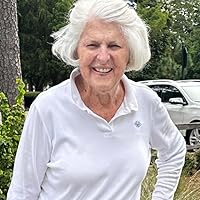
Miriam Darvas has served as the president and organizer of the National Women's Political Caucus and served on several boards and commissions. Farewell to Prague is her first book. She lives in Placerville, CA.
Farewell to Prague is an amazing story of a twelve year old's escape alone from Prague as the German occupation began in March 1939. Her circuitous two month journey by foot and by train took her from Prague, through Czechoslovakia and north through Poland to the Baltic Sea where a fisherman in his small boat took her to sweden. Departing from Goteborg she went by ship on stormy seas to Southampton.
The journey was difficult because of the deep snow, rain and stormy seas. Also she traveled through German held lands where the Gestapo were always a threat as she had no German papers. Add to this worrying about her father who had been arrested, her mother whom she left behind in Prague with the promise she would follow, and her sister who was evacuated in a separate effort.
The author's father wrote a poem, quoted before the beginning of the story:-
"The Sunken City
"Like one lost in the fog in the evening, groping to find that lost road toward the City, which yesterday, in the earthquake, sank into the Bottomless Lake; but people were expecting him there longingly, desires, beliefs, goals, and battles, wife, ecstasy, music, life; but he doesn’t yet know that all this has been lost beneath the surface; he just keeps going, or would go, but false sound shadows lead him astray from the path: woes, slogans, echoes, songs, foghorns sounding alarms, a will-o’-the-wisp, a phantom, a fog mirage; in the heavy, dense silence that aches in sympathy, the dark wings of the shadows of fate rustle, a witch’s gloating cackles, the withering horror of the deaf darkness gapes, like the throat of execution day, from its ice caves of distant old age, a wolf howls, a hyena laughs, and the dog of death barks: — "Oh, where have you gone, Sunken City? "Oh, where are you, Life, Youth?"
"János Darvas (The Author’s Father) 1929"
And the poem is all too appropriate for a beautifully written story that begins in Berlin with a seven year old watching her classmate, playmate, neighbour and first sweetheart, Kurt Blumberg, being beaten by men with truncheons, long past his falling limp on the sidewalk, for being a Jew.
"The day after they killed Kurt, Father did not allow me to go back to school. Though I loved going, I was glad not to have to go out alone. I was afraid of the men in their black boots and their red armbands."
The ordeal of crossing the border into Czechoslovakia is chilling, and it's only the beginning yet. ............
Prague was lovely.
"The white, upright blossoms of the chestnut trees lining the boulevards glowed like candles among the dark green leaves of their crowns. From the old cobblestone streets, the city’s ancient churches rose toward the heavens, their gilded cupolas glistening in the sun. The river Vltava meandered through the city, dividing the Old Town from the New.
"In the Old Town were the bustling marketplaces that had been there since time began. In the New Town were cultivated parks and elegant homes. On a hill, towering majestically above it all, stood Hradcany, the castle of the kings of Bohemia and in modern times the home of Tomas Garrigue Masaryk, founder and first president of Czechoslovakia."
"I looked forward to the spring festivals. People danced in the streets to the resounding Czech oom-pah-pah music. Sometimes I walked on the sidewalk holding Mother’s hand, keeping pace with the parade of people in national costumes. They wore crowns of flowers with ornamental streamers flowing on the air like opening blossoms. Their full skirts swished as they danced, and their embroidered vests flashed in the sun. The music drifted into the air as vibrant and varied as the balloons that floated up, up into the sky, their strings wiggling like tails."
But the Nazi threat loomed. Miriam was sent to boarding school nearby by her father, for safety. Friends of parents discussed leaving for France and advised Miriam's mother to send children to England. There was a Nazi classmate and a Sudeten German teacher at school.
"“An Aryan is a superior human being of the German race,” Obermeier intoned, emphasizing the seriousness of his statement by drumming out each word against the blackboard with his birch."
This was a lie made up by nazis. Aarya is a Sanskrit term and literally means of Light, and has nothing to do with physical characteristics of any kind, but relates to inner enlightenment and its manifestation in life and conduct of a person. Cultured breeding, civilised conduct and high values in humanitarian terms is part of connotation of the word. It was stolen and twisted by nazis, and so was Swastik, and they falsified both. ............
As Germans marched into Prague, her school closed, and everybody had to leave. Miriam and Angelika walked to Prague, eighteen miles by road, through fields and forests covered deep in snow, and list one another in Prague. Miriam arrived home next day, and they met Lex, but Steffie was taken by Germans herding masses of people outside the cafe into trucks.
"The city was devoid of Czech sounds. The guttural sounds of bellowed commands, the march of solid boots, and the rat-tat-tat of drums floated through the air along the boulevard. Troops swarmed through the city, trampling down the snow. Patrols scoured the streets. Paralyzing fear spread through the city, shuttering windows and doors. I tried not to be afraid and pretended I did not see the patrols.
"We crossed the marketplace. The vegetable stands were tightly wrapped with tarpaulin. A few peasants stood around silently, their arms folded across their chests, watching soldiers at the other end of the marketplace toppling the statue of Masaryk. My head was tightly tucked into my coat collar in the hope that perhaps I would not be seen. Mother tightened her hold on my hand and pulled me along. We took the long way around to the Café Kotva. We walked as fast as we could, trying not to cause suspicion. Several times we ducked into doorways to avoid the armed patrol.
"My heart beat faster when I saw Chris walking on the sidewalk across the street with his father. I was about to call to him when my mother squeezed my hand so tightly it hurt. I had been told that I must not recognize anyone, lest I implicate them or they us. When I saw Chris I forgot the admonition. Our eyes met and held for a moment as he walked past. I tagged along beside my mother, my heart splintering into a thousand shards."
They were attended to in Kotva by the solicitous Zelezny.
"Suddenly the shouting stopped and heads turned to the entrance of the street. Trucks were backing into the cul-de-sac and forcing people against the buildings, closing off the street. Flanked by SS officers in their black and silver, soldiers jumped out of the trucks, rifles at the ready. Shrill voices rose against the Café’s window as women, children, and men were herded toward the trucks. Steffie was among them. Lex stretched his arm across the bobbing heads in a vain attempt to reach Steffie’s hand. She was pushed farther and farther away from him and finally forced by rifle butts into a truck. Her hands clung to the tailgate as it slammed shut. The packed truck drove away and another backed into the street. More people were rounded up. The ones left behind forced themselves into the Café in an attempt to get away, and Lex was pushed against the far wall."
Zelezny fed them and put them up for the night, since it was curfew already. Miriam was sent a way by her mother through the underground resistance channel to England, handed from stranger to stranger until she arrived, various stationmasters and their wives and other strangers feeding her and looking after her along the way. The descriptions here are very evocative, the beauty of desolate winter landscape and her train ride and walk up in Tatra mountains, the slide down into Poland and ride to Danzig and further and the couple in Gdynia, and the impressive honesty and kindness of the series of strangers along the way from school to Prague to Gdynia to Carlisle who help, feed and shelter the solitary child. ............
Miriam arrived in England, at Southampton, in May after leaving Prague in March.
"Hungry, sick, and tired, I hardly cared where I was going. Dunes and downs and houses floated by like a hazy dream.
"At Victoria Station in London, we were unloaded and hauled off to a hostel, where I had a bath, ate my first meal in five days, and fell into a sound sleep between clean sheets.
"The following day, a woman dressed in a tweed suit walked me through streets covered with black fog. Lamps shed a dull sepia glow that formed weak pools of light on an invisible street. Her flashlight guided us one slow step at a time. The hall of the station was brightly lit and the people on the platform milled around casually and unperturbed, while I kept looking behind me for a column of soldiers to round us all up. The strange sound of the language, the different looking streets, the unaccustomed color of the official uniforms kept me in a constant state of anxiety."
"She looked at me intently. “Carlisle,” she repeated. I nodded. She smiled, patted me on my knee, and left. I had no more idea where Carlisle was than I had known where Katowice or Goteborg was, nor did I have any idea in which direction I was traveling. There was no end of unknown places in the world. I seemed destined to spend my life traveling on trains or on foot from town to village with no permanent place to land. I belonged nowhere."
"New landscapes sped by: green pastures of lush grass neatly parceled by hedges dividing one from another, gardens attached to bungalows like colorful aprons. This then was England where my mother believed me to be safe, but I did not feel safe. I felt as if I were skimming across a thin sheet of crackling ice that was going to give way any moment and send me plunging into an abyss of darkness to drown."
She was met with and taken home.
"The car slid through a wrought iron gate. A shiny brass plate emblazoned with the word “Nazdar” announced the entry to Miss Masters’s estate.
"What was the familiar Czech word for “so long” doing at the end of the world? Later I learned that Miss Masters had been to Prague twice. She had memorialized her visits with the copper sign, but it was the only Czech word she knew.
"The house stood on the crest of a hill, against dark trees rising into a hazy May sky. The view from its windows, which I came to know well, was of emerald meadows, lush and brilliant, gliding into distant blue-black woods. The nearer gardens were manicured lawns defined by the red and lavender blossoms of vibrant rhododendron shrubs. Beyond the circular cobblestone courtyard and through the woods, willows encircled a lake. It was fed by Eden Brook, which flowed through the village of Brampton. A narrow arched bridge led to a small island covered with azaleas and rhododendron. In time, this would become my favorite spot. I would sit hidden from view amid the greenery and wonder about what would happen next."
Miriam worried about her mother, and when she'd learned English well enough, asked Miss Masters how she could find her. She wrote as per her suggestion, and learned that Nora and Chris were in Sussex. Nora was a poor correspondent, and wrote only to say Chris had been killed by a car. Her mother wrote about getting papers from Gestapo to leave, but finally she lacked money for a ticket, and no one helped. Angelika and her family were taken by Gestapo, and Lex was sharing the apartment of Miriam's mother while their spouses were taken by Germans. ............
Miriam was sent by Miss Masters to Brighton & Hove school, and was subjected to pranks until her school performance surprised everybody. War had parents remove daughters, and Miriam was sent to Denbigh in Wales, then Kettering and then to another school, Long Dene school, to which she walked from Windsor station. This school was run by a wiser, more sympathetic principal, and had a pair of Czech brother and sister students that Miriam was happy to bond with. The two girls relocated to London to study after graduating school, while their beaux - Miriam and the Czech boy Teo, his sister Lilka and another guy Anthony had paired up - went to join air force to fight in the war. Miriam found work in a magazine Sailplane and Glider, and was taken gliding by the editor who was an enthusiast.
"Mr. Blunt and I soared over the downs of Dover. Silently suspended between sea and sky, the turmoil of life became the stuff of insubstantial smoke. The soughing of the sea merged with air currents into an empyrean dream. We went every weekend. I loved it and dreamed of becoming a pilot. Then I would be able to float above the absurdity of the discord below."
Teo visited, and subsequently was shot down over straits of Dover.
"Then Anthony was shot down, and our lives caved in. There seemed to be no consolation anywhere among the ruins and death. The wailing of the air-raid sirens, the bomber formations overhead immediately after the sirens sounded, the bombings, the collapsing buildings, the gathering of the maimed and dead — these were constant reminders that life hung by a slender thread.
"For more than a year we had been reading warning signs about the German secret weapon. Suddenly, it burst across the sky and landed in our lives."
They thought those were German planes shot down.
"At last, the government announced that these were rockets — the secret weapons London had been warned about.
"Relieved to know what the secret weapon was, we were now afraid of not knowing where the next one would crash, and walked hunched in anticipation.
"The sirens screeched continually. As more than two thousand V-1 rockets trashed the city, Londoners humorously dubbed them “Doodlebugs.”"
Miriam's office was bombed and gone, so were the places they lived in, one after another. They learned to not unpack.
"London was swarming with struggling humanity from all parts of the globe. Refugees from Europe came to seek shelter. Soldiers in tunics and turbans, khaki and blue, choked the streets. Along with the daily tragedies went an aura of licentiousness. “Here today and gone tomorrow” was an attitude expressed in lethargic indifference or frenetic activity."
After yet another raid, they found an a room in a house.
"We found an attic room. The roof was so frail that every tremor caused by rocket, plane, and anti-aircraft burst threatened to bring it down.
"This cardboard house with the sword of Damocles hanging over it was the domain of a Polish refugee, a Mr. Rosenblum.
"It was Mr. Rosenblum who reminded us that neither Lilka nor I was Jewish, because we were not born of Jewish mothers.
"I finally realized what my father had tried to explain to me before we left Berlin. Religion had not been an issue in our house. Mother was a Catholic and Father was more a political activist than a Jew. But we had been labeled Jews. The thought, that my father had died as one, and that had I been captured crossing the border I might have died as a member of a group that did not accept me, was tragic. I wanted to weep.
"Lilka said that regardless of what Mr. Rosenblum believed, we were in the same predicament as he was."
They worked on Sabbath in the Rosenblum home, but finally left amidst a raid after having done their duty as air raid wardens, being unable to deal with the house rules. Miriam and Lilka met two flyers, Jacques Maron and Vaclav.
"I got a job at the Czech embassy-in-exile and worked there as an assistant to the consul while I continued going to the university. Lilka got a job with the Czech Red Cross."
Nora came to live with them. They got news, after the war was over, about their mothers' deaths.
Merged review:
The author's father wrote a poem, quoted before the beginning of the story:-
"The Sunken City
"Like one lost in the fog in the evening, groping to find that lost road toward the City, which yesterday, in the earthquake, sank into the Bottomless Lake; but people were expecting him there longingly, desires, beliefs, goals, and battles, wife, ecstasy, music, life; but he doesn’t yet know that all this has been lost beneath the surface; he just keeps going, or would go, but false sound shadows lead him astray from the path: woes, slogans, echoes, songs, foghorns sounding alarms, a will-o’-the-wisp, a phantom, a fog mirage; in the heavy, dense silence that aches in sympathy, the dark wings of the shadows of fate rustle, a witch’s gloating cackles, the withering horror of the deaf darkness gapes, like the throat of execution day, from its ice caves of distant old age, a wolf howls, a hyena laughs, and the dog of death barks: — "Oh, where have you gone, Sunken City? "Oh, where are you, Life, Youth?"
"János Darvas (The Author’s Father) 1929"
And the poem is all too appropriate for a beautifully written story that begins in Berlin with a seven year old watching her classmate, playmate, neighbour and first sweetheart, Kurt Blumberg, being beaten by men with truncheons, long past his falling limp on the sidewalk, for being a Jew.
"The day after they killed Kurt, Father did not allow me to go back to school. Though I loved going, I was glad not to have to go out alone. I was afraid of the men in their black boots and their red armbands."
The ordeal of crossing the border into Czechoslovakia is chilling, and it's only the beginning yet. ............
Prague was lovely.
"The white, upright blossoms of the chestnut trees lining the boulevards glowed like candles among the dark green leaves of their crowns. From the old cobblestone streets, the city’s ancient churches rose toward the heavens, their gilded cupolas glistening in the sun. The river Vltava meandered through the city, dividing the Old Town from the New.
"In the Old Town were the bustling marketplaces that had been there since time began. In the New Town were cultivated parks and elegant homes. On a hill, towering majestically above it all, stood Hradcany, the castle of the kings of Bohemia and in modern times the home of Tomas Garrigue Masaryk, founder and first president of Czechoslovakia."
"I looked forward to the spring festivals. People danced in the streets to the resounding Czech oom-pah-pah music. Sometimes I walked on the sidewalk holding Mother’s hand, keeping pace with the parade of people in national costumes. They wore crowns of flowers with ornamental streamers flowing on the air like opening blossoms. Their full skirts swished as they danced, and their embroidered vests flashed in the sun. The music drifted into the air as vibrant and varied as the balloons that floated up, up into the sky, their strings wiggling like tails."
But the Nazi threat loomed. Miriam was sent to boarding school nearby by her father, for safety. Friends of parents discussed leaving for France and advised Miriam's mother to send children to England. There was a Nazi classmate and a Sudeten German teacher at school.
"“An Aryan is a superior human being of the German race,” Obermeier intoned, emphasizing the seriousness of his statement by drumming out each word against the blackboard with his birch."
This was a lie made up by nazis. Aarya is a Sanskrit term and literally means of Light, and has nothing to do with physical characteristics of any kind, but relates to inner enlightenment and its manifestation in life and conduct of a person. Cultured breeding, civilised conduct and high values in humanitarian terms is part of connotation of the word. It was stolen and twisted by nazis, and so was Swastik, and they falsified both. ............
As Germans marched into Prague, her school closed, and everybody had to leave. Miriam and Angelika walked to Prague, eighteen miles by road, through fields and forests covered deep in snow, and list one another in Prague. Miriam arrived home next day, and they met Lex, but Steffie was taken by Germans herding masses of people outside the cafe into trucks.
"The city was devoid of Czech sounds. The guttural sounds of bellowed commands, the march of solid boots, and the rat-tat-tat of drums floated through the air along the boulevard. Troops swarmed through the city, trampling down the snow. Patrols scoured the streets. Paralyzing fear spread through the city, shuttering windows and doors. I tried not to be afraid and pretended I did not see the patrols.
"We crossed the marketplace. The vegetable stands were tightly wrapped with tarpaulin. A few peasants stood around silently, their arms folded across their chests, watching soldiers at the other end of the mar
I never cease to be shocked and saddened by the loss and degradation that was inflicted on tender children, women and innocent men during the Nazi reign of terror. Miriam Darvas tells the story with taste and elegance. She would be 84 - perhaps she is still alive. Grief. Defiance. Submission. Resurrection. Never forget!
Had I read Farewell to Prague by Miriam Darvas even two weeks ago, it might not have resonated with me as much as it did. Even though WWII ended 70 years ago, the plight of refugees is just as relevant today.
This book was very hard to put down. It was not terribly detailed in some parts, but that mostly worked in the book’s favor. The urgency that pushed Miriam to move from place to place on a daily basis during some passages is conveyed to the reader.
What I found really interesting was how everyone worked together against insurmountable odds to help Miriam survive. She didn’t know where she was going or how she would get there, but she made it. Every stop along the way there were people willing to help her, feed her, give her a place to stay, and protect her. It is amazing to me how this “underground railroad” so efficiently moved children out of continental Europe. It is also a testament to the human spirit and how everyone works together in times of desperation. At any time, Miriam could have been raped or murdered and no one would have ever known what happened to her. But she wasn’t. Everyone was under threat and everyone worked together. Again, it was amazing and terrifying to read.
The book was also interesting from a psychological point of view. The short-term and long-term impact of war (displacement, fear, loss, death) on a child are explored thoroughly. I think this is why the book resonated with me so much in this era. Right now, Europe is experiencing an influx of refugees not seen since WWII, but their experience is frighteningly similar. If you want to know what those refugees are experiencing now, read this book. It is terrible that we are seeing these same scenes play out over and over again.
A very poignant book. It is an important read as the story of the children that survived the war is seldom told. We are assigned to read about Anne Frank in school, but never learn about the non Jews who suffered. Miriam’s memories of that time are sad, and unimaginable to this American. English and history teachers should read it and let it become part of their curriculum. The older I get, the more I learn, and realize the struggles went on long before and long after America played its role.
I chose this rating because it is truly a wonderfully written book and thrilling story A great book! Keeps the reader wanting to read what happens next ! I recommend this book!
True and personal and heartbreaking and scary and hopeful and revelatory and ….. Memoir I read during a visit to Prague. Author was about 6 or 7 when the story begins with an escape….anything else would spoil it for you.
This ìs an awful history of what World War did to a young girl. Through unbelievable sadness and loss, destruction and death are scenes of good people helping just at the right time. This echoes countless other stories of survival.
I read this book today. Even with all the sadness and madness of those years the people have trouble giving up their countries. All countries can learn from Germany. Do not be stupid and blind when your leader is a dictator.
For a small book it was packed with information. I could not put it down and found it excellent description of her life back then. The book made me want to learn more about Prague during that time.
Loved the perspective. I usually read books from the perspective of individuals in concentration camps, and really enjoyed this girl's journey through that time. Couldn't put it down.
I read it on my return from Prague. Easy to get into, very well written. Thought provoking, emotional telling of the terrible experiences a young Jewish girl experiences during WWII. She is forced to flee and survive on her own during difficult times, poverty, death, etc. Amazing survival story. Short book.