For religion to work today there must be an awareness of the profound mystery and wonder of life, combined with an awareness of the practical and everyday living. This book discusses how the holiness, mystery and fascination with the divine can be encountered through spirituality.
Hans Küng was a Swiss Catholic priest, controversial theologian, and prolific author. Since 1995 he had been President of the Foundation for a Global Ethic (Stiftung Weltethos). Küng is "a Catholic priest in good standing," but the Vatican has rescinded his authority to teach Catholic theology. Though he had to leave the Catholic faculty, he remained at the University of Tübingen as a professor of Ecumenical Theology and served as Emeritus Professor since 1996. In spite of not being allowed to teach Catholic theology, neither his bishop nor the Holy See had revoked his priestly faculties.
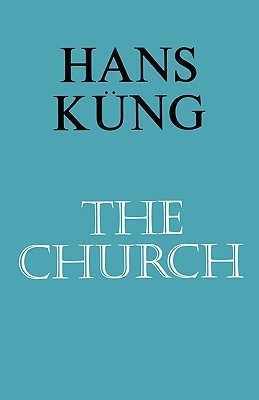
Hans Küng’s The Church is a masterpiece of theological insight, historical scholarship, and visionary thinking. A leading voice in modern theology, Küng offers a profound and deeply engaging exploration of the Christian Church's identity, mission, and challenges in an ever-changing world.
From the outset, Küng impresses with his thorough understanding of the Church's historical development. His ability to weave together complex theological concepts with the practical realities of ecclesiastical history makes this book accessible to both scholars and lay readers. He delves into the roots of the Church, drawing connections between its early foundations and its present-day structure, and does so with a critical yet constructive perspective.
One of the book’s greatest strengths is its balance of honesty and hope. Küng does not shy away from addressing the Church's shortcomings, whether historical or contemporary. His critiques, however, are never destructive. Instead, they serve as a clarion call for reform and renewal, motivated by a deep love for the Church and an unshakable belief in its potential to be a force for good in the world.
Küng's writing shines most brightly when he reflects on the Church's mission. He challenges readers to consider what it means to be a community of faith in service to the Gospel, urging the Church to embrace humility, inclusivity, and a genuine commitment to justice. His theological reflections are deeply rooted in Scripture, yet he is unafraid to confront institutional stagnation and suggest bold, forward-thinking changes.
Throughout The Church, Küng’s passion for ecumenism is evident. His vision of a Church that transcends denominational boundaries is inspiring and deeply relevant in a time when unity among Christians is more crucial than ever. He writes with an infectious optimism, envisioning a Church that not only learns from its past but also embraces a dynamic and open future.
In conclusion, Hans Küng’s The Church is an essential read for anyone interested in the intersection of faith, theology, and the real-world challenges facing the Christian community. Thought-provoking, hopeful, and profoundly relevant, this book invites readers to envision a Church that remains true to its essence while adapting to the needs of the modern world. It is a work that will resonate with anyone seeking to understand and contribute to the ongoing story of Christianity.
This is a very important book on ecclesiology from the last century. Kung was a Roman Catholic who wasn't really accepted by the RCC because of his views on ecclesiology and other matters. There was much in the book with which I disagreed, but there is still a substantial amount of helpful material in the book.
Some of the major disagreements that I had with Kung were:
1. He believes that the doctrine of the church (especially its structure/polity) is not clearly established by the New Testament and that a perfect "ideal" does not exist. For him, the hierarchical structure that developed in the church over time was what was necessary and this development was guided by God as the Church sought to find the best way to organize itself.
2. He frequently questions the truthfulness or historical accuracy of certain parts of the scripture, especially Acts.
3. As one reads, they can sense a biased view toward modern scholarship and methods and against premodern scholarship and methods. He essentially buys into the idea that the modern mind is more equipped for theological, historical, and exegetical inquiry than those who came before.
4. He supports and defends Petrine authority and leadership over the church, though in a more soft and moderated way than traditional Catholics.
Some of the things that I found helpful:
1. I appreciated his focus on the mission of the Church as a mission of the gospel rather than a mission of political power and influence. This is an urgently needed message in today's social and political climate.
2. I appreciated that he took in a view of ministry that involved the whole Church, acknowledging that each member of the Church has been given a gift by which they are to serve the Church. For him, the ordained ministers are set apart in an office and are to use their own gifts to serve the church, but are not superior to the rest of the members.
3. He provides many helpful historical overviews of the development of the doctrine of the church that many non-Catholics may not be familiar with.
4 stars because I actually ended up enjoying a Catholic's take on ecclesiology and surprisingly found myself agreeing with him at various points. Though we obviously have different, ultimate conclusions, Küng also surprisingly depends almost entirely on Scripture for his biblical-theological presentation of the Church (rather than historical norms, however early they were supposedly employed). It's not surprising that this book got him in trouble with his fellow Catholics and was eventually pulled from the press. If he went a step further with some of his theological thoughts, he'd be akin to a modern-day Luther (who he agrees with and references often in this book); but alas, he has not. It's worth looking through if you happen upon it.
A very compelling treatment of the church. Although Kung writes as a Catholic, I found myself in agreement on many of his points. Kung was a critic of his denomination, which got him in a lot of trouble. (I believe this book was banned by the RCC at some point.) Although quite technical, I would recommend this book to those looking to explore the church outside their favorite authors.