

What do you think?
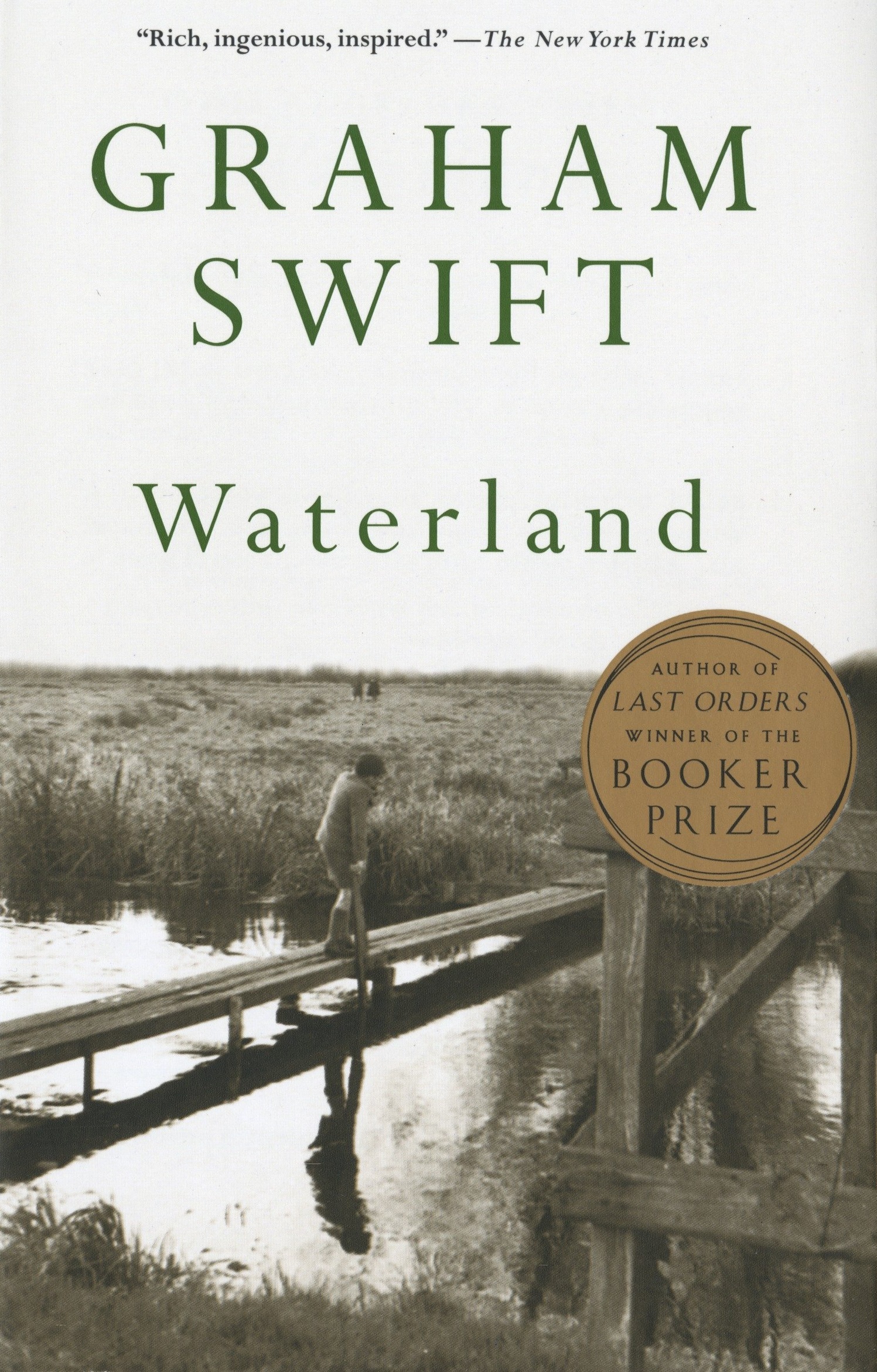
Waterland
Set in the bleak Fen Country of East Anglia, and spanning some 240 years in the lives of its haunted narrator and his ancestors, Waterland is a book that takes in eels and incest, ale-making and madness, the heartless sweep of history and a family romance as tormented as any in Greek tragedy.
"Waterland, like the Hardy novels, carries with all else a profound knowledge of a people, a place, and their interweaving.... Swift tells his tale with wonderful contemporary verve and verbal felicity.... A fine and original work."--Los Angeles Times
"Waterland, like the Hardy novels, carries with all else a profound knowledge of a people, a place, and their interweaving.... Swift tells his tale with wonderful contemporary verve and verbal felicity.... A fine and original work."--Los Angeles Times
368 pages, Paperback
First published January 1, 1983
About the author
Graham Swift
63 books727 followersGraham Colin Swift is a British writer. Born in London, UK, he was educated at Dulwich College, Queens' College, Cambridge, and later the University of York.
Ratings & Reviews
Friends & Following
Create a free account to discover what your friends think of this book!
Community Reviews
Displaying 1 - 30 of 956 reviews

April 2, 2024
I suppose it was unavoidable that I went to sleep last night thinking about how I could possibly write a review for this book and then proceeded to dream about it. After all, dreams, at least my own, are just stories I make up in my head at night to try to make sense of my life and the world around me. Storytelling is a major theme of this novel. So is history. My dream last night went back in time to my past. My nighttime self tried to sort out how I got from there to here. I invented a strange story that I couldn’t possibly share because dreams are impossible to explain. Besides, the essence of the dream is what lingers long afterwards and makes no impact on anyone but the dreamer him or herself anyway. This is just my long-winded way of saying that this book seeped into my whole being. I can’t stop thinking about it. Gosh, the writing is just oozing with atmosphere and that “once upon a time” sort of feeling.
“We lived in a lock-keeper’s cottage by the River Leem, which flows out of Norfolk into the Great Ouse. And no one needs telling that the land in that part of the world is flat. Flat, with an unrelieved and monotonous flatness, enough of itself, some might say, to drive a man to unquiet and sleep-defeating thoughts. From the raised banks of the Leem, it stretched away to the horizon, its uniform color, peat-black, varied only by the crops that grew upon it – grey-green potato leaves, blue-green beet leaves, yellow-green wheat; its uniform levelness broken only by the furrowed and dead-straight lines of ditches and drains, which, depending on the state of the sky and the angle of the sun, ran like silver, copper or golden wires across the fields and which, when you stood and looked at them, made you shut one eye and fall prey to fruitless meditations on the laws of perspective.”
The story is narrated by Tom Crick, an about-to-be forced into retirement history teacher. He weaves together what he calls the Here and Now with History. One can’t separate the two. They are forever intertwined and dependent on one another. I thought of his storytelling as two hands, one hand being the present and the other the past. Both hands are then joined together by linking the fingers with one another. Your ancestors’ pasts and their choices reverberate through time and affect who you are today. The history of the world is a story that repeats itself across the centuries, only varying the settings and actors. Tom doesn’t believe we learn a damn thing from history, and I must agree. Despite this fact, we are not driven to the depths of despair while reading this. There’s a levity to the tone and an occasional insertion of wry humor. It’s okay that we are human and keep repeating the same damn mistakes repeatedly. But why is this?
“… there are very few of us who can be, for any length of time, merely realistic. So there’s no escaping it: even if we miss the grand repertoire of history, we yet imitate it in miniature and endorse, in miniature, its longing for presence, for feature, for purpose, for content.”
I’ve not really told you what this story is about. There is in fact a plot buried here. Well, not buried really, but entwined with all this History. The novel essentially begins with the discovery of an adolescent boy’s body in the river, knocking up against the sluice at the lock-keeper’s cottage. The entirety of the story leaps back and forth in time to attempt to explain just how and why the body ended up there. It’s a history of Tom’s relatives – the affluent Atkinson brewers and the Cricks, the humble lock-keepers and pump-operators. The telling is rather original. Tom shares his story with his history students, addressing them as “Children”. We as readers are essentially these “children” as well. Tom has abandoned teaching history in a conventional way. It’s not the grand scheme of history he’s interested in but rather our personal histories. If we can’t empathize with personal history, then History and its repeated mistakes will have no impact on us.
“And why make a fuss about one drowned boy when over the far horizon and in the sky a war is being fought; when mothers are losing their sons every day and every night the bombers are taking off and don’t all return? The wide world takes priority… Children, evil isn’t something that happens far off – it suddenly touches your arm.”
Look, you must read this for yourself, because much like Tom, I’m taking you in circles. His circles, however, have a beauty to them that is hard to convey. Better yet, he loops and whorls, something more elaborate than plain old circling. I read Graham Swift’s Mothering Sunday several months ago. That was a short sample of the writing I knew I needed to indulge with a larger, second helping. I got that right here with this piece. Graham Swift and this book are now favorites! Life goes on, despite all the nonsense.
“Broody chicken sounds. Innocent cluck-clucks. Quiet river. Mocking late-afternoon mellowness. Because life continues… Because life goes on and July afternoons turn to old gold, despite drowned bodies and inquests, and even despite wars which assert themselves in wireless announcements and evening blackouts.”
“We lived in a lock-keeper’s cottage by the River Leem, which flows out of Norfolk into the Great Ouse. And no one needs telling that the land in that part of the world is flat. Flat, with an unrelieved and monotonous flatness, enough of itself, some might say, to drive a man to unquiet and sleep-defeating thoughts. From the raised banks of the Leem, it stretched away to the horizon, its uniform color, peat-black, varied only by the crops that grew upon it – grey-green potato leaves, blue-green beet leaves, yellow-green wheat; its uniform levelness broken only by the furrowed and dead-straight lines of ditches and drains, which, depending on the state of the sky and the angle of the sun, ran like silver, copper or golden wires across the fields and which, when you stood and looked at them, made you shut one eye and fall prey to fruitless meditations on the laws of perspective.”
The story is narrated by Tom Crick, an about-to-be forced into retirement history teacher. He weaves together what he calls the Here and Now with History. One can’t separate the two. They are forever intertwined and dependent on one another. I thought of his storytelling as two hands, one hand being the present and the other the past. Both hands are then joined together by linking the fingers with one another. Your ancestors’ pasts and their choices reverberate through time and affect who you are today. The history of the world is a story that repeats itself across the centuries, only varying the settings and actors. Tom doesn’t believe we learn a damn thing from history, and I must agree. Despite this fact, we are not driven to the depths of despair while reading this. There’s a levity to the tone and an occasional insertion of wry humor. It’s okay that we are human and keep repeating the same damn mistakes repeatedly. But why is this?
“… there are very few of us who can be, for any length of time, merely realistic. So there’s no escaping it: even if we miss the grand repertoire of history, we yet imitate it in miniature and endorse, in miniature, its longing for presence, for feature, for purpose, for content.”
I’ve not really told you what this story is about. There is in fact a plot buried here. Well, not buried really, but entwined with all this History. The novel essentially begins with the discovery of an adolescent boy’s body in the river, knocking up against the sluice at the lock-keeper’s cottage. The entirety of the story leaps back and forth in time to attempt to explain just how and why the body ended up there. It’s a history of Tom’s relatives – the affluent Atkinson brewers and the Cricks, the humble lock-keepers and pump-operators. The telling is rather original. Tom shares his story with his history students, addressing them as “Children”. We as readers are essentially these “children” as well. Tom has abandoned teaching history in a conventional way. It’s not the grand scheme of history he’s interested in but rather our personal histories. If we can’t empathize with personal history, then History and its repeated mistakes will have no impact on us.
“And why make a fuss about one drowned boy when over the far horizon and in the sky a war is being fought; when mothers are losing their sons every day and every night the bombers are taking off and don’t all return? The wide world takes priority… Children, evil isn’t something that happens far off – it suddenly touches your arm.”
Look, you must read this for yourself, because much like Tom, I’m taking you in circles. His circles, however, have a beauty to them that is hard to convey. Better yet, he loops and whorls, something more elaborate than plain old circling. I read Graham Swift’s Mothering Sunday several months ago. That was a short sample of the writing I knew I needed to indulge with a larger, second helping. I got that right here with this piece. Graham Swift and this book are now favorites! Life goes on, despite all the nonsense.
“Broody chicken sounds. Innocent cluck-clucks. Quiet river. Mocking late-afternoon mellowness. Because life continues… Because life goes on and July afternoons turn to old gold, despite drowned bodies and inquests, and even despite wars which assert themselves in wireless announcements and evening blackouts.”

June 11, 2019
Parece que la revista Granta incluyó a este autor, junto a Martin Amis, Julian Barnes, William Boyd, Kazuo Ishiguro, Ian McEwan o Salman Rushdie, en su lista de Best of Young British Novelists en 1983. No está mal, bravo por la revista… aunque tampoco hay que olvidar que otro buen puñado de autores de dicha lista son unos absolutos desconocidos hoy en día, al menos lo son para mí. Lo que sí puedo decir ahora es que Graham Swift no desentona en absoluto en dicha lista y que además no es ni por asomo el menos importante de todos ellos.
“Un estado de insatisfacción, de intranquilidad, la sensación de que las cosas no son como deberían ser… La historia empieza solamente a partir del momento en que las cosas empiezan a ir mal; la historia nace sólo con los problemas, la perplejidad, el arrepentimiento.”

July 24, 2007
Waterland, published in 1983, is a semi-postmodern examination of the end of History, the trajectory of the promise of the Enlightenment. It is set in the 80's, but looks backwards through history, centering around 1943. It has three different plots: in the 40's, when the narrator Tom is a teenager, it tells of the death of another teenage boy and of the consequences of fooling around with curious Catholic schoolgirls (it sort of screams "DON'T HAVE PREMARITAL SEX! PREMARITAL SEX HAS HORRIBLE PHYSICAL, EMOTIONAL, AND SUPERNATURAL CONSEQUENCES!"); Tom as an adult, and his wife's mental collapse and crime, and Tom's subsequent forced retirement from the school where he is a history teacher; and the history of his family, beginning centuries ago.
Between the two branches of his family, there's a great deal of playing with Freud's concepts of melancholia and mourning - melancholia, the inability to let go of something and move on, being stuck in the past, refusing to move forward with the future, leading to your eventual demise; and mourning being the state of moving on, of grieving and then getting over it. Tom's family has one branch on each side. And then it goes into History versus history (the big overarching world History, versus your own history, and how much you're ever a part of History), and the collapse of linear time, and the fact that although Time, God, and H(h)istory are possibly arbitrary and fictional, we still need them.
Then the incest starts.
Also some philosophizing about eels.
I'm not kidding. This book gets a little ridiculous. It's a semi-Postmodern text examining the difficulty of writing Realism in a Postmodern era, but it goes off on romantic (not Romantic) tangents about natural history and cultural history and all, in a very Julian Barnes (A History of the World in 10 1/2 Chapters) way. Then it goes into creepy, Stephen King-esque scenes with the children exploring the two great draws in life: sex and death. (The only constants, heh.) I ended up wishing either Stephen King or Julian Barnes had written it, and focused on it - as it is, the tension is uneasy, and yet uneasy in a way that really contributes to the novel and its aims. Although I do love how the idea of storytelling is played with in this novel: the idea that we can't bear reality without the stories we create to endow it with meaning, because otherwise reality is too strong, too harsh, and will overpower us. But again, that's very Barnes.
There is a beautiful passage, though, which I'll include here:
Once upon a time people believed in the end of the world. Look in the old books: see how many times and on how many pretexts the end of the world has been prophesied and foreseen, calculated and imagined. But that, of course, was superstition. The world grew up. It didn't end. People threw off superstition as they threw off their parents. They said, Don't believe that old mumbo-jumbo. You can change the world, you can make it better. The heavens won't fall. it was true. For a little while - it didn't start so long ago, only a few generations ago - the world went through its revolutionary, progressive phase, and the world believed it would never end, it would go on getting better. But then the end of the world came back again, not as an idea or a belief but as something the world had fashioned for itself all the time it was growing up.
Which only goes to show that if the end of the world didn't exist it would be necessary to invent it.
Between the two branches of his family, there's a great deal of playing with Freud's concepts of melancholia and mourning - melancholia, the inability to let go of something and move on, being stuck in the past, refusing to move forward with the future, leading to your eventual demise; and mourning being the state of moving on, of grieving and then getting over it. Tom's family has one branch on each side. And then it goes into History versus history (the big overarching world History, versus your own history, and how much you're ever a part of History), and the collapse of linear time, and the fact that although Time, God, and H(h)istory are possibly arbitrary and fictional, we still need them.
Then the incest starts.
Also some philosophizing about eels.
I'm not kidding. This book gets a little ridiculous. It's a semi-Postmodern text examining the difficulty of writing Realism in a Postmodern era, but it goes off on romantic (not Romantic) tangents about natural history and cultural history and all, in a very Julian Barnes (A History of the World in 10 1/2 Chapters) way. Then it goes into creepy, Stephen King-esque scenes with the children exploring the two great draws in life: sex and death. (The only constants, heh.) I ended up wishing either Stephen King or Julian Barnes had written it, and focused on it - as it is, the tension is uneasy, and yet uneasy in a way that really contributes to the novel and its aims. Although I do love how the idea of storytelling is played with in this novel: the idea that we can't bear reality without the stories we create to endow it with meaning, because otherwise reality is too strong, too harsh, and will overpower us. But again, that's very Barnes.
There is a beautiful passage, though, which I'll include here:
Once upon a time people believed in the end of the world. Look in the old books: see how many times and on how many pretexts the end of the world has been prophesied and foreseen, calculated and imagined. But that, of course, was superstition. The world grew up. It didn't end. People threw off superstition as they threw off their parents. They said, Don't believe that old mumbo-jumbo. You can change the world, you can make it better. The heavens won't fall. it was true. For a little while - it didn't start so long ago, only a few generations ago - the world went through its revolutionary, progressive phase, and the world believed it would never end, it would go on getting better. But then the end of the world came back again, not as an idea or a belief but as something the world had fashioned for itself all the time it was growing up.
Which only goes to show that if the end of the world didn't exist it would be necessary to invent it.
September 18, 2010
This may be one of the most beautifully written books I've ever read. A lot of my favorite books, some of which I enjoyed even more than this one, have some combination of good plots, good themes, or good characters, but the quality of the writing leaves something to be desired. This is one of those novels that is so expertly crafted that it makes you remember what great writing is. The premise of a history teacher who is about to involuntarily retire due to the principal's decision to eliminate the history program makes it plausible that the narration is the main character's last lectures to his class. It gets extremely personal, and at times inappropriate for a class lecture, but because he no longer has anything to lose, Tom Crick speaks uncensored, ultimately teaching the class not only his personal history, some of which is pretty grizzly, but also how history is valuable because it is a part of everyone. Every life has become and will become a part of history. Because of the style of narration, it is almost a stream of consciousness. You get the feeling that his words are almost floating out of him of their own will, and that he just lets it happen. As a result, the stories of his life jump around rather than happening chronologically. One moment he'll be talking about his brother and him during the war, then he'll jump to the history of his family in the 18th century, then to his own marriage, and then back and forth again. It can get a little confusing at times because he never tells you which part of his life he is returning to; the reader just has to have patience and then it will be revealed. In short, I recommend this book to anyone who is craving writing as art.

November 3, 2020
“Su Diyarı” bu sene okuduğum en ilginç romanlardan birisi oldu . İngiltere’nin doğusunda “Fenland” denilen sulak, bataklık, yer yer deniz seviyesinin altında olan topraklarıyla Norfolk Fens bölgesinde geçer öyküler. Öyküler diyorum çünkü kitaba adını veren bu sulak arazi bir roman ise, üzerindeki kanallar, havuzlar, ıslah edilmiş topraklar da birer öykü sanki. Bu öykülerden bazıları şunlar; Fransız Devrimi, I. ve II. Dünya Savaşları, Atkinson ailesi, Crick’ler, öğrenci Price, yılanbalığı, çocuk hırsızlığı, toprak ıslahı. Her biri bir öykü.
Anlatıcımız bir tarih öğretmeni. Sorgulayan, yargılayan, biraz ters monte düşünen bilgili bir tarih öğretmeni Tom Crick. Tarihi masal gibi anlatıyor, aslında bize anlatılan tarihin masal olduğuna da inanıyor, bu nedenle kendi masalımsı kişisel tarihini de dünya tarihi özellikle Fransız Devrimi ile paralel anlatıyor, tabii sorgulayarak, nedenlerini araştırarak.
Kitabı anlatmak kolay değil, geri dönüşlerle (flashback), göndermelerle (savaşlara, Hitler’e), dedektiflik kokan anlatımıyla ve mükemmel kurgusuyla farklı bir roman. Cinsellik ve ensest ilişki gibi konuları yılanbalığının yaşam döngüsü ile o kadar ustaca birbiriyle ilişkilendiriliyor ki yazarın doğa bilgisine hayran kalıyorsunuz. Kitap kapağındaki yılanbalığı resmi anlamını buluyor.
Romanı okurken olayın geçtiği yerleri buldum, haritaları ve resimleri inceledim, heyecanlandım. Coğrafi olarak su diyarı olan Fens’deki toprak ıslahını (akaçlama deniyormuş) ilgiyle okudum. Bir ara döndüm Atkinson’ların aile ağacını çıkardım. Gerçek adı Richard olan Dick’e sadece tarihteki “Rick-Dick” kafiyesi nedeniyle değil argoda da tam yerine oturduğu için böyle hitap edildiğini de keşfetmek iyi oldu. Yani romanın içine girerek okudum ve çok keyif aldım. Kesinlikle öneririm.
Anlatıcımız bir tarih öğretmeni. Sorgulayan, yargılayan, biraz ters monte düşünen bilgili bir tarih öğretmeni Tom Crick. Tarihi masal gibi anlatıyor, aslında bize anlatılan tarihin masal olduğuna da inanıyor, bu nedenle kendi masalımsı kişisel tarihini de dünya tarihi özellikle Fransız Devrimi ile paralel anlatıyor, tabii sorgulayarak, nedenlerini araştırarak.
Kitabı anlatmak kolay değil, geri dönüşlerle (flashback), göndermelerle (savaşlara, Hitler’e), dedektiflik kokan anlatımıyla ve mükemmel kurgusuyla farklı bir roman. Cinsellik ve ensest ilişki gibi konuları yılanbalığının yaşam döngüsü ile o kadar ustaca birbiriyle ilişkilendiriliyor ki yazarın doğa bilgisine hayran kalıyorsunuz. Kitap kapağındaki yılanbalığı resmi anlamını buluyor.
Romanı okurken olayın geçtiği yerleri buldum, haritaları ve resimleri inceledim, heyecanlandım. Coğrafi olarak su diyarı olan Fens’deki toprak ıslahını (akaçlama deniyormuş) ilgiyle okudum. Bir ara döndüm Atkinson’ların aile ağacını çıkardım. Gerçek adı Richard olan Dick’e sadece tarihteki “Rick-Dick” kafiyesi nedeniyle değil argoda da tam yerine oturduğu için böyle hitap edildiğini de keşfetmek iyi oldu. Yani romanın içine girerek okudum ve çok keyif aldım. Kesinlikle öneririm.

September 1, 2026
Tom Crick is a fifty-two-year history teacher who is being let go from his school partly due to the students’ rejection of the subject and partly due to the Headmaster’s determination to achieve, at least in curriculum terms, the end of history. Tom responds by ditching the French Revolution dictated by the syllabus and teaching a history of the Fens and stories from his and his family’s past.
Despite the very much felt ‘what did I just read’, this is quite a trip that includes an accidental drowning that might be a murder and generations of people slowly losing out to the water around them and desperately trying to reclaim the land. It’s worth noting that the reclamation here is not just linked to the loss of land. Most of all, however, it is a contemplation on what history really is and how the past has it effect on the present. Go in, expect not to really understand what is happening, enjoy the prose, and you will finally reap the reward.
Despite the very much felt ‘what did I just read’, this is quite a trip that includes an accidental drowning that might be a murder and generations of people slowly losing out to the water around them and desperately trying to reclaim the land. It’s worth noting that the reclamation here is not just linked to the loss of land. Most of all, however, it is a contemplation on what history really is and how the past has it effect on the present. Go in, expect not to really understand what is happening, enjoy the prose, and you will finally reap the reward.

May 24, 2024
Текст, вязкий и густой, как флегма, композиционно восхитителен. В нем почти нет диалогов, это монолог, исповедальный рассказ о трагедии, рассказанный из конца в начало, призванный понять причины своей душевной травмы, но ближе к концу все фрагменты плотно укладываются в единую картину, и, потрясенный читатель испытывает двоякие чувства, с одной стороны, гадливость, когда узнает об инцесте, и в эпизодах варварского аборта у местной знахарки Марты, с другой стороны, сочувствие, в первую очередь к Дику, "Спасителю мира".
Учитель истории Том Крик учит своих подопечных задавать вопрос "Почему?", чтобы понять движущие силы истории. "История: счастливый колодец смыслов. События склонны избегать привязки к смыслам, но мы-то ищем именно смыслы. Еще одно определение человека: животное, которое взыскует смысла – хотя и знает…" Он также учит тому, что Большая история состоит из маленьких историй - историй края, историй семьи. Он рассказывает ученикам о мировой истории через призму истории своей семьи, начиная с восемнадцатого века. Эти истории призваны ответить на вопросы "Почему?", мучающие его самого. Мы узнаем, почему его жена украла ребенка, и получим ответы или сделаем догадки на все остальные "почему?".
Роман богат аллюзиями на мифы, сказки. С самых первых строк автор так и пишет: "Слова из волшебной сказки, и совет из волшебной сказки. Но мы и жили в сказочных местах."
История Фенов зиждется на рождении Земли из Воды, деятельностью Человека по осушению болот. Поэтому это Земля Воды. Вода играет важную роль в романе. Она всегда уносит, уносит в море. И Дика, и красные сгустки плоти после аборта, и бутылку - орудие убийства Фредди, тело которого также обнаружили в воде. Вода в романе - это смерть, небытие, в то время, как земля - все, созданное Человечеством, в том числе, семейная история Аткинсонов-Криков.
Учитель истории Том Крик учит своих подопечных задавать вопрос "Почему?", чтобы понять движущие силы истории. "История: счастливый колодец смыслов. События склонны избегать привязки к смыслам, но мы-то ищем именно смыслы. Еще одно определение человека: животное, которое взыскует смысла – хотя и знает…" Он также учит тому, что Большая история состоит из маленьких историй - историй края, историй семьи. Он рассказывает ученикам о мировой истории через призму истории своей семьи, начиная с восемнадцатого века. Эти истории призваны ответить на вопросы "Почему?", мучающие его самого. Мы узнаем, почему его жена украла ребенка, и получим ответы или сделаем догадки на все остальные "почему?".
Роман богат аллюзиями на мифы, сказки. С самых первых строк автор так и пишет: "Слова из волшебной сказки, и совет из волшебной сказки. Но мы и жили в сказочных местах."
История Фенов зиждется на рождении Земли из Воды, деятельностью Человека по осушению болот. Поэтому это Земля Воды. Вода играет важную роль в романе. Она всегда уносит, уносит в море. И Дика, и красные сгустки плоти после аборта, и бутылку - орудие убийства Фредди, тело которого также обнаружили в воде. Вода в романе - это смерть, небытие, в то время, как земля - все, созданное Человечеством, в том числе, семейная история Аткинсонов-Криков.

April 8, 2016
This may be my favorite novel ever. I've read it a number of times now, and each time I become completely engrossed in the story. This one checks all my personal-fave boxes:
-Drenched in atmosphere (bonus points for describing a place I actually know and love)
-The sweep of history
-People in over their heads
-Little guy vs establishment
-The life-enhancing qualities of beer
We have many novelists who can write circles around the most mundane of subjects, given their mastery of language. And many others who can write crackerjack plots to keep you engaged. It's a very short list who can manage both, and this book, to me, represents the ideal marriage of the two.
I'll admit that it took some effort, the first time I read this, not to lose patience with all the ellipses and the contrivance of the schoolroom lecture. But once you fall into this world of the Fens, and see how people make the same mistakes generation after generation...At some point you have to stop thinking of things as mistakes and just acknowledge they're human nature. And maybe this is why, unlike other readers, I didn't find this book depressing at all. My interpretation is the narrator is somebody who has achieved the wisdom in old age to understand that we are what we are, and what we are is imperfect, and that's okay.
By the way, many reviewers here mention the eels, in a snickering manner. But an eel really lies at the center of this entire story, in a masterfully written way. Snicker all you like, but this part of the story is brilliant.
I love this book. Truly love it. Reading it improves my life and makes me a better person. How many books can claim that?
-Drenched in atmosphere (bonus points for describing a place I actually know and love)
-The sweep of history
-People in over their heads
-Little guy vs establishment
-The life-enhancing qualities of beer
We have many novelists who can write circles around the most mundane of subjects, given their mastery of language. And many others who can write crackerjack plots to keep you engaged. It's a very short list who can manage both, and this book, to me, represents the ideal marriage of the two.
I'll admit that it took some effort, the first time I read this, not to lose patience with all the ellipses and the contrivance of the schoolroom lecture. But once you fall into this world of the Fens, and see how people make the same mistakes generation after generation...At some point you have to stop thinking of things as mistakes and just acknowledge they're human nature. And maybe this is why, unlike other readers, I didn't find this book depressing at all. My interpretation is the narrator is somebody who has achieved the wisdom in old age to understand that we are what we are, and what we are is imperfect, and that's okay.
By the way, many reviewers here mention the eels, in a snickering manner. But an eel really lies at the center of this entire story, in a masterfully written way. Snicker all you like, but this part of the story is brilliant.
I love this book. Truly love it. Reading it improves my life and makes me a better person. How many books can claim that?

July 2, 2020
This is a story about a history teacher, Tom Crick. He is in his fifties and lives in Greenwich, England, known for its observatory, Greenwich Mean Time and 0° longitude. You might say it is where time starts, or at least the place by which other times are set. This is a book about the importance of history, both world history and personal history. History hinges upon what came before, in time.
Tom is the narrator of the story. He starts in the present, the 1980s. He is being forced into retirement. Why? Decreased funding or something else? Instead of delivering dry lectures he decides to tell of his own ancestors, his years as a teenager growing up in the Fens, the coastal lands of East Anglia, and of his marriage. He weaves himself into history. Why? Because personal stories make history relevant.
The telling shifts this way and that in time. The telling is fragmentary and nonlinear. This is a technique that usually does not appeal to me, but it works here!
There is an excitement, a sense of tension that builds in the novel. You want to know more and more and more. A sentence is started and then left hanging. You know exactly what was to be said but is then not said. This writing style is unusual; I have not run into it before. It’s good, very good. It draws your attention, keeps you alert and adds suspense. There is an underlying satirical tone that has you questioning what is implied. The prose is thought provoking.
As we are shown why a knowledge of history is important, we see life in the Fens. The area and life there are drawn vividly. We learn of how wetlands are recovered, of floods, sluice gates, the management of locks and even eels. The spawning of European eels in the Sargasso Sea and eels in a girl’s panties. All of this is told by a master storyteller, an instructor who has a natural talent for teaching. Think back to those special teachers you have had—those teachers that incite curiosity, that make learning magical. Reading this book is like being in such a class.
What is drawn is no happy story, but it feels real. We read of the discovery and awakening of sexual desire. Of incest, mental retardation, jealousy and envy. Abortion and deaths. A father fights in the First World War and his son in the Second World War.
Is history simply a record of past mistakes? How do religious beliefs fit into the picture? Can knowledge of past events make us better people? With knowledge can we make better decisions? Sometimes yes. Sometimes no. Life without curiosity is a dead end. If you have curiosity, how can one stop asking why, why, why as life unrolls? If you are a person who incessantly asks why, the need for history is a given.
Christian Rodska narrates the audiobook. At the beginning he reads too fast. He slows down. As you come to know who is who, the story is no longer difficult to follow. By the end I thought the narration was worth four stars—very good!
The book shouldn’t work but it most definitely does work. I like it a lot and will be reading more by the author soon. I know my gut reaction—explaining why is what is difficult.
Tom is the narrator of the story. He starts in the present, the 1980s. He is being forced into retirement. Why? Decreased funding or something else? Instead of delivering dry lectures he decides to tell of his own ancestors, his years as a teenager growing up in the Fens, the coastal lands of East Anglia, and of his marriage. He weaves himself into history. Why? Because personal stories make history relevant.
The telling shifts this way and that in time. The telling is fragmentary and nonlinear. This is a technique that usually does not appeal to me, but it works here!
There is an excitement, a sense of tension that builds in the novel. You want to know more and more and more. A sentence is started and then left hanging. You know exactly what was to be said but is then not said. This writing style is unusual; I have not run into it before. It’s good, very good. It draws your attention, keeps you alert and adds suspense. There is an underlying satirical tone that has you questioning what is implied. The prose is thought provoking.
As we are shown why a knowledge of history is important, we see life in the Fens. The area and life there are drawn vividly. We learn of how wetlands are recovered, of floods, sluice gates, the management of locks and even eels. The spawning of European eels in the Sargasso Sea and eels in a girl’s panties. All of this is told by a master storyteller, an instructor who has a natural talent for teaching. Think back to those special teachers you have had—those teachers that incite curiosity, that make learning magical. Reading this book is like being in such a class.
What is drawn is no happy story, but it feels real. We read of the discovery and awakening of sexual desire. Of incest, mental retardation, jealousy and envy. Abortion and deaths. A father fights in the First World War and his son in the Second World War.
Is history simply a record of past mistakes? How do religious beliefs fit into the picture? Can knowledge of past events make us better people? With knowledge can we make better decisions? Sometimes yes. Sometimes no. Life without curiosity is a dead end. If you have curiosity, how can one stop asking why, why, why as life unrolls? If you are a person who incessantly asks why, the need for history is a given.
Christian Rodska narrates the audiobook. At the beginning he reads too fast. He slows down. As you come to know who is who, the story is no longer difficult to follow. By the end I thought the narration was worth four stars—very good!
The book shouldn’t work but it most definitely does work. I like it a lot and will be reading more by the author soon. I know my gut reaction—explaining why is what is difficult.

May 9, 2014
An ingeniously constructed novel: a mix of an autobiographical story, a murder story, considerations on history, a reconstruction of a family tree, and an introduction into Fenland, the outstretched peatland near Cambridge, UK. Towards the end there is a lot of jumping in time and space going on. Principal character is Tom Crick, a history teacher, and dramatic moments in his life are the frame of the story.
I appreciated the short reveries on what history really is about, on the importance of stories, life being in essence a story (very postmodern). Swift surely knows the strengths and weaknesses of the history-profession (more on this in my History-account on Goodreads: https://www.goodreads.com/review/show...).
The story about Tom Crick and the Fenland was very interesting but it also had its weak elements, and the end is rather disappointing, as if Swift did not know how to make an appropriate end to it. So, all in all this was kind of a mixed bag to me.
I appreciated the short reveries on what history really is about, on the importance of stories, life being in essence a story (very postmodern). Swift surely knows the strengths and weaknesses of the history-profession (more on this in my History-account on Goodreads: https://www.goodreads.com/review/show...).
The story about Tom Crick and the Fenland was very interesting but it also had its weak elements, and the end is rather disappointing, as if Swift did not know how to make an appropriate end to it. So, all in all this was kind of a mixed bag to me.

December 15, 2017
ON DECAYING FAMILIES [AND EMPIRES]

The narrator of this extraordinary artwork, already a classic in British literature, is called Tom Crick.
Tom's speech is full of incomplete utterances. He communicates with his students, with the children he never had, with the implied reader.
In order to analyze his own life and tell his story, he will first have to deal with his origins, describe the family history (up to a certain point coincident, some scholars say, with the history of British Empire): during its formation process as well as during its falling into decay.
But this is not at all an easy task. Eager to confess everything, he will continuously shift to the past, return to the present time, reflect on facts while telling them, forgetting, then trying to remember again.
The result is a maximum of implication on the part of the reader, a lively, unusual novel which fits literary postmodernism as a surgical glove.
The narrator of this extraordinary artwork, already a classic in British literature, is called Tom Crick.
Tom's speech is full of incomplete utterances. He communicates with his students, with the children he never had, with the implied reader.
In order to analyze his own life and tell his story, he will first have to deal with his origins, describe the family history (up to a certain point coincident, some scholars say, with the history of British Empire): during its formation process as well as during its falling into decay.
But this is not at all an easy task. Eager to confess everything, he will continuously shift to the past, return to the present time, reflect on facts while telling them, forgetting, then trying to remember again.
The result is a maximum of implication on the part of the reader, a lively, unusual novel which fits literary postmodernism as a surgical glove.

July 22, 2022
“Tarihin dikkate değer tek yönü, bence efendim muhtemelen sona ermek üzere olduğu noktaya gelmiş olması.”
Bir tarih öğretmenimiz var ve onun kişisel tarihi, ailevi tarihi, meslek olarak tarihçiliği –tarihte kesintiye gidiyoruz- ve dünyanın sonunun tarihi özel bir anda eşzamanlı olarak çökmek ya da kitaba yaraşır bir şekilde söylemek gerekirse batmak üzeredir ama hiç batmamış olsak da biliriz ki batma eylemi bir çırpıda gerçekleşmez, zamana yayılır, ağır ağır gerçekleşir, yardım çığlıkları, ağıtlar, küfürler ve söylenmeler batış anına eşlik eder. Son kertede çırpınmadan geriye determinizm kalır, olması gereken olur ya da kitaba uygun bir şekilde söylemek gerekirse akacak kan bacak arasında durmaz. Ama yine biliriz ki “bebeklerin sevgiden neşet etmesi” gibi tarihte hikayelerden neşet eder.
Graham Swift kulağımıza yer yer güçlü çığlıklar haline bürünen çok özel bir hikaye fısıldıyor Su Diyarı kitabıyla. Tarihe geçmeden mekâna bir uğrayalım zira öğretmenimiz tarihçi olduğu kadar yetkin bir coğrafya bilgisine de sahip. Su diyarı namlı Fens, İngiltere’nin kuzey doğusunda insan emeği ile yaratılmış bir bölge, yüzlerce yıla yayılan bir süreç ve çaba sonucunda su diyarının göbeğine bir toprak diyarı inşa ediliyor. Anlatıcımız buranı yerlisi su diyarı insanları ile bölgeye toprağı taşıyan toprak insanlarının soyundan geliyor. Bu iki diyar iki farklı insan türünü de ortaya çıkarıyor. Su insanları doğaları ile barışık ve doğanın sunduğu nimetlerle –yılanbalıkları nereden geliyor- yaşarken toprak insanları sürekli bir gelişim, çatışma ve doğayı hizaya sokmanın tüm ard anlamları ve olumsuzluklarını bağrında taşıyorlar. Bu iki dünyanın çatışması metni ekolojist bir yoruma da açık kılıyor olsa da yazar bunu ve çatışmanın gerilimini büyük sözler sarf etmeden metnin son sahnesine kadar taşıyor ve nihayetinde topraktan gelen soy –dünyanın kurtarıcısı- karanlık sularda nihayete eriyor ya da kitaba sadık kalarak söylemek gerekirse doğanın tarihi büyük anlatının tarihine baskın geliyor.
Büyük anlatı demişken; anlatıcımız Fransız devrimi uzmanı ancak bu ve diğer bütün büyük anlatılar haliyle bir dünya imkanı varken işe yarayan bilgiler ve kendi dünyasının çöküşü, öğrencilerinin dünyanın genel çöküşünü – rüyaya dair bölümü, nükleer felaket beklentili 80’ler- beklediği momentle çakışınca ve dahi tarih kesintiye uğramışken başka bir anlatını kapısı açılıyor. Tarihsel ilerlemenin bir adım ileri iki adım geri formunun benzeri bir biçimde anlatı, kişisel olanın sınırlarının tarihsel olanın sınırıyla bulanık bir halde ileri geri savruluşuna hikaye dinleyicisi olarak tanık okur olarak eşlik ediyoruz sayfalar boyunca. Anlatını merkezinde bir hikaye, üç ceset ve bir tarih var: 1943. Adorno az sonra şiirin sonunu ilan edecek, Hitler sonu ya zafer ya hüsran olacak adımlar atacak ama biz dünyanın sonuna kadar biraz daha hikaye dinleyeceğiz ama hiçbir hikaye bize sonuna kadar burada ne oluyor, ne olmuştu, ne oldunun cevabını vermeyecek. Tarihi biraz biliyorsak, bütün anlatıların öznel olduğunu da biliyoruzdur ve biraz Faulkner biliyorsak geçmişin asla geçmediğini, geçmişin geçmiş bile olmadığını biliyoruz.
Tarih kesintiye uğramazdan önce tarihçinin eşi bin dokuz yüz seksen bilmem kaçta tanrının eşlik ettiği bir suça bulaşacak, ama suçun ne bugünle ne bugünde cereyan eden herhangi bir hal ile ilgisi bulunmayacak, biz sınıfta sıramıza oturmuş antropolojik bir kazıyı izler gibi tarihin bugüne uğramasını bekleyeceğiz. Burada olan şeyin 1943 yazıyla, su kenarında girilmiş iddialarla, adı Richard lakabı Dick olan kardeşin ereksiyonuyla, su altında tutulan nefesler, hakim olunamayan nefsler, sandıklar, sırlar, hayaletler ve bira şişeleri ile olan bağının kurulmasını bekleyeceğiz. Ama anlatıcının tarihi okuma biçimi, hikaye anlatma biçimini de ( bir ileri iki geri) belirlediğini göz önüne aldığımızda bu beklenti ve içinde taşıdığı gerilim son sayfaya kadar yakamızdan düşmeyecek.
Nihayetinde insan dediğimiz hikaye anlatan ve hikaye dinleyen bir hayvandır, medeniyetimiz de bu hikayelerin birikmesinden başka bir şey değil sonuçta. Ancak okurun bir hayvan olarak portresini çıkaracaksak, belli bir okurun ( isim vermek istemiyorum, onlar kendini biliyor değil mi hocam) uzun süredir hikaye dinleyesi ya da hikaye anlatmanın belli bir biçimini dinleyesi yok. Bu kitabın temel becerisi, bir sürü becerisinin yanında hikaye anlatma biçimine yaptığı eşsiz olmayan ama gördükçe mutlu olduğum müdahaledir. Bir okur olarak boş, derdi tasası olmayan biçimsel mastürbasyonlardan nasıl nefret ediyorsam 1823 yılındaymış gibi yaz panpa, Zola’ya atarız üslubundan da nefret ediyorum. Bu metin, tarihsel olarak ilkine yakın durma lanetinden kurtulduğu gibi ikincisi ile de arasına mesafe koymuş, derdi, tasası ve gevezeliğini yetkin bir formla buluşturmuş, bu yanıyla iyi okurun ıskalamaması gereken bir metindir zannımca. Temas ettiği her tarihsel uğrak, kendi kişisel uğrağında karşılığını bulmuş, bahsini açtığı her mesele kendi meselesine dokunmuş makro tarihin her lanetli anı mikro tarihin laneti ile iç içe geçmiş, bir yanını Kojin Karatani’nin tarih ve tekerrür’üne, bir yanını Faustvari modernleşmenin lanetine, boşlukta kalan yerlerini nükleer felaket beklentisinin kan mirasının genetik felaketi ile sarıp sarmalamış su diyarını, toprak diyarının zihnini felce uğrattığı tüm dostlarıma, kader mahkumlarına ve ilk okumasında tadına varamamış tüm okurlara ve sevgili erkan bey’e hararetle öneririm.
Bir tarih öğretmenimiz var ve onun kişisel tarihi, ailevi tarihi, meslek olarak tarihçiliği –tarihte kesintiye gidiyoruz- ve dünyanın sonunun tarihi özel bir anda eşzamanlı olarak çökmek ya da kitaba yaraşır bir şekilde söylemek gerekirse batmak üzeredir ama hiç batmamış olsak da biliriz ki batma eylemi bir çırpıda gerçekleşmez, zamana yayılır, ağır ağır gerçekleşir, yardım çığlıkları, ağıtlar, küfürler ve söylenmeler batış anına eşlik eder. Son kertede çırpınmadan geriye determinizm kalır, olması gereken olur ya da kitaba uygun bir şekilde söylemek gerekirse akacak kan bacak arasında durmaz. Ama yine biliriz ki “bebeklerin sevgiden neşet etmesi” gibi tarihte hikayelerden neşet eder.
Graham Swift kulağımıza yer yer güçlü çığlıklar haline bürünen çok özel bir hikaye fısıldıyor Su Diyarı kitabıyla. Tarihe geçmeden mekâna bir uğrayalım zira öğretmenimiz tarihçi olduğu kadar yetkin bir coğrafya bilgisine de sahip. Su diyarı namlı Fens, İngiltere’nin kuzey doğusunda insan emeği ile yaratılmış bir bölge, yüzlerce yıla yayılan bir süreç ve çaba sonucunda su diyarının göbeğine bir toprak diyarı inşa ediliyor. Anlatıcımız buranı yerlisi su diyarı insanları ile bölgeye toprağı taşıyan toprak insanlarının soyundan geliyor. Bu iki diyar iki farklı insan türünü de ortaya çıkarıyor. Su insanları doğaları ile barışık ve doğanın sunduğu nimetlerle –yılanbalıkları nereden geliyor- yaşarken toprak insanları sürekli bir gelişim, çatışma ve doğayı hizaya sokmanın tüm ard anlamları ve olumsuzluklarını bağrında taşıyorlar. Bu iki dünyanın çatışması metni ekolojist bir yoruma da açık kılıyor olsa da yazar bunu ve çatışmanın gerilimini büyük sözler sarf etmeden metnin son sahnesine kadar taşıyor ve nihayetinde topraktan gelen soy –dünyanın kurtarıcısı- karanlık sularda nihayete eriyor ya da kitaba sadık kalarak söylemek gerekirse doğanın tarihi büyük anlatının tarihine baskın geliyor.
Büyük anlatı demişken; anlatıcımız Fransız devrimi uzmanı ancak bu ve diğer bütün büyük anlatılar haliyle bir dünya imkanı varken işe yarayan bilgiler ve kendi dünyasının çöküşü, öğrencilerinin dünyanın genel çöküşünü – rüyaya dair bölümü, nükleer felaket beklentili 80’ler- beklediği momentle çakışınca ve dahi tarih kesintiye uğramışken başka bir anlatını kapısı açılıyor. Tarihsel ilerlemenin bir adım ileri iki adım geri formunun benzeri bir biçimde anlatı, kişisel olanın sınırlarının tarihsel olanın sınırıyla bulanık bir halde ileri geri savruluşuna hikaye dinleyicisi olarak tanık okur olarak eşlik ediyoruz sayfalar boyunca. Anlatını merkezinde bir hikaye, üç ceset ve bir tarih var: 1943. Adorno az sonra şiirin sonunu ilan edecek, Hitler sonu ya zafer ya hüsran olacak adımlar atacak ama biz dünyanın sonuna kadar biraz daha hikaye dinleyeceğiz ama hiçbir hikaye bize sonuna kadar burada ne oluyor, ne olmuştu, ne oldunun cevabını vermeyecek. Tarihi biraz biliyorsak, bütün anlatıların öznel olduğunu da biliyoruzdur ve biraz Faulkner biliyorsak geçmişin asla geçmediğini, geçmişin geçmiş bile olmadığını biliyoruz.
Tarih kesintiye uğramazdan önce tarihçinin eşi bin dokuz yüz seksen bilmem kaçta tanrının eşlik ettiği bir suça bulaşacak, ama suçun ne bugünle ne bugünde cereyan eden herhangi bir hal ile ilgisi bulunmayacak, biz sınıfta sıramıza oturmuş antropolojik bir kazıyı izler gibi tarihin bugüne uğramasını bekleyeceğiz. Burada olan şeyin 1943 yazıyla, su kenarında girilmiş iddialarla, adı Richard lakabı Dick olan kardeşin ereksiyonuyla, su altında tutulan nefesler, hakim olunamayan nefsler, sandıklar, sırlar, hayaletler ve bira şişeleri ile olan bağının kurulmasını bekleyeceğiz. Ama anlatıcının tarihi okuma biçimi, hikaye anlatma biçimini de ( bir ileri iki geri) belirlediğini göz önüne aldığımızda bu beklenti ve içinde taşıdığı gerilim son sayfaya kadar yakamızdan düşmeyecek.
Nihayetinde insan dediğimiz hikaye anlatan ve hikaye dinleyen bir hayvandır, medeniyetimiz de bu hikayelerin birikmesinden başka bir şey değil sonuçta. Ancak okurun bir hayvan olarak portresini çıkaracaksak, belli bir okurun ( isim vermek istemiyorum, onlar kendini biliyor değil mi hocam) uzun süredir hikaye dinleyesi ya da hikaye anlatmanın belli bir biçimini dinleyesi yok. Bu kitabın temel becerisi, bir sürü becerisinin yanında hikaye anlatma biçimine yaptığı eşsiz olmayan ama gördükçe mutlu olduğum müdahaledir. Bir okur olarak boş, derdi tasası olmayan biçimsel mastürbasyonlardan nasıl nefret ediyorsam 1823 yılındaymış gibi yaz panpa, Zola’ya atarız üslubundan da nefret ediyorum. Bu metin, tarihsel olarak ilkine yakın durma lanetinden kurtulduğu gibi ikincisi ile de arasına mesafe koymuş, derdi, tasası ve gevezeliğini yetkin bir formla buluşturmuş, bu yanıyla iyi okurun ıskalamaması gereken bir metindir zannımca. Temas ettiği her tarihsel uğrak, kendi kişisel uğrağında karşılığını bulmuş, bahsini açtığı her mesele kendi meselesine dokunmuş makro tarihin her lanetli anı mikro tarihin laneti ile iç içe geçmiş, bir yanını Kojin Karatani’nin tarih ve tekerrür’üne, bir yanını Faustvari modernleşmenin lanetine, boşlukta kalan yerlerini nükleer felaket beklentisinin kan mirasının genetik felaketi ile sarıp sarmalamış su diyarını, toprak diyarının zihnini felce uğrattığı tüm dostlarıma, kader mahkumlarına ve ilk okumasında tadına varamamış tüm okurlara ve sevgili erkan bey’e hararetle öneririm.

February 18, 2008
Like the countryside in which it is set, I recall this book as being grey, depressing, and sodden. I can't recall a thing that I learned from it - all I remember is the enormous sense of relief I had once I managed to finish it.
Though, as the blurb helpfully point out, there are eels and incest.
Though, as the blurb helpfully point out, there are eels and incest.

October 24, 2018
Murder, incest, guilt, insanity, ale and eels. Hard to imagine not loving a book with themes like that eh? Or is it?
Waterland: Picador Classic is undeniably an impressive and ambitious novel which ruminates upon history's relentless tide of change and humanity’s subsequent shifting fortunes. It’s also firmly rooted in the watery world of the East Anglian Fens, the rich and fertile flood plains, in which its inhabitants are forever locked in an ongoing battle with water, and which can never be comprehensively won by either side.
The left side of my brain admired the novel’s ambition and scope. The right side of my brain remained detached and I was unable to stay immersed.
Sometimes, when I picked this up, I thought how good it was, however it never truly grabbed me: the non linear structure, multiple narratives, and contrasting styles, were ultimately too jarring.
So, whilst clever, ambitious and diverse, it was a book I admired more than enjoyed.
3/5

Waterland: Picador Classic (1983) by Graham Swift
Waterland: Picador Classic is undeniably an impressive and ambitious novel which ruminates upon history's relentless tide of change and humanity’s subsequent shifting fortunes. It’s also firmly rooted in the watery world of the East Anglian Fens, the rich and fertile flood plains, in which its inhabitants are forever locked in an ongoing battle with water, and which can never be comprehensively won by either side.
The left side of my brain admired the novel’s ambition and scope. The right side of my brain remained detached and I was unable to stay immersed.
Sometimes, when I picked this up, I thought how good it was, however it never truly grabbed me: the non linear structure, multiple narratives, and contrasting styles, were ultimately too jarring.
So, whilst clever, ambitious and diverse, it was a book I admired more than enjoyed.
3/5
Waterland: Picador Classic (1983) by Graham Swift
July 8, 2026
Conviene desconfiar de los profesores de historia cuando empiezan a hablar demasiado de su propia vida. Sobre todo si lo hacen delante de una clase que ya no cree en la Historia, en las explicaciones largas ni en la utilidad de mirar hacia atrás.
Uno imagina al pobre Tom Crick intentando defender su asignatura ante alumnos que preferirían estar en cualquier otra parte, y enseguida comprende que aquí la lección se le va a ir de las manos. Por suerte para nosotros, claro. Las mejores novelas suelen empezar cuando alguien pierde el control de lo que pretendía contar. Y esta, desde muy pronto, desplaza el foco hacia una zona más peligrosa que la reconstrucción de los hechos: qué orden damos al pasado, qué ocultamos, qué convertimos en destino y qué confundimos con explicación.
El país del agua es la historia de Tom Crick, profesor de historia en un instituto londinense, un hombre acorralado por una crisis profesional y matrimonial que, ante la pregunta de un alumno sobre para qué sirve la Historia, empieza a responder con una lección cada vez menos escolar y cada vez más personal.
En lugar de limitarse a explicar revoluciones e imperios siguiendo el temario, Tom vuelve a los Fens de su infancia —esa zona de marismas del este de Inglaterra—: al padre encargado de una esclusa, al hermano Dick, a Mary, a las familias de la zona, a viejos secretos, canales, fábricas de cerveza, anguilas, deseos mal entendidos. Y desde ahí habla también de la curiosidad como fiebre infantil y adulta, de esas preguntas que empiezan pareciendo inocentes y acaban abriendo una compuerta que nadie sabe cerrar, y de heridas que llevan décadas respirando debajo del barro.
Dicho así puede sonar a novela de saga familiar con humedad ambiental, pero Graham Swift tiene entre manos algo más raro y más ambicioso: una investigación narrativa, y también una pesquisa retrospectiva muy peculiar, sobre la necesidad casi física de contarnos historias para que el pasado no sea solo una masa informe que nos arrastra. Seguimos a alguien que ya sabe demasiado y aun así necesita reconstruir lo ocurrido, menos por afán de resolverlo que por la necesidad de entender qué clase de vida ha quedado después.
Los Fens son fundamentales. Esa región baja, húmeda, drenada, artificialmente sostenida, ganada al agua con diques, canales, bombeo y una terquedad muy británica, acaba imponiendo la lógica del libro. Es una forma de entender el mundo. La tierra firme, en esta novela, siempre parece provisional. Uno pisa y debajo hay agua. Uno recuerda y debajo hay culpa. Uno explica y debajo hay miedo. Aquí todo sedimenta: el barro, las culpas, las historias familiares, las grandes palabras con las que intentamos fingir que el pasado está ordenado. Swift convierte ese territorio anfibio en la imagen que sostiene la novela y, al mismo tiempo, en un espacio concreto, lleno de olores, oficios, barro, compuertas y criaturas que parecen saber bastante más de la vida que los seres humanos. Las anguilas, por ejemplo, tienen aquí una dignidad misteriosa que muchos personajes envidiarían.
La novela avanza como avanzan los ríos cuando no tienen ninguna prisa por tranquilizarnos: girando, retrocediendo, abriendo meandros, dejando capas. Tom Crick cuenta su historia familiar, la de una región, la Historia con mayúscula y la de su propio derrumbe con una voz que cambia de máscara sin avisar: a ratos lección, a ratos confesión, a ratos cuento familiar, tratado histórico, digresión naturalista o defensa desesperada de un hombre que se aferra a las palabras porque las palabras son lo último que le queda antes del silencio.
A veces esa voz fascina; otras, abruma un poco. Swift escribe con una inteligencia enorme, pero también con una voluntad de construcción tan visible que por momentos uno nota demasiado los engranajes. La novela funciona por vasos comunicantes: el agua con la memoria, la geografía con la culpa, la Historia con las pequeñas catástrofes domésticas, el progreso con la repetición, el cuento infantil con la tragedia familiar. Casi siempre funciona. De vez en cuando, también se nota hasta qué punto Swift ha trabajado muchísimo para que funcione.
Ese es quizá mi pequeño reparo. El país del agua es una novela admirable, ambiciosa, densa en el mejor sentido, llena de páginas brillantes y de ideas que te persiguen mucho después de cerrar el libro. Lo que salva a Swift de escribir una novela meramente cerebral es que sus ideas nacen pegadas al daño de sus personajes: familia, deseo, miedo, culpa, transmisión, secretos. Debajo de la lección de historia corre una veta casi gótica: casas familiares, linajes, cuerpos, rumores, fatalidades domésticas y cosas que se pudren mejor cuando todo el mundo finge que no huelen. La cabeza trabaja mucho, sí, pero casi siempre trabaja sobre una herida.
Mi reserva aparece ahí: no siempre emociona con la misma fuerza con la que impresiona. Hay tramos en los que Swift parece más interesado en demostrar la arquitectura de la novela que en dejar que sus criaturas respiren solas. No es un defecto grave, porque la arquitectura es magnífica; pero sí marca la diferencia entre la admiración plena y esa rendición lectora que uno reserva para los cinco estrellas sin discusión.
Aun así, cuando la novela encuentra su punto exacto, es formidable. Lo es en su manera de fundir lo íntimo y lo histórico sin convertir una cosa en simple ilustración de la otra. Lo es en la tristeza de Tom Crick, en su modo de hablar como quien da clase y pide auxilio al mismo tiempo. Lo es en Mary, mucho más que una presencia lateral: una de las heridas que obligan a Tom a hablar, una figura cargada de sombra sin quedar reducida a mecanismo de la trama. Y lo es, sobre todo, en esa intuición central: la Historia quizá no sirva para arreglar nada, pero dejar de contarla puede ser una forma de desaparecer antes de tiempo.
Swift tiene además una cualidad muy difícil: sabe hacer que una novela de ideas huela a río. El país del agua habla de memoria, de herencia, de culpa, de deseo, de progreso, de relato y de supervivencia, pero nunca se despega del todo de la materia húmeda del mundo. El barro está ahí. Las esclusas están ahí. Los cuerpos están ahí. El pasado deja de parecer una carpeta de archivo: sube desde abajo, mancha los zapatos y obliga a mirar.
Es una novela exigente, poco complaciente, de seducción gradual. Pide paciencia, acepta mal la prisa y puede resultar algo reiterativa si uno no entra en su movimiento de espiral. Pero también es de esas obras que justifican la palabra “novela” en su sentido más amplio: un artefacto capaz de meter dentro una vida, una familia, una comarca, una teoría del relato y una pregunta que la novela arrastra de página en página: por qué seguimos mirando atrás cuando mirar atrás duele tanto.
Tal vez Tom Crick fracase a la hora de convencer a sus alumnos de que la Historia sirve para algo. A mí, al menos, me deja otra convicción: contamos para entender, sí; y también porque hay pasados que siguen hablando cuando nosotros ya querríamos que callaran.
DC
Uno imagina al pobre Tom Crick intentando defender su asignatura ante alumnos que preferirían estar en cualquier otra parte, y enseguida comprende que aquí la lección se le va a ir de las manos. Por suerte para nosotros, claro. Las mejores novelas suelen empezar cuando alguien pierde el control de lo que pretendía contar. Y esta, desde muy pronto, desplaza el foco hacia una zona más peligrosa que la reconstrucción de los hechos: qué orden damos al pasado, qué ocultamos, qué convertimos en destino y qué confundimos con explicación.
El país del agua es la historia de Tom Crick, profesor de historia en un instituto londinense, un hombre acorralado por una crisis profesional y matrimonial que, ante la pregunta de un alumno sobre para qué sirve la Historia, empieza a responder con una lección cada vez menos escolar y cada vez más personal.
En lugar de limitarse a explicar revoluciones e imperios siguiendo el temario, Tom vuelve a los Fens de su infancia —esa zona de marismas del este de Inglaterra—: al padre encargado de una esclusa, al hermano Dick, a Mary, a las familias de la zona, a viejos secretos, canales, fábricas de cerveza, anguilas, deseos mal entendidos. Y desde ahí habla también de la curiosidad como fiebre infantil y adulta, de esas preguntas que empiezan pareciendo inocentes y acaban abriendo una compuerta que nadie sabe cerrar, y de heridas que llevan décadas respirando debajo del barro.
Dicho así puede sonar a novela de saga familiar con humedad ambiental, pero Graham Swift tiene entre manos algo más raro y más ambicioso: una investigación narrativa, y también una pesquisa retrospectiva muy peculiar, sobre la necesidad casi física de contarnos historias para que el pasado no sea solo una masa informe que nos arrastra. Seguimos a alguien que ya sabe demasiado y aun así necesita reconstruir lo ocurrido, menos por afán de resolverlo que por la necesidad de entender qué clase de vida ha quedado después.
Los Fens son fundamentales. Esa región baja, húmeda, drenada, artificialmente sostenida, ganada al agua con diques, canales, bombeo y una terquedad muy británica, acaba imponiendo la lógica del libro. Es una forma de entender el mundo. La tierra firme, en esta novela, siempre parece provisional. Uno pisa y debajo hay agua. Uno recuerda y debajo hay culpa. Uno explica y debajo hay miedo. Aquí todo sedimenta: el barro, las culpas, las historias familiares, las grandes palabras con las que intentamos fingir que el pasado está ordenado. Swift convierte ese territorio anfibio en la imagen que sostiene la novela y, al mismo tiempo, en un espacio concreto, lleno de olores, oficios, barro, compuertas y criaturas que parecen saber bastante más de la vida que los seres humanos. Las anguilas, por ejemplo, tienen aquí una dignidad misteriosa que muchos personajes envidiarían.
La novela avanza como avanzan los ríos cuando no tienen ninguna prisa por tranquilizarnos: girando, retrocediendo, abriendo meandros, dejando capas. Tom Crick cuenta su historia familiar, la de una región, la Historia con mayúscula y la de su propio derrumbe con una voz que cambia de máscara sin avisar: a ratos lección, a ratos confesión, a ratos cuento familiar, tratado histórico, digresión naturalista o defensa desesperada de un hombre que se aferra a las palabras porque las palabras son lo último que le queda antes del silencio.
A veces esa voz fascina; otras, abruma un poco. Swift escribe con una inteligencia enorme, pero también con una voluntad de construcción tan visible que por momentos uno nota demasiado los engranajes. La novela funciona por vasos comunicantes: el agua con la memoria, la geografía con la culpa, la Historia con las pequeñas catástrofes domésticas, el progreso con la repetición, el cuento infantil con la tragedia familiar. Casi siempre funciona. De vez en cuando, también se nota hasta qué punto Swift ha trabajado muchísimo para que funcione.
Ese es quizá mi pequeño reparo. El país del agua es una novela admirable, ambiciosa, densa en el mejor sentido, llena de páginas brillantes y de ideas que te persiguen mucho después de cerrar el libro. Lo que salva a Swift de escribir una novela meramente cerebral es que sus ideas nacen pegadas al daño de sus personajes: familia, deseo, miedo, culpa, transmisión, secretos. Debajo de la lección de historia corre una veta casi gótica: casas familiares, linajes, cuerpos, rumores, fatalidades domésticas y cosas que se pudren mejor cuando todo el mundo finge que no huelen. La cabeza trabaja mucho, sí, pero casi siempre trabaja sobre una herida.
Mi reserva aparece ahí: no siempre emociona con la misma fuerza con la que impresiona. Hay tramos en los que Swift parece más interesado en demostrar la arquitectura de la novela que en dejar que sus criaturas respiren solas. No es un defecto grave, porque la arquitectura es magnífica; pero sí marca la diferencia entre la admiración plena y esa rendición lectora que uno reserva para los cinco estrellas sin discusión.
Aun así, cuando la novela encuentra su punto exacto, es formidable. Lo es en su manera de fundir lo íntimo y lo histórico sin convertir una cosa en simple ilustración de la otra. Lo es en la tristeza de Tom Crick, en su modo de hablar como quien da clase y pide auxilio al mismo tiempo. Lo es en Mary, mucho más que una presencia lateral: una de las heridas que obligan a Tom a hablar, una figura cargada de sombra sin quedar reducida a mecanismo de la trama. Y lo es, sobre todo, en esa intuición central: la Historia quizá no sirva para arreglar nada, pero dejar de contarla puede ser una forma de desaparecer antes de tiempo.
Swift tiene además una cualidad muy difícil: sabe hacer que una novela de ideas huela a río. El país del agua habla de memoria, de herencia, de culpa, de deseo, de progreso, de relato y de supervivencia, pero nunca se despega del todo de la materia húmeda del mundo. El barro está ahí. Las esclusas están ahí. Los cuerpos están ahí. El pasado deja de parecer una carpeta de archivo: sube desde abajo, mancha los zapatos y obliga a mirar.
Es una novela exigente, poco complaciente, de seducción gradual. Pide paciencia, acepta mal la prisa y puede resultar algo reiterativa si uno no entra en su movimiento de espiral. Pero también es de esas obras que justifican la palabra “novela” en su sentido más amplio: un artefacto capaz de meter dentro una vida, una familia, una comarca, una teoría del relato y una pregunta que la novela arrastra de página en página: por qué seguimos mirando atrás cuando mirar atrás duele tanto.
Tal vez Tom Crick fracase a la hora de convencer a sus alumnos de que la Historia sirve para algo. A mí, al menos, me deja otra convicción: contamos para entender, sí; y también porque hay pasados que siguen hablando cuando nosotros ya querríamos que callaran.
DC

August 14, 2021
A little experimental for my taste, but very well written and undeniably clever.

August 24, 2012
Description from Wiki: The film follows the story of an anguished English-born Pittsburgh high school teacher (Irons) in 1974 going through a reassessment of his life. His method is to narrate his life to his class and interweave three generations of his family's history. The film portrays the history teacher's narrative in the form of flashbacks to tell the story of a teenage boy and his mentally challenged older brother living in The Fens of England with their widowed father. In an opening scene the teacher's childless wife (Cusack) takes a child from a supermarket and believes it to be hers. The teacher explains to his class how he and his wife had a teenage romance which led to a disastrous abortion that left her infertile. The teacher is tortured by the guilt of this as well as the jealousy he demonstrated to his older brother when he suspected his girlfriend's child was his brother's. The girl's flirtation with the older brother sets off events that lead to the older boy's death by drowning. A side-theme is the teacher's grandfather, who was a successful brewer and who fathered with his daughter the narrator's older brother. The film ends with the teacher's dismissal from his school and a possible renewal of his relationship with his wife.
 At last, the film has been viewed and it was splendid - the casting alone was a canny deal.
Bettie's Books
At last, the film has been viewed and it was splendid - the casting alone was a canny deal.Bettie's Books

August 3, 2022
O kadar iyi yazılmış bir roman ki ilerledikçe romancının dehasına hayran oldum. Nefis kurgulanmış, özgün bir dil yakalanmış, çok iyi çevrilmiş; her açıdan muntazam kotarılmış. Bir ara okumak için listelerinize ekleyin derim. İyi okumalar.

June 3, 2023
“There’s this thing called progress. But it doesn’t progress. It doesn’t go anywhere. Because as progress progresses the world can slip away. It’s progress if you can stop the world slipping away. My humble model for progress is the reclamation of land. Which is repeatedly, never-ending retrieving what it lost. A dogged and vigilant business. A dull yet valuable business. A hard, inglorious business. But you shouldn’t go mistaking the reclamation of land for the building of empires.”
Another book I have been meaning to read for decades. It is set in the East Anglian Fens. As well as the grand themes of murder, jealousy and love there is eels, ale and incest: it won the Booker Prize. It moves between 1942/3 and the late 1970s with an added historical narrative going back into the eighteenth century. This narrative tracks the main character, Tom Crick’s family from then until the present. There are reflections on time: present day Tom, although brought up in the Fens, lives in Greenwich. The narrative is fragmented, but easy enough to follow. Tom is a history teacher at a time when history is becoming less valued and there are asides relating to the French Revolution.
Tom has reached a crisis aged 52. It looks as though he is about to be made redundant as his history post is being replaced by General Studies. His wife of thirty years has snatched a baby. He resorts to teaching history to his class by teaching them his own history:
“Children [are those] to whom, throughout history, stories have been told, chiefly but not always at bedtime, in order to quell restless thoughts; whose need of stories is matched only by the need adults have of children to tell stories to, of receptacles for their stock of fairy-tales, of listening ears on which to unload, bequeath those most unbelievable yet haunting of fairy-tales, their own lives.”
There are also the reactions of Tom Crick’s pupils who are living under the shadow of nuclear war and see a bleak future:
"I want a future. . . And you -- you can stuff your past!"
As critics and reviewers have pointed out there are similarities with Great Expectations and Absalom, Absalom: post-modern retellings which question narrative itself. Of course the material of the stories refuses to be shaped by them. There’s a great deal of water (this is the Fens!) and lots of water related motifs and symbols. It also fairly deftly jumps between the quaint and the macabre. This is an amalgam of lots of ideas which actually works rather well. And don’t forget the eels!
“Children, only animals live entirely in the Here and Now. Only nature knows neither memory nor history. Man, man -- let me offer you a definition -- is the story-telling animal. Wherever he goes he wants to leave behind not a chaotic wake, not an empty space, but the comforting marker-buoys and trail-signs of stories. He has to go on telling stories. He has to keep on making them up. As long as there's a story, it's all right.”
Another book I have been meaning to read for decades. It is set in the East Anglian Fens. As well as the grand themes of murder, jealousy and love there is eels, ale and incest: it won the Booker Prize. It moves between 1942/3 and the late 1970s with an added historical narrative going back into the eighteenth century. This narrative tracks the main character, Tom Crick’s family from then until the present. There are reflections on time: present day Tom, although brought up in the Fens, lives in Greenwich. The narrative is fragmented, but easy enough to follow. Tom is a history teacher at a time when history is becoming less valued and there are asides relating to the French Revolution.
Tom has reached a crisis aged 52. It looks as though he is about to be made redundant as his history post is being replaced by General Studies. His wife of thirty years has snatched a baby. He resorts to teaching history to his class by teaching them his own history:
“Children [are those] to whom, throughout history, stories have been told, chiefly but not always at bedtime, in order to quell restless thoughts; whose need of stories is matched only by the need adults have of children to tell stories to, of receptacles for their stock of fairy-tales, of listening ears on which to unload, bequeath those most unbelievable yet haunting of fairy-tales, their own lives.”
There are also the reactions of Tom Crick’s pupils who are living under the shadow of nuclear war and see a bleak future:
"I want a future. . . And you -- you can stuff your past!"
As critics and reviewers have pointed out there are similarities with Great Expectations and Absalom, Absalom: post-modern retellings which question narrative itself. Of course the material of the stories refuses to be shaped by them. There’s a great deal of water (this is the Fens!) and lots of water related motifs and symbols. It also fairly deftly jumps between the quaint and the macabre. This is an amalgam of lots of ideas which actually works rather well. And don’t forget the eels!
“Children, only animals live entirely in the Here and Now. Only nature knows neither memory nor history. Man, man -- let me offer you a definition -- is the story-telling animal. Wherever he goes he wants to leave behind not a chaotic wake, not an empty space, but the comforting marker-buoys and trail-signs of stories. He has to go on telling stories. He has to keep on making them up. As long as there's a story, it's all right.”

September 13, 2016
Başetmekte ya da unutmakta zorlandığın ne varsa hikayeye çevir, unutma.
İşte tam da bunu yapıyor tarih öğretmeni Tom Crick. Başetmekte zorlandığı ve unutamadığı aile trajedisini hikayeye çevirerek öğrencilerine anlatmaya başlıyor. Müfredatı bir kenara bırakıyor. Ama anlattığı aslında yine tarih. Bireysel tarihlerimiz de insanlık tarihinden daha farklı değil aslında diyor. Hep aynı döngüleri yaşıyoruz.
Bu kitapla ilgili düşüncelerim 338 sayfa boyunca belki beş kez değişti. Severek başladım, sevmediğime karar verdim, bayıldım, eh işte dedim, çok gittim geldim ama elimden de bırakamadım. Herkese hitap etmeyebileceğini ama ilgisini çekenin de bayılarak okuyacağından emin olduğumu belirteyim. Avcuma çok fazla düşünce ve soru bıraktı, bir kitaptan almayı en çok beklediğim şey.
İşte tam da bunu yapıyor tarih öğretmeni Tom Crick. Başetmekte zorlandığı ve unutamadığı aile trajedisini hikayeye çevirerek öğrencilerine anlatmaya başlıyor. Müfredatı bir kenara bırakıyor. Ama anlattığı aslında yine tarih. Bireysel tarihlerimiz de insanlık tarihinden daha farklı değil aslında diyor. Hep aynı döngüleri yaşıyoruz.
Bu kitapla ilgili düşüncelerim 338 sayfa boyunca belki beş kez değişti. Severek başladım, sevmediğime karar verdim, bayıldım, eh işte dedim, çok gittim geldim ama elimden de bırakamadım. Herkese hitap etmeyebileceğini ama ilgisini çekenin de bayılarak okuyacağından emin olduğumu belirteyim. Avcuma çok fazla düşünce ve soru bıraktı, bir kitaptan almayı en çok beklediğim şey.
May 12, 2014
After Rushdie‘s “The Moor’s Last Sigh” I could only expect that another family saga will end up in my hands: "Waterland" by Graham Swift. It was my first plunge into Swift’s waters, and I hope that it won't be the last one. I only regret reading Waterland in Lithuanian instead of its original language, and I will not know until I pick up the next book by Swift if my four stars should be attributed to my not fully identifying with the author’s voice or the translator’s.
Waterland is a story about storytelling, a narrative about narration that analyses the meaning and the necessity of history.
“Children, only animals live entirely in the Here and Now. Only nature knows neither memory nor history. But man - let me offer you a definition - is the storytelling animal. Wherever he goes he wants to leave behind not a chaotic wake, not an empty space, but the comforting marker-buoys and trail-signs of stories. He has to go on telling stories. He has to keep on making them up. As long as there's a story, it's all right. Even in his last moments, it's said, in the split second of a fatal fall - or when he's about to drown - he sees, passing rapidly before him, the story of his whole life.”
And so the protagonist of the book, Tom, a history teacher in a high school, tells us a story. About the “waterland”, the low-lying fens somewhere in east England. About drainage and beer brewing, madness and murder, coming of age, incest, abortion and childlessness.
Swift suggests that history is cyclical, that any revolution for a better future is always based on a vision or an adapted reflection of a period of prosperity and wellbeing in the past. That a change leads to another change, which does not always mean progress. That there is also regression and repetition. The Fens, where the biggest part of the story is based, serve Swift as the main metaphor of this cyclicality. Despite centuries of efforts to drain and improve the land in the fens, the water had always found the way to return through rains and floods, bringing disasters to the inhabitants.
Do we all live in the fens of history, I dare to ask? And is there more to it than trying to keep our heads above the water of its recurring floods?
I may or I may not find the answer, but I will keep wondering.
"Your "Why?" gives the answer. Your demand for explanation provides an explanation. Isn't the seeking of reasons itself inevitably an historical process, since it must always work backwards from what came after to what came before? And so long as we have this itch for explanations, must we not always carry round with us this cumbersome but precious bag of clues called history? Another definition, children: Man, the animal which demands an explanation, the animal which asks Why."
Waterland is a story about storytelling, a narrative about narration that analyses the meaning and the necessity of history.
“Children, only animals live entirely in the Here and Now. Only nature knows neither memory nor history. But man - let me offer you a definition - is the storytelling animal. Wherever he goes he wants to leave behind not a chaotic wake, not an empty space, but the comforting marker-buoys and trail-signs of stories. He has to go on telling stories. He has to keep on making them up. As long as there's a story, it's all right. Even in his last moments, it's said, in the split second of a fatal fall - or when he's about to drown - he sees, passing rapidly before him, the story of his whole life.”
And so the protagonist of the book, Tom, a history teacher in a high school, tells us a story. About the “waterland”, the low-lying fens somewhere in east England. About drainage and beer brewing, madness and murder, coming of age, incest, abortion and childlessness.
Swift suggests that history is cyclical, that any revolution for a better future is always based on a vision or an adapted reflection of a period of prosperity and wellbeing in the past. That a change leads to another change, which does not always mean progress. That there is also regression and repetition. The Fens, where the biggest part of the story is based, serve Swift as the main metaphor of this cyclicality. Despite centuries of efforts to drain and improve the land in the fens, the water had always found the way to return through rains and floods, bringing disasters to the inhabitants.
Do we all live in the fens of history, I dare to ask? And is there more to it than trying to keep our heads above the water of its recurring floods?
I may or I may not find the answer, but I will keep wondering.
"Your "Why?" gives the answer. Your demand for explanation provides an explanation. Isn't the seeking of reasons itself inevitably an historical process, since it must always work backwards from what came after to what came before? And so long as we have this itch for explanations, must we not always carry round with us this cumbersome but precious bag of clues called history? Another definition, children: Man, the animal which demands an explanation, the animal which asks Why."

May 13, 2014
Tom Crick, now a history teacher, is forced into retirement due to an unfortunate and ghastly act committed by his wife. Why?
Tom Crick asks and seeks answers to a lot of why’s because history rides uncomfortably behind that very word, that very monosyllabic question – why?
It has a strong and veritable bearing on today, this history, the past, that incident; incidents. It shapes, shakes, cautions, humiliates, and intimidates – this history.
Would the gory chapters of the French revolution prove half as interesting if I told you instead of the happening of a particular day on the bridge of the Hockwell Lode, a water course draining into the river Leem, where five children stand to dive, to prove their manliness, to show it to a curious girl, standing with her hands crossed across her shoulders in an attempt to conceal the obvious. Is this where it all began? Or would the horrific incestuous relationship between a lonely father and her lovely daughter draw your attention? It can’t be vulgar, can it if they deem it to be love, both father and daughter? Or wait, maybe this would rouse your interest; a girl of fifteen getting pregnant in the hapless curiosity and discoveries of the body and then never being able to deliver a child and feeling the need to steal one at an age above 50; “God told me”, she said.
History doesn't always need to be about kings and queens, wars and revolutions, countries and soldiers, little Tom Crick and his childhood sweetheart Mary Metcalf had created history too, by doing a little and by letting a lot been done. They created and let themselves be slaughtered at its altars. Everyone indulges in a history that is cunning, unbelievable, threatening, and treacherous – we all like extremities, don’t we and then we sympathize with the very pain, with the treachery, with a catastrophe, revealing unconsciously our shamelessness.
THIS is what I term brilliant storytelling. A masterpiece! With every neatly arranged chapter, the author ties you to a slack string and craftily leads you through what seems to be an aimless direction, lures you with his words, creates a suspense and when the string is taut and you seem lost in digression, he snaps it back and you fall face down, pleasurably into the embrace of the primary plot and your mind races and traces in excitement, connecting to it and you end up grinning in the deliberate attempts of the authors digression each time.
The novel is devoid of succinctness because the unfolding of a life and its mysteries lies in its details. Painstakingly, yet colorfully, the author, like the most meticulous surgeon has successfully dissected each aspect of the incident. So if there is a slimy eel involved on the scene, the author has poked into its very existence, its breeding patterns, its origination, the research behind it. If a bottle of ale is the weapon in question, then you are dragged into the inglorious history of its brewing and its makers. The river Leem, the scene of crime flows into numerous pages.
The first person narrative invigorates the imagination. This is an uncomfortable quilt you would like to tuck under and not want to let go off. Am a Graham Swift fan now!
Tom Crick asks and seeks answers to a lot of why’s because history rides uncomfortably behind that very word, that very monosyllabic question – why?
It has a strong and veritable bearing on today, this history, the past, that incident; incidents. It shapes, shakes, cautions, humiliates, and intimidates – this history.
Would the gory chapters of the French revolution prove half as interesting if I told you instead of the happening of a particular day on the bridge of the Hockwell Lode, a water course draining into the river Leem, where five children stand to dive, to prove their manliness, to show it to a curious girl, standing with her hands crossed across her shoulders in an attempt to conceal the obvious. Is this where it all began? Or would the horrific incestuous relationship between a lonely father and her lovely daughter draw your attention? It can’t be vulgar, can it if they deem it to be love, both father and daughter? Or wait, maybe this would rouse your interest; a girl of fifteen getting pregnant in the hapless curiosity and discoveries of the body and then never being able to deliver a child and feeling the need to steal one at an age above 50; “God told me”, she said.
History doesn't always need to be about kings and queens, wars and revolutions, countries and soldiers, little Tom Crick and his childhood sweetheart Mary Metcalf had created history too, by doing a little and by letting a lot been done. They created and let themselves be slaughtered at its altars. Everyone indulges in a history that is cunning, unbelievable, threatening, and treacherous – we all like extremities, don’t we and then we sympathize with the very pain, with the treachery, with a catastrophe, revealing unconsciously our shamelessness.
THIS is what I term brilliant storytelling. A masterpiece! With every neatly arranged chapter, the author ties you to a slack string and craftily leads you through what seems to be an aimless direction, lures you with his words, creates a suspense and when the string is taut and you seem lost in digression, he snaps it back and you fall face down, pleasurably into the embrace of the primary plot and your mind races and traces in excitement, connecting to it and you end up grinning in the deliberate attempts of the authors digression each time.
The novel is devoid of succinctness because the unfolding of a life and its mysteries lies in its details. Painstakingly, yet colorfully, the author, like the most meticulous surgeon has successfully dissected each aspect of the incident. So if there is a slimy eel involved on the scene, the author has poked into its very existence, its breeding patterns, its origination, the research behind it. If a bottle of ale is the weapon in question, then you are dragged into the inglorious history of its brewing and its makers. The river Leem, the scene of crime flows into numerous pages.
The first person narrative invigorates the imagination. This is an uncomfortable quilt you would like to tuck under and not want to let go off. Am a Graham Swift fan now!

October 2, 2025
Bu romanı seyahatim sırasında yanıma almadım. Dolayısıyla yaklaşık on günlük bir ara vermiş oldum. Kaldığım yerden devam ederken biraz elimde süründü hatta yarım mı bıraksam diye düşündüm. İyi ki vazgeçmemiş ve okumaya devam etmişim.
Anlatıcımız tarih öğretmeni Tom Crick. Crick derslerinde sık sık kendi kişisel tarihini de anlattığı için okul yönetimi tarafından pek sevilmiyor hatta ödenek yetersizliği bahane edilerek emekliliğe zorlanıyor. Crick ise bu kararın ardından toplumsal tarihin trajedilerine ek olarak kendi yaşamını ve sırlarını öğrencileriyle son bir kez paylaşmaya karar veriyor. Üç farklı zamanı anlatıyor aslında bizlere yazar daha doğrusu Tom. Dedesini, kendi çocukluğunu ve günümüzde eşi Mary ile yaşadıklarını. Matruşkaların içinden çıkan bebekler gibi roman da katman katman açılıyor. Bir cinayet, gençlik ve cinselliği keşif de bu katmanlarda yer alıyor. Masalsı anlatıma sahip bu roman, ilginizi kaybetmeyip koruduğunuzda sizi şaşırtma sözü veriyor. Kamusal ve kişisel tarih anlatısının ilginç ve bir o kadar sert şekilde harmanlandığı bir romandı Su Diyarı. Benim gibi ara vermeden okuduğunuzda daha çok sevip, etkileneceğinizi düşünüyorum.
Anlatıcımız tarih öğretmeni Tom Crick. Crick derslerinde sık sık kendi kişisel tarihini de anlattığı için okul yönetimi tarafından pek sevilmiyor hatta ödenek yetersizliği bahane edilerek emekliliğe zorlanıyor. Crick ise bu kararın ardından toplumsal tarihin trajedilerine ek olarak kendi yaşamını ve sırlarını öğrencileriyle son bir kez paylaşmaya karar veriyor. Üç farklı zamanı anlatıyor aslında bizlere yazar daha doğrusu Tom. Dedesini, kendi çocukluğunu ve günümüzde eşi Mary ile yaşadıklarını. Matruşkaların içinden çıkan bebekler gibi roman da katman katman açılıyor. Bir cinayet, gençlik ve cinselliği keşif de bu katmanlarda yer alıyor. Masalsı anlatıma sahip bu roman, ilginizi kaybetmeyip koruduğunuzda sizi şaşırtma sözü veriyor. Kamusal ve kişisel tarih anlatısının ilginç ve bir o kadar sert şekilde harmanlandığı bir romandı Su Diyarı. Benim gibi ara vermeden okuduğunuzda daha çok sevip, etkileneceğinizi düşünüyorum.

May 3, 2016
The Tide of History
Graham Swift won the Booker Prize in 1996 for Last Orders, the story of a group of East-End Londoners on a trip to dispose of a dead friend's ashes, and looking back at the mingled histories of their relationships going back decades. Swift's earlier novel Waterland (1983) is also preoccupied with the past, but it is a much easier book to read, with fewer characters and a more articulate narrator. This is Tom Crick, a South London history teacher who is about to be retired, under the guise of phasing out history in the school, but really for personal reasons that will become apparent. The novel is ostensibly the final history classes that Tom delivers to his students—but it is a loose structure, full of fascinating digressions. Tom's official subject is the French Revolution, but he spends more time on the story of his family and the history and geography of his birthplace, the fens of East Anglia. In particular, he focuses on one particular year, 1943, a summer of growth and exploration, when teenage sexual encounters led to more than the usual consequences.
Comments on the cover of the paperback edition compare Swift to Melville and Hardy. Both comparisons are just, although Swift's style is his own. Certainly his willingness to suspend the story for long accounts of the draining of the fens, or the rise of the brewing industry, or the breeding habits of the European Eel must owe something to Moby-Dick; I can't claim that all his discursions feed back into the story (relatively simple as it is), but they do give great richness to its context. And Swift is like Hardy in his extraordinary ability to root his writing in a detailed and intimate sense of place—in this case at the opposite side of England, in the bleak marshlands won with difficulty from the sea. This has personal relevance for me, as my own ancestors were among those who came over to England from Holland in the 17th century to help drain the fens. What I know of the area today fits exactly with what Swift describes, but his details of banks and backwaters and feel for the spirit of living year-round amid such expanses reveal a writer who has the fenland in the marrow of his bones.
There are secrets that emerge from all this excavation, but few surprises. Swift has a way of touching on something, leaving it, and returning much later by a different route. As a result, almost everything that happens has a tragic inevitability. It is here that Tom's preoccupation with history and Swift's feeling for the fenland come full circle. Tides ebb and flow; reclaimed land is lost to silt and water and painfully regained once more; history is a slow cycle that turns continually around the same old mistakes. Swift may take a pessimistic view, but no more than, say, Ian McEwan, whom he resembles in many of his themes (cf. The Child in Time ) and in the resilient life he gives to his characters. So it is not all tragedy. Even Tom Crick, who understands the long view better than anybody, goes into retirement with his head held high.
Graham Swift won the Booker Prize in 1996 for Last Orders, the story of a group of East-End Londoners on a trip to dispose of a dead friend's ashes, and looking back at the mingled histories of their relationships going back decades. Swift's earlier novel Waterland (1983) is also preoccupied with the past, but it is a much easier book to read, with fewer characters and a more articulate narrator. This is Tom Crick, a South London history teacher who is about to be retired, under the guise of phasing out history in the school, but really for personal reasons that will become apparent. The novel is ostensibly the final history classes that Tom delivers to his students—but it is a loose structure, full of fascinating digressions. Tom's official subject is the French Revolution, but he spends more time on the story of his family and the history and geography of his birthplace, the fens of East Anglia. In particular, he focuses on one particular year, 1943, a summer of growth and exploration, when teenage sexual encounters led to more than the usual consequences.
Comments on the cover of the paperback edition compare Swift to Melville and Hardy. Both comparisons are just, although Swift's style is his own. Certainly his willingness to suspend the story for long accounts of the draining of the fens, or the rise of the brewing industry, or the breeding habits of the European Eel must owe something to Moby-Dick; I can't claim that all his discursions feed back into the story (relatively simple as it is), but they do give great richness to its context. And Swift is like Hardy in his extraordinary ability to root his writing in a detailed and intimate sense of place—in this case at the opposite side of England, in the bleak marshlands won with difficulty from the sea. This has personal relevance for me, as my own ancestors were among those who came over to England from Holland in the 17th century to help drain the fens. What I know of the area today fits exactly with what Swift describes, but his details of banks and backwaters and feel for the spirit of living year-round amid such expanses reveal a writer who has the fenland in the marrow of his bones.
There are secrets that emerge from all this excavation, but few surprises. Swift has a way of touching on something, leaving it, and returning much later by a different route. As a result, almost everything that happens has a tragic inevitability. It is here that Tom's preoccupation with history and Swift's feeling for the fenland come full circle. Tides ebb and flow; reclaimed land is lost to silt and water and painfully regained once more; history is a slow cycle that turns continually around the same old mistakes. Swift may take a pessimistic view, but no more than, say, Ian McEwan, whom he resembles in many of his themes (cf. The Child in Time ) and in the resilient life he gives to his characters. So it is not all tragedy. Even Tom Crick, who understands the long view better than anybody, goes into retirement with his head held high.

July 12, 2016
UPDATE:
I thought I'd revisit this one, as I do often for books I rate 5 stars. Does that rating hold? In this case, no. It took me a long time to get through a second reading, and it just didn't cast a spell like it did the first time. It's still VERY good, but for me, 2 years have passed and I can't sing praises as loudly as before. Maybe it's just me, maybe it's the 2 years, maybe at the time I read it there had been an issue (emotional?, physical?) this book addressed. I reread my original notes (condensed severely for the original posted in July of 2016) and the ending, instead of feeling just right, left me cold: if I'd authored this book, I'd have done something different. Besides, our Earth has changed in so much, I understand more about some things, and I'm convinced (via a number of science books I read in 2017) I understand very little about most things. Or perhaps it just surprised me then, but not today.
ORIGINAL:
From Tim Binding's introduction: "Waterland has the appearance of a magnificent engine, a shining and brilliant marvel of construction. It has its oiled wheels, its cogs, its ratchets, its levers. It breathes power." The book jacket claims this is an "extraordinary masterpiece." Overstated praise? No, this one is a beauty. And to think I simply pulled this off a shelf at the library, as I often look for books I've never heard of by authors unknown to me. Bothersome to realize the possibility of many other brilliant works (brilliant to me, that is) of which I haven't encountered. "Waterland" is easily the best novel I've read so far this year.
I thought I'd revisit this one, as I do often for books I rate 5 stars. Does that rating hold? In this case, no. It took me a long time to get through a second reading, and it just didn't cast a spell like it did the first time. It's still VERY good, but for me, 2 years have passed and I can't sing praises as loudly as before. Maybe it's just me, maybe it's the 2 years, maybe at the time I read it there had been an issue (emotional?, physical?) this book addressed. I reread my original notes (condensed severely for the original posted in July of 2016) and the ending, instead of feeling just right, left me cold: if I'd authored this book, I'd have done something different. Besides, our Earth has changed in so much, I understand more about some things, and I'm convinced (via a number of science books I read in 2017) I understand very little about most things. Or perhaps it just surprised me then, but not today.
ORIGINAL:
From Tim Binding's introduction: "Waterland has the appearance of a magnificent engine, a shining and brilliant marvel of construction. It has its oiled wheels, its cogs, its ratchets, its levers. It breathes power." The book jacket claims this is an "extraordinary masterpiece." Overstated praise? No, this one is a beauty. And to think I simply pulled this off a shelf at the library, as I often look for books I've never heard of by authors unknown to me. Bothersome to realize the possibility of many other brilliant works (brilliant to me, that is) of which I haven't encountered. "Waterland" is easily the best novel I've read so far this year.
September 16, 2011
Yes, there's eels. Yes, there's incest. But more importantly, there's a subtle flow of history, back and forth across the pages from the French Revolution to the nuclear days of WWII. Lessons learned from the trials and tribulations of the Crick family can easily be applied to the great events of world history, and history itself is shown to be an irresistible constant of useless baggage wrapped around dire foretelling. The world is racing to improve itself at such speeds as to dash itself across the rocks of its own progress, falling in love with the idea of complete destruction in order to break from the mindless fervor pace. Humans are the most obvious instrument and often times side effect of this juggernaut, and as Tom shows, the only thing to be done is to try and understand the facts behind the madness. Not to get THE answer, but SOME answer, delving deep and retrieving something serviceable, something that will reason out the unfortunate events and say, "Here. This is why it happened. Knowing this won't change anything, save your ability to cope. And perhaps add you to the chain of consequences propagated from this history. Your decision."

August 13, 2008
What is it about Swift's writing that I find so haunting? Nearly all of his novels are about a middle-aged man in an existential crisis, and yet I find them deeply, arrestingly relatable even as a young, happy lady. It might be his concise sentence structure, or it might be his ability to, at the end of the story, connect all the small moments and rush them toward the reader in a fast, breathtaking wave until finally leaving a brisk declaration of The Point of Everything in the wake, like a broken shell on shore. If you find yourself at the end sitting on a beach, skin saturated in emotion, mind stunned by the force of Swift's writing, and holding a husk of this book, then we'll know it's the latter.
I don't know, you guys. Maybe he's just good with the words. G. Swift, you keep throwing books over the Atlantic and I'll keep catching them with open arms.
I don't know, you guys. Maybe he's just good with the words. G. Swift, you keep throwing books over the Atlantic and I'll keep catching them with open arms.

February 5, 2026
kurgu gibi kurgu, roman gibi roman! dört dörtlük buldum yine graham swift'in yazımını ve anlatıcılığını. okuduğum üçüncü romanı, üçünü de aklımdan çıkaramıyorum.
hatalar, yanlışlar var üç romanında da. bilerek ya da bilmeyerek başkalarının hayatına kalıcı hasar verme ve üstünden yıllar geçtikten sonra bununla yüzleşme var, başkasının hayatında bıraktığı kalıcı hasarın altında ezilme ve bu ezilmeyle baş edemediği için yüzleşmeye kadar geçen süreçte katatonikleşme/duygusuzlaşma var.
bu kitapta da karartılmış iki hayatın üstüne kurulu bir evliliğin uzun yıllar sessizlik ve durağanlık sonrası delirmeye gidişini müthiş bir tarih anlatıcılığı, tarih eleştirisi ile eşleştirerek yazmış swift. ben mest oldum.
hatalar, yanlışlar var üç romanında da. bilerek ya da bilmeyerek başkalarının hayatına kalıcı hasar verme ve üstünden yıllar geçtikten sonra bununla yüzleşme var, başkasının hayatında bıraktığı kalıcı hasarın altında ezilme ve bu ezilmeyle baş edemediği için yüzleşmeye kadar geçen süreçte katatonikleşme/duygusuzlaşma var.
bu kitapta da karartılmış iki hayatın üstüne kurulu bir evliliğin uzun yıllar sessizlik ve durağanlık sonrası delirmeye gidişini müthiş bir tarih anlatıcılığı, tarih eleştirisi ile eşleştirerek yazmış swift. ben mest oldum.

August 1, 2015
The Norwich, Gildsey, Peterborough railway was introduced primarily as a passenger service but, by enabling cheap freight transportation, also contributed to the emergence of rail as the principal artery of agricultural trade in mid-nineteenth century East Anglia, overtaking inland waterways, with radical implications for the region’s economy and socio-political fabric.
If you struggled to get to the end of that sentence then Waterland may not be for you, as it’s basically hundreds and hundreds of pages of that sort of thing interspersed with a bit of incestuous shagging between the idiot offspring of farmers and lock keepers. It’s part literature, part historiography, with Swift using the Fenlands of Norfolk and Cambridgeshire as his canvas for asking “large questions in small places”.
As a history graduate who sat a finals paper in historiography, and as an occasional visitor to the picturesque and interesting part of England in which the novel is set, I embarked on Waterland fully expecting to lap it up. Unfortunately I was bored stiff after 100 pages, which I attribute in part to the contrived way in which the author introduces his meditations on historical theory and methodology (an elderly history teacher responding to a claim by a precocious student that learning history is pointless, which ties into a sub-plot around the teacher’s wife going mad and trying to abduct one of the kids). But my main gripe is his fondness for sentences of four, five and sometimes upwards of six sub-clauses, which renders large parts of it bloody near unreadable.
If you struggled to get to the end of that sentence then Waterland may not be for you, as it’s basically hundreds and hundreds of pages of that sort of thing interspersed with a bit of incestuous shagging between the idiot offspring of farmers and lock keepers. It’s part literature, part historiography, with Swift using the Fenlands of Norfolk and Cambridgeshire as his canvas for asking “large questions in small places”.
As a history graduate who sat a finals paper in historiography, and as an occasional visitor to the picturesque and interesting part of England in which the novel is set, I embarked on Waterland fully expecting to lap it up. Unfortunately I was bored stiff after 100 pages, which I attribute in part to the contrived way in which the author introduces his meditations on historical theory and methodology (an elderly history teacher responding to a claim by a precocious student that learning history is pointless, which ties into a sub-plot around the teacher’s wife going mad and trying to abduct one of the kids). But my main gripe is his fondness for sentences of four, five and sometimes upwards of six sub-clauses, which renders large parts of it bloody near unreadable.
November 3, 2021
You know that uncle who has no family but thinks he’s really witty and worldly? Graham Swift has written a book where you’re trapped in the corner at a gathering where said uncle drones on at you and you die of boredom.
Displaying 1 - 30 of 956 reviews