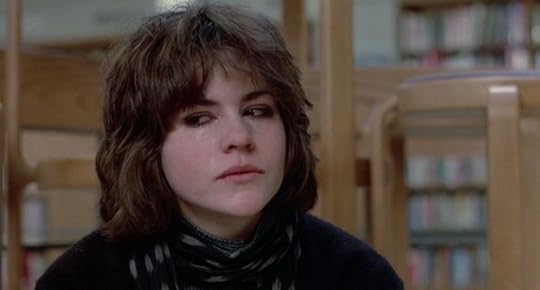
No one captured the teen portion of the eighties as poignantly as writer-director John Hughes. Sixteen Candles, The Breakfast Club, Weird Science, Pretty in Pink, Ferris Bueller's Day Off, and Some Kind of Wonderful are timeless tales of love, angst, longing, and self-discovery that illuminated and assuaged the anxieties of an entire generation.
Fondly nostalgic, filled with wit and surprising insights, don't you forget about me contains original essays from a skillfully chosen crop of novelists and essayists on the films' far-reaching effects on their own lives -- an irresistible read for anyone who came of age in the eighties (or just wishes they did).
Featuring new writing Steve Almond * Julianna Baggott * Lisa Borders * Ryan Boudinot * T Cooper * Quinn Dalton * Emily Franklin * Lisa Gabriele * Tod Goldberg * Nina de Gramont * Tara Ison * Allison Lynn * John McNally * Dan Pope * Lewis Robinson * Ben Schrank * Elizabeth Searle * Mary Sullivan * Rebecca Wolff * Moon Unit Zappa
Jaime Clarke is a graduate of the University of Arizona and holds an MFA from Bennington College. He is a founding editor of the literary magazine Post Road, now published at Boston College, and co-owner, with his wife, of Newtonville Books, an independent bookstore in Boston.
The most amusing thing about this book is how everyone rags on Molly/Andie's supposedly awesome homemade prom dress in Pretty in Pink. The second most amusing thing about it is that out of twenty contributors, only four are listed as teaching at MFA programs in the back of the book. The third most amusing thing is that Moon Unit Zappa is given the end spot in the anthology (she is not one of the quartet teaching writing). I don't think this was worth the five bucks I paid for it at Half Price this afternoon.
One writer confides she was diagnosed with a brain tumour the summer she saw a lot of John Hughes movies, but never follows up (well obviously it was treated or something or we wouldn't be reading her essay, but still). Another contributor is at pains to inform the reader - repeatedly - "No, I was not a loser in high school, unlike all the other poets." (Zing.) One guy writes disturbingly about his teenaged infatuation with Ally Sheedy. Another guy writes disturbingly about his teenaged infatuation with Mary Stuart Masterson. (No guys write about their teenaged infatuations with Duckie, although a couple of girls do, and Tod Goldberg uses his essay to tell us that even though he was NOT GAY, he was like Duckie, but NOT GAY ((neither was Duckie, but anyway)), until he changed his image by deciding to have no image at all, which, as any high schooler can tell you, is the biggest image there is, in high school. I am so cool, I have no need to obey your mediocre definitions of coolness.) One guy writes about his decision not to e-stalk his ex-girlfriend who Looked Just Like Molly (except when she Looked Just Like Andie MacDowell....wait, what?) by not in fact whipping out his credit card "for a one-time payment of $19.95" that will give him "complete access to all public documents relating to my ex, including real estate records, criminal court records, documents relating to birth and death, marriage and divorce...." Not because he has moral qualms or anything like that, but he wants to remember her as eternally twenty-five. Then he wonders if maybe she got fat. Then he calls Molly Ringwald a has-been. Most people in this collection do. I dunno, hasn't she spent most of her adult life living in places like Paris and Greece? That sounds better than Mr. Rock 'N' Roll: The Alan Freed Story, but it's no High Art, I guess. Three people note the amazing absence of black people from Ferris Bueller's Chicago, except in the dancing-in-the-streets scene. Two people, one of them male, note that of the hilarious "I passed out and had sex with you" scene in Sixteen Candles "We call that date rape these days. Or just rape." Progress....A couple of people mention the amazing racism of the "Long Duk Dong" scenes, but in a horrified, oh-my-God-that-did-not-just-happen way, like when your favourite uncle gets drunk off his ass during Christmas dinner and makes a terrible racist joke, and then everyone starts talking REALLY LOUDLY about how good the cranberry sauce is to drown him out.
In fact very few of these essays are about the films at all. Oh, the plots are assumed knowledge, and certain iconic scenes (panties, felt up by grandmother, cake at the end, dancing in the streets, the record store dance, the poor girl gets the rich guy but the poor guy turns down the rich girl, &c &c) are referred to repeatedly, but the I don't know oh ACTUAL CINEMATIC ASPECTS of these, well, MOVIES are pretty much ignored. One person mentions the David Bowie quote at the beginning of The Breakfast Club, but not that it's on a glass wall which SHATTERS. (Cinematically!) Nobody talks about the long pan through the deserted high school that actually opens that movie, with its subtle clues about the kids' public identities: the prom queen poster, the wrestling story in the school paper crumpled discarded on the floor, the locker with the nasty slur that turns out to be Bender's -- or that film's stagy yet compelling extreme closeups and long takes, devoid of music, as the strangers confess their lives to each other because they know they'll never be together this way again. Or the shot inside the art museum,* Ferris Bueller and his two friends looking down, and the camera way down looking back up at the kids, with the deflating, utterly Hughesian punchline: "Anything is peaceful from one thousand, three hundred and fifty-three feet."
No, what we mostly get is a lot of alternately too-cool-for-the-room or rather painfully self-aware prose about "how these movies made ME, ME, ME, FEEL, FEEL, FEEL, when I saw them in 1985 as a teenager." Yeah, arguably the Hughesverse is self-enclosed, privileged, well-off, adolescent and white and the biggest problems its characters face mostly have to do with personal experience (virginity or loss thereof) or social status (WHAT ABOUT PROM, BLAINE? BLAINE, WHAT ABOUT PROM?!) and yeah, Hughes's career petered out in a string of wildly successful kiddie action flicks, kind of like J.D. Salinger's last long story being the grotesque one where Seymour Goes to Camp. (Along with some truly horrible remakes.) But there were also films like She's Having a Baby, Career Opportunities, and Only the Lonely, even though that was Chris Columbus. He was Whedonesque before Whedon was Whedon; why not talk about the snappy dialogue, the voice-overs and monologues, the way words are used as weapons? -- But ultimately I can't blame them, what can you say about someone who made such an indelible mark on a generation and then apparently happily sold out to 20th Century Fox and Kit Culkin? Not a lot, that's what. At least Salinger retired to a cabin and wasn't turning out Sweet Valley High novelizations.
Probably all you need to know about this collection, finally, is that one author wrings an entire essay out of an internet quiz: "Which John Hughes Character Are You?" And it's not Moon Unit Zappa.
*Did not one of these writers recognize that entire kids-grooving-on-groovy-art sequence is ripped off from To Sir With Love, only with no Sir? Seriously? What was the requirement for submitting to this anthology, "Must not have seen a popular movie pre-1984 or post-1987"?
Really great collection of writers' responses to the films of John Hughes. I would have given it five stars, but it was shockingly short on reactions to "The Breakfast Club" while giving an awful lot of page time to "Ferris Bueller," which is just not right.
I suffer from a case of severe nostalgia when it comes to the John Hughes movies. I keep a luxury apartment in my heart for The Breakfast Club. I plan to live there with Judd Nelson's John Bender when I die. Sixteen Candles and Ferris Bueller's Day Off bring me endless delight. I still suffer the indignity of Andie's choice of Blane over Duckie in Pretty in Pink. These are serious issues, people! And this is why I'm the perfect audience for this book.
The essays, all focused on John Hughes movies, range from serious to silly. Some are awesome, some are less so. But they're all short, and all of the authors share at least a hint of my obsession with the greatest movies the 80s produced. (Actually, a couple of people probably beat me for obsession.)
Is it life changing? No. Is it a fun exploration of some enduring films and a common obsession? Yeah. Worth the time for my fellow Hughesians.
If I had to sum up my feelings of this book in one word, it would be disappointment.
Let me preface this by saying I adore John Hughes. I love all of his films (Sixteen Candles tops my favorite movies list) – I love the characters, the banter, the plots… Basically, whenever I start to talk about John Hughes, its a whole lot of love love love and ignoring anything that could be considered “wrong” with the films. I suspend my disbelief every time I watch the movies and get sucked in, believing that the cute senior guy will see past the cheerleader to the real girl, the princess and the rebel will be together come Monday, et cetera et cetera.
When I ordered this book (“Don’t You Forget About Me – Contemporary Writers on the Films of John Hughes” edited by Jaime Clark), I was expecting to read essays by people who felt the same way about the films – similar to when I read “Coffee at Lukes”, essays about the show Gilmore Girls last summer.
Unfortunately, this was not the case.
While I enjoyed the forward and a few of the essays in this book (I Dated Molly Ringwald, Sort Of, Make a Wish and A Slut or A Prude stick out in my mind), most of them were cynical or critical about the films. The forward by Ally Sheedy (who played Allison Reynolds in “The Breakfast Club”) seems out of place with the tone of the entire book – it set me up thinking that my expectations would be proven correct but as soon as I dove into the first essay, I was disappointed.
The essays were at best cynical and at worst mean-spirited about the films. The writers refuse to suspend their disbelief and instead attempt to shatter the blissful content I had about the films. One essay, Real Men Don’t Eat Quiche, goes on and on about how all the characters in Ferris Bueller’s Day Off suck and Principal Rooney is the only good character – so in fact, he’s kind of missed the entire spirit of the film. Another, Pretty in Penury, discusses everything that is wrong with Pretty in Pink…in detail.
While this book has a few redeeming essays (Another favorite was The Scream, With Lip Gloss), it is nothing like what I expected it to be (but not in a good way). Unless you feel “meh” on John Hughes and his films, I would recommend this book with several warnings to make sure the new reader knows what they are getting into. For a John Hughes obsessee like myself, I found it disappointing and annoying that Jaime Clarke would try to sell this book off as a nostalgic look at the films – when it clearly isn’t . I had another John Hughes essay book in my Amazon cart and now I’m second guessing whether or not I should purchase it… good thing this book only cost me $.16 plus S/H.
In the end, I would give this book 2.5/5 stars. Not really a worthwhile read.
I picked up this book on a whim, not really expecting much in terms of content, but was pleasantly surprised to discover a complex series of essays that take John Hughes films seriously. I have always loved Pretty in Pink, The Breakfast Club and Some Kind of Wonderful, so it was a joy to take a stroll down memory lane and revisit some of their most poignant and funny moments. The contributing writers are diverse - you hear both from folks who worship and loath JH, from the former nerds and the popular girl, and from the nobodies and he somebodies (the book closes with a lovely essay by Moon Unit Zappa).
My only complaint would be around the series of essays in the middle that repeatedly declare love for Sixteen Candles - it became monotonous to me, and not just because I'm not a big fan of that film. But otherwise I highly recommend this book to anyone who ever loved JH's films. Many of the writers eloquently sum up what makes the characters he has created folks that we (still) aspire to be like. In talking about Andie from Pretty in Pink, Lisa Gabriele says, "I carry that redheaded girl in my heart today. I carry her pride and her unassuming beauty, her integrity and her ingenuity... Andie demonstrates that there is freedom in self-love, because you can't be victimized by other people's opinions or labels because your core is solid and impenetrable." This book gives weight to films that may have previously been dismissed as teen fare, not seeing that they, in fact, shaped a generation's worth of young minds. Mine included.
What a great, nostalgic, intelligent collection of essays by contemporary authors! These essays discuss and explicate the more known John Hughes films like: Sixteen Candles, The Breakfast Club, Weird Science, Pretty in Pink, Some Kind of Wonderful and Ferris Bueller's Day Off. I remember thinking when I was younger, "Wow, I can't wait to get older just so I can be a teen and see teen movies with my friends." When the time came, Hughes had digressed and was doing movies like Home Alone for the younger movie going set. I remember being really pissed. I wanted to be a part of the Hughes world's and environments. In hindsight, I have no idea why, but I just loved all of the relationships...between friends, parents, and all the characters were such...characters. They all stood out in my mind. This is such a great read for those who grew up with watching any of the more teen-angst filled films. I utterly recommend this and wish to read more by these essay writers, and more books in this vein.
Quite a nice collection of essays on the influence of John Hughes' work. Moon Unit Zappa's essay is a particular stand-out. Also, a succint meditation of being a teenager in general. I would have preferred if there had been a few less essays about the Cult of Molly Ringwald (she is amazing, but at times it felt quite repetitive), and focused more on side characters as well (who are very worthy of reflection). People touched on the racism centered around Long Duck Dong, but I would have really appreciated maybe reading an essay written by an Asian American person discussing this rather iconic figure. I think there were many rich areas that were left unexcavated, and that was a bit disappointing. I appreciated the discussion on classism touched on by a few of the authors (names escape me because I'm a bit tipsy and very lazy, as the book is on the other side of the house). Overall, an interesting read and a nice collection.
OK, to begin with, I was never a huge John Hughes fan, though I also must admit that his films resonate with a certain type of potent charm for any suburban white kid who grew up in the 80s. I stumbled upon this incredible essay last year (https://hazlitt.net/longreads/diamond...), which placed this book on my reading list, and lo-and-behold, I found a copy on the “Free” rack at the thrift store I occasionally volunteer at.
Since this book is a collection of diary-entry essays, many of which are quite enjoyable to read simply for the nostalgic camaraderie of it all, I figure I’d add my take to the mix and see if others are sure to do likewise, because why not? If the Amazon Imperium decides to shit-can Goodreads because it’s not profitable, or the PII (personally identifiable information) they glean from us proves too fruitless to profit from, then this is all folly anyway; however, if Goodreads stays because of whatever reasons the Powers-that-be decide, then this could be archival, and some day fertile soil for future social-psychologists (or space-alien archeologists) to comb through and reconstruct this age from the ashes of whatever doom befalls insipid humanity.
Besides, I have free time and willpower at this moment . . .
I graduated high school in 1991, within the shadow of Chicagoland in a white-bread world of extreme suburbia, and while Ferris Bueller’s Day Off may be the pinnacle of visual storytelling within my memory of the 80s, all the other John Hughes films were completely ignorable, until, much, much later in life. Now, I can say I’ve seen them all, with two main additional points: The Breakfast Club is pure genius, and Molly Ringwald was the “every girl” I subconsciously, to this day, dream about. The memoiristic component to these essays are quite enjoyable, and perhaps Quinn Dalton sums it all up well with:
“I think a part of you is still in love with your first love, always. This is the one you walked into clean—with empty pockets and no past—when you were too young to worry about your career, or whether there might be children or a divorce tucked away somewhere. You haven’t yet tested—and discovered—your own limits, or anyone else’s, for that matter. This is when you create the universe of love you will live in for the rest of your life. You will measure other, future, more complicated, more mature loves against it” (p. 64).
I believe this statement is profoundly true. We’re all mostly fuck-ups in high school, and I was a roiling mess due to circumstances beyond my control. Sleuthing through that morass doesn’t necessarily make the pain of regrets go away, and it certainly can’t erase the power of that first virgin, stomach-like-lead, gobsmacked love. The lucky ones find it again, burning slightly less bright, but close enough to not matter, maybe even powerful enough to eclipse the past. If so, you are truly fortunate.
It’s easy to see similarities to characters in these films, pull their frameworks apart and impose oneself onto someone, or parts of someones (again if you grew up white and suburban), but there exists very sad undercurrents when compared to reality: “Hughes bought into the lacquered lie of the wonderful life, that no matter your circumstances, the system allows you to succeed if you put in the work. And success is not so much independence as it is wealth and power” (Soraya Roberts). Roberts goes on to deftly highlight these dynamics in the Hazlitt essay above, and as several writers in this collection mention, these films were far from perfect, and in many ways some scenes are quite deplorable. In the end, Tod Goldberg gives a nice dissection:
“John Hughes established that the marginalized would find their margin, that those truly in love would not go about life in a fit of unrequited yearning, that if you were decent and capable of epiphany, you would be rewarded with your fondest hopes. Adult reasoning suggests that most of the relationships Hughes put in motion were actually destined for bone-crushing failure.
Just to consider the statistical odds of these scenarios ever working out:
1. Jake Ryan and Samantha Baker in Sixteen Candles: Jake was college bound and was about ten minutes away from statutory rape of sixteen-year-old ingenue Samantha Baker. 2. Farmer Ted and Jake’s girlfriend, Caroline, in Sixteen Candles: The geeky freshmen had sex with the passed-out-drunk prom queen (not to mention that he had his buddies take photos of her) that may or may not have been consensual. We call that date rape these days. Or just rape. Whichever, Caroline should be happy MySpace didn’t exist in the 1980s. 3. The couples in The Breakfast Club: They all faced the inevitable reality of Monday-morning homeroom. Like Bender was going to prom with Claire? Like Allison was going to start cheering for Andy at his wrestling matches?” (pp. 92-93)
Personally I would have placed #3 as #1, #1 as #2, and #2 as #3, because the weight of it is so much more important here. Still, the films fantasize delusions that “social norms” in the hellscape of high school (in any era) eradicate more than they prove true, but that’s what the bulk of Hollywood teenage-life stuff does, right? They feed us fantasies that the trials of life crush underfoot. Who doesn’t want to run off with Allison before her “makeover” to smoke dope and read Dark Horse comics and listen to Danzig’s first album on cassette tape? Who hasn’t wanted to knock Jake Ryan’s teeth out and dance with Sam? Why were some of us “destined” to be Camerons, sulking in the shadows of those fucking lovable, always-winning Ferris Buellers? It doesn’t matter, of course. We play the cards we’re dealt as best we can. I miss you, Tank Girl.
The films of John Hughes are a canon of the 80s and cannot be ignored, even if one wants to. This collection of reflective essays is probably best digested slowly, in pieces, since reading about the same characters over and over again can be tedious, detracting from the essence of the individual writers as standalone pieces. All said and done, the Roberts essay in the Hazlitt article is the best of all, and well worth the time.
I liked it because of the subject matter (John Hughes' teen movies), and I started wondering why I don't read more collections of essays. But the more I read, the more I remembered: Oh Yeah. Writers think too much and essays are self-indulgent navel gazing about crap that doesn't really matter. What I learned: I still want to be Ferris Bueller.
Not bad, but not great either. My tastes don't typically run to the personal essay form, and much of the writing felt self-indulgent. Given the subject matter, though, I'm not sure that's a fair critique. Just OK.
I bought this at the Dollar Tree a few years back and finally got around to reading it. If you are looking for a collection of essays that critique, analyze or otherwise delineate John Hughes' movies, keep moving. This is clearly a collection of point of view essays, most of which are somewhat self-indulgent reflections of the writers' youth. It's actually rather good, and some of the essays remind me of trying to connect profound academic thought with pop culture in college papers for the "cooler" professors that were more indulgent of such things. Sometimes I really miss being a student. Many of the essays are witty yet poignant, funny and irreverent yet nostalgic and sensitive. I found it comforting to know that I'm not the only one who thought Molly Ringwald's dress at the end of "Pretty in Pink" was atrocious after she finished altering it (it looked much better as a vintage dress before she hacked it barbarically with those scissors), nor am I the only one disappointed that Annie Potts' character sold out her uniqueness to date a square.
Follows are my notes on the individual essays.
The forward by Ally Sheedy was touching and gave a small glimpse of what production was like on the set of an iconic movie. The introduction left me thinking that the editor is a bit full of himself, yet still a somewhat witty writer.
Steve Almond - an insightful essay that drew attention to details I've missed in countless viewings of "Ferris." This was one of my two favorite essays (the other one being Ryan Boudinot's), and left me wanting to rewatch "Ferris" and note the instances in the movie he referenced.
Julianna Baggott - I didn't agree entirely, but she made a few good points regarding sexism in high school society. Not much has changed.
Lisa Borders - Her premise is that the fantasy ending of "Sixteen Candles" is plausible as long as you leave off "happily ever after." My premise is that there isn't much of a point unless you assume they wind up together and eventually have a good life together, not perfect ... just good.
Ryan Boudinot - I rather enjoyed this essay despite the fact that I couldn't really relate to the subject matter. He made some excellent points and I thoroughly appreciated how he connected Mitchell-Smith's post acting collegiate work with the themes in one of the campiest movies ever. This one was perhaps the only essay in the collection that felt academic in style.
T Cooper - The writer, as a LGBTQ youth identifies with the sexually ambiguous characters in movies. A fun read, but hardly enlightening.
Quinn Dalton - While just as self indulgent and introspective as T Cooper's essay (less about the subject movie and more about the writer), her interpretation of "Sixteen Candles" and application of it to her experiences is interesting.
Emily Franklin - The perils of trying to turn friendships into romances. I would say it only happens in the movies and on TV, but it happened to me. The lesson here is that you can't force it.
Lisa Gabriele - A touching, bitter portrait that compares poor and rich classes as illustrated in the movie "Pretty in Pink."
Tod Goldberg - Grown man blames random actor for lack of high school dating success, and later embarrasses himself in front of said actor. Not one of the better essays in the book.
Nina de Gramont - Woman finds self-realization in an online quiz. Deeper than you would think.
Tara Ison - Less of an essay than a reflection on being on the edge of adulthood, of stalling that last step into the real world of grownups, and of using movies to escape from it.
Allison Lynn - Ferris Bueller teaches us that life is better with harmless adventures, even when they don't go as planned, and that everyone is equally cool.
John McNally - Taking out his bitter resentment of the socioeconomic class division between the North Side and South Side of Chicago on the otherwise endearing characters in "Ferris Bueller's Day Off."
Dan Pope - Rather superficial view of life and relationships, and how even when peaking early means you don't realize your dreams, you can still be content with your lot in life. Not a great essay.
Lewis Robinson - Ally Sheedy' s character in "The Breakfast Club" inspires a young man to pursue batshit crazy.
Ben Schrank - I wouldn't be surprised if Mr. Schrank has a Mary Stuart Masterson shrine hidden behind the clothes in his closet, not to mention a rather large therapy bill.
Elizabeth Searle - Hughes' movies, particularly those featuring Molly Ringwald, are incredibly accurate portrayals of teen angst and insecurities. Especially if you seriously over think them.
Mary Sullivan - Evidently the majority of John Hughes movies can be simplified into the Cinderella archetypal story pattern, which the writer tries to apply to her own experience while referencing a completely unrelated yet classic song.
Rebecca Wolff - Psycho babble about Ferris Bueller by a former high school mean girl who thinks her self-centered life might have been somewhat better if she had made friends with the unpopular kid who dressed weird and didn't give a hoot that Wolff and her ilk ignored her. This essay, and writer, are just annoying to me.
Moon Unit Zappa - Not so much an essay on John Hughes movies as it is an autobiographical sketch of her teen years and how she decided to become a writer. The most interesting item is that evidently Molly Ringwald once dated her brother Dweezil. The only thing Zappa really notes about the movies is how they reflected a life and culture completely foreign to her own upbringing. It is interesting as a glimpse into the life of the child of a rock legend, and amusing how much she name drops.
Overall, it was an amusing read, but not a book I will revisit, hold onto or necessarily recommend to friends or family unless I know they would be interested in something exactly along these lines. I cannot think of anyone this description would apply to at the moment.
I think the average rating for this is spot on. I, also, would rate this about 3.5.
The book has several essays written by people who were in their youth during the time that the John Hughes films came out. I’m in that group, and I enjoyed everyone’s viewpoints for the most part. There was one standout for me that was like a red flashing light that the author had either been too young during that time, or she just didn’t get it. If you read this, you’ll probably be able to pick that one out. It is the only one to say completely ludicrous and degrading things about Molly.
I’m giving this 4 stars not because of the writing but because of how the many authors broke down the films in ways I never thought of. Plus it made me rewatch them all. Breakfast Club, 16 Candles, and Pretty in Pink and Ferris Beuller are the films I most recall and cherish from my teen years. But they did not age well for the most part. And viewing them as a 50yr old father of teens is vastly different than watching as a teen.
A nice way to re-visit and re-contextualize some of the movies that shaped me as a pre-teen. Essay quality is patchy - some are excellent (Steve Almond, T Cooper, Rebecca Wolff), some ... less so. Read the ones that sing to you, skip the ones that don't. A nice way to spend a sick day at home. Recommended if his movies meant anything/everything to you when you saw them.
It was just ok. The essays were really more about the writer's experiences than the actual movies. in one essay, the Breakfast Club high school is referred to as Sherman instead of Shermer. That's unforgivable!
After reading essay after essay in this, I couldn't finish it, so I skimmed til the end to see if there was anything worth while. There are a few good bits, but it wasn't worth it. Maybe the content just wasn't for me
My disappointment in this book is mostly my own misplaced expectation. I’d certainly read a companion book on Hughes’ films outside the teen angst genre. This book is basically a collection of essays on the film Pretty in Pink.
A fun read. I've only seen Some Kind of Wonderful Once, so now I have to go back and watch it! I also have to take the "Which John Hughes Character Are You?" quiz.
If you ever had an unrequited crush on Molly Ringwald, or wondered what ever happened to that guy from Weird Science—no, not Anthony Michael Hall, the other guy--then this book is for you. It's not simply a rehash of John Hughes highlights or yeah-wasn't-that-great quotations, but a collection of funny and touching essays on the trials of adolescence from the vantage point of 30-something writers. These authors reflect on teen angst via Hughes’ plots and related parallels to their own lives. There are numerous odes to Ms. Ringwald as Hughes’ muse, and more than a few discussions (and photos) of unfortunate fashion choices of 80’s teen actors and high school students who felt imitation was the greatest form of flattery. The standout essays in the collection are Steve Almond’s philosophical treatise on Ferris Bueller’s Day Off (I’m not kidding), and That’s Not a Name, That’s a Major Appliance: How Andrew McCarthy Ruined My Life by Tod Goldberg.
I like this book simply because it exists. I'm a bit obsessive about the John Hughes teen movies (TBC, PiP, SKoW, SC, FBDO), and I'm glad to see the obsession morphed into a collection of essays. While elated that someone had the notion to publish this book, the actual essays are not all that insightful. For the most part, I've put more thought into the movies than the authors of these essays. Quite a few stated that they watched the movies again after not seeing them for a number of years, while I've had them on constant rotation for the last 15. Why were these authors chosen and why should I care about their opinions? How are they qualified to sum up the cultural & personal influence of the best teen movies ever made? They're not, not really, which is why this collection of essays leaves much to be desired, although there are a few good ones scattered amongst the blah.
I feel like John Hughes is too easy of a target for the kind of autobiographical essays contained in this book. The book contains few surprising insights (although they are there) and many "Well, obviously." moments. Even a book about John Hughes could have led to less predictable essays (for example, the author list is entirely composed of former Anthony Michael Halls, Molly Ringwalds in SIXTEEN CANDLES, and Ally Sheedys in THE BREAKFAST CLUB...I'd be interested to read an essay about John Hughes movies by a former jock or prom queen). However, I always find it a pleasure to read how movie's profoundly influence people's lives, intertwine with their memories, and grow with them. There are too few books on the subject--so I'm glad that this disappointing but entertaining one exists.
This is a collection of essays by writers who came of age with John Hughes movies. In other words: I'm exactly the target audience! Most of the writers I've never heard of, and admittedly some are better than others, but they are always interesting. Revisit your own feelings towards movies like Sixteen Candles, Pretty in Pink, Ferris Bueller, Breakfast Club, etc. Probably the funniest essay was the last: Moon Unit Zappa (most famous for her "gag me with a spoon" rap on her dad's "Valley Girl" single) reminisces on her HARD crush on Michael Schoeffling of Sixteen Candles, and how John Hughes' movies may as well have been Star Wars for the Zappas, as their life was so totally different from the suburban life depicted. :)
It was very entertaining to read about how these films influenced others, since last face it, if you were young in the '80's, these movies were real life! I learned some interesting details also, such as the original ending to Pretty In Pink was different and that Molly Ringwald turned down such bigtime films as Pretty Woman.... I think what a lot of people don't realize though is that the reason why we are all so nostalgic for the 80's is that it was the last decade when this country was truly American, before ghetto culture and multiculturism were shoved down our throats. This is the way our youth was and we wish we could go back to it.
This one was OK for me. I am a huge fan of most of the movies which are talked about in this book, but I did not feel I could relate to a lot of them. I am not sure, but it could be the age gap between me and many of the authors. These movies were huge in the 80's and I did not experience them till the late 90s. Perhaps this was part of it. I would recommend this for people who experienced these movies during the 80s (as tweens or teens).
This is a collection of essays written over the John Hughes' movies from the 80s: Sixteen Candles, The Breakfast Club, Pretty in Pink, Weird Science, Ferris Bueller's Day Off, and Some Kind Of Wonderful. I thought it was a nice change of pace for me to read this and I took a lot away from the majority of the essys. In fact, it inspired me to write a piece from that time era as well. I din't write about any of the above movies but I centered on the year 1984. Good coffee table book.
This is now my Bible. If anyone is curious to why I am the way I am, this book pretty much spells it out. There's a couple essays in here that didn't work for me, but the rest of them are truly amazing. This book made me think about characters and the value each one brings to a story.
For anyone and everyone who can recite -- on command -- from Hughes' early movies, this one is a must read. If you've never seen any of the Hughes teen films that form the entire basis for this collection of essays, or came into them too late, you probably won't appreciate most of this book.
A collection of essays on the films of John Hughes. Some essays are a hit some are a miss. I'd definitely recommend reading Susannah Gora's You Couldn't ignore me if you tried for a more cohesive view of John Hughes and his popular movies.