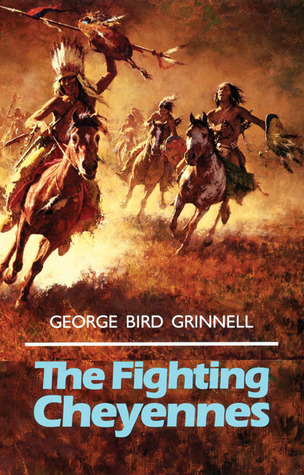
"A long association with the Cheyennes has given me a special interest in them, and a special wish that they should be allowed to speak for themselves. What the Indians saw in the battles here described, I have learned during years of intimate acquaintance with those who took part in them."-George Bird Grinnell.
Without critical comment or biased judgement, George Bird Grinnell-one of the truly great historians of the American Indian-has recorded the major battles that the Cheyennes fought. In this account the entire gallery of the heroic Cheyenne chiefs and warriors-Roman Nose and Black Kettle and Dull Knife and many others-emerge in full color as they strive against the greatest enemy of all: the failure of the white man to understand and appreciate their way of life and his ignorance of their real capacity for peace and cooperation.
"[Grinnell’s] integrity, sincerity, sympathy, and understanding made him welcome in every tipi. . . . He was one of the very few historians who knew how to get authentic information from Indians, and how to present things as they saw them in readable form."–Stanley Vestal in the foreword.
George Bird Grinnell was an American anthropologist, historian, naturalist, and writer. Grinnell was born in Brooklyn, New York, and graduated from Yale University with a B.A. in 1870 and a Ph.D. in 1880. Originally specializing in zoology, he became a prominent early conservationist and student of Native American life. Grinnell has been recognized for his influence on public opinion and work on legislation to preserve the American bison. Mount Grinnell is named after Grinnell.
Well, I rather gave up. I enjoy the history and the info etc. but the reading is difficult since it jumps and then you have to find the rest of the paragraph farther on, then go back and hope you are in the right area etc. It may have been just this addition (ISBN 978-0-217-38530-5) different than the one shown in the picture here. It was written long ago and also some parts are not current and that is clearly stated on the first page where the publishing info is (copyrighted edition 2009). A different edition may be smoother reading. I have been reading the "Southern Cheyennes" along with it as a lot is taken from Grinnell's info with corrections and up dates etc. That is an easier read. I mix in other genre for breaks so it is taking me longer than ordinarily.
Lydbok. Engelsk. Den amerikanske historikeren og antroplogon Georg Bird Grinell sin skildring av Cheyenne-høvdinger og krigere - Roman Nose and Black Kettle and Dull Knife sine kriger mot de hvite inntrengerne fra 1830-1890. Utgitt i 1915, allsidig kildebruk: Samtaler med overlevende cheyenner, hvite soldater og aviskilder, m.m. Detaljert, solid og overveldende. Bra bok.
Audio book. English. American historian and anthropologist Georg Bird Grinell's depiction of Cheyenne chiefs and warriors - Roman Nose and Black Kettle and Dull Knife's wars against the white invaders from 1830-1890. Published in 1915, comprehensive use of sources: Conversations with Surviving Cheyenne, White Soldiers and Newspapers, etc. Detailed, solid and overwhelming. Good book.
A detailed and fascinating account of the wars of the U.S. Army with the various people's of the plains Indians nations.
Due to the style of writing during the very earliest part of the twentieth century the reading can be slow, but patience is well rewarded. The Indian point of view is well represented.
Had no idea that the tribes young warrior were made up of several different groups within the tribe that did not always agree . I was born in 1940 , only about 30 years after the last war with the Modoc's in Klamath County Oregon. Our Saturday movies were a lot of Cowboys and Indians. Indians always getting killed , no wonder there is still unrest. scs
I think this is a great book for researchers or people with background knowledge of Native American history. I really like that the author sourced information directly from the perspectives of Cheyenne living at the time of writing. The stories are interesting and I think would be great reference for someone wanting to dive deeper.
As a casual reader, however, I got lost by the names and locations frequently listed. I also wished it was in chronological order and had more about Cheyenne culture, but it seemed more to be listed by specific events or relationships with other tribes. It's written in an old style so I had to rewrite my brain, which is fine, but I was already struggling to process information.
All in all this book is maybe not for a casual reader wanting to be introduced to Cheyenne culture, but great for someone wanting to supplement their knowledge with a different perspective.
An important historical book that documents important events and confrontations of the Cheyenne, mostly between them and US government troops. The author gives accounts from both sides and attempts to piece together what actually happened, as a good historian does. it also applies to the Arapaho, the Sioux, the Kiowa, Pawnee ... If this book didn't exist, many of these events would be lost, or just taken at face value (erroneously) from the US GOV version of events.
This was an interesting view from the eyes of one who lived through this point in US History. I enjoyed the contrast between the Native Americans, and the US Soldiers' point of view on who was winning the war, and how many people fell on either side. This is a read that people who are interested in American History, Native Americans, and the war would enjoy.
Great details about life on the plains in the 1860s. Personal desribtions from the Indians point of view regarding the changes in their lifestyle and ability to survive.
Outstanding documentary of this period of history!
Loved the detail and the presentation of both sides of this important period of western history. You could feel the frustration of both sides. In coming to grips with the changes of the west.
I liked this book . It was very interesting but thought some parts of it was "long winded " and was boring. If anyone is interested in Indian heritage , culture and history this book would be the one to read.
The account of the Sand Creek Massacre was absolutely devastating to listen to. I had to take a break from the audio book and put on “Threnody to the Victims of Hiroshima” as the only song befitting such a moment.
The story was very much from the Indians point of view and their memories. Government covered up many of the slaughters that happened massacre of women and children just to take their land.
A lot of interesting information given in a detailed way. It was a bit dry at times but the description of the Cheyenne plight comes through loud and clear.
Being only a quarter way through this seems to be a very good book of the American and American Indian history covering the wars between tribes and the tribes with the white man. Much of the history covers Kansas, Colorado and Nebraska territories.
Being written in the early1900s, it is still fresh in the minds of the writer and the children of those involved making it a very accurate account.
Good historical account of the Indian wars of the plains Indians.
I read this because this book offered for free on Amazon Kindle. The story recorded here was more than one century old, but we could always learn something from history.
A great old classic about the world of the Cheyenne up to the point where they were driven, unwillingly, onto the reservations. George Bird Grinnell knew many Cheyenne personally, some of whom were in famous battles like The Little Big Horn, and they told him their side of the story. An interesting book.