

What do you think?
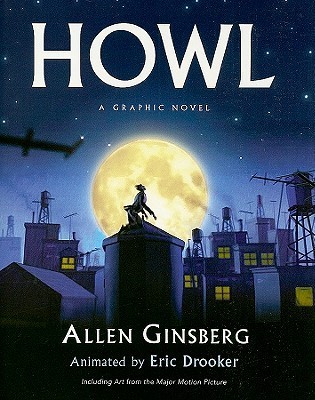
Howl
Now a Major Motion Picture
First published in 1956, Allen Ginsberg's "Howl" is a prophetic masterpiece—an epic raging against dehumanizing society that overcame censorship trials and obscenity charges to become one of the most widely read poems of the century.
First published in 1956, Allen Ginsberg's "Howl" is a prophetic masterpiece—an epic raging against dehumanizing society that overcame censorship trials and obscenity charges to become one of the most widely read poems of the century.
223 pages, Paperback
First published January 1, 1956
About the author
Allen Ginsberg
548 books4,240 followersAllen Ginsberg was a groundbreaking American poet and activist best known for his central role in the Beat Generation and for writing the landmark poem Howl. Born in 1926 in Newark, New Jersey, to Jewish parents, Ginsberg grew up in a household shaped by both intellectualism and psychological struggle. His father, Louis Ginsberg, was a published poet and a schoolteacher, while his mother, Naomi, suffered from severe mental illness, which deeply affected Ginsberg and later influenced his writing—most notably in his poem Kaddish.
As a young man, Ginsberg attended Columbia University, where he befriended other future Beat luminaries such as Jack Kerouac, William S. Burroughs, and Neal Cassady. These relationships formed the core of what became known as the Beat Generation—a loose-knit group of writers and artists who rejected mainstream American values in favor of personal liberation, spontaneity, spiritual exploration, and radical politics.
Ginsberg rose to national prominence in 1956 with the publication of Howl and Other Poems, released by City Lights Books in San Francisco. Howl, an emotionally charged and stylistically experimental poem, offered an unfiltered vision of America’s underbelly. It included candid references to homosexuality, drug use, and mental illness—subjects considered taboo at the time. The poem led to an obscenity trial, which ultimately concluded in Ginsberg’s favor, setting a precedent for freedom of speech in literature.
His work consistently challenged social norms and addressed themes of personal freedom, sexual identity, spirituality, and political dissent. Ginsberg was openly gay at a time when homosexuality was still criminalized in much of the United States, and he became a vocal advocate for LGBTQ+ rights throughout his life. His poetry often intertwined the personal with the political, blending confessional intimacy with a broader critique of American society.
Beyond his literary achievements, Ginsberg was also a dedicated activist. He protested against the Vietnam War, nuclear proliferation, and later, U.S. foreign policy in Latin America. He was present at many pivotal cultural and political moments of the 1960s and 1970s, including the 1968 Democratic National Convention and various countercultural gatherings. His spiritual journey led him to Buddhism, which deeply influenced his writing and worldview. He studied under Tibetan teacher Chögyam Trungpa and helped establish the Jack Kerouac School of Disembodied Poetics at Naropa University in Boulder, Colorado.
Ginsberg’s later years were marked by continued literary output and collaborations with musicians such as Bob Dylan and The Clash. His poetry collections, including Reality Sandwiches, Planet News, and The Fall of America, were widely read and respected. He received numerous honors for his work, including the National Book Award for Poetry in 1974.
He died of liver cancer in 1997 at the age of 70. Today, Allen Ginsberg is remembered not only as a pioneering poet, but also as a courageous voice for free expression, social justice, and spiritual inquiry. His influence on American literature and culture remains profound and enduring.
As a young man, Ginsberg attended Columbia University, where he befriended other future Beat luminaries such as Jack Kerouac, William S. Burroughs, and Neal Cassady. These relationships formed the core of what became known as the Beat Generation—a loose-knit group of writers and artists who rejected mainstream American values in favor of personal liberation, spontaneity, spiritual exploration, and radical politics.
Ginsberg rose to national prominence in 1956 with the publication of Howl and Other Poems, released by City Lights Books in San Francisco. Howl, an emotionally charged and stylistically experimental poem, offered an unfiltered vision of America’s underbelly. It included candid references to homosexuality, drug use, and mental illness—subjects considered taboo at the time. The poem led to an obscenity trial, which ultimately concluded in Ginsberg’s favor, setting a precedent for freedom of speech in literature.
His work consistently challenged social norms and addressed themes of personal freedom, sexual identity, spirituality, and political dissent. Ginsberg was openly gay at a time when homosexuality was still criminalized in much of the United States, and he became a vocal advocate for LGBTQ+ rights throughout his life. His poetry often intertwined the personal with the political, blending confessional intimacy with a broader critique of American society.
Beyond his literary achievements, Ginsberg was also a dedicated activist. He protested against the Vietnam War, nuclear proliferation, and later, U.S. foreign policy in Latin America. He was present at many pivotal cultural and political moments of the 1960s and 1970s, including the 1968 Democratic National Convention and various countercultural gatherings. His spiritual journey led him to Buddhism, which deeply influenced his writing and worldview. He studied under Tibetan teacher Chögyam Trungpa and helped establish the Jack Kerouac School of Disembodied Poetics at Naropa University in Boulder, Colorado.
Ginsberg’s later years were marked by continued literary output and collaborations with musicians such as Bob Dylan and The Clash. His poetry collections, including Reality Sandwiches, Planet News, and The Fall of America, were widely read and respected. He received numerous honors for his work, including the National Book Award for Poetry in 1974.
He died of liver cancer in 1997 at the age of 70. Today, Allen Ginsberg is remembered not only as a pioneering poet, but also as a courageous voice for free expression, social justice, and spiritual inquiry. His influence on American literature and culture remains profound and enduring.
Ratings & Reviews
Friends & Following
Create a free account to discover what your friends think of this book!
Community Reviews
Displaying 1 - 30 of 406 reviews

September 29, 2021
I remember revisiting this one in the summer of '67, when I was working on the West coast of Canada. I had first read it in the spring during March Break, and was feeling excoriated by Ginsberg's Jeremiad against the dispassionate and cynical middle and ruling classes.
The reason I remembered it on Vancouver Island was an afternoon talk show I saw then exhibiting poor Allen tinkling Hindu finger-cymbals and bells during a recitation of his anti-Vietnam later poetry.
The interviewer seemed both bemused and mildly amused by it all.
Poor Allen. His poetry and he, himself, openly Gay in a repressed age, were mocked by the media. Plus, as I have been, he was bipolar.
Now, of course, his work is classic lit. I wouldn't be in the least bit surprised if Howl is readily available in the public domain. You kids should read it! An outspoken Beatnik when it was published, Allen saw Howl banned almost everywhere.
I first read him in Evergreen Magazine, itself banned in many states.
A divided America?
Yes, then as now.
But if freedom has had an upsurge since then, free speech has not.
And if you're interested in the evolution of free speech -
This is one work to read!
***
Well, it’s now several months after I first wrote this review, and - wouldn’t you know it - I’ve found Ginsberg’s Howl in its entirety:
And here, for your enchantment at its pure poetry and edification at its (still very relevant) message, it is.
Read and heed!
https://edisciplinas.usp.br/pluginfil...
The reason I remembered it on Vancouver Island was an afternoon talk show I saw then exhibiting poor Allen tinkling Hindu finger-cymbals and bells during a recitation of his anti-Vietnam later poetry.
The interviewer seemed both bemused and mildly amused by it all.
Poor Allen. His poetry and he, himself, openly Gay in a repressed age, were mocked by the media. Plus, as I have been, he was bipolar.
Now, of course, his work is classic lit. I wouldn't be in the least bit surprised if Howl is readily available in the public domain. You kids should read it! An outspoken Beatnik when it was published, Allen saw Howl banned almost everywhere.
I first read him in Evergreen Magazine, itself banned in many states.
A divided America?
Yes, then as now.
But if freedom has had an upsurge since then, free speech has not.
And if you're interested in the evolution of free speech -
This is one work to read!
***
Well, it’s now several months after I first wrote this review, and - wouldn’t you know it - I’ve found Ginsberg’s Howl in its entirety:
And here, for your enchantment at its pure poetry and edification at its (still very relevant) message, it is.
Read and heed!
https://edisciplinas.usp.br/pluginfil...

June 16, 2012
Five stars for the poem, one star for the graphics and typography. This book is patently NOT the way to read this poem. Howl is momentum; Howl is movement; Howl is a wall of words that knocks you down and ties you up. This book was full of stills plucked from an animation and breaks up the wall of words over hundreds of pages. Both choices disservice both the poem and animation. The poem ends up broken into pieces. The pictures are indistinct and poorly composed, because they were never meant to be stills. The art itself borders on cheesy, with characters firmly in the uncanny valley and visual metaphor that is just too easy.
This book is a dead thing. If you want a better experience, print the poem out in its entirety on a roll of butcher paper and read it out loud to yourself by candlelight in an empty room.
This book is a dead thing. If you want a better experience, print the poem out in its entirety on a roll of butcher paper and read it out loud to yourself by candlelight in an empty room.

December 29, 2012
Rating: 4.5* of five
I've shifted my 4.5-star review of this comic book, I mean graphic novel!, to my blog Expendable Mudge Muses Aloud.
This is a case where the addition of pictures made a huge and positive difference to my experience of a work. If, like me, you don't want to decode words and interpret pictures because the combination is almost always less than the sum of the parts, here is an exception to the rule.
Beautiful. I understand the poem far better for having read this.
And someone please explain why James Franco gets so much snark lobbed at him. The film of this was quite good.
I've shifted my 4.5-star review of this comic book, I mean graphic novel!, to my blog Expendable Mudge Muses Aloud.
This is a case where the addition of pictures made a huge and positive difference to my experience of a work. If, like me, you don't want to decode words and interpret pictures because the combination is almost always less than the sum of the parts, here is an exception to the rule.
Beautiful. I understand the poem far better for having read this.
And someone please explain why James Franco gets so much snark lobbed at him. The film of this was quite good.
July 23, 2018
(3.5*)
Since my first read (which I can’t believe that was 8 years ago), I’ve been meaning to return to the poems in Howl and Other Poems. This time, I read the poems by date rather than the order of the book, starting with the Earlier Poems first leading up to Howl, noting how the later poems, with their long lines, read like prose that simultaneously shows different sides of a picture.
The mood in these is mostly unsettling, dark to sombre, but I was also amused how in A Supermarket in California the speaker is shopping with Walt Whitman. Howl, with its chanting in the last parts was not as visually crisp as its first part, but that first part starts with such a loud bang that takes the rest of that poem to catchup with, and I needed a moment where Song (one of the Earlier Poems) turns love upside down like a heavy weight.
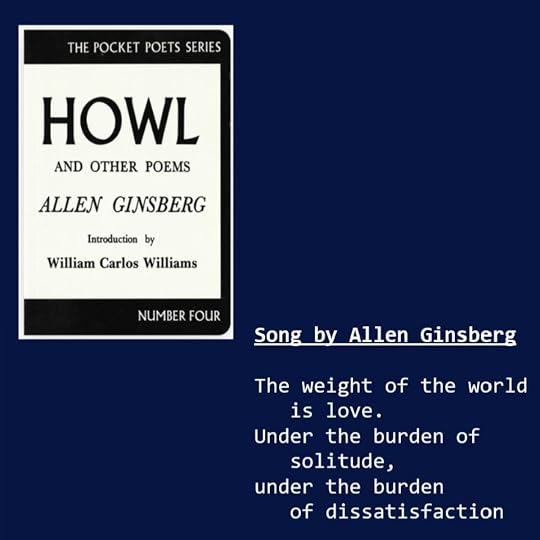
I enjoyed reading these again, what struck me the most is how its use of language collides imagery in unexpected ways.
Since my first read (which I can’t believe that was 8 years ago), I’ve been meaning to return to the poems in Howl and Other Poems. This time, I read the poems by date rather than the order of the book, starting with the Earlier Poems first leading up to Howl, noting how the later poems, with their long lines, read like prose that simultaneously shows different sides of a picture.
The mood in these is mostly unsettling, dark to sombre, but I was also amused how in A Supermarket in California the speaker is shopping with Walt Whitman. Howl, with its chanting in the last parts was not as visually crisp as its first part, but that first part starts with such a loud bang that takes the rest of that poem to catchup with, and I needed a moment where Song (one of the Earlier Poems) turns love upside down like a heavy weight.
I enjoyed reading these again, what struck me the most is how its use of language collides imagery in unexpected ways.

May 30, 2023
সারাজীবন কাটিয়ে দিলাম শুধু এই কবিতাটার মতো হওয়ার চেষ্টায়।

July 22, 2014
I wasn't particularly impressed with this illustrated version. The images were stills from the animation which was created for the movie -- not really GN material. They were nice enough, but didn't translate well to the page, and I wasn't particularly impressed with the way they were laid out. I wonder if they had been pencil drawings I would have liked them better, and found them a more fitting companion to the poem. Eh.
November 8, 2010
I read the poem as a teenager, and I've gradually been getting more interested in graphic novels, so when I saw a graphic novel version--with Ginsberg's involvement, so I knew it wouldn't be a horrible hack job--in Powell's recently I couldn't resist.
The poem is just as viciously powerful as when I first read it; though I can only imagine it would have had more impact when it was published, in 1956. The only detail that marks it as in any way dated is the repeated references to typewriters. The significance of the age is more that it shows the disaffection and societal failure it recounts as not only not being novel--I knew that, though it's good to be reminded--but even older than I had realised. The boomer generation has somehow managed to spin this fable of rebellion having been invented in the mid-late 60s, whereas here is a long poem from 10 years earlier that oozes vitriol at the establishment and recounts insistently all the "collateral damage" of an epoch that these days seems to get romanticised as being before everything got so damn complicated.
For me, apparently unlike for most of the reviewers on Goodreads, the illustrations added quite a lot. They're beautiful in themselves, the style feels very appropriate, and they fit both the individual images and the cacophonic succession of images very well. They also add something else unexpected: by letting the book put each breath of the text on a new page, they make the poem fit the print format much better than in the text-only edition I had read before, letting it flow more naturally than it can all squashed onto one page.
The poem is just as viciously powerful as when I first read it; though I can only imagine it would have had more impact when it was published, in 1956. The only detail that marks it as in any way dated is the repeated references to typewriters. The significance of the age is more that it shows the disaffection and societal failure it recounts as not only not being novel--I knew that, though it's good to be reminded--but even older than I had realised. The boomer generation has somehow managed to spin this fable of rebellion having been invented in the mid-late 60s, whereas here is a long poem from 10 years earlier that oozes vitriol at the establishment and recounts insistently all the "collateral damage" of an epoch that these days seems to get romanticised as being before everything got so damn complicated.
For me, apparently unlike for most of the reviewers on Goodreads, the illustrations added quite a lot. They're beautiful in themselves, the style feels very appropriate, and they fit both the individual images and the cacophonic succession of images very well. They also add something else unexpected: by letting the book put each breath of the text on a new page, they make the poem fit the print format much better than in the text-only edition I had read before, letting it flow more naturally than it can all squashed onto one page.

June 17, 2017
The old cliche, "ignorance is bliss," has proven untrue for me. I read a graphic novel version of this and it made me hate the poem, because I didn't appreciate the graphic interpretation. My review of the graphic novel: below.
I gave this another chance, and I'm grateful I did. I read the poem here: https://www.poetryfoundation.org/poem....
Ginsburg isn't showing off, as I accused him in my original, scathing review. The man pours out his feelings. His friend lies dying and he howls his words from a broken heart, weeping over the suffering of his generation. It almost brought me to tears and moves me now as I write this. He blames a societal force he calls "Moloch," a name in the Bible for a Canannite god famous for accepting babies into the flames of its stone belly. He ends the poem by opening his heart for his friend who lies dying in a hospital.
Beautiful and powerful, moved my heart.
------------
Original read, one star, around June 15th
I thought this would amaze and delight.
Instead I feel annoyed. Ginsburg had amazing talent with prose, but, in my opinion, he over-indulges and shows it off with melodrama and nonsense.
I gave this another chance, and I'm grateful I did. I read the poem here: https://www.poetryfoundation.org/poem....
Ginsburg isn't showing off, as I accused him in my original, scathing review. The man pours out his feelings. His friend lies dying and he howls his words from a broken heart, weeping over the suffering of his generation. It almost brought me to tears and moves me now as I write this. He blames a societal force he calls "Moloch," a name in the Bible for a Canannite god famous for accepting babies into the flames of its stone belly. He ends the poem by opening his heart for his friend who lies dying in a hospital.
Beautiful and powerful, moved my heart.
------------
Original read, one star, around June 15th
I thought this would amaze and delight.
Instead I feel annoyed. Ginsburg had amazing talent with prose, but, in my opinion, he over-indulges and shows it off with melodrama and nonsense.
June 4, 2008
I love this poem-it changed so much for me, it showed me the possibilities of writing. what it could be. ITs about a friend of Ginsbergs, who was put in a mental institution, and Ginsberg is writng about how society itself has gone mad, how everyone is crazy, the passion of that insanity, the search for stability, the consequence of crazy, maddening liablities when what used to be your mind takes over. It documents the point when the 50's became the 60's, and we as a nation ushered in a new dawn. Not everyone was going to survive, but it wasn't about that. Again, the moment, the documentation, Howl is perfect at this. Its when we stopped being innocent and started being real.

Read
February 26, 2014اونا که یکه و تنها تو خیابونای «آیداهو» دنبال فرشتگان روشن بین سرخپوست بودن/ اونا که خودشون فرشتگان روشن بین سرخپوست بودن/ اونا که جماع کردن سرخوشانه و ارضاءناپذیر با یه بطری آبجو یه معشوقه یه پاکت سیگار یه شمع و از تخت افتادن پایین و سینه خیز کنان ادامه دادن رو زمین و پایین راهرو خوردن به دیوار و آخر سر بیهوش افتادن با تصوری از بهترین کُس خلاص شده از دست آخرین انزال آگاهی/ اونا که گم شدن تو کوههای آتشفشانی مکزیک بیهیچ ردی از خودشون/ بجزسایهی لباس کارشون و گدازه و خاکستر شعر پخشوپلا تو آتشدان شیکاگو/ اونا که زندهزنده سوختن تو لباس فلانل معصومشون تو خیابون مدیسون/ میون انفجار آیههای سربی و قیل و قال مستانهی هنگ آهنین مد/ اونا که تمام شب رو با کفشهای پر از خون تو برفهای بارانداز قدم زدن/ در انتظار یه دری تو ایست ریور که به یه اتاق پر از دود و دم و افیون باز بشه

April 27, 2012
All due respect to the poem encased in this book. My critique comes from the book as a whole.
Images in this graphic novel were quite literal in their adherence to the words of the poem. So much so that I think my wandering brain suffered for that. The changes from page to page jarred me, especially in Part I.
"Howl" is a better read without pictures at this point.
The final part, the epilogue, nixes my critique with a good mix of imagery that doesn't take the reader out of the poem. (Seriously, the ending images alone should get this review an extra star. Oh, well.)
Images in this graphic novel were quite literal in their adherence to the words of the poem. So much so that I think my wandering brain suffered for that. The changes from page to page jarred me, especially in Part I.
"Howl" is a better read without pictures at this point.
The final part, the epilogue, nixes my critique with a good mix of imagery that doesn't take the reader out of the poem. (Seriously, the ending images alone should get this review an extra star. Oh, well.)

March 29, 2026
9/10 - stumbled across this graphic novel version in my local library and couldn’t resist picking up. It’s been a good while since I was immersed in the beat generation work of Kerouac et al, via my noughties obsessive consumption of all things Bob Dylan… so I was tentative and conscious that this poem wouldn’t resonate as well with me now. But from that opening line, I was quickly reminded of its sharpness and potency . Lines such as “who threw their watches off the roof to cast their ballot for eternity…” are just so compelling. In part 2 the line, “Moloch whose love is endless oil and stone! Moloch whose soul is electricity and banks!” couldn’t sound any more pertinent at this point in time. This feels extremely demoralising, but upholds the work for its initial purpose and astuteness in commentary…Eric
Drooker’s animation in the poem taps deeply into the intensity of HOWL, but interestingly draws the sheer darkness of it much to the fore; an element I probably wouldn’t have recognised as prominently in my twenties.
Drooker’s animation in the poem taps deeply into the intensity of HOWL, but interestingly draws the sheer darkness of it much to the fore; an element I probably wouldn’t have recognised as prominently in my twenties.

October 18, 2017
Actual rating: 3.5 stars. An excellent read. Dark, haunting, haunted, alive! Haha!

December 3, 2019
Allen Ginsburg's epic poem was first published in 1956, when I was still too young to notice. Half a decade later, as an aspiring beatnik in the wasteland of my home city, reading it was akin to a rite of passage. Faithful to the occasion, I would toke up and start at the beginning, which I came to know well, because I never seemed to reach the end. It was a good book to carry around because it was small enough to carry in a jacket pocket and I did that for a while. Certainly it was easy to identify with his chilling assessment. I was one of those
who threw their watches off the roof to cast their ballot for Eternity outside of Time....p94
If it didn't sound so much like bragging, I would recount how I bought my first edition at the holy grail of City Lights and if I was a purist I might slam this effort. But Eric Drooker took the trouble to establish a friendship with Allen, who endorsed the project and gave it his enthusiastic blessing.
Who am I to hold out against the charm distilled from the anguish of the poem?
I love the cover with its Peter Pan allusions, and the pictures of AG and ED together. I love the idea that the spirit of my times is being transported for these times. Readers new to the poem will be inspired to look up the original I want to see the movie asap and dig out my old copy.
And yes, I read it straight through!
Visions! omens! hallucinations! miracles! ecstasies!
Gone down the American River!
Dreams! adorations! illuminations! religions! the
whole boatload of sensitive bullshit!
p59

September 15, 2010
I have no use whatsoever for poetry unless it's set to music and called lyrics. So, really, for me, three stars out of five is a tour de force. How I got to this stage of my life without reading beat poetry is easy to explain: I quit college too early, never did drugs save booze, and I am a recluse.

August 9, 2017
Howl - c'est l’Énéide des États Unis. C'est à lire absolument si on s'intéresse le moindrement à la littérature américaine. Ginsberg sous alias d'Alvah Goldbrook est la vedette de la lecture de poésie qui se trouve au debut des "Clochards célestes" de Jack Kerouac.

June 18, 2012
My first exposure to this poem. The art style isn't one I usually enjoy--but I could feel the beat movement in the rhythm of Ginsberg's words.

April 28, 2020
4.5
The poems was dark and the illustration depict every stanza that Ginsberg wrote. I showcase the hardship and negativities that the poetry was expressing to the audience. Beautifully drawn and the theme is captivating to see.
The poems was dark and the illustration depict every stanza that Ginsberg wrote. I showcase the hardship and negativities that the poetry was expressing to the audience. Beautifully drawn and the theme is captivating to see.

April 24, 2021
Aunque no he entendido muchas referencias, metáforas, comparaciones y personificaciones, espero poder apreciarlo un poco más cuando lo analicemos en profundidad (énfasis en "espero"). Aún así, personalmente me transmite la crudeza y dureza de la sociedad, las injusticias que vivimos, la hipocresía y los límites "sobrehumanos" que podemos alcanzar los humanos. Bastante interesante la verdad... 🤔

January 27, 2019
Loved this as a graphic novel ❤️

November 8, 2020
this poem made absolutely ZERO sense to me, which is exactly why I loved it, it was so shocking, jarring, and uncensored that I quite literally had to pick up my jaw from the floor several times throughout. would only recommend if you are in an open minded mood for a very odd read

February 11, 2017
O poema continua sendo uma grande inspiração - eu acho que jamais vou deixar de ter 17 anos e me encantar com essa ode aos vagabundos e marginais e patéticos personagens que buscam beleza, gozo e eternidade em meio aos escombros do pós-tudo. Por mais cínica e pomposa que eu possa ser de vez em quando a energia do Ginsberg vai sempre ressoar em mim.
Mas o projeto da graphic novel... que horror. Arte feia (stills da animação que não vi), literal demais, pouquíssimo inspirada.
Comprei o livro por 10 pratas numa banca de sobras na rodoviária e pretendo deixar o exemplar numa parada de estrada; quem sabe o poema -apesar do projeto gráfico pavoroso - não encontre algum adolescente perdido cheio de ódio e de amor que ainda não ouviu falar nada sobre Allen Ginsberg e está prestes a ter uma iluminação.
Quero acreditar que vai ser assim.
Mas o projeto da graphic novel... que horror. Arte feia (stills da animação que não vi), literal demais, pouquíssimo inspirada.
Comprei o livro por 10 pratas numa banca de sobras na rodoviária e pretendo deixar o exemplar numa parada de estrada; quem sabe o poema -apesar do projeto gráfico pavoroso - não encontre algum adolescente perdido cheio de ódio e de amor que ainda não ouviu falar nada sobre Allen Ginsberg e está prestes a ter uma iluminação.
Quero acreditar que vai ser assim.

October 24, 2008
Just because it's a classic doesn't mean I have to like it.

January 19, 2011
OH MY GOD YOU HAVE TO SHUT UP.

January 26, 2015
3½ stars, rounded up for the great illustrations

March 3, 2021
God awful illustrations, fantastic writing.

November 25, 2023
An illustrated version of Allen Ginsberg's iconic Howl poem that captures parts of its essence really well, but misses out on others.

I'm not going to summarise the poem itself, which I have already covered to an extend here, but granted that I think of it as a fulminant and emotional piece, I was highly curious how it would translate into this format of a graphic novel. Illustrator Eric Drooker was actually a friend of Ginsberg and was asked personally to take on this demanding task.

The illustrations capture the loneliness and otherness of the characters Ginsberg describes well. It's interesting, because in the poem itself I don't think that being lonely is a world I'd attribute to the scenarios pictured in it, but since he does zoom in on what was publicly perceived as the freaks and the underdogs, it's reasonable to assume that they must have felt a sense of alienation. Drooker's images are dark and gloomy, creating an atmospheric world that particularly comes to life in the poem's second part, which is concerned with the state of industrial civilisation.

What these images lack is the sort of vibrancy and force that Ginsberg delivers with his words. To me it's essentially what makes the poem so great and powerful, meaning that I ultimately ended having mixed feelings about this way of visualising it. The 3D style leaves everything feeling very contained and clean, whereas Ginsberg's words are anything but: loose and free, they were way more jazz than Drooker chose to display.
It's definitely interesting to see this attempt at visualising the Beat generation, but I wouldn't recommend this as an introduction to either the scene or Ginsberg specifically. You'd miss out on letting your imagination grasp the words full potential.
I'm not going to summarise the poem itself, which I have already covered to an extend here, but granted that I think of it as a fulminant and emotional piece, I was highly curious how it would translate into this format of a graphic novel. Illustrator Eric Drooker was actually a friend of Ginsberg and was asked personally to take on this demanding task.
The illustrations capture the loneliness and otherness of the characters Ginsberg describes well. It's interesting, because in the poem itself I don't think that being lonely is a world I'd attribute to the scenarios pictured in it, but since he does zoom in on what was publicly perceived as the freaks and the underdogs, it's reasonable to assume that they must have felt a sense of alienation. Drooker's images are dark and gloomy, creating an atmospheric world that particularly comes to life in the poem's second part, which is concerned with the state of industrial civilisation.
What these images lack is the sort of vibrancy and force that Ginsberg delivers with his words. To me it's essentially what makes the poem so great and powerful, meaning that I ultimately ended having mixed feelings about this way of visualising it. The 3D style leaves everything feeling very contained and clean, whereas Ginsberg's words are anything but: loose and free, they were way more jazz than Drooker chose to display.
It's definitely interesting to see this attempt at visualising the Beat generation, but I wouldn't recommend this as an introduction to either the scene or Ginsberg specifically. You'd miss out on letting your imagination grasp the words full potential.
March 22, 2025
"Peyote solidities of halls, backyard green tree cemetery dawns, wine drunkenness over the rooftops, storefront boroughs of teahead joyride neon blinking traffic light, sun and moon and tree vibrations in the roaring winter dusks of Brooklyn, ashcan rantings and kind king light of mind"

November 28, 2017
Resistance to Twentieth Century Capitalism in Allen Ginsberg’s “Howl”
This paper explores how the poem “Howl” by Allen Ginsberg appears as a powerful resistance against twentieth century Capitalism of America. A post world war poem, published in 1956, the poem shows strong distaste for the contemporary consumer culture, warfare and monstrous capitalism. With the rapid urbanization, industrialization and quest to pursue American Dream, working class people started to work hard in America. After being branded Superpower nation as a result of victory in second world war, America extended its business globally. Capitalism triumphed and class difference became distinct. As Hansen puts it, during 1950s “With increased living standards, broad layers of the working class were now able to achieve decent standards of living, and buy products that had previously been reserved for the upper classes – hence the phenomenon of so-called “consumerism” – the idea that working-class families could buy happiness with their disposable incomes” (Hansen par. 2). As a result, money ruled over humanity, intellectuality and the ethics. The value of poetry, ethics and morality declined. So, Ginsberg claims, due to capitalist triumph, he saw the “best mind of my generation destroyed by madness” (line 1). As the poem is addressed to his friend Carl Solomon who was in Rockland- a mental hospital, the “angelheaded hipsters” (line 2) destroyed by madness are perhaps the poet himself and his Beat Generation who advocate for equality and socialism. Throughout the poem, Ginsberg clarifies who were the best mind of his generation, how were they destroyed and who destroyed them.
In the second part of the poem, Ginsberg asserts “Moloch” (line 79) as the phenomenon which destroys the best mind of the generation. The myth of Moloch comes from Hebrew Bible, where Moloch is the idolatrous god which demands the sacrifice of children by burning. He presents Moloch as the synonymous term for Capitalism as Capitalism is also eating up humanity with utmost cruelty. “Moloch whose mind is pure machinery! Moloch whose blood is running money! Moloch whose fingers are ten armies! Moloch whose breast is a cannibal dynamo! Moloch whose ear is a smoking tomb!” (line 82). Capitalism relies on Industrialization and its mind is pure machinery, it does not regard the pain and suffering of an individual. Its only intention is profit. It is like a cannibal and sucks the life out of the people who intend goodwill instead of chasing American Dream. “Moloch the incomprehensible prison!” (line 81). Capitalism is the prison for the imagination, creativity and intellects. It forces all the genuine ideas to be disintegrated; justice and freedom is chained. Life becomes impossible without money in such world. Everything is comprehended through money and every other human potentiality becomes trivial.
The hangover of second world war was not yet over and in 1955, American people saw the dawn of Vietnam War. At universities, too, “war scholars” (line 6) were privileged. The poets and students who advocated for humanism and “Blake-light Tragedy” (line 6) were branded as obscene and “were expelled from the academics” (line 7). This is the autobiographical experience of Ginsberg himself. He was expelled from the university. There was no place for the intellectuals and the humanists of the generation. They were tortured by government for raising voice against capitalism, war, class-difference and advocating for cosmopolitanism and freedom. Due to the consumerist and capitalist culture of twentieth century, Ginsberg witness that creative and intellectuals are forced to "cut their wrists three times successively unsuccessfully” and are “jumped off the Brooklyn Bridge,”. In this world, only aristocrats, warlords and rich are valued. Nobody cares for the proletariat and people active on creative works rather than on producing money. Ginsberg says "but no one cares; they “walked away unknown and forgotten.” What could the poet and his generation do when the world is engulfed by the rage of war, hatred and the humanity is dismissed for the machinery capitalism? Finding no place for themselves under the monstrous shadow of Moloch, these people indulged on smoking Marijuana, homosexuality, drugs, poetry, protests and communism. They wandered all around talking continuously cursing for the government whose only interest is war and the Capitalism which brought frustration and suicide among the working-class people. They “burned their money in wastebaskets” (line 8) resisting Capitalism, “wandered around and around at midnight in the railroad yard wondering where to go, and went, leaving no broken hearts” (line 22), “distributed Supercommunist pamphlets in Union Square” (line 32) advocating for the liberation from money and power. As Miller puts it, “Ginsberg illustrates that capitalism is oppressive and he proposes means to end the system...by way of his protagonists Ginsberg effectively offers socialism and communism as superior alternatives to capitalism” (par 7, 11). Ginsberg’s major intention in the poem is to defense the proletariats group and amplify their potentiality which is oppressed by monstrous capitalism. Ginsberg describes about his protagonists ‘angelheaded hipsters’ who instead of involving in some creative and progressive process, are involving in degenerative activities like drinking, smoking, vomiting and “yacketayakking” screaming. This is all due to the despotic impact of Capitalism. The best minds are withering and being wasted. Frustration clouds their mind. As Wills points out:
“angelheaded hipsters were poets, writers, artists, the mentally ill, the impoverished, the unemployed, drug addicts, homosexuals, visionaries, the disillusioned, criminals, and disenfranchised workers. They were all enslaved by the dollar…their disillusionment with society led them to attempt suicide…(they) met Marx’s qualification for a proletariat truly ready for political revolution… and were keenly aware of their oppression.” (par 2, 3)
Due to the Capitalist hegemony in America, during and after world wars, Marxism and Communism intensified. The emergence of multi-national companies, rapid development of technology and massive industrialization produced aristocrats along with proletariats. Ginsberg’s mother had also subscription to Communism. As Jonsson claims, “His parents were communists and socialists, and Ginsberg had already as a youth the desire for becoming ‘a labor lawyer’ and ‘fighting the good foght” (par 19) Ginsberg’s involvement in Communist movement is also apparent. Communism was a response towards the Capitalist encroachment in America.
At the third part of the poem, Ginsberg shows solidarity with his friend Carl Solomon who is in Columbia Presbyterian Psychiatric Institute to which he refers by Rockland. He keeps repeating “I am with you in Rockland” to focus his support. “where you will split the heavens of Long Island and resurrect your living human Jesus from the superhuman tomb” (line 117). He claims that there are “twentyfive thousand mad comrades” (line 118) with them together in Rockland who are singing the final stanza of the Internationale. This evokes for the starting of a new age of revolution. Furthermore, Ginsberg signals to the resurrection of human Jesus(the best minds) from the superhuman tomb(capitalism). By resisting evil capitalism and ongoing wars, with the mass demonstrations and awakening, Ginsberg asserts that they will be free soon from the tight grip of Capitalism. “O victory forget your underwear we’re free” (line 120). He symbolically shows optimism for the future.
In the footnote to the poem, Ginsberg uses the word “holy” repeatedly. He assimilates everything: the soul, the body, the skin, the tongue, the asshole, the nose being holy. “Everything is holy! Everybody’s holy! Everywhere is holy! Everyday is eternity! Everyman’s an angel” (line 3). As footnote is the comment added to the bottom of printed page, Ginsberg seems to be portraying the world after the disintegration of Capitalism and Warfare. After money is burned and the world becomes free from the snare of rapid industrialization, everything will be holy and beautiful. “Intelligent kindness of the soul” (line 15) will be retrieved. Life will no more be cheap and intellectuality and knowledge will get priority in world. Alike Marxist expectation of world to reach to the condition of governmentless, countryless cosmopolitan situation at the end, Ginsberg also has the similar expectation.
To conclude, Ginsberg’s “Howl” resists the cruelty of Moloch(Capitalism) in twentieth century America. As a result of growing urbanization and industrialization pushed up by rapid development of science and technology, the best minds of poet’s generation were destroyed and involved in suicidal works like drinking, marijuana, drugs, jazz and protests as a result of frustration. Warfare and money were valorized at that time over the kind soul of humanist, poets and intellectuals. Materialism ruled over spirituality and poetry. Ginsberg portrays the true-wicked face of Capitalism which is like Moloch and demands sacrifice of poor and weak people. In the first part of the poem, he shows who the best minds of the generation are and what has capitalism forced them to do, destroying them. In the second part, he shows the true face on Capitalism by comparing it with Moloch. And in the last part of the poem, he shows his solidarity with all the best mind of generation frustrated, who are in mental hospital or locked up in prison by addressing his friend Carl Solomon in Rockland. He makes it clear that once thousands of socialists come together from all the parts of America to demonstrate with Solomon in Rockland, freedom will rise. He even uses obscene language like ‘fucked’, ‘ass’, ‘cock’, ‘balls’ to attack over Capitalism. The poet seems to be in no mood to negotiate with capitalism and attacks it time and again in favor of socialism. The poem is written to be read aloud and Ginsberg even uses enjambed long lines which must be read in one breath in order to make the voice of the poem powerful to attack over Capitalism. The howling in the poem is intended to defy gruesome Capitalism and establish a classless society which will flourish all the best minds of the generation by providing them equal opportunity and nurturing their creativity.
Works Cited
Ginsberg, Allen. Howl, and Other Poems. San Francisco: City Lights Pocket Bookshop,
1956. Pdf.
Hansen, Tom. “Ginsberg’s Howl Against Capitalism- a Film Review”. In Defense of
Marxism. 24 Mar. 2017. Web.
Jonsson, Linnea. “Howl by Allen Ginsberg- Analysis & Discussion”. Sonoloco. 25 Mar.
2017.Web
Miller, Kyle. “A Marxist Analysis of ‘Howl”. Kyle’s Blog. 25 Mar. 2017. Web
Wills, David S. “Ginsberg and the Machinery of Capitalism: A Political Reading of Howl”.
Beatdom. 25 Mar. 2017. Web.
This paper explores how the poem “Howl” by Allen Ginsberg appears as a powerful resistance against twentieth century Capitalism of America. A post world war poem, published in 1956, the poem shows strong distaste for the contemporary consumer culture, warfare and monstrous capitalism. With the rapid urbanization, industrialization and quest to pursue American Dream, working class people started to work hard in America. After being branded Superpower nation as a result of victory in second world war, America extended its business globally. Capitalism triumphed and class difference became distinct. As Hansen puts it, during 1950s “With increased living standards, broad layers of the working class were now able to achieve decent standards of living, and buy products that had previously been reserved for the upper classes – hence the phenomenon of so-called “consumerism” – the idea that working-class families could buy happiness with their disposable incomes” (Hansen par. 2). As a result, money ruled over humanity, intellectuality and the ethics. The value of poetry, ethics and morality declined. So, Ginsberg claims, due to capitalist triumph, he saw the “best mind of my generation destroyed by madness” (line 1). As the poem is addressed to his friend Carl Solomon who was in Rockland- a mental hospital, the “angelheaded hipsters” (line 2) destroyed by madness are perhaps the poet himself and his Beat Generation who advocate for equality and socialism. Throughout the poem, Ginsberg clarifies who were the best mind of his generation, how were they destroyed and who destroyed them.
In the second part of the poem, Ginsberg asserts “Moloch” (line 79) as the phenomenon which destroys the best mind of the generation. The myth of Moloch comes from Hebrew Bible, where Moloch is the idolatrous god which demands the sacrifice of children by burning. He presents Moloch as the synonymous term for Capitalism as Capitalism is also eating up humanity with utmost cruelty. “Moloch whose mind is pure machinery! Moloch whose blood is running money! Moloch whose fingers are ten armies! Moloch whose breast is a cannibal dynamo! Moloch whose ear is a smoking tomb!” (line 82). Capitalism relies on Industrialization and its mind is pure machinery, it does not regard the pain and suffering of an individual. Its only intention is profit. It is like a cannibal and sucks the life out of the people who intend goodwill instead of chasing American Dream. “Moloch the incomprehensible prison!” (line 81). Capitalism is the prison for the imagination, creativity and intellects. It forces all the genuine ideas to be disintegrated; justice and freedom is chained. Life becomes impossible without money in such world. Everything is comprehended through money and every other human potentiality becomes trivial.
The hangover of second world war was not yet over and in 1955, American people saw the dawn of Vietnam War. At universities, too, “war scholars” (line 6) were privileged. The poets and students who advocated for humanism and “Blake-light Tragedy” (line 6) were branded as obscene and “were expelled from the academics” (line 7). This is the autobiographical experience of Ginsberg himself. He was expelled from the university. There was no place for the intellectuals and the humanists of the generation. They were tortured by government for raising voice against capitalism, war, class-difference and advocating for cosmopolitanism and freedom. Due to the consumerist and capitalist culture of twentieth century, Ginsberg witness that creative and intellectuals are forced to "cut their wrists three times successively unsuccessfully” and are “jumped off the Brooklyn Bridge,”. In this world, only aristocrats, warlords and rich are valued. Nobody cares for the proletariat and people active on creative works rather than on producing money. Ginsberg says "but no one cares; they “walked away unknown and forgotten.” What could the poet and his generation do when the world is engulfed by the rage of war, hatred and the humanity is dismissed for the machinery capitalism? Finding no place for themselves under the monstrous shadow of Moloch, these people indulged on smoking Marijuana, homosexuality, drugs, poetry, protests and communism. They wandered all around talking continuously cursing for the government whose only interest is war and the Capitalism which brought frustration and suicide among the working-class people. They “burned their money in wastebaskets” (line 8) resisting Capitalism, “wandered around and around at midnight in the railroad yard wondering where to go, and went, leaving no broken hearts” (line 22), “distributed Supercommunist pamphlets in Union Square” (line 32) advocating for the liberation from money and power. As Miller puts it, “Ginsberg illustrates that capitalism is oppressive and he proposes means to end the system...by way of his protagonists Ginsberg effectively offers socialism and communism as superior alternatives to capitalism” (par 7, 11). Ginsberg’s major intention in the poem is to defense the proletariats group and amplify their potentiality which is oppressed by monstrous capitalism. Ginsberg describes about his protagonists ‘angelheaded hipsters’ who instead of involving in some creative and progressive process, are involving in degenerative activities like drinking, smoking, vomiting and “yacketayakking” screaming. This is all due to the despotic impact of Capitalism. The best minds are withering and being wasted. Frustration clouds their mind. As Wills points out:
“angelheaded hipsters were poets, writers, artists, the mentally ill, the impoverished, the unemployed, drug addicts, homosexuals, visionaries, the disillusioned, criminals, and disenfranchised workers. They were all enslaved by the dollar…their disillusionment with society led them to attempt suicide…(they) met Marx’s qualification for a proletariat truly ready for political revolution… and were keenly aware of their oppression.” (par 2, 3)
Due to the Capitalist hegemony in America, during and after world wars, Marxism and Communism intensified. The emergence of multi-national companies, rapid development of technology and massive industrialization produced aristocrats along with proletariats. Ginsberg’s mother had also subscription to Communism. As Jonsson claims, “His parents were communists and socialists, and Ginsberg had already as a youth the desire for becoming ‘a labor lawyer’ and ‘fighting the good foght” (par 19) Ginsberg’s involvement in Communist movement is also apparent. Communism was a response towards the Capitalist encroachment in America.
At the third part of the poem, Ginsberg shows solidarity with his friend Carl Solomon who is in Columbia Presbyterian Psychiatric Institute to which he refers by Rockland. He keeps repeating “I am with you in Rockland” to focus his support. “where you will split the heavens of Long Island and resurrect your living human Jesus from the superhuman tomb” (line 117). He claims that there are “twentyfive thousand mad comrades” (line 118) with them together in Rockland who are singing the final stanza of the Internationale. This evokes for the starting of a new age of revolution. Furthermore, Ginsberg signals to the resurrection of human Jesus(the best minds) from the superhuman tomb(capitalism). By resisting evil capitalism and ongoing wars, with the mass demonstrations and awakening, Ginsberg asserts that they will be free soon from the tight grip of Capitalism. “O victory forget your underwear we’re free” (line 120). He symbolically shows optimism for the future.
In the footnote to the poem, Ginsberg uses the word “holy” repeatedly. He assimilates everything: the soul, the body, the skin, the tongue, the asshole, the nose being holy. “Everything is holy! Everybody’s holy! Everywhere is holy! Everyday is eternity! Everyman’s an angel” (line 3). As footnote is the comment added to the bottom of printed page, Ginsberg seems to be portraying the world after the disintegration of Capitalism and Warfare. After money is burned and the world becomes free from the snare of rapid industrialization, everything will be holy and beautiful. “Intelligent kindness of the soul” (line 15) will be retrieved. Life will no more be cheap and intellectuality and knowledge will get priority in world. Alike Marxist expectation of world to reach to the condition of governmentless, countryless cosmopolitan situation at the end, Ginsberg also has the similar expectation.
To conclude, Ginsberg’s “Howl” resists the cruelty of Moloch(Capitalism) in twentieth century America. As a result of growing urbanization and industrialization pushed up by rapid development of science and technology, the best minds of poet’s generation were destroyed and involved in suicidal works like drinking, marijuana, drugs, jazz and protests as a result of frustration. Warfare and money were valorized at that time over the kind soul of humanist, poets and intellectuals. Materialism ruled over spirituality and poetry. Ginsberg portrays the true-wicked face of Capitalism which is like Moloch and demands sacrifice of poor and weak people. In the first part of the poem, he shows who the best minds of the generation are and what has capitalism forced them to do, destroying them. In the second part, he shows the true face on Capitalism by comparing it with Moloch. And in the last part of the poem, he shows his solidarity with all the best mind of generation frustrated, who are in mental hospital or locked up in prison by addressing his friend Carl Solomon in Rockland. He makes it clear that once thousands of socialists come together from all the parts of America to demonstrate with Solomon in Rockland, freedom will rise. He even uses obscene language like ‘fucked’, ‘ass’, ‘cock’, ‘balls’ to attack over Capitalism. The poet seems to be in no mood to negotiate with capitalism and attacks it time and again in favor of socialism. The poem is written to be read aloud and Ginsberg even uses enjambed long lines which must be read in one breath in order to make the voice of the poem powerful to attack over Capitalism. The howling in the poem is intended to defy gruesome Capitalism and establish a classless society which will flourish all the best minds of the generation by providing them equal opportunity and nurturing their creativity.
Works Cited
Ginsberg, Allen. Howl, and Other Poems. San Francisco: City Lights Pocket Bookshop,
1956. Pdf.
Hansen, Tom. “Ginsberg’s Howl Against Capitalism- a Film Review”. In Defense of
Marxism. 24 Mar. 2017. Web.
Jonsson, Linnea. “Howl by Allen Ginsberg- Analysis & Discussion”. Sonoloco. 25 Mar.
2017.Web
Miller, Kyle. “A Marxist Analysis of ‘Howl”. Kyle’s Blog. 25 Mar. 2017. Web
Wills, David S. “Ginsberg and the Machinery of Capitalism: A Political Reading of Howl”.
Beatdom. 25 Mar. 2017. Web.

April 16, 2026
Well done!
Displaying 1 - 30 of 406 reviews