

What do you think?

Selected Novels and Short Stories
Patricia Highsmith's dark talents, obsessive interest in love and murder, and macabre sensibility produced some of the most influential and deeply unsettling fiction of the twentieth century. For the reader uninitiated in the deadly world of her canon, this collection offers the first serious introduction to her remarkable range and psychological insight.
With an introduction provided by Joan Schenkar—author of the acclaimed biography The Talented Miss Highsmith—Patricia Highsmith: Selected Novels and Short Stories continues the remarkable renaissance of this literary master. Even with her first novels, Highsmith tore at the very fabric of 1950s middle-class society, revealing the stark emotional brutality that lurked beneath the sunny facade of Eisenhower suburbia.
Chosen by Joan Schenkar, the selections in this book—two iconic American novels and a trove of her most representative short stories—char the virtuosic range of Highsmith's voice, as she deftly leaps from suspense to horror, from biting social satire to deeply moving psychological drama. In Strangers on a Train (1950)—Highsmith's debut novel about the inspiration for the classic Hitchcock film—a casual conversation between acquaintances devolves into a tangled web of murder, desperation, and manipulation. This thriller provides as thorough an examination of guilt and obsession as can be found in contemporary literature. Highsmith's second novel, The Price of Salt (1952), is a seductive tale of sexual obsession that demonstrates the astounding versatility of Highsmith's insight into human nature, and has only recently begun to receive commensurate literary recognition. Written during the intensely creative period of her late twenties, The Price of Salt blends Highsmith's richly figured language with the then scandalous subject of lesbian love. The accompanying thirteen short stories demonstrate Highsmith's mastery of the short story form and reveal her to be as fine a craftsman as any American twentieth-century novelist.
This volume introduces a new generation to the haunting fiction of one of our most underappreciated literary geniuses.
With an introduction provided by Joan Schenkar—author of the acclaimed biography The Talented Miss Highsmith—Patricia Highsmith: Selected Novels and Short Stories continues the remarkable renaissance of this literary master. Even with her first novels, Highsmith tore at the very fabric of 1950s middle-class society, revealing the stark emotional brutality that lurked beneath the sunny facade of Eisenhower suburbia.
Chosen by Joan Schenkar, the selections in this book—two iconic American novels and a trove of her most representative short stories—char the virtuosic range of Highsmith's voice, as she deftly leaps from suspense to horror, from biting social satire to deeply moving psychological drama. In Strangers on a Train (1950)—Highsmith's debut novel about the inspiration for the classic Hitchcock film—a casual conversation between acquaintances devolves into a tangled web of murder, desperation, and manipulation. This thriller provides as thorough an examination of guilt and obsession as can be found in contemporary literature. Highsmith's second novel, The Price of Salt (1952), is a seductive tale of sexual obsession that demonstrates the astounding versatility of Highsmith's insight into human nature, and has only recently begun to receive commensurate literary recognition. Written during the intensely creative period of her late twenties, The Price of Salt blends Highsmith's richly figured language with the then scandalous subject of lesbian love. The accompanying thirteen short stories demonstrate Highsmith's mastery of the short story form and reveal her to be as fine a craftsman as any American twentieth-century novelist.
This volume introduces a new generation to the haunting fiction of one of our most underappreciated literary geniuses.
644 pages, Hardcover
First published December 6, 2010
About the author
Patricia Highsmith
489 books5,316 followersPatricia Highsmith (19 January 1921 – 4 February 1995) was an American novelist who is known mainly for her psychological crime thrillers which have led to more than two dozen film adaptations over the years.
She lived with her grandmother, mother and later step-father (her mother divorced her natural father six months before 'Patsy' was born and married Stanley Highsmith) in Fort Worth before moving with her parents to New York in 1927 but returned to live with her grandmother for a year in 1933. Returning to her parents in New York, she attended public schools in New York City and later graduated from Barnard College in 1942.
Shortly after graduation her short story "The Heroine" was published in the Harper's Bazaar magazine and it was selected as one of the 22 best stories that appeared in American magazines in 1945 and it won the O Henry award for short stories in 1946. She continued to write short stories, many of them comic book stories, and regularly earned herself a weekly $55 paycheck. During this period of her life she lived variously in New York and Mexico.
Her first suspense novel Strangers on a Train published in 1950 was an immediate success with public and critics alike. The novel has been adapted for the screen three times, most notably by Alfred Hitchcock in 1951.
In 1955 her anti-hero Tom Ripley appeared in the splendid The Talented Mr Ripley, a book that was awarded the Grand Prix de Litterature Policiere as the best foreign mystery novel translated into French in 1957. This book, too, has been the subject of a number of film versions. Ripley appeared again in Ripley Under Ground in 1970, in Ripley's Game in 1974, The Boy Who Followed Ripley in 1980, and in Ripley Under Water in 1991.
Along with her acclaimed series about Ripley, she wrote 22 novels and eight short story collections plus many other short stories, often macabre, satirical or tinged with black humour. She also wrote one novel, non-mystery, under the name Claire Morgan , plus a work of nonfiction Plotting and Writing Suspense Fiction and a co-written book of children's verse, Miranda the Panda Is on the Veranda.
She latterly lived in England and France and was more popular in England than in her native United States. Her novel Deep Water, 1957, was called by the Sunday Times one of the "most brilliant analyses of psychosis in America" and Julian Symons once wrote of her "Miss Highsmith is the writer who fuses character and plot most successfully ... the most important crime novelist at present in practice." In addition, Michael Dirda observed "Europeans honoured her as a psychological novelist, part of an existentialist tradition represented by her own favorite writers, in particular Dostoevsky, Conrad, Kafka, Gide, and Camus."
She died of leukemia in Locarno, Switzerland on 4 February 1995 and her last novel, Small g: A Summer Idyll, was published posthumously a month later. (Gerry Wolstenholme, July 2010).
She lived with her grandmother, mother and later step-father (her mother divorced her natural father six months before 'Patsy' was born and married Stanley Highsmith) in Fort Worth before moving with her parents to New York in 1927 but returned to live with her grandmother for a year in 1933. Returning to her parents in New York, she attended public schools in New York City and later graduated from Barnard College in 1942.
Shortly after graduation her short story "The Heroine" was published in the Harper's Bazaar magazine and it was selected as one of the 22 best stories that appeared in American magazines in 1945 and it won the O Henry award for short stories in 1946. She continued to write short stories, many of them comic book stories, and regularly earned herself a weekly $55 paycheck. During this period of her life she lived variously in New York and Mexico.
Her first suspense novel Strangers on a Train published in 1950 was an immediate success with public and critics alike. The novel has been adapted for the screen three times, most notably by Alfred Hitchcock in 1951.
In 1955 her anti-hero Tom Ripley appeared in the splendid The Talented Mr Ripley, a book that was awarded the Grand Prix de Litterature Policiere as the best foreign mystery novel translated into French in 1957. This book, too, has been the subject of a number of film versions. Ripley appeared again in Ripley Under Ground in 1970, in Ripley's Game in 1974, The Boy Who Followed Ripley in 1980, and in Ripley Under Water in 1991.
Along with her acclaimed series about Ripley, she wrote 22 novels and eight short story collections plus many other short stories, often macabre, satirical or tinged with black humour. She also wrote one novel, non-mystery, under the name Claire Morgan , plus a work of nonfiction Plotting and Writing Suspense Fiction and a co-written book of children's verse, Miranda the Panda Is on the Veranda.
She latterly lived in England and France and was more popular in England than in her native United States. Her novel Deep Water, 1957, was called by the Sunday Times one of the "most brilliant analyses of psychosis in America" and Julian Symons once wrote of her "Miss Highsmith is the writer who fuses character and plot most successfully ... the most important crime novelist at present in practice." In addition, Michael Dirda observed "Europeans honoured her as a psychological novelist, part of an existentialist tradition represented by her own favorite writers, in particular Dostoevsky, Conrad, Kafka, Gide, and Camus."
She died of leukemia in Locarno, Switzerland on 4 February 1995 and her last novel, Small g: A Summer Idyll, was published posthumously a month later. (Gerry Wolstenholme, July 2010).
Ratings & Reviews
Friends & Following
Create a free account to discover what your friends think of this book!
Community Reviews
Displaying 1 - 30 of 52 reviews
July 23, 2023
A Highsmith Reader
Review of the W.W. Norton & Company hardcover edition (2010) edited with an Introduction by Joan Schenkar and collecting Strangers on a Train (1950), The Price of Salt (1952) and a selection of 13 short stories (Various publication dates 1939 - 2002).
I started a recent Patricia Highsmith (1921-1995) mini-binge through a chance Kindle Deal-of-the-Day with The Tremor of Forgery (1969) and from discovering several recent biographies such as Devils, Lusts and Strange Desires: The Life of Patricia Highsmith (2021) and the graphic novel Flung Out of Space: Inspired by the Indecent Adventures of Patricia Highsmith (2022). With the upcoming Ripley TV-series (2023? 2024?) starring Andrew Scott as Highsmith's infamous character Tom Ripley, it seemed a good time to discover further unread Highsmith.
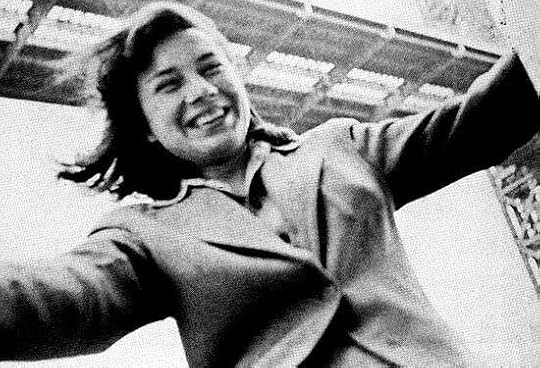
Patricia Highsmith in an uncharacteristic laughing pose from the 1940s. Image sourced from Memphis Necromancer WordPress.
I had never read any Highsmith short stories and Selected... seemed like a good place to start as it was compiled by biographer (The Talented Miss Highsmith: The Secret Life and Serious Art of Patricia Highsmith (2009)) and authority Joan Schenkar (1942-2021). Flung Out of Space writer Grace Ellis bemoaned in her own introduction to her graphic novel that Schenkar had passed away and had not been available to write it.
Given the opportunity, I did re-read the classics Strangers... and The Price..., maybe for the 3rd or 4th time. I was less impressed by the former now and more impressed with the latter. The alcoholic Bruno seemed sadly incompetent and much less of a figure to inspire a murder-trade with the hapless Guy. The romance of Therese and Carol was more compelling though, especially after having read its somewhat fictionalized real-life background in Flung Out of Space.
The short story selection was odd. Schenkar doesn't present them in chronological order except for grouping them as either "Early" or "Later". Some of the dating could be discovered by reading the end copyright credits where most (but not all) of the original magazine publications were listed. The selections lean towards the "Uncollected Stories" with 7 of the 13 being from that posthumous collection. Only 4 of the 13 deal with actual murderous crime (the inclusion of the 1 & 1/2 page cavewoman murder of Oona... is a bizarre choice), 1 implies the horror of a possible future child molestation, 1 relates to art forgery, 1 finds a person disturbed by the discovery of their primitive basket-weaving skill, and the 6 others deal with people being unkind to each other (although one of those involves birds and not humans). Schenkar's brief one sentence summaries (quoted as the "JS synopsis" excerpts below) hardly describe the reason for their inclusion.
So one is left with the question of whether these are really Highsmith's most interesting short stories or was there some other reason for their selection. Presumably Highsmith didn't rate 7 of them very highly if she excluded them from the several collections published in her own lifetime. Schenkar may be making some sort of demonstration of the variety of Highsmith's tales of apprehension and human unkindness which were not necessarily those of murder and crime.
This was still a 4 rating though, even if it left a lot of mystery in its wake. I do need to read some of Highsmith's own collections to get a better idea of whether this selection is truly representative.
Short Story Synopses and Publication History WARNING: Some may consider the synopses to be spoilers.
Early Stories:
1. A Mighty Nice Man (First published in Barnard Quarterly, vol XV, no. 3, Spring 1940, first collected in Nothing That Meets the Eye: The Uncollected Stories of Patricia Highsmith (2002)) JS synopsis: “A mother and daughter who seem to cooperate with a prospective pedophile.”
2. The Still Point of the Turning World (First published as “The Envious One” in Today’s Woman, March 1949, first collected in Nothing That Meets the Eye: The Uncollected Stories (2002)) JS synopsis: “a matron whose jealousy of another mother afflicts her infant son.”
3. Where the Door is Always Open and the Welcome Mat is Out (First collected in Nothing That Meets the Eye: The Uncollected Stories (2002)) JS synopsis: “A career girl is humiliated by the disparagements of her married sister.”
4. Quiet Night (The short first version published in Barnard Quarterly, Fall 1939, revised 2nd version as “Screams of Love/The Cries of Love” published in Woman’s Home Journal, January 1968 and then collected in Eleven (1970)) JS synopsis: “Two elderly roommates and their unquiet cruelties.”
5. In the Plaza (First collected in Nothing That Meets the Eye: The Uncollected Stories (2002)) JS synopsis: “A heterosexual Mexican prototype for Ripley.”
6. The Great Cardhouse (First published in Story, vol. 36, issue 3, no. 140, May-June 1964, first collected in Nothing That Meets the Eye: The Uncollected Stories (2002)) JS synopsis: “A collector of forgeries, whose own body parts are prosthetic.”
7. The Baby Spoon (First collected as “The Silver Spoon” in Slowly, Slowly in the Wind (1979)) JS synopsis: “A vaguely homosexual poet who robs and murders his vaguely homosexual patron.”
Later Stories:
8. Oona, the Jolly Cave Woman (First collected in Little Tales of Misogyny (1975)) JS synopsis: “A cavewoman whose violent death makes romantic and artistic history.”
9. Two Disagreeable Pigeons (First published in Harper’s Magazine, vol. 305, no. 1829, October 2002, first collected in Nothing That Meets the Eye: The Uncollected Stories (2002)) JS synopsis: “A female pigeon with marital problems.”
10. Not One of Us (First collected as “He Wasn’t One of Us” in The Black House (1981)) JS synopsis: “A toxic social group that engineers the suicide of its least desirable member.”
11. Woodrow Wilson’s Necktie (First collected in Slowly, Slowly in the Wind (1979)) JS synopsis: “An expressionist serial killer whose cartoon crimes are inspired by celebrity waxworks.”
12. The Terror of Basket-Weaving (First collected in The Black House (1981)) JS synopsis “A press representative permanently upset by her only act of creation.”
13. The Trouble with Mrs. Blynn, the Trouble with the World (First published in The New Yorker May 27, 2002, first collected in Nothing That Meets the Eye: The Uncollected Stories (2002)) JS synopsis: “A dying stranger patiently watching her mean-spirited nurse.”
Review of the W.W. Norton & Company hardcover edition (2010) edited with an Introduction by Joan Schenkar and collecting Strangers on a Train (1950), The Price of Salt (1952) and a selection of 13 short stories (Various publication dates 1939 - 2002).
In Highsmith Country, good intentions corrupt naturally and automatically, guilt often afflicts the innocent and not the culpable, hunter and prey reverse roles at a moment’s notice, and life is a suffocating trap from which even her most accomplished escape artists cannot find a graceful exit.
Along with her many published works, she left 250 unpublished manuscripts of varying length as well as 38 writer’s notebooks (or cahiers, as she rather grandly called them) and 18 diaries in five languages – four of which she didn’t actually speak. - excerpts from the Introduction to Selected Novels and Short Stories.
I started a recent Patricia Highsmith (1921-1995) mini-binge through a chance Kindle Deal-of-the-Day with The Tremor of Forgery (1969) and from discovering several recent biographies such as Devils, Lusts and Strange Desires: The Life of Patricia Highsmith (2021) and the graphic novel Flung Out of Space: Inspired by the Indecent Adventures of Patricia Highsmith (2022). With the upcoming Ripley TV-series (2023? 2024?) starring Andrew Scott as Highsmith's infamous character Tom Ripley, it seemed a good time to discover further unread Highsmith.
Patricia Highsmith in an uncharacteristic laughing pose from the 1940s. Image sourced from Memphis Necromancer WordPress.
I had never read any Highsmith short stories and Selected... seemed like a good place to start as it was compiled by biographer (The Talented Miss Highsmith: The Secret Life and Serious Art of Patricia Highsmith (2009)) and authority Joan Schenkar (1942-2021). Flung Out of Space writer Grace Ellis bemoaned in her own introduction to her graphic novel that Schenkar had passed away and had not been available to write it.
Given the opportunity, I did re-read the classics Strangers... and The Price..., maybe for the 3rd or 4th time. I was less impressed by the former now and more impressed with the latter. The alcoholic Bruno seemed sadly incompetent and much less of a figure to inspire a murder-trade with the hapless Guy. The romance of Therese and Carol was more compelling though, especially after having read its somewhat fictionalized real-life background in Flung Out of Space.
The short story selection was odd. Schenkar doesn't present them in chronological order except for grouping them as either "Early" or "Later". Some of the dating could be discovered by reading the end copyright credits where most (but not all) of the original magazine publications were listed. The selections lean towards the "Uncollected Stories" with 7 of the 13 being from that posthumous collection. Only 4 of the 13 deal with actual murderous crime (the inclusion of the 1 & 1/2 page cavewoman murder of Oona... is a bizarre choice), 1 implies the horror of a possible future child molestation, 1 relates to art forgery, 1 finds a person disturbed by the discovery of their primitive basket-weaving skill, and the 6 others deal with people being unkind to each other (although one of those involves birds and not humans). Schenkar's brief one sentence summaries (quoted as the "JS synopsis" excerpts below) hardly describe the reason for their inclusion.
So one is left with the question of whether these are really Highsmith's most interesting short stories or was there some other reason for their selection. Presumably Highsmith didn't rate 7 of them very highly if she excluded them from the several collections published in her own lifetime. Schenkar may be making some sort of demonstration of the variety of Highsmith's tales of apprehension and human unkindness which were not necessarily those of murder and crime.
This was still a 4 rating though, even if it left a lot of mystery in its wake. I do need to read some of Highsmith's own collections to get a better idea of whether this selection is truly representative.
Short Story Synopses and Publication History WARNING: Some may consider the synopses to be spoilers.
Early Stories:
1. A Mighty Nice Man (First published in Barnard Quarterly, vol XV, no. 3, Spring 1940, first collected in Nothing That Meets the Eye: The Uncollected Stories of Patricia Highsmith (2002)) JS synopsis: “A mother and daughter who seem to cooperate with a prospective pedophile.”
2. The Still Point of the Turning World (First published as “The Envious One” in Today’s Woman, March 1949, first collected in Nothing That Meets the Eye: The Uncollected Stories (2002)) JS synopsis: “a matron whose jealousy of another mother afflicts her infant son.”
3. Where the Door is Always Open and the Welcome Mat is Out (First collected in Nothing That Meets the Eye: The Uncollected Stories (2002)) JS synopsis: “A career girl is humiliated by the disparagements of her married sister.”
4. Quiet Night (The short first version published in Barnard Quarterly, Fall 1939, revised 2nd version as “Screams of Love/The Cries of Love” published in Woman’s Home Journal, January 1968 and then collected in Eleven (1970)) JS synopsis: “Two elderly roommates and their unquiet cruelties.”
5. In the Plaza (First collected in Nothing That Meets the Eye: The Uncollected Stories (2002)) JS synopsis: “A heterosexual Mexican prototype for Ripley.”
6. The Great Cardhouse (First published in Story, vol. 36, issue 3, no. 140, May-June 1964, first collected in Nothing That Meets the Eye: The Uncollected Stories (2002)) JS synopsis: “A collector of forgeries, whose own body parts are prosthetic.”
7. The Baby Spoon (First collected as “The Silver Spoon” in Slowly, Slowly in the Wind (1979)) JS synopsis: “A vaguely homosexual poet who robs and murders his vaguely homosexual patron.”
Later Stories:
8. Oona, the Jolly Cave Woman (First collected in Little Tales of Misogyny (1975)) JS synopsis: “A cavewoman whose violent death makes romantic and artistic history.”
9. Two Disagreeable Pigeons (First published in Harper’s Magazine, vol. 305, no. 1829, October 2002, first collected in Nothing That Meets the Eye: The Uncollected Stories (2002)) JS synopsis: “A female pigeon with marital problems.”
10. Not One of Us (First collected as “He Wasn’t One of Us” in The Black House (1981)) JS synopsis: “A toxic social group that engineers the suicide of its least desirable member.”
11. Woodrow Wilson’s Necktie (First collected in Slowly, Slowly in the Wind (1979)) JS synopsis: “An expressionist serial killer whose cartoon crimes are inspired by celebrity waxworks.”
12. The Terror of Basket-Weaving (First collected in The Black House (1981)) JS synopsis “A press representative permanently upset by her only act of creation.”
13. The Trouble with Mrs. Blynn, the Trouble with the World (First published in The New Yorker May 27, 2002, first collected in Nothing That Meets the Eye: The Uncollected Stories (2002)) JS synopsis: “A dying stranger patiently watching her mean-spirited nurse.”

March 27, 2016
This was more of a fly-over for me than a read; I had read the great novels, Strangers On A Train and The Price Of Salt previously, and was interested here in the short stories (and somewhat, the introduction, by Joan Schenkar).
There are thirteen stories included in addition to the well-acknowledged novels; they are included in two groupings, early and late, and are a true definition of 'hodge podge'. I've never gotten the idea that Highsmith is very good at the shorter form, or at least very committed to it. She seems to be doing short stories just to give some themes or dynamics a little whirl, to see if they look like taking on their own life, but generally just concluding them without too much interest if not. They're entirely capable short fiction, starting very pulpy in the forties and concluding more wittily/ wickedly toward the 7os/8os.
(On the topic of the dates of the stories, it's hard to know exactly what fits in where. Schenkar unhelpfully notes that as editor she's not putting them in chronological order, and it's not clear from the publishing data exactly what came when.)
Rather than linger on the lesser titles it's probably best to say there are two very-significantly Highsmith signature pieces, called The Terror Of Basket Weaving and Not One Of Us. In each the sense of identity is questioned by a random prompt, and felt to be as cursed or unlucky as anything in Poe; in each, the author touches on human insecurities to ratchet up the tempo and dark atmosphere of the otherwise banal settings.
Highsmith has her regular, unavoidable themes, and when she strikes them either gently or full-on, the reverberations carry, and the next few layers of the story take on new drive, inevitability. A meeting on a train, a jealous or envious glance-- casual or fleeting, but all it takes for the next developments to click into place, disastrous and coincidental, sometimes murderous.
This volume is notable for the long pieces, but also a couple of the stories; it's an appetizer, though, for the rest of the menu, which awaits elsewhere.
There are thirteen stories included in addition to the well-acknowledged novels; they are included in two groupings, early and late, and are a true definition of 'hodge podge'. I've never gotten the idea that Highsmith is very good at the shorter form, or at least very committed to it. She seems to be doing short stories just to give some themes or dynamics a little whirl, to see if they look like taking on their own life, but generally just concluding them without too much interest if not. They're entirely capable short fiction, starting very pulpy in the forties and concluding more wittily/ wickedly toward the 7os/8os.
(On the topic of the dates of the stories, it's hard to know exactly what fits in where. Schenkar unhelpfully notes that as editor she's not putting them in chronological order, and it's not clear from the publishing data exactly what came when.)
Rather than linger on the lesser titles it's probably best to say there are two very-significantly Highsmith signature pieces, called The Terror Of Basket Weaving and Not One Of Us. In each the sense of identity is questioned by a random prompt, and felt to be as cursed or unlucky as anything in Poe; in each, the author touches on human insecurities to ratchet up the tempo and dark atmosphere of the otherwise banal settings.
Highsmith has her regular, unavoidable themes, and when she strikes them either gently or full-on, the reverberations carry, and the next few layers of the story take on new drive, inevitability. A meeting on a train, a jealous or envious glance-- casual or fleeting, but all it takes for the next developments to click into place, disastrous and coincidental, sometimes murderous.
This volume is notable for the long pieces, but also a couple of the stories; it's an appetizer, though, for the rest of the menu, which awaits elsewhere.

April 6, 2014
I love the escalating tension in each gripping thriller; the straightforward, uncomplicated, but stylish, 50s language; the characters with intricate and sometimes diabolical motivations; and the vividly painted settings in which these characters reside.
Charles Bruno, the sociopath in Strangers on a Train, is captivating. He is a spoiled brat, repulsive and prone to childish tantrums and, yet, Guy Haines, whom he maneuvers into a bizarre double murder plot, eventually falls for him. Haines, an up-and-coming architect, is convinced by Bruno’s obsessive infatuation with him that they are indeed bound together and there is an unmistakable homoerotic element to their relationship.
The Price of Salt perfectly captures the desperate longing of first love in the character of Therese Belivet, a young woman trying to launch her career as a set designer. Therese is falls for the sophisticated, soon-to-be-divorced, Carol Aird. Over time, and on a road trip during which a detective pursues the couple, Therese experiences an intricate range of emotions ranging from unbridled, shameless love, to fear, and then humiliation mixed with steadfast devotion. The Price of Salt demonstrates the difficulties of experiencing a love that is perceived as both aberrant and criminal.
Whether writing about a group of friends who purposefully drive a man to drink or two rather pedestrian pigeons that attack a child in Trafalgar Square, Highsmith artfully portrays the more sinister elements of human nature: sophomoric murder plots, jealousy, blind cruelty, greed, sneering contempt, and the exercising of power for its own sake. She captures all our darkest moments so perfectly.
Charles Bruno, the sociopath in Strangers on a Train, is captivating. He is a spoiled brat, repulsive and prone to childish tantrums and, yet, Guy Haines, whom he maneuvers into a bizarre double murder plot, eventually falls for him. Haines, an up-and-coming architect, is convinced by Bruno’s obsessive infatuation with him that they are indeed bound together and there is an unmistakable homoerotic element to their relationship.
The Price of Salt perfectly captures the desperate longing of first love in the character of Therese Belivet, a young woman trying to launch her career as a set designer. Therese is falls for the sophisticated, soon-to-be-divorced, Carol Aird. Over time, and on a road trip during which a detective pursues the couple, Therese experiences an intricate range of emotions ranging from unbridled, shameless love, to fear, and then humiliation mixed with steadfast devotion. The Price of Salt demonstrates the difficulties of experiencing a love that is perceived as both aberrant and criminal.
Whether writing about a group of friends who purposefully drive a man to drink or two rather pedestrian pigeons that attack a child in Trafalgar Square, Highsmith artfully portrays the more sinister elements of human nature: sophomoric murder plots, jealousy, blind cruelty, greed, sneering contempt, and the exercising of power for its own sake. She captures all our darkest moments so perfectly.

September 6, 2024
Patricia Highsmith is one of the more interesting writers out there, expressing her troubled soul through troubled writing. She often seems like an afterthought, however, not always mentioned as being in the first rank of authors. This is a collection of her first two novels: Strangers on a Train (1950) and The Price of Salt (aka Carol, 1952), accompanied by 13 short stories composed from 1939 to 1973. According to editor and Highsmith biographer Joan Schenkar the stories were "selected from Highsmith's lesser-known short works." The first novel was made infamous by Alfred Hitchcock and the second was originally published under a pseudonym because of its subject matter. The short stories seemed like a random selection of Highsmith's work, but provided a diverse introduction to her styles. The stories are mostly about various sorts of crimes, cruelties, and fears. At times it seemed that Highsmith's sole goal was to subvert her readers' expectation. All the short pieces had something of interest; none left me saying "so what then?" as short stories sometimes do. A good peek for readers new to Highsmith and can be found as a bargain used. [4★]

June 18, 2013
This is an amazing collection of short stories and two novels by Patricia Highsmith. She became popular again when her novel The Talented Mr. Ripley was made into a movie starring Matt Damon a few years ago. I prefer the French film version of the same novel under the title Purple Noon personally. I think it is one of the great French New Wave films. Anyway, this collection came out soon after the release of the most recent movie version of that novel. The first novel Patricia Highsmith published is Strangers on a Train which of course was made into the masterpiece movie by Alfred Hitchcock. There are minor differences between the film and the novel in the beginning, Guy is an architect in the novel, a profession tennis player in the movie but the differences become major and veer off from each other in the middle of the book. Film was censored much more harshly than books were at the time and there are behavioral nuances that Hitchcock could tell easily one way in film and better told another way in the novel. Both have an interesting way of dealing with the homosexual stance of George Bruno, Hitchcock used George Sanders to "act" gay while Highsmith describes Bruno as feeling anger and displeasure around women except for his mother. He also has an attachment to Guy which is shown in both mediums as being unusual. The novel takes us into a more logical outcome of the horrific story.
Highsmith was also a gifted short story teller with stories that could take your breath away. The book breaks up the stories into her early career as a writer and later in her career. The early stories are A Mighty Nice Man, in which a man traveling through a small town wants to take a young teenage girl for a ride in his car without anyone knowing about it; The Still Point of the Turning World; Quiet NIght; Where the Door is Open and the Welcome Mat is Always Out; In The Plaza, where a young boy in a tourist town in Mexico grows up to be a gigolo to earn money and succeeds all too well; The Great Cardhouse; and a real mind blower, The Baby Spoon.
The Price of Salt is the second novel in the book and it is wonderful. A simple story of two women who fall in love at a time where there really isn't a description of their kind of love and the threat of consequences in America, land of the free. Basically a romantic love story where the protagonists are women and the evil stepsisters are men.
The later stories include: Oona, the Jolly Cavewoman, a story as silly as it sounds; Two Disagreeable Pigeons, about a couple of pigeons who are used to each other even if they aren't madly in love with each other, traversing the tube, buses and transportation daily to find their food and activities; Not One of Us, a deeply disturbing portrait of a social group who include and exclude a couple they "don't like" because they don't drink and socialize the same way they do, very disturbing as it is true; Woodrow Wilson's Necktie, a return to a murder story; The Terror's of Basket Weaving and The Trouble with Mrs. Blynn, the Trouble with the World, a story about a woman's death. This collection is well worth reading and listening to. I listened to the audiobook version and read along at times. Wonderful collection, wonderful writer.
Highsmith was also a gifted short story teller with stories that could take your breath away. The book breaks up the stories into her early career as a writer and later in her career. The early stories are A Mighty Nice Man, in which a man traveling through a small town wants to take a young teenage girl for a ride in his car without anyone knowing about it; The Still Point of the Turning World; Quiet NIght; Where the Door is Open and the Welcome Mat is Always Out; In The Plaza, where a young boy in a tourist town in Mexico grows up to be a gigolo to earn money and succeeds all too well; The Great Cardhouse; and a real mind blower, The Baby Spoon.
The Price of Salt is the second novel in the book and it is wonderful. A simple story of two women who fall in love at a time where there really isn't a description of their kind of love and the threat of consequences in America, land of the free. Basically a romantic love story where the protagonists are women and the evil stepsisters are men.
The later stories include: Oona, the Jolly Cavewoman, a story as silly as it sounds; Two Disagreeable Pigeons, about a couple of pigeons who are used to each other even if they aren't madly in love with each other, traversing the tube, buses and transportation daily to find their food and activities; Not One of Us, a deeply disturbing portrait of a social group who include and exclude a couple they "don't like" because they don't drink and socialize the same way they do, very disturbing as it is true; Woodrow Wilson's Necktie, a return to a murder story; The Terror's of Basket Weaving and The Trouble with Mrs. Blynn, the Trouble with the World, a story about a woman's death. This collection is well worth reading and listening to. I listened to the audiobook version and read along at times. Wonderful collection, wonderful writer.

November 23, 2011
I wanted to own and read this book mostly because it contained the novel, "Strangers on a Train." I saw the Hitchcock film a few years ago and loved it. I also read, and enjoyed, "The Talented Mr. Ripley" during a trip to Europe several years ago, after seeing the movie with Matt Damon. So there was every indication that I would enjoy "Strangers on a Train."
It did not disappoint!
The central premise here is that Guy Haines, a budding young architect, meets a crazy, irresponsible young man named Charlie Bruno during a train trip. They are strangers to one another, but they get to talking and share some personal information.
It comes out that Charlie wants his father dead, so he can have free access to pop's money. Charlie hatches a scheme: he will murder Guy's ex-wife, who has become a personal and professional inconvenience to Guy. In return, Charlie expects Guy to murder Charlie's father. Charlie believes that his plan is perfect, because there is no real connection between Guy and Charlie except for the fact that they have met accidentally on the train. Further, neither murderer would have any connection to his victim or any motive to commit the murder, extraneous to Charlie's cold-hearted proposal. So theoretically (and barring any logistical mistakes), the murders will be unsolvable.
Of course, Guy is a respectable, caring, professional fellow, so he has no interest in Charlie's preposterous scheme. Furthermore, he doesn't wish his ex-wife dead. He brushes Charlie off and hopes he will never see him again once they part ways.
Charlie, however, unilaterally follows through with his part of the unconsummated bargain, and then begins to stalk and blackmail Guy in sinister and persistent ways.
Highsmith does a brilliant job of describing Charlie's killing of Guy's ex-wife, Miriam. It is very suspenseful and believable.
Highsmith also paints a convincing picture of how the respectable Guy is propelled into his own darker persona by Charlie's haunting presence and his persistent threats. As Charlie maintains and proves, anyone can commit a murder, under the right circumstances.
Highsmith is a master of both physical and psychological description. She also creates memorable characters. It's hard to believe that this was her first novel. The evolving love-hate/obsessive-repressive relationship between Guy and Charlie is fascinating. And her exploration of Guy's self-consuming guilt rivals Poe's "The Tell-Tale Heart."
I highly recommend this book to anyone who has an interest in crime fiction.
My memory of the Hitchcock film is a bit fuzzy, but I do recall that it ended with a fantastic scene at an amusement park, on a carousel, with the Charlie Bruno analog trying to murder the Guy Haines analog with a knife.
Now, there IS a carousel scene in the book, but it occurs toward the beginning, when Charlie is about to murder Miriam. So the book and the movie are clearly different in important ways.
I am eager to watch the Hitchcock film again. I'm sure that it stands on its own merits, even if it takes liberties with Highsmith's story. I do not expect to be disappointed with Hitchcock's film as a result of reading Highsmith's book.
The rest of this long book (642 pages, altogether) will probably have to sit on the back burner for a while, but I hope that I will get around to reading the whole thing, at some point. Highsmith definitely belongs in the pantheon of crime writers.
It did not disappoint!
The central premise here is that Guy Haines, a budding young architect, meets a crazy, irresponsible young man named Charlie Bruno during a train trip. They are strangers to one another, but they get to talking and share some personal information.
It comes out that Charlie wants his father dead, so he can have free access to pop's money. Charlie hatches a scheme: he will murder Guy's ex-wife, who has become a personal and professional inconvenience to Guy. In return, Charlie expects Guy to murder Charlie's father. Charlie believes that his plan is perfect, because there is no real connection between Guy and Charlie except for the fact that they have met accidentally on the train. Further, neither murderer would have any connection to his victim or any motive to commit the murder, extraneous to Charlie's cold-hearted proposal. So theoretically (and barring any logistical mistakes), the murders will be unsolvable.
Of course, Guy is a respectable, caring, professional fellow, so he has no interest in Charlie's preposterous scheme. Furthermore, he doesn't wish his ex-wife dead. He brushes Charlie off and hopes he will never see him again once they part ways.
Charlie, however, unilaterally follows through with his part of the unconsummated bargain, and then begins to stalk and blackmail Guy in sinister and persistent ways.
Highsmith does a brilliant job of describing Charlie's killing of Guy's ex-wife, Miriam. It is very suspenseful and believable.
Highsmith also paints a convincing picture of how the respectable Guy is propelled into his own darker persona by Charlie's haunting presence and his persistent threats. As Charlie maintains and proves, anyone can commit a murder, under the right circumstances.
Highsmith is a master of both physical and psychological description. She also creates memorable characters. It's hard to believe that this was her first novel. The evolving love-hate/obsessive-repressive relationship between Guy and Charlie is fascinating. And her exploration of Guy's self-consuming guilt rivals Poe's "The Tell-Tale Heart."
I highly recommend this book to anyone who has an interest in crime fiction.
My memory of the Hitchcock film is a bit fuzzy, but I do recall that it ended with a fantastic scene at an amusement park, on a carousel, with the Charlie Bruno analog trying to murder the Guy Haines analog with a knife.
Now, there IS a carousel scene in the book, but it occurs toward the beginning, when Charlie is about to murder Miriam. So the book and the movie are clearly different in important ways.
I am eager to watch the Hitchcock film again. I'm sure that it stands on its own merits, even if it takes liberties with Highsmith's story. I do not expect to be disappointed with Hitchcock's film as a result of reading Highsmith's book.
The rest of this long book (642 pages, altogether) will probably have to sit on the back burner for a while, but I hope that I will get around to reading the whole thing, at some point. Highsmith definitely belongs in the pantheon of crime writers.


January 9, 2019
COUNTDOWN: Mid-20th Century North American Crime
BOOK/Short 94 (of 250)
"Where the Door is Always Open and the Welcome Mat is Out" is my focus here. Why do we so often put ourselves in this situation, saying things like 'mi casa su casa" (sp?) or "yes please visit anytime" or oh, say the most dangerous line of all, "you can stay as long as you like"? A smile, a few words of kindness should be part of the way we live, but sometimes we go to far...
HOOK - 3 stars: "Riding home on the Third Avenue bus, sitting anxiously on the very edge of the seat she had captured, Mildred made rapid calculations for the hundredth time that day," opens the story. Her sister, Edith, is visiting. She's not even arrived, but Mildred is anxious. It's a simple opener, and if you've never read Highsmith, you don't realize that things might go very bad, very fast.
PACE - 3: A solid short, just right.
PLOT - 4: At the end of this visit, we're stressed and exhausted. We've cleaned and cooked and worried before our guest arrive: will we judged negatively? Is our home nice enough, but why do we even care? MUST we impress a friend, a relative? Truth is, if people judge you by your furniture, they are not your friends. The crime hear is that we beat ourselves up, we exhaust ourselves over nothing.
CHARACTERS - 4: Mildred and Edith, sisters, awkward, neither really cares about the other. But the pretense is overwhelming: we count the minutes until the time of parting arrives. Mildred and Edith are everyone of us at some point in our lives. We eventually learn to just say, "No, not right now," and offer no excuses. And that's perfectly fine. At one point, Edith invited Mildred to come back to her birth city. Edith doesn't mean it at all.
ATMOSPHERE - 3: Palpable tension, every sentence, but only if you've read a few works by this author and have found yourself on one of Highsmith's numerous high-wire acts. Mildred forgot to buy butter. There is a streak on a curtain. The dinner Mildred prepares is fine, but Edith complains about people who take cold meals.
SUMMARY: Overall, 3.4. So typical of Highsmith. Just a visit from a relative. A meal. Sleep. It's over, off to the train station. What a HUGE crime: wasting our precious lives away, worrying over nothing. "No, thanks" is a perfectly kind, operative term that maybe we should use more often.
BOOK/Short 94 (of 250)
"Where the Door is Always Open and the Welcome Mat is Out" is my focus here. Why do we so often put ourselves in this situation, saying things like 'mi casa su casa" (sp?) or "yes please visit anytime" or oh, say the most dangerous line of all, "you can stay as long as you like"? A smile, a few words of kindness should be part of the way we live, but sometimes we go to far...
HOOK - 3 stars: "Riding home on the Third Avenue bus, sitting anxiously on the very edge of the seat she had captured, Mildred made rapid calculations for the hundredth time that day," opens the story. Her sister, Edith, is visiting. She's not even arrived, but Mildred is anxious. It's a simple opener, and if you've never read Highsmith, you don't realize that things might go very bad, very fast.
PACE - 3: A solid short, just right.
PLOT - 4: At the end of this visit, we're stressed and exhausted. We've cleaned and cooked and worried before our guest arrive: will we judged negatively? Is our home nice enough, but why do we even care? MUST we impress a friend, a relative? Truth is, if people judge you by your furniture, they are not your friends. The crime hear is that we beat ourselves up, we exhaust ourselves over nothing.
CHARACTERS - 4: Mildred and Edith, sisters, awkward, neither really cares about the other. But the pretense is overwhelming: we count the minutes until the time of parting arrives. Mildred and Edith are everyone of us at some point in our lives. We eventually learn to just say, "No, not right now," and offer no excuses. And that's perfectly fine. At one point, Edith invited Mildred to come back to her birth city. Edith doesn't mean it at all.
ATMOSPHERE - 3: Palpable tension, every sentence, but only if you've read a few works by this author and have found yourself on one of Highsmith's numerous high-wire acts. Mildred forgot to buy butter. There is a streak on a curtain. The dinner Mildred prepares is fine, but Edith complains about people who take cold meals.
SUMMARY: Overall, 3.4. So typical of Highsmith. Just a visit from a relative. A meal. Sleep. It's over, off to the train station. What a HUGE crime: wasting our precious lives away, worrying over nothing. "No, thanks" is a perfectly kind, operative term that maybe we should use more often.

June 30, 2017
From the first sentence of Joan Schenkar’s introduction to this collection of the short novels Strangers on a Train and The Price of Salt along with a dozen or so short stories: "Let’s face it, Patricia Highsmith, who spent half her life outside the United States and never wrote a novel without a crime in it, is as American as rattlesnake venom. Rooted in Texas and Alabama, raised in Greenwich village , Highsmith invested her considerable creative capital in the back alleys of the American Dream; a shadow world of homicidal alter egos, subverted successes and narratives of such shimmering negativity that they are like nothing else in their immediate literary landscapes.”
I like the term “shimmering negativity” and would say that is apt in my experience of this collection. Highsmith definitely excels at creating uncomfortable tension in her stories. I saw movie "The Talented Mr. Ripley" when it came out but had never read any Highsmith prior to experiencing this collection in audio book form through Overdrive. I would have preferred to read it with my eyes but neither library had physical copies and I was too cheap/lazy to ILL it or buy a copy.
Strangers on a Train was expertly narrated by Bronson Pinchot (not your Grandmother’s Balki anymore! And if you know who Balki is, you probably are a grandparent yourself. Ha ha). I would say, in comparison to the rest of the collection, that my experience of this title was probably enhanced by his reading it to me.
However, most of the short stories were just OK. But also the short story format is not a favorite of mine, so don’t take my word for it. Most disappointing was The Price of Salt, however. I found it dull for the most part and I didn’t like the narrator, Cassandra Campbell. I might have enjoyed the book more if I could have read it with my eyes. But I think my biggest problem was I couldn’t understand the appeal of someone as mercurial as Carol or what Therese saw in her. The film, with the beautiful Cate Blanchette, might have been more appealing to me, but I haven’t seen it.
I like the term “shimmering negativity” and would say that is apt in my experience of this collection. Highsmith definitely excels at creating uncomfortable tension in her stories. I saw movie "The Talented Mr. Ripley" when it came out but had never read any Highsmith prior to experiencing this collection in audio book form through Overdrive. I would have preferred to read it with my eyes but neither library had physical copies and I was too cheap/lazy to ILL it or buy a copy.
Strangers on a Train was expertly narrated by Bronson Pinchot (not your Grandmother’s Balki anymore! And if you know who Balki is, you probably are a grandparent yourself. Ha ha). I would say, in comparison to the rest of the collection, that my experience of this title was probably enhanced by his reading it to me.
However, most of the short stories were just OK. But also the short story format is not a favorite of mine, so don’t take my word for it. Most disappointing was The Price of Salt, however. I found it dull for the most part and I didn’t like the narrator, Cassandra Campbell. I might have enjoyed the book more if I could have read it with my eyes. But I think my biggest problem was I couldn’t understand the appeal of someone as mercurial as Carol or what Therese saw in her. The film, with the beautiful Cate Blanchette, might have been more appealing to me, but I haven’t seen it.

May 21, 2011
I listened to this on vacation but only got through Strangers on a Train, so I've been logging long hours this week to finish it. Bronson Pinchot was surprisingly good, particularly reading Strangers on a Train.
I haven't ever seen the Hitchcock movie version of the novel, but I could definitely tell this was the same author as Ripley - creepy, desperate, overanalyzing characters who live in their minds but make bad decisions.
Some of the short stories were portraits of people or things, like Two Disagreeable Pigeons, which was kind of cute, actually. Others were interesting with huge twists at the end. I definitely rewound the end of The Baby Spoon to listen to the last minute several times to try to understand what happened, haha. Woodrow Wilson's Necktie is another story example of characters that are so out of control they seem to have lost their humanity.
The other novel in this collection is The Price of Salt, Highsmith's well-known "lesbian novel." She actually published it under a pseudonym at the time, because of concern over the reception of a love story of two women at the time. It was brave and sweet in some ways but seemed to drag on a bit once they hit the road. I do like that she was inspired to write it based on an experience from her own life.
“I think sex flows more sluggishly in all of us than we care to believe.”
“The music lived, but the world was dead.”
Highsmith seems to write in a time where everyone writes daily letters. Did that time ever exist? I'd like to live in it for a while.
I haven't ever seen the Hitchcock movie version of the novel, but I could definitely tell this was the same author as Ripley - creepy, desperate, overanalyzing characters who live in their minds but make bad decisions.
Some of the short stories were portraits of people or things, like Two Disagreeable Pigeons, which was kind of cute, actually. Others were interesting with huge twists at the end. I definitely rewound the end of The Baby Spoon to listen to the last minute several times to try to understand what happened, haha. Woodrow Wilson's Necktie is another story example of characters that are so out of control they seem to have lost their humanity.
The other novel in this collection is The Price of Salt, Highsmith's well-known "lesbian novel." She actually published it under a pseudonym at the time, because of concern over the reception of a love story of two women at the time. It was brave and sweet in some ways but seemed to drag on a bit once they hit the road. I do like that she was inspired to write it based on an experience from her own life.
“I think sex flows more sluggishly in all of us than we care to believe.”
“The music lived, but the world was dead.”
Highsmith seems to write in a time where everyone writes daily letters. Did that time ever exist? I'd like to live in it for a while.

March 11, 2017
Of course, I heard of the movies "Strangers on a Train", "Talented Mr. Ripley" and "Carol" but I had no idea that the movies are based on Highsmith's stories and characters which are much, much ... much richer. Patricia Highsmith is an extraordinary writer of "psychological thrillers", especially since she wrote her first novel "Strangers on a Train" in 1950 which was immediately picked up by Hitchcock to make his classic film. The other novel in this audio book collection were "Price of Salt" which evolved into the movie "Carol". Her short stories are also beautifully written, and can be very funny--for example "Claude and Maude" the pigeons. In both of the novels, she examines the inner workings of men and women who commit social sins then must struggle to live with the consequences. The men in Strangers murder each other's victims, while the women in Salt indulge in a homosexual affair (in 1950). Despite the social ostracism and punishment they all face from friends, family and the police; it is the secrecy, the self delusion, and the erosion of integrity which are much more painful and destructive. I don't remember if the movies have happy endings but Highsmith is fortunately not so simplistic in her writing. All people have a dark side to their natures, and unless they can come to terms with their own skeletons, they remain trapped in their mental hells. Highsmith supposedly had a terrible childhood and much of her intense writing comes from a need to get revenge. We are very lucky that she chose to write stories instead of actually do all the horrible things that are contained in her books. It's hard to say which of her characters are the good guys and which are bad, but I can definitely say they are all unforgettable.

January 30, 2018
i read the two novels, not the stories, and loved them. they really drew me in.
i've seen the films based on both - STRANGERS ON A TRAIN and CAROL
the latter was originally named THE PRICE OF SALT and penned under a pseudonym at a time when writing about lesbian romance was considered taboo - her publisher strongly encouraged - read: forbid - that she publish it under her name.
and so, both books are different than the films they inspired and that's not surprising. a lot of the work here is internal and a film-maker would obviously need to externalize, that is, dramatize the internal strife. in the case of STRANGERS, this is a masterful study of guilt, ala dostoevsky - there's a good bit of CRIME AND PUNISHMENT floating around in there in terms of themes, but the story reads wholly original.
CAROL is a more faithful reading of THE PRICE OF SALT, although, therese (protagonist) has a bit more time on the page to do some growing up before the final scenes. she really blossoms in a way that rooney mara didn't have time to do in the film.
regardless of adaptations, these are really fine works - i'm so glad to have found them.
i've seen the films based on both - STRANGERS ON A TRAIN and CAROL
the latter was originally named THE PRICE OF SALT and penned under a pseudonym at a time when writing about lesbian romance was considered taboo - her publisher strongly encouraged - read: forbid - that she publish it under her name.
and so, both books are different than the films they inspired and that's not surprising. a lot of the work here is internal and a film-maker would obviously need to externalize, that is, dramatize the internal strife. in the case of STRANGERS, this is a masterful study of guilt, ala dostoevsky - there's a good bit of CRIME AND PUNISHMENT floating around in there in terms of themes, but the story reads wholly original.
CAROL is a more faithful reading of THE PRICE OF SALT, although, therese (protagonist) has a bit more time on the page to do some growing up before the final scenes. she really blossoms in a way that rooney mara didn't have time to do in the film.
regardless of adaptations, these are really fine works - i'm so glad to have found them.
August 6, 2018
I wanted to read the prose version of Strangers on a Train and it turned out to be even more disturbing than the movie. I also read a few short stories such as The Baby Spoon which were also pretty unsettling. Highsmith has been compared to Shirley Jackson, but as far as I'm concerned, while Highsmith is very talented, Shirley is incomparable.
May 17, 2015
I can't recommend this huge collection to my younger Goodreads friends., but I was fascinated. Listened to it on 22 CDs! Noir lit. Am now going to watch old films based on her books....Strangers on a Train, etc.

June 6, 2011
One of the great forgotten writers of the last century, one of those writers no one recognizes till you give the name of a book or a movie she was involved in and they say, "oh yeah I liked that".

July 20, 2022
Outstanding collection featuring Highsmith's first two novels plus 13 short stories. If you have never read anything by Highsmith this would be an excellent place to start.
In her forward, Joan Schenkar sets the tone of the stories in this collection:
“Highsmith invested her considerable creative capital in the back alleys of the American Dream: a shadow world of homicidal alter egos, subverted successes, and narratives of such simmering negativity that they are like nothing else in their immediate literary landscapes.”
The short stories in this collection can be thought of as "unsettling" to put it mildly... but they are gems of psychological thrillers.
There are some additional quotes by Highsmith herself that just add to her intensity in her writings and the subject matters that she chose:
“Obsessions are the only things that matter, Perversion interests me most and is my guiding darkness.”
“Good short stories are made from the writers emotions alone.”
“Every artist is in business for his health”…
and this final quote says a lot...
“I can’t think of anything more apt to set the imagination stirring, drifting, creating, than the idea- the fact- that anyone you would walk past on the pavement anywhere may be a sadist, a compulsive thief, or even a murderer.”
If you have never read anything by Highsmith this would be an excellent place to start.
In her forward, Joan Schenkar sets the tone of the stories in this collection:
“Highsmith invested her considerable creative capital in the back alleys of the American Dream: a shadow world of homicidal alter egos, subverted successes, and narratives of such simmering negativity that they are like nothing else in their immediate literary landscapes.”
The short stories in this collection can be thought of as "unsettling" to put it mildly... but they are gems of psychological thrillers.
There are some additional quotes by Highsmith herself that just add to her intensity in her writings and the subject matters that she chose:
“Obsessions are the only things that matter, Perversion interests me most and is my guiding darkness.”
“Good short stories are made from the writers emotions alone.”
“Every artist is in business for his health”…
and this final quote says a lot...
“I can’t think of anything more apt to set the imagination stirring, drifting, creating, than the idea- the fact- that anyone you would walk past on the pavement anywhere may be a sadist, a compulsive thief, or even a murderer.”
If you have never read anything by Highsmith this would be an excellent place to start.

Read
May 7, 2024This is a great collection including two novels: Strangers on a Train and The Price of Salt, or Carol as well as two sections of Early Stories and Later Stories. This collection also contains a fine introduction, "Highsmith Country: An Introduction" written by Joan Schenkar.
I have reviewed Strangers on a Train and The Price of Salt, or Carol individually. This review will focus on the introduction and short stories.
Favorite Passages:
Highsmith Country: An Introduction by Joan Schenkar
Rooted in Texas and Alabama, raised in Greenwich Village, Highsmith invested her considerable creative capital in the back alleys of the American Dream: a shadow world of homicidal alter egos, subverted successes, and narratives of such shimmering negativity that they are like nothing else in their immediate literary landscapes.
The secrets of her style are a coroner's eye for detail, a hyperconsciousness of the way human abnormalities can be enumerated, and the high optical refractions she was able to scan into her mostly plain prose. She liked lists, charts, maps, forgeries, and everything doubled. She believed, like any good American, in rigorous self-improvement, and murder was always on her find.
_______
"Good short stories," she wrote, "are made from the writer's emotions alone."
_______
"Every artist," she wrote, "is in business for his health." Fiction was for what she wished would happen.
I have reviewed Strangers on a Train and The Price of Salt, or Carol individually. This review will focus on the introduction and short stories.
Favorite Passages:
Highsmith Country: An Introduction by Joan Schenkar
Rooted in Texas and Alabama, raised in Greenwich Village, Highsmith invested her considerable creative capital in the back alleys of the American Dream: a shadow world of homicidal alter egos, subverted successes, and narratives of such shimmering negativity that they are like nothing else in their immediate literary landscapes.
The secrets of her style are a coroner's eye for detail, a hyperconsciousness of the way human abnormalities can be enumerated, and the high optical refractions she was able to scan into her mostly plain prose. She liked lists, charts, maps, forgeries, and everything doubled. She believed, like any good American, in rigorous self-improvement, and murder was always on her find.
_______
"Good short stories," she wrote, "are made from the writer's emotions alone."
_______
"Every artist," she wrote, "is in business for his health." Fiction was for what she wished would happen.
February 24, 2021
All good stories but one in particular really got me. The Price of Salt about a young woman's first love is just incredible and unforgettable for some of us - one of those special stories that deeply and emotionally resonates. The scene where the lovers first meet is so real and captivating. After the initial setup it's frustrating to read for about half the story. Because the dialog is strange, like the characters are missing each other and can't communicate, and there's a couple metaphors that are subsequently dropped. A nice surprise that Highsmith is doing this on purpose, just part of the love story. I love how she presented some aspects of romance that I've known in my own experience, but had forgotten or had not articulated. Like what more could you want from literature.

March 7, 2024
this book was a whole collection of books and stories so I’m giving my thoughts on a handful and by a handful I mean three.
strangers on a train-good! I thought it dragged after the first 60% though. Rip Bruno you would’ve loved Sigmund Freud
price of salt- I love lesbians I love girls suffering from twentieth century comphet who come to terms with their sexuality through an older mentor figure turned lover wooooooooo
my favorite short story was Woodrow Wilson’s Necktie! I’m sane I promise
strangers on a train-good! I thought it dragged after the first 60% though. Rip Bruno you would’ve loved Sigmund Freud
price of salt- I love lesbians I love girls suffering from twentieth century comphet who come to terms with their sexuality through an older mentor figure turned lover wooooooooo
my favorite short story was Woodrow Wilson’s Necktie! I’m sane I promise

May 11, 2022
Good sized collection, includes “Strangers on A Train,” and “Price of Salt/Carol.” “Price of Salt/Carol” is celebrated because of its lesbian-love-happily-ever-after ending, but could just as well be celebrated for its lyrical descriptions of love fever. A solid collection and, yes, crazy Pat is pretty flipping good. Are the snails good here?

October 10, 2025
I loved Strangers on a Train, and many of the other stories were enjoyable. I didn't really like The Price of Salt. Neither of the women were very likeable characters. Carol was cold and manipulative, and Therese was a whiney petulant child. Strangers on a Train is definitely worth the read if you want to give Patricia Highsmith a try.
January 19, 2021
Highsmith is one of the best intriguing voices in contemporary novels out there.
It is a must for fiction readers. This edition, on top of that, is very beautiful, which also adds to the reading experience.
It is a must for fiction readers. This edition, on top of that, is very beautiful, which also adds to the reading experience.

July 26, 2023
A reader does not know how any of the stories are going to end, making this collection an intriguing one. I didn't always enjoy every short story, some seemed a short, winding road to not much to say, but overall an interesting read.

September 23, 2023
Only read (listened) to about 5 of the short stories, as i had already read salt and not ready now for strangers on a train, but the stories i read.... outstanding. and frustrating.... in trying to figure them out - though i know at the end of the day it is just more Highsmith perverseness.

May 14, 2018
A great collection that shows the skill and breadth of Highsmith. I look forward to start the Ripley books.

August 17, 2018
I adored “Strangers on a Train” but was not mesmerized by the short stories and felt largely bored with most of “The Price of Salt.” (To be fair romance is not my favorite genre).
March 15, 2022
Four stars for the two novels, three stars for the short stories.
November 3, 2023
Excellent writer. short stories were all rather dour , which isn't necessarily a bad thing, they are just seemed one note.

July 21, 2024
88/150 for Mama in 2024

April 11, 2026
Everything but the final two stories.
Displaying 1 - 30 of 52 reviews