This installation of the Modern Master series surveys the work of Rene Magritte, one of the most enigmatic artists of the 20th century and an important figure in the surrealist movement. He combined the commonplace with the fantastic to become the master of "magic realism." Cloud-filled skies, bowler-hatted men, and oversized household objects are in abundance in the more than 60 full-color reproductions included in this volume.
The mysteries of Monsieur Magritte have long held for me a magnetic attraction, and I have long treasured this volume, "reading" its paintings over and over. Accompanying the images, Bernard Noël provides poetic, philosophical text. Noël retains a sense of wonder, a sense that there is only so much that one can add to the work of Magritte -- almost nothing.
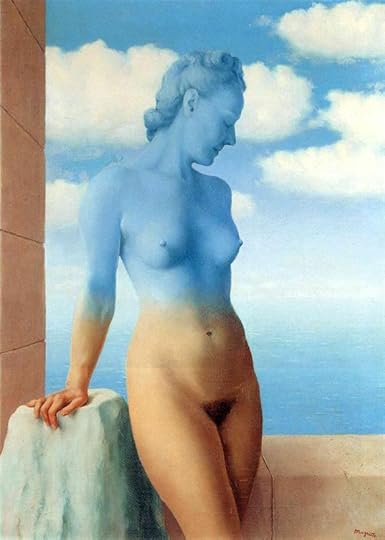
La Magie Noir (Black Magic), 1935. Oil on canvas. (28) (Lithograph, 1945)
And yet the text does provide a foundation for a deeper understanding of Magritte's approach, relying heavily on Magritte's own writings. First and foremost, Magritte considered painting as thought -- as depicting thoughts that take place precisely as images, precisely the images in the paintings -- ordinary elements arranged in never-before-seen ways. Neither ideas nor emotions, he believed, could be "expressed" at all in a painting — but rather, take place in the viewer. Yet both inspiration and mystery, he believed, were necessary to a paint a thought worth painting. What does this really say? Maybe not much beyond what we already intuit. And learning that Magritte's random-seeming titles were not random at all, but carefully chosen, intended to be an inseparable part of his paintings -- does this help to understand them? Maybe not. And that may be a good thing.
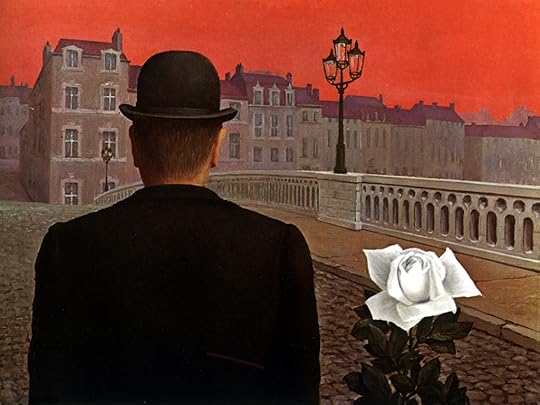
Pandora's Box, 1951. Oil on canvas. (57)
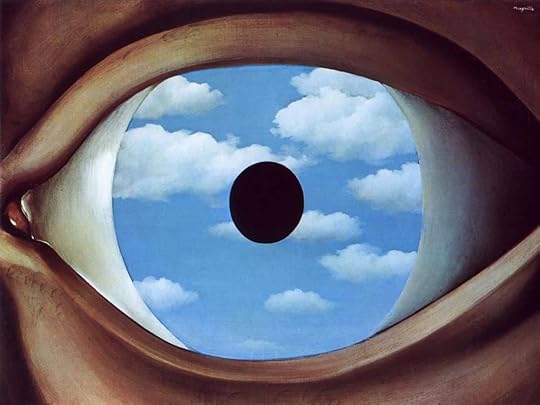
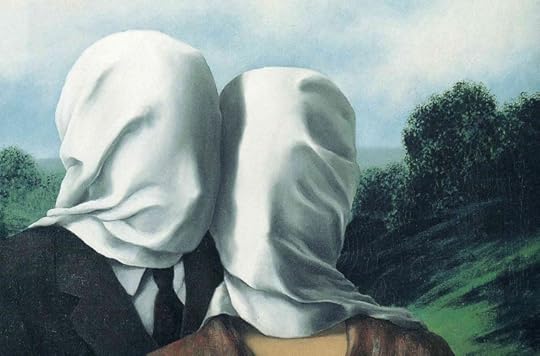
Things hide in Magritte's paintings: With Magritte ... the invisible is ... the visible hidden by the visible, the image hides what it calls for: a reading -- a reading at once serious and playful, which is mobilized by a series of contradictions ... Pairs of lovers are hidden from each other and from the viewer by cloth wrapped around their heads, covering their faces. A landscape painting seemingly hides a landscape. Is the landscape behind the landscape painting the same as the one in the painting or utterly different -- perhaps a scene of trauma hidden behind a bland façade? A ubiquitous fellow in a bowler hat hides his face or turns his back to us — yet looks suspiciously like Magritte himself. A woman (modeled by Magritte's wife Georgette) averts her face modestly although her body is completely nude. Yet what does this "nudity" really reveal? As she appears to transform into a classical sculpture or a piece of the sky, we are left in deeper mystery, left to imagine all sorts of "meanings".
No words are adequate to a Magritte painting. So here are a few images from this book, and a few quotations. I dedicate them to you, and to our friend Jean-Paul W.-S. who also loves the paintings of Magritte.
* * * * *
Thought resembles only when it is inspired. . . . Spontaneously it reunites the shapes of the apparent world, in an order offered by inspiration …To restore that which is offered to mystery. (Magritte's own words, 34-38)
The Lovers, 1928. Oil on canvas. (25)
* * * * *
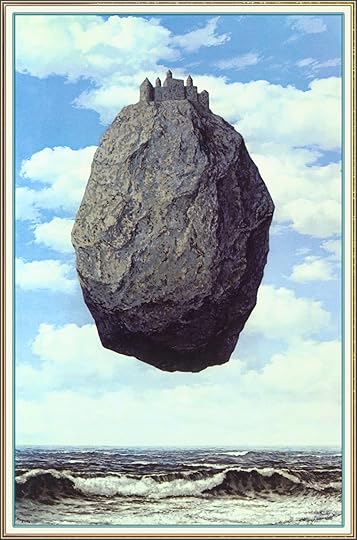
Being capable of answering the question: What is the meaning of these images, would correspond to making Meaning, the Impossible, resemble a possible idea. . . . The spectator can see, with utmost liberty, my images such as they are, while trying, like their author, to think Meaning. I mean to say the Impossible (49, Magritte's own words)
Castle of the Pyrenées, 1959. Oil on canvas. (80)
* * * * *
It suffices . . . to examine several paintings of Magritte, and one realizes they all operate on contradiction. . .(8)
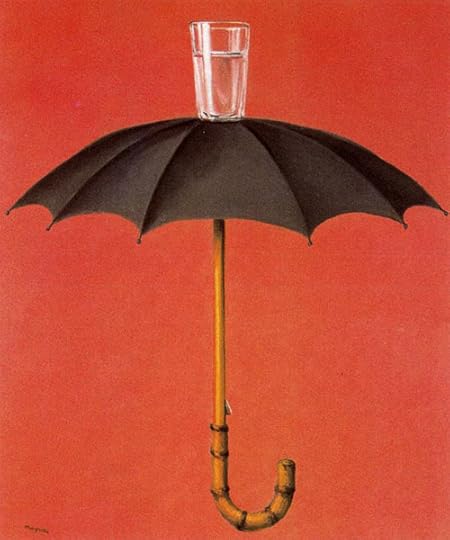
Hegel’s Vacation, 1958. Oil on canvas. (66)
Letter from René Magritte to Suzi Gablik, dated May 19, 1958
Dear Mademoiselle Suzi:
My last painting was begun by the question: how can I show a glass of water in a painting in a manner that is not indifferent? Neither whimsical, nor arbitrary, nor weak, but, let us say the word: genial? (without false shame). I set out by designing many glasses of water: (3 glasses, sketched) with, always, a stroke in the glass. This stroke, after the 100th or the 150th sketch, became cupped, and then took the form of an umbrella.
Then the umbrella was placed in the glass, and to finish, underneath the glass.
This is the exact solution to the initial question, how can I paint a glass of water with genius?
I then thought that Hegel (another genius) would have been quite sensible to this object which has two opposed functions; not to want water (to repulse it) and to want (contain) water. He would have been charmed, I think, or amused (as if on vacation) and I call the painting: << Hegel’s Vacation >>.
Very cordially yours, René Magritte (22)
* * * * *
We seek out meaning that will have us reassured, yet is the visible not that much more visible when it perturbs us?
The Red Model, 1935. Oil on canvas.
Drawing for the Works of Alexander, undated. Pencil on paper. (81)
* * * * *
This short monograph, printed in Italy during the 1970s, contains only 50 color plates and 40 black and white, but the color plates are of higher quality than the fine art monographs published today, and many of the images are not to be found anywhere online.
أعجبني جدا كتاب برنار نويل عن ماجريت. كنت قد اقتنيت الكتاب، وأنا لا أعرف من هو ماجريت من الأساس، لكن، من كلمة الغلاف، فهمت أنه فنان تشكيلي بلجيكي، وبرنار نويل يقدم من خلال كتابه قراءة فنية وفلسفية لأعماله، وأنا تستهويني مثل هذه الكتابات. لقد جربتها منذ فترة قريبة، مع قراءة لسلفادور دالي وأعماله..
خلال القراءة، كنت أعود لأبحث عن اللوحات التي يتكلم عنها نويل، وكانت اللوحة الرئيسية التي يدور حولها أغلب الكلام، لوحة (عطلات هيجل)، وهي عبارة عن مظلة، فوقها كوب ماء. وهي لوحة سريالية غريبة، لكني وقفت أمامها متأملا في قدرة ماجريت علي جمع هذا التناقض، حيث لا يوجد أي رابط بين الشيئين. بعدها عرفت أن هذه هي مدرسة ماجريت..
كانت قراءة نويل لأعمال ماجريت مغايرة، ومحفزة للقارئ، لأن يتوقف أمام أي لوحة، لماجريت أو غير ماجريت، ليقرأها، ويبحث عن ما تقوله..
برنار نويل عندما يكتب فإنه يكتب بطريقة فنية غنية بالشعر. هنا قدّم رونيه ماجريت وفق رؤيته الفلسفية في المرئي واللامرئي. لم أعرف ماجريت إلا بسبب كمية الفضول الهائلة خلف برنار . باعتقادي أننا بمجرد رؤية نموذج واحد من لوحاته فنكتشف أننا نعرفه أي ماجريت الذي كتبه نويل. نعرفه خصوصا من لوحة العاشقين الذين يقبلان بعضهما من خلف حجاب. والحمامة التي أكلت السماء الحرة وامتلأت بها جسدها. الترجمة ممتازة لدرجة الاسترسال في القراءة والانتهاء بعد البحث عن المزيد من اللوحات السريالية التي تميز بها. ..
"كل ماهو موجود يجد شكله في إمكانيته نفسها، ويتألف منها. ولكن كي يظهر ماهو موجود ويتجسد، عليه أن يلتقي بما يشبهه في الفكر المرئي".
"الكتابة وصف لامرئي للفكر والتصوير هو الوصف المرئي له"
سبع كلمات تحكم ماجريت: فكر، أشكال، عالم ظاهري، تشابه، تعبير، انفعال، فكرة. المهم هو تحديد الاستخدام الذي يقوم به ماجريت لهذه المفردات وذلك من خلال نصوصه الخاصة به. الفكر يتكون من أشياء مرئية. الأشكال مايسكن المرئي ويعطيه مسمياته. العالم الظاهري بشكل بديهي هو مجمل المرئي. التشابه هو الجوهر والمتماهي مع الفعل الأساسي للفكر والإلهام هو الحدث الذي ينبثق من خلاله التشابه. لايمكن تمثيل الانفعال في لوحة وليس للأفكار أي مظهر مرئي.
قرأت لبرنار نويل لأول مرة كتابه النسيان، الذي ترجمته دار توبقال المغربية، ومنذ ذلك الوقت صار لدي اهتمام كبير به وبالشاعر الذي يرفض أن يسمى شاعراً. منذ البداية يبين الجهد الكبير الذي بذلته الأستاذة راوية صادق في ترجمة العمل الذي يقوم على دراسة لوحة محددة لرينيه ماجريت والمسماة "عطلات هيجل". نويل يسبر عميقاً في فكر ماجريت قبل فنه ويستعرض ذلك من خلال لوحات عدة لماجريت. الكتاب فاتن ومعقد قليلاً في نمط لغته رغم جودة الترجمة. وأحب أن أنبه الأصدقاء القراء بأنهم سيحتاجون للرجوع كثيراً إلى لوحات ماجريت وهم يقرأون الكتاب. الكتاب صغير وقد يتصور البعض أنه سهل التخطي في جلسة واحدة ولكن هذا عزيز.
التجربة الثانية لى مع"برنار نويل" ، كانت الأولى مع كتاب" لسان أنّا" والذى يتحدث فيه عن الممثلة الإيطالية"أنّا مانيانى" وخلاصة تجربتى معه تتلخص فى أن أُلحق به صفة "فزلوك" من الفعل فزلك يفزلك فهو فزلوك..والله أعلم
ما غفر له هو ترجمة السيدة العظيمة المترجمة" راوية صادق" والتى لها ترجمات عدة رائعة..مثلا الترجمة الكاملة لكتاب "قصيدة النثر من بودلير حتى أيامنا" ل سوزان برنار فى جزئيه الضخمين
الكتاب عبارة عن نقد فني للأعمال التشكيلية للفنان رونيه ماجريت، تمنيت لو احتوى الكتاب على نماذج من لوحاته وخاصة لوحة عطلات هيجل محور الكتاب، اعجبني الشق الفلسفي المتعلق بالعلاقة بين الفكر والتصوير. اقتباسات: - الإحساس الذي نشعر به خلال رؤيتنا للوحة لاينبغي فصله عن اللوحة ولاعن أنفسنا. فالإحساس واللوحة وأنفسنا قد التحموا في غموضنا. -الأشياء هي كلمات الرسام فنحن نتعلم من تنسيقها أكثر مما نتعلم من رصد عناصرها وموجوداتها من التمرين البسيط لقراءتها. - الكتابة وصف غير مرئي للفكر والتصوير هو الوصف المرئي له.
Interprets the content of Magritte’s paintings in terms of one painting standing as representative of the oeuvre—Hegel’s Vacation, a painting in which contradiction, and thus thought, is figured.