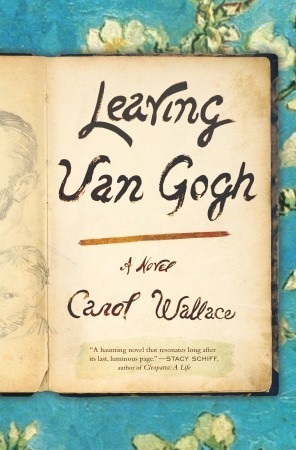
In the summer of 1890, in the French town of Auvers-sur-Oise, Vincent van Gogh shot himself in the chest with a revolver. He died two days later, at the age of thirty-seven, largely unknown despite having completed over two thousand works of art that would go on to become some of the most important and valued in the world.
In this riveting novel, Carol Wallace brilliantly navigates the mysteries surrounding the master artist’s death, relying on meticulous research to paint an indelible portrait of Van Gogh’s final days—and the friendship that may or may not have destroyed him. Telling Van Gogh’s story from an utterly new perspective—that of his personal physician, Dr. Gachet, specialist in mental illness and great lover of the arts—Wallace allows us to view the legendary painter as we’ve never seen him before. In our narrator’s eyes, Van Gogh is an irresistible puzzle, a man whose mind, plagued by demons, poses the most potentially rewarding challenge of Gachet’s career.
Wallace’s narrative brims with suspense and rich psychological insight as it tackles haunting questions about Van Gogh’s fate. A masterly, gripping novel that explores the price of creativity, Leaving Van Gogh is a luminous story about what it means to live authentically, and the power and limits of friendship.
Carol Wallace, the great-great-granddaughter of Lew Wallace, is the author most recently of a new version of "Ben-Hur." It is the official tie-in of the new major film, releasing in August of 2016.
Carol is also the co-author of "To Marry an English Lord," which was one of the inspirations for "Downton Abbey," and author of the historical novel "Leaving Van Gogh." Previous titles have included humor, parenting, and social history. In 2006 Wallace received a M.A. in art history from Columbia University. The research for her M.A. thesis provided the foundation for "Leaving van Gogh." A 1977 graduate of Princeton University, Wallace lives in New York.
Vincent van Gogh (1853-1890) was a Dutch Post-Impressionist painter who is among the most famous and influential figures in the history of Western Art. At the age of 37, when he committed suicide, he was largely unknown despite having completed over 2,000 works of art that would later go on to become some of the most important and valued in the world.
This story is told from the point of view of Vincent’s personal physician, Dr. Gachet, who was a pioneer in the humane treatment of the mentally ill and a great lover of the arts.
Camille Pissarro recommends his friend-doctor to Theo van Gogh, who is looking for the right doctor for his brother Vincent.
Dr. Gachet, as a young student, “cared deeply about medical problems, but what he wanted to talk about was art. (…) And thus over the years he came to know them all – Courbet and Manet, Pissarro and Cezanne, Monet and Renior, Sisley and Guillaumin.”
Vincent comes under Dr. Gachet’s care already after the incident with slashing his ear. He seems to be lucid and Dr. Gachet believes he can help him.
The town of Auvers outside Paris is “accustomed to painters with their rucksacks and collapsible easels and stools, often settled where you least expect them, at a turn in the road or in the hollow of a meadow.”
The cultural life in Auvers is limited, so the presence of Vincent seems quite stimulating to the doctor.
As a Dutch painter, Vincent’s paintings are not finding recognition in French galleries, except recognition in a French magazine, pointing to his isolated style, not fitting any of the contemporary movements. As flattering as the article is, the worrisome situation is with his isolated personality.
Vincent “is more or less self-taught. (…) none of the technical expertise taught at the Ecole des Beaux-Arts. (…) he sees world as no one else does. Naturally this makes his paintings difficult to sell.”
When the doctor sees Vincent’s paintings for the first time he is “struck to the core by the beauty, the peacefulness, and the intricacy of what he had created.” He is “astonished at his mastery.”
Vincent the painter and the patient both come alive; vividly portrayed as a man of rare talent and a man who struggled with mental illness.
As the author explores the subject of mental illness, there are two chapters, which focus just on that and that’s the part when I felt disconnected from the story. But as soon as story goes back and focuses on Vincent again, the connection returns.
Besides the brief disconnection, the story is brilliantly written with richly textured layers revealing the lives of both characters.
Even doctor’s housekeeper turns out to be quite a character, disliking the painter from the moment she opens the door for him. “Vincent van what? She retorted. Van Goog? Dreadful name!” And communication without words is one of her trades. “Over the years she had become a master at communicating without resorting to words.”
This book reminded me of the world’s first fully painted feature film Loving Vincent (Polish-UK co-production, available in the US), both very touching and masterful.
If you’d like to read more about Vincent van Gogh, another excellent novel: The Sunflowers by Sheramy Bundrick.
I was really looking forward to the arrival of this book. After all, sad books need love too! I even loved the first lines...
"I held Vincent's skull in my hands. It was a strange and melancholy moment."
...but my love faltered midway through the reading. As the story dragged on I found it harder and harder to pick the book back up. It was so promising! I knew it wasn't going to be barrels of sunshine, but I never expected it to be boring. Le sigh.
Where to begin? This book captured my heart from its first pages and it still hasn't let go. Vincent van Gogh was a man of supreme artistic brilliance but a true lost soul when it came to living in the real world. Without the undying support of his brother Theo we might never have known the beauty of his Sunflowers or the glory of his Starry Night. His works were a passion of mine as I studied art history and they remain amongst my favorite pieces of art.
Ms. Wallace imagines the last months of van Gogh's life after he left the asylum in St. Remy and found Paris too noisy. He moved to Auvers in the countryside where he painted and painted and painted. He was befriended by a Dr. Gachet who was at the forefront of new methods of caring for the mentally ill. The book weaves a tale of what might have been between a very troubled genius and the doctor who was unable to help him.
Vincent van Gogh left an enormous legacy between his paintings and his letters. I believer there are something like 900 letters between he and his brother that help to chronicle the times and what Vincent was feeling. Using the letters and other sources Ms. Wallace has written a story that makes you feel like you come to know Vincent van Gogh the man. You feel his pain and frustration at having the world not understand his style of painting yet you know that he will be vindicated in the end. It's just a shame that he did not live to see the acclaim that he so deserved.
This is a book I will keep and read again and those are few and far between. It's one of those books that you really don't feel like you are reading; you feel like you are drawn into the world of the characters and despite the ending that you know is coming you still don't want to leave.
This was an interesting book. I chose it because I love art and I am always interested in the artists who create the art I love. I have always thought Van Gogh to be an tragic and fascinating human being.
This book is a fictionalized account of the end of his life told from the perspective of the real man who became his doctor and friend and who was also an artist. I liked the perspective because the reader gets to see Van Gogh and other artists as real people interacting with other people.
I really enjoyed the description the doctor gave of the way Van Gogh painted---with such speed and miraculous talent---almost throwing the paint on the canvas and yet making such detailed and beautiful pictures... I also liked the way the doctor described how his life had been impacted by having known Van Gogh and how because of Van Gogh the doctor would never look at the world in the same way. I was already sympathetic to Van Gogh and the book made me more so but I really disagreed with the doctor's actions from a moral perspective. That clouded my enjoyment of the book. I wish Van Gogh's life could have been filled with the same beauty and vibrancy as his paintings.
In this fictionalized biography, the last months of Vincent Van Gogh's life are told from the first person perspective of Paul Gachet, a medical doctor. Dr. Gachet lived part time in Paris and part time in Auvers, which is a short distance from Paris, and had an interest in mental illness. He also did a little painting and was a collector. This is in the very, very early stages of understanding mental problems. Theo Van Gogh, Vincent's brother, asked Dr Gachet if he would observe his brother's behavior and provide some guidance. Gachet and his family became friends with Vincent.
I enjoyed the perspective of trying to understand Vincent Van Gogh through Dr. Gachet. There were many detailed descriptions of some of the works Vincent painted. I used those descriptions to Google the paintings. Some of the author's conclusions, such as the physical and mental problems of each brother, go further than other authors. Sometimes the storyline seemed a little forced, but on the whole I'm pleased that I read the book.
Historical fiction can be tough, but this does a good job of giving the reader a look into the last few months of Van Gogh's troubled life. I appreciated the extra info regarding the state of mental health treatment in the late 1800s, and a little about the Parisian artist community. I did think the character development was a bit thin, but overall an enjoyable read.
Author Carol Wallace tackles a tough literary project, creating a fictional work about famed artist Vincent Van Gogh in the final year of his life. Readers will already have formed preconceptions about the artist. Integrating her own viewpoint with a core of historical accuracy, and expressing this through fictional conversations and thoughts is not an easy task. Wallace applies several ingenious approaches to the problem.
The story is narrated through the eyes of Dr. Paul Gachet, a physician with strong interest in both the art world, and mental disorders. Gachet is an old man reminiscing about not only Van Gogh, who died 15 years previously, but his long life, which paralleled the revolution of Impressionism and and the dawn of modern medicine (he lived from 1828-1909). Van Gogh died in 1890. Louis Pasteur was developing his theories of bacterial immunization in the 1870's. Dr. Gachet is most well-known as the subject of two portraits by Van Gogh. In addition, is daughter Marguerite, is the subject of a portrait as well. Viewed apart from Van Gogh, Dr. Gachet was an interesting figure. He was painted by Cezanne, and the Salon painter Armand Gauthier, and collected a huge trove of Impressionist paintings, given to him either as gifts, or payment for his services. His additional interests ranged from homeopathy to creating etchings.
We are able to view Van Gogh through Gachet's eyes. An almost manic-depressive cycle unfolds with Van Gogh able to voice, even towards the end, moments of lucidity about his emotional unraveling, violent episodes, black-outs, and feelings of despair over his helplessness. At the same time, there is an overriding sense of ambiguity. Gachet labels the artist as monomaniacal and delusional. He is therefore surprised when he learns Van Gogh has also been observing him – with startling insight. In one reverie, Gachet notes: “...I have wondered, in the years since then, whether Vincent perceived the people he knew as individuals. He had a great love for humankind.... What he did not seem to feel was the suffering of the particular human beings around him.” Did his art stem from being disengaged from reality or from a deeper engagement with a higher, more permanent reality?
Gachet questions the accuracy of his observations, against the background of his own troubled emotional state, due in part to the early death of his wife Blanche from tuberculosis. Thus, the novel is able to play with the many speculations about Van Gogh that remain active even to this day.
Particularly in Van Gogh's portraits, we see a perplexing combination of emotional engagement and formal exploration through the energetic, almost sculptural brushwork, the very particular poses he selects for his subjects and the deft and daring use of color. One of the delights of this sort of book is that it will compel the reader to re-examine Van Gogh's art – particularly the paintings of that final year. I can recommend a couple of websites of particular value: http://www.vangoghgallery.com/in_his_... offers side-by-side comparisons between Van Gogh's paintings, and photographs of the same scenes. This comparison highlights the brilliant use of color and compositional precision of the paintings. http://www.tfsimon.com/auvers-sur-ois... offers an extensive collection of the Auvers paintings, including the primary ones mentioned in the book: Portraits of Dr. Gachet, Marguerite, the art dealer Pere Tanguy, and Adeline Ravoux, the daughter of Van Gogh's landlord.
LEAVING VAN GOGH is a meditation on death, as the title suggests. The death of Dr. Gachet's wife, Theo Van Gogh's impending death from syphilis, and Gachet's own end of life thoughts intertwine with Van Gogh's inevitable suicide. Marguerite's world seems somehow claustrophobic with its overly sheltered conventions of feminine behavior. There is even a note of prescient regret about the fate of Dr. Gachet's children. Marguerite never marries, and Paul remains a rootless entity on the periphery of the art world. Perhaps this is the reason I cannot give a higher rating to the book. Devoid of the more traditional fictional devices, the book serves as a somber backdrop to the mysterious intensity of Van Gogh's work. As for the fictional narrative, there is a pervasive but very human sense of sadness.
I really had higher hopes for this book. I'm intrigued by Van Gogh, not only with his paintings, but his complex personality and life.
I felt, however, a bit left behind by this book. I think of painting as a visual art (obviously), so I found myself wading through a lot of technical aspects of painting as well as descriptions of paintings themselves-- which somehow lost something in the translation through prose. I suppose it's rather like trying to explain to a blind person how a painting looks, or conveying to a deaf person the nuances of a specific musical piece.
Also, I never really felt a firm grasp for the characters (the male ones especially). The gestures or speech often felt a bit caricatured.
The book I read several years ago, containing the letters between Vincent and his brother Theo, was far more enlightening as to who this incredibly talented and tortured man really was.
Best book of 2017 so far. Spellbinding. Beautiful. Very sad - I cried. Author was scrupulous in telling what was true and what made up; I would like to think it was all true. That poor man - and those exquisite paintings! I've seen some in various galleries; there is nothing like his painting.
It is true that many artist's do suffer forms of mental illness - more than the rest of the population. And poor Theo also. It is amazing really that his widow went on to assiduously promote van Gogh's work and now we can see it ourselves - the lucky ones get to see it in gallerys and it is twice as amazing in real life. Thanks to Janice - I may never have read this book if not for the challenge she set this year!
as a huge van gogh fan i really enjoyed this book for the storyline, but there were a few things which i didn’t vibe with. it’s not really my typical writing style that i prefer, so it was hard to feel connected to the story. some of the facts about van gogh’s final week or two were not quite right. and i know there are creative liberties but it painted the story in a very different light. but overall it was really cool to read at the same time as my visit to auvers-sur-oise so i could actually picture all the locations mentioned in the book.
3 1/2 stars. Dr. Gachet tried to treat the mental illness of Vincent Van Gogh as well as being his friend during the final days of Van Gogh's life, and this fictionalized memoir (or what do you call this genre?) is told from the doctor's viewpoint. Most of us know that Van Gogh's work is beautiful and startling but there are lots of us who know little about the artist other than that he cut off his own ear. Well, not the whole ear, as it turns out. How can such a disturbed person find and create, in his unique style, such beauty?
I loved learning more about Van Gogh in this novel. I think that perhaps I would not have liked Gachet very much. He seemed indifferent to his own children, too hard on his son, describing his daughter as “presentable,” who did a “reasonable job” of playing Chopin and was a competent housekeeper. Be still my heart! I think he made poor decisions concerning both his wife and Van Gogh, but could I have done better?
Theo Van Gogh, Vincent's brother, was portrayed as a kind and compassionate man, fighting his own battles, helping his brother the best he could, and frustrated because he couldn't do more.
I found the description of care and treatment for mental patients to be fascinating, and sad. There was so much done wrong and so very little hope, even for those with physical ailments that were diagnosed as mental issues. I had to frequently quit reading so I could go Google a painting or person or situation, and it's wonderful when books make me want to learn more. I also loved that the author included notes at the end explaining was was true and what was speculation. It is frustrating to read about a real person and at the end, wonder what part is fact.
What I loved less is that the the story begins after Van Gogh is already dead, and the doctor recounts his memories of him. That led to too much telling – Vincent said this, Vincent did that, and it made it harder to connect to the people in the book. The book got off to a slow start for me but the story engaged me. Overall this was, for me, an interesting, touching, and entertaining story.
Thanks to LibraryThing and Random House for giving me a finished copy of this book.
Poignant and sad fantasy of Vincent Van Gogh’s last days.
It may have been Dr. Gachet’s painting or simply his name in conjunction with another painter that sparked Carol Wallace’s interest in Vincent Van Gogh’s last months in bucolic Auvers, but Dr. Gachet is imagined into existence. All of this seems to come from Van Gogh’s portrait of the psychiatrist who unofficially treated him.
Much about Van Gogh’s life is known and has been fully chronicled. Wallace gives depth and weight to the quiet days that dwindled down into his suicide and protracted death. The possibility that anyone other than Van Gogh’s family could care so much for him lends a size and shape to his sad life.
Wallace begins with Dr. Gachet and Theo Van Gogh’s request that the doctor agree to treat his brother, who has just come out of the asylum. Dr. Gachet was the best choice since the doctor had treated other artists and was an artist himself, or so it seemed. By opening up Dr. Gachet’s family life and his relationships with various forms of madness, Wallace sets a course that leads unerringly to Van Gogh’s death.
By incorporating passages from Van Gogh’s letters and the doctor’s reactions to his paintings and style, each detail shines an oblique light on the artist and the man who befriended and treated him. Van Gogh saw Dr. Gachet as damaged goods, an artist blind leading the blind when it came to treatment and possible cure. Wallace also shows that the doctor is observant and unerring in his diagnoses of Theo and Vincent while pointing up Dr. Gachet’s inability to help either one.
Although Leaving Van Gogh is a quiet novel full of little details and subtle insights, Wallace uses anecdotal history and personal letters to fill in the blanks between the lines history has left blank. Van Gogh emerges as an erratic man with a clear and overwhelming mission to render the landscapes of the outer world into a coherent and disturbing portrait of sadness and inevitable death that elevates this small corner of artist history in soft contrast to the bold brilliance of Vincent’s inner demons.
Leaving Van Gogh is a small tale about towering genius with an existential crisis at its sad heart.
Based on some historical fact, this is the story of the last days of Van Gogh. He resides in the small village of Auvers and is befriended by Dr. Gachet ( an actual person who Van Gogh once painted). Dr. Gachet struggles unsuccessfully to help Van Gogh through his mental instability and may have been instrumental in his suicide.
Doesn't sound like a meaty plot, does it? That's because it isn't. If I didn't love Van Gogh so much I would have found this one tedious in the extreme. Nothing happens! Van Gogh paints an amazing canvas, no one is going to ever buy it in his lifetime, so he is impoverished and supported by his loving but in the last stages of syphlis brother Theo who also has a family to provide for, Vincent has an episode of hysteria or maybe epilepsy and on and on. This is helped along by LOTS of internal musings by good old Dr. Gachet.
However, did I mention I love Van Gogh? So I enjoyed imagining him and fleshing him out as a human a little more. I had always heard about his difficult life and depression but this gave some more detail. I also thought more about how many great masters of art, literature or music have been "mad" or had physical difficulties like Beethoven's deafness. In modern times, perhaps many of them may have been diagnosed as bi-polar. So, while this didn't have an urgent plot, it did have some great information about my favorite artist and I really liked that.
This was a difficult book to read, maybe because his tragic life is known. You knew there was no happy ending and were compelled to continue to watch him spiral down through the eyes of his "doctor" and friend.
"the summer of 1890, in the French town of Auvers-sur-Oise, Vincent van Gogh shot himself in the chest with a revolver. He died two days later, at the age of thirty-seven, largely unknown despite having completed over two thousand works of art that would go on to become some of the most important and valued in the world. In this riveting novel, Carol Wallace brilliantly navigates the mysteries surrounding the master artist’s death, relying on meticulous research to paint an indelible portrait of Van Gogh’s final days—and the friendship that may or may not have destroyed him. Telling Van Gogh’s story from an utterly new perspective—that of his personal physician, Dr. Gachet, specialist in mental illness and great lover of the arts—Wallace allows us to view the legendary painter as we’ve never seen him before. In our narrator’s eyes, Van Gogh is an irresistible puzzle, a man whose mind, plagued by demons, poses the most potentially rewarding challenge of Gachet’s career."
I have mixed feelings about historical fiction, so I'll admit I bought this book because the cover was so pretty. Sure am glad I did though- my reasoning was the only shallow thing about the book. First drawn in by Dr. Gachet's own story of treating his wife and artist friends, I was captured by the vivid depiction of Vincent Van Gogh himself. The scenes with Van Gogh are some of the most riveting I have encountered in any historical fiction novel, and truly illustrates the artist as a struggling human being, not just a mad genius. Equally fascinating are Dr. Gachet's "modern" ideas about treating the mentally ill. You don't have to be an art-lover, history buff, or francophile to enjoy this book, as I am not. It's a thoughtful, original, and not-at-all pretentious (as I was afraid it would be) read and- added bonus- will look great on your bookshelf!
I really enjoyed this story presented as told by Dr. Paul Gachet; a doctor specializing in mental illness and true final friend in the life of Vincent Van Gogh. The novel is narrated with such beautiful and disturbing details, I could picture the artist fervently at work and bring images of some popuar and some lesser known works to mind. The last days of Van Gogh's life are so vividly and lovingly exposed that it drove me to my own personal madness to finish the book. I feel that it is fortunate for Vincent (and the reader) that the Doctor was capable of recognizing his artistic genious and posessed the ability to understand his personal complexities! The book 'spoke' to me immediately when I discovered it on the new arrivals display at the library I just had to check it out! I have an entirely new appreciation for the artist I thought I knew.
Reading this novel sent me to the internet to look up several paintings by Van Gogh referenced in this book, most notably the portrait of our narrator, Dr. Gachet. The good doctor tells this story while looking back on his life. These are memories of the few months the brilliant Vincent Van Gogh was in his care in his hometown of Auvers. The painter's brother, Theo, approached Dr. Gachet about helping watch over Vincent, and arrangements were made. Dr. Gachet specialized in psycholgical cases, "hysteria" and the like, so he seems a good fit to interact with Vincent. The bones of this novel reminded me at times of The Swan Thieves. The doctor's obsession with the painter and the painter's obsession with the world around him are really what make this story interesting.
What an enjoyable read! I'm not big on historical fiction but I liked how Wallace's writing is so visual and absorbing. I felt as though I was apart of this "changing" late 19th century society filled with avant garde artists and the mentally ill. I was most touched by the intimate relationship between Vincent & Theo.
The story is written from Dr. Gachet's perspective. Theo Van Gogh's requested that the doctor agree to treat his brother, who had just come out of the asylum. Dr. Gachet was chosen because he had treated other artists (and was an amateur artist himself.) By opening up Dr. Gachet and his family to relationships with various types of insanity, Wallace sets a course that leads unerringly to Van Gogh's death.
One of the wonders of historical romances is the made up answer to "what could have happened then." The real story is intertwined brilliantly with the actual facts, and gives us a possible solution to the question still made nowadays, and that surrounds van Gogh's death: where did the gun go?
It is not my favourite assumption of van Gogh's death, the one provided by the author, but the narrative - from the point of view of an imagined Dr. Gachet - does give us a beautiful insight into Vincent's last months of life, his paintings and his mental health. We get caught in the story and, sometimes, we do believe it happened exactly like this.
Having been a Van Gogh fan for many years, I was intrigued by the premise of this novel. I also write novels myself and am an oil painter, so there were many points of intersection for me with this story. Overall, I found the writing to be very perceptive and, in places, lyrical. I had issues with the pacing in some spots--too much time on Dr. Gachet's past as an intern without a strong connection to the primary narrative line. Overall though, an interesting and compelling read. -Sally Ann Sims, author of Halt at X: A North of Boston Novel
You cannot help but be drawn into this book, like one of Van Gogh’s paintings the reader suddenly enters into a world entirely different than their own you cannot help but finish this book and look at Van Gogh’s works (or your own world for that matter) with new eyes….it’s like seeing his works and life with a new eyes and perspective. Five out of five starts, brushes down! See my full review here
Wallace chooses an excellent narrator for this novel based on the last days of Van Gogh. His doctor/friend/art lover - Dr. Gachet tells the story from an objective, yet sympathetic point of view. The close relationship between Vincent and his brother Theo is also explored.The author has done her research and thoroughly explains the fiction and the fact of this fascinating story. Makes the reader appreciate the advances in mental and physical healthcare in the past 120 years.
This is the third book that I have read about Van Gogh. The first was from the his brother's point of view ( Theo). The second was about his sister-in-law and her perseverance in having Vincent's painting show in galleries. The shipping of the paintings and the efforts that it took. This book is from the doctor's point of view. Van Gogh was highly disturbed and Theo asked this doctor to keep an eye on his brother. This added to the background of the artist.
This book did not hold my interest very well; I was more interested in the doctor's stories about mentally ill patients than I was about Van Gogh's life. Also it makes doctor-assisted suicide sound almost ok, which I definitely do not agree with.