An award-winning Spanish artist offers a chilling, full-color rendition of Stoker's classic horror novel about the rampage of master vampire Dracula. Mature.
I thought this was a superb illustrated reinterpretation of the classic Dracula story. I liked the format and the fantastic artwork. The story sticks to the Bram Stoker plot and was enjoyable. The artwork was very detailed, creepy, dark, and atmospheric that aided to the visual story. This was a great graphic novel and I would definitely recommend it to fans of the genre. Thanks!
Stworzona ogromnym nakładem pracy, malarska adaptacja "Drakuli", ma wszystkie wady i zalety tego typu wydawnictw. Wiele z tych kadrów odpowiednio powiększonych nadawałoby się na ścianę, lecz razem nie grzeszą dynamiką, a to nie służy komiksowej fabule. Z jednej strony razi nadmiar tekstu, z drugiej mniej więcej od połowy łatwo poddać się klimatowi historii, bo realistyczne, choć często kiczowate obrazy dobrze z nią współgrają. Dla miłośników klasycznych ramotek. W swojej kategorii jest całkiem nieźle
Verujem da je poznato koliko volim Drakulu i sve adaptacije i verzije ovog dela. U poslednjih par godina dobili smo nekoliko stripskih adaptacija posvećenih upravo grofu Drakuli.
Za Sajam ove godine, Stalker me obradovao još jednom adaptacijom čuvenog Stokerovog romana. U pitanju je grafička novela radjena po romanu Stokera, od strane španskog autora Fernanda Fernandeza.
Ovo je vrhunsko delo i pravi omaž čuvenom klasiku koji odoleva vremenu. Prvi put objavljen još 1984. ovaj strip oduševljava fanove širom sveta. Crteži i boje zadržavaju pogled. Scene su u skladu sa atmosferom romana, uglavnom mračne i pune senki. Na momente imamo i svetle crteže, gde boje oživljavaju. Autor se trudi i uspeva da izgradi napetost koja vlada i u knjizi. Slikarska tehnika je zadivljujuća, kao i paleta boja. Verno prati roman, pa se priča može verodostojno pratiti, jer je sve savršeno uklopljeno. Scenario i dijalozi takodje odlični.
Bez sumnje jedno veliko remek-delo stripa i vredan deo moje kolekcije. Velika preporuka.
Fernando Fernández made sure the text and illustration of his adaptation was faithful to and entirely in the spirit of the original. The details of what he chose and how well he synthesized them are up for debate- I only mention the intention of the adapter. The length of the original is such that many scenes had to be abbreviated or left out of a 96 page interpretation.
He painted the entirety in an awe-inspiring fashion that captures the mood of the story with such brilliance that Stoker himself would have, beyond doubt, been been impressed with the objective quality of the art and honored by the tremendous effort that was put forth to render his masterpiece!
I HAD TO GIVE THIS *****. I'm still in its thrall!
I was so mesmerized by the art that I could forgive certain hiccups within the adaptation of the plot. I would have added some scenes that I believe are critical to the story BUT what would I have left out to fit them in?
When I think of how SELFLESS Fernandez was in painting this whole thing I realize that it would be utterly rude to ask for more total pages. Whatever amount of money he has earned for this, in grand total, does not alone justify the effort he gave it. I believe he's an artist who does not think of money while he's painting and one who gives a project what it deserves no matter the compensation. Sure, that has made and will continue to make many poor artists but it's their work that lives beyond finance as a reward to all of us. OVER 400 PAINTINGS THAT COULD BE FRAMED IN A MUSEUM! How did he do it? Only selflessness and pride in artistry answer that for me.
Dracula is probably my favorite book. Well...one of my favorite books. It's a story I find myself revisiting over and over again. This is a graphic novel adaptation by Spanish comic book artist, Fernando Fernandez. His work is amazing! The pages in this book are beautifully painted, most likely in egg tempera. With awesome page layouts, some of which containing up to twelve panels. And illustrated in an extremely realistic style! I do appreciate European comic books, they have a unique style and quality that you don't always find in American comics.
Is it a faithful adaptation? Yes and No. Stoker's text is altered...reworded I should say. However, the core of Stoker's material is preserved. The events and actions of the characters in the book are presented in a respectful way. And Count Dracula really looks like the guy that Bram Stoker describes in the original book, at least he nailed that one!
So I enjoyed reading this very much. It would have gotten five stars if the text was not altered, but still a fairly good adaptation (at least preferable to that The Complete Dracula crap I read last month...LOL).
Maravillosas ilustraciones de Fernández, pintadas al óleo. Puedes ver cada trazo, sombra, luz,... Sin duda el precursor de cierta estética del personaje.
És Dràcula. I les il·lustracions són autèntiques meravelles. Es poden perdonar alguns sotracs en el ritme i un final massa precipitat perquè, al cap i a la fi, blame it on mr. Stoker.
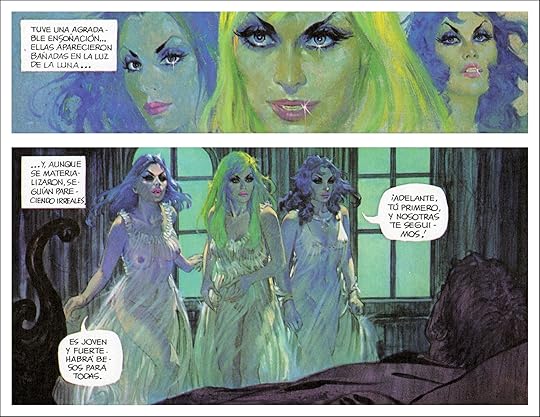
Definitivamente, una de las mejores adaptaciones fieles al texto de Stoker en forma de cómic. En lo argumental, Fernández se ciñe al libro sin abandonarlo más que en pequeños detalles, mientras al tiempo se las apaña para condensarlo en apenas 100 páginas de cómic sin dejarse nada demasiado esencial. En lo visual, qué decir, una delicia de principio a fin, el óleo y los constantes juegos cromáticos no hacen sino acentuar la atmósfera decadente del libro y la época en que transcurre. Todo y que los constantes cuadros de narración podrían hacer farragoso el avance, el autor los va regando durante todo la obra con pequeñas perlas de narrativa secuencial que ya quisieran para sí muchos autores contemporáneos.
La edición, de CARTEM, enorme en tamaño y soberbia en calidades, está a la altura de la obra que respalda.
Buena adaptación de la obra de Stoker, muy fiel a la historia original (si fidelidad es lo que buscan), aunque lo más atractivo es su interpretación gráfica, que imagino era la prioridad de Fernández... el libro destaca por las ilustraciones/pinturas del autor, y la composición de viñetas en cada página. Personalmente me gustó el juego de atmósferas a partir del color. Es un libro muy bonito, sobre todo para quienes disfrutan del Cómic desde las Artes Visuales, y además un ejemplo interesante de adaptación de novela a novela gráfica.
"Jer krv je život..." – ovom rečenicom Bram Stoker postavlja temelj mita o Drakuli, a Fernando Fernandez kroz svoj strip to majstorski prevodi u slikovni jezik. Fernandezov Drakula je više od obične adaptacije; to je vizuelna poema, ispunjena tamom, strašću i suštinskim sukobom između svetlosti i tame, života i smrti.
Stokerov Drakula ovde nije samo pretnja koja vreba iz senki, već i simbol večnih strahova čoveka – strah od nepoznatog, smrti, greha i večnog prokletstva. Fernandez kroz svoj crtež uspeva da dočara zagonetnu i dvosmislenu prirodu Drakule, prikazujući ga u scenama prepunim teskobe, ali i nadrealne lepote. Njegova upotreba tamnih tonova i povremenih proplamsaja crvene, koji simbolizuju krv i strast, pojačavaju emocionalni naboj svake stranice. Drakula ovde nije samo nemrtvi antagonist, već sila koja izaziva duboka filozofska pitanja o prirodi života i smrti, o večnosti i moralu.
Likovi i pejzaži koje Fernandez stvara odišu gotičkom atmosferom, dok kontrast između svetla i tame dodatno podvlači borbu između dobra i zla. Fernandezov stil, bogat detaljima i preciznim linijama, stvara osećaj klaustrofobije i jeze, ali i divljenja prema vizuelnoj lepoti sveta koji prikazuje. Njegov Drakula je istovremeno strašan i zavodljiv, oličenje suprotnosti koje definišu vampirski mit.
Jedan od autentičnih citata iz Stokerovog romana, "O, čudnog li je osećaja probuditi se iz sna u kome ste mislili da ste mrtvi, i pronaći da ste još živi!", podvlači stalnu napetost između života i smrti u priči, što Fernandez kroz svoj crtež dodatno oživljava.
"Drakula" Fernando Fernándeza to z jednej strony wybitna praca graficzna, a z drugiej strony słaby komiks.
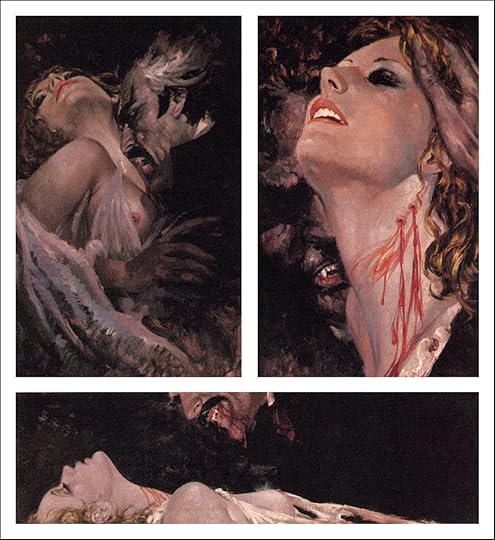
Zacznijmy od strony graficznej, poszczególne kadry to wspaniale namalowane obrazy, które robią duże wrażenie, a niekiedy wręcz zachwycają, autor posiadał niesamowity talent, a namalowane przez niego postaci zapadają w pamięć. Świetne operowanie kolorem , które tworzy znakomity klimat.
Wygląda na to, że autor wybrał niewłaściwe medium do prezentacji swojego talentu. Niektóre kadry sprawdzają się znakomicie jako część narracji, inne natomiast zupełnie nie. Czasem brakuję po prostu dynamizmu, jest zbyt statycznie. Innym razem obraz jest tylko ilustracją tekstu, czyli po prostu dubluje to co jest napisane. W komiksie ważne jest to by tekst i rysunek uzupełniały się, przynosząc razem więcej informacji, niż sam tekst lub sam rysunek, zdecydowanie nie powinny się dublować. Sporo kadrów jest też przeładowanych tekstem narracyjnym.
Myślę, że gdyby wykorzystać obrazy namalowane dla tego komiksu jako ilustracje do tekstu książki, czyli po prostu tworząc wydanie ilustrowane, robiłoby to dużo większe wrażenie i byłoby to prawdopodobnie jedno z naprawdę robiących największe wrażenie wydań ilustrowanych. Inną możliwością byłoby po prostu wystawienie obrazów na wystawię w galerii, nawet z kawałkami tekstu towarzyszącego danemu obrazowi.
Krótko: zachwyca graficznie, rozczarowuje jako komiks, czyli zmarnowany ogromny potencjał.
Pfff es la tercer adaptación de Drácula que he leído en formato comic y honestamente ha sido la peor. Se nota mucho que es un cómic de la vieja escuela, de ~1981. Mucho texto en las cajas, la historia por suerte ya la conozco bien y no está muy bien narrada/contada, las ilustraciones no cumplen su trabajo de contar una historia, falta mucho de la narrativa de comic moderna. El autor está más preocupado en mostrar una visión realista de los actores que de contar la historia. A pesar de su formato de lujo y su edición limitada, solo 5.000 unidades, en formato especial de 170 gramos por hoja, realmente no es suficiente, no he disfrutado más la historia. Los dos cómics anteriores estaban mucho mejor a pesar de ser en blanco y negro. Me lo he terminado ya por puro compromiso draculesco. En los 80 (antes de la peli del 92) debió ser una pasada contar con este comic, en 2024 se ha avanzado demasiado para que me cause algún impacto.
Fernando Fernández’s illustrated edition of Dracula is a gorgeous object, no question. His artwork brings a moody, sensual, almost fever‑dream quality to Stoker’s world, and several panels are so atmospheric they feel like they’re breathing fog. As a visual companion, it’s impressive.
As a reading experience, though, it’s a bit uneven. The adaptation condenses and rearranges the original in ways that sometimes help the pacing but occasionally flatten the tension that makes Dracula so enduring. The narrative jumps can feel abrupt, and some characters lose the nuance they have in Stoker’s text.
Still, if you’re a fan of gothic aesthetics or illustrated classics, this edition is worth a look. It doesn’t replace the novel, but it offers a stylish, evocative alternate lens on a story most of us know by heart.
The art in this is the best thing about it. The style really suits the story and time period and is quite gorgeous and skillful. Unfortunately the lettering leaves some things to be desired. The kearning at times made words difficult to decipher and in at least one case the layout of the flow lead to needing to read it multiple times to figure out the order. The story itself has the faults of the original of course, but the adaptation seems pretty decent, though I had a few moments of confusion where I think a bit more detail/exposition would have been useful. Still, it was an enjoyable read and a visual delight.
Spanish comic strip artists from 1960s through to 1980s were quite simply among the best in the world, and in my view they've never been bettered. Fernández' sumptuously painted artwork throughout this 1980s adaptation of Dracula is astonishing. The scenes of the ship on a stormy sea, the beauty of Mina and Lucy, the terrifying power of Dracula, the resoluteness of Van Helsing, all of this combines to create a work that threatens to burst from the pages. Absolutely amazing stuff.
El que yo tengo es la edición especial 40 aniversario y es una auténtica maravilla. Todos conocemos la historia de Drácula y poco aporta en ese sentido. Pero visualmente es espectacular, una obra de arte. Una joya que cualquier amante de esta novela querría tener en casa.
I really wanted to like this, having seen the film. I did find it a little drawn out though... and at times a little dull. Still good, but not a favourite classic of mine.
Si hubiera sabido que esta adaptación al cómic de Drácula tan fiel existía, jamás me habría leído el libro. El cómic es una obra maestra, merece mucho más la pena que el original.
Upon its publication in 1897, Bram Stoker's Dracula was seen as nothing more than a slightly cheesy thriller, if an unusually successful one. Most such "shilling shockers" were forgotten within a year or two. But this one was different: Over the course of the next century Count Dracula, the aristocratic vampire, left his natural habitat between the pages of a book and insinuated himself into the world's consciousness as few other fictional characters haveever done. Now, more than a hundred years after his appearance in print, Dracula has shed the status of "fictional character" altogether and has become an authentic modern myth.
Why has this odd and terrifying figure exerted such a hold on our collective imagination? Why does the image of the vampire both attract and repel, in apparently equal measure? If, as has been argued, Dracula owes its success to its reflection of specific anxieties within the culture, why then has its power continued unabated throughout more than a century of unprecedented social change? Late-Victorian anxieties and concerns were rather different from our own, yet the lure of the vampire and the persistence of his image seem as strong as ever.
Dracula's durability may in part be due to Tod Browning's 1931 film, for when most people think of the character, it is Bela Lugosi's portrayal that springs to mind. But in spite of memorable performances by Lugosi and by Dwight Frye as Renfield, the film is awkward and clunky, even laughable in parts; in terms of shocking, terrible, and gorgeous images, it cannot compare with the novel that inspired it. It is hard to believe that, on its own, it would have created such an indelible impact.
Once Dracula became lodged in the popular imagination, it began to accrue ever-new layers of meaning and topicality. The novel has provided rich material for every fad and fancy of twentieth-century exegesis. It has been deconstructed by critics of the Freudian, feminist, queer theory, and Marxist persuasions, and has had something significant to offer each of these fields. Today, in the age of AIDS, the exchange of blood has taken on a new meaning, and Dracula has taken on a new significance in its turn. For post-Victorian readers, it has been a little too easy to impose a pat "Freudian" reading on the novel, in which the vampire represents deviant, dangerous sexuality, while the vampire-hunters stand for sexual repression in the form of bourgeois marriage and overly spiritualized relationships. This interpretation certainly contains a large element of truth, but the novel's themes are much richer and more complex than such a reading might suggest.
Readers coming to Dracula for the first time should try to peel away the layers of preconception that they can hardly help bringing to the novel. We should try to forget Bela Lugosi; we should try to forget easy (and anachronistic) Freudian cliches; we should put out of our minds all our received twentieth- and twenty-first-century notions of friendship and love, both heterosexual and homosexual. If we let the novel stand on its own, just as it appeared to Bram Stoker's contemporaries in the last years of the Victorian era, what exactly do we find?
Dracula was something I'd been meaning to read for a long time—aside from a sense of duty to be somewhat well-read in classic literature—because of the pervasive nature of vampire lore in movies, television and modern literature. I'm inquisitive about the source of things, that is, the inspiration behind cyclical cultural trends and references in entertainment. This is not to say that Bram Stoker's Dracula is by any means the first text to explore vampire folklore, but it is considered a quintessential work within the vampire universe from which subsequent works construct their canon.
But Dracula is not just about vampires—the novel brings to light several themes, such as gender roles in Victorian culture, socioeconomic classism, and sexuality, among others. Most interesting to me was Stoker's characterization of Victorian women, in particular Mina, a fiercely intelligent and resourceful woman whom the male protagonists hold in the highest regard. Yet, true to the times, her mental prowess is observed not as a mere human virtue, but as a function of her possessing a "male brain". I found Mina's relationship with the men to be a fascinating example of the way women were regarded in the Victorian era—it seemed to mark the beginning of a slow transition from marginalization of women as "the weaker sex" to extremely capable equals. There still seemed to be a, albeit innocuous, hesitation to consider women as true equals, as they were seen as delicate treasures prone to hysterics and thus more fragile, emotionally and physically, than their male counterparts. Any strong characteristic, therefore, could be considered unfeminine and a feature of masculinity, instead of a trait indiscriminately available to either sex or gender. It encourages one to consider just what makes certain traits particularly feminine or masculine, and why.
Anyway, I enjoyed the novel, but found the ending VERY anticlimactic. I wasn't sure what, exactly, I was expecting—I suppose something more confrontational? I also would have liked to learn more about the Count, such as how he became the monster he was, what he was like when human, etc., but that would have been undoable given the novel's epistolary format. And I'm fairly certain vampires, especially those who enjoy higher social status like the Count, had better things to do than transcribe life's mundane details in their journals. In any case, Dracula is a great work of classic literature that I encourage everyone to visit at least once. It's only 96 pages, after all!
Dracula holds up as the seminal vampire novel, even over a hundred years after its first publication. This is no Buffy/Angel, Sookie/Bill, Bella/Edward incarnation of vampires. Stoker's imagination devised a black-and-white dichotomy that allows for no gray area. Vampires are pure evil. Our protagonists are inherently good, through and through. While this makes it somewhat difficult to relate to the characters on a personal level, it certainly fits the genre of a Gothic horror novel and provides the thrill of suspense and good triumphing over evil.
There are several interesting aspects of the folklore surrounding vampires that don't seem to have made it into the modern versions. For example, wild roses are as effective as garlic in warding off vampires. Dracula can transform into many creatures including a bat, a dog, and a wolf. And he can become a fog or mist, seeping in through small cracks though he still has to be invited in by a resident of the house. While he's exceptionally strong and can be destroyed by a stake through the heart, he can't cross running water of his own volition. And sunlight doesn't destroy him, it just limits his powers.
The major weakness of the novel for me was the ham-handed and unsubtle attempts at differentiating the characters' voices (since the novel is told through journal entries, letters and notes). The brilliant Dutch scientist Dr. Van Helsing sounds like an illiterate kindergartener when he talks in broken English. The American Quincey Morris speaks in cliched phrases about the Wild West and Winchesters. The dialects of minor, lower-class English characters are almost unintelligible to modern readers. But that aside, it's an interesting insight into the Victorian mindset about gender expectations, the role of religion in life, and medical and scientific understanding of the time.
Cette bédé est une adaptation libre du roman de Bram Stoker tout en étant fidèle au texte et à l'esprit de l'oeuvre originale.
L'apport personnel de l'auteur se trouvant dans le sens des dessins et l'utilisation de la couleur.
Premier constat : j'aime les dessins ressemblant à des aquarelles, j'aime aussi les couleurs utilisées, assez claires, comme des lavis.
Dès la première case, on ressent déjà des frissons, le poids des superstitions et la peur qui prend directement à la gorge.
Pourtant, je ne devrais pas être surprise, je sais très bien où je m'engage, contrairement à Jonathan Harker quand il prend la route du château du comte Dracula… Eh bien, malgré tout, j'ai eu la trouille.
L'auteur a rendu vie au roman, l'a brillamment mis en scène – pardon – en pages, et en couleurs. Les scènes sont superbes, très parlantes, sensuelles, même, à certains moments (lorsque Dracula boit le sang de Lucy et celui de Mina) et on se surprend à d'abord admirer les images avant de passer au texte.
Contrairement au film de Coppola, il n'y a pas d'histoire d'amûr entre Mina et le comte Dracula. Pas de Dracula en dandy comme l'était Gary Oldman. Pas d'introduction non plus que les origines du vampirisme de Dracula.
Pour les midinettes amatrices de vampires sensuels, sexy et suceurs de sang végétal, faudra passer son chemin, ici, c'est du véritable vampire A.O.C !
Comme dans le roman original, on est dans le gothique et l'horreur pure. de quoi faire monter sa tension tout en régalant ses petites mirettes.
Un album qui est tombé dans les bonnes mains, les miennes. Il va aller rejoindre la liste de mes bédés préférées.
Drácula es uno de esos personajes que ha alcanzado el estatus del mito. Eso hace que tenga numerosas versiones. Cada generación debe tener a su conde transilvano. Así, a medida que pasan las décadas, el ser humano, fascinado por este monstruo, va añadiéndole nuevas capas de significado. Desde la tiranía de la nobleza europea pasando por las drogas, el paganismo o el SIDA, Drácula y sus hijos se han transfigurado en una poderosa metáfora de la oscuridad que habita en nuestra sangre.
En 2021, llegó a nuestras librerías la reedición de la titánica versión de Drácula llevada a cabo por el artista Fernando Fernández. Reconocido a nivel nacional e internacional, fue uno de los grandes dibujantes del cómic de terror y fantástico antes de centrarse en el mundo de la pintura.
Cuando se concluye la lectura de este cómic, una cuestión está clara: hay que dar las gracias a la editorial cARTEm por recuperar, con una edición de lujo, una de sus obras más significativas del cómic vampírico.
This is, of course, the seminal book of the vampire subgenre, and in that sense any fan of vampire fiction, and probably most horror fans, should give it a read.
It's an epistolary novel, using diary entries, newspaper articles, and telegrams from, by and about the half a dozen or so major characters to tell the tale. (I was unaware of until reading it.) The problem with this, at least in Stoker's case, is that one never really manages a deep connection to the characters. Granted the format makes building that connection difficult, but I have read epistolary novels that have managed it.
Additionally, Stoker's attempt to keep the entries more 'real' (I can't think of better way to say it, and it may not have been a conscious effort in any event) mean there is a great deal of extraneous information which bogs down his already pretty average prose.
Without the presence of its historical significance it's unlikely I'd recommend this novel, but because it is so influential and important I do, with caveats related to the pacing and format mentioned above.