

What do you think?

Only Opal: The Diary of a Young Girl
Beginning when she is five years old, in the early 1900s, Opal keeps a diary, recording her dreams and chronicling her life with her adopted family as they move from one lumber camp to another.
32 pages, Hardcover
First published January 1, 1994
About the author
Barbara Cooney
136 books244 followersBarbara Cooney was an American writer and illustrator of 110 children's books, published over sixty years. She received two Caldecott Medals for her work on Chanticleer and the Fox and Ox-Cart Man, and a National Book Award for Miss Rumphius. Her books have been translated into 10 languages.
Ratings & Reviews
Friends & Following
Create a free account to discover what your friends think of this book!
Community Reviews
Displaying 1 - 30 of 49 reviews

August 29, 2017
Young Opal Whitely tells her own story in this book. Born around 1900, Opal is taken in by a disinterested family after her parents died. The family moved nineteen times to various lumber camps, and Opal kept writing in her diary. When she was twenty, her diaries were published in book form.
This is a rather sad book, giving us a glimpse of Opal's life as she visits with her human and animal friends, then again as she says goodbye to them before her adoptive family moves again.
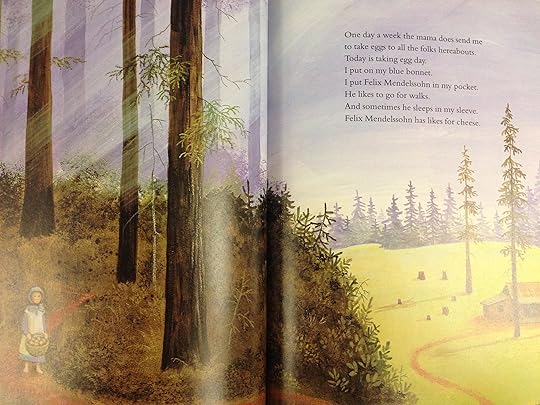
Cooney's artwork captures the Oregon forests beautifully, and works well with this melancholy tale.
This is a rather sad book, giving us a glimpse of Opal's life as she visits with her human and animal friends, then again as she says goodbye to them before her adoptive family moves again.
Cooney's artwork captures the Oregon forests beautifully, and works well with this melancholy tale.

July 27, 2011
Jane Boulton (a poet herself) selected (and, I think, somewhat adapted) excerpts from Opal Whiteley's childhood diary to create the narrative for this story. Perfectly paired with Barbara Cooney's illustrations, this makes a poignant and beautiful story about a young girl's affection and appreciation for nature and animals, her yearning for kindness, and her tenacious spirit. According to the author's note, Opal's parents died when she was young and the logging family she was "adopted" into moved nineteen times in her young life so it was difficult for her to put down roots anywhere. This story focuses on one of the places she lived and the animals she loved, and the places she loved, and the neighbors she loved. It is absolutely heartwrenching when those things are taken away from her, yet she is somehow such an indomitable spirit that you feel she will be okay and find new things to love wherever she goes. Her writing style is so unique, sparse and yet absolutely captivating and it just grabs on to my emotions. I can't say more without spoilers, but a scene with a mouse and another with a tree really touched me. Also, she names things after people she reads about (or authors) in books; she was a very learned little girl but also wise in ways that can never be taught. I think fans of Anne of Green Gables and similar heroines will appreciate Opal and I certainly am curious to read her actual diary after reading this book. "Only Opal" is one of my mom's favorite picture books and I loved it, too.

May 28, 2026
Only Opal: The Diary of a Young Girl (1994) is a picture book adaptation of selected excerpts of Opal Irene Whiteley's purported childhood diary (which was published in 1920 as The Story of Opal: The Journal of an Understanding Heart) and with Barbara Cooney providing the accompanying artwork to Jane Boulton's featured and adapted text for Only Opal: The Diary of a Young Girl (a text that is expressive, poignant, often heartbreaking, but also showing much resilience, strength of character and internal fortitude, with my only very mild caveat being that if Only Opal: The Diary of a Young Girl is to be read with or by the intended audience, with or by younger children, the occasional non standard grammar and syntax parts need to be explained and it also should to be pointed out that this bien sûr is not something to imitate either).
Yes indeed, Cooney's folk-art like style of watercolour paintings complementing Boulton's adapted journal entries in Only Opal: The Diary of a Young Girl, this is absolutely visually stunning and aesthetically delightful, glowingly and gloriously depicting misty Oregon landscapes, ferny and flowery wooded areas as well as huge forests teeming with gentle and clever fauna, visually creating a warm and inviting natural world which also physically reflects Opal Whiteley's all-encompassing affinity for and love of everything nature-oriented and themed, with Barbara Cooney's brushwork delicately visualising and emphasising the comfort Opal Whiteley derives from her natural surroundings, but that in deliberate contrast, Cooney is also portraying in Only Opal: The Diary of a Young Girl most humans (well, except for of course Opal Whiteley) and their habitations with a generally flat and mostly even quite forbidding appearance, visually distinguishing Opal's inner world of warmth and wonder from the harsh human environment that is her family "home" (but which also as such in Only Opal: The Diary of a Young Girl never ever feels like a true home, as a place of love, acceptance and solace for Opal Whiteley).
And Jane Boulton's adapted diary entries for Only Opal: The Diary of a Young Girl depict young Opal (beginning around age five or six in the early 1900s) as an orphan living with a family in various Oregon lumber camps (since Mr. Whiteley is an itinerant lumberjack and works where he can find employment, thus also necessitating frequent moving), with her adoptive parents showing little affection, Opal shouldering heavy duty chores and frequently missing school due to laundry duty and other responsibilities. But just to point out, that while Opal Whiteley's life is certainly harsh in Only Opal: The Diary of a Young Girl (and that the Whiteleys obviously do not at all understand and often eve rather consider her a burden) logging and frontier families like the Whiteleys did in fact face many chores, had many hardships in general to contend with, that children were basically and often only seen as helpmeets and that missing school was sadly something pretty common and especially so for girls (not to mention that although Opal Whiteley in The Story of Opal: The Journal of an Understanding Heart adamantly claims that she was an orphan, the actual historical documents tell a very much different story, that Opal Whiteley was in fact not a biological orphan, that she was the eldest child of Charles Edward Whiteley and Mary Elizabeth Scott Whiteley, but seems to have always emotionally and spiritually felt like an orphan, like an alien in her family of origin, so that Opal Whiteley seems to have created with The Story of Opal: The Journal of an Understanding Heart a diary where she was an orphan and where her biological parents were both deceased and also members of the French aristocracy, thus creating a foster child fantasy which in Only Opal: The Diary of a Young Girl Boulton seems to just accept and use at total face value so to speak, which my inner child does not mind at all, but which for my older adult reading self sure does tend to feel just a trifle uncomfortable).
So in and throughout Only Opal: The Diary of a Young Girl, Jane Boulton's adapted diary entries show how Opal Whitely finds consolation in the surrounding forests and creatures, naming animals and trees after historical and literary figures in her imaginative world, that she feels totally, that she feels utterly misunderstood but derives spiritual comfort from nature amid her profound loneliness and sense of loss. And indeed, textually and visually speaking, Only Opal: The Diary of a Young Girl and the combination of Boulton's text and Barbara Cooney images rates solidly four stars for me.
However, I will indeed have to lower my rating for Only Opal: The Diary of a Young Girl from four to three stars since I have some major issues with Jane Boulton's author's note. For yes, I (as an older adult reader) do find Boulton's completely uncritical acceptance in her author’s note that Opal Whiteley was actually a bona fide orphan and that the Whitleys adopted her rather academically questionable and as such problematic (even though I do believe that Opal Whiteley definitely considered herself as being at best an unwanted and always unappreciated, unloved alien and interloper in her family or origin). For while Opal’s foster child fantasy and creating a deceased and loving imaginary aristocratic biological family actually makes sense and is in fact often a way for adults who have experienced and children who are facing a highly difficult, abusive childhood to cope with severe trauma (and that especially Opal Whiteley’s mother often seemingly beat her daughter for simply daydreaming, for being precocious, for behaving in an “eccentric” manner), sorry, in the author’s note it should definitely be mentioned by Jane Boulton that Opal Whiteley was not biologically speaking an orphan even though emotionally and philosophically she definitely always considered this to be the case. And also, considering that the authenticity of the childhood diary that inspired Only Opal: The Diary of a Young Girl has been debated since the original publication of The Story of Opal: The Journal of an Understanding Heart in 1920, this should also be mentioned in the author's note (and that this is basically just being cast aside and being ignored by Boulton, well, rather massive bah-humbug regarding this).
Yes indeed, Cooney's folk-art like style of watercolour paintings complementing Boulton's adapted journal entries in Only Opal: The Diary of a Young Girl, this is absolutely visually stunning and aesthetically delightful, glowingly and gloriously depicting misty Oregon landscapes, ferny and flowery wooded areas as well as huge forests teeming with gentle and clever fauna, visually creating a warm and inviting natural world which also physically reflects Opal Whiteley's all-encompassing affinity for and love of everything nature-oriented and themed, with Barbara Cooney's brushwork delicately visualising and emphasising the comfort Opal Whiteley derives from her natural surroundings, but that in deliberate contrast, Cooney is also portraying in Only Opal: The Diary of a Young Girl most humans (well, except for of course Opal Whiteley) and their habitations with a generally flat and mostly even quite forbidding appearance, visually distinguishing Opal's inner world of warmth and wonder from the harsh human environment that is her family "home" (but which also as such in Only Opal: The Diary of a Young Girl never ever feels like a true home, as a place of love, acceptance and solace for Opal Whiteley).
And Jane Boulton's adapted diary entries for Only Opal: The Diary of a Young Girl depict young Opal (beginning around age five or six in the early 1900s) as an orphan living with a family in various Oregon lumber camps (since Mr. Whiteley is an itinerant lumberjack and works where he can find employment, thus also necessitating frequent moving), with her adoptive parents showing little affection, Opal shouldering heavy duty chores and frequently missing school due to laundry duty and other responsibilities. But just to point out, that while Opal Whiteley's life is certainly harsh in Only Opal: The Diary of a Young Girl (and that the Whiteleys obviously do not at all understand and often eve rather consider her a burden) logging and frontier families like the Whiteleys did in fact face many chores, had many hardships in general to contend with, that children were basically and often only seen as helpmeets and that missing school was sadly something pretty common and especially so for girls (not to mention that although Opal Whiteley in The Story of Opal: The Journal of an Understanding Heart adamantly claims that she was an orphan, the actual historical documents tell a very much different story, that Opal Whiteley was in fact not a biological orphan, that she was the eldest child of Charles Edward Whiteley and Mary Elizabeth Scott Whiteley, but seems to have always emotionally and spiritually felt like an orphan, like an alien in her family of origin, so that Opal Whiteley seems to have created with The Story of Opal: The Journal of an Understanding Heart a diary where she was an orphan and where her biological parents were both deceased and also members of the French aristocracy, thus creating a foster child fantasy which in Only Opal: The Diary of a Young Girl Boulton seems to just accept and use at total face value so to speak, which my inner child does not mind at all, but which for my older adult reading self sure does tend to feel just a trifle uncomfortable).
So in and throughout Only Opal: The Diary of a Young Girl, Jane Boulton's adapted diary entries show how Opal Whitely finds consolation in the surrounding forests and creatures, naming animals and trees after historical and literary figures in her imaginative world, that she feels totally, that she feels utterly misunderstood but derives spiritual comfort from nature amid her profound loneliness and sense of loss. And indeed, textually and visually speaking, Only Opal: The Diary of a Young Girl and the combination of Boulton's text and Barbara Cooney images rates solidly four stars for me.
However, I will indeed have to lower my rating for Only Opal: The Diary of a Young Girl from four to three stars since I have some major issues with Jane Boulton's author's note. For yes, I (as an older adult reader) do find Boulton's completely uncritical acceptance in her author’s note that Opal Whiteley was actually a bona fide orphan and that the Whitleys adopted her rather academically questionable and as such problematic (even though I do believe that Opal Whiteley definitely considered herself as being at best an unwanted and always unappreciated, unloved alien and interloper in her family or origin). For while Opal’s foster child fantasy and creating a deceased and loving imaginary aristocratic biological family actually makes sense and is in fact often a way for adults who have experienced and children who are facing a highly difficult, abusive childhood to cope with severe trauma (and that especially Opal Whiteley’s mother often seemingly beat her daughter for simply daydreaming, for being precocious, for behaving in an “eccentric” manner), sorry, in the author’s note it should definitely be mentioned by Jane Boulton that Opal Whiteley was not biologically speaking an orphan even though emotionally and philosophically she definitely always considered this to be the case. And also, considering that the authenticity of the childhood diary that inspired Only Opal: The Diary of a Young Girl has been debated since the original publication of The Story of Opal: The Journal of an Understanding Heart in 1920, this should also be mentioned in the author's note (and that this is basically just being cast aside and being ignored by Boulton, well, rather massive bah-humbug regarding this).

July 27, 2011
Wow! This book is so depressing, made somewhat less depressing by Opal’s connections to various animals and plants, the fact that she was writing, the fact that she seemed to feel some comfort in the presence of her dead parents.
Orphaned, living with a family that makes her work hard and seems to show her no affection, this is presented as a portion of her diary covering her 5th-6th year, a time when she was supposedly just learning to write, and missing many days of school due to her servitude.
Opal’s reaction to the death of “Michael Raphael” was so painful.
I almost laughed at the end when the author’s note painted an even grimmer picture of Opal’s life than did Opal’s own words, and how it ended with “And now you might want to start a diary of your own.” It struck me as funny because hopefully most child readers, after being saddened (devastated?) by Opal’s diary, hopefully their lives are better and their diary contents are less disturbing. However, this would make a good book to read with orphans, foster kids, kids who have to move, kids with otherwise difficult lives, and anyone who loves nature and its animals and plants.
The illustrations are charming!
Not for preschoolers.
Orphaned, living with a family that makes her work hard and seems to show her no affection, this is presented as a portion of her diary covering her 5th-6th year, a time when she was supposedly just learning to write, and missing many days of school due to her servitude.
Opal’s reaction to the death of “Michael Raphael” was so painful.
I almost laughed at the end when the author’s note painted an even grimmer picture of Opal’s life than did Opal’s own words, and how it ended with “And now you might want to start a diary of your own.” It struck me as funny because hopefully most child readers, after being saddened (devastated?) by Opal’s diary, hopefully their lives are better and their diary contents are less disturbing. However, this would make a good book to read with orphans, foster kids, kids who have to move, kids with otherwise difficult lives, and anyone who loves nature and its animals and plants.
The illustrations are charming!
Not for preschoolers.

December 4, 2018
This book is based off of a diary of a young girl at the turn of the century. It's quite sad actually and doesn't end happily either.
Ages: 4 - 8
Cleanliness: the little girl believes her dead parents are guardian angels, watching over her.
**Like my reviews? I also have hundreds of detailed reports that I offer too. These reports give a complete break-down of everything in the book, so you'll know just how clean it is or isn't. I also have Clean Guides (downloadable PDFs) which enable you to clean up your book before reading it!
Visit my website!
Ages: 4 - 8
Cleanliness: the little girl believes her dead parents are guardian angels, watching over her.
**Like my reviews? I also have hundreds of detailed reports that I offer too. These reports give a complete break-down of everything in the book, so you'll know just how clean it is or isn't. I also have Clean Guides (downloadable PDFs) which enable you to clean up your book before reading it!
Visit my website!

June 7, 2024
Gorgeous illustrations. I know it's from a real child's diary but wow it's SO SAD.

June 1, 2026
Picture book illustrated by wonderful Barbara Cooney. Based off a childhood diary of an orphan girl living in lumber camps in Oregon early 1900s.

June 19, 2010
This is a beautifully written, and tragically sad story - but well worth the read if you are doing a memoir study with older children (and none of whom have been abandoned...)

Read
July 25, 2011A terribly sad book. My mother used to use it for her 2nd graders when they started journal writing...

Read
February 4, 2019The story was okay (though it’s origins are interesting). The pictures, however, are beautiful. They’re of Oregon forests, so it’s hard not to love them.
July 12, 2018
Rereading a book is like revisiting an old friend. I was so glad to visit with Opal out of Only Opal. Opal Whitely kept a diary as a child. Born about 1900, Opal lived a hard life. Her parents both died and she was sent to live with unfeeling people. Opal always kept a positive attitude and her spirituality was beautiful. When she is 20, she meets a publisher who wants to publish her diaires. Torn to pieces by a :wicked stepsister" Opal kept the torn pieces and at age 20, painstakingly pieces them together. Beautifully illustrated by Barbara Cooney an inspiring read!

June 9, 2012
This book is actually excerpts from a controversial diary of a young girl in the early 1900's. Controversial because there are questions about the truth...I almost hope this isn't true...a five-year-old is orphaned and taken in by completely unsympathetic folks whom she calls 'the father' and 'the mother.' The mother keeps Opal home on laundry days and makes the little girl do way more than a child's share of the chores. One wonders, but Opal never realizes, whether they adopted the girl as a servant.
Opal's birth parents were readers and writers -- they kept journals, and according to the story, so does she. She is extremely close to the animals and plants in her world, naming them all wonderfully classic names: the calf Elizabeth Barrett Browning, the tree, Michael Raphael, and the mouse, Felix Mendelssohn.
Opal does make human friends too, Dear Love and the blind girl give her a feel for human love until she's moved away by the father and the mother.
The illustrations in this edition are beautiful companions to the lyricism of the words...Sharing this will open lots of conversations with students.
Opal's birth parents were readers and writers -- they kept journals, and according to the story, so does she. She is extremely close to the animals and plants in her world, naming them all wonderfully classic names: the calf Elizabeth Barrett Browning, the tree, Michael Raphael, and the mouse, Felix Mendelssohn.
Opal does make human friends too, Dear Love and the blind girl give her a feel for human love until she's moved away by the father and the mother.
The illustrations in this edition are beautiful companions to the lyricism of the words...Sharing this will open lots of conversations with students.

August 12, 2012
One of the recent books found in a collection purchased from a retired teacher is this lovely book with diary parts selected by Jane Boulton, and beautiful illustrations by Barbara Cooney. The back matter tells that Opal Whiteley did live with a couple after her parents died when she was seven. It is a true kind of Cinderella story. The family didn't treat her well but she kept a secret diary and this book shares parts of it. We learn that she takes solace in the what she has of nature, a mouse named Felix Mendelssohn, a calf called Elizabeth Barrett Browning and a tree who is Michael Raphael. A stepsister found the diary and tore up the pieces, but Opal kept them, and later a publisher asked about the diary. Opal pieced it all back together and it was published. Isn't that a wonderful story! An inspiring book to inspire young students to keep their journals.
March 20, 2013
Only Opal consists of excerpts from Opal Whiteley's real diary. Opal was born around 1900 and was adopted after her parents died. Opal learns to adapt to her new surroundings by connecting with nature.I would recommend this book for children ranging from six years old to ten years old. This book classifies as a biography. Opal shows that nature can be comforting when life makes her sad. Opal's outlook on life even after the death of her family and the treatment of her foster family is very positive. The readers will be able to connect Opal's situation with their own and it will help them remember that even if people die they are still watching over them. This book may inspire children to keep their own diary's.
April 7, 2013
This picture book told in verse, is an interesting look at the thoughts and feelings of a young girl who has lost her parents and while living with "the mother" and the father" writes in her diary about her sadness without her parents and her friendship with animals. It is haunting to think about children who feel and endure these hardships. I loved the names Opal chose for her animal friends-and laughed out loud at the pig named Peter Paul Reubens, but was this part of the adaption by Jane Boulton? I don't know, but perhaps reading the full diary will shed more insight on this interesting young woman in Oregon history.

August 20, 2020
As always, Barbara Cooney is brilliant. The story of Opal Whiteley is fascinating, but I don’t think there’s any way that the diary is legitimate. The language strikes me as overly precious and false—a fantasy of innocent genius rather than the voice of an actual child of precocious intelligence. Add to that the fact that the details of the diary don’t align with the known facts of her childhood... The whole thing starts to seem a little maudlin to me. Very sad, more for what the text conceals than the story it tells.
February 28, 2013
This book uses the craft of creating a character using a certain dialect, in this book particularly a southern dialect. This makes the text more real and students can envision themselves in this book right beside Opal. This is a great book to use when teaching writers craft, specifically diary/journal written because this book is written like a diary. Also, this would be a great book for picture walks because the pictures are very detailed.

June 12, 2013
Once again, Barbara Cooney's art shines (and I like her art in this book even more than her work found in Miss Rumphius or Ox-Cart Man!)
What makes this book super special is that its text is from an actual little orphan girl's diary. It's really quite heart braking at points (e.g., her foster mom really doesn't love her), but that's what makes the book so real & therefore so effective.
Recommended.
What makes this book super special is that its text is from an actual little orphan girl's diary. It's really quite heart braking at points (e.g., her foster mom really doesn't love her), but that's what makes the book so real & therefore so effective.
Recommended.
March 18, 2015
This book was about a young girl who's parents passed away. The new mother that she lives with makes her do many chores. She would miss school so she could wash the laundry. I enjoyed reading the diary of opal. She often struggled and had hard times but still remained as positive as good be.
September 20, 2017
One of my favorite children's books. Shares the diary entries of a young girl who was orphaned and taken in by a traveling family from Oregon. Her determination to keep the diary after everything is heartwarming.
May 4, 2018
Only Opal is a beautifully written and illustrated book and plus its true! As you can read in the back of book, Opal's stepsister tore up her diary and hid it under a log. Someone found it ,put it together and Ms.Cooney wrote it down and made this book!

February 12, 2009
This is one of those books that has stayed with me for years. Haunting and beautiful. I think of it often.
Read
May 19, 2012This book is based on actual journal entries made by Opal, which were written and preserved in a nearly miraculous way.

April 13, 2015
This is from the diary of a woman who was born in 1900. After her parents passed away she decided to keep a diary of her "fifth and sixth year" where she chronicles her daily experiences.

March 10, 2016
Easy enjoyable book!
March 11, 2016
I look forward to reading Opal's Whitley's entire diary: Opal the Journal of an Understanding Heart. Published in 1920.

December 23, 2016
Beautiful words and pictures. Very moving in a simple and poignant way.

October 19, 2025
This illustrated diary is adapted from the real Opal Whiteley’s diary and is a heart-wrenching glimpse into her lonely world. Set in 1900s Oregon lumber camps, young Opal, an orphan, faces neglect and cruelty yet finds solace in nature—befriending a crow, mouse, cow, pig, and even a tree she names Michael Raphael. Her poetic voice, both innocent and wise, broke my heart: “The world is so beautiful and sometimes so sad.”
This isn’t a light read—it’s raw, tender, and devastating as it shows a young child’s resilient spirit against harsh realities. If you don’t mind tears and like to feel deeply, this is for you. Adapted for children, but it hits adults hard too.
5/5 ⭐️ for its emotional depth and gorgeous illustrations. A true living book.
This isn’t a light read—it’s raw, tender, and devastating as it shows a young child’s resilient spirit against harsh realities. If you don’t mind tears and like to feel deeply, this is for you. Adapted for children, but it hits adults hard too.
5/5 ⭐️ for its emotional depth and gorgeous illustrations. A true living book.

September 25, 2024
I've been searching for this book for a long time! At first it was hard to remember the title only that the little girl had a diary, and a tree friend called Michael Raphael, a very distinguished name.
This story recounts Opal's life growing up in a tree cutting labor camp. Adopted at birth, Opal describes all the aspects of her daily life, school and her animal friends. The illustrations are endearing and packed with humor and emotion. The girl's life is filled with loss and disappointments, but also beauty and hope.
This story recounts Opal's life growing up in a tree cutting labor camp. Adopted at birth, Opal describes all the aspects of her daily life, school and her animal friends. The illustrations are endearing and packed with humor and emotion. The girl's life is filled with loss and disappointments, but also beauty and hope.

January 29, 2022
Sourcing its text from the disputed diary of an eccentric genius, Only Opal is a beautifully troubling meditation on the inner life of a young orphan in the early 1900's. The young Opal's descriptions of animals and nature are enchanting as is the artwork rendered by Barbara Cooney. Some stilted and possibly artificial syntax and grammar aside, this is a lovely book for children, especially those who are often lost in daydreams and other meditations.
Displaying 1 - 30 of 49 reviews