

What do you think?

Photobooth: The Art of the Automatic Portrait
Since its introduction to the public in September of 1926 on a street corner in New York City, the automatic photobooth has captured the interest of the general public and fine artists alike. Raynal Pellicer, author of Mug Shots, examines the self-portraits—sometimes practical, sometimes whimsical—produced by this enduring 20th-century novelty.
The countless documents included here feature shots of Francis Bacon, Billy Childish, Allen Ginsberg, John F. Kennedy, Anne Frank, Salvador Dalí, André Breton, Wim Wenders, Walker Evans, and John Lennon, among others. Photobooth draws a fantastic inventory of artistic variations on the snapshot, bringing together works of art and self-portraits of persons both known and unknown, from the 1920s to the present.
The countless documents included here feature shots of Francis Bacon, Billy Childish, Allen Ginsberg, John F. Kennedy, Anne Frank, Salvador Dalí, André Breton, Wim Wenders, Walker Evans, and John Lennon, among others. Photobooth draws a fantastic inventory of artistic variations on the snapshot, bringing together works of art and self-portraits of persons both known and unknown, from the 1920s to the present.
304 pages, Hardcover
First published December 1, 2010
Ratings & Reviews
Friends & Following
Create a free account to discover what your friends think of this book!
Community Reviews
Displaying 1 - 5 of 5 reviews

March 13, 2015
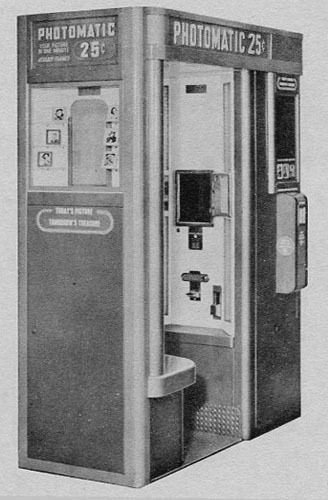
Part 1 -- history and technology of the photobooth
From their earliest, blurriest days as a World's Fair innovation and souvenir-maker in technology, to train station commonplace, to source of universal identification.
Part 2 -- surrealists in photobooths
Surrealist artists loved Photobooths. "If you grimace, it's funny," Eluard wrote to his wife.
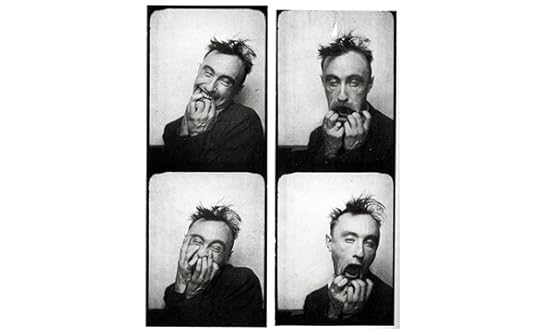
Yves Tanguey
Part 3 -- modern art with photobooths.
Of course Warhol is famous for his interest in this medium, but many other modern artists also like the booths, even though the same things could be done easily with a digital camera.
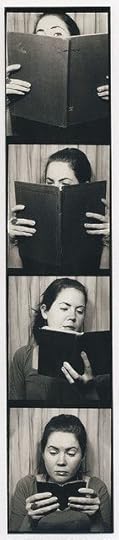
Cori Kindred
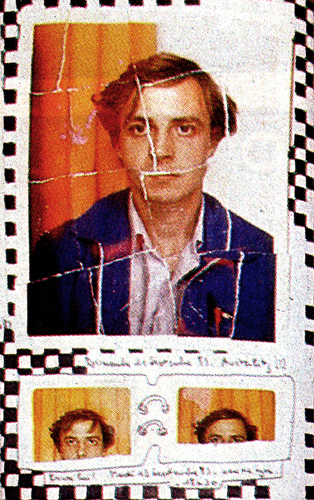
Bonus trivia for fans of the film "Amelie": the character Nino is based (quite closely, at least in terms of photographic matters) on a real person, photographer Michel Folco.
From their earliest, blurriest days as a World's Fair innovation and souvenir-maker in technology, to train station commonplace, to source of universal identification.
Part 2 -- surrealists in photobooths
Surrealist artists loved Photobooths. "If you grimace, it's funny," Eluard wrote to his wife.
Yves Tanguey
Part 3 -- modern art with photobooths.
Of course Warhol is famous for his interest in this medium, but many other modern artists also like the booths, even though the same things could be done easily with a digital camera.
Cori Kindred
Bonus trivia for fans of the film "Amelie": the character Nino is based (quite closely, at least in terms of photographic matters) on a real person, photographer Michel Folco.

December 9, 2011
This book is pure inspiration!
I love photobooths. As a kid every time I went to the big mall downtown I would try to get my picture taken in the little booth. I bought tiny little frames to put the best of them in and I still have those frames sitting up on my bookshelf. So needless to say, when I saw this I had to grab it from the library. This book takes my nostalgia to an entirely new level.
Beautiful, wonderful, artistic and every bit as interesting as I hoped it would be. PHOTOBOOTH takes a look at all the angles from the history to the mystery behind why so many people love the photobooth not only as a way to take a quick snap but as an artistic medium of expression and museum quality art. Every single photograph is beautifully printed, there isn't any crowding (which makes a huge difference) and everyone is given their own place to shine.
An entire section of the book is dedicated to pages where individual artists who have worked with the photobooth as a medium have written out there own experiences and thoughts on why they were personally drawn to it, discussing the art they have created.
I just loved every second of flipping through this book. Right now all I want to do is go out and find one of those near extinct booths and get my picture taken. Seriously, wish me luck.
I love photobooths. As a kid every time I went to the big mall downtown I would try to get my picture taken in the little booth. I bought tiny little frames to put the best of them in and I still have those frames sitting up on my bookshelf. So needless to say, when I saw this I had to grab it from the library. This book takes my nostalgia to an entirely new level.
Beautiful, wonderful, artistic and every bit as interesting as I hoped it would be. PHOTOBOOTH takes a look at all the angles from the history to the mystery behind why so many people love the photobooth not only as a way to take a quick snap but as an artistic medium of expression and museum quality art. Every single photograph is beautifully printed, there isn't any crowding (which makes a huge difference) and everyone is given their own place to shine.
An entire section of the book is dedicated to pages where individual artists who have worked with the photobooth as a medium have written out there own experiences and thoughts on why they were personally drawn to it, discussing the art they have created.
I just loved every second of flipping through this book. Right now all I want to do is go out and find one of those near extinct booths and get my picture taken. Seriously, wish me luck.

November 7, 2013
The narration is a bit simplistic, and the drug plot farfetched, but this noir, interwoven story of an Interpol agent looking to apprehend his parents' killer is captivating nonetheless. Beautiful illustrations where angular, impassioned faces jut out of rainy, haunted landscapes. There is an optimistic message of love, family and destiny beneath the grit here.

April 18, 2012
If I had known it was translated from the original French I doubt I would have read the book. Many of the people featured might be familiar in France but less so in North America. I was duped by Elvis and Andy Warhol on the cover. Wasn't a total loss as I discovered Lee Godie - quite a character.

January 9, 2014
Great story idea and great illustration. Some of the details were a little blurry and rushed. I wouldn't mind reading this if it were longer.
Displaying 1 - 5 of 5 reviews