

What do you think?

The Bay of Angels
When her widowed mother marries a wealthy older man and moves to Nice, Zoe's life changes forever. Alone in London, she discovers a new-found freedom and independence - until a sudden and tragic accident forces her to re-examine her life and maybe settling down isn't for everyone. For the first time Anita Broo
208 pages, Paperback
First published January 1, 2001
About the author
Anita Brookner
66 books712 followersAnita Brookner published her first novel, A Start In Life in 1981. Her most notable novel, her fourth, Hotel du Lac won the Man Booker Prize in 1984. Her novel, The Next Big Thing was longlisted (alongside John Banville's, Shroud) in 2002 for the Man Booker Prize. She published more than 25 works of fiction, notably: Strangers (2009) shortlisted for the James Tait Black Memorial Prize, Fraud (1992) and, The Rules of Engagement (2003). She was also the first female to hold a Slade Professorship of Fine Arts at Cambridge University.
Ratings & Reviews
Friends & Following
Create a free account to discover what your friends think of this book!
Community Reviews
Displaying 1 - 30 of 101 reviews

February 1, 2023
This is my second Anita Brookner novel and in fairly short time I might add. After thoroughly enjoying Incidents in the Rue Laugier I was interested in seeing if I was as enamoured with this one. I am pleased to say the answer is yes. I can also repeat what I said previously, “….minimal dialogue, long passages that were deep descriptions of individuals and of place…….lacking a particularly strong plot.” But again it works. Brookner is an extraordinary writer, so skilled and adept at her craft that plot hardly needs to be complex. Those that enjoy their literature in this style will not be disappointed.
Thematically, this is a tale of loneliness and commitment to a specific way of life when circumstances force our hand. Only child Zoe tells her story as a first-person narrative of growing up with her widowed and solitary mother Anne. Anne eventually marries a much older and wealthy man, who Zoe likes very much. Unfortunately he passes on and Zoe’s world then consists of looking after her mother who declines rapidly. How Zoe deals with all this is superbly told with a deftness that had me the reader thinking that there was a certain permanent pensiveness in Zoe, a pensiveness that pervaded her life from beginning through to her seemingly final destiny of meeting an older man who was not far removed from life’s loneliness himself. All told in a so middle class bourgeois and very English way.
Highly recommended for the exemplary writing alone.
Thematically, this is a tale of loneliness and commitment to a specific way of life when circumstances force our hand. Only child Zoe tells her story as a first-person narrative of growing up with her widowed and solitary mother Anne. Anne eventually marries a much older and wealthy man, who Zoe likes very much. Unfortunately he passes on and Zoe’s world then consists of looking after her mother who declines rapidly. How Zoe deals with all this is superbly told with a deftness that had me the reader thinking that there was a certain permanent pensiveness in Zoe, a pensiveness that pervaded her life from beginning through to her seemingly final destiny of meeting an older man who was not far removed from life’s loneliness himself. All told in a so middle class bourgeois and very English way.
Highly recommended for the exemplary writing alone.

February 4, 2021
A 4-star book; 3.5 in the company of the other Brookners I've read.
For completists.
For completists.

February 13, 2023
3.5 stars. A reflective character based novel about a young independent woman, Zoe Cunningham, who grew up with a widowed and reclusive mother. Her mother, when Zoe was in her late teens, married Simon Gould, who is wealthy, kind and generous. Zoe lives in an apartment paid for by Simon.
I am a Brookner fan, having read ten of her novels. I found this novel a little on the dull side with fairly uninteresting characters!
Readers new to Brookner should firstly read ‘Hotel du Lac’, 1984 Booker Prize winner, ‘Strangers’ or ‘Latecomers’.
This book was first published in 2001.
I am a Brookner fan, having read ten of her novels. I found this novel a little on the dull side with fairly uninteresting characters!
Readers new to Brookner should firstly read ‘Hotel du Lac’, 1984 Booker Prize winner, ‘Strangers’ or ‘Latecomers’.
This book was first published in 2001.

March 11, 2018
I am sure this will be the saddest coming of age story I'll ever read; one in which the characters mainly lose rather than find themselves, in which a sense of baffled loss, and loneliness, weighs heavily on every page. It is primarily an exploration of loneliness, and sometimes I found it hard to continue reading about this mother and daughter shunted around by the kindness of strangers, passive in the face of the plans of others and helpless in the face of freedom and independence; of lives unlived, ignored, of the blind groping for a lost connection which does not name itself as lost; of their 'bewilderment', as Zoë calls it. But Brookner's rendering of their relationship is so beautiful, if painful; and she captures with exquisite bleakness the sense of watching your life go by, the uncertainty of what to do about it. If for nothing else, this book is worth reading simply for its deep, almost unbearable emotion, hinted at by each line of controlled and understated prose.

March 6, 2012
A self-absorbed young woman raised as an only child by a single mother has her life turned upside down when her reclusive mother suddenly decides to marry a wealthy older man and move to a villa in the south of France with her new husband. The grown daughter is left behind in London, albeit with a flat of her own, a fat bank account, and a cheating boyfriend. For the next several years the daughter travels back and forth between London and Nice (to visit her mom) enjoying her new-found freedom and independence. She suspects her mom is unhappy in her new circumstances, which casts a shadow over the narrator's own life, but the mother insists that all is well, and life goes on. When the old man dies in a freak accident his wife, who was kind of 'spacey' to begin with, sinks into a deep depression bordering on dementia, and is no longer able to care for herself. In another reversal of fortune the daughter is left with the responsibility of caring for her ailing mother both financially and physically. After the mother dies---in one of the novel's most poignant scenes---the daughter finds herself unable to resume a normal life and winds up in a bizarre platonic relationship with an older man who lives with his spinster sister. Had the novel ended with the death of the mother, I might have given it three stars, but the story drags on for another thirty or so pages with the daughter wandering aimlessly back and forth between London and France bemoaning her fate as a single, childless woman approaching middle age without anything to look forward to.
The novel is written almost entirely in narrative style, with very little dialogue or action. I found little to like about either one of these two joyless women. Some of the other reviewers approached this book from the feminist perspective, as it shows how women raised in a patriarchal society are ill-prepared for independence when they lose the men in their lives. As a single woman, never-married and LOVING it, I have a hard time relating to this. Frankly, I found the novel's male characters just as pathetic as the women.
This is a very sad story about loneliness, old age, dying, and the tribulations of caring for aging parents. These are issues that need to be addressed, but hopefully in a less boring way.
The novel is written almost entirely in narrative style, with very little dialogue or action. I found little to like about either one of these two joyless women. Some of the other reviewers approached this book from the feminist perspective, as it shows how women raised in a patriarchal society are ill-prepared for independence when they lose the men in their lives. As a single woman, never-married and LOVING it, I have a hard time relating to this. Frankly, I found the novel's male characters just as pathetic as the women.
This is a very sad story about loneliness, old age, dying, and the tribulations of caring for aging parents. These are issues that need to be addressed, but hopefully in a less boring way.

October 2, 2011
Carefully wrought prose, like setting ornaments on a shelf in a just so manner.
It is the story of a young woman's entrance into adulthood told in the first person. Her passivity and determined naivete are irritating, especially in the context of her constant assertions that she is an independent and emancipated woman. She is completely dependent on, and constantly seeks, paternalistic oversight of some sort, and yet rarely or only obliquely acknowledges that reliance.
Some of the scenes were too contrived and jarringly unbelievable, such as the mother's hospitalisation, and the daughter's drifting helplessness. But the scenes in the Residence Saint Therese, especially the first scene, were wonderful. They were precise acute observations of the players and their roles in a nursing home.
Since this was my first novel by Brookner, I'm not sure if this claustrophobically precise style of writing is her own, or if it was the voice of the narrator. I'm looking forward to comparing it with another one of her novels.
It is the story of a young woman's entrance into adulthood told in the first person. Her passivity and determined naivete are irritating, especially in the context of her constant assertions that she is an independent and emancipated woman. She is completely dependent on, and constantly seeks, paternalistic oversight of some sort, and yet rarely or only obliquely acknowledges that reliance.
Some of the scenes were too contrived and jarringly unbelievable, such as the mother's hospitalisation, and the daughter's drifting helplessness. But the scenes in the Residence Saint Therese, especially the first scene, were wonderful. They were precise acute observations of the players and their roles in a nursing home.
Since this was my first novel by Brookner, I'm not sure if this claustrophobically precise style of writing is her own, or if it was the voice of the narrator. I'm looking forward to comparing it with another one of her novels.

December 10, 2013
It's become a cliche to call Anita Brookner the modern Henry James, but with her latest novel, she's outdone the fusty old master. Some future genius will have to be called the modern Anita Brookner.
"The Bay of Angels," her 20th elegant novel, perfects an examination of loneliness that threatened to grow monotone in her last few books. Yet here, remarkably, she makes another quantum leap into psychological depth, splitting the atoms of human nature and tracing the particles that veer off.
Her narrator is a compulsively analytical young woman named Zoe Cunningham. She lives in quaint isolation on the margins of life and London with her widowed mother, "a woman in embryo."
Despite their static circumstances, Zoe is sustained by the lessons of those earliest books, the fairy tales of Hans Christian Anderson and the Brothers Grimm, and later by the stories of travail and triumph by Charles Dickens.
"I was willing to believe in the redeeming feature," she notes wistfully, "the redeeming presence that would justify all of one's vain striving, would dispel one's disappointments, would in some mysterious way present one with a solution in which one would have no part, so that all one had to do was to wait, in a condition of sinless passivity, for the transformation that would surely take place."
When a wealthy, older man falls in love with her mother, the fairy godmother seems to have come through after all.
Simon is loving, generous, and paternal, just the sort of gentleman to whom Zoe can relinquish her gentle mother and go off to live a modern, liberated life. "It was providential," she writes. "All seemed to agree on that point."
Simon moves Mrs. Cunningham to his modern villa in Nice, France, sets Zoe up with her own flat, and all live happily ever after.
"Though it satisfied the requirements of legend," Zoe concedes darkly, "it made me aware of what all the stories left out, namely the facts of what happened next. The stories had ended on the highest possible note, whereas what they should have indicated was the life that followed."
Indeed, what follows in this novel is rather sad. Simon suddenly dies and his affluence evaporates. Zoe and her mother find themselves without money or a place to live. More ominous, though, her mother's energy begins seeping away.
Visiting her in a sanatorium, Zoe finds herself riding conflicting currents of love and dread. She's wholly devoted, but she resents the loss of freedom, the burdensome need to parent the parent. As Zoe travels back and forth between London and Nice, the circumference of her own life begins to shrink toward the center of her mother's health.
Her emotional turmoil is compounded by the Kafkaesque treatment she receives from the doctors and nurses and the thicket of old-fashioned attitudes held by other women at the nursing home.
This may sound dreary in summary, but Brookner's wit glows like a kind of background radiation that charges everything here - even the tragedy. She has never been more clear-sighted, more compellingly brilliant.
When Zoe begins seeing her mother's doctor, a man who "gave the impression of having worn a double-breasted suit from a tender age," the fairy tale threatens to rise up again, but Zoe won't fall for that. Somehow, she must negotiate the old desire for male salvation and the modern insistence on barren autonomy.
It's a conundrum worthy of Brookner's relentless analysis, and it eventually yields, if not an answer, at least profound insight.
http://www.csmonitor.com/2001/0419/p2...
"The Bay of Angels," her 20th elegant novel, perfects an examination of loneliness that threatened to grow monotone in her last few books. Yet here, remarkably, she makes another quantum leap into psychological depth, splitting the atoms of human nature and tracing the particles that veer off.
Her narrator is a compulsively analytical young woman named Zoe Cunningham. She lives in quaint isolation on the margins of life and London with her widowed mother, "a woman in embryo."
Despite their static circumstances, Zoe is sustained by the lessons of those earliest books, the fairy tales of Hans Christian Anderson and the Brothers Grimm, and later by the stories of travail and triumph by Charles Dickens.
"I was willing to believe in the redeeming feature," she notes wistfully, "the redeeming presence that would justify all of one's vain striving, would dispel one's disappointments, would in some mysterious way present one with a solution in which one would have no part, so that all one had to do was to wait, in a condition of sinless passivity, for the transformation that would surely take place."
When a wealthy, older man falls in love with her mother, the fairy godmother seems to have come through after all.
Simon is loving, generous, and paternal, just the sort of gentleman to whom Zoe can relinquish her gentle mother and go off to live a modern, liberated life. "It was providential," she writes. "All seemed to agree on that point."
Simon moves Mrs. Cunningham to his modern villa in Nice, France, sets Zoe up with her own flat, and all live happily ever after.
"Though it satisfied the requirements of legend," Zoe concedes darkly, "it made me aware of what all the stories left out, namely the facts of what happened next. The stories had ended on the highest possible note, whereas what they should have indicated was the life that followed."
Indeed, what follows in this novel is rather sad. Simon suddenly dies and his affluence evaporates. Zoe and her mother find themselves without money or a place to live. More ominous, though, her mother's energy begins seeping away.
Visiting her in a sanatorium, Zoe finds herself riding conflicting currents of love and dread. She's wholly devoted, but she resents the loss of freedom, the burdensome need to parent the parent. As Zoe travels back and forth between London and Nice, the circumference of her own life begins to shrink toward the center of her mother's health.
Her emotional turmoil is compounded by the Kafkaesque treatment she receives from the doctors and nurses and the thicket of old-fashioned attitudes held by other women at the nursing home.
This may sound dreary in summary, but Brookner's wit glows like a kind of background radiation that charges everything here - even the tragedy. She has never been more clear-sighted, more compellingly brilliant.
When Zoe begins seeing her mother's doctor, a man who "gave the impression of having worn a double-breasted suit from a tender age," the fairy tale threatens to rise up again, but Zoe won't fall for that. Somehow, she must negotiate the old desire for male salvation and the modern insistence on barren autonomy.
It's a conundrum worthy of Brookner's relentless analysis, and it eventually yields, if not an answer, at least profound insight.
http://www.csmonitor.com/2001/0419/p2...

December 12, 2024
"Life is a process of adjustment, you know…"
A beautiful novel about loneliness, loss and family…
Zoe and her widowed mother live a serene yet solitary life with their modest finances in London. Then, her mother marries a wealthy older man and moves to Nice, and Zoe stays behind. Alone in London, she builds an independent life and enjoys her freedom. The sudden death of her stepfather brings a dramatic change both for Zoe and her mother and forces Zoe to face new realities…
I always admire Brookner's eloquent prose. I like her calm and focused approach when explaining and analyzing the characters' moods and thoughts and her search for understanding what is happening. In this book, I especially liked the focus on the loneliness of women and their search for belonging. Her discussion on gender roles in society, ageing, and the pressure of responsibilities is insightful and deeply thought-provoking...
A beautiful novel about loneliness, loss and family…
Zoe and her widowed mother live a serene yet solitary life with their modest finances in London. Then, her mother marries a wealthy older man and moves to Nice, and Zoe stays behind. Alone in London, she builds an independent life and enjoys her freedom. The sudden death of her stepfather brings a dramatic change both for Zoe and her mother and forces Zoe to face new realities…
I always admire Brookner's eloquent prose. I like her calm and focused approach when explaining and analyzing the characters' moods and thoughts and her search for understanding what is happening. In this book, I especially liked the focus on the loneliness of women and their search for belonging. Her discussion on gender roles in society, ageing, and the pressure of responsibilities is insightful and deeply thought-provoking...

February 4, 2009
A monologue of the main character's mental meanderings. Boring in the extreme, even in her profoundest moments. It is gracefully written, but not a story I cared for. I read it part of the way through a number of months ago and quit before it induced a coma. This time I saw it through without more than a few extra naps. According to the dust jacket this is a very admired book and author.

April 18, 2014
I found myself increasingly annoyed and irritated as I read this book,in fact I would quite happily have slapped Zoe !

September 18, 2018
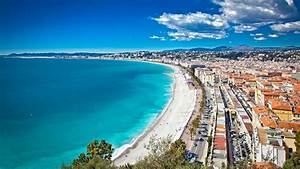
The Bay of Angels in France.
So, a usual Anita Brookner book where the entire story takes place (mostly) in the head of a young passive woman. This book seems to spend more time on money than other novels she's written.
Others have written about how men were worshipped in this book, but I'm old enough that I know some of the older generation, where the women didn't even know how to write a check or drive a car. In department stores money went through tubes up to the office so the sales clerks (ladies) didn't have to handle it. Those were "men's jobs". Same as when it was suggested that the attorneys take care of the money (but you have to wonder how many little old widows were scammed without knowing it.)

April 22, 2026
In my project of reading all Brookner novels chronologically I'm now approaching the end, and it feels like I'm becoming as tired of and detached from Brookner's characters as they are tired of and detached from themselves. Somehow the books and myself are nearing a perfect unity, which feels somewhat sublime but unfortunately does not make for very entertaining reading.
Hilarious though how some evidence points towards this being set in the 1980s or even 1990s, but much is being made of the purchase of a radio, of listening to it and then gifting it to someone else, reverently as if this apparatus had only just been invented.
Hilarious though how some evidence points towards this being set in the 1980s or even 1990s, but much is being made of the purchase of a radio, of listening to it and then gifting it to someone else, reverently as if this apparatus had only just been invented.

July 6, 2011
The Optimist's Daughter meets The Wings of the Dove, set against the glaring light of the Med, The Bay of Angels made me feel horribly sad. This was not the book that I wanted to read about Nice. I wanted a romance and some adventure and a name-dropped cafe or bar I could go to and have a drink at like Zoe Cunningham did in The Bay of Angels, but neither Zoe nor her author were helping me out there. The Wings of the Dove, though also very sad and not what I wanted to read right before going to Venice, at the very least gave me Florian's on the Piazza San Marco.
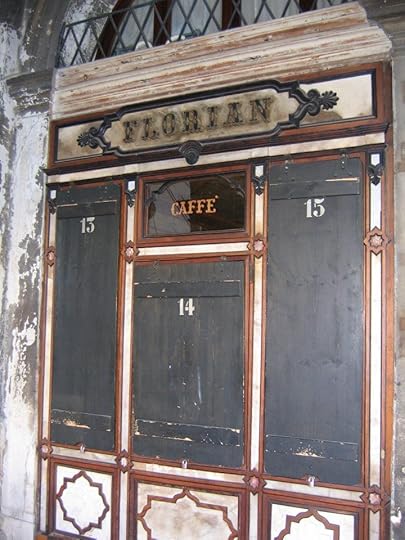 .
. I got to sit at the bar there and have a drink, just like Merton Denshler (and Henry James, and any other male writerly type who passed through Venice in the past 300 years).
[image error]
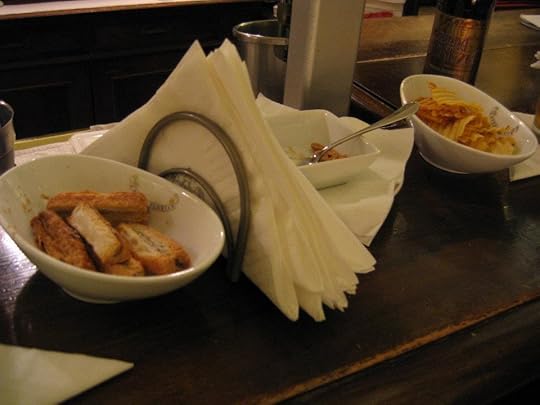
This was one of the more expensive 'been there, had a drink like Person X' experiences I've had in my life, but I must recommend it: the waiters are all impeccably dressed and polite, the atmosphere is warm and inviting and cozy, the people watching is top notch, and they have the BEST bar snacks - and you get them all to yourself!
So, The Bay of Angels disappointed in regard to fresh ideas for activities in the South of France, and the only landmark of note is St. Rita's in the Vieux Ville.
 .
.A lot of funerals happen there. (It didn't help my mood today when, just after finishing a section of this novel where a funeral is held at St. Rita of Cascia in Nice, Handsome Boyfriend and I drove past the Shrine of St. Rita of Cascia in Philadelphia and a funeral procession was exiting the church. It was a very Stranger than Fiction moment.) Which is all to say, if you are planning a trip to the Riviera and want to read a few good novels set there to gear you up for the trip, maybe leave this one at the bottom of the pile.
However, I can't believe that I've never read Brookner before; the writing here is top notch, not a clink or clank or cliche to be found. She is the real deal and I have every intention of devouring the rest of her oeuvre. (Bay of Angels was her 22nd(!!?!) novel!) Bay of Angels is also a great, albeit small, novel. A young woman, Zoe Cunningham reads fairy tales as a child, and believes in them. She and her mother, who are 'independent' (i.e., don't have to work), live in a modest flat in London until Zoe, seventeen and supplanting The Blue Fairy Book with the Greek Myths of gods intervening in human life, and her mother meet Simon Gould, wealthy widower, who marries Mrs. Cunningham and whisks her off to his home in the South of France, buying Zoe her own flat in London and setting each of them up with a private expense account. Zoe's 'theory' - that fairy tales and/or deus ex machinae will come true as long as you believe - is proven correct. Then everything goes to hell.
In the great literary tradition of the city-as-character, Nice plays the role of fairy godmother or protector goddess in Zoe's fairy-tale gone wrong. It is a moving, multi-layered story about love and fate and family that asks and seeks to answer how much control we have over our lives. The twenty-year-old Zoe reminded me so much of myself at that age, too.
Recommended with caveats.
January 4, 2010
Anita Brookner writes beautiful prose. I enjoyed her writing more than the story she told.

August 11, 2012
I thoroughly enjoyed The Bay of Angels by Anita Brookner. I particularly admire the way she susses out the intricacies of emotions attached to human interaction -- it is such an organized approach to description, her method of describing what's going on inside people's heads as they observe life. I am quite astounded by it. It has changed the way I will regard my own life.
Brookner's vocabulary is also thought-provoking, stimulating, and inspiring. I had to look up words I had never seen before. Nothing is said in a common manner and yet it is completely without affectation.
This book is a marvel.
Brookner's vocabulary is also thought-provoking, stimulating, and inspiring. I had to look up words I had never seen before. Nothing is said in a common manner and yet it is completely without affectation.
This book is a marvel.
Read
June 7, 2016I found this book to be a totally whiney, mopey self-indulgent book that was difficult to read. Long, boring passages, lots of foreign phrases with no basis for context. All in all, a colossal waste of my time.

July 4, 2013
Boring, a slog, claustrophobic . One reader called it anemic. I think this is the perfect descriptor. Not sure I will be able to finish.

June 12, 2022
My first Anita Brookner. It was intense.

April 23, 2021
"That is why stories are so important: they reveal one to oneself, bringing into the forefront of one's consciousness realizations which have so far been dormant, unexamined." - page 40, The Bay of Angels
I've come to terms with the fact that I'll probably give every Anita Brookner novel I read 5 stars.
This was incredibly depressing and I can see why it has a low rating, but there's something about Brookner's writing I can't get enough of. She just does things to me! Not sure this is a good place to start for someone looking to dip their toes in, and that goes for the rest of her 2000's output, which I've read is her bleakest - http://brooknerian.blogspot.com - but if you're a fan, you know what you're getting yourself into.
I also recommend checking out any and every interview with her you can find online - she was so funny!
"Anita, leaning across the lunch table to examine what was on my plate: “How is that?” she asks, and then, with one of her broader, more expectant smiles: “Disappointing?” Anita telling me that she had just completed a novel, dropping her voice to add, in a low, confidential tone, “It’s about … a lonely woman.”
I've come to terms with the fact that I'll probably give every Anita Brookner novel I read 5 stars.
This was incredibly depressing and I can see why it has a low rating, but there's something about Brookner's writing I can't get enough of. She just does things to me! Not sure this is a good place to start for someone looking to dip their toes in, and that goes for the rest of her 2000's output, which I've read is her bleakest - http://brooknerian.blogspot.com - but if you're a fan, you know what you're getting yourself into.
I also recommend checking out any and every interview with her you can find online - she was so funny!
"Anita, leaning across the lunch table to examine what was on my plate: “How is that?” she asks, and then, with one of her broader, more expectant smiles: “Disappointing?” Anita telling me that she had just completed a novel, dropping her voice to add, in a low, confidential tone, “It’s about … a lonely woman.”

May 31, 2016
The Bay of Angels revolves around the relationship between Zoe Cunningham and her widowed mother. I found this rather a strange book. Nothing much happens...actually things do happen, but Brooker doesn't devote many words to the events that happen. Instead she fills the book with the internal judgements and scrutiny of Zoe.
Zoe is an independent, yet lonely woman who seems to judge her happiness and worth on the basis of male interest. She appears to believe that every woman, including her mother, feels similarly and it's difficult to tell if she's right because there is very little dialogue to reveal what others think. We have to rely fully on the thoughts and observations of Zoe.
Brookner writes beautifully and precisely, but I have to admit to being a bit frustrated after 140 pages of Zoe hyper-analyzing minutia. In this particular book the main character grated on me, so despite dealing with some topics I was interested in (death, relationships, insecurity) I didn't really enjoy or get much out of the story. I will try another Brookner book because her writing style is like no other.
Zoe is an independent, yet lonely woman who seems to judge her happiness and worth on the basis of male interest. She appears to believe that every woman, including her mother, feels similarly and it's difficult to tell if she's right because there is very little dialogue to reveal what others think. We have to rely fully on the thoughts and observations of Zoe.
Brookner writes beautifully and precisely, but I have to admit to being a bit frustrated after 140 pages of Zoe hyper-analyzing minutia. In this particular book the main character grated on me, so despite dealing with some topics I was interested in (death, relationships, insecurity) I didn't really enjoy or get much out of the story. I will try another Brookner book because her writing style is like no other.

September 22, 2008
A depressing story of aging, changing responsabilities, strength and old-fashioned expectations and roles but not in a good way. Mixed in the middle of this book are brief interludes of hope shown in Adam and Dr. Balbi but conveniently come across in a very sexist manner. I get it. That's the point but it is done in a completely unrefreshing way. I was almost sicked by the shock expressed when rare strength was shown in women. Again I get it but I cannot appreciate the approach. Maybe my coming from a different generation is what frustrates me so, yet, this has not been the case with other books I have read. Very disappointing read!

May 3, 2015
I kept thinking something 'exciting' is surely going to happen to Zoe or her mother....but they just kept plodding along in such a boring routine. Felt I was reading the same sentences over and over only in a different paragraph. Wondered how Zoe could fill a whole day after checking at the hospice early in the morning....she wasn't allowed to see her mother; just check in with the nurses and then she seemed to do little but wander the streets of Nice until time to head back to her barely furnished room. Why didn't she meet any friends? Why didn't she visit galleries, museums, parks? Why didn't she get a part-time job?

May 16, 2009
Anita Brookner has written not so much a coming of age story as a coming to terms story. Zoe Cunningham narrates her own life story, beginning with her childhood as the daughter of a reclusive but kind widow who takes good care of her but teaches her nothing about coping with any of life's vicissitudes.

August 2, 2011
Again, it's not so much the plot with Brookner, but the prose. It shines.
July 24, 2012
A little more happened in this Brookner novel than in the last I read, but I still wanted to shake the protagonist out of her passivity. Passive suffering seems to be a theme of hers.
March 18, 2018
Some beautiful use of English but little in way of storyline.
I actually wanted to slap Zoe and tell her to get a life.
I actually wanted to slap Zoe and tell her to get a life.
March 15, 2020
This is a transfixing coming of age story. It is wonderfully written.
Zoe is delighted when her widowed Mum remarries. Her stepdad is personable, biddable, generous, and well heeled. He has a villa in Nice. She stays behind in London as they go to Nice, buffeted by having plenty of money, and she has her own flat. She visits her Mum and stepdad in Nice often over the years.
Tragedy ensues as the stepdad is killed in a freak accident. The Mum lapses into a deep depression and needs to be cared for, so the daughter Zoe is left with that responsibility. She is lonely and gets involved in an odd relationship with an older man, purely platonically.
There is a bleakness for Zoe as she powerlessly watches her life go by, largely unlived, whilst feeling she has no control in changing it. Loss and loneliness are deeply explored in the book. Zoe feels a sense of bewilderment at her constrained circumstances, but feels stunted from doing anything about it. The mother/ daughter relationship is beautifully depicted, albeit acknowledging the poignancy and painfulness of its reality.
This is a book freighted with emotions. I found it to be a beautiful read.
Zoe is delighted when her widowed Mum remarries. Her stepdad is personable, biddable, generous, and well heeled. He has a villa in Nice. She stays behind in London as they go to Nice, buffeted by having plenty of money, and she has her own flat. She visits her Mum and stepdad in Nice often over the years.
Tragedy ensues as the stepdad is killed in a freak accident. The Mum lapses into a deep depression and needs to be cared for, so the daughter Zoe is left with that responsibility. She is lonely and gets involved in an odd relationship with an older man, purely platonically.
There is a bleakness for Zoe as she powerlessly watches her life go by, largely unlived, whilst feeling she has no control in changing it. Loss and loneliness are deeply explored in the book. Zoe feels a sense of bewilderment at her constrained circumstances, but feels stunted from doing anything about it. The mother/ daughter relationship is beautifully depicted, albeit acknowledging the poignancy and painfulness of its reality.
This is a book freighted with emotions. I found it to be a beautiful read.

February 21, 2022
Great premise that quickly dissolved into a novel I didn’t want to read. Not much was happening after the initial story came to a sad end.
Sometimes when I read Brookner and come across a main character talking about the love affair she’s having at the moment, I catch myself thinking “your guy is probably just hungry or wants to get back to work on time - no need to suspect him of such complicated mental acrobatics.”
And yet, I suppose, that is what makes a Brookner’s novel so distinct. That Mariana Trench full of her exquisite, beautiful, elegant sentences. I’ve never read anyone quite like her.
Sometimes when I read Brookner and come across a main character talking about the love affair she’s having at the moment, I catch myself thinking “your guy is probably just hungry or wants to get back to work on time - no need to suspect him of such complicated mental acrobatics.”
And yet, I suppose, that is what makes a Brookner’s novel so distinct. That Mariana Trench full of her exquisite, beautiful, elegant sentences. I’ve never read anyone quite like her.

June 11, 2024
Zoë is pleased to see her widowed mother marry Simon, a generous older man with a villa in Nice. However, her mother's uncertainty about the marriage and unwillingness to talk about Zoë's birth father are causing troubles in Zoë's own relationships and her sense of identity as a woman. When Simon has an accident, Zoë is drawn closer to her mother and to a group of women in an eldercare facility. The simple storyline provides a framework for reflections on love, family, life, death, and the search for belonging.
We don't really get to know Zoë well as a character because she is herself grappling with her identity separate from her mother, whom she loves but consistently judges. Brookner's eloquent language and detailed descriptions of inner life are impressive. As the plot unfolds, the writing becomes more profound. There are some breathtaking turn of phrase.
It was worth reading the second half in one sitting.
We don't really get to know Zoë well as a character because she is herself grappling with her identity separate from her mother, whom she loves but consistently judges. Brookner's eloquent language and detailed descriptions of inner life are impressive. As the plot unfolds, the writing becomes more profound. There are some breathtaking turn of phrase.
It was worth reading the second half in one sitting.
May 18, 2019
At first I felt I was reading a memoir; the text has that reflective quality of an author relating the circumstances of her early life. And actually some aspects of Brookner's life are echoed in this story. Zoe is the only child of a widow; they live very much to themselves in London until her late adolescence when her mother is introduced to an older well-off gentlemen. She marries Simon and they move their lives to Nice; Simon meanwhile provides money for her to live in London and pursue a modest career as an editor/fact checker. Simon died unexpectedly and Zoe's mother goes into a state of shock. Simon's wealth proves to be less abundant than they had been led to believe; in fact her mother was turned out of the house which seems to have been only borrowed. Zoe is forced to put her mother into a very gentile nursing home; she retains her work in Britain.
This is not a quick read; it is very introspective, rigorous, disciplined. I doubt there are more than a dozen pages with any sort of dialogue. Brookner did not take the easy way out and it's clear why she won the Booker.
I hope to read more of her novels but I think I will allow myself some time in between; reading this was a very immersive experience. Through over 200 pages of Zoe's view of her own life I internalized her feelings and experiences.
.
This is not a quick read; it is very introspective, rigorous, disciplined. I doubt there are more than a dozen pages with any sort of dialogue. Brookner did not take the easy way out and it's clear why she won the Booker.
I hope to read more of her novels but I think I will allow myself some time in between; reading this was a very immersive experience. Through over 200 pages of Zoe's view of her own life I internalized her feelings and experiences.
.
Displaying 1 - 30 of 101 reviews