An attempt to develop a theory of knowledge and philosophy of mind using ideas derived from the mathematical theory of communication developed by Claude Shannon. Information is seen as an objective commodity defined by the dependency relations between distinct events. Knowledge is then analyzed as information caused belief. Perception is the delivery of information caused belief. Perception is the delivery of information in analog form (experience) for conceptual utilization by cognitive mechanisms. The final chapters attempt to develop a theory of meaning (or belief content) by viewing meaning as a certain kind of information-carrying role.
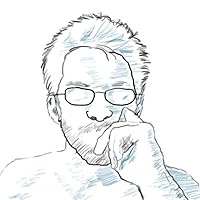
Frederick Irwin Dretske is a philosopher noted for his contributions to epistemology and the philosophy of mind. Recent work centers on conscious experience and self-knowledge. He was awarded the Jean Nicod Prize in 1994. Dretske received his Ph.D from The University of Minnesota and taught for a number of years at the University of Wisconsin-Madison before moving to Stanford University. After retiring from Stanford, he moved to Duke University where he is now research professor of Philosophy. Dretske holds externalist views about the mind, and thus he tries in various writings to show that by means of mere introspection one actually learns about his own mind less than might be expected.
If you like your intentionality good and naturalized, you've got no better place to start than information theory, and Dretske was (as far as I know) the first to apply it to philosophy. Although a lot of his stuff on representation has since been tossed aside in favor of more sophisticated theories (e.g. those that can accomodate misrepresentation) the book evokes a lot of useful intuitions for the philosophy of mind and epistemology.
Reading Dretske in the context of a lot of more recent philosophical literature (especially in mind and metaphysics) is really a curious feeling. Dretske does act as sort of an interesting preface for a lot of the material, because he does mediate between functionalist and representationalist perspectives in mind, and tries to flesh out some of the salient things his peers get right. Overall, I think that the greatest upshot of this view might be that Dretske actually offers one of the earliest active hybrid views.
There are a lot of dated features in the book. The general approach in terms of information theory is still very salient, but a lot of the language that he uses to flesh out the relationship between digital and analog information is less stable and interesting than more recent alternatives; Churchland's work on computational approaches gives a bit more of a clear distinction between those different sorts of ways of discussing information and the relationship between them. (Though, of course, Dretske is less philosophically committal than Paul Churchland in many other respects.)
I would probably recommend reading some of the other work on computational work well ahead of engaging with Dretske, and perhaps working on this book in the narrow circumstance where the interest is both in mind and the relevant stuff in information theory that Dretske uses. There are some features in the discussion, especially towards the end of the book, that I think are excellent and I'm not sure that he discusses concepts in quite that way elsewhere in the book. I did find those portions of the discussion really valuable.
Thought provoking in places but disappointing. I was seldom convinced by or interested in the formalism introduced at the beginning. While Dretske acknowledges problems with knowledge as "justified true belief", he fails to mention Karl Popper or Conjectures and Refutations, written over a decade earlier. There are several unfortunate physical examples, including a heavy reliance on water qua H2O that just doesn't work due to the true complexity of water hidden by "H2O". I certainly was not fully engaged with the latter half of the book, which seemed to just stop rather than reach any form of conclusion.
Fred I. Dretske uses Knowledge and the Flow of Information to remind us that history is full of quiet enforcers who were just "following standard procedure" while enabling harm.
Very serviceable theory of information. Includes a theory of semantics based on etiological origin that is very clever and provides a palatable form of semantic externalism. Lack of probabilistic causation or information is interesting. I wonder if the theory could be adapted to something like Judea Pearl's models of causation.