In the New York Times bestselling autobiography Rogue Warrior, Richard Marcinko chronicled his controversial career in the U.S. Navy's elite maritime commandos, the SEAL teams.
After his success as creator and commander of the counterterrorist SEAL TEAM SIX, he was ordered to create Red Cell -- a dirty-dozen team of SEALs whose mission was to infiltrate the Navy's most secure installations. Marcinko did his job too well. His reward was a year in a federal penitentiary.
During that year, Marcinko and John Weisman wrote Rogue Warrior...but government restrictions meant Marcinko could only tell a fraction of his incredible story. Now the secrets he could not reveal explode on the page as the Rogue Warrior returns in the blockbuster suspense novel of the year—a novel with him as the hero!
As Rogue Warrior Red Cell begins, Marcinko, now a freelance security expert, makes a shocking smugglers are transferring nuclear materials to North Korea through Japan—with backing from traitorous Americans. Recalled involuntarily to command RED CELL and stop the operation, the Rogue Warrior, with his loyal SEALs, will do anything to crush those who would betray America for a price. Based on current SEAL tactics, Rogue Warrior Red Cell is an electrifying, sure-fire hit.
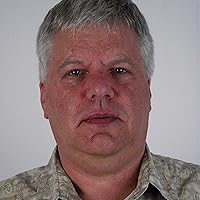
Richard Marcinko is the author of the Rogue Warrior thrillers and is a living, breathing hero honored with the silver star and four bronze stars for valor, along with two Navy Commendation medals and other honors. After serving in Vietnam, he went on to start and command SEAL Team 6, the Navy's anti-terrorist group, and Red Cell, a high-level anti-terrorist unit. Marcinko keeps his hand in the field as the president of a private international security company and now lives in Warrington, Virginia.
Women's lib, equal opportunities and all that plays a part in trying to push good old Harry Callahan out of the SFPD in the mid 1970s, when badge #2211 is assigned a female partner and told that he is a dinosaur, an undesirable with questionable methods for solid results. Putting hoods out of business and behind bars. Hailed for successful tactics and stellar results during the Vietnam War and subsequently spooling up a new special unit in a time when global terrorism was running wild, Richard Marcinko, ROGUE WARRIOR, received the same treatment. The new Navy had no more use for him and tried to nick him with shady schemes used to clip Al Capone. "Betrayal" by the service, Hollywood allure, and lotsa greenbacks to pay the bills can be Siren's Song for even the most stalwart patriot. Kept on the down low forever and only occasionally allowing a tiny peek via entertainment vessels like Jerry Fletcher's DEVILS WITH GREEN FACES ('89), David Morrell's scant 5 lines in the 350+ page 1984 novel THE BROTHERHOOD OF THE ROSE, 1990's movie NAVY SEALS starring Charlie Sheen et al, and of course the often misinterpreted original MAGNUM P.I. whose eponymous retired Sailor-turned-private investigator started the series wearing a Surface Warfare Officer (SWO) pin and is conveniently interchanged with Thomas Magnum magically transforming to a NAVY SEAL, Navy Special Warfare used to be the quiet professionals. Revisiting the #1 NYT Bestseller success of ROGUE WARRIOR, Demo Dick Marcinko barks even louder with RED CELL, a reality infused global thriller, taking espionage, intrigue and action to the next level.
Recalled to active duty (by an all-powerful and connected former SecDef) to combat the hemorrhaging of nuclear technology to an ENEMY OF THE STATE via an organized program of clandestine nuclear theft. Using Marcinko's old unit from the mid-80s, RED CELL, containment is the name of the game before the (pre-internet) media gets wind of the problem. It's a covert job and Demo Dick's the right man, as there's no one blacker, spookier, or dirtier in SpecWar than the Vietnam era SEAL. It's why he got volunteered. Doom on Demo. Since this is mostly fiction, the stakes are incredible: Tomahawk missiles, billions of dollars, and national security awash in a massive conspiracy that reaches deep into the heart of the Navy establishment. Of course, no one on the Hill's the wiser, filled as it is with petty, small-minded, selfish people, each out for himself, interested only in money and getting re-elected. It appears that nothing's changed in the intervening thirty years. While the OG series MAGNUM P.I. is now being massaged into what "normal" returning war-time Navy SEALs do in civil society, those actually experienced in the deadly arts don't fall too far from the tree. Operating somewhere between UNODIR and Murphy's Law, Marcinko and crew demonstrate/live that unconventional warfare means just what it says. Unconventional. Dirty, spooky, nasty, unfair. RED CELL features fantastic ops from the Navy Yard to Seal Beach, Tokyo, and even NorKo, also throwing in Century City, Los Angeles, including the skyrise that dubbed for Nakatomi Tower in DIE HARD, inventing a 'fictitious' sequel, even though DIE HARD 2 was already in the rearview for four years at the time of publication.
ROGUE WARRIOR II - RED CELL exists in a time "back then" when dramatic growth in SpecWar meant a bigger profile, more SEALs, more money, opportunity, and sadly more bureaucracy, layers of management, increased career ladder ticket punchers for rapid career advancement. Per Marcinko, bigger budgets and visibility resulted in less Hunters and eventually a scourge of authors, YouTubers, podcasters, etc. Complain as he might, this is the culture Demo Dick helped create by authoring the #1 NYT Bestseller ROGUE WARRIOR as his debut and the subsequent Navy SEAL adventure series. Half of said ROGUE WARRIOR series existed before the internet was a serious threat to BS artists, Major Braggadoccios, and info exploiters, though it appears that the SEAL sphere of entertainers still benefits from those who are too "lazy and stupid" to try to learn things, discern truth from BS, and demand more from auteurs. Truth be told, nobody doesn't like SEALs, and positive (albeit fictional) stories [via authors] helps the Navy up-value or maintain its image. Cleaving into a recurring theme, Marcinko does his very best to not toe the company line, offering a scathing indictment of how the Navy is run as well as the Waco fiasco; big thanks to Bill Clinton and Janet Reno. Proving that the system has the longer arm, the Navy wants his scalp, the pentagon wants him shot and the FBI is on notice. Maybe the ATF, Customs, Immigration, the Coast Guard, and even the U.S. Mail are lining up for their shot.
Despite the entertaining antics, rough edges, and detailed MIL & Intel content, the sophomoric does shine through the narrative, mainly in the extensive use of "time to..." (in various forms) which a lot of modern MIL-Shlock authors are equally guilty of. Displaying that he's a mensch in spite of all the bragging, locker room boasting, and not so subtle self-backslapping, Marcinko admits that he is an egocentric ass who can't see the forest for the trees, sometimes. Self-admittedly too often he tries to screw the system whenever he can, even if it's not in his best interest to do so. In charge of America's premier counterterrorism unit SEAL Team Six in the 1980s, Demo offers the prediction that terrorism will eventually come home to the United States in the 1990s, leaving more than enough signs to shore up defenses prior to 9/11. In missions as in MIL-Thrillers, look no further than Dick Marcinko for bottom line planning, bare-bones execution and zero-based support action. The ROGUE WARRIOR is back to growlin' and prowlin', hopping and popping, snooping and pooping, shooting and looting. ROGUE WARRIOR put Navy SEALs on the world stage, read RED CELL to honor the legendary Vietnam era Navy SEAL and keep em there.
Once again, loose morals, awful language, but intriguing story. Sometimes the author's bravado gets on your nerves, and sometimes you think it would take that kind of bravado and extreme self confidence to be able to accomplish the things he writes about.
Some passages that I marked:
"It is like this. Warriors are different. Whether you are a master of the ancient Chinese martial art of tai chi chuan, a sniping instructor at the Marine sniping school at Quantico, or a master chief at BUD/S out at Coronado Island, you have the same goal: to teach your students to neutralize the enemy by any and all means at their disposal, as quickly as they can. To instill this principle so that each man can carry it out takes time and effort. First, they must be willing to work hard. To learn the craft of killing. Then they must learn to work as a group--remember all that preaching about unit integrity? I told you you'd see it again. Then they must learn to be flexible, both in body and mind. In Eastern martial arts, for example, you learn how to turn your enemy's energy against him. The same doctrine can be applied in running a Marine platoon, a SEAL squad, or an Army Ranger battalion. Finally, you must inculcate in your men a warrior's soul. The soul of a true warrior is always prepared for death. What that means in plain English is, give your mission everything you've got--because in the end, you're gonna die anyway. So the warrior gives everything he does 110 percent. This, then, is the core of the warrior. The resolve that allows him to kill, face-to-face. The determination that keeps him going despite any adversity." pg 98
Because my sleeve length is thirty-five and my inseam is thirty-two, people tend to underestimate me. All they see is another knuckle-dragger who loves to use the F-word in various ingenious combinations. They forget that I have a master's in international relations from Auburn, and that I speak three languages conversationally and a half a dozen more well enough to get me by. They know that I am proficient at killing. They forget that I am also a reasonably capable corporate politician. You can't not be a corporate politician and rise to the positions I held in the Navy, which included command of SEAL Teams Two and Six, naval attache in Phnom Penh, Navy liaison to Operation Eagle Claw--the rescue of the Tehran hostages--and SpecWar briefer to Secretary of the Navy John Lehman. It's impossible. But that's okay with me. I'd rather be underestimated. It gives me an edge. It allows me the advantage of surprise. --pg 134
I worked for countless assholes like Pinky when I was in Vietnam, inflexible, small-minded officers with pea-brains, who refused to see how SEALs could be utilized imaginatively. Instead of using us as the tip of the tactical spear to terrorize and disorient the enemy, they assigned us brief supporting roles for their slow, blundering, ineffective armadas of riverine craft--SpecWar spear carriers whose mission was badly conceived and ill-defined. The reason behind their incredible lack of vision was that they had all been trained as ship drivers, aviators, or nuclear submariners, not as lean, mean badass jungle fighters. They thought of war in the conventional way--a static affair in which the lines don't shift very much; in which one side attacks the other with huge numbers of men to take territory. But as we all know now--and a few of us knew back then--Vietnam was an unconventional war. It wasn't about territory and huge armies facing off the way it had been done since the Assyrians. Vietnam was a brutal jungle war largely waged by small groups of highly motivated insurgents backed up by large numbers of highly motivated troops. To succeed, you had to hit the enemy the way he hit you: get in, beat the shit out of him, and get the hell out before he knew what had happened. Most of the naval officers with whom I worked just didn't get it. --156
A word about that. You're probably groaning now and saying why the hell is he talking about cannon fodder again. God, what an insensitive, politically incorrect schmuck this Marcinko chap is. Well, gentle reader, cannon fodder is a reality of warfare. There are times when, as a commander, you make a decision that will probably send some of your men to their deaths. Period. Full stop. When I created SEAL Team Six, I chose several of the younger shooters knowing that if I had to make that call, they'd be the first ones to go into the jaws of death. I did it without remorse or guilt. I did not feel remiss about this because, as a SEAL, I am the Navy's cannon fodder. SEALs are expendable. In fact, all SpecWar units are expendable. That's the way it's always been. Indeed, the UDT teams at Omaha Beach in June 1944 lost more than 50 percent of their men. The planners on Ike's staff had known how bad it would be, and still they assigned those naked warriors their mission. The Frogs at Omaha Beach were cannon fodder. So were the brave Canadian commandos who lost 80 percent of their men at Dieppe. But the generals who created those missions weren't villains. Nor were they callous. Sometimes, war calls for men to sacrifice themselves for a greater good. And when the order comes through, you don't have to like it--you just have to do it. No matter what the consequences may be.--167
Half crazed, Demo Dick turns his real world SEAL experience into the lukewarm spy-thriller-action genre (circa 1980). Very much in the spirit of the original 'rogue warrior', this yarn seems like a testosterone fueled ego booster with a few added plot points. The original SEAL with a book DEAL. "Doom on you" is my favorite catch phrase now.
Like his other books, good rousing adventures. This one, about smuggling nuclear parts into Japan. Patriots Seals fighting foreign enemies, some all-out traitors, and bureaucrats. Fun, sometimes coarse, narrative storytelling narrated by the author. Good, but rough around the edges, characters. He does a good job of teaching (about spec warfare and his philosophy of life / warfare, unit integrity, etc.) while still progressing the story.
Richard Marcinko veterano de la guerra de Vietnam y primer oficial al mando del SEAL Team Six es un hombre con una vida muy interesante. Tras escribir una especie de autobiografía (El primer libro de Rogue Warrior), comenzó a editar más libros como este, con nombres de personas y lugares cambiados para mantener la privacidad de las misiones y aventuras en las que se vió envuelto.
Dick Marcinko relata con ayuda de John Weisman sus misiones de manera muy entretenida y emocionante. Algunas partes están un poco exageradas o modificadas respecto a los hechos reales para darle un poco de vida al libro pero aún así se nota qué partes son más reales porque sientes la tensión en las pelotas mientras lo lees.
En este en concreto sale algún flashback de Vietnam y sobretodo partes de la época que el autor pasó dedicándose a la seguridad privada y adiestramiento de civiles en tácticas militares. Respecto al tono del libro es imposible evitar reirse con alguno de los comentarios que suelta Marcinko de vez en cuando.
No esperes leer una especie de Rambo acabando con decenas de enemigos él solo por arte de magia, esto son operaciones especiales, cooperación, esfuerzo y valor. Se aprende mucho sobre armas, técnicas militares y lecciones sobre la vida con estos libros, además de pasar un buen rato. Es un tipo malhablado, con sentido del humor, sentido del deber, sangre fría y un fuerte compañerismo.
Creo que solo están los libros en Inglés, pero el lenguaje que utiliza es muy cercano, la historia es narrada como si el propio Marcinko te estuviera contando la historia tomando unas cervezas.
The cover calls this book a novel, but it’s hard to determine where the autobiography ends and the fiction begins. Marcinko’s larger-than-life character is full of attitude and testosterone. As a Navy SEAL, he swears like a sailor. In fact, the more vulgarities you can throw at a fellow warrior, the more he is appreciated. And forget about being politically correct - especially with regard to Japanese and Koreans. The book is so full of military acronyms it requires its own glossary at the end. The author also offers a scathing critique of the Navy brass and its bureaucracy.
The narrative follows Marcinko as a security consultant finding flaws in the security at Japan’s Narita Airport. He uncovers a nuclear weapons operation, thereby ruffling a few feathers in Washington. He is then impressed back into military service as the leader of Red Cell, an elite group of ex-SEALs tasked with uncovering more security flaws. Yet it seems that the Navy is doing everything in its power to cover up the arms smuggling and put him and his team in harm’s way. Suspected of being involved in the smuggling are ex-Secretary of Defense, Grant Griffith and his own commanding officer, Rear Admiral Pinky Prescott da Turd. Who will win - Marcinko or the highest echelons of Navy bureaucracy? Of course, we know the answer, but it is seat-of-the-pants excitement getting to the finale.
Kudos to John Weisman who helped shape Marcinko knuckle dragging persona into a best selling franchise.
The testosterone language does get old, but you can easily make abstraction of it. When you do, your reading will provide you with lots of treats and action filled SpecOps. It was so constantly entertaining that it almost became boring. After about 270 pages, I started having enough of it.
Still, I will keep reading Marcinko, as, let’s be honest, this book gave me exactly what I was looking for.
Golly, he sure does like to say "fuck." Also doubles down on the homoerotic commentary from the first volume, including such great phrases as "Male-to-male epoxy," "These guys would drink each other's piss," and of course, "I'd suck a room full of dicks."
It was difficult to get through this one. I don't recommend at all. In fact I bet it would be only half the length if you took out all the vagaries and swearing. If you are a Navy Seal you might like this book but everyone else skip it.
This book is both riveting and hilarious. I love the way Marcinko writes and the way he thinks. If we had more in the military like him, who knows how different things would be.
Really a good read. A bit disturbing that our military could be so shallow …
One can see, today, how pc our military is becoming. One learns here that it is not a new thing, nor did it happen overnight. Hopefully there are still a few good men left.
Dick Marcinko is not easy to define. This book is a novel written as a sort of autobiography. I don't know how much is true nor false. Regardless, it is a good read.
A truly amazing autobiography written by Dick Marcinko, the toughest US NAVY SEAL to ever jump onto or off of a boat, anywhere, anytime, any ocean, any hemisphere. When you read this book you will have a good idea about what it takes to be a hero.
Liked the book, a lot of action as Marcinko tracks down Military and retired Def Sec. selling Nuclear weapons to No. Korea and hardware. He weaves some of his past operations into the story. Good for a Fiction Novel. With his Seal team Members.
I really liked the insight to adventure, danger, and inner working of the organization. I was attracted to this book after reading Marcinko's autobiography.
This book was super interesting and intriguing. I'm amazed at what Richard went through. He was a great soldier and a pull no punches guy. I for one agree with his tactics and his actions.
He's honestly not terrible at writing, but this is a very bad book, bursting with self-indulgent preening. You'd almost think it was written by a 4-foot tall man.