Journey to a world torn between Dark & Day! It is earth like you have never seen it; a sphere of mythical creatures, epic adventures and lurking mysteries!
Jonothon Wyer is the scrawniest kid in the Twilight Ring. His only hope to become healthy & whole is to join the army of the Empress of the Dark End. On his last fateful wake at home, Jono makes an unexpected discovery that thrusts him into the center of an age old conflict between the Dark & Day.
Join Jono as he learns to trust new friends, outwit mythical monsters, explore amazing realms and uncover the terrible mystery that is tearing the world apart!
The wild imagination of Clive Barker's "ABARAT" with the deliberate plotting of an early "Harry Potter" novel.
It's always fun to see someone pay homage to the things you love. "Dark & Day" appears to be written as a love song to the SNES-era "Final Fantasy" games, and that whole series in general.
In a land quite literally divided between eternal day and eternal night, we follow Jonothon Wyer, a dark dweller. Jono is a sickly little boy who is admitted into the prestigious Windom Academy, where he will be given the chance to make a difference in the world, and maybe change it forever.
Though there is a lot of familiar ground being covered in "Dark & Day"'s premise, the author does a pretty great job at adding some surprisingly clever extra layers of narrative to give an otherwise tired plotline its own flavor and some very unexpected twists. I will not spoil, but trust me: there is a lot more going on in Jono's story within Windom than the typical fare (meet the teachers, meet the bully, get in fights, pass your tests).
The greatest thing about this story is probably the world. It's a deeply imagined narrative sandbox for the author. Though there's a lot left to explore, the world presented here is already massive, packed with many different creatures and some pretty awesome lore I can't wait to see come into play in future books.
Also, there was some major relief in seeing that the author had the decency to wrap up the story really well while leaving a major plot point open for sequels. I don't like seeing stories end abruptly, as though the writer grew bored and decided to just write "The End". This is a well conceived three-act story that wraps after a pretty epic (if a bit rushed) climax.
My only major gripe was that it could've used some editing. The book is a bit longer than it should be, and the pacing is a bit erratic, sometimes lingering on unimportant plot points and then rushing through the better parts. This sometimes results in the existence of too many characters, many of which are way too awesome to have such small roles (one Professor in particular was awesome and only had one scene).
9/10 easily rounded to 5 stars. This was a quick, colorful and incredibly entertaining read. If I didn't have a massive reading list ahead of me, I'd dive right into book 2.
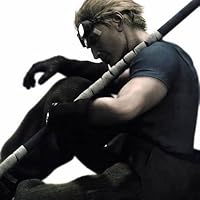
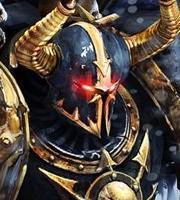
This is not directly related to the book but I need to point out that "Dark & Day" has some of the most awesome artwork I've ever seen. It's out-of-this-world phenomenal. I love that it was included within the pages of the (e)book.
This is nominally aimed at young teenagers, but I think it is highly suitable for some older ones as lomng as they don't mind the nominal age of the protagonists. It is a fantasy set in a futuristic Earth in which, for sone reason (maybe a change of obliquity so that our current equator is at "dawn") half the planet is in perpetual sunight and the other half in dark. Jonothon Wyer lives not too deeply in the dark, he is hopelessly impeded by needing a machine to make his heart and lungs work, but if he can win a scholarship to Eies (the capital of the Dark) he will be fixed and will become a soldier fighting to defend the Dark. It appears the Dark and the Day each think the other wants to take over the other. Jono (the name he is generally called) gets the scholarship, but he also discovers something, and quickly becomes entangled with both sides. This is a cleverly written book, the plot contains a number of subtle characterizations of our modern society. The dark is evil, the light is good, but are they really? It is a book where the young reader has to re-evaluate conclusions continually. The major characters are well-drawn and in general behave in a believable fashion (there the occasional scene where what they do is totally plot required as opposed to being credible, though), there is a good fantasy element through weird machines and cyborg attachments, and at the end of many chapters, there is an illustration of what the author thinks the character looks like, to be seen after the reader has already made his/her decision. Well crafted. My only reservation is the length; whether young people are ready for 400+ pages is an interesting question.
(I’m not a fluent English speaker, but hopefully this won’t be very wonky!) The Dark and Day novels, coupled with the beautiful art from Andrew Hou, Lianna Tai and Tyler Edlin, have introduced myself to a futuristic, visually rich and immersive Earth in which both halves live in very distinct conditions: Dark Enders favor science/tech and live under the sun’s shadow in a constant state of night; whilst Day inhabitants are constantly bathed in sunlight, favoring spirituality, nature and magic. You also have the Terralunans, a society in the moon (Terralunis) that also seems to have a relevant role in the Dark and Day’s dynamics. Advertised as an “Star Wars + Harry Potter adventure,” the novels draw elements from magical fantasy, science fiction and the -punk genres, dealing with themes such as spirituality, advanced technology (specially prosthetics, nano and biotechnology), politics and philosophy. As someone who recently played Arcanum: Of Steamworks and Magick Obscura, I also drew some parallels between their interesting representation of balance between magic and technology. I’ve read the first three books in weeks (pulling all-nighters from an /ok, just one more page/) and overall really liked the series! Jono progressively shows a very mature character that I don’t usually see in YA fiction, and I found myself slowly changing my view of him as a younger brother to someone I’d look up to for their logic and compassion. Grail, Keiko, Wishe, Ramsus, the Empress and the Sage… It is hard to pick a favorite character. In YA I usually roll my eyes at clichés such as dramatic love triangles and immature characters that come off as unrealistic, and I was extremely pleased to see Dark and Day effortlessly bending such tropes into a conceivable and engaging read (no eyes were rolled.) The characters are believable and relatable, and sometimes have their own chapters showing their POV in that world. Book 3 has a striking chapter in which a Day inhabitant finds herself desperate for a divine signal while in an artificially maintained sapling grove at the capital and heart of the Dark. To me this scene represents the eerie, beautiful contrast between both kingdoms. . :::::::::::::::::::::::::Plot spoilers/third book spoilers::::::::::::::::::::::: . Enders face a terrorist organization known as the Tombs. They advocate an alternate interpretation of religious texts in which the end of the world is inevitable and should be happening at the time the books are set. They have no qualms in murdering masses of people to meet their ends, while still able to somehow recruit and appeal to individuals from all backgrounds. This group clearly reminded me of ISIS, and I’d constantly draw other parallels to our contemporary world while seeing the novels’ sensible approach to other struggles and ethical dilemmas we currently face in regular-Earth. Non-human animals are barely mentioned in the Dark, and I only wonder what all the development of the cities might have done to them. The powers and limits of propaganda, patriotism and surveillance are also shown (and how they can manipulate people’s mindsets between cycles of war and peace on a whim), especially on the side of Dark Enders and Terralunans - though I still see hints of it in the Day. Another interesting mention is the Pox: A frightening, mysterious and destructive force that is still to be deciphered (or not) by Earthlings. To summarize, I see mentions of Harry Potter, Tolkien and Final Fantasy as references for Dark and Day, but it is good to emphasize how it is a gorgeously illustrated, refreshing and contemporary read filled with characters able to arouse empathy and thought. I’m very glad to have stumbled upon those books, and eagerly await the fourth novel. ♥ Comment Comment | Permalink
I won this in a GoodReads giveaway some time ago intending to give it to my little nephew. But I'm going to give it a go. Looks like good reading. I apologize for not getting to it before now. -------------------------------------------------------- This is a great story probably intended for middle-schoolers but I thoroughly enjoyed it. Jono is 11 and has been sickly all his life. The only way he can aspire to good health is to get good grades and be accepted into military academy where his life will belong to the state. And what a state it is. This futuristic alternate-universe novel is dark but not scary. Jono makes it to the academy, makes new friends, and tries to save his world from war that may end it entirely. The sequel, Dark & Day: The Withering Mark, continues the saga. ------------------------------------------------------- This story deserves 5 stars. I have to give it 4 (4.5 if I could), though, because of the typos. They were the strangest I've ever encountered in a book. We are all familiar with the enormity of typos in ebooks. This, however, is beautifully printed, beautifully illustrated, and beautifully bound. I first thought, "How could a publishing house allow this to go out," but checked and it appears it was self-published. My question, then, is where the heck were the human readers? Someone besides the authors themselves should READ self-published works and not be afraid to criticize. Have these authors no friends? The usual typos resulting from spell-check are here: "main of hair" and "alter where she worships" being two examples. However, this book had, time after time, errors I haven't seen before. First, word tenses were mixed in many, many sentences. (pg. 176) "A shadow beneath the cracked ice appeared for only a moment before it fading quickly away." (pg. 234) "Jono wanted to avoided being late to class..." Second, loads and loads of sentences omit words. (pg. 224) "Jono noticed the pink spots on his arms had begun to peel away the skin to find tiny metal circles." (pg. 224) "The small black dots itched violently and Jonothon his arm." In addition to these two examples there were many instances of smaller words missing: the, to, an, etc. I'll make my usual offer: $.05/page and I'll fix all these problems for any author who wants to retain my services.
I decided to grab a copy after seeing a post in a Facebook "Blogging the Books" group. I am recently intentionally reading genres outside my main interest, and YA is one of those genres, so I decided to give it a chance.
The first thing that grabbed my eye was the well-illustrated cover. The fully-realized, visually catching graphics are repeated through the book, and they are wonderful. The author credits each one at the end, as multiple artists worked on it. Kudos to the author and illustrators - they really made the book stand out.
The book began in a future world where half the population lives under eternal Day and uses magic, and the other half lives under eternal Night, and uses mechanix. There are also other people, offworld, known as the Terralunans, who are sketched in enough to make the reader understand how they weigh in on the proceedings, but not overly done. I expect we will learn more about them later (the first chapter of the sequel is included at the end of this edition. I'm thinking about getting it.) The plot proceeded in a bit of an Ender's Game-Harry Potter steampunk mashup that I found enjoyable as an adult reader of YA.
There were a few things here and there that I noticed. For one, there are several word choice, spelling, and typo errors throughout. In fact, one of the chapter headings misspells "fray". But they were not so many that I couldn't keep going, and once I got into the story, they didn't pull me out too much. I did feel the story got bogged down once Jonothon (the main character) ends up at the military school. For one, it took a while for the school to actually feel like a military school. It felt more like Hogwarts. Also, I was sometimes confused about the delineation between who used magic and who didn't. My attention did wander a bit here.
However, once the action started again, and the plot wheels started turning, I was sucked back into the book, completing it in one final hour-long marathon read. The message/theme of the book was a relevant one, namely the fact that various factions were so ready to go to war over one misunderstanding. However, the message didn't overwhelm the narrative, and was nicely situated within the story.
If you enjoy this genre, I would recommend this book. Even if you don't like YA, it's a fun read. (And oh, those great illustrations!)
I listened to a free copy of the audiobook provided by the author for an unbiased review.
Fun book! It is a hero’s journey with setting heavily influenced by Final Fantasy and Harry Potter. (It even has minor characters named Cid, Biggs, and Wedge—the latter two of course being FF’s nod to Star Wars.)
Magic and highly advanced tech share a world tidally locked. They have the technology to get to other planets, but have been blockaded and at odds with each other for a long time.
Since I listened to it, I’m honestly not sure if it is a graphic novel or a novel with illustrations. I enjoyed it as an audiobook, and I’ll probably get the book copy at some point to see the art.
It is aimed at younger readers, but it was great to geek out to as an adult. I am looking forward to continuing the series.
I can remember as a youth, nestled under heavy blankets on a cold winters night just delving into my favorite books. As a young man with no lacking for vivid imagination I often would craft my own costumes of my favorite characters from the stories. Brandishing my cardboard tube that you get out of the center of wrapping paper for a sword and wearing an old blanket I would play with my brothers in the backyard. Each of us would argue over who got to be the good guys and bad guys and usually as the oldest I got to be the hero more than once. :) This story reminds me of being young in the days of high adventure and endless imagination that behold a sort of magic one looks back on fondly with the warm summer glow of happy days gone by.
I remember reading the Lord of the Rings series under my covers with a flashlight and being so tired for school the next day. I fell in love with that series a few years ago, later I read the Harry Potter series and a few months ago I really got into The Lightning Thief -- that new Percy Jackson series. NOW! I am reading Dark & Day by Israel Gray.. this book is a fantastic combination of some of my favorite stories from movies, books, I see parallels from my favorite characters in Anime and Manga.. I am anticipating Dark & Day being the new favorite fiction for 2012 and the new favorite series for kids, adults, tweens, and young adults alike in the 2010s!!!!!
I loved the drawings!!! It was so cute, cuddly and lovable. Of course, this is coming from a teen which loves small and little things. The characters were very lovable and the title pretty much draws out my enthusiasm. After winning this I have to say that it brought me back to my childhood with fairy tales and others. It is recommended.
I haven't read the book but I know the author. He is a delightful and interesting fellow. I really have no excuse for not reading his work, other than the fact that I can't find a electronic copy for my Nook.
Mr. Grey is about the hardest working, most generous, humble, honest, disciplined man I know. A true Renascence man.
I wish him well with this book and the subsequent books.
If you're into fantasy, liked the Narnia and/or Harry Potter books, or just like reading, check it out. It's an awesome story set in a unique universe and will leave you wanting for more!
Usually not a fantasy girl but I won this book on goodreads and decided to give it a try and I am really glad I did! Very good book I thoroughly enjoyed this till the very end.
Jonothon lives in the Twilight---the border country that separates Dark and Day. But when he finds an ancient artifact, he might have set off the end of his world. Now he's racing to keep the artifact out of the hands of the Queen of Dark, before the forces of Day are crushed . . .
This book is made of awesome. The sheer amount that's packed into the story should make it feel confusing, but it all just works. Because Jonothon is of the Dark, we get more detail about the Dark. Loosely, it's science versus magic, on a world where the sun only ever shines on one side of the planet. Both sides have a multitude of races, but the Dark also has mechs, cyborgs, and "hollows"---holograms. In fact body modification is so common in Dark that staying "natural" is equivalent to choosing to live like a caveman. And given the way they do computers, it's also true.
I liked the layers of mythology with the stories of the seven seraphim, and the way it's never quite clear how much of this is true. I liked how the story challenges Jonothon about dealing with reality, and how both Dark and Day have their own stories that blind them to what they might otherwise see. I liked that it wasn't quite as black and white as it initially appears.
The illustrations are gorgeous. My only wish is that they'd show up in color when I read it on the computer. It was great to see all the characters, and some, like Celeste, were a reference I didn't catch until I saw the picture.
Which was the other thing that made me smile. There are callbacks to Final Fantasy, Tolkien, and more. It's not so big as to be a ripoff, or so obvious as to be distracting, but it's a nice little wink to those who recognize names like Wedge and Biggs.
Overall, if you have any interest in fantasy adventure stories, read this. The world is bursting with detail, the pace never lets up, the story careens around all sorts of twists and turns, and the end pulled everything together in a satisfying conclusion. I rate this book Highly Recommended.
Disclaimer: I was provided a copy of this book, free of charge, in exchange for an honest review.
Where normally I'd start my reviews with a personal insight into the subject matter and how it relates to me, this time I have to simply pass the floor to my 10 year old daughter who listened to this book and wrote this review…
When my Dad asked if I wanted to read this book, I wasn't sure. You see I love fantasy and have read lots of it including Dragonlance and many others but I've not read any with Magic and Machines and Scifi isn't something I particularly like. But the cover was cool and the main characters name was strange so I thought I'd give it a go.
The story is about a world that is split into two sides. On one side is eternal day and they use Magic to do everything and protect them and the other side, which always felt like the poorer side, live in constant night and their lives revolve around technology to with cybernetic and Hollows.
It is the Dark side where we find Jono, a young (although, older than me!) boy who is dying and needs machinery to heal him but to get this he has to be accepted into the Empresses army and early on this does happen and so he is slowly drawn into a world where the two 'nations' hate and fear each other for imagined slights.
I'm not going to spoil the story but it was really deep and not as Black and White (pardon the joke) as a lot of fantasy stories where there's a dark god or evil dragon and it was all very subtle but very exciting. I was really drawn into the characters and found the world really realistic and cleverly balanced and beautifully read with all the characters being easy to recognise even when the narrator was playing females.
For me, I'm not sure if I'll be going straight onto book 2 as it is really heavy and deep and I think I'd need to read something else between the parts but I do really want to continue as I really want to see everyone being happy again at the end.
Oh and thank you Jacob for the book, I loved it :)
*I won copies of the first three books via a giveaway on the Mugglenet website, but that does not in any way affect my review and rating for the book.*
"Dark & Day" is the first book in the series, and it was an enjoyable read. While the series is meant for younger readers, older readers will also find a lot to like in "Dark & Day." (I personally enjoyed the pop culture references to William Shatner and LOTR, among others).
The series is advertised as a "Harry Potter/Star Wars" hybrid and that's pretty accurate. In the first installment of the series, we are introduced to Jonothon Wyer's world, which is divided into two factions. The Dark, which champions science and the advancement of technology, and the Day, which favors magic.
I don't want to spoil the rest of the book, which features some tried and tested tropes (the chosen one, science vs. magic, etc.), but also includes some surprising twists.
The book also had wonderful art depicting the characters and locations, and the artists did a good job of bringing them all to life. I loved looking at the illustrations, which made it easier to imagine Polari, Windom, and the other locations Jono visits in the first book.
I'm currently reading "Dark & Day 2: The Withering Mark," and I can't wait to find out more about Jono's adventures.
P.S. While there are some typos and grammatical errors in my copy of the "Dark & Day," it looks like the books have been relaunched. Hopefully, the new editions have undergone stricter editing.
Ok, so this summary hooked up but the way the first few chapters went I almost gave up on it. In fact, my 10 yr old son did give up on it after an hour of listening by himself. I pushed through and by around chapter 9 or 10 it picked up and I was hooked. There's a lot of scene setting, character development and such that takes place in the beginning (which I expect from the first book in a series) but this did take a bit longer than normal. I do think it was worth it and the story did pick up it pace quickly from there. It is a really fun mix of stories like Harry Potter but with a sci-fi and fantasy feel- it has magic, mechs, creatures, aliens and an academy!
The narrator does an amazing job and I credit his skills to keeping me in it during the slower intro. He really was a lot of fun to listen to!
—I was given this free review copy audiobook at my request and have voluntarily left this review.
(Review from a fan via Deviant Art) First of all, this is what everyone should be doing: READING DARK AND DAY. Period.
Unless you've already read it, then you should be posting on the forums and waiting for the second book!
No seriously, it's a great read, and reading is awesome. It's a way to help your imagination form unimaginable worlds, guided by someone else.
Check out [link] !
-~-~-~-~-~-~-~-~-
So, what's this all about?
[Intro] Somewhere there's a world full of magic and highly advanced technology. The sun has died long ago, and the world is divided in a dark half and a day half. The people of the day live to serve the seven seraphims, their gods, and the people of the dark live to serve their empress. However, due to some events in the past, Dark and Day are on the brink of war.
[Beginning[ Somewhere in the twilight of the dark, there's a little boy named Jonothon Wyer. However, Jono is not a normal boy. He goes to school like all the other kids, but he has a dysfunctional heart and weak lungs. Therefor he always has to carry around a heart regulator on wheels and wear a breathing mask so all the dust and smog won't choke him.
However, there's a special program set up by the empress of the dark, that will fix any problems a child may have. But the price for this is a lifetime of servitude in the army of the dark. If Jono is not helped he will probably die, so he agrees to serve in the army, in exchange for medical help and an education on Windom Academy.
Then the whole story takes a dramatic turn when on his birthday Jono finds an ancient relic, which is supposed to be able to destroy Day ór Dark. This is also when Jono learns the bloodstained truth about the empress. He and the tumnkin Alexsayter Aquinas start a grueling journey to the land of Day, hunted by the minions of the empress.
Or at least, so it seems...
-~-~-~-~-~-~-~-~-
If you're into fantasy, liked the Narnia and/or Harry Potter books, or just like reading, check this out. It's an awesome story set in a unique universe!
I really enjoyed this book! I thought the characters were engaging and the storyline was fun. I did have a bit of a problem following who was who in the big battle scene, but was able to sort it out during the aftermath. But overall it was a great read and has promise to make an awesome series. I look forward to reading the next one!
Perhaps a good book, but the editing is so poor that it prevented me from being able to pay attention to the story. I ultimately became too frustrated with the reading experience and stopped almost half way through.
I will definitely be reading book two. I could not put it down. I kept wondering what would happen next. I really liked the ending though. I thought they gave him a nice gift. For more read the book.
I'm excited to read this book. I haven't received it yet from the giveaway I won, but I look forward to getting it and reading. I hope that it is worth all this waiting around.
I thought this was pretty enjoyable. It borrowed from C. S. Lewis and others, but the plot moved and was interesting. Nice manga style art work. I think the students will enjoy it.