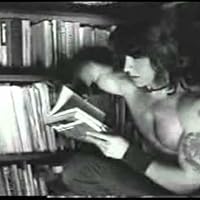
There's a moment early in "Get in the Van" where Henry Rollins recalls listening to Black Flag as a fan and both loving and hating the music. Loving it because it was urgent, energetic and evocative of his own pent-up feelings of alienation and boredom. Hating it because, reflexively, the band's very do-it-yourself existence combined with the music to show the young Rollins what he was not - free and self-realized.
What follows is Rollins' account, almost all of it pulled from his own journals, of what happened when he became the vocalist for the band that he both loved and hated. And perhaps appropriately, I left the whole things feeling satisfied and sad.
The satisfaction comes from the fact that this is a damn good read, and, in a rare instance, an even better experience as an audiobook. Yep, the Grammy Rollins earned for his narration was well-deserved, as the book comes through the speakers like Rollins' best moments as a vocalist and spoken-word artist - intense, hyper-introspective, standoffish and funny.
The sadness? Probably like a lot of readers in their 30s and beyond, I picked this up in the spirit of re-visiting something. Black Flag had long since broken up when I heard my first punk record and immediately felt I was being spoken to directly. But just as I embraced the bands I was exposed to in the 90s, I wanted to hear their influences and their influences influences. That led me to the early moments of American hardcore punk, bands like Minor Threat and, of course, Black Flag. And I loved them just as much, if not more, than the generation of bands that came after.
Like a lot of 31-year old former punkers, I've moved on musically and intellectually. Despite a steadfast love for Bad Religion (still my favorite band,) I only occasionally dust off my old CDs. I think everyone goes through brief spurts of musical nostalgia.
Yet, like I said, I was hit by sadness midway through "Get in the Van." Because going through the (mis)adventures of Rollins and Black Flag - constant poverty, broken-down vans, sleeping on floors, infighting, dustups with skinheads - I could only think "Christ, that sounds miserable."
But Rollins isn't writing about misery. He's writing of the joy of the music and how it superseded all else at that time in his life. And that was when "Christ, that sounds miserable" turned into "Christ, I've gotten old." Because Rollins is talking about a moment in life most of us are thrilled to have behind us - the early 20s, where most of us were embarrassingly passionate and/or embarrassingly poor. I realized that while I was hopefully done with poverty, I was almost assuredly done with that kind of passion. And that made me sad.
That's the crux of "Get in the Van." Rollins, 20 years old and miserable despite a "straight job" that gave him money in the bank, embraced the desperation of traveling and playing in Black Flag in a way an adult couldn't embrace. There are numerous ways Rollins shows this desperation - the band's roadie advises him that dog food and white bread is a great cure for hunger, so long as you get it down before tasting it - but there are just as many mentions of the other side. Often, a story of some degrading moment is ended with "but we got to play."
In fact, that may be the only fault of "Get in the Van." It commits the ultimate punk rock sin - it lags. Rollins seems especially intent on describing the band's routine misfortune on its European tours. All the stories of being put down by terrible bands or being attacked by anti-American skinheads or getting no response from too-cool-for-school English audiences...all of it blends together into a narrative that could easily be half as long.
The real thorn in Rollins' paw is Rollins, and it makes for the best part of the book. Through Rollins' own words, we see a wide-eyed kid living the dream of singing in his favorite band turn into an alienated, surly, inward-driven young man. Is it the solitude of the road between gigs? The violent conflicts with skinheads? The lack of food, money and shelter? The creative tug-of-war between Rollins and bandmate/foil Greg Ginn? Yes.
It's a bit hard, really, to pick at the flaws of a book considering most of the words written were never intended to become a book. It would have been better, narrative-wise, to have less regarding the drag that is Bavarian touring and more on Ginn, the yin to Rollins' yang both musically and in regards to worldview. It would have been better to have had a less-abrupt end, or at the very least something insightful from the young Rollins to show a transition from his inner conflict.
We don't get that, though. "Get in the Van" is jumbled, imperfect and unbalanced. LIke any satisfying punk song.