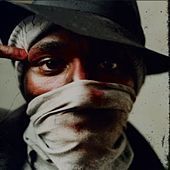
Already a celebrated performance artist, vocalist, poet, playwright, and visionary, Carl Hancock Rux now presents a brilliant debut novel--a profound and lyrical portrait of urban life that will take its place among the classics of American literature. Racine is a reserved young man, but his passion for music lights him up inside. He's just returned from Paris where he'd been invited by a friend to produce music, make recordings, and earn a living. The plan didn't quite pan out, and now he's back in New York, where fate, providence, or just plain chance leads him to a once-glorious brownstone turned into a squat by a few eccentric loners.
There's Manny, who wears sarongs and glitter but has no trouble attracting beautiful women, and Couchette, a gorgeous second-generation dancer whose mother has gone to Bali to live and bear a child with a man who built her a house in the midst of a rice paddy. What binds the characters is a deep sense of loss. Each is--like the city they live in--wounded and seeking healing and connection with and through the other housemates.
Rux's poetic fiction blurs the lines between characters' dreams, memory, and reality. Asphalt--the name representing the essence of the city and the hard, layered, yet vulnerable sensibility of its inhabitants--is part post-modern parable, part urban mythology, and altogether relevant to contemporary reality. Asphalt is daring and unforgettable, marking the arrival of an original and astounding new voice in American literature.
A dazzling, impressionistic riff on apocalypse and rebirth in New York City, ASPHALT charts the story of Racine, a young DJ picking up the pieces of a shattered life amidst a post-apocalyptic Brooklyn cityscape. After a musical career in Paris unravels before it begins, Racine,who is at once a prodigal son and wounded wanderer, returns to a home he no longer recognizes----New York, a city devastated by an unnamed war and presently in the throes of a massive reconstruction. The streets swarm with military police, building crews and merchants. Each layer of fresh asphalt crushes the city's past underfoot: "Wherever bloodstains had soaked into the gravel, new ground had been laid." Through design or chance, Racine makes his way to a decrepit Brooklyn brownstone, a 19th century relic which has somehow survived the war and the wrecking balls. The crumbling walls still echo with "conversations from forever ago"--conversations which may hold the key to Racine's own, fractured past. The house now doubles as a squatter commune and makeshift speakeasy called the Alibi, where the neighborhood comes to find a groove and get high. Racine moves in as the resident DJ. Laconic and private by nature, he nevertheless begins to open up to the house's eccentric inhabitants. There's Lucinda, an old Santeria priestess, bedridden in her room and Mawepi, her caretaker. Manny, the clandestine (Middle Eastern?) house mascot, smokes ganja, wears sarongs and glitter, and publiclly makes love to women. As secretive about his ethnicity as he is about the dark and dangerous city corridors he occassionally frequents, Manny confounds Racine with his penchant for industrial mu! sic, architecture, and conspiracy theory. Couchette, an erotic dancer who becomes Racine's soul mate and sometimes lover, combines striptease with avant-garde performance art in honor of her mother, who has returned to her native Bali, and her father, a once famed jazz musician who committed suicide in the very house Couchette and Racine now inhabit.
Rux's vision of a shellshocked yet resilient metropolis resonates powerfully in light of recent events. As a new New York rises out of the ashes,these disparate characters are connected by parallel histories of pain and loss, echoing the apocalypse, which has befallen the city as a whole. The concept of collective memory provides the story's nexus. Racine, Couchette, and the city itself all share variations of the same history, a common myth of loss and recovery, remembering and forgetting. In many ways, Couchette and Manny are also Racine's mirrors: like him, they bear deep scars, literal and metaphorical. For both Racine and Couchette, the house is the site of their most painful memories—buried almost to the point of forgetting-- and yet they have been compelled to return, in search of reconciliation. Healing, however--like the city's renewal-- may demand the demolition of the very thing they've constructed to survive in.
The title, ASPHALT, becomes a potent metaphor for the risks and uncertainty of civic and personal reconstruction. As a fresh layer of asphalt paves over the ruins, what gets lost? How do we negotiate the competing demands of past and present? How do we move forward while honoring the past? What does it mean to rebuild? Although ASPHALT was written largely before 9/11, these questions could hardly be more timely.