

What do you think?

Wenken voor jonge letterkundigen
Son los
Consejos a los jóvenes escritores
el libro de cuentas de un prestamista, una guía de inversión literaria: la literatura como producto de mercado, artículo de consumo. Y, en este juego del mercado, el burgués debe estar presente: seducción del burgués, primera premisa. Baudelaire se nos adelanta en el tiempo vislumbrando la entrada del mercado salvaje en la vida marital del libro y el autor.
54 pages, Paperback
First published January 1, 1995
About the author
Charles Baudelaire
1,929 books4,459 followersPublic condemned
Les fleurs du mal
(1857), obscene only volume of French writer, translator, and critic Charles Pierre Baudelaire; expanded in 1861, it exerted an enormous influence over later symbolist and modernist poets.
Reputation of Charles Pierre Baudelaire rests primarily on perhaps the most important literary art collection, published in Europe in the 19th century. Similarly, his early experiment Petits poèmes en prose (1868) ( Little Prose Poems ) most succeeded and innovated of the time.
From financial disaster to prosecution for blasphemy, drama and strife filled life of known Baudelaire with highly controversial and often dark tales of Edgar Allan Poe. Long after his death, his name represents depravity and vice. He seemingly speaks directly to the 20th century civilization.
Reputation of Charles Pierre Baudelaire rests primarily on perhaps the most important literary art collection, published in Europe in the 19th century. Similarly, his early experiment Petits poèmes en prose (1868) ( Little Prose Poems ) most succeeded and innovated of the time.
From financial disaster to prosecution for blasphemy, drama and strife filled life of known Baudelaire with highly controversial and often dark tales of Edgar Allan Poe. Long after his death, his name represents depravity and vice. He seemingly speaks directly to the 20th century civilization.
Ratings & Reviews
Friends & Following
Create a free account to discover what your friends think of this book!
Community Reviews
Displaying 1 - 30 of 30 reviews

December 25, 2017
'Any healthy man can go without food for two days--but not without poetry.'
Isn’t that beautifully said, ladies and gentlemen?
‘Good prose is like a windowpane’, George Orwell wrote, and on the predisposition that tips for aspiring writers emanating from other writers tend to be barely disguised self-instructions, young Baudelaire’s essay Advice to young writers (which can be read here) seems no exception. This comes with the nuance that some of Baudelaire’s precepts are of the self-ironic kind. As most are disgracefully unheeded by himself, this essay transpires a quite sardonic reading experience, from the moment one starts relating some of the patronizing suggestions to Baudelaire’s own life and behaviour. Adding to the fun is the apodictic, haughty tone of the writing, bearing in mind that the essay was published in 1846, a few days before Baudelaire turned 25, having at that moment almost nothing published yet under his real name (however he had already written a great deal of Les Fleurs du mal, to be published about ten years later) – motherly advice from a novice.
Take "Never have any creditors; pretend to have some if you'd like, this is all that I can pass along to you", isn’t that a slightly hilarious advice from someone who will have squandered much of his substantial inheritance at the age of 23, and because of his prodigal dandy lifestyle -expensive clothes, collecting paintings - was eternally on the run to hide from his creditors ? Equally facetious is his invocation writing means daily working as much as inspiration, daily work and inspiration being sisters, while he had great difficulties with work discipline, as he confessed to his mother in a letter from 30 August 1851, comparing himself to Balzac as ‘having nothing in common with him but debts and projects’ : "It must be confessed, man is a most feeble creature, since habit plays so great a part in virtue. I have had the most incredible difficulty in recommencing work. And I ought really to cut out the RE, for I think I have never begun."
Human, all too human, our poet.
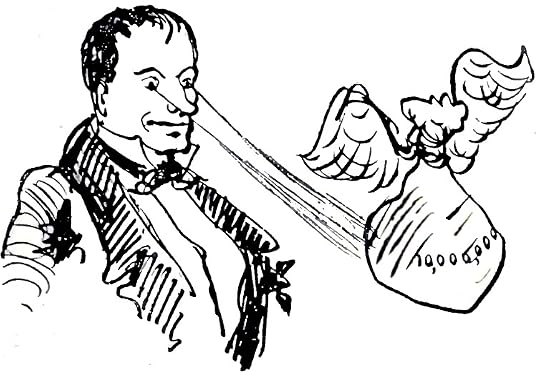
So from these lines surfaces an ironic self-portrait, congruent with some of the caricatures Baudelaire drew of himself, this one illustrating his lifelong, almost obsessive preoccupation with money, already tangible in this early text.
Apart from the precepts aimed at young literati on writing, we get some useful, nice and witty advice on how to live life in general:
“Hatred is a precious liquid, a poison dearer than that of the Borgias – because it is made from our blood, our health, our sleep, and two-thirds of our love – we must be stingy with it.”
To top it off, Baudelaire offers a last warning, concerning which categories of women better to dismiss as lovers and which ones to embrace. To avoid: the honest woman, the actress, the blue-stocking. To embrace - to let the poor fatigued intellectual rest his (evidently, the littérateur is a man) mind and legs, have his well-earned Sunday rest away from literature - the prostitute, or the brainless domestic drudge (l’amour ou le pot-au-feu). Not that such staggering musings sound that astonishing coming from a writer notoriously misogynistic and bile-spewing like Baudelaire, who later called George Sand ‘a latrine’. ‘The only two women to whom Baudelaire accorded some intelligence and whom he respected as a person, not as a commodity for either his physical necessities or his artistic inspiration, seem to have been his mother and his old servant Mariette’. O mommie dearest, what anxiety seems to lurk beneath such misogyny - a fear to be strangled by a blue stocking? Probably much could be said about that aspect of his writing. He wasn’t the only writer in 19th century France with such a view on women, and he undeniably was also venomous towards men – he didn’t seem stingy with his own anger and hate (again disregarding his own precept). Reading this, you might not burble with laughter, but as well grin and bear it.
Isn’t that beautifully said, ladies and gentlemen?
‘Good prose is like a windowpane’, George Orwell wrote, and on the predisposition that tips for aspiring writers emanating from other writers tend to be barely disguised self-instructions, young Baudelaire’s essay Advice to young writers (which can be read here) seems no exception. This comes with the nuance that some of Baudelaire’s precepts are of the self-ironic kind. As most are disgracefully unheeded by himself, this essay transpires a quite sardonic reading experience, from the moment one starts relating some of the patronizing suggestions to Baudelaire’s own life and behaviour. Adding to the fun is the apodictic, haughty tone of the writing, bearing in mind that the essay was published in 1846, a few days before Baudelaire turned 25, having at that moment almost nothing published yet under his real name (however he had already written a great deal of Les Fleurs du mal, to be published about ten years later) – motherly advice from a novice.
Take "Never have any creditors; pretend to have some if you'd like, this is all that I can pass along to you", isn’t that a slightly hilarious advice from someone who will have squandered much of his substantial inheritance at the age of 23, and because of his prodigal dandy lifestyle -expensive clothes, collecting paintings - was eternally on the run to hide from his creditors ? Equally facetious is his invocation writing means daily working as much as inspiration, daily work and inspiration being sisters, while he had great difficulties with work discipline, as he confessed to his mother in a letter from 30 August 1851, comparing himself to Balzac as ‘having nothing in common with him but debts and projects’ : "It must be confessed, man is a most feeble creature, since habit plays so great a part in virtue. I have had the most incredible difficulty in recommencing work. And I ought really to cut out the RE, for I think I have never begun."
Human, all too human, our poet.
So from these lines surfaces an ironic self-portrait, congruent with some of the caricatures Baudelaire drew of himself, this one illustrating his lifelong, almost obsessive preoccupation with money, already tangible in this early text.
Apart from the precepts aimed at young literati on writing, we get some useful, nice and witty advice on how to live life in general:
“Hatred is a precious liquid, a poison dearer than that of the Borgias – because it is made from our blood, our health, our sleep, and two-thirds of our love – we must be stingy with it.”
To top it off, Baudelaire offers a last warning, concerning which categories of women better to dismiss as lovers and which ones to embrace. To avoid: the honest woman, the actress, the blue-stocking. To embrace - to let the poor fatigued intellectual rest his (evidently, the littérateur is a man) mind and legs, have his well-earned Sunday rest away from literature - the prostitute, or the brainless domestic drudge (l’amour ou le pot-au-feu). Not that such staggering musings sound that astonishing coming from a writer notoriously misogynistic and bile-spewing like Baudelaire, who later called George Sand ‘a latrine’. ‘The only two women to whom Baudelaire accorded some intelligence and whom he respected as a person, not as a commodity for either his physical necessities or his artistic inspiration, seem to have been his mother and his old servant Mariette’. O mommie dearest, what anxiety seems to lurk beneath such misogyny - a fear to be strangled by a blue stocking? Probably much could be said about that aspect of his writing. He wasn’t the only writer in 19th century France with such a view on women, and he undeniably was also venomous towards men – he didn’t seem stingy with his own anger and hate (again disregarding his own precept). Reading this, you might not burble with laughter, but as well grin and bear it.

October 13, 2018
Ter gelegenheid van 15 jaar boekhandel Paard van Troje in Gent verschijnt deze Perlouse van uitgeverij Voetnoot uit 2004 opnieuw. Rokus Hofstede herzag zijn vertaling en Henrik Barends maakte 3 versies van de opmaak (ik las versie C). Van elke versie zijn er 111 exemplaren.

August 27, 2019
Ironisch zelfportret van de heraut van de moderne westerse poëzie

April 27, 2015
Era da un paio d’anni che questo libretto giaceva sui miei scaffali. L’avevo comprato al Salone del Libro, attratta dalla copertina elegante color verde muschio, di carta pesante. Mi sono decisa a leggerlo solo adesso e ho scoperto che i saggi, all’interno di questa raccolta, sono tre: “Consigli ai giovani scrittori”, appunto – il più corposo –, “Scelta di massime consolanti sull’amore” e “Come si pagano i debiti quando si ha del genio”. Tutti e tre veloci, tutti e tre apparsi come articoli su vari giornali.
Il mio preferito è anche il più breve, ovvero “Come si pagano i debiti quando si ha del genio”. Il protagonista, lo si capisce da qualche strizzata d’occhio di Baudelaire, è Honoré de Balzac. Quel che fa non ve lo spiego, anche perché sennò vi racconterei tutto.
Il saggio principale, “Consigli ai giovani scrittori”, è carino. ‘Carino’ è uno di quegli aggettivi che non ho mai capito, eppure stavolta non ne trovo un altro per descrivere questo scritto. Pensavo che l’avrei trovato più interessante o stimolante. In realtà “Consigli ai giovani scrittori” è più una bonaria presa in giro ai giovani scrittori: ironico, sornione, conciso. Carino, ecco.
Il mio preferito è anche il più breve, ovvero “Come si pagano i debiti quando si ha del genio”. Il protagonista, lo si capisce da qualche strizzata d’occhio di Baudelaire, è Honoré de Balzac. Quel che fa non ve lo spiego, anche perché sennò vi racconterei tutto.
Il saggio principale, “Consigli ai giovani scrittori”, è carino. ‘Carino’ è uno di quegli aggettivi che non ho mai capito, eppure stavolta non ne trovo un altro per descrivere questo scritto. Pensavo che l’avrei trovato più interessante o stimolante. In realtà “Consigli ai giovani scrittori” è più una bonaria presa in giro ai giovani scrittori: ironico, sornione, conciso. Carino, ecco.

March 6, 2021
Gençlere edebiyat ile ilgili tavsiye verirken konu nasıl metreslere gelebiliyor anlamış değilim.. Yazarın başka kitaplarını bilemiyorum ama bu tam bir zaman kaybı! Yazarın yaşadığı dönemdeki zihniyeti bu mini yazılarına yansıttığı o kadar belli ki.. Ayrıca Sel yayınları kitabın orijinal yayım tarihini de yazmamış bravo! Başka güzel çevirilmeyi bekleyen kitapların yanında bu yazıları (30 sayfalık saçmalamaya kitap demeye dilim varmıyor) çevirmek çok yazık olmuş.

February 21, 2022
Piacevole.
Una lettura discreta dove par proprio di essere al bar a dialogare con Baudelaire su ciò che pensa riguardo vari aspetti della scrittura.
Breve, ma una mezz'ora gradita.
Una lettura discreta dove par proprio di essere al bar a dialogare con Baudelaire su ciò che pensa riguardo vari aspetti della scrittura.
Breve, ma una mezz'ora gradita.

September 16, 2021
Mientras lo leía pensaba que me hubiera gustado encontrarme estos consejos mucho antes. Igual y nada más lo digo como pretexto, pero en ese entonces pensaba que el oficio era esperar sentado el arrebato de inspiración, no cuestión de sacrificio, de rutina y, como también dice Baudelaire al principio del librito, de suerte.
Si me topaba antes con estas palabras, que le quitan el romanticismo a la profesión y se dirigen a ella como lo que es, un trabajo, igual y me hubiera levantado.
Sea como sea, no dejan de ser consejos valiosos que pueden ser útiles en cualquier momento.
El consejo sobre las queridas puede ignorarse completamente. Es el único que no aporta nada. xd
Si me topaba antes con estas palabras, que le quitan el romanticismo a la profesión y se dirigen a ella como lo que es, un trabajo, igual y me hubiera levantado.
Sea como sea, no dejan de ser consejos valiosos que pueden ser útiles en cualquier momento.
El consejo sobre las queridas puede ignorarse completamente. Es el único que no aporta nada. xd

February 25, 2026
Baudelaire ismine kanıp okumayın. Sadece yirmi sekiz sayfacık, minik bir kitapçık. Ne yazık ki, başlığının vaat ettiğini okuyucusuna veremiyor.
January 31, 2015
El arte que satisface la necesidad más imperiosa será siempre el más honrado.
Ha sido de mis lecturas más nutritivas de este año porque como literata o intento de este me llamó y no me arrepiento de nada porque ahora tengo la necesidad de imprimir pequeños folletos con esta maravilla y regalarlos en cada esquina del mundo.
Ha sido de mis lecturas más nutritivas de este año porque como literata o intento de este me llamó y no me arrepiento de nada porque ahora tengo la necesidad de imprimir pequeños folletos con esta maravilla y regalarlos en cada esquina del mundo.

December 27, 2019
Gidemde ahmak kız bulam.
March 3, 2022
Un hombre acongojado por sus vicios y sus heridas mentales, en mi opinión, las almas rotas son las que supuran con mejor claridad y elocuencia la locura y la esencia humanas.
Aunque estoy en desacuerdo con muchos de sus consejos, empezando por aquellos referentes a las amantes, donde las mujeres figuran únicamente como placenteras compañeras del hombre y éste como el único capaz de ser escritor y literato; comprendo el contexto histórico en que se sitúa su pensamiento y me compadezco de su condición enferma y melancólica.
A pesar de que mi primera impresión fue una molestia tajante, por encontrarme reacia a su machismo, encuentro ofensiva la critica inicial que abre el texto escrita por Alfonso Salazar, el también traductor de la obra.
Quien juzga al escritor por muchas cosas, de entrada, incluso antes de permitirle al lector darle una vista al contenido; por ejemplo por la edad en que decide escribir su 'vademecum de consejos' tildándolo de incompetente y en mi opinión sus ideas, no todas por supuesto, tienen un fundamento de experiencias adolescentes y pueriles como bien describe Baudelaire, que podrían ser útiles para otro escritor que, en su época, estuvo seducido por las drogas, las prostitutas y las enfermedades.
Sé que la critica del traductor es dura porque en el siglo XVIII Baudelaire estaba trasgrediendo toda estructura moral y ofreciendo al futuro escritor el camino 'fácil’ de gustar al burgués consumidor de su obra. Pero precisamente ésa puerta poética a una realidad cruda y enferma, que era tabú, es lo que lo posiciona hoy, más de 200 años después, como padre de la poesía moderna.
El ensayo es una invitación clara a crear sin los límites culturales, morales y filosóficos del momento, sin dejar de lado la disciplina del arte como oficio, pero con libertad absoluta, en pro de que lleguen los favores económicos pero sin que ese aspecto de la vida altere, finalmente, la obra.
Aunque estoy en desacuerdo con muchos de sus consejos, empezando por aquellos referentes a las amantes, donde las mujeres figuran únicamente como placenteras compañeras del hombre y éste como el único capaz de ser escritor y literato; comprendo el contexto histórico en que se sitúa su pensamiento y me compadezco de su condición enferma y melancólica.
A pesar de que mi primera impresión fue una molestia tajante, por encontrarme reacia a su machismo, encuentro ofensiva la critica inicial que abre el texto escrita por Alfonso Salazar, el también traductor de la obra.
Quien juzga al escritor por muchas cosas, de entrada, incluso antes de permitirle al lector darle una vista al contenido; por ejemplo por la edad en que decide escribir su 'vademecum de consejos' tildándolo de incompetente y en mi opinión sus ideas, no todas por supuesto, tienen un fundamento de experiencias adolescentes y pueriles como bien describe Baudelaire, que podrían ser útiles para otro escritor que, en su época, estuvo seducido por las drogas, las prostitutas y las enfermedades.
Sé que la critica del traductor es dura porque en el siglo XVIII Baudelaire estaba trasgrediendo toda estructura moral y ofreciendo al futuro escritor el camino 'fácil’ de gustar al burgués consumidor de su obra. Pero precisamente ésa puerta poética a una realidad cruda y enferma, que era tabú, es lo que lo posiciona hoy, más de 200 años después, como padre de la poesía moderna.
El ensayo es una invitación clara a crear sin los límites culturales, morales y filosóficos del momento, sin dejar de lado la disciplina del arte como oficio, pero con libertad absoluta, en pro de que lleguen los favores económicos pero sin que ese aspecto de la vida altere, finalmente, la obra.

July 18, 2023
Citaat : Een mislukte poging om iemand af te kraken is een jammerlijk incident. Het is een pijl die als een boemerang terugkeert of op zijn minst je hand ontvelt wanneer hij wegschiet, een kogel die terugkaatst en je dodelijk kan treffen.
Review : Wenken voor jonge letterkundigen is een essay, want meer kan je het echt niet noemen voor de aankomende schrijver en/of recensent. Het bevat behartenswaardige opmerkingen over geluk en pech bij het debuteren, over het afkraken van tegenstanders, over de methoden om een werk op te zetten, over dagelijkse arbeid en inspiratie. Erg vrouwvriendelijk is de tekst zeker niet. De vrouw als letterkundige is voor hem verschillende bruggen te ver en hij geeft zijn schrijvende broeders dan ook alleen tips over vrouwen die voor de letterkundige (man uiteraard) een bedreiging vormen en welke een steun en toeverlaat zijn.
Deze wenken geven een ironisch zelfportret van de kunstenaar als jonge man, een kunstenaar die met Les Fleurs du mal in 1857 een literair werk afleverde dat hem in de galerij der groten plaatste. Als kennismaking met het werk van de maestro zijn deze wenken best aan te bevelen. Conseils aux jeunes littérateurs is weer een kleinood uit de reeks Perlouses, met korte verhalen, novellen en essays, die de Nederlandstalige lezer een (hernieuwde) kennismaking met bekende en minder bekende grootheden uit de Franse literatuur biedt. Elke vertaling gaat in principe vergezeld van een kort nawoord, in dit geval Rokus Hofstede, waarin auteur en tekst in hun tijd worden geplaatst.
Review : Wenken voor jonge letterkundigen is een essay, want meer kan je het echt niet noemen voor de aankomende schrijver en/of recensent. Het bevat behartenswaardige opmerkingen over geluk en pech bij het debuteren, over het afkraken van tegenstanders, over de methoden om een werk op te zetten, over dagelijkse arbeid en inspiratie. Erg vrouwvriendelijk is de tekst zeker niet. De vrouw als letterkundige is voor hem verschillende bruggen te ver en hij geeft zijn schrijvende broeders dan ook alleen tips over vrouwen die voor de letterkundige (man uiteraard) een bedreiging vormen en welke een steun en toeverlaat zijn.
Deze wenken geven een ironisch zelfportret van de kunstenaar als jonge man, een kunstenaar die met Les Fleurs du mal in 1857 een literair werk afleverde dat hem in de galerij der groten plaatste. Als kennismaking met het werk van de maestro zijn deze wenken best aan te bevelen. Conseils aux jeunes littérateurs is weer een kleinood uit de reeks Perlouses, met korte verhalen, novellen en essays, die de Nederlandstalige lezer een (hernieuwde) kennismaking met bekende en minder bekende grootheden uit de Franse literatuur biedt. Elke vertaling gaat in principe vergezeld van een kort nawoord, in dit geval Rokus Hofstede, waarin auteur en tekst in hun tijd worden geplaatst.

March 14, 2024
3/5
A ver qué sí, que Baudelaire era un egocentrista bien cabrón eso no lo voy a negar, pero hay que ser sincero en qué se saca uno que otro consejillo que sí puede ser aplicado a los ámbitos de creación (en general de contenidos, no solamente literatura). El hecho de que tuviera 25 años cuando escribió esto pero el vato intentaba desenvolverse en un mundo que de por sí ha sido cerrado a las élites no solamente económicas sino intelectuales.
En fin, segunda lectura del año y espero seguir avanzando aunque sea poco a poco. Gracias por leer.
A ver qué sí, que Baudelaire era un egocentrista bien cabrón eso no lo voy a negar, pero hay que ser sincero en qué se saca uno que otro consejillo que sí puede ser aplicado a los ámbitos de creación (en general de contenidos, no solamente literatura). El hecho de que tuviera 25 años cuando escribió esto pero el vato intentaba desenvolverse en un mundo que de por sí ha sido cerrado a las élites no solamente económicas sino intelectuales.
En fin, segunda lectura del año y espero seguir avanzando aunque sea poco a poco. Gracias por leer.

January 21, 2026
Büyük beklentilerle elime almıştım. Aslında güzel de başlıyor, minicik bir kitaptan maksimum verim alacağınızı düşündürüyor. Sonra aniden konu kadınlara, metreslere geliyor. Belki de ben anlamamışımdır alakayı ama yazarın kimseye tavsiye verme niyeti yok gibi, sadece kendi iç dünyasını sayfalara dökmüş. Beklentilerimi maalesef karşılamadı.
January 1, 2020
"Gerçekten de nefret değerli bir içkidir, Borgia'nınkinden daha kıymetli bir zehirdir, çünkü o bizim kanımızdan, bizim kirimizden, uykumuzdan, aşkımızın üçte ikisinden yapılmadır! Nefrette cimri olunmalı."

November 30, 2021
Yani o kadar kısa ve yüzeysel ki. Sanki sadece birkaç satır karalamis da kitap diye sunmuslar gibi. Bazı düşünceleri ile de pek uyusamadim. Yani bu eser tavsiyeler mi yoksa tavsiye olsun torba dolsun içerikli bir kitap mı pek anlam veremedim. Yine de 15 dakikanizi ayırıp okuyabilirsiniz.

December 26, 2017
Indispensable!

May 24, 2018
hayatımdan 10 dakika çaldı

May 11, 2021
Okunmasa da olur.

September 26, 2022
Está ok. Nada del otro mundo. Aunque es bien material para principiantes en este tipo de textos.

April 6, 2023
De jonge Charles had wel een beetje gevoel voor humor.

Read
December 29, 2023Kitap küçücük, miniminnacik 10 dakikada biten bir kitap.
İçinden birkaç tavsiye almak isterseniz okuyabilirsiniz.
5'li set halinde aldığım setin içindeki kitaplardan biri.
İçinden birkaç tavsiye almak isterseniz okuyabilirsiniz.
5'li set halinde aldığım setin içindeki kitaplardan biri.
February 25, 2026
Bunun kitap olarak basılıp satılması üzücü. 10 dakikada okunan kıraathane sohbeti.

June 19, 2026
“The bluestocking, because she is a grown-up tomboy”???
lmfao the take of all time
lmfao the take of all time
July 23, 2018
Dans un rapport fraternel dans la lignée de l’époque, Baudelaire offre quelques conseils trop génériques pour être véritablement utiles aux « jeunes littérateurs ». Malgré tout, le texte contient quelques réflexions intéressantes et permet d’en savoir plus sur la façon dont l’auteur envisage l’écriture. Sinon, je passerai rapidement sur le sexisme tout à fait vulgaire de Baudelaire (pour lequel il est reconnu), notamment dans la section « Des maîtresses ».
Pour ceux qui seraient intéressés, je m’attarde plus longuement à ce texte dans mon analyse « Le "jeune littéraire" dans Lettres à un jeune poète de Rainer Maria Rilke et Conseils aux jeunes littérateurs de Charles Baudelaire » sur lilitherature.com.
Pour ceux qui seraient intéressés, je m’attarde plus longuement à ce texte dans mon analyse « Le "jeune littéraire" dans Lettres à un jeune poète de Rainer Maria Rilke et Conseils aux jeunes littérateurs de Charles Baudelaire » sur lilitherature.com.

January 26, 2012
Il ne s'agit pas là d'un chef d'oeuvre de la littérature, mais d'une lettre ouverte aux générations futures. Une trentaine de pages et une description du métier d'auteur par un jeune Charles Baudelaire de 25 ans, déjà très critique à l'égard du monde littéraire et artistique en général. Intéressant, mais décourageant pour qui voudrait se lancer dans l'écriture !!

Read
July 1, 2022Un point de vue intéressant autour du métier de "littérateur" (surtout les points I, II, III, VI), miné par une petite pincée d'égo -plus amusante que gênante toutefois- mais malheureusement et surtout par une grosse cuillère de misogynie hors sujet (IX)
Read
May 8, 2015"Alacaklılardan nasıl kurtulabiliriz?" bölümünün boş sayfa olması eğlendirici olmuş.
This entire review has been hidden because of spoilers.

February 3, 2020
Nunca sobran los consejos a los escritores, siempre serán bien recibidos.
Displaying 1 - 30 of 30 reviews