Helen Beatrix Potter was an English author, illustrator, mycologist, and conservationist who is best known for her children's books, which featured animal characters such as Peter Rabbit.
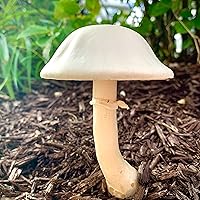
Born into a wealthy household, Potter was educated by governesses and grew up isolated from other children. She had numerous pets, and through holidays in Scotland and the Lake District, developed a love of landscape, flora, and fauna, all of which she closely observed and painted. Because she was a woman, her parents discouraged intellectual development, but her study and paintings of fungi led her to be widely respected in the field of mycology.
In her thirties, Potter published the highly successful children's book The Tale of Peter Rabbit and became secretly engaged to her publisher, Norman Warne, causing a breach with her parents, who disapproved of his social status. Warne died before the wedding.
Potter eventually published 24 children's books, the most recent being The Tale of Kitty-in-Boots (2016), and having become financially independent of her parents, was able to buy a farm in the Lake District, which she extended with other purchases over time.
In her forties, she married a local solicitor, William Heelis. She became a sheep breeder and farmer while continuing to write and illustrate children's books. Potter died in 1943 and left almost all of her property to The National Trust in order to preserve the beauty of the Lake District as she had known it, protecting it from developers.
Potter's books continue to sell well throughout the world, in multiple languages. Her stories have been retold in various formats, including a ballet, films, and in animation.
Sweet! Here´s my newyear´s tradition continued, first book of the year is a Beatrix Potter. This time it´s the tale of grey squirrel Timmy Tiptoes, his wife Goody and and a little chipmunk. Here´s some background info: Beatrix Potter loved the countryside and she spent much of her Victorian childhood drawing and studying animals. Her passion for the natural world lay behind the creation of her famous series of little books. A particular source of inspiration was the English Lake District where she lived as a farmer and land conservationalist. In 1911 Potter was preparing The Tale of Timmy Tiptoes, which was aimed to appeal to her many American fans, featuring animals of American origin, squirrels, chipmunks and a black bear. Cute and gorgeous drawings. Lovely start of the year once again with Beatrix Potter!
My kid's grandma bought us a 12 book set of the original Beatrix Potter books. I'll be reviewing them at random and out of order.
Okay, I'm not sure if this one is actually a good book for kids, but it might be my favorite of the 12 we have.
There's a crappy little world of squirrels who misunderstand each other and forget where they put their nuts, and some weird birds who yell phrases at each other that cause a lot of confusion ("Who's been digging up my nuts?"). While Timmy Tiptoes and "his wife Goody" are getting ready for winter, Timmy gets his ass kicked by some other squirrels and thrown down a hole into a hollow tree. There, he meets a chipmunk named Chippy Hackee. They hang out together eating nuts and singing drinking songs and decide not to go back to their wives until the tree blows up and a bear shows up and they finally have to call it.
I like that nobody gets permanently traumatized in this one. There's always some surprisingly harsh physical violence in these Beatrice Potter books, but at least Timmy recovers fast enough and then has fun with his new bro Chippy Hackee. It might have been better if Squirrel Nutkin showed up in a better place in his life (like how Peter's recovery is at the center of Benjamin Bunny's book, which I'll get to some other time).
One thing that's starting to really bug me about these books is how much Beatrix Potter overuses the word "fat." She never means it in a nice way. Any animal described as fat is constantly getting in trouble for being fat. Cut it out with the fat shaming, Potter.
The Jetsons-ish level of sexism aside (his wife Goody), I find this chaotic squirrel world kind of charming.
An intricate tale meant to show us how frequently those with fascist tendencies are simplistic and illiterate. In this version they are dunderhead squirrel gangs, bent on violence, who misunderstand innocent passing birdsong for meaningful messages sent to them. I suppose like men who believe God is speaking directly in their ear?
A better angel in this tale, however, includes a character who has a brief, but meaningful, gay (and cross-species) affair, but eventually returns to his spouse. The object of his diversion, a dissolute and abusive chipmunk, goes on to encounter a bear, representing something that can kick his ass, I guess.
Thus we are reminded to carefully steward our nuts. Well struck, Beatrix.
Some critics consider The Tale of Timmy Tiptoes one of Beatrix Potter's lesser tales, a slapdash attempt to appease publishers with a Tale about North American wildlife. The plot may be a bit thin, but the real problem with The Tale of Timmy Tiptoes is little Chippy Hackee.
Chippy Hackee is a chipmunk who has run away from his wife and home to hang out in a hollow tree eating Timmy and Goody Tiptoes' stash of nuts. When a gang of squirrels push Timmy Tiptoes through the hole, Chippy is delighted to have an enabler for company, and he eagerly coaxes Timmy to eat so many nuts he becomes too fat to exit the tree. They sit around eating more nuts and singing the nursery equivalent of barroom ballads. Timmy's distraught little squirrel wife asks Mrs. Chippy Hackee to climb through the hole, but she demurs because "My husband, Chippy Hackee, bites!" Of course he does. He's a villainous little sot of a wife-biter.
Potter's idea of justice is to give him a bad cold and send a large bear to scare him back to his wife. Mrs. Chippy Hackee tends to him, of course.
I wonder how unsettled Potter intends us to be? I'm sure wife-biting is all very typical for nineteenth-century anthropomorphic rodents, and Potter seems more concerned with Chippy returning to his home than his behavior once he gets there. Still, on the final page we see the chipmunks warding off a taunting bird. Mrs. Chippee Hackee holds a pitiful broken umbrella, and I can't help but think we're still meant to feel sympathetic towards her, in spite of the "resolution" of Chippy's return.
Anyway, what a strange little child-size allegory of alcoholism! Potter must not have had a very good opinion of Americans.
Another lovely story from Beatrix Potter. This one is about a squirrel Timmy Tiptoes, who – with his wife Goody – is gathering nuts to prepare for winter, hiding them in trees. Timmy is set upon by other squirrels who think he has stolen their nuts (untrue), and they throw him down a hole in a tree. Luckily, it happens to be a tree that Timmy had used for nut storage. There is a chipmunk, Chippy Hackee, inside who looks after Timmy and they both get fat on the nuts. While looking for Timmy, Goody comes across Chippy’s wife, and together they search for their missing husbands. When they are found, Timmy is too fat to get out of the tree trunk. Eventually, high winds blow the top of the tree and Timmy is able to go home to Goody. Chippy has a few more days of ‘freedom’ away from his wife, but in the end is chased home by a bear. Morals of the story (intended or otherwise): 1) unfounded rumours can be devastating to the person named – i.e. don’t listen to little birds chattering. 2) There will always be someone jealous of your success through hard work, i.e. the other squirrels. 3) Some men make feckless husbands (Chippy, I am looking at you!), though may still be good friends to other males I love the main character’s name. When my younger brother, Timothy, was a child he used to walk around on tiptoes, so Mum nicknamed him Timmy Tiptoes. Again, wonderful colour illustrations, though Timmy is depicted as a grey squirrel rather than the native red.
"That Tale of Timmy Tiptoes" interestingly does not specify any of its characters to be children. The central characters are in fact two married couples. Yet what transpires would not be out of place happening to Peter Rabbit or Squirrel Nutkin. Furthermore still the plot does not have that sense of scheming as in Beatrix Potter's more popular tale but instead a remarkably realistic sense of spontaneity.
In short what we have here is not a story about children devising their childish plays but rather grown-ups on a little section of the coaster of life seen through the lens of children's literature. So viewed grown-up life is really at least as immature as childish life. Gently conveying this little piece of profundity can only be done in children's literature. Beatrix Potter accomplished this in "Timmy Tiptoe" with her usual elegant artistic economy.
Beatrix wrote this for a more worldly population. This was dedicated to an American girl and it is about a grey school, which they came from America. The artwork is most stunning in this story. The kids loved this one and so did I. The squirrels gathering nuts get into some troubles. A fun story. This is a good place to start after Peter Rabbit.
Definitely a weird one, but quite funny. A husband who runs away from his wife and also bites her! He then practically kidnaps the star of the story. Very nice illustrations, too.
This is about squirrels and chipmunks saving up nuts for the winter. On one level, the plot about what happens to the squirrel, it feels blandly generic. There is, however, an amusing comment on marriage in the reaction of Timmy and wife, Goody, to the events. Potter's is a very pragmatic view of marriage, is what I'm saying.
A wonderful tale of whimsy with great drawings througout the story. Beatrix wrote this for a more worldly population. Definitely a weird one, but quite funny.
Timmy Tiptoes a squirrel is working hard along with his wife to hoard food for the approaching winter.
I was not aware that squirrels dig holes in the ground to hide their winter hoards and then they have difficulty finding the same spot. I always felt that when it concerns food and survival almost all animals are more evolved then men.
Anyway, Timmy Tiptoes meets Chippy Hackee 'The Chipmunk' in very unusual circumstances and he is forced to live along with him because they have got themselves stuck in a hole.
Now thinking hard about the lesson this one wanted to convey I can't think of any. Maybe it is that the kids should start saving their supply of candies for the bad times of no candies. If this is the lesson, it's indeed precious !
It’s another Beatrix Potters awesome Characters. Illustrations are wonderful. I felt the story is bit complex and confusing this time. But I love her illustrations amazing as always.
Another quaint story from Beatrix Potter's universe of antropomorphic animals. This time it is about dilligent, but also forgetful squirrels, who all are stashing nuts for the winter. The plot is very thin, as it mostly revolves around Timmy Tiptoe's small adventure of being chased by the other squirrels, only to end up in a woodpecker's hollow, where a chipmunk, who doesn't want to go home to his wife resides. Needless to say Timmy Tiptoe's wife searches for him and he returns home, pretty uneventful. The is with the chipmunk, although his stubborness gave him a cold, as he returns home.
The squirrels Timmy and Goody Tiptoes gather nuts daily, until Timmy is briefly separated from Goody and he reluctantly lives with the chipmunk Chippy Hackee (who is avoiding his own wife deliberately) in the abandoned hollow tree where the Tiptoes store their nuts. Equally interesting is the mystery of why Chippy Hackee avoids his wife. Readers sensitive to depictions of mob violence might want to avoid this tale. Readers seeking a comparative tale about young adult relationships might be amused.
Another cute cosy book with the cutest illustrations especially when Timmy was all swaddled like a fat baby squirrel <3 ... Why was the chipmunk lowkey evil, acting like the Gingerbread Witch in Hansel and Gretel fattening him up for company... or malicious intent... nuts. GOODY TIPTOES YOU CUTIE I love that the wives teamed up yes ladiessss!! Evil other squirrels tho and that bird bothered me profusely 3
Squirrel lynch mob was wild Poor Timmy tiptoes, this one took a long time to finish as B was upset poor Timmy was getting attacked when he was innocent
I read this one with my toddler and I really enjoyed it because we could still see squirrels outside preparing for the winter and it made the story all the more compelling!
Having spent a little of my childhood in England and Scotland, I have a soft spot for squirrels. The red ones. Not so grey squirrels; observing their frenetic antics in Washington, DC, I decided that they were creepy little critters, a thought confirmed by this tale. As Beatrix Potter's following grew, she picked up fans in America and this book was a concession to them, featuring the aforementioned critters, chipmunks and even a black bear. An allegory about bullying, isolation and being a free spirit.