Jump to ratings and reviews
Rate this book

Elspeth Huxley's Childhood Memoirs #1

The Flame Trees of Thika: Memories of an African Childhood

Rate this book
[Elspeth] Huxley was a child of six when she trekked out with her gallant mother in an ox cart to join her charming but improvident father in the wild Kikuyu country of Kenya. Through her young eyes we become participants in a family's pioneer existence and share their indomitable spirit. The young couple built their house of grass, cleared the virgin land, and began the planting that they hoped would turn their home into a thriving coffee plantation. They came to know and love the world of farm and bush, with its rich abundance of tame and wild life, its hauntingly lovely scenery, its big-game thrills. Beyond that, they grew to an understanding of the vivid, lively and unsophisticated world of the native, with its witchcraft and sudden death, its charms and spirits. They also became an integral part of the small community of settlers who were their neighbors in the all-but-untouched an Edinburgh nurse, married to an absentee elephant poacher; a tough Boer farmer who had walked his way alone from South Africa; the lovely, vivacious Lettice, her stiff ex-cavalry husband, the handsome romantic adventurer - all authentic individuals in their own right, whose private lives spring into high relief in this absorbing and beautiful book.

281 pages, Paperback

First published January 1, 1959

223 people are currently reading
7863 people want to read

About the author

Elspeth Huxley

71 books71 followers
Elspeth Joscelin Huxley was an English writer, journalist, broadcaster, magistrate, environmentalist, farmer, and government adviser. She wrote over 40 books, including her best-known lyrical books, The Flame Trees of Thika and The Mottled Lizard, based on her youth in a coffee farm in British Kenya. Her husband, Gervas Huxley, was a grandson of Thomas Henry Huxley and a cousin of Aldous Huxley.

Ratings & Reviews

What do you think?
Rate this book

Friends & Following

Create a free account to discover what your friends think of this book!

Community Reviews

5 stars
2,392 (39%)
4 stars
2,322 (38%)
3 stars
1,094 (17%)
2 stars
207 (3%)
1 star
78 (1%)
Displaying 1 - 30 of 344 reviews
Profile Image for Peter Tillman.
4,039 reviews476 followers
May 9, 2022
Great stuff. Her memoir is from the early years of the Kenya colony — her parents’ new farm was one of the first established in that area, and the hinterlands were still pretty much as they were before the Europeans arrived. As others have said, the highlight of the book is the flavor of the East Africa of a century ago: sights, sounds, smells, animals, people. She was a wonderful writer. Not to be missed, if you are interested in East Africa, or this era. The cover photo on the 2000 Penguin reprint, of the author, her Mom, and her pony around 1915, is a fine preview of her story.

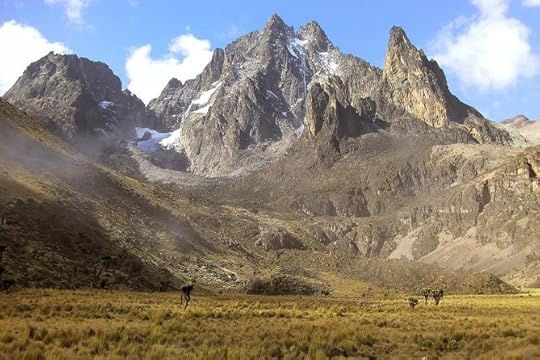
This is very nice country indeed. My parents lived in Kenya in the early 1970s. Their house was at 7000 ft., almost on the equator, so a near-perfect year-round climate. They had a view of Kilimanjaro from their front windows, and of Mt. Kenya from the back. This was an old British agricultural research station. You could see why the Brits didn’t want to give up their colony!

Elspeth arrived in Kenya in late 1913 at age 6 1/2. She went back to England with her mother in (I think) 1915 or early 1916, after the beginning of WW1. She returned with her parents after the War, and left Kenya for good in 1925 to go to college in England. https://en.wikipedia.org/wiki/Elspeth...

I’m pretty sure her memoirs are fictionalized to a degree — I don’t doubt she remembered the highlights, and perhaps her parents and/or neighbors kept diaries or journals — but her account of (e.g.) her neighbor Lettice carrying on an affair with a gallant young colonial would have been beyond the comprehension of a 7 year old girl, I think. She did become a well-regarded novelist.

I first read the book in the late 1970s, and it’s stuck with me. I’m reading a battered library copy of the 1959 first American edition, which arrived a few days before the libraries closed for the coronavirus emergency.

Thika is now an industrial town of about 280,000 on the outskirts of Nairobi, served by an 8-lane superhighway, and the rest of the country has changed drastically too. Fortunately, Kenya has protected substantial areas of the country as National Parks and Preserves, some of which I’m familiar with from when my parents lived there. I haven’t been back, though I’ve long intended to.
Profile Image for Ferris.
1,505 reviews23 followers
February 9, 2009
"The Flame Trees of Thika: Memories of an African Childhood" by Elspeth Huxley, is an absolutely lovely recollection of childhood as it should be for every child. The daughter of two financially strapped, adventurous, and eternally optimistic parents, Elspeth recounts life in Thika in the bush of Kenya, where she spent her youth amongst the Kikuyu and Masai. She lived with nature, with superstitions, with death and love, and certainly writes about it all with great equanimity. She is able to capture the way a child hovers around the fringe of certain events, yet seems to understand events with a certain unique wisdom. It is a wonderful book. The writing is excellent, the story actually quite amazing, and the people are fascinating, one and all. Read it!
Profile Image for Margitte.
1,188 reviews667 followers
May 10, 2022
There are so many novels, memoirs, non-fiction, and travelogues about Africa, that a separate book-hub, such as GR, can be established for this wondrous continent itself.

In 1958, at the age of 51, Elspeth Huxley wrote her memoirs of her life as a child in Africa. She was born in July, 1907 and arrived in Kenya in 1913, where her parents, Major Josceline and Nellie Grant already established themselves on a small farm near Thika. For some or other reason they were named Robert and Tilly in the book. There was optimism and dreams-which kept them trying forever more, battling the wild with little money, even less experience, and mountains of challenges to overcome. To reach their land, and then build a house out of nothing, was the first one. Her dad as the perpetual optimist: delving for diamonds in Mozambique, gold in Peru, oil wells in Turkey. His old nanny said he was born with a hole in his pocket. Still, his next endeavour was a coffee farm in Kenya.

Compared to books such as Travels Into The Interior of Africa by Mungo Park (two journeys in 1795 and 1805), or even Travels in West Africa by Mary H. Kingsley, (1897) , and add more context with Thomas Pakenham's historical writings in his ginormous book The Scramble for Africa: The White Man's Conquest of the Dark Continent from 1876 to 1912 (1991) , and Elspeth's story becomes light and fluffy in comparison.

However beautiful, atmospheric, poetic, or lyrical her memories were, folks like her, were the colonialists who later would become the target of Doris Lessing's wrath in her writings about the British colonialists in Africa. Her book African Laughter: Four Visits to Zimbabwe (1994), made mincemeat out of Lessing's fellow Brits.

Huxley was a young girl of 6 years old, with little or no knowledge of the geopolitics which were rendered all around her. Huxley chose to ignore it all in this memoir, and shared her memories of her life as a little girl on her father's coffee farm with her pony Moyale, her tortoise Mohammed, the chameleons, George and Mary, and the spaniel, Bancroft. In the typical British superiority mindset, other nations were way beyond their social standing, and fellow Europeans, which already firmly established themselves all over Africa as per the scramble did not make it into her hall of admiration. Some of those neighbors already arrived during the 1600s and had quite a different story to tell as the nouveau arrivals in the early 1900s from Britain, like Elspeth's circle of Brits in Kenya.

Nevertheless, her writing style and her adventures, corresponds well with the memories of Alexandra Fuller:
Don't Let's Go to the Dogs Tonight: An African Childhood(2001) ,
Scribbling the Cat(2004) ,
Cocktail Hour Under The Tree of Forgetfulness(2011) . - my favorite.
I loved this author's work.


Earlier authors in this (Eurocentric)genre, such as Kuki Galman, will enfore the reader's impressions of a continent which captured the souls of everyone stepping a foot on it.
I Dreamt of Africa (2000), and
African Nights (2000).

Don't forget The Poisonwood Bible by Barbara Kingsolver.

There really are so many excellent African authors, both black and white, that my enthusiasm for this genre cannot be listed in a review of one book. There are still
a few hundred more I would love to read. But if you want to find more African novels, travelogues, and everything else I particularly have read about Africa (not many listed, since I read most of it before joining GR) please visit my Africa Shelf .

Elspeth Huxley was a good read. Sometimes we need to skip geopolitics and just venture off into the magic rendition of a simple life, written well. This memoir was one of them.
Profile Image for Lobstergirl.
1,921 reviews1,435 followers
January 19, 2014

I seem to be one of the few readers who didn't love this tale of a young British family trying to start a coffee plantation in British East Africa (Kenya) in the period 1912-1914, their friendships with the other British colonials, and their interactions with the Kikuyu and Masai people who lived nearby, or worked for them. Actually, it completely bored me.

There was also something mildly unsettling about the narrator's "voice:" she's writing the memoir as an adult, about 50 years after the events she's narrating, which took place when she was a young girl, from ages six to eight. There is a sweetness and innocence in the narration, but also a very un-childlike sophistication about the romantic goings-on of adults. In other words, there is no way at age six or eight she would have grasped the subtle sexual tensions between Lettice Palmer and Ian Crawfurd, or comprehended the coded language used by the memoir's characters to discuss the romantic possibilities between these two. There are also long conversations which obviously would not have been remembered so faithfully, unless she was undertaking stenography at age six. So I felt like, as a reader, the authorial wool was being pulled over my eyes. I also read, perhaps on Wikipedia, that some of the characters were composites. Which, you know, is utterly fine unless you're James Frey - go for it. Novelize your memoir. But don't pretend it's some kind of accurate account of people and events when it's a fictionalized montage. It would have been nice to have an author's or editor's note in the edition explaining what was going on, but there wasn't in my Penguin edition.
Profile Image for El.
1,355 reviews491 followers
April 1, 2012
When we were kids we played in a field down the street from our house. If memory serves correctly (always a joke when it comes to my memory) the space was almost entirely undeveloped, so there was ample space for us to run and play. We rode our bikes down there, we chased butterflies, we caught bugs for science projects; I won't speak for my brothers or the friends I played with, but I also spent time down there letting my imagination go absolutely effing wild.

Reading Elspeth Huxley's memoirs of growing up in Kenya reminded me of the land at the bottom of Main Street. We certainly had no lions or giant pythons in that field, but I encountered plenty of them in my imagination. The field was our African wilderness, or anything else we wanted it to be.

Elspeth's family moved to British East Africa when she was a little girl. The land was almost entirely unsettled when they arrived, and she talks about colonialism from the viewpoint of a child. Certainly she wasn't involved in the more serious, adult subject matters, but she wasn't entirely blind to what was going on around her either. She picked up on quite a bit, the smart little whippersnapper that she was.

But she primarily concerned herself with the other aspects of living in Africa. She lived in fear that the wild animals would eat her pet. She wrote about being stuck in a rainstorm that made her wonder if the Kikuyu tribe was right in believing that storms were the product of an angry god.

Not unlike Isak Dinesen's Out of Africa and Shadows on the Grass, the best part of this memoir are Elspeth's detail about the land on which she lived. I've never been particularly drawn to Africa (I really don't like the heat), but this girl makes me want to go, even though I know Kenya of today would be nothing like the Kenya she knew and experienced.

Aside from Dinesen, I also thought of Miles Franklin's My Brilliant Career: My Career Goes Bung, though Franklin's story (not a memoir) takes place in Australia instead of Africa... yeah... welcome to my head, this is how I make connections.

A great read, and I have her second memoir The Mottled Lizard to read when I'm ready, which excites me 'cause I'm a dork like that. Elspeth's family left Kenya during the war, and I'm curious to see what her life was like after the war when she returned to Africa.

For myself, I have no desire to return to the bottom of Main Street to see what that field is like now. Certainly there's a Wal-Greens or a Wal-Mart or fifteen gas stations in place of the hills and tress and grass that I remember. I would like to preserve that memory. Sometimes it's just not worth going back.
Profile Image for Jeanette (Ms. Feisty).
2,179 reviews2,186 followers
June 3, 2008
In 1913, when the author was six years old, she and her mother and father went to British East Africa (B.E.A.) to start a coffee plantation. This was nearly 100 years ago, when that area was mostly unsettled. Her father bought some property, sight unseen, in the middle of nowhere among the Kikuyu people. This book was especially fascinating for me because everything was so incredibly different from modern times.
The story is very simply told from her very early memories, although I suspect she must have consulted some diaries or letters her parents kept. The book only covers about a two year period, because World War I intervened and people went back to Europe to wait it out.
I did not want this story to end. As I got to the last few pages, I found myself longing for a sequel, and I was happy to discover that she did write one, The Mottled Lizard.
Profile Image for booklady.
2,740 reviews177 followers
February 12, 2018
Read this several times over the years and also watched the BBC series which I just love. Never got around to reviewing the book, but recently my sister handed me her copy of the sequel, The Mottled Lizard, so I figured it was about time.

Elspeth Huxley just knows how to write. It is the beginning of the end of British cultivation (?) of the African frontier. It is the clash of cultures, religions, sexes, ages, and times—just before the outbreak of WWI. Everything has come together but there is a sense that it is all falling apart.
Huxley writes with wisdom, wistful humor, deep irony and nostalgia which belies the perspective of the child narrator. True it is the grown Elspeth who is relating the story, but she is convincingly young and yet at the same time infinitely older than the adults around her.

A great adventure story, all the more so for being based on the author’s life. Some reviewers here on GRs have taken issue with Huxley and the liberty she has taken with characters and conjectured dialogues. If you are looking for a ‘just the facts’ biography, it isn’t. And yet it is a story which doesn’t grow old; I can see reading it again. It is one of those books you HATE to see it end. But don't worry, the sequel has started off GREAT!
Profile Image for Dan.
151 reviews32 followers
December 18, 2015
Ever get to the end of a book and contemplate flipping back to the first page and starting all over again? This is a book whose world I just want to continue living in but, like the ending of a book, is a world that just doesn't exist anymore. So much of the book, though it deals with people trying to start a new frontier life in Africa, is really about the ending of things, specifically the end of old Europe with the onset of World War 1.

Elspeth, in the last chapter, writes about how she realized, quite suddenly and with some fright, how strangely interconnected all things are in life. She blames herself for the death of Kate, not because of any direct fault of her own, but the indirect responsibility she had in the wounding of a buffalo. All of a sudden the rational world she felt so sure of was gone and now replaced with uncertainty. One could also quite easily see how people might then turn to superstition and folk magic to explain their place in the universe. Charms, sacrifices, ceremonies, all the ways of life for the native Africans don't then seem so strange when we look at it through the lens of our own uncertainty in the scheme of the universe.

But this one death and this one series of events is, all the while, back-dropped by the war in Europe. Events there of a much larger scale were colliding and would claim the lives of millions of people who were caught up in events they could not foresee or control. Ian being the earliest example of a victim to circumstance.


The whole book is filled with the parallels of their lives and that of WW1: the irrigation trenches being filled with water mirror the trenches of the un-moving fronts, the tribal warfare parallels the conflict between nation states. In some ways the book is as much about what happened to the whole world at the beginning of the 20th century as it is about one young girls' experience growing up in Africa with her pioneering and liberal thinking parents.

Elspeth makes a strong case for how the world should behave. She always details the solutions that people come up with be it how best to grow coffee in Africa, deal with tribal politics, or deal with some unusual neighbors - she is always looking for a way to make things work. And it's no wonder because much of the world was totally breaking down.

But she never becomes sentimental about her experiences. Yes it is a very romantic setting and stunningly beautiful, but Elspeth is a realist who leans towards cautious optimism. The characters in the book earn all their emotions, and there is never any melodrama or silliness here. And a lot of how she makes this work is by seeing the world through such a young persons eyes. She only ever gets to see and hear snippets of what's going on around her so she, like us, have to piece so much together.

This books great strength is that it takes us to that time and place, makes us empathize with this little girl and gets us to see the world for what it could be without ever cheating us emotionally. This is a brilliant story; one of the greatest books I have ever read. In fact, I place this book right alongside Sergey Aksakov's "A Family Chronicle" as one of the finest pieces of writing ever published.

I absolutely adore this novel like nothing else I have ever read.
Profile Image for ❀⊱RoryReads⊰❀.
815 reviews182 followers
March 2, 2025
3.5 Stars

Children see people as kind, interesting, fun, or not. Little Elspeth accepted each person as they were, unlike the adults around her, some of whom were appallingly racist. Even basically decent people like Elspeth's parents had the sense of British superiority and entitlement of their time. This is a picture of a way of life now gone, and good riddance, except for the stories about the good people Elspeth met, and the memories of their kindness, humor, intelligence, and courage.
Profile Image for Orinoco Womble (tidy bag and all).
2,274 reviews234 followers
December 1, 2016
This is meant to be a memoir. Unlike other memoirs/diaries/correspondence that some GR readers think are novels, this one really is a novel presented as a memoir. We are told it covers the years when she was aged five to eight. How could a child as young as Elspeth supposedly is during the action, hear those detailed adult conversations and remember them, let alone comprehending what was going on?

It's excellently well written, and one could argue that the author talked to people as an adult and reconstructed the scrappy memories of childhood from rumor and gossip and fact remembered by others. But then we get the dream she relates in enormous detail, only to state in the very next sentence: "My dreams were always jumbled, and the next morning I could only remember bits of this one." Yeah...bits that form a detailed, coherent (for a dream) whole. Uh-huh.

Another thing that annoyed me was the repeated statement that the Masai and other African groups had no conception that an animal could feel pain. This is surprising when you consider how important, indeed basic, cattle are to their entire culture! But then both she and all the white adults around her simply assume that they are superior in every way to the people who have lived there since time was. That's the reason I've shelved it as "social realism"--it really does reflect the attitudes of the European (settlers? invaders? colonists?) of the time.

Many years ago I picked up The Mottled Lizard in a second-hand shop, which covers her adolescent years. At the time it made sense, as for many people the adolescent memories are the most lasting, coming as they do at an age when the youth feels their powers coming to them; everything is immediate and makes a lasting impression. Now, I feel that Huxley (who also wrote mystery novels) simply wove a good story out of what memories she had. Reading that volume I interpreted her constant criticisms of her parents as being the voice of that adolescent we've all been, which finds our parents' every word and action embarassing beyond belief. Putting this same patronising attitude in the mind and mouth of a small child who is supposedly sent miles on horseback to run errands for her parents as if she were a mini-adult, just makes the main character seem very mean-spirited.
Profile Image for Daren.
1,570 reviews4,571 followers
August 30, 2014
A memoir, written much later in life, of the author as a six year old, arriving in Kenya with her parents in 1913. The story follows her life for a few years, before her father leaves for the war and she and her mother return to England.
At the time Thika was a remote area of Kenya, and their neighbours were other settlers, English, Scottish, Dutch and South African. There were of course native people in the area.
Written with the author as a child, she displays the childlike naivety in some areas, but also demonstrates a complete understanding of the adult interactions, which is a little strange. I couldn't pick whether she embellished the memories she had, was filled in on details later, or this is more fictionalised than memoir.
Having said that, it was well written, interesting and very readable.
Profile Image for Christian West.
Author 3 books4 followers
May 24, 2018
Firstly: the only horse in this book seems to be on the front cover. That's why I bought it, but it's not a horse book in the slightest.

This autobiography tells the story of 6 year old Elspeth and her early years in Africa before World War 1. Her parents (who she calls by name) travel to Thika where they begin a farm by utilising locals for labour.

The story is very slow, and it took me a long time to get into it, but once I did I loved it. It's descriptive about the things around her, and Elspeth often describes the smells of the people around her and I love that touch. I enjoyed the innocence which is bought to the story - one of her neighbours is obviously having an affair, and she cannot work out why the husband doesn't get along with the lovely man who visits.

I umm'd and aah'd about whether to give this a 4 or a 5, but settled on a 4 because of how long it took me to get into the slow pacing.
Profile Image for Elizabeth (Miss Eliza).
2,737 reviews171 followers
March 25, 2013
*Special Content only on my blog, Strange and Random Happenstance during Ashford April (April 2013).

In the late twenties, Kenya became known for it's "Happy Valley." A place of paradise and pleasure, where you could start your life over a make a fortune in coffee or dairy. But to those who settled there before the first world war, it was an entirely different world. In 1913 Elspeth Huxley's family moved to Thika to start a coffee plantation. They had heard there where fortunes to be made... only coffee takes at least five years to bring in any crop, and that's if everything goes right. With insects that would make anyone's skin crawl, to fighting amongst their workers who belonged to waring tribes, to curses and black magic, life is far harder than any of them would have expected. Yet the friendships they make with their workers, who are loyal in their own way, and with their fellow settlers, leads to an interesting and diverse community that Elspeth grows up in.

The beauty of Africa, while harsh, still is inspiring. Elspeth sadly reminiscences that the days when the plains would be covered with a plethora of game and where there were some areas in which you were probably the first human ever to set foot was soon to end. The settlers would change the landscape forever, but luckily, there was an inquisitive little five year old who saw Thika for the magical world it was and forever preserved it in these pages.

A few years back I was driving back with a friend through southern Missouri from another friends wedding in Arkansas when I spied a billboard for the Laura Ingalls Wilder museum in Mansfield. As you can imagine, he was a bit dismayed by the fact that he now had to go on a tour of Laura's Rocky Ridge Farm. Before the house tour, which hand some interesting carpentry thanks to Laura's husband Almonso, there was a nice museum to wander through. In one of the cases with pride of place was Laura's own guns, which she used often to kill small game. That's when it struck me, the reality of Laura's life versus her books. Thankfully I was not the other two tourists who where having issues coming to gripes with the fact that the tv show was pure fiction, while Laura's books where, not fiction, but her interpretation of her life.

The Little House Books had presented a a sort of glorious golden childhood of living in sod houses and tapping maple syrup. Right about now you might be wondering why I'm going on about Laura Ingalls Wilder in a book review for Elspeth Huxley, but the truth is that Huxley's book, The Flame Trees of Thika, is Little House without the softened edges. They are both fictionalized but at the heart is the truth of their upbringing. Unlike Little House, you are not spared details about ticks and ants and dead animals and goat sacrifices. You will get terrified of what could happen to your pets in Africa. You will not be thinking, oh, how lovely to life in a sod house, no, you will be thinking, dear lord, I am so glad someone didn't have to heat up a needle and use it to extract an egg sack from under my toe nails. Because that is what Kenya was for Elspeth.

Now, I'm not saying that Kenya isn't Elspeth's her version of heaven and paradise combined, it's just that she doesn't stint on the whole picture, the good and the bad. This is what makes it such a great read. You are not just contained only in her little world of house and hearth, but all the characters in her life. Because of the farm needing so many workers, you get a glimpse of tribal life and the strong differences between the Kikuyu and the Masai. How the natives should never be underestimated in their cunning, a story about the Masai stealing cattle but shipping it via railway under the "true" owners name is one example. I say "true" owner, because Elspeth digs deep into the mindset of the Africans, and how their definition of property is far more fluid than Europeans.

Elspeth, growing up around these people, has a way of not condemning them for being different, but being able to see both sides. She understands why her parents and other settlers would be annoyed, but she sees that, through the natives eyes, that they aren't to blame, it's how they live. This is so refreshing. She is more an anthropologist, seeing everyone for what they are, versus the typical British Imperialist's view of do as I say, live as I do, that is the only way. In fact, by the time I got to the end of the book all the characters had become my friends so deeply that I didn't want to leave them, even if World War I was starting. Thankfully I see there is a sequel!

Now I must sidetrack everything to do a little review of this edition. This edition was released with a new introduction in the late 80s after the success of the BBC miniseries. Sadly it is long out of print, which baffles me. The book is far more beautiful then the little paperback one you can currently get. There are luscious illustrations by the Kenyan artist Frances Pelizzoli. Not only do they bring Kenya alive, but they so sync with the story. Their placement in the text is perfect and they are so accurate to the story. Nothing annoys me more then when a book is illustrated and the illustrations don't go with the text. The point of illustrations is to illuminate and expand your connection with the text. The most recent grievous perpetrator of this was in Neil Gaiman's The Graveyard Book, where Dave McKean, a frequent collaborator with Neil, has Bod dressed in clothes before Silas gives him clothes. Um, yeah, not meshing together and pulling me out of the book. Whereas Pelizzoli just dragged me further in the world of Elspeth.

Though I have a feeling this edition was more for admiring then reading. The paper stock is glossy, so it's hard to read in some lighting situations because the pages reflect the light. Also, the font is so small and the lines so long per page, it's easy to lose you place and makes it far longer to read. I'm a fast reader and I struggled with the book just for this reason. So, your paperback copy you have sitting on your shelf will serve you better for the daily readings, but if you ever see a copy of this at your local used bookstore, pick it up for your coffee table, it's beautiful and, well, it's about coffee too, so thematic with your table. A win win situation.
Profile Image for Barbara Nutting.
3,205 reviews164 followers
February 28, 2021
A very different look at the Africa I have been obsessively reading about. The year is 1913 and we are seeing Kenya through the eyes of a very young girl - she is six years old. The book was actually written when Ms Huxley was fifty-two in 1959.

I would have liked this better if it had been fiction rather than a biographical memoir. How could she possibly have remembered those events so many years later? All those people and the dialogue just didn’t seem natural if a child is supposed to be telling the story. Why did she refer to her parents as Tilly and Robin? Those aren’t even their names.

I found it very slow moving, didn’t like the animal killing scenes and I felt like I was missing something!! I can’t believe it was made into a mini series - like Little House in Africa?

Profile Image for Frank.
2,103 reviews30 followers
February 21, 2021
The Flame Trees of Thika is Elspeth Huxley's reminiscences of her childhood in British East Africa (what is now Kenya) from 1912 to 1914. She was only six years old in 1912 and must have been a very precocious child with a good memory to be able to write this narrative almost 50 years later. She tells the story of how her parents, Robin and Tilly, moved to Africa to start a coffee plantation on 500 acres between the banks of two rivers near Thika. Her father, Robin, bought the land sight unseen with the faith-based knowledge that the soil was ideal for coffee growing and the expectations of making a fortune a few years down the line. But first, the land had to be cleared and planted during the rainy season. The native people, the Kikuyu, had to be persuaded to help in this task and most of them were very reluctant to do so. But eventually, the land was cleared and a crop planted. Huxley tells the story of living on the land and observing and delving into the culture of the native people and the beauties and hazards of the landscape. These hazards included wild animals and insects including ticks which Elspeth learned to pluck off of her and squash them in her fingers. "There were also jiggas. These burrowed under your toenails, laid their eggs, and created a swollen, red, tormenting place on your toe." And then there were the siafu or driver ants that could attack and eat animals to the bone.

But Elspeth learned to enjoy her home in Africa and had a couple of chameleons as pets. She also had a young duiker, a small antelope, that she kept as a pet. It often got into the family's garden and its exploits reminded me a lot of the novel The Yearling. Eventually, the duiker ran off to be in the wild but when it did, Elspeth thought it may have been eaten by the python that lived in a pool in the river. The python was swollen after eating some kind of larger animal but it turned out that after it had been killed, it had swallowed a young goat. She also tells of her white neighbors and their relationships that were probably hard to understand for a six-year old. There were also the eccentricities of some of the neighbors, such as having a velvet upholstered couch and a grand piano in a dirt floored cabin. But mainly this narrative was about living in the wildness of Africa with Mount Kenya in the distance.

At the outbreak of WWI, Robin joined the armed forces to fight against the Germans and Elspeth and Tilly returned to England. Elspeth and Tilly did go back to Africa after the war as related in her book, The Mottled Lizard.

I enjoyed this look at the early days of life in Kenya. It was an interesting narrative of a time and place now long gone. There were some disparaging comments made by some of the whites against the native Kikuyu who often viewed them as lazy savages. The "n word" was also used a few times in these descriptions but I think Huxley did this to show the narrow-mindedness of the settlers at the time. Overall, I would recommend this to anyone interested in European involvement in turn of the century Africa.
Profile Image for Joel Tunnah.
79 reviews
March 15, 2023
This was a tough read.

On my TBR list since 1982 (!) when I was assigned it by one of my 5th grade teachers. I never read it, and I lied to my teacher. So here I am... but how times have changed. This violent, gory, mostly pro-Colonialism book would never be assigned to students today.

Huxley's 1959 novel is a *heavily* fictionalized "memoir" of her British family's life in colonial Kenya in 1913, when she was six years old. In the book, she arrives on a mule, covered in ticks, to an uncultivated patch of veldt with only her somewhat clueless but eager parents. In reality, the real Elspeth came much later, with a maid and a nanny. Even her parents' names are changed (and for some odd unexplained reason, she never calls them mother or father, they're "Tilly" and "Robin").

"How much does one imagine, how much observe." (pg 155)

I think much of this book is imagined, not observed, especially most of the adult interactions and conversations, which are the bulk of the novel. In fact, the book really is about the adults and the struggles of life in Africa at that time, rather than "an African childhood" of the narrator.

And it truly is a struggle. Unlike the semiautobiographical novel "Cartwheeling in Thunderstorms" by Katherine Rundell, which has some joy and wonder of the place as seen through the eyes of its author/narrator (sadly only half of that book takes place in Africa), Flame Trees is pure misery from beginning to end. The land is miserable, the Kikuyu natives are miserable, the European settlers are miserable, and especially the animals are miserable and are being continually slaughtered and abused throughout the book. Everyone is dying, sick, subject to violence, or being eaten alive by insects, lions, leopards, or cannibals.

Then, there's the master/servant, parent/child, relationship between the European settlers and the natives.

"'Surely that's the whole point of our being here,' Tilly remarked. 'We may have a sticky passage ourselves, but when we've knocked a bit of civilization into them, all this dirt and disease and superstition will go and they'll live like decent people for the first time in their history.' Tilly looked quite flushed and excited when she said this, as if it was something dear to her heart." (pg 120)

That's her *mom*! The men are even worse and want to lash everyone or shoot their cattle... when they're not out shooting elephants and gazelles for "sport". If the author is at all critical of her parents' and neighbors' attitudes towards the native Africans, it's not obvious.

Overall, the pacing was slow, and the narrative was a bit tedious and impersonal, except when punctuated by an endless list of horrible incidents.
The one positive thing I will say is that, for the most part, Huxley doesn't romanticize anything. How much is fact or fiction, though, especially when it comes to her descriptions of the Kikuyu, I can't say.
Well, at least I finally finished that school assignment, and only 41 years late.
Profile Image for Karyl.
2,133 reviews151 followers
January 28, 2016
I spent some time in Kenya in 1996, when I was just a teen, on a mission trip with my church. We spent most of our time in a tiny village called Kibwezi without electricity (but we had running water!), and we lived in tents for a month while we helped out at the polytechnic we sponsored and helped build new classrooms from native brick. It's one of my most cherished memories, and so I love to read books on Kenya throughout its history.

I absolutely wanted to love this book. I don't know whether it's me or it's the book (this gets really rave reviews here on Goodreads), but I felt myself skimming so many passages, or reading a section and realizing that none of it had sunken in. Perhaps it was because Huxley was a child during these years in British East Africa, but she has a very adult perception of what's going on, especially regarding her parents' friends. There's quite a few instances extramarital attraction, and I have to wonder whether Huxley did pick up on it when she was 6 (because it is possible), or whether she's looking back on her childhood memories with adult eyes and realizing that's what's happening. Also I found it strange that she refers to her parents by their first names in this memoir, yet they're not actually her parents' real names (which are actually Nellie and Jos, not Tilly and Robin).

I did quite enjoy the photographs she included, but the handwritten captions were at times difficult to decipher. I also found the memoir a bit disjointed, with nothing really tying everything together. It reads more like an unconnected collection of anecdotes, and it's perhaps for that reason that I felt it rather slow going.

I much preferred Beryl Markham's West with the Night for a look at colonial Kenya through a child's eyes. Unfortunately this one, its photos and paintings notwithstanding, came as a bit of a disappointment for me.
Profile Image for Bettie.
9,977 reviews5 followers
March 6, 2014
[image error]

video blurb - When a young Edwardian family leaves the shores of England to build a home in the wilderness of East Africa, what they encounter is beyond their imagination, but forever remembered by their 11-year-old daughter.

Based on the beloved memoir by Elspeth Huxley, THE FLAME TREES OF THIKA brings to life the color and adventure of another place and time. In 1913, Robin and Tilly Grant (Hayley Mills) arrive in Kenya with the dream of transforming a barren plot of land into a thriving coffee plantation. But torrential rains, relentless insects, and murderous animals, as well as relations with natives and other settlers, challenge their ambitions. Will England call them back? Or will the wide-eyed wonder of young Elspeth help unlock the mysteries of a foreign land and open the doors into the pleasures and rewards of a new home?

From the creator of Upstairs, Downstairs, THE FLAME TREES OF THIKA is an enchanting, critically acclaimed mini-series featuring seven episodes shot on location and filled with details both lavish and authentic.


Great beck-life adventure slowly told. Parents were not at all hands on - they left Elspeth at home alone over Hogmanay whilst they travelled into Nairobi to go to the races and the upshot was Elspeth hosted a party where all sorts of adult adventures ensued.

Lots of ju-ju against which they either use doses of Epsom Salts or call in the Catholic priests from further north as immunisation - lol. All in view of mount Kenya

Major fault with this TV series is that no-one aged even though we see infrastructure growth and the arrival of the railroad.

This entire review has been hidden because of spoilers.
Profile Image for Judy.
836 reviews11 followers
August 5, 2014
A memoir of the author's childhood in Thika, a farm area outside Nairobi in colonial Kenya, just prior to World War I in 1913 when the author was six years old. Her quirky parents traveled from England to Thika to start a coffee plantation. In the early 20th century, the area was a mosaic of English, Scottish, and Dutch settlers trying to carve out a place among the native Kikuyu and Masai tribes. Sometimes the two worlds intersected, but rarely did they blend.

Huxley looks back on her family's adventure among the wildlife and wild people of Africa and describes it with insight and humor. She includes tales of hunts, of Kikiyu and Masai tribes, and of her love for the people and animals of Africa. Coming from pioneer stock myself, I loved her insights into living on the frontier. Unfortunately, their adventure ended after less than two years because of the onset of the East Africa Campaign of World War I, but Elspeth spent most of her youth in other parts of Africa and then returned often to Africa as an adult. As a side note (not part of the book), the author married the cousin of Aldous Huxley, was friends with Joy Adamson, author of the African classic Born Free, and was widely considered to be a brilliant journalist, environmentalist, and government advisor. She died in 1997.

In 1981 the book was made into a seven-episode mini-series by A&E. It stars Hayley Mills as the author's mother and was shot on location in Kenya.
Profile Image for Kay.
1,020 reviews216 followers
February 11, 2008
Huxley writes lyrically and perceptively about growing up in British East Africa. What I like most about this book is that it captures the wonder and curiosity of a young child quite convincingly. Huxley does a marvelous job bringing the Kikuyu and Masai people to life, and she does an equally impressive job portraying the wildlife and natural environment. This is a book filled with wonder. It's a very sensory book -- one can almost see, hear, smell, and taste Africa.

Another aspect of the book that is especially well done is the depiction of diverse cultural viewpoints -- for the most part, the locals don't understand the British and vice versa. Huxley does a good job of making it clear the origins of these misunderstandings, and she does it evenhandedly, with affection for all the cultures, including a clear-eyed appraisal of how odd British concepts of land ownership must have seemed to, say, the Masai.
Profile Image for Elizabeth.
748 reviews29.1k followers
May 29, 2008
This book reminded me a little bit of Little House on the Prairie with some adult bits thrown in. The main character is a young girl who comes to Kenya with her parents so that they can do the pioneering thing: working with the Kikuyu and Masai, planting coffee, grafting fruit trees, swapping spouses. Meanwhile the little girl waxes poetic about killer ants that can only be avoided with ashes, her pony, buffaloes, war dances, murder, and snippets of the adult world. Her view of Africa is somewhat fractured due to her age, but that only makes it more beautiful. What a fun read.
Profile Image for Fred Shaw.
563 reviews47 followers
April 11, 2016
I enjoyed this book immensely. The story of a family and their life being cut out of raw African land, as seen through a child's eyes. The setting is early 20th century before WWI, about the same time Isak Dinensen was at her farm in the Ngong hills. Hardly roads or any comforts; all had to be done by the family. One important observation that struck me was how in this case the English, who came to bring culture, religion and government to the savages, were really upsetting the course of life of the continent that had been existing just fine since the beginning of time.
Profile Image for Beth Bonini.
1,415 reviews326 followers
November 20, 2023
4.5 stars So atmospheric, a real joy to read!

We were going to Thika, a name on a map where two rivers joined. Thika in those days - the year was 1913 - was a favourite camp for big-game hunters and beyond it there was only bush and plain. If you went on long enough you would come to mountains and forests no one had mapped and tribes whose languages no one could understand. We were not going as far as that, only two days’ journey in the ox-cart to a bit of El Dorado my father had been fortunate enough to buy in the Norfolk hotel from a man wearing an Old Etonian tie.


This book is deservedly a classic of the “white colonials in Africa” genre. Ostensibly it is a memoir of Elspeth Huxley’s young life in Kenya. At the age of six, Elspeth travels with her parents from Nairobi to the “Kikuyuland” where her father hopes to establish a farm. Her father’s head is stuffed with dreams of a thriving dairy and orchards and coffee plantations before his wife cuts into his reveries to say “And in the meantime, it would be nice to have a grass hut to sleep in, or even a few square yards cleared to pitch the tent.”

The elements of the story are Nature, the beauty and harshness of it; the characters of the author’s mother and father; the people the Huxleys encounter; and the challenges and the disappointments they face. Huxley really shines at character portraits, although all of her writing is vivid and atmospheric. In this novel, there is no such thing as an “African” - rather, there is a diverse variety of tribes and personalities. The European settlers are not quite as varied, but still, there are different nationalities and a mixture of foe, ally and true friend.

The narrator is meant to be the young author herself, but this is no childish point of view. In truth, the novel/memoir was written in 1959, when Elspeth Huxley was 52 and the narration and the specificity of detail most definitely comes from a sophisticated and observant mind. Although the events of the novel are entirely recounted by the young child Elspeth, it’s a real stretch to think of a child telling - much less remembering, 45 years later - this story. The subtitle describe the book as “memories” - to be differentiated from explicit memoir - but I still don’t understand how this book reflects the child’s experience in any way other than the merest skeletal outline sense of that word. It was a short experience, too - as World War I breaks out not much longer than a year after the family sets out for their Thika outpost. Still, that was just a personal niggle of mine - and it didn’t really detract from my reading pleasure.
Profile Image for Maayan K.
123 reviews18 followers
October 31, 2017
The voice of this book is just pure charm. It's one of those books that, despite the historical injustices implicit in its premise, is irresistible to me along the same lines that little house on the prairie is irresistible: the inherent drama and adventure of settling and establishing a farm in a "wild" country. In this case, the story is a slightly fictionalized version of Huxley's family in the late 1910s, after they impetuously buy a plot of bush at Thika outside of Nairobi on which to establish a coffee farm.

The narrator has the innocence of a child overlaid with the knowing canniness of the adult author, who is an excellent technical storyteller. Robin and Tilly, the narrator's young parents, are wonderfully illustrated characters: talented, optimistic, and perpetually failing. I love the bits of botanical and mechanical info that's sprinkled in through them as they make elaborate plans for the farm and flounder about trying to make it all happen. It's especially hard not to fall in love with Tilly, the narrator's intelligent, emotional, and endlessly resourceful mother. The cast of characters around are equally captivating. Much of the plot surrounds the family's interactions with members of the Kikuyu and Masai people who they hire on as labour, and the sometimes funny sometimes tragic results of their different cultures colliding. As a child, the narrator occupies a liminal space between cultures - the local beliefs and customs are real to her. Thus, the descriptions of things like magic spells, the patriarchal social order of the neighboring village, and local customs around illness and death are untainted by irrelevant logical criticisms - they are simply matters of fact. The other major plot involves a love triangle that their white neighbours, the Palmers, are tangled in. This provides some narrative tension that's helpful for the book's arc. Here, the innocent and mostly uninterested child hears things she doesn't understand, but of course we do. This device was deployed with enough precision and subtlety that it wasn't too contrived.

Is it realistic that Elspeth Huxley remembers the details of so many conversations from her early childhood? No. Is the story of romance likely to have transpired exactly as is? No. Is this a politically correct per 2017 rendering of colonial Kenya? definitely not. Is it a well-crafted, bursting-with-life, everyday adventure story from a kid's perspective with amazing and memorable detail? absolutely.

Some important caveats: though the narrator herself isn't prejudiced, the racism embedded in every aspect of her family's story and this period of African history is glaring. For a contemporary reader, it's a clear and unflinching documentation of the attitudes of the white settlers of the time. The narrator's critique of these attitudes is pretty obvious tonally, but she doesn't break character to address it directly from an adult's perspective - this is simply the world she lives in. From the little that I've read about her, Elspeth Huxley in her later years was a liberal-ish voice who eventually came around to advocating for the independence of African states from colonial rule. But, colonial Africa was very much the environment she was immersed in and it's unequivocally the perspective she writes from. Obviously, reading her is not at all a replacement for reading black African writers. For what it is though, this is a great story.
Profile Image for Hope.
1,501 reviews160 followers
October 30, 2014
From page one of The Flame Trees of Thika I knew I’d stumbled across an incredibly observant and eloquent writer. Huxley succeeds in helping the reader taste, smell and see Kenya at the beginning of the 20th century.

It was a stroke of brilliance to write this book from the point of view of a small child. Obviously the book’s descriptions and insights into human nature are far beyond the powers of a child to communicate, but the child-as-narrator was a powerful tool because the author was able to report the conversation and actions of the adults without judgment. The same was true for her descriptions of the different tribal peoples who worked on or near her father’s coffee plantation.

So why didn’t I love this book? My heart yearned for character development and found none. Although the book was clean, there were implications of several extramarital affairs. I was reminded of Kurtz in Heart of Darkness who became less and less civilized as he moved toward the heart of the jungle. Here again were people who seemed less restrained by societal mores the farther they moved from their home cultures.

Still, I will always remember Huxley’s description of a sunset as “rose, lemon and the color of flamingo’s wings”. I turned that phrase over in my mind for three whole days! Would-be writers should read this book as a lesson in writing fresh metaphors. With all the distractions we fight against today I’m wondering if ANYONE still pays attention to details like this author.
Profile Image for Liralen.
3,341 reviews276 followers
October 15, 2019
I'm not entirely sure what to make of this one, which has been on my to-read list for years and years. Huxley was young in the events of The Flame Trees of Thika: between six and eight, though her family later returned to Kenya, so this was not the real end of her time there. But Huxley does not write of a child's adventures and experiences. Her focus is much more on the dramas of the adults around her. This makes sense, perhaps; from the sounds of things, her life in Kenya didn't involve many other children, and the adults around her don't sound to have been all that interested in sheltering Huxley from their affairs (literal and figurative).

But it's still odd, a little like having A Spear of Summer Grass as told by a six-year-old. In many ways it feels like the story her parents would have told, not the one she would have understood at the time. Maybe it's just a style-of-the-times thing (the book originally being published in the 1950s), but it was a bit of a puzzle to me. How much of this did she learn after the fact, and how much did she remember, and how much of it just...felt like something that could have happened?
Profile Image for Bobbi.
513 reviews6 followers
December 17, 2012
In 1971 I had the good fortune of spending six weeks studying in Kenya and Tanzania, some of the same places that the author lived and wrote about. Reading this book today, almost a century after it was written, the changes that have taken place are not only shocking but tremendously sad. Native Africans lived for centuries in the area, taking only what they needed to live on. The land belonged to all which is why the English (and other Europeans) felt that they could take whatever they wanted and "civilize" the area. Certainly this is not new (witness North America) but the consequences mean that we will never again see the spectacular wild areas that Elspeth and her parents experienced. Even in 1971 there were large herds of animals crossing the grassy savannahs, the air was so clear, you marveled at how many stars there were in those skies. Now the English have left, Kenya has the highest population growth in the world, trying to scratch out a living any way they can, leaving the earth barren and the wildlife gone. I've avoided going back to Africa for just these reasons; it would break my heart.
101 reviews
September 27, 2020
The author provides an interesting view of what Kenya was like one hundred years ago when the British had just begun colonizing it. The book shows how different cultures and societies both collide and adapt when one side has no choice. The author, perhaps without the intention of doing so, documents the injustices imposed by colonialism on the native peoples and the assumption of cultural superiority by the colonizer.
Profile Image for Robert.
397 reviews38 followers
January 1, 2010
An engrossing story, said to be largely autobiographical, seen through the eyes of a young girl in Pre-WWI Kenya. A pleasure to read.

I enjoyed the Masterpiece Theater version immensely but the book was far better. Huxley was a masterful writer. The language and her fidelity to point of view are almost flawless.
1,038 reviews11 followers
September 24, 2015
I enjoyed this memoir very much. I did think it odd that Huxley referred to her parents by their first names. I also have reservations that at 6 or 7 she remembered things that clearly but I suppose every good book depends on good research.
Displaying 1 - 30 of 344 reviews

Can't find what you're looking for?

Get help and learn more about the design.