

What do you think?

Sex & Eroticism in Mesopotamian Literature
Sex and Eroticism in Mesopotamian Literature is a new contribution to current debates about sex and eroticism. It gives an insight into Mesopotamian attitudes to sexuality by examining the oldest preserved written evidence on the subject - the Sumero-Akkadian cuneiform sources - which were written between the 21st and the 5th centuries B.C. Using these long-neglected and often astonishing data, Gwendolyn Leick is able to anlayse Mesopotamian views of prostitution, love magic and deviant sexual behaviour as well as more general issues of sexuality and gender.
This fascinating book sheds light on the sexual culture of one of the earliest literate civilisations.
This fascinating book sheds light on the sexual culture of one of the earliest literate civilisations.
336 pages, Paperback
First published October 13, 1994
About the author
Gwendolyn Leick
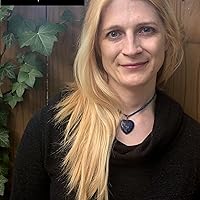
29 books33 followersGwendolyn Leick is an anthropologist and Assyriologist. She is the author of various publications on the Ancient Near East, including A Dictionary of Near Eastern Mythology and Sex & Eroticism in Mesopotamian Literature. She also acts as a cultural tour guide in the Middle East, lecturing on history, archaeology and anthropology.
Ratings & Reviews
Friends & Following
Create a free account to discover what your friends think of this book!
Community Reviews
Displaying 1 - 8 of 8 reviews

September 18, 2020
Turns out the oldest surviving literary culture was pretty into sex. I came to this book to read about the oldest documented trans people in human history (the castrated, cross-dressing priests of Inanna/Ishtar who spoke the women's language Emesal) but stayed for the discussions of love magic, potions, and witchcraft! While some of the terminology is a bit dated, given that this was written nearly thirty years ago, the general analysis is - at least for someone like me who is not an Assyriologist - wonderful.

November 12, 2015
This book was nowhere near as dry as I expected it to be. Usually, texts discussing ancient Near Eastern texts read like the nutritional information on the back of a cereal box. This one was different, with a bit of tongue in cheek humour thrown in for good measure. The image of Enkidu 'sticking out' of the rushes made me giggle, perhaps I am weird! The main thing I enjoyed about this book was the author was quick to point out when she thought that previous scholars had imposed their own personal beliefs or the strictures of the society in which they lived on the ancient text. It is extremely hard to be objective and no-one is perfect. The author also acknowledges this. Some parts did drag a little and seem a little repetitive (that may be because a lot of the texts are repetitive!), but overall, it was a well structured analysis and discussion of sexuality in the ancient past. I would recommend to anyone who has an interest in Mesopotamian history or an interest in the history of sexuality/eroticism and its portrayal in ancient society. In the end, it did say a lot without saying anything, which is good, because it means the author allowed the texts to speak for themselves and provided only guidance.

March 26, 2018
A pretty thorough overview of the subject that holds up well even at time of writing. Leick divides the book into early and later Bronze Age, and examines a different theme in each chapter, from the connection of sex to nature’s fertility in creation myths, to bridal songs, love spells, courtship contests, and much more. Leick frequently provides translations, even differing translations of the same text where unravelling hidden layers of meaning is required, and casts a critical eye over past studies, pointing out where she thinks other authors may have misunderstood the original text. Although this is not an overview of sex and eroticism in ancient Mesopotamia, merely how the Mesopotamians wrote about these subjects in literature, it still provides an insightful window into their world.
7 out of 10

November 25, 2016
This book is composed of short chapters, each with a distinct focus. Leick writes clearly, and as others have noted, helpfully shares her own interpretations where she reads the source texts differently from other experts. That said, I found myself struggling to believe many of the interpretations, because so many of the ancient texts are riddled with lacunae. If I read a number of the quoted passages dropping everything that is a reconstruction of what might have filled the holes, it becomes very hard to reach any conclusion about what the texts are saying. One line of interpretation throughout the work is that ancient Mesopotamian writers took for granted that sex should be pleasurable for women as well as men. Another theme that echoes in multiple sources is a heavy association of semen with ritual pollution.
It would be lovely to be able to supplement the analysis of texts with archeological evidence, but if such evidence exists, it isn't part of this account. As a result - as Leick takes pains to emphasize - her work is *not* an analysis of sex and eroticism in Ancient Mesopotamia, but just in Mesopotamian literature. Those could turn out to be two quite different things, we don't know. The closest we get to records of real life are collections of 'spells' to attract desire and keep partners faithful, suggesting (for example) that jealousy played a stronger role in real life than it does in the fragmented texts.
It would be lovely to be able to supplement the analysis of texts with archeological evidence, but if such evidence exists, it isn't part of this account. As a result - as Leick takes pains to emphasize - her work is *not* an analysis of sex and eroticism in Ancient Mesopotamia, but just in Mesopotamian literature. Those could turn out to be two quite different things, we don't know. The closest we get to records of real life are collections of 'spells' to attract desire and keep partners faithful, suggesting (for example) that jealousy played a stronger role in real life than it does in the fragmented texts.

April 17, 2023
Fascinating evaluation and explanation of the erotic mythology and religious customs of the earliest civilizations in Mesopotamia by a Sumerologist. The section on the religio/cultural importance placed on the vulva is particularly interesting!
April 19, 2020
Last chapter on the Epic of Gilgamesh is a fine climax (heh) to the book.
Read
March 3, 2009Love this book. I wish I had a copy, but it costs too much. :(
Read
August 23, 2017Dry, academic, sometimes insular, but full of fascinating stuff.
Displaying 1 - 8 of 8 reviews