

What do you think?

Pearl Buck in China: Journey to The Good Earth
One of the twentieth century’s most extraordinary Americans, Pearl Buck was the first person to make China accessible to the West.
She recreated the lives of ordinary Chinese people in The Good Earth , an overnight worldwide bestseller in 1932, later a blockbuster movie. Buck went on to become the first American woman to win the Nobel Prize for Literature. Long before anyone else, she foresaw China’s future as a superpower, and she recognized the crucial importance for both countries of China’s building a relationship with the United States. As a teenager she had witnessed the first stirrings of Chinese revolution, and as a young woman she narrowly escaped being killed in the deadly struggle between Chinese Nationalists and the newly formed Communist Party.
Pearl grew up in an imperial China unchanged for thousands of years. She was the child of American missionaries, but she spoke Chinese before she learned English, and her friends were the children of Chinese farmers. She took it for granted that she was Chinese herself until she was eight years old, when the terrorist uprising known as the Boxer Rebellion forced her family to flee for their lives. It was the first of many desperate flights. Flood, famine, drought, bandits, and war formed the background of Pearl’s life in China. "Asia was the real, the actual world," she said, "and my own country became the dreamworld."
Pearl wrote about the realities of the only world she knew in The Good Earth. It was one of the last things she did before being finally forced out of China to settle for the first time in the United States. She was unknown and penniless with a failed marriage behind her, a disabled child to support, no prospects, and no way of telling that The Good Earth would sell tens of millions of copies. It transfixed a whole generation of readers just as Jung Chang’s Wild Swans would do more than half a century later. No Westerner had ever written anything like this before, and no Chinese had either.
Buck was the forerunner of a wave of Chinese Americans from Maxine Hong Kingston to Amy Tan. Until their books began coming out in the last few decades, her novels were unique in that they spoke for ordinary Asian people— "translating my parents to me," said Hong Kingston, "and giving me our ancestry and our habitation." As a phenomenally successful writer and civil-rights campaigner, Buck did more than anyone else in her lifetime to change Western perceptions of China. In a world with its eyes trained on China today, she has much to tell us about what lies behind its astonishing reawakening.
She recreated the lives of ordinary Chinese people in The Good Earth , an overnight worldwide bestseller in 1932, later a blockbuster movie. Buck went on to become the first American woman to win the Nobel Prize for Literature. Long before anyone else, she foresaw China’s future as a superpower, and she recognized the crucial importance for both countries of China’s building a relationship with the United States. As a teenager she had witnessed the first stirrings of Chinese revolution, and as a young woman she narrowly escaped being killed in the deadly struggle between Chinese Nationalists and the newly formed Communist Party.
Pearl grew up in an imperial China unchanged for thousands of years. She was the child of American missionaries, but she spoke Chinese before she learned English, and her friends were the children of Chinese farmers. She took it for granted that she was Chinese herself until she was eight years old, when the terrorist uprising known as the Boxer Rebellion forced her family to flee for their lives. It was the first of many desperate flights. Flood, famine, drought, bandits, and war formed the background of Pearl’s life in China. "Asia was the real, the actual world," she said, "and my own country became the dreamworld."
Pearl wrote about the realities of the only world she knew in The Good Earth. It was one of the last things she did before being finally forced out of China to settle for the first time in the United States. She was unknown and penniless with a failed marriage behind her, a disabled child to support, no prospects, and no way of telling that The Good Earth would sell tens of millions of copies. It transfixed a whole generation of readers just as Jung Chang’s Wild Swans would do more than half a century later. No Westerner had ever written anything like this before, and no Chinese had either.
Buck was the forerunner of a wave of Chinese Americans from Maxine Hong Kingston to Amy Tan. Until their books began coming out in the last few decades, her novels were unique in that they spoke for ordinary Asian people— "translating my parents to me," said Hong Kingston, "and giving me our ancestry and our habitation." As a phenomenally successful writer and civil-rights campaigner, Buck did more than anyone else in her lifetime to change Western perceptions of China. In a world with its eyes trained on China today, she has much to tell us about what lies behind its astonishing reawakening.
322 pages, Kindle Edition
First published March 25, 2010
About the author
Hilary Spurling
28 books49 followersHilary Spurling, CBE, FRSL (born 1940) is an English writer, known as a journalist and biographer. She won the Whitbread Prize for the second volume of her biography of Henri Matisse in January 2006. Burying The Bones: Pearl Buck in China was published in March 2010.
She is married to playwright John Spurling, and has three children (Amy, Nathaniel and Gilbert) and two grandchildren.
She is married to playwright John Spurling, and has three children (Amy, Nathaniel and Gilbert) and two grandchildren.
Ratings & Reviews
Friends & Following
Create a free account to discover what your friends think of this book!
Community Reviews
Displaying 1 - 30 of 213 reviews

Read
October 5, 2017Not a biography, more a study of her life in China and how that effected her, the book trails off wrapping up half her life in a couple of dozen disaster filled and disappointment flavoured pages.
Pearl Buck was just a name to me, one of that curious tribe of once very popular authors who are now largely forgotten, Spurling's book hasn't convinced me to read the collected works of Pearl Buck but implicitly it is a powerful argument for biographical writing. Pearl Buck won the Nobel prize for literature in 1938, perhaps infamously the prize is awarded for work in an ideal direction, a criterion tailor made for Buck whose writing was deliberately didactic, setting out to expose and explain particularly rural China to a wider world.
For Spurling the spur for this came from her bi-cultural childhood and her lifelong oscillation between forgetting and remembering. Early traumatic experiences could be suppressed, but later through fiction, recalled and laid to rest - the burying the bones - of the title, with reference to the literal bones of girl children abandoned in public places to die. Her discovered role as inverse missionary - explaining a distant world to the people back 'home' made her rich but exposed her to criticism in China and the USA. In the USA, her stance was unacceptably anti-racist and anti-segregationist, her personal life worse - a divorcee with a disabled child who came close to being charged with heresy by the Presbyterian Church , all the same through the 30s and the 40s she was a reliable best seller, despite her books becoming increasingly didactic and remote from her own experience, in China she was disliked for exposing rural poverty and the grime beneath the glitter of the interwar years, while even her translation of the Chinese classic All Men are Brothers (alias The Water Margin was criticised on the grounds of making China appear barbaric.
For Spurling the child is the father of the man, born in China to a missionary Father and his wife, both of whom came from families that had only in the previous generation emigrated to America, his family Calvinists from Switzerland via Bavaria, hers from Holland. Both families had settled in West Virginia and were united in being anti-Yankee. Pearl, though was born in China and one of the few children born to her parents who managed to survive childhood, was brought up fluent in Chinese, thought in Chinese and in writing effectively translated herself into English. This Spurling says gave her writing a particular cadence. Sent back occasionally to the USA, slang and demotic English was a foreign language to her, the kid is nuts for example, had to be translated for her into a more standard form of English but playing amongst the bones of exposed girl children, being spat at as a foreigner, the shock of learning that she was not Chinese, the trauma of the Boxer movement, bandit raids and warlord activity were parts of her childhood.
Her father had fled his own Angry Old Testament God father's farm, to serve in the vineyard of the Lord, eagerly counting up the number of converts he had won over (less than a dozen), red haired, red-faced, tall with blue eyes, to the Chinese he looked like a theatrical villain, but he learnt the language and became devoted to the idea of developing a Chinese-Christian clergy, to which end he translated the Bible, his fellow missionaries felt that incoming missionaries ought to remain the clergy ministering to a population of native converts. He was mostly absent, stumping around the countryside, occasionally getting beaten up or stoned Pearl's mother was left at home to be pregnant until she got sick of loosing children to disease at which point she pointedly abstained from marital relations on the occasions her husband returned home . Pearl herself ended up marrying a missionary herself, though one who specialised in agricultural reform and statistical analysis. Pearl spent many years writing gushing letters to the in-laws, protesting too much about the deep connection between her and her husband and how their relationship became stronger with every year to hide from herself how incompatible they were and how unhappy she was.
But a writer's life is something different, literary success set her free, her publisher became her next husband , she was good to him, working unpaid as an editor for him during the depression as well as writing bestsellers and not running off with her royalties. But eventually he died. In her late life a dancing teacher waltzed into her life, treated her as an Empress while she wrote a book about the dowager Empresses, Pearl herself withdrew from view like her subject, bizarrely appearing in a Vermont shop window dressed in a silk gown - tourists would come and stare at her - to her deep disappointment she didn't get to go to China with Nixon. She was good with her money, setting up several charitable institutions which were not entirely looted by the dancing teacher and raising a crop of adopted children - though one thinks this easier, as it allowed her to avoid having to have a close relationship with any one of them. She had a curious ability to both close herself off from others and to be deeply empathetic, perhaps linked to her determination to completely transplant herself into new settings. The end of her life is passed over in a bare 28 pages, her quasi Imperial late life would lend itself to a no less interesting but very different book.
Spurling tells a story frequently strange and ultimately sad, of a woman who wanted to be everything - wife, mother, herself, but seems the more she tried, the more she struggled, one of those twentieth century lives that was lived carrying the wreckage of the nineteenth on her shoulders.
Pearl Buck was just a name to me, one of that curious tribe of once very popular authors who are now largely forgotten, Spurling's book hasn't convinced me to read the collected works of Pearl Buck but implicitly it is a powerful argument for biographical writing. Pearl Buck won the Nobel prize for literature in 1938, perhaps infamously the prize is awarded for work in an ideal direction, a criterion tailor made for Buck whose writing was deliberately didactic, setting out to expose and explain particularly rural China to a wider world.
For Spurling the spur for this came from her bi-cultural childhood and her lifelong oscillation between forgetting and remembering. Early traumatic experiences could be suppressed, but later through fiction, recalled and laid to rest - the burying the bones - of the title, with reference to the literal bones of girl children abandoned in public places to die. Her discovered role as inverse missionary - explaining a distant world to the people back 'home' made her rich but exposed her to criticism in China and the USA. In the USA, her stance was unacceptably anti-racist and anti-segregationist, her personal life worse - a divorcee with a disabled child who came close to being charged with heresy by the Presbyterian Church , all the same through the 30s and the 40s she was a reliable best seller, despite her books becoming increasingly didactic and remote from her own experience, in China she was disliked for exposing rural poverty and the grime beneath the glitter of the interwar years, while even her translation of the Chinese classic All Men are Brothers (alias The Water Margin was criticised on the grounds of making China appear barbaric.
For Spurling the child is the father of the man, born in China to a missionary Father and his wife, both of whom came from families that had only in the previous generation emigrated to America, his family Calvinists from Switzerland via Bavaria, hers from Holland. Both families had settled in West Virginia and were united in being anti-Yankee. Pearl, though was born in China and one of the few children born to her parents who managed to survive childhood, was brought up fluent in Chinese, thought in Chinese and in writing effectively translated herself into English. This Spurling says gave her writing a particular cadence. Sent back occasionally to the USA, slang and demotic English was a foreign language to her, the kid is nuts for example, had to be translated for her into a more standard form of English but playing amongst the bones of exposed girl children, being spat at as a foreigner, the shock of learning that she was not Chinese, the trauma of the Boxer movement, bandit raids and warlord activity were parts of her childhood.
Her father had fled his own Angry Old Testament God father's farm, to serve in the vineyard of the Lord, eagerly counting up the number of converts he had won over (less than a dozen), red haired, red-faced, tall with blue eyes, to the Chinese he looked like a theatrical villain, but he learnt the language and became devoted to the idea of developing a Chinese-Christian clergy, to which end he translated the Bible, his fellow missionaries felt that incoming missionaries ought to remain the clergy ministering to a population of native converts. He was mostly absent, stumping around the countryside, occasionally getting beaten up or stoned Pearl's mother was left at home to be pregnant until she got sick of loosing children to disease at which point she pointedly abstained from marital relations on the occasions her husband returned home . Pearl herself ended up marrying a missionary herself, though one who specialised in agricultural reform and statistical analysis. Pearl spent many years writing gushing letters to the in-laws, protesting too much about the deep connection between her and her husband and how their relationship became stronger with every year to hide from herself how incompatible they were and how unhappy she was.
But a writer's life is something different, literary success set her free, her publisher became her next husband , she was good to him, working unpaid as an editor for him during the depression as well as writing bestsellers and not running off with her royalties. But eventually he died. In her late life a dancing teacher waltzed into her life, treated her as an Empress while she wrote a book about the dowager Empresses, Pearl herself withdrew from view like her subject, bizarrely appearing in a Vermont shop window dressed in a silk gown - tourists would come and stare at her - to her deep disappointment she didn't get to go to China with Nixon. She was good with her money, setting up several charitable institutions which were not entirely looted by the dancing teacher and raising a crop of adopted children - though one thinks this easier, as it allowed her to avoid having to have a close relationship with any one of them. She had a curious ability to both close herself off from others and to be deeply empathetic, perhaps linked to her determination to completely transplant herself into new settings. The end of her life is passed over in a bare 28 pages, her quasi Imperial late life would lend itself to a no less interesting but very different book.
Spurling tells a story frequently strange and ultimately sad, of a woman who wanted to be everything - wife, mother, herself, but seems the more she tried, the more she struggled, one of those twentieth century lives that was lived carrying the wreckage of the nineteenth on her shoulders.

August 5, 2015
Spurling's bio showed me a side of Pearl Buck I never knew. She was a survivor who made art out of the trauma she witnessed, not for the sake of art, but to bring attention to the plight of China's poor. She pulled no punches, particularly where missionary activity was concerned ("Sincerity isn't enough," she once said), but she also used her writing and her activism to avoid facing the tragedies in her own life.
She achieved a great deal, personally (Pulitzer, Nobel) and politically -- repeal of Chinese Exclusion Acts, raising huge sums to assist with relief efforts, establishing an organization after the war to take care of unwanted minority and mixed-race children, mostly Amerasians (she coined the word), the tens of thousands of American babies fathered by American servicemen with Asian women in Japan, and later in Korea. I came away with great admiration for Buck, and yet by the end it seemed that the past had caught up with her. She ended her days in self-imposed exile, preferring the company of characters she had created on paper to her own children. "No one really got close to her," said her daughter Janice. "I never really got to know her."
She achieved a great deal, personally (Pulitzer, Nobel) and politically -- repeal of Chinese Exclusion Acts, raising huge sums to assist with relief efforts, establishing an organization after the war to take care of unwanted minority and mixed-race children, mostly Amerasians (she coined the word), the tens of thousands of American babies fathered by American servicemen with Asian women in Japan, and later in Korea. I came away with great admiration for Buck, and yet by the end it seemed that the past had caught up with her. She ended her days in self-imposed exile, preferring the company of characters she had created on paper to her own children. "No one really got close to her," said her daughter Janice. "I never really got to know her."

February 17, 2019
In China, there have been two opposite sentiments about Pearl S. Buck: she was admired for her authentic depict of ordinary Chinese and her sympathy towards the rural poor and their sufferings (the fact she won a Nobel Prize was something to be proud of), on the other hand, criticized for portraying the dark, "bad" side of China; her background as a daughter of an over zealous missionary only intensified the criticism. The criticism was dominant during the Mao era.
Pearl Buck in China: Journey to the Good Earth is part biography, part literature analysis. A lone white missionary family living in rural China in 19th century was tough, although not as tough as for the local peasants, but consider it was their choice (the husband's choice)! 10 years 10 converts, most of the time hated and attacked by locals. I can never understand the zeal in the name of monolithic religion. I feel sympathetic to PB's mother-"marriage is a life-sentence", the biographer wrote. She often had to manage the household all by herself. Even with help from domestic servants, it was very hard for a woman who knew nothing about the country, and who had lost four of her seven children.
PB's upbringing made her bi-cultural. In her childhood, she played with local Chinese kids, learned Chinese from her Wang Amah (the nanny). Her father hired a Chinese scholar to teach her Chinese. Witnessing infanticide left a permanent scar on her mind.
PB's interaction with Chinese literature circle is fascinating. The alleged affair between PB and Xu Zhi-mo(徐志摩) , the poet everyone loved, didn't happen. PB especially criticized Xu and the Crescent Moon Society poets: "exquisite and empty, though they were so fluent in their line and sound". She admired Lu Xun(鲁讯) and Chen Du-xiu(陈独秀). PB also lavishly praised Kuo Mo-jou(郭沫若): "that brilliant mind, whose habit was the utmost candor and whose passion was truth". Of course, in later years she would be disappointed by the same poet who wrote communism propaganda and boot-licking verses. PB and her second husband's publishing company published Lin Yutang(林语堂)'s books in the US.
There is also the story of her daughter Carol who had PKU, a genetic disorder, a story I have read elsewhere.
Memory is a treasure trove where a good storyteller like Pearl Buck could retrieve from and re-arrange throughout her life. Like many writers before her and of her day, PB wrote several autobiographies or autobiographies-in-disguise, each shifted slightly or employed a different undertone. Is it still possible in the age of internet and social-media where everything is recorded?
Pearl Buck in China: Journey to the Good Earth is part biography, part literature analysis. A lone white missionary family living in rural China in 19th century was tough, although not as tough as for the local peasants, but consider it was their choice (the husband's choice)! 10 years 10 converts, most of the time hated and attacked by locals. I can never understand the zeal in the name of monolithic religion. I feel sympathetic to PB's mother-"marriage is a life-sentence", the biographer wrote. She often had to manage the household all by herself. Even with help from domestic servants, it was very hard for a woman who knew nothing about the country, and who had lost four of her seven children.
PB's upbringing made her bi-cultural. In her childhood, she played with local Chinese kids, learned Chinese from her Wang Amah (the nanny). Her father hired a Chinese scholar to teach her Chinese. Witnessing infanticide left a permanent scar on her mind.
PB's interaction with Chinese literature circle is fascinating. The alleged affair between PB and Xu Zhi-mo(徐志摩) , the poet everyone loved, didn't happen. PB especially criticized Xu and the Crescent Moon Society poets: "exquisite and empty, though they were so fluent in their line and sound". She admired Lu Xun(鲁讯) and Chen Du-xiu(陈独秀). PB also lavishly praised Kuo Mo-jou(郭沫若): "that brilliant mind, whose habit was the utmost candor and whose passion was truth". Of course, in later years she would be disappointed by the same poet who wrote communism propaganda and boot-licking verses. PB and her second husband's publishing company published Lin Yutang(林语堂)'s books in the US.
There is also the story of her daughter Carol who had PKU, a genetic disorder, a story I have read elsewhere.
Memory is a treasure trove where a good storyteller like Pearl Buck could retrieve from and re-arrange throughout her life. Like many writers before her and of her day, PB wrote several autobiographies or autobiographies-in-disguise, each shifted slightly or employed a different undertone. Is it still possible in the age of internet and social-media where everything is recorded?

August 18, 2010
After reading "The Good Earth," which I liked enormously, I decided to read this biography of Pearl Buck. "The Good Earth" is an excellent novel (see my earlier review) written by a woman who loved China and the Chinese people. In this excellent biography of its author – Pearl Buck – Spurling tells about both the events in Pearl Buck’s life that led up to the writing of "The Good Earth," which spent two years at the top of the best-seller list and won its author a Pulitzer Prize, and the events that followed this extraordinary success. She soon after became the first American woman to win the Nobel Prize for literature. One of the 20th century’s most extraordinary Americans, Pearl Buck was the first person to make China accessible to the West. She saw the Chinese as people like any others and did much to change the standard American view of China as a land of dirty, scavenging beggars and sinister, slit-eyed, yellow-skinned villains.
Pearl Buck, the daughter of missionary parents, was born in the US on June 26, 1892, but grew up in China (Chinese was her first language and she thought she was Chinese until she was eight years old) among bandits, beggars, lepers, typhoons, floods, rebellions, famine, sinister mobs, and marauding soldiers. Her parents – Absalom Sydenstricker and Carie Stulting – are the subject of two biographies, "Fighting Angel" and "The Exile," respectively, both written by Pearl Buck. As a child she loved to read English literature. For almost a decade of her childhood, she reread all of Charles Dickens works annually. This was her escape from the bleak and semi-tragic surroundings that she encountered daily and, in her early years, her only link to the Anglo-Saxon world.
In 1910 she returned to the US to enroll at Randolph-Macon Women’s College in Virginia and graduated four years later. She had intended to remain in the US, but returned to China because of her mother’s failing health. She married John Lossing Buck in 1917, and spent the next 10 years with him in China traveling to places where, sometimes, she was the first white woman the local villagers had ever seen. In 1927, the Buck’s narrowly escaped with their lives, when Nationalist soldiers drove them as refugees to Japan.
After her divorce from John Lossing Buck, she married her publisher Richard Walsh, with whom she remained in a successful marriage until his death in 1960. She continued without him for another 13 years, ever missing “… his companionship, … his warmth, his generosity, his sharp wit, his calming and unfailing attentive presence.” From the "NYT" review (July 4, 2010): “Spurling’s is very much the story of what turned an American missionary’s daughter into a writer; of how literature is extracted from life; of what a woman (and a mother) must do to perform that operation; [and:] of what fueled Buck’s astonishing output (39 novels, 25 works of non-fiction, short stories, children’s books, translations, and countless magazine articles).”
The vast historical backdrop adds richness to this biography without smothering its subject. She lived through the Boxer Rebellion in 1900. Later in life Pearl Buck was accused in the US of being a Communist and appeared on Senator Joseph McCarthy’s black list. "Time" magazine banned her from its pages. At the same time, ironically, she was denounced by the Communist Chinese as an imperialist. China (actually Zhou Enlai) forbade her return in 1972, when she applied for a visa in order to accompany President Richard Nixon during his historic visit with Chairman Mao Zedong. From the biography (p. 231): “Pearl retained to the end the view of China laid out at the start of her career in … 1925: [when she said about China:] ‘as the inevitable future leader of Asia, and as a monumental force in herself with her unmeasured resources, both human and material, she will exert a tremendous influence upon the future of the world.’”
Throughout her life, Pearl Buck fought racism, sexism, ignorance (especially about the Chinese and their culture), and superstition. Again from the "NYT" review: “[She bridged:] two cultures that seemed mutually incomprehensible.”
Pearl Buck died at the age of nearly 81 at her home in Danby, Vermont on March 6, 1973. "The Good Earth" meant so much more to me after having read this extraordinarily portrait of its author. "The Good Earth" was made into a movie, which I hope will prove to be worthy of its source.
Pearl Buck, the daughter of missionary parents, was born in the US on June 26, 1892, but grew up in China (Chinese was her first language and she thought she was Chinese until she was eight years old) among bandits, beggars, lepers, typhoons, floods, rebellions, famine, sinister mobs, and marauding soldiers. Her parents – Absalom Sydenstricker and Carie Stulting – are the subject of two biographies, "Fighting Angel" and "The Exile," respectively, both written by Pearl Buck. As a child she loved to read English literature. For almost a decade of her childhood, she reread all of Charles Dickens works annually. This was her escape from the bleak and semi-tragic surroundings that she encountered daily and, in her early years, her only link to the Anglo-Saxon world.
In 1910 she returned to the US to enroll at Randolph-Macon Women’s College in Virginia and graduated four years later. She had intended to remain in the US, but returned to China because of her mother’s failing health. She married John Lossing Buck in 1917, and spent the next 10 years with him in China traveling to places where, sometimes, she was the first white woman the local villagers had ever seen. In 1927, the Buck’s narrowly escaped with their lives, when Nationalist soldiers drove them as refugees to Japan.
After her divorce from John Lossing Buck, she married her publisher Richard Walsh, with whom she remained in a successful marriage until his death in 1960. She continued without him for another 13 years, ever missing “… his companionship, … his warmth, his generosity, his sharp wit, his calming and unfailing attentive presence.” From the "NYT" review (July 4, 2010): “Spurling’s is very much the story of what turned an American missionary’s daughter into a writer; of how literature is extracted from life; of what a woman (and a mother) must do to perform that operation; [and:] of what fueled Buck’s astonishing output (39 novels, 25 works of non-fiction, short stories, children’s books, translations, and countless magazine articles).”
The vast historical backdrop adds richness to this biography without smothering its subject. She lived through the Boxer Rebellion in 1900. Later in life Pearl Buck was accused in the US of being a Communist and appeared on Senator Joseph McCarthy’s black list. "Time" magazine banned her from its pages. At the same time, ironically, she was denounced by the Communist Chinese as an imperialist. China (actually Zhou Enlai) forbade her return in 1972, when she applied for a visa in order to accompany President Richard Nixon during his historic visit with Chairman Mao Zedong. From the biography (p. 231): “Pearl retained to the end the view of China laid out at the start of her career in … 1925: [when she said about China:] ‘as the inevitable future leader of Asia, and as a monumental force in herself with her unmeasured resources, both human and material, she will exert a tremendous influence upon the future of the world.’”
Throughout her life, Pearl Buck fought racism, sexism, ignorance (especially about the Chinese and their culture), and superstition. Again from the "NYT" review: “[She bridged:] two cultures that seemed mutually incomprehensible.”
Pearl Buck died at the age of nearly 81 at her home in Danby, Vermont on March 6, 1973. "The Good Earth" meant so much more to me after having read this extraordinarily portrait of its author. "The Good Earth" was made into a movie, which I hope will prove to be worthy of its source.

November 1, 2012
Raised in China by an over zealous missionary father and long suffering mother, Pearl Sydenstricker Buck had an extraordinary childhood. Her loving mother, Carrie, saw to her education and her stern misogynist father, Absalom, made a difficult life more difficult for the everyone around him.
At a young age Pearl saw extreme poverty, disaster and death in rural China. Pearl lost four siblings in ways that could be attributed to her family's living conditions. At times the family lived without running water or electricity (as Pearl did later with her husband in Nanxuzhou and as a refugee). She learned Chinese and English simultaneously, making her fully bilingual.
While most missionary children had sheltered lives in ex-pat communities with English language schools, Pearl spent her childhood with impoverished rural Chinese and at a very young age learned of their most intimate lives. Later, her husband's career in the study of Chinese agriculture connected her to China's academic/scientific communities and continued her connection with the rural poor. She worked these shared experiences with the Chinese people into thousands of pages of novels, speeches, articles and stories.
Hillary Spurling has produced a highly readable book, in many places it's a page turner. Its problem, from my point of view, is that the narrative has some holes and presents incohesive portraits of its subject, Pearl, and her father who is a determining influence on her life.
One narrative hole relates to finances. There is a big emphasis on the hand to mouth existence of the Sydenstrickers. Every penny Absalom can spare is going to his Bible translation or other projects. It is hard to believe that Pearl's four years at Randolph Mason (and transportation) are financed by her mother's hoarding of what can be saved in household expenses. Similarly, as the Lossing Buck's are scrimping while Lossing works on his MA, there is somehow money for Pearl's MA too. There is a lot of trans-oceanic travel, there is her sister's start of a college education, there is at least one summer long vacation for Pearl, her mother and sister, there is a period of residential medical care for her mother and there are medical expenses and travel costs for Carol. These do not fit the Sydenstriker or Buck financial situations as they are described.
The family is important to this story, so I feel the relationships need more depth in their presentation. Pearl's sister Grace has to leave college in the US to return to China to help Pearl with her child. Local help would be easy to obtain so there must be a deeper story here. Pearl's brother, Edgar, was sent back to the US at age 15 which suggests some interesting, and unexplored, family dynamics. Absalom, after Carie's death, seems to live with his daughters, which given his past, has to be an imposition and source of great stress. In the refugee camp in Japan, in his advanced age, Absalom considers missionary work in Korea. Does he really, or is this just a ploy to extract family commitments? Carol, whose importance to Pearl is emphasized, just disappears from the text in the end. Was the money left to her school eliminated in Pearl's second will naming Ted Harris as a major beneficiary? Similarly, Janice almost disappears.
Both Pearl and Absalom change. Pearl, as a young adult is an empathetic listener and a dedicated and somewhat willowing wife, mother and writer. Later in life she becomes what seems to be cold and materialistic. Her need for and love for children is emphasized as a young woman, but in the end it seems she can't be bothered. In the narrative, this is an abrupt change, with no foreshadowing or explanation. There is some shading and some discussion of the change (or perceived change in Pearl's eyes) in Absalom. His initial portrait is frightening. He is the supreme autocrat and argues with everyone - always. He has no interest in his children or his wife. His rigidity adds to the hardships his family suffers. He is self-righteous in his mission and this is all important to him. At the end of the book, he is nearly human. He still does not bend, he is presented sympathetically.
While this sounds quite critical, there is a lot of good material here, and the author really holds your interest.
At a young age Pearl saw extreme poverty, disaster and death in rural China. Pearl lost four siblings in ways that could be attributed to her family's living conditions. At times the family lived without running water or electricity (as Pearl did later with her husband in Nanxuzhou and as a refugee). She learned Chinese and English simultaneously, making her fully bilingual.
While most missionary children had sheltered lives in ex-pat communities with English language schools, Pearl spent her childhood with impoverished rural Chinese and at a very young age learned of their most intimate lives. Later, her husband's career in the study of Chinese agriculture connected her to China's academic/scientific communities and continued her connection with the rural poor. She worked these shared experiences with the Chinese people into thousands of pages of novels, speeches, articles and stories.
Hillary Spurling has produced a highly readable book, in many places it's a page turner. Its problem, from my point of view, is that the narrative has some holes and presents incohesive portraits of its subject, Pearl, and her father who is a determining influence on her life.
One narrative hole relates to finances. There is a big emphasis on the hand to mouth existence of the Sydenstrickers. Every penny Absalom can spare is going to his Bible translation or other projects. It is hard to believe that Pearl's four years at Randolph Mason (and transportation) are financed by her mother's hoarding of what can be saved in household expenses. Similarly, as the Lossing Buck's are scrimping while Lossing works on his MA, there is somehow money for Pearl's MA too. There is a lot of trans-oceanic travel, there is her sister's start of a college education, there is at least one summer long vacation for Pearl, her mother and sister, there is a period of residential medical care for her mother and there are medical expenses and travel costs for Carol. These do not fit the Sydenstriker or Buck financial situations as they are described.
The family is important to this story, so I feel the relationships need more depth in their presentation. Pearl's sister Grace has to leave college in the US to return to China to help Pearl with her child. Local help would be easy to obtain so there must be a deeper story here. Pearl's brother, Edgar, was sent back to the US at age 15 which suggests some interesting, and unexplored, family dynamics. Absalom, after Carie's death, seems to live with his daughters, which given his past, has to be an imposition and source of great stress. In the refugee camp in Japan, in his advanced age, Absalom considers missionary work in Korea. Does he really, or is this just a ploy to extract family commitments? Carol, whose importance to Pearl is emphasized, just disappears from the text in the end. Was the money left to her school eliminated in Pearl's second will naming Ted Harris as a major beneficiary? Similarly, Janice almost disappears.
Both Pearl and Absalom change. Pearl, as a young adult is an empathetic listener and a dedicated and somewhat willowing wife, mother and writer. Later in life she becomes what seems to be cold and materialistic. Her need for and love for children is emphasized as a young woman, but in the end it seems she can't be bothered. In the narrative, this is an abrupt change, with no foreshadowing or explanation. There is some shading and some discussion of the change (or perceived change in Pearl's eyes) in Absalom. His initial portrait is frightening. He is the supreme autocrat and argues with everyone - always. He has no interest in his children or his wife. His rigidity adds to the hardships his family suffers. He is self-righteous in his mission and this is all important to him. At the end of the book, he is nearly human. He still does not bend, he is presented sympathetically.
While this sounds quite critical, there is a lot of good material here, and the author really holds your interest.

March 7, 2015
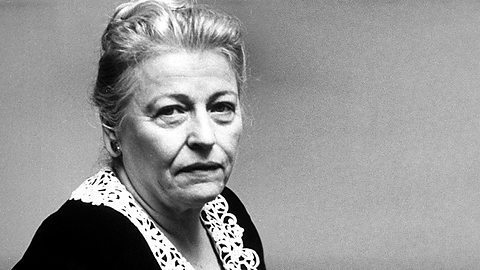
 http://www.bbc.co.uk/programmes/b00rl...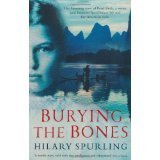
BBC description: In "Burying The Bones", distinguished biographer Hilary Spurling takes as her subject Pearl Buck, the highly influential American author whose astonishing life proved even more fantastic than her popular novels of the 1930s, 40s and 50s.
Born to Christian missionaries in 1890s China, Buck's writing helped change Western perceptions of that country forever; in recognition of which she won the Nobel Prize for Literature in 1938.
Pearl's Pulitzer Prize-winning novel "The Good Earth" portrayed the lives of ordinary Chinese people and became a worldwide bestseller when it was published in 1932 (it still sells in its thousands each year). Though her work has fallen out of fashion with the public, she is still held in high regard by writers such as Jung Chang, the acclaimed author of "Wild Swans", who described Buck as "One of the greatest writers on China'".
Hilary Spurling is the author of "The Unknown Matisse", listed as one of the New York Times' Ten Best Books of 1998, and "Matisse The Master", which was named Whitbread Book of the Year, and won the Los Angeles Times biography prize, in 2005.
Reader: Lindsay Duncan.
Abridger: Alison Joseph.
Producer: Kirsteen Cameron.
2/5: we learn more about Pearl's childhood and the ways in which her father's missionary zeal impoverished his family. A firebrand preacher who was often absent for long periods of time, he invariably spent his meagre wages on a project to translate the New Testament into Chinese. Pearl's mother lost four children to illnesses which could have been treated easily had they better access to food and medicine. This was the potent environment which formed Pearl and inspired her adult imagination.
3/5 Pearl's desire for independence led her to make a hasty marriage of which her family disapproved. Refusing to be cowed by a series of personal tragedies, she discovered that her imagination offered escape from her difficulties and she began to write fiction in earnest.
HAH! This is the same book as 'Pearl Buck in China: Journey to the Good Earth' which I liked to a 4*
4* Pearl Buck in China: Journey to the Good Earth
4* Matisse the Master: The Conquest of Colour, 1909-1954
CR Burying the Bones

Read
February 15, 2011I ask myself when i am reading a book and afterwards, like now, when i write the review, what is the genre? even before i ask, what is the book about? this book is a biography, but an rather unusual one. first it is really about her first 35 years, those years in china. second, it really isn't about facts, dates etc but is like a forensic literary investigation into how she incorporated her childhood into her books. the author scours pearl buck's literary output for hints about what she was thinking about and doing as a youngster in the chinese outback as a missionaries kid. cute trick, but the author really does seem to pull it off well.
when reading a biography i need to be prepared for the peter-paul dilemma, that is, what peter says about paul tells us as much about peter as it does about paul. without having read other biographies of buck, i'm unable to judge how well the author pulls off this issue. it feels ok, but i can't objectively tell.
so if the book is about pearl s. buck, why should i care or why should i read this book about her?
first i like china, i like being there, i like thinking about the culture. i like history. PSB is a crucial link between US and Chinese history at the crucial juncture of the 1st half of the 20th C, literally there are only a handful of similarly placed people, a probably PSB leads anyone's list. but even more interesting, because of the way the book is written, it casts a surprisingly interesting light on how children grow up in a culture different from that of their parents. what exactly did it mean to grow up as PSB did, what does this say about human culture.
but there is another reason, that is what does it mean to be a MK-missionaries kid? what does growing up there teach her that we ought to learn about cross cultural evangelism? especially given the history of PSB and G. Machen(one of my theological heroes, an issue covered in just a few pages in this book.
the book only touches on this issue, dwelling more on her relationship with her father and how his theology effected his personality and how he related to people (remembering the peter-paul dilemma, i don't know how much of this is the author's issues and how much is PSB's)
but in any case, i liked the book. one of only a handful that alma and i have read at the same time, she telling me it was a must read now type of book. the author is an excellent writer and i look forward to reading more things she will write.
when reading a biography i need to be prepared for the peter-paul dilemma, that is, what peter says about paul tells us as much about peter as it does about paul. without having read other biographies of buck, i'm unable to judge how well the author pulls off this issue. it feels ok, but i can't objectively tell.
so if the book is about pearl s. buck, why should i care or why should i read this book about her?
first i like china, i like being there, i like thinking about the culture. i like history. PSB is a crucial link between US and Chinese history at the crucial juncture of the 1st half of the 20th C, literally there are only a handful of similarly placed people, a probably PSB leads anyone's list. but even more interesting, because of the way the book is written, it casts a surprisingly interesting light on how children grow up in a culture different from that of their parents. what exactly did it mean to grow up as PSB did, what does this say about human culture.
but there is another reason, that is what does it mean to be a MK-missionaries kid? what does growing up there teach her that we ought to learn about cross cultural evangelism? especially given the history of PSB and G. Machen(one of my theological heroes, an issue covered in just a few pages in this book.
the book only touches on this issue, dwelling more on her relationship with her father and how his theology effected his personality and how he related to people (remembering the peter-paul dilemma, i don't know how much of this is the author's issues and how much is PSB's)
but in any case, i liked the book. one of only a handful that alma and i have read at the same time, she telling me it was a must read now type of book. the author is an excellent writer and i look forward to reading more things she will write.

November 25, 2010
This has to be one of the best biographies I've ever read. It was riveting. Spurling's prose made it read almost like a novel, and a very good novel at that. It doesn't matter if you've read anything by Pearl Buck, you will want to when you're done. I've read The Good Earth but will reread it with a completely new eye next time.
Pearl's early life was lonely, harrowing and disturbing. Her father's missionary zeal and her mother's unhappiness left her with no one but her younger sister, Grace. Four of her six siblings died of diseases commonly found in China at the turn of the century. The family lived through civil unrest, famines, and wars. They stayed in China through the terrifying Boxer Revolution, hiding out in a mud hut. They were surrounding by grinding poverty. Pearl considered herself more Chinese than American throughout her life and said she thought in Chinese, not English.
Seeing her parents' loveless marriage, Pearl was determined to marry for love. Lossing Buck was an agriculturist and moved to China to find ways to increase crop production. Like Pearl's father, however, his work came above all else and loneliness once again took over her life.
As Buck's wife, Pearl wrote articles and short stories but never published a novel. It was to support her handicapped daughter that she finally produced The Good Earth. Pearl's life in China showed her how bigotry and hatred could affect people and spent her life in America championing civil rights.
I hope this outstanding biography piques people's interest in Pearl Buck once again. China's importance in today's world cannot be understated and Pearl's writing will help us to understand its reawakening.
Pearl's early life was lonely, harrowing and disturbing. Her father's missionary zeal and her mother's unhappiness left her with no one but her younger sister, Grace. Four of her six siblings died of diseases commonly found in China at the turn of the century. The family lived through civil unrest, famines, and wars. They stayed in China through the terrifying Boxer Revolution, hiding out in a mud hut. They were surrounding by grinding poverty. Pearl considered herself more Chinese than American throughout her life and said she thought in Chinese, not English.
Seeing her parents' loveless marriage, Pearl was determined to marry for love. Lossing Buck was an agriculturist and moved to China to find ways to increase crop production. Like Pearl's father, however, his work came above all else and loneliness once again took over her life.
As Buck's wife, Pearl wrote articles and short stories but never published a novel. It was to support her handicapped daughter that she finally produced The Good Earth. Pearl's life in China showed her how bigotry and hatred could affect people and spent her life in America championing civil rights.
I hope this outstanding biography piques people's interest in Pearl Buck once again. China's importance in today's world cannot be understated and Pearl's writing will help us to understand its reawakening.

March 7, 2015
From BBC Radio 4 - Book of the Week:
In "Burying The Bones", distinguished biographer Hilary Spurling takes as her subject Pearl Buck, the highly influential American author whose astonishing life proved even more fantastic than her popular novels of the 1930s, 40s and 50s.
Born to Christian missionaries in 1890s China, Buck's writing helped change Western perceptions of that country forever; in recognition of which she won the Nobel Prize for Literature in 1938.
Pearl's Pulitzer Prize-winning novel "The Good Earth" portrayed the lives of ordinary Chinese people and became a worldwide bestseller when it was published in 1932 (it still sells in its thousands each year). Though her work has fallen out of fashion with the public, she is still held in high regard by writers such as Jung Chang, the acclaimed author of "Wild Swans", who described Buck as "One of the greatest writers on China'".
4* Pearl Buck in China: Journey to the Good Earth
4* Matisse the Master: The Conquest of Colour, 1909-1954
4* Burying the Bones: Pearl Buck in China
In "Burying The Bones", distinguished biographer Hilary Spurling takes as her subject Pearl Buck, the highly influential American author whose astonishing life proved even more fantastic than her popular novels of the 1930s, 40s and 50s.
Born to Christian missionaries in 1890s China, Buck's writing helped change Western perceptions of that country forever; in recognition of which she won the Nobel Prize for Literature in 1938.
Pearl's Pulitzer Prize-winning novel "The Good Earth" portrayed the lives of ordinary Chinese people and became a worldwide bestseller when it was published in 1932 (it still sells in its thousands each year). Though her work has fallen out of fashion with the public, she is still held in high regard by writers such as Jung Chang, the acclaimed author of "Wild Swans", who described Buck as "One of the greatest writers on China'".
4* Pearl Buck in China: Journey to the Good Earth
4* Matisse the Master: The Conquest of Colour, 1909-1954
4* Burying the Bones: Pearl Buck in China
July 8, 2010
Overall, it was a real good angry woman read...until the end of her[ie. Pearl's:] life...when ..I came to have some doubts...all of this was heavily influenced by my memories of having been told of this woman's life and times by my paternal grandmother...who saw Pearl as something of a style icon..lifestyle that is. I did enjoy some of stuff about life in China and the many social changes and times she was witness too...the biographer seems to have a good idea of the many facets this woman had to her long life.

July 20, 2016
I have been a fan of Pearl S. Buck from the time I was a teenager. I have read many of her books and this biography helped me to understand one of my favorite authors. I knew that she was raised in China and her parents were missionaries but I did not know how much she felt that China and the Chinese people were her people. She left China ultimately in her 30's because of the political changes and the danger for foreigners at the time. She never felt at home in America and never really meshed with the culture. I always wondered about the often flowery way of writing and from this book I learned that she thought in Chinese but wrote her books in English. The language idiom was exacting and is a very important writer of Chinese way of living and thought in her time. Also what was very revealing was her own pain and sadness over her daughter's mental retardation. I have gained an even more appreciation of Pearl S. Buck and a love for her books.

September 5, 2011
I read Pearl Buck novels as a child and teen, then never went near her again. She was popular in her day, but that day has passed. You never hear her mentioned anymore. I didn't like this book, yet entered it wanting to like it. The writing style read like a dissertation, or a term paper; i.e. flat. Things I didn't like about Pearl as a person: her ability to dump husbands when they were no longer useful to her, her icing over her parent's lives, after suffering through an abusive childhood of deprivation, a meglomaniac of a father lost in his own sainthood, and later hooking into a young man that she gave power to in overseeing her foundation and funds--a great kick in the teeth for her children. R.I.P. Mom. If you want insight into that period of China, or even her life, you'd do better seeking out other texts.
March 28, 2010
In "Burying The Bones", distinguished biographer Hilary Spurling takes as her subject Pearl Buck, the highly influential American author whose astonishing life proved even more fantastic than her popular novels of the 1930s, 40s and 50s.
Born to Christian missionaries in 1890s China, Buck's writing helped change Western perceptions of that country forever; in recognition of which she won the Nobel Prize for Literature in 1938.
Pearl's Pulitzer Prize-winning novel "The Good Earth" portrayed the lives of ordinary Chinese people and became a worldwide bestseller when it was published in 1932 (it still sells in its thousands each year). Though her work has fallen out of fashion with the public, she is still held in high regard by writers such as Jung Chang, the acclaimed author of "Wild Swans", who described Buck as "One of the greatest writers on China'".
Hilary Spurling is the author of "The Unknown Matisse", listed as one of the New York Times' Ten Best Books of 1998, and "Matisse The Master", which was named Whitbread Book of the Year, and won the Los Angeles Times biography prize, in 2005.
Reader: Lindsay Duncan.
Abridger: Alison Joseph.
Producer: Kirsteen Cameron.
BROADCASTS
Mon 29 Mar 201009:45BBC Radio 4 (FM only)
Tue 30 Mar 201000:30BBC Radio 4
http://www.bbc.co.uk/programmes/b00rl6wf
Born to Christian missionaries in 1890s China, Buck's writing helped change Western perceptions of that country forever; in recognition of which she won the Nobel Prize for Literature in 1938.
Pearl's Pulitzer Prize-winning novel "The Good Earth" portrayed the lives of ordinary Chinese people and became a worldwide bestseller when it was published in 1932 (it still sells in its thousands each year). Though her work has fallen out of fashion with the public, she is still held in high regard by writers such as Jung Chang, the acclaimed author of "Wild Swans", who described Buck as "One of the greatest writers on China'".
Hilary Spurling is the author of "The Unknown Matisse", listed as one of the New York Times' Ten Best Books of 1998, and "Matisse The Master", which was named Whitbread Book of the Year, and won the Los Angeles Times biography prize, in 2005.
Reader: Lindsay Duncan.
Abridger: Alison Joseph.
Producer: Kirsteen Cameron.
BROADCASTS
Mon 29 Mar 201009:45BBC Radio 4 (FM only)
Tue 30 Mar 201000:30BBC Radio 4
http://www.bbc.co.uk/programmes/b00rl6wf
This entire review has been hidden because of spoilers.
June 15, 2010
I enjoyed most of the novels of Pearl Buck. She seemed to catch the essence of behavior patterns of Chinese, Japanese and Koreans, and how they are different, and described them lovingly. She was particularly interested in ordinary, poor people, as in her masterpiece, "The Good Earth". This volume is a biography covering her childhood as daughter of a single-minded missionary bent on converting the heathens but not interested in understanding them. The missionary's wife had a rough time, living in poverty, surviving uprisings. Pearl's playmates were the local poor Chinese children, so she grew up speaking Chinese. Pearl is not altogether a sympathetic character. She married an agricultural missionary who did a great deal of good, but was not an intellectual, and Pearl eventually divorced him, but to the reader, that act was never really explained, he was a good decent man, just not a prince charming. Perhaps it was a foreshadowing of her unreasonable old age. Pearl came to depend on her American publisher, whom she married, who took care of holding back the adoring hordes and so on. The young woman Pearl, plainly dressed and coifed, would have been shocked if she could have glimpsed the old woman Pearl, who became a grande dame in costly outfits reveling in luxury. That's a side of Pearl I had never before read about. I wondered about her sanity.

November 19, 2010
Since I was in China last spring, I’ve been overdosing on books about their tumultuous 20th century. Though Pearl Buck (1892–1973) was an American she spent much of her life in China and her heart remained there even when she lived in the United States.
The best biographies make me feel as if I’m there… and I was there with Pearl from her life as a child of missionaries living in rural poverty, through the Boxer Rebellion and civil war, with her inattentive husband and trying to understand what was wrong with her first child. To me this was the heart of the book and the experiences that formed the Pearl who became the famous and lauded writer, the fighter who worked to repeal the discriminatory laws against Chinese, and the first person to promote interracial adoption.
From this book I moved on to the celebrated author Anchee Min’s PEARL OF CHINA: A NOVEL. Again I found myself in China and enjoying the lifelong fictional friendship between Preal and Willow. The real life events were dramatic and gave Min the opportunity to expand the background for her Pearl and Willow.
Both books are a perfect fit with Jung Chang’s biography of her grandmother and mother and her autobiography in THE WILD SWANS: THREE DAUGHTERS OF CHINA which I’ve written about previously.
The best biographies make me feel as if I’m there… and I was there with Pearl from her life as a child of missionaries living in rural poverty, through the Boxer Rebellion and civil war, with her inattentive husband and trying to understand what was wrong with her first child. To me this was the heart of the book and the experiences that formed the Pearl who became the famous and lauded writer, the fighter who worked to repeal the discriminatory laws against Chinese, and the first person to promote interracial adoption.
From this book I moved on to the celebrated author Anchee Min’s PEARL OF CHINA: A NOVEL. Again I found myself in China and enjoying the lifelong fictional friendship between Preal and Willow. The real life events were dramatic and gave Min the opportunity to expand the background for her Pearl and Willow.
Both books are a perfect fit with Jung Chang’s biography of her grandmother and mother and her autobiography in THE WILD SWANS: THREE DAUGHTERS OF CHINA which I’ve written about previously.

July 23, 2010
One of the best crafted biographies I have encountered, this is a completely absorbing story of a remarkable life--a life that bridged two disparate cultures. Spurling is able to extract the most interesting aspects without unnecessary detail as many of the long bios do. The reaction to the publication of "The Good Earth"; her naivete about publishing in America, and of course life in the U.S. all make for absorbing reading. When she became a college student at Randolph-Macon, the students at the all-girls school never saw anything like her. She thought in Chinese as it was her first language. The reader learns about the background of China in the early 20th century, her unsuccessful missionary father (he managed to convert 10 people in 10 years) who thought women had no souls and that the Chinese were not really people. Buck worked to become his opposite her whole life, until the end, which had a Judy Garland-like end. (You'll have to read it to see what I am referring to.) This is a wonderfully engrossing as well as compellingly written book. Highly recommended.
March 16, 2012
This is a fascinating look at Pearl Buck, the FIRST woman to win a Nobel prize for literature for The Good Earth. A book that she thought in Chinese and wrote in English! Her Chinese/English readers say that it is really a masterpiece for looking at and writing about the world as a native Chinese. Hilary Spurling does a masterful job of showing us Pearl's changing perspective on missionary work, her parents and her relationship to America. I can't wait to reread TGE and Imperial Woman. Maybe even more of her books.
It is also a compelling look at being a woman at that time and how it is reflected in not only her accolades but in her criticism. She was at one time banned in China for being an enemy of the state, but also blacklisted (HUAC) in the USA...for being an enemy of the state!
Of course, any woman can find herself reflected in Pearl's uneasy relationship as a woman to a patriarchal world, The personal is political.
It is also a compelling look at being a woman at that time and how it is reflected in not only her accolades but in her criticism. She was at one time banned in China for being an enemy of the state, but also blacklisted (HUAC) in the USA...for being an enemy of the state!
Of course, any woman can find herself reflected in Pearl's uneasy relationship as a woman to a patriarchal world, The personal is political.

September 12, 2010
Spurling obviously did extensive research for this book. Unfortunately, the editing and transfer of that information to an enjoyable read was severely lacking. The text read more like a dissertation rather than an entertaining compilation of the events in Buck’s life. I did persevere and slogged through to find the more significant and important points, but there were far too many unimportant and unnecessary portions that should have been edited. The beginning of the book focused primarily on her father, Absalom, with Pearl featured more as a secondary character. There were other areas of Buck’s life that were completely glossed over (i.e., the children she adopted when she returned to the U.S.)
At some point I will probably read another bio on Buck that actually focuses on her life told (hopefully) by a more talented biographer.
At some point I will probably read another bio on Buck that actually focuses on her life told (hopefully) by a more talented biographer.

December 14, 2015
Dramatic, readable story of a person and of her times, the early twentieth century in China and in America. I knew Buck primarily as the author of The Good Earth, but had no idea how significant that book was and of its ramifications. She moved from missionary daughter, then wife, to prolific author, to important public figure and advocate. And I found her last years surprising but understandable, and moving.
Most fascinating to me was the reaction of people in China, often defensive, and in the United States, wildly popular yet often condemnatory. A example of how a fiction writer can make social issues personal, bring out stories of suffering people, stories that the public would rather ignore, and influence the public or legislators. In that sense her works are similar to Grapes of Wrath and Uncle Tom’s Cabin, which helped spur social reform.
Most fascinating to me was the reaction of people in China, often defensive, and in the United States, wildly popular yet often condemnatory. A example of how a fiction writer can make social issues personal, bring out stories of suffering people, stories that the public would rather ignore, and influence the public or legislators. In that sense her works are similar to Grapes of Wrath and Uncle Tom’s Cabin, which helped spur social reform.

July 2, 2010
The most fascinating part of this biography is description of Pearl Buck's growing in China and interacting with the Chinese culture in ways impossible for her missionary parents. The book loses steam and becomes drier from Chapter 3 onward once Buck returns to America to attend college. Even after she goes back to China, marries, continues with mission/humanitarian work, and begins writing, the narrative lacks the passion in the first two chapters.
Still it was interesting read and gives background to Buck's stories and their influences.

May 31, 2012
This is an extremely well written and researched book about Pearl Buck, a woman who blazed trails, was a many-layered individual and, I think, born before her time. Her writing did a great deal to raise consciousness about the plight of the millions of Chinese peasants both before and after WWII, among many other causes that she focused on. Hilary Spurling takes advantage of the mounds of letters written by and to Pearl Buck and the host of other materials which encompassed her life and weaves it into a rich, very readable book.
October 8, 2010
I remember reading a lot of her books when I was in high school. Would love to read them again since back in HS I didn't know anything about Chinese history. I don't know a whole lot now, either, but enough to make the books even more interesting. She had a very interesting life and was ahead of her time in a lot of social ways. Her oldest child had brain damage at birth and her way of dealing with that so openly was a shock to both the Chinese and Americans.

November 23, 2010
A very well-written biography but not comprehensive. I should have known that the focus was on her life in China, as clearly stated in the title. However, I was disappointed to learn little of her life once she returned to the United States. I will have to read another biography covering detail of her later years.
Read
November 30, 2011Worth reading for the details on Buck's life and insights into her book, including The Good Earth. She wrote the book in Mandarin in her head and translated it into English as she typed. She had a genuine love for the Chinese people and culture. A daughter of an eccentric missionary father and long-suffering mother, she was born in the U.S. but pretty much lived in China until age 17.

March 14, 2011
Thought-provoking and beautifully written, this biography puts the author and her times in context. Spurling has a knack for sensory detail, colorful character traits and thoughtful analysis. A highly recommended biography, I read this in about 8 hours over the course of 2 weeks.

July 18, 2010
Finally--done with this book. I can only give one star to books that I don't finish, hence the two. I love Pearl Buck, but man, I struggled with this book mostly because I was bored.
Want to Read
July 24, 2010recommendation from NPR. she wrote good earth?
November 19, 2011
An excellent biographer - looking forward to reading whatever else she has written.

June 8, 2012
This is a biography of an author who grew up under extraordinary circumstances and became famous writing variously, about her own family, and about sharply drawn fictional characters inspired by her experiences. Her most important literary creation was, of course, "The Good Earth", which earned her renown for its portrayal of the common people of China, neglected in writings even by Chinese authors who considered the rural poor to be of no interest as subject matter. Pearl won the Pulitzer Prize for the book in 1932; it, and subsequent books centering on China were recognized with the awarding of the Nobel Prize in literature in 1938.
You could say China picked Pearl Buck as much as you could claim she chose China as a subject. She was raised in the home of a Southern Presbyterian missionary and his wife, Absalom and Carie Sydenstricker. In adulthood, she would write a book about her mother, "The Exile", then shelve it for a decade until after she was well-known; it would be released as a duo with a biography of her father, "The Fighting Angel." Producing these portraits of her parents using the perspective of adult hindsight would allow her to tell about her family's interactions in ways that would not have been possible earlier. As a child, she lived with her parents in various towns in Northern China, where her mother frequently had to live alone, trying to raise several children with few, if any other fellow American wives to give her security and company, while Absalom performed itinerant missionary work under frequently threatening and humiliating conditions. If Hilary Spurling has a heroine, it is Carrie, who lived with isolation, then heavy-handed domination combined with emotional distancing from her husband when he returned home, contracting tuberculosis, cholera, malaria and dysentery while seeing several of her children die from the family's harsh, even primitive, living conditions. One thing Spurling won't allow Absalom's memory to put aside is the suffering his wife and children experienced from want of clothing, children's' toys, even food and decent housing while he channeled mission living stipends into his personal projects.
The uniqueness of Pearl's writing would produce "beautiful cadences" (p. 137) of prose, as evident in her book "East Wind West Wind", the result attributed to her process of thinking in Chinese while writing in English. This reveals a key aspect of Pearl's personality which was channeled into her work. She was always the outsider, whether living in the United States or in China. She grew up mostly in Zhenjiang, learning the language and customs, unfiltered, through her nanny Wang Amah, and the local children she befriended and their mothers. She also experienced rejection and open insults from local townsfolk who saw her blond hair and blue eyes as physical defects. Most of her siblings died before her birth, although she was always close to her younger sister Grace. She had some American girl friends from the Longden family when she was a teenager, but they saw her as "young for her age" (p. 60) because she couldn't keep up with their knowledge of slang, hairstyles or fashion. Pearl's knowledge of the world outside Asia was primarily derived from nineteenth century novels, like the complete works of Dickens which she read annually. It was no surprise, then, that traveling to Virginia to attend Randolph-Macon Women's College would be a culture dislocation to her. She would work hard to excel socially and academically there, and would graduate as class president in 1913.
After graduation, she had to forego personal plans in order to return to China to care for her ailing mother. For once, she was socially popular among the Westerners, as the American who could ease the adjustment to the country for her expatriate countrymen. Her life took on new meaning then, as she began work at the Presbyterian Mission's high school for boys teaching English.
Big changes were happening in her life in that era. She met, and wed, an agricultural economist, John Lossing Buck, who began a groundbreaking agricultural survey of China after traveling, with Pearl, extensively among the peasant farmers. Political turmoil was helping to bring about a revolution in the acceptance of the values of education, with the mission schools leading the way through their "empirical, knowledge-based approach to education" as opposed to the "ancient imperial system based on poetry and calligraphy" (p. 81). The fall of the last dynasty also brought about a revolutionary view of the type of acceptable speech in writings for the general public. "Democratic access to the means of learning and communication" (p. 136) was offered with the elevation of "pai-hua", the form of speech used by millions of people, vainly condemned by university intellectuals as the "rickshaw-coolie school" (p. 136) of speech. "Pai-hua", the Chinese language Pearl fluently used to converse with the citizenry since she was a girl, and which formed the basis of the novels of Wang Amah which captivated Pearl as a child, was now being brought into its own by a new generation of Chinese academics who proved its powers of grace and liveliness toward expressing deep meaningfulness (p. 137) in written form.
Pearl would combine her deep understanding of Chinese verbal articulation with her selective memory of her life's experiences to write "The Good Earth" and other novels. The settings of these works, however preposterous, were real; consider the dislocation and uprisings in the countryside during times of political upheaval, and the terrible year of 1906-07 in which flood and famine would lay waste the northern part of China and send huge, overpowering masses of refugees, devouring everything in their path from grass to tree bark, to live in Zhenjiang.
Pearl Buck's China experience would end shortly after "The Good Earth" was published. She would be in the United States when it came out, and would return to China briefly, but would realize her marriage was over. It would also not be possible to maintain her educational missionary work, due to the denunciations of her book by Presbyterian elders who objected to its frank descriptions of its subjects' down-to-earth outlook on life. There was also the need to look after her daughter Carol, who had mental developmental problems and was institutionalized. She would start a new life with her new husband, and her publisher, Richard Walsh. They would spend the next three decades living on their farm in Bucks County, Pennsylvania with their numerous adopted children as Pearl wrote novels and magazine articles.
Controversy would continue in her life as she became an outspoken advocate of minorities; she established a famous foundation to aid Asian children. She would also become an influential critic of the mission movement which imposed a "militant Christianity" (p. 48) of Southern Presbyterian and other soul-savers on a society with deep roots in humanistic religions such as Confucianism, Buddhism and Daoism, protected by the military forces of the Western powers, especially in the immediate aftermath of the Boxer uprising of 1900. Pearl Buck would be criticized by the church she grew up into. Her Chinese-themed books, including "The Good Earth" would be dismissed by academics; the Nationalist government, bluntly described by Spurling as fascist, would make living in China for Pearl and her family and friends very dangerous; and the Communists who eventually took over the country condemned the neglect of class struggle in her books, making it impossible for her to visit the country after Richard Nixon opened diplomatic ties in the 1970's. Frequently the outsider among her peers while growing up, Pearl would live with the condescension and condemnation of her literary works while sticking up for the oppressed. The negative reception of her work among political ideologues and academic intelligentsia would not stop her from producing stories which have continued to enjoy a wide reader constituency.
You could say China picked Pearl Buck as much as you could claim she chose China as a subject. She was raised in the home of a Southern Presbyterian missionary and his wife, Absalom and Carie Sydenstricker. In adulthood, she would write a book about her mother, "The Exile", then shelve it for a decade until after she was well-known; it would be released as a duo with a biography of her father, "The Fighting Angel." Producing these portraits of her parents using the perspective of adult hindsight would allow her to tell about her family's interactions in ways that would not have been possible earlier. As a child, she lived with her parents in various towns in Northern China, where her mother frequently had to live alone, trying to raise several children with few, if any other fellow American wives to give her security and company, while Absalom performed itinerant missionary work under frequently threatening and humiliating conditions. If Hilary Spurling has a heroine, it is Carrie, who lived with isolation, then heavy-handed domination combined with emotional distancing from her husband when he returned home, contracting tuberculosis, cholera, malaria and dysentery while seeing several of her children die from the family's harsh, even primitive, living conditions. One thing Spurling won't allow Absalom's memory to put aside is the suffering his wife and children experienced from want of clothing, children's' toys, even food and decent housing while he channeled mission living stipends into his personal projects.
The uniqueness of Pearl's writing would produce "beautiful cadences" (p. 137) of prose, as evident in her book "East Wind West Wind", the result attributed to her process of thinking in Chinese while writing in English. This reveals a key aspect of Pearl's personality which was channeled into her work. She was always the outsider, whether living in the United States or in China. She grew up mostly in Zhenjiang, learning the language and customs, unfiltered, through her nanny Wang Amah, and the local children she befriended and their mothers. She also experienced rejection and open insults from local townsfolk who saw her blond hair and blue eyes as physical defects. Most of her siblings died before her birth, although she was always close to her younger sister Grace. She had some American girl friends from the Longden family when she was a teenager, but they saw her as "young for her age" (p. 60) because she couldn't keep up with their knowledge of slang, hairstyles or fashion. Pearl's knowledge of the world outside Asia was primarily derived from nineteenth century novels, like the complete works of Dickens which she read annually. It was no surprise, then, that traveling to Virginia to attend Randolph-Macon Women's College would be a culture dislocation to her. She would work hard to excel socially and academically there, and would graduate as class president in 1913.
After graduation, she had to forego personal plans in order to return to China to care for her ailing mother. For once, she was socially popular among the Westerners, as the American who could ease the adjustment to the country for her expatriate countrymen. Her life took on new meaning then, as she began work at the Presbyterian Mission's high school for boys teaching English.
Big changes were happening in her life in that era. She met, and wed, an agricultural economist, John Lossing Buck, who began a groundbreaking agricultural survey of China after traveling, with Pearl, extensively among the peasant farmers. Political turmoil was helping to bring about a revolution in the acceptance of the values of education, with the mission schools leading the way through their "empirical, knowledge-based approach to education" as opposed to the "ancient imperial system based on poetry and calligraphy" (p. 81). The fall of the last dynasty also brought about a revolutionary view of the type of acceptable speech in writings for the general public. "Democratic access to the means of learning and communication" (p. 136) was offered with the elevation of "pai-hua", the form of speech used by millions of people, vainly condemned by university intellectuals as the "rickshaw-coolie school" (p. 136) of speech. "Pai-hua", the Chinese language Pearl fluently used to converse with the citizenry since she was a girl, and which formed the basis of the novels of Wang Amah which captivated Pearl as a child, was now being brought into its own by a new generation of Chinese academics who proved its powers of grace and liveliness toward expressing deep meaningfulness (p. 137) in written form.
Pearl would combine her deep understanding of Chinese verbal articulation with her selective memory of her life's experiences to write "The Good Earth" and other novels. The settings of these works, however preposterous, were real; consider the dislocation and uprisings in the countryside during times of political upheaval, and the terrible year of 1906-07 in which flood and famine would lay waste the northern part of China and send huge, overpowering masses of refugees, devouring everything in their path from grass to tree bark, to live in Zhenjiang.
Pearl Buck's China experience would end shortly after "The Good Earth" was published. She would be in the United States when it came out, and would return to China briefly, but would realize her marriage was over. It would also not be possible to maintain her educational missionary work, due to the denunciations of her book by Presbyterian elders who objected to its frank descriptions of its subjects' down-to-earth outlook on life. There was also the need to look after her daughter Carol, who had mental developmental problems and was institutionalized. She would start a new life with her new husband, and her publisher, Richard Walsh. They would spend the next three decades living on their farm in Bucks County, Pennsylvania with their numerous adopted children as Pearl wrote novels and magazine articles.
Controversy would continue in her life as she became an outspoken advocate of minorities; she established a famous foundation to aid Asian children. She would also become an influential critic of the mission movement which imposed a "militant Christianity" (p. 48) of Southern Presbyterian and other soul-savers on a society with deep roots in humanistic religions such as Confucianism, Buddhism and Daoism, protected by the military forces of the Western powers, especially in the immediate aftermath of the Boxer uprising of 1900. Pearl Buck would be criticized by the church she grew up into. Her Chinese-themed books, including "The Good Earth" would be dismissed by academics; the Nationalist government, bluntly described by Spurling as fascist, would make living in China for Pearl and her family and friends very dangerous; and the Communists who eventually took over the country condemned the neglect of class struggle in her books, making it impossible for her to visit the country after Richard Nixon opened diplomatic ties in the 1970's. Frequently the outsider among her peers while growing up, Pearl would live with the condescension and condemnation of her literary works while sticking up for the oppressed. The negative reception of her work among political ideologues and academic intelligentsia would not stop her from producing stories which have continued to enjoy a wide reader constituency.

August 12, 2013
I have to say that Pearl Buck was an amazing woman!

Pearl as a young girl with her family.
Pearl Comfort Sydenstricker was born on June 26, 1892, in Hillsboro, West Virginia. Her parents, Absalom and Caroline Sydenstricker, were Southern Presbyterian missionaries, stationed in China. Pearl was the fourth of seven children (and one of only three who would survive to adulthood). She was born when her parents were near the end of a furlough in the United States; when she was three months old, she was taken back to China, where she spent most of the first forty years of her life. The Sydenstrickers lived in Chinkiang (Zhenjiang), in Kiangsu (Jiangsu) province, then a small city lying at the junction of the Yangtze River and the Grand Canal. Pearl's father spent months away from home, itinerating in the Chinese countryside in search of Christian converts; Pearl's mother ministered to Chinese women in a small dispensary she established. From childhood, Pearl spoke both English and Chinese. She was taught principally by her mother and by a Chinese tutor, Mr. Kung. In 1900, during the Boxer Uprising, Caroline and the children evacuated to Shanghai, where they spent several anxious months waiting for word of Absalom's fate. Later that year, the family returned to the US for another home leave.
In 1910, Pearl enrolled in Randolph-Macon Woman's College, in Lynchburg, Virginia, from which she graduated in 1914. Although she had intended to remain in the US, she returned to China shortly after graduation when she received word that her mother was gravely ill. In 1915, she met a young Cornell graduate, an agricultural economist named John Lossing Buck. They married in 1917, and immediately moved to Nanhsuchou (Nanxuzhou) in rural Anhwei (Anhui) province. In this impoverished community, Pearl Buck gathered the material that she would later use in The Good Earth and other stories of China.
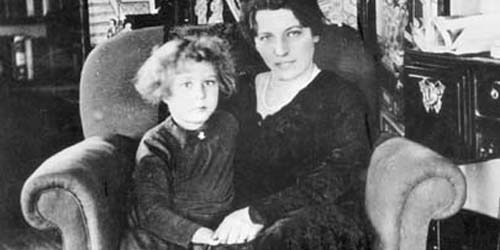
Pearl and her daughter Carol.
The Bucks' first child, Carol, was born in 1921; a victim of PKU, she proved to be profoundly retarded. Furthermore, because of a uterine tumor discovered during the delivery, Pearl underwent a hysterectomy. In 1925, she and Lossing adopted a baby girl, Janice. The Buck marriage was unhappy almost from the beginning, but would last for eighteen years.
From 1920 to 1933, Pearl and Lossing made their home in Nanking (Nanjing), on the campus of Nanking University, where both had teaching positions. In 1921, Pearl's mother died and shortly afterwards her father moved in with the Bucks. The tragedies and dislocations which Pearl suffered in the 1920s reached a climax in March, 1927, in the violence known as the "Nanking Incident." In a confused battle involving elements of Chiang Kai-shek's Nationalist troops, Communist forces, and assorted warlords, several Westerners were murdered. The Bucks spent a terrified day in hiding, after which they were rescued by American gunboats. After a trip downriver to Shanghai, the Buck family sailed to Unzen, Japan, where they spent the following year. They then moved back to Nanking, though conditions remained dangerously unsettled.
Pearl had begun to publish stories and essays in the 1920s, in magazines such as Nation, The Chinese Recorder, Asia, and Atlantic Monthly. Her first novel, East Wind, West Wind, was published by the John Day Company in 1930. John Day's publisher, Richard Walsh, would eventually become Pearl's second husband, in 1935, after both received divorces.
In 1931, John Day published Pearl's second novel, The Good Earth. This became the best-selling book of both 1931 and 1932, won the Pulitzer Prize and the Howells Medal in 1935, and would be adapted as a major MGM film in 1937. Other novels and books of non-fiction quickly followed. In 1938, less than a decade after her first book had appeared, Pearl won the Nobel Prize in literature, the first American woman to do so. By the time of her death in 1973, Pearl would publish over seventy books: novels, collections of stories, biography and autobiography, poetry, drama, children's literature, and translations from the Chinese.
In 1934, because of conditions in China, and also to be closer to Richard Walsh and her daughter Carol, whom she had placed in an institution in New Jersey, Pearl moved permanently to the US. She bought an old farmhouse, Green Hills Farm, in Bucks County, PA. She and Richard adopted six more children over the following years. Green Hills Farm is now on the Registry of Historic Buildings; fifteen thousand people visit each year.
From the day of her move to the US, Pearl was active in American civil rights and women's rights activities. She published essays in both Crisis, the journal of the NAACP, and Opportunity, the magazine of the Urban League; she was a trustee of Howard University for twenty years, beginning in the early 1940s. In 1942, Pearl and Richard founded the East and West Association, dedicated to cultural exchange and understanding between Asia and the West. In 1949, outraged that existing adoption services considered Asian and mixed-race children unadoptable, Pearl established Welcome House, the first international, inter-racial adoption agency; in the nearly five decades of its work, Welcome House has assisted in the placement of over five thousand children. In 1964, to provide support for Amerasian children who were not eligible for adoption, Pearl also established the Pearl S. Buck Foundation, which provides sponsorship funding for thousands of children in half-a-dozen Asian countries.
Pearl Buck died in March, 1973, just two months before her eighty-first birthday. She is buried at Green Hills Farm."
www.english.upenn.edu/Projects/Buck/b...
Pearl as a young girl with her family.
Pearl Comfort Sydenstricker was born on June 26, 1892, in Hillsboro, West Virginia. Her parents, Absalom and Caroline Sydenstricker, were Southern Presbyterian missionaries, stationed in China. Pearl was the fourth of seven children (and one of only three who would survive to adulthood). She was born when her parents were near the end of a furlough in the United States; when she was three months old, she was taken back to China, where she spent most of the first forty years of her life. The Sydenstrickers lived in Chinkiang (Zhenjiang), in Kiangsu (Jiangsu) province, then a small city lying at the junction of the Yangtze River and the Grand Canal. Pearl's father spent months away from home, itinerating in the Chinese countryside in search of Christian converts; Pearl's mother ministered to Chinese women in a small dispensary she established. From childhood, Pearl spoke both English and Chinese. She was taught principally by her mother and by a Chinese tutor, Mr. Kung. In 1900, during the Boxer Uprising, Caroline and the children evacuated to Shanghai, where they spent several anxious months waiting for word of Absalom's fate. Later that year, the family returned to the US for another home leave.
In 1910, Pearl enrolled in Randolph-Macon Woman's College, in Lynchburg, Virginia, from which she graduated in 1914. Although she had intended to remain in the US, she returned to China shortly after graduation when she received word that her mother was gravely ill. In 1915, she met a young Cornell graduate, an agricultural economist named John Lossing Buck. They married in 1917, and immediately moved to Nanhsuchou (Nanxuzhou) in rural Anhwei (Anhui) province. In this impoverished community, Pearl Buck gathered the material that she would later use in The Good Earth and other stories of China.
Pearl and her daughter Carol.
The Bucks' first child, Carol, was born in 1921; a victim of PKU, she proved to be profoundly retarded. Furthermore, because of a uterine tumor discovered during the delivery, Pearl underwent a hysterectomy. In 1925, she and Lossing adopted a baby girl, Janice. The Buck marriage was unhappy almost from the beginning, but would last for eighteen years.
From 1920 to 1933, Pearl and Lossing made their home in Nanking (Nanjing), on the campus of Nanking University, where both had teaching positions. In 1921, Pearl's mother died and shortly afterwards her father moved in with the Bucks. The tragedies and dislocations which Pearl suffered in the 1920s reached a climax in March, 1927, in the violence known as the "Nanking Incident." In a confused battle involving elements of Chiang Kai-shek's Nationalist troops, Communist forces, and assorted warlords, several Westerners were murdered. The Bucks spent a terrified day in hiding, after which they were rescued by American gunboats. After a trip downriver to Shanghai, the Buck family sailed to Unzen, Japan, where they spent the following year. They then moved back to Nanking, though conditions remained dangerously unsettled.
Pearl had begun to publish stories and essays in the 1920s, in magazines such as Nation, The Chinese Recorder, Asia, and Atlantic Monthly. Her first novel, East Wind, West Wind, was published by the John Day Company in 1930. John Day's publisher, Richard Walsh, would eventually become Pearl's second husband, in 1935, after both received divorces.
In 1931, John Day published Pearl's second novel, The Good Earth. This became the best-selling book of both 1931 and 1932, won the Pulitzer Prize and the Howells Medal in 1935, and would be adapted as a major MGM film in 1937. Other novels and books of non-fiction quickly followed. In 1938, less than a decade after her first book had appeared, Pearl won the Nobel Prize in literature, the first American woman to do so. By the time of her death in 1973, Pearl would publish over seventy books: novels, collections of stories, biography and autobiography, poetry, drama, children's literature, and translations from the Chinese.
In 1934, because of conditions in China, and also to be closer to Richard Walsh and her daughter Carol, whom she had placed in an institution in New Jersey, Pearl moved permanently to the US. She bought an old farmhouse, Green Hills Farm, in Bucks County, PA. She and Richard adopted six more children over the following years. Green Hills Farm is now on the Registry of Historic Buildings; fifteen thousand people visit each year.
From the day of her move to the US, Pearl was active in American civil rights and women's rights activities. She published essays in both Crisis, the journal of the NAACP, and Opportunity, the magazine of the Urban League; she was a trustee of Howard University for twenty years, beginning in the early 1940s. In 1942, Pearl and Richard founded the East and West Association, dedicated to cultural exchange and understanding between Asia and the West. In 1949, outraged that existing adoption services considered Asian and mixed-race children unadoptable, Pearl established Welcome House, the first international, inter-racial adoption agency; in the nearly five decades of its work, Welcome House has assisted in the placement of over five thousand children. In 1964, to provide support for Amerasian children who were not eligible for adoption, Pearl also established the Pearl S. Buck Foundation, which provides sponsorship funding for thousands of children in half-a-dozen Asian countries.
Pearl Buck died in March, 1973, just two months before her eighty-first birthday. She is buried at Green Hills Farm."
www.english.upenn.edu/Projects/Buck/b...
Displaying 1 - 30 of 213 reviews