J. B. Jackson, a pioneer in the field of landscape studies, here takes us on a tour of American landscapes past and present, showing how our surroundings reflect important changes in our culture. Arguing that our urban environment makes us increasingly concerned with time and movement rather than place and permanence, Jackson examines the new vernacular landscape of trailers, parking lots, roads, and shopping malls, and traces the development of dwellings in New Mexico from prehistoric pueblo villages to mobile homes.
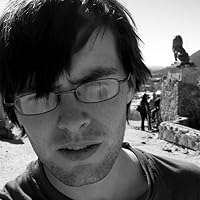
John Brinckerhoff "Brinck" Jackson, J. B. Jackson, (September 25, 1909, Dinard, France - August 28, 1996, La Cienega, NM) was a writer, publisher, instructor, and sketch artist in landscape design. Herbert Muschamp, New York Times architecture critic, stated that J. B. Jackson was “America’s greatest living writer on the forces that have shaped the land this nation occupies.” He was influential in broadening the perspective on the “vernacular” landscape.
Really enjoyed this much-needed non-fiction. It was recommended on an episode of the Bibliography podcast by Goldberry Books. J. B. Jackson was a landscape historian, and this book of loosely connected essays covers his thoughts about the 'vernacular landscape,' everything from Puebloan ruins in the Southwest, to why the landscape needs roads. It was written in the early 90's, and it's too bad he's not here to update--would love his thoughts on GPS. Looking forward to reading more by him.
Currently reading on Google books. This is what I suggest ... go to this site ( http://books.google.com/books?id=nqo5... ) and at the table of contents click on the section about New Mexico. Read what he says about the Pueblo Indians and if it doesn't blow you away don't listen to another thing I say about anything. This is a book I have read before. Jackson is a fascinating thinker and a wonderfully clear and lucid writer. his thoughts about landscape and culture were revelatory for me and very important to me as an artist. Up there with Bachelard's Poetics of Space especially since I could understand Jackson's writing! It is really a sweet read.
This book is a three and-a-half, but not afforded the opportunity to rate it so, something compels me to round down rather than up. Jackson is that rarest of instances of the non-academic who is revered within his/her relevant academic community (his most-notable contribution to the field of cultural geography being the journal Landscapes, which he founded). Jackson was blessed with a highly readable, highly enjoyable writing style with none of the pretensions trappings of most academic writing. This, along with his keen observations, allowed his writing to escape the limits of academic audience into the culture at large. This book includes many joys and more than a few surprises. I would highly encourage someone who is interested in Jackson to pick it up. Your curiosity will be rewarded. While not every essay is gold the following range from very good to fantastic - must-reading for anyone interested in the idea of place:
"The Accessible Landscape" "Seeing New Mexico" "Pueblo Dwellings and Our Own" "Church or Plaza?" "Beyond Wilderness" "Working at Home" "A Sense of Place, A Sense of Time"
A truly inspiring read. The clarity with which J.B. Jackson approaches the modern built environment is a model that I wish more would follow. Highly recommended to anyone interested in houses, gardens, roads, cars, in short-- any of the core aspects of modern life.
"This is the virtue and even the beauty of this time of year in northern New Mexico: it isolates and intensifies existence; it creates a landscape and then preserves it by freezing it." (22)
"[A]fter the Norman Conquest, hunting became the ruling passion of the nobility; and that was when the word forest came into the English language -- to designate not a kind of vegetation or topography, but a legal entity: an area outside (in Latin, fores) the realm of customary law; an area reserved for certain important persons, the king included, who enjoyed hunting big game." (76)
"We are constantly interacting with trees: some of them give us fruit, others give us firewood, and all have to be thought about and even worried about when we consider the future. In brief, trees give us a sense of responsibility and sometimes a kind of parental pride; each domesticated tree calls for an individual response, a response far richer, far more rewarding that a strictly passive -- aesthetic or ecological -- response to the forest." (95)
"Many of those eight thousand trucks in 1910 were small electric delivery trucks..." (174)
"The small commercial or service vehicle is helping weave together the city which an earlier generation of automobiles had torn apart. Both kinds of vehicles, the passenger car and the truck, share responsibility for decentralization, but each has begun to mitigate the effect o the other. ... Both responses are helping create a vernacular type of city; loosely structured, fluid, and expansive." (185)
"[R]oads and streets and alleys and trails can no longer be identified solely with movement from one place to another. Increasingly they are the scene of work and leisure and social intercourse and excitement." (190)