Jump to ratings and reviews
Rate this book

On Royalty: A Very Polite Inquiry into Some Strangely Related Families

Rate this book
The notable characteristic of the royal families of Europe is that they have so very little of anything remotely resembling true power. Increasingly, they tend towards the condition of pipsqueak principalities like Liechtenstein and Monaco-fancy-dress fodder for magazines that survive by telling us things we did not need to know about people we have hardly heard of. How then have kings and queens come to exercise the mesmeric hold they have upon our imaginations? In On Royalty, renowned BBC journalist Jeremy Paxman examines the role of the British monarchy in an age when divine right no longer prevails and governing powers fall to the country’s elected leaders. What Desmond Morris did for apes, Paxman has done for these primus inter the royal families.

386 pages, Kindle Edition

First published January 1, 2006

44 people are currently reading
478 people want to read

About the author

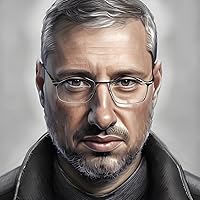
Jeremy Paxman

23 books102 followers
Jeremy Dickson Paxman is a British journalist, author and television presenter. He has worked for the BBC since 1977. He is noted for a forthright and abrasive interviewing style, particularly when interrogating politicians. His regular appearances on the BBC2's Newsnight programme have been criticised as aggressive, intimidating, condescending and irreverent, and applauded as tough and incisive.

Ratings & Reviews

What do you think?
Rate this book

Friends & Following

Create a free account to discover what your friends think of this book!

Community Reviews

5 stars
88 (14%)
4 stars
216 (34%)
3 stars
241 (38%)
2 stars
67 (10%)
1 star
12 (1%)
Displaying 1 - 30 of 82 reviews
Profile Image for Margarita Garova.
483 reviews265 followers
July 9, 2023
Убедените републиканци могат да бъдат спокойни – книгата не е възхвала на монархическата институция. Всъщност, Паксман през цялото време изтъква нейната нелогичност и несъстоятелност в модерните времена, утвърдили демократичното начало в изборния процес, а не родовата приемственост, основана на привилегии. Монархията по същността си е алогична и може би точно заради това народите на държави с монархическо устройство не са никак склонни да я премахнат – тя апелира към чувствата и емоциите, въплъщава надполитическото и злободневното, като в същото време медиите я правят достатъчно достъпна и прозрачна, за да не загуби съвсем връзка с реалността.

Като недостатък на книгата отбелязвам подвеждащото заглавие, което препраща към един по-широк, общоевропейски анализ на монархиите в исторически план. Реално обаче историческият план го има, но не и европейското. Авторът се е концентрирал почти изцяло върху британската история, а доколкото е дал примери с други държави, го е направил за целите на сравнителния анализ. Например, сред малкото не-британски примери посочва и българския цар Фердинанд, който присъства изцяло карикатурно. Въпреки това книгата съдържа, когато е възможно да бъдат откроени в цялостния словесен поток, ценни размисли на британската политическа мисъл.

Но дори и при това ограничено поле на изследване, Паксман е постигнал сравнително интересен разказ, макар и в доста моменти разводнен с повторения и излишна и вече малко остаряла информация. Всъщност, когато мислим за монархията, ние си представяме най-вече британската и от тази гледна точка е интригуващо да се проследи нейната еволюция, повратен момент в която се оказват две събития от 20 век – революцията от 1917 г. в Русия и разстрелът на братовчедите Романови и абдикацията на Едуард VIII през 1936 г. Оттогава Уиндзорската династия полага неимоверни усилия, за да оцелее, адаптирайки се към все по-бързите времена. Но тя не би могла да съществува каквито и усилия да положи, ако хората нямаха нужда от нея.

По-интересното за мен обаче е друго. Как, при наличието на история, по-голямата част от която е преминала под знака на монархията в една или друга форма, у българското колективно съзнание не е останала никаква следа – нито сантимент, нито остатъчни практики (символи, маниери) от тази история. Болният националистически възторг по трите морета е нещо съвсем друго. Отчасти си го обяснявам със сравнително краткия период в исторически мащаб, през който сме имали съвременна монархия – по-малко от сто години и с последвалите старания всякакви следи от този период да бъдат заличени, а от друга – със слабото чувство за историчност и ниската и често пъти избирателна историческа култура на българина.

Аз съм с монархически убеждения, според мен един крак/кралица е много по-сплотяваща фигура от президент на република, който често следва амбициозен дневен ред и прокарва разделителни линии в обществото. А и както казва и самият автор, европейските държави, които са и монархии, са доста по-стабилни и проспериращи от републиките. Изглежда, че фигурата на монарха, дори когато има номинална власт, дори когато е безлична или неприятна фигура, не се отразява на привързаността към самата институция и това, което въплъщава – едно по-устойчиво разбиране за националната идентичност, реверанс към миналото и традициите и романтичен повей от инфантилния и донаучния период на света, но без недостатъците на абсолютната тирания.

„По-добре короната да бъде носена от глупак, отколкото от някой, който си е въобразил, че има да изпълнява мисия.“
„Фактът, че короната разполага с толкова малко власт, пречи на републиканците да убедят хората, че биха спечелили нещо, ако се отърват от нея.“
„…изчезналите монархии са тези, които са били най-деспотични и са се отличавали със склонност към самовъзвеличаване.“
„Радикалните възгледи принадлежат на тези, които се ръководят от въображаемото бъдеще, вместо от добре известното минало.“
„…британците като че ли обичат кралете и кралиците си най-много, когато са много млади или много възрастни.“
„Ако длъжността на президент беше свързана със същата степен на доживотен интерес към изпълняващата я личност, то кандидатите за тази работа биха били много малко.“
Profile Image for David.
865 reviews1,664 followers
November 7, 2007
Actually, the third star is a reflection more of my own weakness for royal gossip and similar trivia. Paxman's treatment isn't particularly lively. One senses that an overdeveloped sense of deference is possibly cramping his style, and a deference is the kiss of death to liveliness.

After I'd dutifully slogged through to the end, I remembered that Christopher Hitchens had written a review which appeared in The New York Times:

http://www.nytimes.com/2007/07/08/boo...

Reading it again, I'm surprised at how gently Hitchens treats the book. It reminded me that by far the funniest part of the book is paxman's account of King Leka, pretender to the throne of Albania.

Note: I include the link to the NYT review above because of a completely awesome feature that I just found out about. Double-clicking any word in the Times review will call up an encyclopedia definition of the word. How awesome is that?

Profile Image for Margaret.
904 reviews36 followers
May 29, 2015
A thoroughly enjoyable and thought-provoking book. A rebublican by conviction when he started the book, Paxman considers all aspects of the British royal family, past and present: their ancestry and history; their relationship with their people, and with God; their day-to-day life in the past and these days; their obligations, rights and responsibilities. It's a closely and thoroughly researched book, but witty too, and written with a light touch. At the end he concludes that, with all its imperfections, the stability and well being of our country is better assured by the fact that we have a hereditary monarch, rather than an elected president. I found it easy to agree with his arguments.
Profile Image for Stefan Mitev.
167 reviews705 followers
January 22, 2022
Известният журналист и телевизионен водещ Джереми Паксман прави исторически и културологичен анализ на кралската институция. Защо хората продължава да се вълнуват от владетелите с наследствена титла дори и изцяло лишени от политическа власт в днешни дни? Защо скандалите около британското кралско семейство винаги са водеща новина в медиите? Отживелица ли е монархия? Трябва ли обществото да почита откровено неуспешни и непопулярни крале?

Книгата е пълна с исторически "винетки", които могат да ни изненадат и впечатлят. Например, в средновековието при раждането на престолонаследници често са присъствали независими "свидетели", които да потвърдят легитимността и чесността на процеса, който протича без "подмяна". Кралете са от една страна галеници на съдбата, защото получават всичко дори и да не притежават амбиция и талант, но от друга, парадоксално имат ограничения в своята свобода. Например изборът на брачен партньор е понякога е мъчителен, съществува негласно задължение за създаване на потомство (и то от мъжки пол) преди всичко останало, изисква се умело избягване на публични скандали и спорни теми, които могат да опетнят публичния образ. Екстремен пример за последното е, че по време на Октомврийската революция в Русия цар Николай Втори търси убежище в Англия от собствения си братовчед Джордж Пети, но получава отказ, защото британската публика не би одобрила подобен акт. Съответно, Николай е заловен и безмилостно убит от болшевиките.

Джереми Паксман споменава няколко пъти и цар Фердинанд, но в лоша светлина. Внушава на читателите, че никоя кралска особа не е искала да стане цар на България. Валдемар Датски отказва. Анекдотично книгата ни разкрива, че Фердинанд научава за "свообдната позиция" след като в една виенска билярдна зала български емисари изразяват открито безсилието си да намерят монарх. Има дори коментар и върху сексуалната ориентация на Фердинанд. Не е спестена критика и към албанците, които търсят свой крал чрез обява в английски вестник. Понякога английският хумор е прекалено краен.
This entire review has been hidden because of spoilers.
Profile Image for Nick Davies.
1,740 reviews59 followers
May 19, 2023
What with it being coronation season, I thought I'd read this one (picked up cheap second hand a few weeks previously) to get a bit of background. Though written a good decade or so ago, hence there were points which felt slightly non current (obviously) I thought this was a very insightful, well-researched and entertaining exploration of the roles and reasons for royals. Not getting too bogged down in history, this spent more time looking at the monarchy in the 20th and early 21st Century, and I found it fair (not fawning, not attacking) and pretty balanced. Paxman surprised me with his tone.. less haranguing and confrontational than on television!
Profile Image for Sharon Terry.
131 reviews5 followers
June 15, 2018
This is an entertaining enquiry into the persistence of the British monarchy into the twenty-first century.

Despite the loss of Britain's empire, the political power monarchs once had and even the "mystique" of royalty, Britain is still not a republic. Paxman cites example after example of monarchies being deposed, especially after the upheavals of 1848 - or deliberately imposed, in the case of Greece and Albania - to show what a wobbly institution it can be, yet it seems to have remained firm in Britain. Much of its later success is undoubtedly due to the present queen, who is often presented as a symbol of enduring values and strengths in an uncertain world. The major events of her life and reign are surveyed, including her lowest ebb - the death of Princess Diana and its subsequent mishandling by the Palace - and the desperate damage control and eventual success in restoring her in the public's estimation.

These events, however, simply underscore the importance of the personality and public performance of the monarch herself in keeping the institution going. Much anxiety exists among monarchists about what will be its fate when the queen is inevitably succeeded by Prince Charles. Paxman doesn't believe the succession will bypass him; at most, he could become a regent, before becoming king, like George IV, if his mother's final years are clouded by illness or incapacity. What bothers people most about Charles is his difficult personality and tarnished image: Paxman holds that the monarchy must unite people, whereas, already, Charles seems to divide them.

There is much analysis throughout the book, as well as humour, historical and contemporary anecdotes, so I would recommend it to anyone interested in monarchical systems or just the incredible longevity of the English monarchy.
Profile Image for Stephanie.
1,190 reviews
June 19, 2012
Christopher Hitchens gave it a good review in the New York Times, but I just couldn't get into it. Paxman's writing is just too pedantic for me, and did not make this subject -- the always fascinating one of royal families -- enticing. I did have fun, though, looking through the index and reading snippets. Who could resist reading more about "Hawaii: dynastic incest, 45" or "Zog, King of the Albanians, 30-2, 35, 29-40, 43"?
Profile Image for Fiona.
982 reviews528 followers
August 24, 2012
Leaves you wondering why we take royalty seriously at all. Another lightweight book from JP but very enjoyable reading about this bizarre institution.
18 reviews
March 4, 2009
A droll look from every angle at the British monarchy, it's quirky history and incomprehensible staying-power. For Americans wondering why there's a Queen, anglophiles, and especially fans of Elizabeth II, a fun, insightful, and irreverent book.
Profile Image for Marissa.
57 reviews1 follower
June 1, 2008
Very interesting book. Read if you like history, interesting tidbits, or royalty (obviously). The author writes in a british dialect and humorously, as all English authors do. Good, quick read.
Profile Image for Katie Bee.
1,249 reviews9 followers
June 28, 2017
Lighweight, detached, and somewhat repetitive. Paxman's musings on the subject of royalty read more like an extended essay or treatise that became bloated out of shape, rather than a proper book. Still, he is at times an engaging writer and there are moments of interest.

One of the strongest elements of the book - or at least, most interesting to me personally - was that Philip's personality comes across rather more clearly in this book than most other places I've read about him.
The duke's personal style is a disconcerting mixture of bluff affability and utter disdain: although no intellectual himself, he does not suffer fools gladly. He has a blazing temper and appears almost pathologically incapable of saying sorry. But his staff seem devoted to him: even the duke's retired private secretary still ambles into Buckingham Palace most weeks. They have had to get used to his sense of humour. On one state visit the duke was showing Queen Beatrix of the Netherlands down the receiving line in Buckingham Palace, introducing her to members of the household. At the end of the line, blinking out from behind the palm fronds, stood his private secretary. 'I've no idea who this is,' said the duke to the visiting queen. 'Must be some gatecrasher.'

Philip's marginalia in another writer's unpublished royal biography, later encountered and reported by Paxman, made me laugh. 'Rubbish,' he observes tartly to a supposed 1952 quote he's supposed to have said (one that I've seen many places), and scribbles 'wrongly' when the author says that general knowledge has it that the Royal couple has separate bedrooms. (291) Paxman was also able to interview him (and Charles, on a separate occasion, though not the Queen), and I must say that I rather sympathize with him as regards Rupert Murdoch. (236-38) Perhaps the most perceptive moment in this book to me was Paxman's observation that Philip's 'bluff manner' would have been standard and accepted in past generations, but that nowadays the amplification (and soundbite nature) of the mass media means that a joke that doesn't land becomes international news in a moment.

One problem the book has is one that is common to many a human endeavor: events eventuated. Paxman's thoughts on the future of the monarchy feel thus incomplete and out-of-date. I would be interested to read an afterword that considered the Diamond Jubilee and, more central to the future of 'The Firm', the overwhelming popularity of William & Kate and their children. As it is, Paxman ends with the prospect of Charles & Camilla, and while they may yet take the throne for an attenuated reign, the 'damage' that people have worried (or hoped) they might do the institution seems much less central than it might have done in previous years. With William, Kate, George, and Charlotte in the wings, Charles and "his image as a spoilt, talking-to-the-trees grumbler" have become simply transitional. (279)

On the other hand, this newest evolution in the course of the Royal Family is accounted for in Paxman's premise. A mild republican by nature, by the end of his musings on royalty Paxman seems to have lapsed into mild royalism - or at least, the absence of a desire for royal abolition. His final paragraph sums up his journey and the book as a whole:
Certainly, if we were devising a system of government for the twenty-first century we should not come up with what we have now. The arrangements are antique, undemocratic and illogical. But monarchies do not function by logic. If they work, they do so by appealing to other instincts, of history, emotion, imagination and mythology, and we have to acknowledge that many of the most stable societies in Europe are monarchies, while some of the most unstable and corrupt have presidents. It would theoretically be possible to pull one thread out of the rug woven by history (although we do not know what other threads might then unravel). We could easily pack all of them off to live out their lives in harmless eccentricity on some organically managed rural estate. But why bother?
546 reviews9 followers
August 12, 2023
This is a book about the psychology of monarchy, examined from the perspective of both the monarch and their subjects. Its general theses is that the monarchy, like religion, is an irrational institution but that it answers to deep-rooted human impulses. These are what make it difficult for Republicans to get their voices heard. The thesis probably holds most strongly in England and Paxman fails to examine its opposite - the thriving of republics across the globe without the projected fantasy of Monarchy. There are, however, many entertaining insights into the quirks of the monarchical mind to be found, especially in areas where Paxman was granted access to the Royal household. It is also striking that the strongest Republican argument (from a Guardian piece) is one that accepts the need for the fantasy but argues that the fantasy itself is too outmoded and simplistic.
Profile Image for Artem.
44 reviews4 followers
January 1, 2018
Typical Paxman banter, barely comprehensible, meandering in all sorts of directions. Self-congratulatory tone definitely doesn’t help when it’s hard to even understand the point of the book. It’s something to do with Paxman’s distaste for the institution and how it fits into modern society and politics but the whole thing is incredibly sloppy. He only occasionally touches on other royal families to somehow give the title justice and make the book more comprehensive but most of the book is focused on the British royal family and covers just the most sensational, non-operational parts. The anecdotes are dry and uninteresting; the research done for this book feels like an offhand exercise during some sort of an excursion. Skip it.
Profile Image for Annika.
674 reviews44 followers
November 7, 2018
A quick read, just some fun facts here and there about the different lines of Windsors/Hanovers/Tudors/Romanovs etc etc etc. I was hoping he'd talk past Prince Charles, let's start with William/Kate, even Harry/Megan might be too new still. But he stops at Charles (and nothing new there, the man is just not as intriguing as his sons are/will be). This is not a disappointing book, it's great for Royal Family fans, for any royal family.

Also the first time I saw the Queen's name linked with Glenn Miller. And man I love a conspiracy theory. Also, some good insight into the Anastasia Romanov imposter. I think there are good apologetics about royalty, as a whole, as to what it really means to be "royal" in this society and through history.

1,596 reviews1 follower
January 24, 2024
Oh, for an updated version! The last 20+ years have seen a whole new raft of characters joining or impinging on the British Royal Family e.g. Kate, Camilla as queen, Meghan, Jeffrey Epstein etc. plus the death of the Queen and Prince Philip. And I loved the fact stated that the then Prince Charles was known for his peevishness; nothing changes, as evidenced by his hissy fits during his ascension when two pens failed him.

In summary, a thoroughly enjoyable read about, and analysis of, mainly the British Royal Family, its role then and now, plus a discussion as to why we still have a monarchy.
P.S. I quote ‘What has gone wrong in the relationship between the newspapers and the royal family’. I think Harry has certainly told us!
Profile Image for Adrienne.
709 reviews3 followers
January 15, 2024
A book about the role and purpose of monarchy, primarily focusing on Britain in the 20th century. I was not previously familiar with the author, and I was impressed by his writing. I'd definitely read more by him. I appreciated his understanding of the facts and his presentation of them. The book was first published in 2006, and therefore probably written in 2004-5, so obviously some of the insights and predictions have been proven to be inaccurate. Now that Charles is King Charles III, I would love an update that would cover the last 20 years.
Profile Image for Scott.
2 reviews
August 23, 2019
If you're into the history of royalty (not just in the UK), you'll likely enjoy this book to a certain extent. However, it doesn't add anything new. The main focus is on the relevance of royalty today.
1,325 reviews5 followers
September 3, 2024
Oh, I don't know. This one is a bit all over the place. There's quite a bit about British Royalty, but also some dipping into other monarchies. Mostly I felt like the author wanted us to know that he felt it was all a bit silly, and he would return to the point often.
Profile Image for Holley Peterson .
51 reviews1 follower
August 27, 2019
I'll read anything by Jeremy Paxman - massive crush - and oh yes he's very literate and clever :-)
Profile Image for Dipra Lahiri.
800 reviews52 followers
May 22, 2023
Decided to read on the occasion of Charles's coronation. A deeply researched book, analytical without being dull, with flashes of Paxo's trademark dry wit, whilst never taking sides.
4 reviews1 follower
February 20, 2015
It was indeed repetitive at times, but I feel if this were kept as a book to just 'dip into' for entertainment, as was probably primarily intended, this would be less bothersome and more of an asset. I didn't necessarily agree with Paxman's prime analysis that logic plays no part in why the British Monarchy is still in place; he seems to contradict himself on this point himself when advocating the advantages of monarchy over a political head of state (his arguments seem perfectly logical to me). I feel his point that logic is not the prime or necessary ingredient in supporting monarchy is taken in the end to be exaggerated and we end up with the notion there is no logical case to be made at all. Which is factually untrue whether you're a Republican or not. But, on all other counts Paxman does a great job of entertaining and has indeed dug up some bizarre and wonderful information.

I would say read, if like me, you have very little knowledge or previous interest in 'Royalty' (meaning in this work mainly British royalty) as it will peak your curiosity without disappointing you (it is not a comprehensive works). It is indeed, in my opinion, a political work coming from a resolutely British perspective. So, do not rely exclusively on this title if you are looking for an in-depth view of the idea of 'royalty' across different societies or a detailed history of monarchy in either Britain or other countries, or any conventional 'history' book at all. It is not chronological or devoted to historical analysis in any degree. It is more a discussion of things that are historical. I believe this was what it was intended to be, and is still an accomplished piece of intellectual discipline, considering this topic is potentially so broad and messy.

Overall, it is interesting, refreshingly light for any devoted history readers, charmingly of its time (the views are somewhat dated now, being a 2006/2007 edition, and the royal family having gone through more evolutionary episodes since). As long as you have taken the time to understand what the aims of this book are, and are not, I challenge anyone not to commend and enjoy it for what it is.
Author 71 books155 followers
April 5, 2013
Paxman's On Royalty reads like one of his BBC documentaries, the style is dry and full of flashy buzz words and the content is second rate and not as polite as the the title of the book claims to be. The book starts as an intermittent attack on the queen and her predecessors, interrupted every now and again with flash stories about some of Europe's monarchies. To Paxman the 'short' and 'smiley' queen is inferior in intellect to the rather 'bookish' queen of Denmark who has the air of a 'university professor'. He carries on talking of George the sixth failure at Oxford, the prince of Wales's mishaps and adultery, and the queen's sisters' marriage failures. Then suddenly the book turnes upside down, refuting what its first half is all about. George the fifth's letting down of his cousin the tzar of Russia which led to his execution by the Bolshevicks, becomes the demonstration of a king's restricted will and diminishing powers. Diana's crisis turnes to be the fault of the media who demonized the royal family, and the royal family's marriage failures become something that makes them fit more in the current world in which many of their subjects suffer from the same problems. Paxman ends the book with the note that the monarchy is the core of the country's stability and that many corrupt countries in the world are republics headed by elected presidents.

Although the book contains a few entertaining accounts on the monarchies of Europe and at home, I do not get the inconsistant attacks on the monarchies which sound more like something that is put there just to shock the reader and make the book interesting. Possibly the only thing I agree with in the book is the last note, to which I add; the British monarchy is the core of stability of the peculiar British democratic system, and the insurance policy in situations of dead lock and elections mishaps.
Profile Image for Simon Howard.
711 reviews17 followers
January 19, 2016
This third volume in Paxman’s series on British culture essentially presents a well-argued case for retaining the monarchy, whilst simultaneously recognising the manifold flaws, improbabilities, and injustices of the system. And, actually, I rather agree with his point of view – which, to some degree, makes for a less challenging and engaging read. I always think it’s always more interesting to read things which challenge your views, rather than things which reinforce them – though often, things which challenge your views end up reinforcing them anyway.

Paxman uses an awful lot of history of our monarchy, and several throughout the world, to flesh out his argument, and there is obvious potential for this to become very dry and dull – a potential that, fortunately, is never fulfilled. Paxman crafts a cogent, coherent, and entertaining argument, presented with the wry, dry humour for which he has become renowned.

The real joy of the book is in Paxman’s narrative. It would be easy for a title such as these to lose its narrative thread, but by providing a clear argument running throughout the book, Paxman manages to engage the reader and maintain their engagement, even when explaining complex historical events – albeit in a very accessible style.

Paxman provides a robustly constructed, irreverent, and entertaining guide to an institution he argues is simultaneously and paradoxically anachronistic, yet relevant and essential to today’s society. To a person like me – relatively poorly informed about British history – Paxman provides a great introduction and makes a clear argument for retention of the monarchy, whilst also allowing his trademark personality to shine through.

I thoroughly enjoyed On Royalty, and would happily recommend it: Its humour gives it easy-read levity, whilst its recurring themes and central message make it thought-provoking and memorable.
85 reviews3 followers
November 26, 2011
This is certainly an interesting read, and written in an easy style by Mr. Paxman. Although it certainly contain his opinions (on the concept of monarchy in general and the House of Windsor in particular) and one can almost hear him utter some of the phrases used (those of us used to his Newsnight style), it is probably as near to an objective analysis of the subject matter as is to be found in print anywhere nowadays.

Some of the chapter divisions are perhaps questionable, with some issues having to be repeated because they cross several boundaries (such as the mass mourning hysteria that followed the death of Diana, Princess of Wales in 1997), but there is a certain logic in dividing up the various chapters as they are, giving the author scope to make comparisons between the current House of Windsor and their forbears, as well as with other monarchies in Europe and beyond.

One slight quibble – no doubt in order to reinforce his wholly agnostic view of royalty, I find distasteful and odd his insistence on using lower case lettering when referring to specific individuals such as The Queen (“the queen”). There is no problem when using the term “queen” when referring to queens in general, but titles conferred on individuals ought, as a basic rule of grammar (not to mention politeness) to commence with an upper case letter. Odder still because of his lack of consistency: not “prince Charles” but “Prince Charles” in some places.

Any reader is bound to find new material contained in this book, but it does cover a lot of ground already covered by many authors in the past. Recommended to anyone with an interest in Royalty in general or the British Royal family in particular.
119 reviews8 followers
May 15, 2011
Another of my "ripped-from-the-headlines" background reading picks (remember the Royal Wedding? yeah, seems like a long time ago). Paxman's success in covering several centuries' worth of royal history in 300 pages is mixed, and his efforts to include royal families beyond the British one are uneven, though sometimes the comparative angle is interesting (Albania's attempt to recruit a king). Most of the book concerns the 20th-century House of Windsor and Paxman's search to understand why it still exists. His conclusion? Like so much else about politics in general, "monarchies do not function by logic . . . [but] by appealing to other instincts, of history, emotion, imagination and mythology."
Profile Image for  Becka.
64 reviews
August 7, 2007
Paxman's insider's look into the closed off, eccentric lives of the European (mostly British) royals is irreverent and wickedly entertaining. The colorful historical anecdotes about such matters as the abnormally large head of a Spanish king due to inbreeding and the baby talk that Edward VIII was prone to doing around Wallis Simpson, provide great brain candy under the guise of becoming more educated in European history. Paxman is a bit long-winded at times, but those passages are worth slogging through for the tastier tidbits. As a girl who grew up in blind awe of Queen Elizabeth and Diana, I'm very much enjoying this book.
Displaying 1 - 30 of 82 reviews

Can't find what you're looking for?

Get help and learn more about the design.