

What do you think?

I'm Not Crazy, I'm Just Not You: The Real Meaning of the 16 Personality Types
Tracing the growth of personality type study from Carl Jung to today's nuanced theory, Roger Pearman and Sarah C. Albritton show how greatly our individual personality preferences affect our interactions with others. I'm Not Crazy, I'm Just Not You teaches us how to overcome our natural inclination to judge difference in order to recognize and celebrate it, even across generational and cultural divides.
272 pages, Paperback
First published March 4, 1997
Ratings & Reviews
Friends & Following
Create a free account to discover what your friends think of this book!
Community Reviews
Displaying 1 - 30 of 49 reviews

December 16, 2016
I HAVE TO SAY WHEN I READ THIS TITTLE I GIGGLED and I just needed to read this book!
This book is purely written to understand yourself, other personalities and how to communicate, if you have a certain personality type, there will be times in your life when you will feel misunderstood AND yes even crazy!
Did you ever wonder why you react the way you do in certain situations, why you feel nobody understands you, or why you feel different about topics million other people find acceptable?
What is “normal” human behavior?

The Real Meaning of the 16 Personality Types

I read a bunch of articles on this specific topic the last couple of years, always wanted to learn more.
I done this 16 personality test as part of a training seminar. Like any other person doing the test that day, I was a bit reluctant, and to be honest I was not interested. But after the test I thought this test is quite accurate and interesting. I done the test +- 5 times over the last 3 years but the results stayed the same!
As my job situation changed drastically over the last 3 years I had to know how to treat and to respond to different cultures and people and situations. But this is the first book that I read that made sense why people do things the way they do them.

Background:
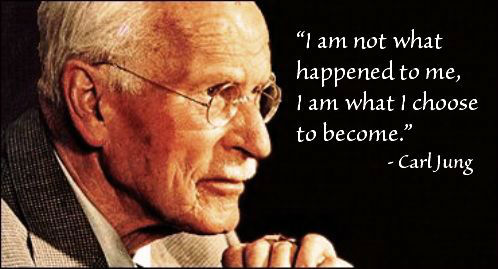
In 1921, Swiss psychologist/anthropologist/man of letters Carl Gustav Jung wrote Psychological Types
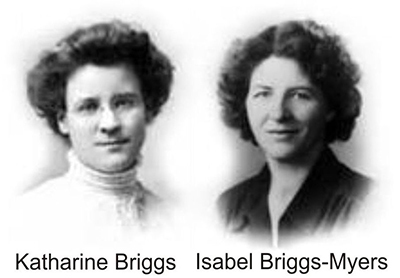
American Katharine Briggs and Isabel Briggs Myers done the same type of studies their studies was mostly why different people succeed or fail at different jobs.
So in the span of the following twenty years the Myers- Briggs Personality type was created referred to as the MBTI. Jung’s notion, honored in Myers and Briggs’ work, is that the different styles of perception, judgment, and energy flow are just that—different. One is not inherently better or worse than another.
But I think before you read this book you need to do the personality test, it is free (the link below) and takes +- 12 minutes.
FREE PERSONALITY TEST

https://www.16personalities.com/free-...
What I learned in this book is that we all - please note this section I highlights from the book!
About:
I’m Not Crazy, I’m Just Not You
Each individual has a unique personal psychology and behaves in ways that may have other roots. People’s life experiences, the demands of their current situation, their developmental stage in life (the perspective of adulthood is a good deal richer than the one of childhood)
For example, if a natural extrovert who gets energy from interacting with others is raised in an abusive home, he may learn that thinking out loud leads to conflict. As an adult, he may revert to a silent thought process or a detached coping strategy when he feels threatened or stressed.
The real gift of understanding type is the knowledge that there might be different but equally valid views about an issue, and that discussion about these views need not dissolve into an unpleasant personal argument.
(1) When two or more people are together, communication is an ongoing fact, whether we are trying to send messages or not;
(2) Projection is at the root of all communication— we hear or see something and project our meaning onto it;
(3) Most misunderstandings occur because of prejudice, preconception, and emotional reactivity, which are opposite the honesty, candor, and openness we generally want in relationships;
(4) How we express ourselves, what we project, and part of our prejudices, preconceptions, and emotional reactions are related to our psychological type;
(5) Psychological type can help us rationally understand our expressions and projections in constructive ways, and can also help us listen to others more effectively.
PATHWAYS OF COMMUNICATION
Type as a Lantern on the Path to Understanding
Mostly all humans want others in their life to be dependable and to be recognise as a reliable human
What aspects of our communication style trigger another’s reaction that leads to a misunderstanding?
How about our interpretation of others’ messages?
How often do we check them out? How aware are we of our own reactions and how these reactions affect our judgments?
So we have a cycle: We project what we learn, we learn from what we are, we are at least partly the outcome of the preferences we live out in daily life—and the way we live feeds what we learn. And so it goes, on and on.
If, for example, we learn at an early age that people are to be mistrusted and treated with suspicion, we tend to see others’ behaviors as having bad intentions and ulterior motives. Consequently, we withhold information from people and protect ourselves in ways that are likely to elicit responses that support our suppositions. If our preference is for Extroversion, we may express our distrust energetically; if we are Introverted, we may simply become too anxious around others to engage them. In either case, the results are the same: We project certain meaning onto another person’s behavior, behave ourselves in a way that supports our assumptions, and receive confirmation that our projection was correct.
Remembering that type is all about how we usually attend to information, what we attend to, how we decide, and how we act on what we believe to be true, we will explore type’s contribution to:
Extrovert Seeking and initiating in the environment
Introvert Receiving and reflecting on the environment
Communication Effects of Extroversion/Introversion
By habit, Extroverts tend to express themselves freely. They are so comfortable initiating in their environment that they assume everyone else is, too. Further, a lack of immediate reaction from Extroverts usually occurs when they do not trust a situation (or person) or when they feel incapable of making a reasonable response. Aware of this personal discomfort, they often assume that when they see someone else who is not immediately responsive, or who appears cautious, then that person must also be uncomfortable, worried, and possibly slow or only moderately competent in the situation. Notice the ease with which the Extrovert's experience becomes the baseline for judging others’ reactions. This is the nature of projection. It is an unconscious process that colors our understanding. It may well be the Extrovert's first unspoken prejudice; understanding is based on what the Extrovert is comfortable with, rather than what may be true for an Introvert.
For example
A consultant we know had been working with a group of managers on a regular basis over several months.
On a break during one session, the supervisor of the group approached with a smug grin and said, “You know, John, I’ve finally figured out why I don’t trust people like you!”
Somewhat taken aback, John nonetheless remembered his own lessons well enough to ask, “What do you mean by that?”
The supervisor said, “I’ve been watching you for all these months now, and I’ve finally figured it out.
Whenever one of my managers asks you a question, you always pause before you respond. I can see the gears turning in your head, and you’re not responding immediately tells me you’re withholding information from my people. I don’t trust anyone who doesn’t tell me all they know.”
This was all John needed to understand what was going on. He said, “George, if I ask you a question and you pause before responding, could I trust your response as being the whole truth?”
George replied quickly, “Absolutely not. If I can’t answer immediately, that means I have a hidden agenda to sort through before I can formulate a verbal response.”
“Aha!” John said. “Just because that’s true for you doesn’t mean it is for me. Remember our sessions on type a few months ago? As I recall, your preference is for Extroversion. Mine is for Introversion. All I can tell you is that when someone asks me a question, it’s like a marble being dropped into one of those multilevel puzzles with holes in each layer. It starts rolling around, finds the hole and drops to the next layer, finds the hole there and drops through to the next layer, and so forth until it falls out the bottom. When it falls out, I have a response. I am not consciously withholding anything. Nor am I stupid or slow. I simply prefer to process internally before I respond. In fact, if I respond too quickly it may mean I have a prefabricated answer that has been designed to cover something up!”
As the truth of this explanation dawned on him, George began to turn very pale. John touched him on the arm and asked what was wrong. George whispered, ashamed, “I can’t tell you how many people I’ve fired because I thought I couldn’t trust them.”
Consider the converse situation, in which a person with Introverted preference observes an Extrovert initiating and moving around in many interactions in a short period of time. The Introvert may view such behavior as shallow and superficial. Keep in mind that an Introvert engaged in this behavior may indeed feel shallow and superficial, and therefore assumes others would feel the same.
The Introvert’s baseline is all wrong for making sense of the Extrovert's behavior. It is safe to assume that people engaged in the environment and interacting with others are expressing Extroversion. In that mode, their comments may simply be the beginning or middle of thought, not the end. They may be probing for reactions, and if so their comments may have no more significance than to simply spur the conversation. They are constantly misunderstood as meddling, opinionated, and forceful, but if you listen carefully and hold your judgments in tow, you may hear information that reveals the richness of thought and the intent of the message.
When individuals are observant, somewhat disengaged, and seem careful about word choice, it is reasonable to assume they are expressing Introversion. In this mode, their comments are usually the end parts of their thoughts. What comes out verbally is their most complete thought on the topic for the time being. Receptive and appearing cautious, they are simply trying to create space in their environment to let their heads work.
But they generally share what is important to them, and if you listen carefully you will get a very good idea of their mind-set and perspective. They are not holding back, necessarily; they are simply sorting through all the internal static to become clear on what to finally say. Often misunderstood as aloof, condescending, and anxious, they are actually creating the time and space needed to respond to the experience they are having.
“Stepping Out” for Clarity
Trying to step out of the situation in which they find themselves in order to gain clarity, individuals with a Thinking preference seek to find criteria that can frame information and experience in such a way that there is a sense of objective analysis. It seems objective because of the logical, orderly manner in which situations are reviewed. Folks with a Thinking preference put enormous effort into looking at the pros and cons of a situation, analyzing how things are related, and proposing principles to guide their thoughts.
If you want to reevaluate how you behave or interact with other humans, or just have the desire to grow and improve yourself or why others and yourself act the way a certain way → I will recommend this book. If you are some kind of manager, or just have people reporting to you or just to understand your family, read this book I will recommend it.
This book is purely written to understand yourself, other personalities and how to communicate, if you have a certain personality type, there will be times in your life when you will feel misunderstood AND yes even crazy!
Did you ever wonder why you react the way you do in certain situations, why you feel nobody understands you, or why you feel different about topics million other people find acceptable?
What is “normal” human behavior?
The Real Meaning of the 16 Personality Types
I read a bunch of articles on this specific topic the last couple of years, always wanted to learn more.
I done this 16 personality test as part of a training seminar. Like any other person doing the test that day, I was a bit reluctant, and to be honest I was not interested. But after the test I thought this test is quite accurate and interesting. I done the test +- 5 times over the last 3 years but the results stayed the same!
As my job situation changed drastically over the last 3 years I had to know how to treat and to respond to different cultures and people and situations. But this is the first book that I read that made sense why people do things the way they do them.
Background:
In 1921, Swiss psychologist/anthropologist/man of letters Carl Gustav Jung wrote Psychological Types
"Everything that irritates us about others can lead us to an understanding of ourselves"
Carl Gustav Jung
American Katharine Briggs and Isabel Briggs Myers done the same type of studies their studies was mostly why different people succeed or fail at different jobs.
So in the span of the following twenty years the Myers- Briggs Personality type was created referred to as the MBTI. Jung’s notion, honored in Myers and Briggs’ work, is that the different styles of perception, judgment, and energy flow are just that—different. One is not inherently better or worse than another.
But I think before you read this book you need to do the personality test, it is free (the link below) and takes +- 12 minutes.
FREE PERSONALITY TEST
https://www.16personalities.com/free-...
What I learned in this book is that we all - please note this section I highlights from the book!
About:
I’m Not Crazy, I’m Just Not You
Each individual has a unique personal psychology and behaves in ways that may have other roots. People’s life experiences, the demands of their current situation, their developmental stage in life (the perspective of adulthood is a good deal richer than the one of childhood)
For example, if a natural extrovert who gets energy from interacting with others is raised in an abusive home, he may learn that thinking out loud leads to conflict. As an adult, he may revert to a silent thought process or a detached coping strategy when he feels threatened or stressed.
The real gift of understanding type is the knowledge that there might be different but equally valid views about an issue, and that discussion about these views need not dissolve into an unpleasant personal argument.
(1) When two or more people are together, communication is an ongoing fact, whether we are trying to send messages or not;
(2) Projection is at the root of all communication— we hear or see something and project our meaning onto it;
(3) Most misunderstandings occur because of prejudice, preconception, and emotional reactivity, which are opposite the honesty, candor, and openness we generally want in relationships;
(4) How we express ourselves, what we project, and part of our prejudices, preconceptions, and emotional reactions are related to our psychological type;
(5) Psychological type can help us rationally understand our expressions and projections in constructive ways, and can also help us listen to others more effectively.
PATHWAYS OF COMMUNICATION
Type as a Lantern on the Path to Understanding
Mostly all humans want others in their life to be dependable and to be recognise as a reliable human
What aspects of our communication style trigger another’s reaction that leads to a misunderstanding?
How about our interpretation of others’ messages?
How often do we check them out? How aware are we of our own reactions and how these reactions affect our judgments?
So we have a cycle: We project what we learn, we learn from what we are, we are at least partly the outcome of the preferences we live out in daily life—and the way we live feeds what we learn. And so it goes, on and on.
If, for example, we learn at an early age that people are to be mistrusted and treated with suspicion, we tend to see others’ behaviors as having bad intentions and ulterior motives. Consequently, we withhold information from people and protect ourselves in ways that are likely to elicit responses that support our suppositions. If our preference is for Extroversion, we may express our distrust energetically; if we are Introverted, we may simply become too anxious around others to engage them. In either case, the results are the same: We project certain meaning onto another person’s behavior, behave ourselves in a way that supports our assumptions, and receive confirmation that our projection was correct.
Remembering that type is all about how we usually attend to information, what we attend to, how we decide, and how we act on what we believe to be true, we will explore type’s contribution to:
Extrovert Seeking and initiating in the environment
Introvert Receiving and reflecting on the environment
Communication Effects of Extroversion/Introversion
By habit, Extroverts tend to express themselves freely. They are so comfortable initiating in their environment that they assume everyone else is, too. Further, a lack of immediate reaction from Extroverts usually occurs when they do not trust a situation (or person) or when they feel incapable of making a reasonable response. Aware of this personal discomfort, they often assume that when they see someone else who is not immediately responsive, or who appears cautious, then that person must also be uncomfortable, worried, and possibly slow or only moderately competent in the situation. Notice the ease with which the Extrovert's experience becomes the baseline for judging others’ reactions. This is the nature of projection. It is an unconscious process that colors our understanding. It may well be the Extrovert's first unspoken prejudice; understanding is based on what the Extrovert is comfortable with, rather than what may be true for an Introvert.
For example
A consultant we know had been working with a group of managers on a regular basis over several months.
On a break during one session, the supervisor of the group approached with a smug grin and said, “You know, John, I’ve finally figured out why I don’t trust people like you!”
Somewhat taken aback, John nonetheless remembered his own lessons well enough to ask, “What do you mean by that?”
The supervisor said, “I’ve been watching you for all these months now, and I’ve finally figured it out.
Whenever one of my managers asks you a question, you always pause before you respond. I can see the gears turning in your head, and you’re not responding immediately tells me you’re withholding information from my people. I don’t trust anyone who doesn’t tell me all they know.”
This was all John needed to understand what was going on. He said, “George, if I ask you a question and you pause before responding, could I trust your response as being the whole truth?”
George replied quickly, “Absolutely not. If I can’t answer immediately, that means I have a hidden agenda to sort through before I can formulate a verbal response.”
“Aha!” John said. “Just because that’s true for you doesn’t mean it is for me. Remember our sessions on type a few months ago? As I recall, your preference is for Extroversion. Mine is for Introversion. All I can tell you is that when someone asks me a question, it’s like a marble being dropped into one of those multilevel puzzles with holes in each layer. It starts rolling around, finds the hole and drops to the next layer, finds the hole there and drops through to the next layer, and so forth until it falls out the bottom. When it falls out, I have a response. I am not consciously withholding anything. Nor am I stupid or slow. I simply prefer to process internally before I respond. In fact, if I respond too quickly it may mean I have a prefabricated answer that has been designed to cover something up!”
As the truth of this explanation dawned on him, George began to turn very pale. John touched him on the arm and asked what was wrong. George whispered, ashamed, “I can’t tell you how many people I’ve fired because I thought I couldn’t trust them.”
Consider the converse situation, in which a person with Introverted preference observes an Extrovert initiating and moving around in many interactions in a short period of time. The Introvert may view such behavior as shallow and superficial. Keep in mind that an Introvert engaged in this behavior may indeed feel shallow and superficial, and therefore assumes others would feel the same.
The Introvert’s baseline is all wrong for making sense of the Extrovert's behavior. It is safe to assume that people engaged in the environment and interacting with others are expressing Extroversion. In that mode, their comments may simply be the beginning or middle of thought, not the end. They may be probing for reactions, and if so their comments may have no more significance than to simply spur the conversation. They are constantly misunderstood as meddling, opinionated, and forceful, but if you listen carefully and hold your judgments in tow, you may hear information that reveals the richness of thought and the intent of the message.
When individuals are observant, somewhat disengaged, and seem careful about word choice, it is reasonable to assume they are expressing Introversion. In this mode, their comments are usually the end parts of their thoughts. What comes out verbally is their most complete thought on the topic for the time being. Receptive and appearing cautious, they are simply trying to create space in their environment to let their heads work.
But they generally share what is important to them, and if you listen carefully you will get a very good idea of their mind-set and perspective. They are not holding back, necessarily; they are simply sorting through all the internal static to become clear on what to finally say. Often misunderstood as aloof, condescending, and anxious, they are actually creating the time and space needed to respond to the experience they are having.
“Stepping Out” for Clarity
Trying to step out of the situation in which they find themselves in order to gain clarity, individuals with a Thinking preference seek to find criteria that can frame information and experience in such a way that there is a sense of objective analysis. It seems objective because of the logical, orderly manner in which situations are reviewed. Folks with a Thinking preference put enormous effort into looking at the pros and cons of a situation, analyzing how things are related, and proposing principles to guide their thoughts.
If you want to reevaluate how you behave or interact with other humans, or just have the desire to grow and improve yourself or why others and yourself act the way a certain way → I will recommend this book. If you are some kind of manager, or just have people reporting to you or just to understand your family, read this book I will recommend it.

February 18, 2011
I'm Not Crazy, I'm Just Not You / 978-1-857-88552-1
I'm admittedly not a big fan of the Myers-Briggs personality types model. I've seen the model employed badly, too many times, at corporate retreats that seemed to use the model to stereotype and as an excuse to avoid getting to know individuals meaningfully. (One teacher argued that there was no point in ASKING an employee's opinion if you already knew what their "type" would want in any given situation - asking might result in misunderstandings, or in polite lies, from an employee who didn't know or couldn't express what their type "really" would want!)
I've also, anecdotally, taken many iterations of the test many times (as well as having family members rate me on their own), only to get a different type almost every single time. I can't honestly say that I've "collected" all 16 types, but I HAVE been each of the 8 subtypes, at various times. And I'm not alone - studies have shown that 50% of people who re-test get a different type at time of retest, and while this may be chalked up to poor testing, or poor self-reporting, or any number of other inherent difficulties in personality typing, the overall process makes me a little concerned. Nevertheless, I did try to keep an open mind going into this book when I received it from NetGalley, and I was at first prepared to recommend this book "if you must read a Myers-Briggs book", but deeper reading left me with mixed feelings.
From the start, there's a lot that's done right here. The authors carefully explain the general concepts of typing and really hammer home the crucial fact that types are "general preferences" per person, and not locked in behaviors. The authors note, "...we cannot make predictions of behavior or competencies based solely upon a person's type preferences," and I appreciate this strongly worded warning to corporate managers who try to staff projects based on personality type alone. In addition, the type components are much more clearly explained here - it's nice to see an author make the "correct" (according to Jung, anyway) distinction between introversion/extroversion, instead of leaving it to the current colloquial meaning of shy/outgoing (the English language having evolved extensively in the 60 years since Jung's ideas were published).
Despite the strong start, though, the writing starts to flounder - a lot of the material here is basically unsupported and loosely linked anecdotes about interactions with various children and managers, and the anecdotes frankly seem to me to be a stronger argument in favor of better communication overall (and general open-mindedness to differences) as opposed to a reason to study the 16 personality types in any kind of depth. The anecdotes seem flowing and disjointed, and sometimes don't seem to have a compelling connection to the current topic in the book.
Ultimately, I appreciate that the authors make the point that the Myers-Briggs model cannot be used in any scientifically significant sense to predict individual behavior, but once that has been established, I have to ask what is the point of a book dedicated to understanding the 16 types? I'd expected the super-title ("I'm Not Crazy, I'm Just Not You") to be more about understanding and tolerance to opposing opinions, rather than about pigeonholing people into "Sensing" types who "predictably" (except when they don't!) think and act a certain way - which is how the children in the anecdotes are described. I suppose if you're a firm believer in the Myers-Briggs model, this might be a valuable resource for how to think from another typical point of view, but I'm not sure you'll enjoy wading through all the anecdotes to get there. And if you're not a believer in the Myers-Briggs model, this book certainly isn't going to change your mind.
NOTE: This review is based on a free Advance Review Copy of this book provided through NetGalley.
~ Ana Mardoll
I'm admittedly not a big fan of the Myers-Briggs personality types model. I've seen the model employed badly, too many times, at corporate retreats that seemed to use the model to stereotype and as an excuse to avoid getting to know individuals meaningfully. (One teacher argued that there was no point in ASKING an employee's opinion if you already knew what their "type" would want in any given situation - asking might result in misunderstandings, or in polite lies, from an employee who didn't know or couldn't express what their type "really" would want!)
I've also, anecdotally, taken many iterations of the test many times (as well as having family members rate me on their own), only to get a different type almost every single time. I can't honestly say that I've "collected" all 16 types, but I HAVE been each of the 8 subtypes, at various times. And I'm not alone - studies have shown that 50% of people who re-test get a different type at time of retest, and while this may be chalked up to poor testing, or poor self-reporting, or any number of other inherent difficulties in personality typing, the overall process makes me a little concerned. Nevertheless, I did try to keep an open mind going into this book when I received it from NetGalley, and I was at first prepared to recommend this book "if you must read a Myers-Briggs book", but deeper reading left me with mixed feelings.
From the start, there's a lot that's done right here. The authors carefully explain the general concepts of typing and really hammer home the crucial fact that types are "general preferences" per person, and not locked in behaviors. The authors note, "...we cannot make predictions of behavior or competencies based solely upon a person's type preferences," and I appreciate this strongly worded warning to corporate managers who try to staff projects based on personality type alone. In addition, the type components are much more clearly explained here - it's nice to see an author make the "correct" (according to Jung, anyway) distinction between introversion/extroversion, instead of leaving it to the current colloquial meaning of shy/outgoing (the English language having evolved extensively in the 60 years since Jung's ideas were published).
Despite the strong start, though, the writing starts to flounder - a lot of the material here is basically unsupported and loosely linked anecdotes about interactions with various children and managers, and the anecdotes frankly seem to me to be a stronger argument in favor of better communication overall (and general open-mindedness to differences) as opposed to a reason to study the 16 personality types in any kind of depth. The anecdotes seem flowing and disjointed, and sometimes don't seem to have a compelling connection to the current topic in the book.
Ultimately, I appreciate that the authors make the point that the Myers-Briggs model cannot be used in any scientifically significant sense to predict individual behavior, but once that has been established, I have to ask what is the point of a book dedicated to understanding the 16 types? I'd expected the super-title ("I'm Not Crazy, I'm Just Not You") to be more about understanding and tolerance to opposing opinions, rather than about pigeonholing people into "Sensing" types who "predictably" (except when they don't!) think and act a certain way - which is how the children in the anecdotes are described. I suppose if you're a firm believer in the Myers-Briggs model, this might be a valuable resource for how to think from another typical point of view, but I'm not sure you'll enjoy wading through all the anecdotes to get there. And if you're not a believer in the Myers-Briggs model, this book certainly isn't going to change your mind.
NOTE: This review is based on a free Advance Review Copy of this book provided through NetGalley.
~ Ana Mardoll

November 22, 2007
Along with only 2% of the population, I am an INFJ, an Introverted Intuitive type. At times I do feel a little crazy, and so I nearly cried joyous tears to realize that I am...uggh...utterably predictable :) For years I thought I was an ISFJ. To learn that I was really more of an Intuitive than a Sensor made a tremendous difference!

November 27, 2011
Not written for a lay audience, or anyone who didn't want to be bored to tears. Potentially interesting subject matter, but presented in driest fashion imaginable. Best reserved for professionals in personality research or hard-core masochists.

April 12, 2012
A good reference book. I wouldnt recommend it for those without a basic understanding of personality typology, as it is a bit heavy if you dont. Definitely not a book to read from cover to cover, but gives a good framework which you can dip in and out of.

January 25, 2008
A bit heavy - it's taken me a year to read this, off and on! - but pretty sound as far as type and Jungian/Myers-Briggs personality theory go, with some cognitive function theory as well. The authors stress that all types are valuable and good, and also that type is a 'subtext' to the real individual.
Plenty of explanations about what people expect, trust and appreciate, and how easy it is to get caught up in our own preconceived ideas. Lots of charts summarising how each of the sixteen Myers-Briggs types is most likely to react or behave under certain circumstances.
Of course, people are far more than their type, and these are not hard-and-fast rules for communication. But when there are personality clashes, it could well be worth referring to this book.
Plenty of explanations about what people expect, trust and appreciate, and how easy it is to get caught up in our own preconceived ideas. Lots of charts summarising how each of the sixteen Myers-Briggs types is most likely to react or behave under certain circumstances.
Of course, people are far more than their type, and these are not hard-and-fast rules for communication. But when there are personality clashes, it could well be worth referring to this book.

December 28, 2012
This overview of Myers-Briggs and Jungian type theory has been so helpful to me in my personal and professional life. I had skimmed it several years ago, but read it again after being selected as a supervisor. I recommend it to anyone who needs to find ways to connect with others who seem very difficult or hard to understand.

March 2, 2019
عارفة المعلومات مسبقا

May 17, 2020
A very academic read in general, but explains some of the very nuanced and sometimes intricate differences within type that I found lacking in other MBTI books. Would not start learning about type with this book as it's very dry.
September 3, 2012
I picked this book up because I thought it might help me move up in my career if I started learning how to better communicate with other people. I got so much more than that out of it though. I have been recommending this book to everybody I know. After reading the information about personality types and how they interact I was able to reinterpret conversations I had had not only at work but also with my husband and friends and I now feel like I have a much better understanding of how the other people were interpreting the conversations. It was very enlightening. However, there were some topics that I think could have been written in a way that was easier to follow.
The biggest challenge of this book is getting through the first section. The first section discussed the history of type theory and some of the broad ideas behind it however without any background in type theory I found it difficult to follow. So if you pick up this book be aware that the author assumes some knowledge of type theory going in.
The second section of this book describes the different elements of type theory and how the different independent elements of a personality type fit together. I actually had a moment while reading chapter 5 that it all clicked for me and I had to go back and skim all of the previous chapters again but once the elements of type fell into place the rest of the book was very easy to follow and made a great deal of sense.
Sections 3 4 and 5 are about using type knowledge in your daily life. I personally have already found uses for it. My husband and I are exact opposite personality types and after reading this book I have found that I am able to frame requests and issues in a way that he better understands. This has led to an incredible improvement in how we communicate. I have also used this information in my communications with co workers and seen a marked improvement.
Overall, I strongly recommend this book. It is not like a horoscope that will tell you how you or someone else is going to respond although it is tempting to try to assume that you know how someone else is going to behave once you think you know what their type is but that is not the purpose of this book. This book is great for illuminating how you naturally perceive issues and helping you make sure that when you communicate with other people you are aware of the possible weaknesses of your perspective. This book will also help you learn to frame your thoughts in a way that other people can more easily understand. I would particularly recommend this book for managers of any kind. as I think it will be a great tool to help improve the effectiveness of any group.
The biggest challenge of this book is getting through the first section. The first section discussed the history of type theory and some of the broad ideas behind it however without any background in type theory I found it difficult to follow. So if you pick up this book be aware that the author assumes some knowledge of type theory going in.
The second section of this book describes the different elements of type theory and how the different independent elements of a personality type fit together. I actually had a moment while reading chapter 5 that it all clicked for me and I had to go back and skim all of the previous chapters again but once the elements of type fell into place the rest of the book was very easy to follow and made a great deal of sense.
Sections 3 4 and 5 are about using type knowledge in your daily life. I personally have already found uses for it. My husband and I are exact opposite personality types and after reading this book I have found that I am able to frame requests and issues in a way that he better understands. This has led to an incredible improvement in how we communicate. I have also used this information in my communications with co workers and seen a marked improvement.
Overall, I strongly recommend this book. It is not like a horoscope that will tell you how you or someone else is going to respond although it is tempting to try to assume that you know how someone else is going to behave once you think you know what their type is but that is not the purpose of this book. This book is great for illuminating how you naturally perceive issues and helping you make sure that when you communicate with other people you are aware of the possible weaknesses of your perspective. This book will also help you learn to frame your thoughts in a way that other people can more easily understand. I would particularly recommend this book for managers of any kind. as I think it will be a great tool to help improve the effectiveness of any group.

March 26, 2012
Quick review for a very complex, informative read. I don't know if I can do justice to reflecting about this text in terms of the amount of information it has on personality type based on the MBTI standard, but it's very helpful, especially from a research/scientific standpoint in psychological and sociological standards.
I wouldn't say that "I'm Not Crazy, I'm Just Not You" is the best text for introduction for a lay audience - because it's more of an academic text and vetted examination of MBTI. In a sense, that's both a pro and con - a virtue because it's well researched and compiles the data and expansions in table forms and reflective formats on each component of the personality type, but the vice is that it becomes a bit too weighted in its respective arguments. I thought this book started out with much intrigue and steam when it identified each of the components of the MBTI and what characteristics, strengths, weaknesses, and interaction components that each of the combinations had. The tables were great summations of each type, but there were also thorough expansions on what each of these components meant and examples in the workplace and lifestyles to how they came into play. The more practical applications to daily life came in the latter sections, and I appreciated the expansions.
This isn't the kind of book one can read in one sitting, and I'll admit it took me a while to go through in terms of digesting all it had to offer, but it's certainly one I'd recommend as a go-to text on MBTI, and I see myself revisiting the information not just for information on my particular type (INTJ), but also understanding other people who may have a different type than me. Of course, we are all more than just a specific type as we function as people with various sets of experiences, goals and desires, but it does help to understand why some people think the way they do and be able to understand what processes they may use in their thinking and ideologies.
Overall score: 4/5 stars.
Note: I received this as an ARC from NetGalley, from the publisher.
I wouldn't say that "I'm Not Crazy, I'm Just Not You" is the best text for introduction for a lay audience - because it's more of an academic text and vetted examination of MBTI. In a sense, that's both a pro and con - a virtue because it's well researched and compiles the data and expansions in table forms and reflective formats on each component of the personality type, but the vice is that it becomes a bit too weighted in its respective arguments. I thought this book started out with much intrigue and steam when it identified each of the components of the MBTI and what characteristics, strengths, weaknesses, and interaction components that each of the combinations had. The tables were great summations of each type, but there were also thorough expansions on what each of these components meant and examples in the workplace and lifestyles to how they came into play. The more practical applications to daily life came in the latter sections, and I appreciated the expansions.
This isn't the kind of book one can read in one sitting, and I'll admit it took me a while to go through in terms of digesting all it had to offer, but it's certainly one I'd recommend as a go-to text on MBTI, and I see myself revisiting the information not just for information on my particular type (INTJ), but also understanding other people who may have a different type than me. Of course, we are all more than just a specific type as we function as people with various sets of experiences, goals and desires, but it does help to understand why some people think the way they do and be able to understand what processes they may use in their thinking and ideologies.
Overall score: 4/5 stars.
Note: I received this as an ARC from NetGalley, from the publisher.

December 24, 2012
This book will give you an insight to the famous MBTI theory of personality types. It has a very good level of explanations for beginners who want to learn more in this field.
It's very interesting and will catch on you to go through it all simply because you can relate to the information on every page. The book chapters will start from the basics taking you through what personality types are all about, help you define your own personality type, and eventually discuss all the implications of that in the different aspects of interactions in one's life.
Personally, I found chapter 6 which talks about how personality types affects our communications the most interesting, it really shows how complex types can be and leaves you at the end with the fact that people can never be categorized but a bit more understood. And this is all that might be needed to enlighten our relationships with others.
The take home message I would say was how to value differences in people, how to have one extra reason to justify a person's act.
This is not a book that you can read one time, definitely needs another visit to digest all the thoughts it has to offer.
It's very interesting and will catch on you to go through it all simply because you can relate to the information on every page. The book chapters will start from the basics taking you through what personality types are all about, help you define your own personality type, and eventually discuss all the implications of that in the different aspects of interactions in one's life.
Personally, I found chapter 6 which talks about how personality types affects our communications the most interesting, it really shows how complex types can be and leaves you at the end with the fact that people can never be categorized but a bit more understood. And this is all that might be needed to enlighten our relationships with others.
The take home message I would say was how to value differences in people, how to have one extra reason to justify a person's act.
This is not a book that you can read one time, definitely needs another visit to digest all the thoughts it has to offer.

July 8, 2012
"who will speak for the wolf?" absolutely loved it. I thoroughly enjoyed the informative nature and clear presentation of the MBTI structure and foundational basis. I personally found the "dry" aspects (as others put it) the most useful. The outlines and bullet points made for great references, and were always followed by practical stories and personal experiences which helped to apply each concept to real world examples.
The book briefly touches on the importance and relevance Carl Jung played in originating the development of MBTI. Although anyone familiar with Jung, his concepts & achievement, is sure to appreciate his influence, as the symbols, archetypes and individuation process are echoed throughout.
But the real worth of this read is learning how effectively understand, communicate with and value the unique differences in others.
The book briefly touches on the importance and relevance Carl Jung played in originating the development of MBTI. Although anyone familiar with Jung, his concepts & achievement, is sure to appreciate his influence, as the symbols, archetypes and individuation process are echoed throughout.
But the real worth of this read is learning how effectively understand, communicate with and value the unique differences in others.

May 21, 2013
I've skimmed a lot of a MBTI personality books, but this is the first one that I've read straight through. The organization and chapters were done well. Instead of just giving general differences between the types, the book is broken into smaller sections that look at each type's differences in areas such as: communication, emotional intelligence, motivators, stressor, thinking patters, etc. This book will definitely be a resource I will reference in the future. Possibly a 5-star when compared to other MBTI books I've looked at.

August 3, 2019
Picked this book because i've always interested in personality types. Boy, this book just changes my perception about types almost entirely. I used to think that there are always better types, but after reading this, i realized that is the wrong approach to types.
This book essentially is a tool for helping people understand, that others might not act or think the way you prefer. It's a tool for achieving better communication. We just have to value other preferable action and thoughts, because if you can understand others, you'll realize that they're not crazy, they're just not you.
This book essentially is a tool for helping people understand, that others might not act or think the way you prefer. It's a tool for achieving better communication. We just have to value other preferable action and thoughts, because if you can understand others, you'll realize that they're not crazy, they're just not you.

March 9, 2011
This was an amazingly insightful and intriguing book. The authors delivered the information in such a captivating manner that it was easy to become immersed in the info. Their use of analogies and charts really helped expound upon what they had already said. I can honestly say I know a lot more about myself and others around me because of this book.

July 27, 2012
Great book, which explain the importance of understanding the personality type. One can discover his own type in the first chapters. It helped me to understand people around me starting with my family and close friends.
I recommend this book for who is interested in the MBTI theory of personality types.
I recommend this book for who is interested in the MBTI theory of personality types.

November 24, 2013
I'm thinking 3.5 stars here. I've been dipping in and out of this book for a few months and finally finished it. I identify strongly with my MBTI personality type and this book has lots of interesting information about how my dominant and secondary functions manifest themselves in everyday situations. Parts of it are a little dry, but mostly it moved right along and kept my attention.

December 30, 2018
The information was well-researched-great for anyone who wants to know what backs up the labels. However, with the title so inviting, I thought it would be more engaging for an ‘everyday’ reader. This is more for someone who would want to delve into more technical knowledge about the types. It was not exactly what I was looking for at this time.

August 1, 2024
يتحدث الكاتب عن انماط الشخصية الستة عشر ويتمنى ان يقودهم هذا الإكتشاف الى السعادة .
الكتب المنتشرة في السوق لا تقدم مساعدة ذاتية للناس ، وفيها توسع كبير جدا ولكنها معلوماتها غير قابلة للتطبيق على الجميع ، وغالبا هذه الأبحاث اجريت على شريحة سريرية تبحث عن حل لمشكلة ما نفسية او عاطفية ولا تنطبق على جميع البشر .
هذا الكتاب في جوهره يدور حول الوسيلة التي يمكننا بها أن نتعرف إلى الفوارق البشرية ونتفهمها ونقيّمها بطرق بناءة ومنتجة، ولقد ضمن الكتاب قصصاً شخصية عديدة أخذت من المجتمع ومن الخبرات التطوعية التي كان يقوم بها المؤلفان.
الكتب المنتشرة في السوق لا تقدم مساعدة ذاتية للناس ، وفيها توسع كبير جدا ولكنها معلوماتها غير قابلة للتطبيق على الجميع ، وغالبا هذه الأبحاث اجريت على شريحة سريرية تبحث عن حل لمشكلة ما نفسية او عاطفية ولا تنطبق على جميع البشر .
هذا الكتاب في جوهره يدور حول الوسيلة التي يمكننا بها أن نتعرف إلى الفوارق البشرية ونتفهمها ونقيّمها بطرق بناءة ومنتجة، ولقد ضمن الكتاب قصصاً شخصية عديدة أخذت من المجتمع ومن الخبرات التطوعية التي كان يقوم بها المؤلفان.

August 18, 2024
I was particularly impressed by the authors' ability to explain complex psychological concepts in a way that is easy to understand. I especially enjoyed learning about the cognitive functions and how they influence our behavior. This book has helped me to better understand myself and my relationships with others. I highly recommend it to anyone who is curious about human nature and interested in the MBTI theory like I am.

January 14, 2018
Decent summary of understanding different personality types' behaviour, motivation and potential. It makes senses that these things are more interesting for introverts who probably have better skills to apply some of the learnings in real life and benefit from them.
Generally a bit more believable framework than zodiac signs. Because, of course, Jung.
Generally a bit more believable framework than zodiac signs. Because, of course, Jung.
March 11, 2021
Gives general descriptions of the 16 types in areas such as emotional intelligence, trust, hot buttons and so on, that anyone with a basic understanding of the 8 Jungian cognitive functions can come up with, and offers no suggestions or tips on what to do with the information in everyday life.
Useful for academic understanding if you don't have much knowledge of the MBTI types or cognitive functions, but not if you want a book with applicable tips and suggestions.
Really regret getting it, thought it had to be good since it covered a wide range of topics and was based on the cognitive functions. Lesson learnt, read through the author's other books, and check if it's available at the library before deciding to get it.
Useful for academic understanding if you don't have much knowledge of the MBTI types or cognitive functions, but not if you want a book with applicable tips and suggestions.
Really regret getting it, thought it had to be good since it covered a wide range of topics and was based on the cognitive functions. Lesson learnt, read through the author's other books, and check if it's available at the library before deciding to get it.

June 7, 2021
I'm not Crazy, I'm Just Not You... research heavy book focused on dissecting the personality types and relationships between differing values and perspectives. Many charts showing assessments for each type felt repetitive and individual centered, would have enjoyed to read more about how types affect other types in relationships.

December 25, 2022
I took snippets of it and learnt about some personality types. I stopped short of the self development portion. Will pick it back up from the library next time.
It's an informative but dry read. Not very easy to go through this go at it.
It's an informative but dry read. Not very easy to go through this go at it.

January 14, 2025
Read for class.
An interesting aid in understanding Myers-Briggs personality types. First time I’ve read about auxiliary expressions of our preferences. Nice to know types aren’t fixed and should not be used to pigeon hole people.
An interesting aid in understanding Myers-Briggs personality types. First time I’ve read about auxiliary expressions of our preferences. Nice to know types aren’t fixed and should not be used to pigeon hole people.

May 19, 2019
Thumbed through the book. Good but wasn't impressed. Info-dump and heavy. Probably will never read it again.

August 14, 2019
A really good and easy to read book on personality type.
February 7, 2026
A little heavy and heady. Very interesting and explains a bunch about personalities. Not a bad book, just not an exciting read.

December 29, 2016
This book takes an approach to MBTI that is far more useful than the common "horoscope" stereotyping and scapegoating that many use type theory to reinforce. Descriptions are always discussed on a continuum, and explained in ways that are respectful of free will, as well as cultural, generational, and other differences. The intent behind the book is to foster an understanding of differences, and to encourage people to not only value diversity in personality, but to work with it.
Used appropriately, this book can go a long way to helping people understand the differences in personality that dictate how energy is used, preferences for data and analysis, and how people interact with the world and internally. As I read the book, I remembered recent conflicts in my life that probably came down simply to my own personal preferences clashing with other people's and causing misunderstandings about intent. Knowing that a behavior I use to show trust can seem suspect to another type helps me to realize how deeply we project our own point of view onto other people.
The author cautions against using type to excuse behavior, to discriminate against people, or to reinforce stereotypes. I personally have been discriminated against in hiring because of a PR-administered test. I was told that I was a great fit for the position, and to just be honest on the test which was nothing more than a paperwork "formality." I knew full well that the job would typically be an Extravert job, but since I was told that the test was a formality, I was honest, and they let me know very quickly thereafter that I wasn't as good a fit as they had thought. The book explains why this is a completely inappropriate use of the MBTI instrument.
My hope is that applying the lessons of this book will help me to be able to understand other people much better. As an INTP, sometimes social considerations flummox me - not because I'm uncaring, but because the way that I interact isn't what other people are looking for from me. I can pick up on clues that others are uncomfortable, but I can't always figure out why or how to find common ground. I now have tools to reframe my own statements so that I can be understood, and to show more empathy and concern for those considerations others hold dear.
I also hope to use the lessons in this book to develop my own preferences, strengths, and areas for improvement. I have consistently been expected to stifle aspects of my type throughout my life, and it's a relief to understand more accurately what stresses me and what excites me. I resonate with the tendencies of my type, and this helped me understand why certain aspects of my life are unfulfilling. Hopefully, I'll be able to grow in a way that nurtures myself while understanding what others are looking for and providing that without compromising my own sense of integrity.
To be complete, I also think there are a few parts of the book that are written in an ambiguous way that could be easily misunderstood. For example, sometimes the contrasts of Feeling and Thinking oversimplify Thinking as "straight line" reasoning compared to Feeling as "fractal", and had me wondering if I have been mistyped all these years. As I read on, I absolutely am a Thinker, and every subsequent description of how Thinkers describe themselves was right on. There were a few more descriptions that were similarly confusing, but there was always enough subsequent detail to clarify.
Used appropriately, this book can go a long way to helping people understand the differences in personality that dictate how energy is used, preferences for data and analysis, and how people interact with the world and internally. As I read the book, I remembered recent conflicts in my life that probably came down simply to my own personal preferences clashing with other people's and causing misunderstandings about intent. Knowing that a behavior I use to show trust can seem suspect to another type helps me to realize how deeply we project our own point of view onto other people.
The author cautions against using type to excuse behavior, to discriminate against people, or to reinforce stereotypes. I personally have been discriminated against in hiring because of a PR-administered test. I was told that I was a great fit for the position, and to just be honest on the test which was nothing more than a paperwork "formality." I knew full well that the job would typically be an Extravert job, but since I was told that the test was a formality, I was honest, and they let me know very quickly thereafter that I wasn't as good a fit as they had thought. The book explains why this is a completely inappropriate use of the MBTI instrument.
My hope is that applying the lessons of this book will help me to be able to understand other people much better. As an INTP, sometimes social considerations flummox me - not because I'm uncaring, but because the way that I interact isn't what other people are looking for from me. I can pick up on clues that others are uncomfortable, but I can't always figure out why or how to find common ground. I now have tools to reframe my own statements so that I can be understood, and to show more empathy and concern for those considerations others hold dear.
I also hope to use the lessons in this book to develop my own preferences, strengths, and areas for improvement. I have consistently been expected to stifle aspects of my type throughout my life, and it's a relief to understand more accurately what stresses me and what excites me. I resonate with the tendencies of my type, and this helped me understand why certain aspects of my life are unfulfilling. Hopefully, I'll be able to grow in a way that nurtures myself while understanding what others are looking for and providing that without compromising my own sense of integrity.
To be complete, I also think there are a few parts of the book that are written in an ambiguous way that could be easily misunderstood. For example, sometimes the contrasts of Feeling and Thinking oversimplify Thinking as "straight line" reasoning compared to Feeling as "fractal", and had me wondering if I have been mistyped all these years. As I read on, I absolutely am a Thinker, and every subsequent description of how Thinkers describe themselves was right on. There were a few more descriptions that were similarly confusing, but there was always enough subsequent detail to clarify.
Displaying 1 - 30 of 49 reviews