A darkly comic fable of brotherly love and family identity is Suzan-Lori Parks latest riff on the way we are defined by history. The play tells the story of Lincoln and Booth, two brothers whose names were given to them as a joke, foretelling a lifetime of sibling rivalry and resentment. Haunted by the past, the brothers are forced to confront the shattering reality of their future.Suzan-Lori Parks is the author of numerous plays, including "In the Blood" and "Venus." She is currently head of the A.S.K. Theater Projects Writing for Performance Program at the California Institute of the Arts in Valencia.
Suzan-Lori Parks is an award-winning American playwright and screenwriter. She was a recipient of the MacArthur Foundation "Genius" Grant in 2001, and received the Pulitzer Prize for Drama in 2002. She is married to blues musician Paul Oscher.
The latest entry in my personal Pulitzer challenge is Topdog/Underdog by Suzan-Lori Parks, the 2002 winner for drama. In what will be an abbreviated review during this holiday week, I thought that Parks was gutsy in her writing, which ended up earning her accolades. I am sure the acting on stage starring Don Cheadle and Jeremy Wright was even better than the script, which I rated 3.5 stars. The acting most likely would have earned this another half star at least. Here is what I have gleaned from the script:
-Parks depicts two African American brothers named Lincoln and Booth, their names given to them by their father when he was drunk as a joke. They are caught in a cycle of poverty and scrape to get by, either in legal or illegal jobs. This continues to be a hot button issue and one which Parks so eloquently addresses on stage. -Lincoln and Booth, despite being given their names as a joke, do their best to live up to their namesakes. Lincoln works at an arcade dressed as Abe Lincoln all the while inquiring into other and better legitimate means of employment. Booth shoplifts, cons Lincoln out of his paycheck, acts as a card shark, and sweet talks the women on his block. While these means of either saving or gaining a few bucks are only illegal until one gets caught, they speak to Booth's less than stellar character. -Parks also discusses issues such as divorce and other non nuclear families as well as the prevalence of guns and violence in inner city African communities. It was intriguing for me to see what an African American woman thinks of these issues and how she chose to address them in her script bluntly offending people and still getting her point across. -Indirectly Parks shows how education is one's ticket to bettering oneself. Both Lincoln and Booth quit school at ages 16 and 13 and neither could obtain decent jobs. Neither brother had a positive role model encouraging them to further their education, and, fending for themselves in a broken home, they both turned to life on the streets. -The dialogue which includes both Lincoln and Booth as card sharks is original and lively and could be indicative of life on the streets. At the same time it is courageous to show the less than stellar English spoken by people with less than a twelfth grade compulsory education. -All of these points would lead to lively discussions, and it is my hope that this play is taught in high school English classrooms around the country.
TopDog/Underdog was a better than expected play for me although not my favorite Pulitzer winner this year. As I read through scripts, I notice that a play has to have a lot of action or a well rounded cast of characters for me to be moved by it in written form. These plays are top quality and deserving of the awards that they receive yet are most likely that much better on stage. I do not think I will get to any additional Pulitzer winning drama this year; however, TopDog/Underdog is a prime example of why I should be motivated to view these plays at the theater. I have also found Suzan-Lori Parks as an ambitious writer and do look forward to reading more of her work.
Pulitzer Prize? Who cares. MacArthur "Genius" grant? No big deal. The literary establishment rightly has buried this play with praise, none of it able to bear weight once you've read or seen this play. The words are electric. The subtext is playfully obvious and rife with tension. The requisite "bucking of literary conventions" turns out to be a miraculous way to depict rhythm on the page. Lori-Parks knocks this one right out of the stadium and into your lap.
ps: Don Cheadle premiered the role of Lincoln on Broadway, then was replaced by Mos Def. Now that you've got those images in your head, I dare you to try and imagine anyone better for the roles.
I saw this play some years ago when the A.C.T. performed it in San Francisco. I remember enjoying the rhythm of the language that carried the play. But recently, I wanted to start searching for literature that was focused on how generations inform one another. Especially after Ferguson, where there arose two types of discourse about what happened. On the one hand, the events were being described as an isolated incident where someone broke the law that led to tragic consequences. On the other hand, there was a history of police brutality that got tethered to the incident which made it part of a chain of a historical record of violence against the African-American community. I remembered in the play there was a motif of inheritance that gets mentioned over and over and I wanted to see how that developed, so I went back and read the play over again and I was pleasantly surprised about how this play is trying to look at the ways African-Americans have been and informed about their history and how they construct their realities out of them.
The two main characters, Booth and Lincoln, were named after their historical predecessors. But by doing so, it tethers them to a particular history. Their father initially said it was a joke to name them like that, but it was grave joke that would have severe consequences. But there are other incidents where history informs how the brothers are living. Lincoln works in an amusement park portraying the historical Lincoln, but earning almost slave wages. This almost suggests that freedom doesn't necessarily mean African-Americans have been better off.
Both brothers are students of the 3 card monte, street gambling, trying to make a living, which implies a certain randomness to how African-Americans have succeeded. Some have, some haven't, but whose fault has it been? There is a certain randomness to it that can be paralleled to gambling.
But the heart of the story is centered around Booth's "inheritance" which was given to him when their parents abandoned them. Booth is reluctant to part with his "inheritance" and chooses to hustle and steal instead of spending it. It's almost as if saying that this has informed his life and he doesn't wish to relinquish it or build on it, but rather his inheritance is a burden for him that he can't escape. I think this kind of burden is what leads to the tragic events at the end. He's doomed to repeat history because of his name, but also doomed because he can't change what he has inherited.
The whole play is about a hustle, and who is being hustled. But the important thing to figure out is, why they are hustling and why do they choose to hustle each other? I think you have to delve into what is informing their circumstance and I think that's the opening one could use to build a lens on how one generation can inform the other.
Well THAT escalated quickly! This was a quick and intense play that definitely left me wanting more. I wonder if there is a purpose behind the spelling errors in something that is made to be read aloud. I feel like I could probably go all English major on this and dissect some significant meaning from insignificant details... But it's almost midnight. Right now I'm just hopeful that this is the thing to break my reading slump.
2.5 stars. Ooof. BRUTAL. Good but brutal. you know how sometimes you can recognize something is of good quality, but you still don’t personally like it? I feel like that’s me with this play. I definitely see why it won a Pulitzer. It’s a good play, well written, good structure, everything, which would make it more 3-star material, but it’s not quite for me, making it more of a 2-star affair. A really well done play though.
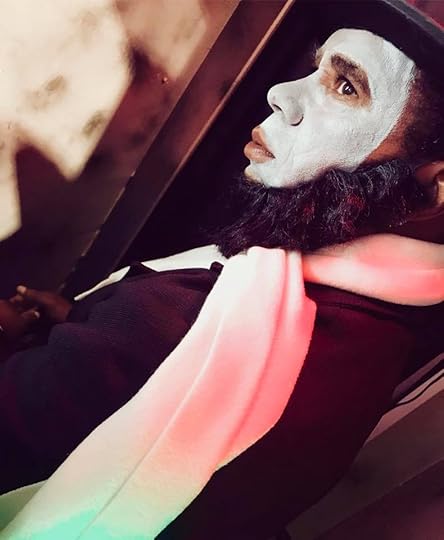
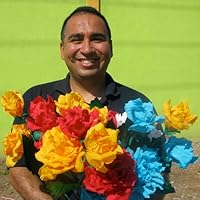
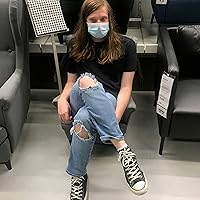
Topdog/Underdog is a play written by Suzan-Lori Parks that won the 2002 Pulitzer Prize for drama. As some of you know, starting in June I’ve been working at the South Bend Civic Theater as stage manager for this play, which opened August 10th. It’s been a roller coaster of emotions putting this show together, and each night we run it, things get more intense. Rehearsals — regular, tech, and dress — have eaten up most of my emotional capacity, thus some silences from me. Here are some of the folks involved in the show I’ve been working on:
Topdog/Underdog is about two black brothers, but isn’t a play about race. Lincoln is in his late 30s, and Booth is six years younger. Lincoln used to be the master of the street hustle 3-card monte, but when a member of his crew was murdered, he threw his gun in the river and swore off the cards. Drinking and womanizing led his wife, Cookie, to leave him, which is how we get Lincoln and Booth living together in Booth’s one-room apartment. There isn’t running water in the apartment, and symbols of poverty are everywhere. The sound designer (I brought on my husband, who majored in broadcasting) and I created cityscape noises to run throughout the whole play, including sirens, trains, car horns, and ambient traffic. There are also thin-wall apartment noises, such as a neighbor’s music, babies crying, fighting, some upstairs sexy noises, and even toilet flushing (the bathroom is shared among tenants and not in the apartment). The setting: here and now.
Booth is terrible with cards, but he’s a great thief. He refuses to get a job, so the only money that comes in now is provided by Lincoln, who has a job at an arcade. Lincoln sits facing a in a booth, pretending to be Abraham Lincoln that last night at the theater, while customers come in and shoot him. All day long, he is shot. Parks plays with history both in the characters’ names and Lincoln’s job. The crux of the story is that Booth wants to hustle 3-card monte with Lincoln, who won’t touch playing cards, so they can live the dream: women, money, their names in everyone’s mouths. Booth gets braver, practicing 3-card monte in front of Lincoln to taunt him, repeatedly reminding Lincoln that he’s bedded Lincoln’s ex-wife and that Lincoln is a depressed loser who can’t move forward.
Lincoln, played by Paul Bertha. Photo by Laurisa LaSure.
Like a Greek tragedy, the trauma runs deep in this play. We learn that the brothers’ mom cut out, leaving Booth $500 in a stocking. Two years later, their dad leaves, giving Lincoln $500 in a handkerchief. Thus, the brothers are completely abandoned when they are 11 and 16. Lincoln has blown his “inheritance,” but Booth has keep his for over 20 years without even looking in the stocking. You can see more about the play’s themes straight from our director, Laurisa LaSure.
I confess when I first read the play I didn’t love it. There were gaps, things that happened that weren’t earned. But through the rehearsal process, each member of the cast and crew added something to story by making assumptions and using imagination. For instance, Lincoln talks about his “Best Customer” at the arcade, who comes in every day to shoot him. He whispers odd things into Lincoln’s ear before he shoots on the left. As we put the show together, we wondered, what if Booth was the Best Customer? That he’s just coming to the arcade every day to poke at his brother who’s gone straight? Parks doesn’t make this clear, but there are clues that actors and crew members can pick up on and run with. Each time the play is done — anywhere — it can be interpreted differently.
At this point, I’ve literally read this play about 30 times. I know most of the lines and annoy some cast members when I quote lines verbatim that the actors waffle a little (sorry, Paul!). As stage manager, part of my job is to memorize where the actors should be on the stage, which is challenging because we’re working in the round, which means the audience is on all sides of the stage. The director meticulously checked to make sure no seat in the house is ever blocked from seeing at least one actor’s face at all times, but one wrong angle and you see audience members rubbernecking.
There are certain moments in the play that are so intense. So very intense. Last night, one man jumped out of his seat and looked like he was trying to flee (which you can’t do when there are people sitting all around you). The previous night, a nice lady couldn’t quit sobbing, even after the show. I wish I could have told her I sob every time we run the last scene. Imagine how dehydrated I am.
During the show, I give all the sound cues and run the light board. Pushing a button to make the lights change seems easy, but when I’m trying to give cues by following what the actors are saying (which doesn’t always 100% follow the script), or I’m trembling and panting (yes, panting) in scene 6, or I have a light cue and I have to deliver a perfectly-timed sound cue, it’s very hard to get things right. I do my best and have a supportive director.
Topdog/Underdog is a gorgeous play that has two actors, but there are so many ways each man could be played, meaning you get a different experience with each cast. I recommend you see it on stage!
As funny as it is tragic, and Parks is able to encapsulate so much political discourse in a play that never allows itself to directly gesture to larger abstract theoretical discourses. It's all about the narrative. And the narrative is dealt with so deftly that it feels effortless and flows so smoothly that, even if the ending isn't the most insane thing to read on the page, it packs a satisfyingly bleak punch. It also amazes me that Parks can employ unsubtle tactics without annoying, because she nuances and adds things onto seemingly obvious images to the point that the layering makes the unsubtle subtle. So cool.
It's all about two men that cannot stand their identities and want to don identities that they perceive to be superior to their true selves. Yet this abrasive cognitive dissonance, in conjunction with a troubling half-known familial truth, breeds sibling rage masquerading as brotherly banter.
As a playwright I really appreciate this play. The characters are well rounded and incredible to watch. There's a wonderful musical rhythm to Parks' writing that shines in this piece. The set up of two brothers named Booth and Lincoln with Lincoln dressing up part time as Honest Abe at an arcade pretty much tells you how it's going to end but watching them get there is a incredible journey. Booth's desperate desire to be like his brother when he was a hustler and Lincoln's desire to avoid becoming that person again really drives the play. One of my favorite plays by one of my favorite playwrights.
it's clear that this works better on the stage (which like, obviously. it was designed for that) and is merely a Very Good Play elevated to a great one by its actors. actually reading it is a bit much. but still, i'm so impressed by the fact that this somehow so ambitious and minimalistic at the same time. fitting that this is a piece of theatre instead of any other medium because what stuck out to me beyond the obvious historical themes was how much of this is about performance in some way. even when the other is not there, booth / lincoln speaks as though he is. the last scene is one of the most upsetting things i've read in a while, even if i saw it coming.
I recommend everything written by Suzan-Lori Parks and Topdog/Underdog is no exception. Parks is a very down-to-earth sister. Her love of American history is so pervasive throughout her work. I'm a really big fan of hers. Topdog/Underdog has been one of the most fascinating literary works, I've read this year. This play is only a about 120 pages and can easily be read in one day, but it's the themes and ideas at work in the play that keep you thinking for about a week. It's worth it, though.
This made me insanely happy after reading something that failed to do a similar twist at the end. For only two characters this play has a lot going on, and all of it going well.
OKAY so I read this with students and I will say that my students are juniors and mature so they could handle the content, but it is pretty inappropriate at times for the classroom. I say this mostly bc of sexually explicit verbiage but we talked about how it’s a form of expression that is often utilized in plays to gain a better understanding of the characters, the setting, culture, relationships etc.
That being said, this play was incredibly entertaining and informational and my students did a phenomenal job with the read alouds! We were collectively hooked by the story and it led to a really thoughtful analysis of abandonment, family ties, toxic masculinity. It is well titled and presents an ending that I’m sure will leave audience members dazed as the curtains close.
quick read. i was really scared that i would stay in this reading slump but this guy pulled me out!!
i’m so impressed by this author. i’ve read two of her books so far (this one and “getting mother’s body”) and i loved both. she captures so much —parental abandonment, sibling rivalry, poverty, suspense—in such a short amount of time it’s ridiculous. i literally could not put this down. so good, from the writing style to the dialogue. chef’s kiss
It was mid. Like it was good, but there was only dialogue between two characters and it droned on in a few places. It is a quick read with a few good concepts though!
This year I put a little more focus on teaching dramatic literature, stuff that comes in script form. It's a lot easier for students to immerse themselves in a world where actions and words are all that matter (and descriptions and imagery are minimal).
First came Susan Lori-Parks' Top Dog/Underdog, a rather daring piece of theatre from 2001. I first read it when my brother Matt showed me just how powerful modern plays could be in comparison with the classics. How honest and raw was this relationship between brothers, how brutal and frank was the need to prove yourself, to stand up and earn the respect of someone you cared about so much.
Being brothers naturally made the play more real to me. I don't have the experience of poverty that Lincoln and Booth (the play's only characters) do. Nor do I know what it's like to be so utterly devalued that your only viable career choice is to be a willing target at a penny arcade every day. I don't know how desperation can turn families against each other, nor do I know what I would do in their situation. Topdog/Underdog is a very foreign play for me, even though it's from my own country, and my own time era.
But there's a tremendous realness in Topdog/Underdog. Matt was right about it, it's frank, brutal, blunt and brusque. It's undeniably honest, and even without the prior knowledge or past experience that separates me from the characters in the play, I can appreciate what's so real about it. Time and again I heard the same idea from my students. Those with siblings linked in to the struggle and angst, those without siblings felt the sincerity of both character's emotions.
The 2002 Pulitzer winner for drama. This two-person play focuses on two African-American brothers and their struggle with their past (their childhood and their abandonment by both parents) and their present (both are down-on-their-luck). Lincoln is the older brother whose internal conflict weighs security and responsibility against respectability and success and the chance to make money illegally. Booth is the younger brother who dreams big dreams about himself, who wants to live bigger than he is living. Booth is obsessed with the game three-card monte and sees it as the road through which he can accomplish his big dreams. Lincoln sees the con-game as representative of a life he no longer wishes to live, despite how much money he made from it in the past, and could conceivably make in the future. The dialogue between the two is amazing. With a short sentence, Parks can build the tension or establish the love between the brothers without needlessly long expositions. The few monologues in the play sketch out the characters’ struggles without coming across as too overtly expository. Just a very good play, and a recommended read for all.
I can understand the acclaim and praise for Suzan-Lori Parks' evocative play Topdog/Underdog, however I guess it just wasn't for me. It was a work of theater, alright, however it was not a drama. Almost lightweight in terms of impact on the reader, I knew by the first page what would happen in the end. Nonetheless, the themes that Parks brings out reflect across not only the two brothers, but perhaps also across all of America. Poverty, systemic racism, and generational trauma, even a reader who has only ever touched the shallows of such a life can feel the damage it carries. Yes, the techniques were well-crafted and yes, there were multiple dimensions for both characters, but just not for me.
Dark and wonderful in its wordplay and musings, Topdog/Underdog features two brothers, Lincoln and Booth, on a collision course because of the sins of the previous generation, and I just cannot imagine what it must have been like to see Don Cheadle and Jeffrey Wright perform this amazing work. There's a lot to chew on about violence, family, legacy, and more, but I keep coming back to Parks's words and the back and forth. Great stuff.
The choice to write the dialogue as spoken AAVE, though necessary, does at times impede the flow while reading; that is, if it differs from one's own way of speaking.
That aside, this play fucking slaps. It cuts so deep and exposes the desperation felt by many many underprivileged people, African-American in this specific story, as they attempt to make something of their lives, within and without systems built by the privileged.
I didn't love it as much as I loved Father Comes Home From the Wars, but it had that play's opposite problem. Where that soared in the middle, this one dragged a bit, before lurching to an electric conclusion. I feel like onstage I would enjoy the ritual repetition of the card game spiel, but it got to be a drag to read.
This brief two person play is bizarre and a bit confusing (and also a bit much at times), but it is just intriguing enough that I kept reading. I won't say I enjoyed it, but I also won't say I hated it. It was... different.
Captivating, frenetic, and electrifying. Topdog/Underdog explores the unattainable American Dream, a tense relationship between brothers, 3-card monte, and the fulfillment of another Lincoln assassination prophecy with cunning dialogue and all the emotions left on the table.
Very well executed commentary on capitalism, the unreachable American dream, and race politics. Aswell as the inexhaustible rivalry that exists between citizens to survive, even family, everyone is trying to be the top dog.
I loved how Susan-Lori Parks translated generational trauma and the past impacting the present/future into a contemporary play. The brother rivalry set up from the beginning with the names Lincoln and Booth also added another element of how American history shaped their lives.
It's always nice to come back to a play every now and then. I like all the insinuations and inferences the reader must make because it's all dialogue and indirect characterization and references. I'm surprised I didn't have this already marked "read" because I read it in college, and liked everything I read in college and marked a 5 because I thought everything assigned was supposed to be classic or blew me away because I hadn't read that much and so everything DID blow me away. I've seen Parks's name pop up the last couple of months as she has eulogized (or commemorated?) a famous writer(can't remember who?) -in Time and then she was garnering publicity for reworking Native Son for HBO, and I thought that I should come back to this and see what I think 17 years after probably rating it a 5.
So today was a perfect day to revisit this -- sitting by the pool, summer vacation finally here, reading about a nice rivalry between brothers, both struggling to get by in adulthood, relationships, lying and trying to sucker people.
And I didn't really care for it a whole lot. Dialogue always pops in a play, but I found it a bit repetitive as the brothers keep going through their 3-card Monte chant, Booth always talking about Grace when it seems pretty obvious that it's all bullcrap, the plotline of their parents circling through at a perfect rhythm that seems a bit too artificial, the finale between two characters named Lincoln and Booth (got a guess?)...
It was entertaining to read, and I can only imagine the experience of watching the original production with Don Cheadle and Jeffery Wright playing the brothers; I bet that would add a lot to the material. It was still interesting to think about the themes alluded to -- infidelity, identity, survival, manipulation -- but I didn't really have a 5-star experience.