

What do you think?

Against Which
An exploration of the various ways language can help us transcend both the banal and unusual cruelties which are inevitably delivered to us, and which we equally deliver unto others. These poems comb through violence and love, fear and loss, exploring the common denominators in each. Against Which seeks the ways human beings might transform themselves from participants in a thoughtless and brutal world to laborers in a loving one.
- GenresPoetryAfrican American
92 pages, Paperback
First published October 31, 2006
About the author
Ross Gay
36 books1,544 followersRoss Gay is an American poet, essayist, and professor who won the National Book Critics Circle Award for Poetry and the Kingsley Tufts Poetry Award for his 2014 book Catalog of Unabashed Gratitude, which was also a finalist for the National Book Award for Poetry.
His honors include being a Cave Canem Workshop fellow and a Bread Loaf Writers' Conference Tuition Scholar, and he received a grant from the Pennsylvania Council of the Arts.
He is an associate professor of poetry at Indiana University and teaches in Drew University’s low-residency MFA program in poetry. He also serves on the board of the Bloomington Community Orchard.
His honors include being a Cave Canem Workshop fellow and a Bread Loaf Writers' Conference Tuition Scholar, and he received a grant from the Pennsylvania Council of the Arts.
He is an associate professor of poetry at Indiana University and teaches in Drew University’s low-residency MFA program in poetry. He also serves on the board of the Bloomington Community Orchard.
Ratings & Reviews
Friends & Following
Create a free account to discover what your friends think of this book!
Community Reviews
Displaying 1 - 30 of 44 reviews

September 20, 2020
Wow. If, like me, you came to this book my way of the book of delights, and the catalog of unabashed gratitude, this book will hit you like a punch in the stomach. Gay brings his same brilliant care with words and rhythm, and allows us to fully see his familiarity with the hard, the brutal, the inescapably sad. We see grief and acceptance and resigned transcendence, and occasional flashes of redemption and joy. I can not recommend this collection enough.

May 21, 2019
What a hard-won breath of gratitude—

April 2, 2022
If it was ever in question, Ross Gay has clinched his spot among my top favorite poets. I probably enjoyed this the least of his 3 collections, which is saying a lot because I still found it to be pretty incredible. The first half (Part One and the first half of Part Two) was weaker for me, featuring Gay's gorgeous language and skilled turns of phrase but ultimately feeling a little more hollow than what I'd come to expect from him. That was more than corrected in the second half, however, which has all the rich writing Gay is so masterful at alongside some more thematic cohesion and heart. The Part Three is especially compelling, with most of the poems revolving around Gay's ailing father (to whom the book is dedicated to) as he comes to terms with his dying and death.
The collection as a whole could be considered a meditation on the juxtapositions of violence, pain, and death with tenderness, beauty, and wonder. I read Gay's collections in reverse chronological order, and these focuses are certainly a throughline for him, but I'd say this work is the most bracing and direct in tone and subject, leaning towards the heavier end of the spectrum. For the most part, those tended to be the poems that worked best for me. Many of the aforementioned poems attending to Gay's paternal relationship are the highlights and likely what I'll remember most here ("How to Fall in Love with Your Father," "Why Would We Not," and "Patience" are especially moving). Some are even more brutal, like "Postcard: Lynching of an Unidentified Man, circa 1920," "For a Young Emergency Room Doctor," "The Bullet, in its Hunger," and "Late October in Easton," and I was floored by those as well. The closer, "Thank You," is a bittersweetly perfect conclusion for this, giving voice to my own gratitude for the jewels found here and the testimony to life, death, pain, love, and beauty that runs throughout.
The collection as a whole could be considered a meditation on the juxtapositions of violence, pain, and death with tenderness, beauty, and wonder. I read Gay's collections in reverse chronological order, and these focuses are certainly a throughline for him, but I'd say this work is the most bracing and direct in tone and subject, leaning towards the heavier end of the spectrum. For the most part, those tended to be the poems that worked best for me. Many of the aforementioned poems attending to Gay's paternal relationship are the highlights and likely what I'll remember most here ("How to Fall in Love with Your Father," "Why Would We Not," and "Patience" are especially moving). Some are even more brutal, like "Postcard: Lynching of an Unidentified Man, circa 1920," "For a Young Emergency Room Doctor," "The Bullet, in its Hunger," and "Late October in Easton," and I was floored by those as well. The closer, "Thank You," is a bittersweetly perfect conclusion for this, giving voice to my own gratitude for the jewels found here and the testimony to life, death, pain, love, and beauty that runs throughout.
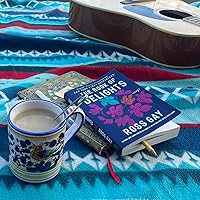
June 1, 2024
Visceral, violent, and the softest breath of Ross Gay. Some of these poems made me feel physically ill for the accuracy with which they speak of the violence of America (The Bullet, in Its Hunger). And some made me coo for the way they spoke about death (The Poet Dreams of His Father). And some made me giddy and warm (Two Bikers Embrace on Broad Street & Unclean. Make me.)
And the one that captured me most today- The Drive.
“…Tomorrow
the sun's tongue will lie across the glass back
of the Delaware like a white sword, and i'll wake
happy, some fears cast off, i'll sing,
I bet, think of a woman's gait like a seaweed
strand in a stream's breeze, I'll touch my
chest, feel the young bulldozer's pounding howl,
I'll be happy, despite my best friend's crude hands
endlessly folded in drink, I'll be happy
despite his exhaustion, and thorough
as it is, the windblown reeds in our childhood's
caustic woods still sway, and the dingy creek's
slow drag still pulls silt over salamanders…”
And the one that captured me most today- The Drive.
“…Tomorrow
the sun's tongue will lie across the glass back
of the Delaware like a white sword, and i'll wake
happy, some fears cast off, i'll sing,
I bet, think of a woman's gait like a seaweed
strand in a stream's breeze, I'll touch my
chest, feel the young bulldozer's pounding howl,
I'll be happy, despite my best friend's crude hands
endlessly folded in drink, I'll be happy
despite his exhaustion, and thorough
as it is, the windblown reeds in our childhood's
caustic woods still sway, and the dingy creek's
slow drag still pulls silt over salamanders…”
March 6, 2025
"If you find yourself half naked
and barefoot in the frosty grass, hearing,
again, the earth's great, sonorous moan that says
you are the air of the now and gone, that says
all you love will turn to dust,
and will meet you there, do not
raise your fist. Do not raise
your small voice against it. And do not
take cover. Instead, curl your toes
into the grass, watch the cloud
ascending from your lips. Walk
through the garden's dormant splendor.
Say only, thank you.
Thank you."
and barefoot in the frosty grass, hearing,
again, the earth's great, sonorous moan that says
you are the air of the now and gone, that says
all you love will turn to dust,
and will meet you there, do not
raise your fist. Do not raise
your small voice against it. And do not
take cover. Instead, curl your toes
into the grass, watch the cloud
ascending from your lips. Walk
through the garden's dormant splendor.
Say only, thank you.
Thank you."

August 21, 2024
I haven’t read a complete book of poems by Ross Gay - just poems featured in other books, or online publications, but I loved the ones I read so I decided to pick this one up. (I also adore his essay collections, so if you love his work but haven’t read them, you should.) I was expecting more poems related to nature, because he writes amazing poems that include the natural world, and I was really surprised by this collection because of its range in topics. It’s a true exploration of the love and violence that lives within the human heart, and how by simply existing those two things are forever intertwined. We are always close to encountering both in one way or another. I also appreciate the way that he notices things. He has such an attention for detail that I am often left in awe. Usually I turn to his work for comfort, but this collection is heavier in topic so I would go into this collection knowing you are going to experience a lot of BIG feelings.

December 10, 2019
A gorgeous collection.

July 31, 2020
I can't find a single fault in this collection. It's so raw without falling into any of the normal sort of vapid conventions of poets reaching for rawness. Everything here is fiercely original and fiercely real. Best poem in the collection, for me, was Outside the Wake of a Friend's Father.
Coming into this collection, Gay's first published collection, after having read Catalog of Unabashed Gratitude, his most recent collection, added a whole other layer onto the reading of this one. It can't be denied that while there is beauty in Against Which, it's also oozing with pain and anger. And Catalog just... isn't, really. It's amazing for me to see that difference, and know that within the ten years between the two collections' publications, Gay stopped hurting a little. It makes me happy. It also makes me excited to read the middle collection, Bringing the Shovel Down.
Coming into this collection, Gay's first published collection, after having read Catalog of Unabashed Gratitude, his most recent collection, added a whole other layer onto the reading of this one. It can't be denied that while there is beauty in Against Which, it's also oozing with pain and anger. And Catalog just... isn't, really. It's amazing for me to see that difference, and know that within the ten years between the two collections' publications, Gay stopped hurting a little. It makes me happy. It also makes me excited to read the middle collection, Bringing the Shovel Down.

February 4, 2018
Such tenderness in this volume. The opening poem is stunningly tender and even more so because of the subjects, "Two Bikers Embrace on Broad Street." The loss of the father is a primary theme, but the losses of other men pepper the volume, too, including an "ex-Knick" in "Late October in Easton," a lynched man in "Postcard: Lynching of an Unidentified Man, circa 1920," and a friend's father in "Outside the Wake of a Friend's Father." One of my favorite poems is "Song of the Pig Who Gave the Poet, Age 3, Worms" in which the pig speaks to the little boy he's passed his disease along to. The pig knows what people have done to his kin and he wishes to give the same back to this boy, but settles for worms. Never have I read a poem like it.

November 22, 2015
Wow. I kept thinking that this is what you'd get if Walt Whitman grew up in Philadelphia in the late 20th century. Such a great set of poems. Some are a little intense, but most are so beautifully worked. I will be buying some of this guy's books.

December 29, 2015
3.5 stars, i think. when ross gay is on, he is so very ON.

June 17, 2026
As often happens with writers whose fame finds them a couple books into their publishing careers, I read Ross Gay’s first poetry collection after reading five of his subsequent books and deciding that he’s probably my favorite man currently writing. Because Gay frequently writes about his own life, especially in his prose, I worried that this book would feel like the preliminary sketches of things that were later fleshed out in other books. I worried that Against Which wouldn’t have much to show me that Gay hadn’t shown me in his later work. I was wrong.
I couldn’t put this book down. Honestly, as I am not a gardener myself, I enjoyed this work that arrived before Gay’s obsession with tilling the land (and all the beautiful community it has brought to his life) made its way into his writing. Tragically relevant 20 years after this book’s publication are his laments about gun violence and its victims (“The bullet, like you, simply craves / the warmth of the body. Like you, only wants / to die in someone’s arms” (“The Bullet, in Its Hunger”). Eternally relevant are his poems mourning lost loved ones. The final section is comprised entirely of this sort of poem, and I think those are what I found most moving: “That’s not this love poem. In this love poem / the son trains himself on the task at hand, / which is simple, which is, finally, the only task / he has ever had, which is lifting / the father to his feet” (“How to Fall in Love With Your Father”). There are many other quotable lines, and the closer is a touching response to those in the Dylan Thomas school of thought.
This just shows that Ross Gay was a quality writer in 2006 and he remains so in 2026. This collection would be a great introduction to his work or, as with me, an additional link in my chain of familiarity with his corpus.
I couldn’t put this book down. Honestly, as I am not a gardener myself, I enjoyed this work that arrived before Gay’s obsession with tilling the land (and all the beautiful community it has brought to his life) made its way into his writing. Tragically relevant 20 years after this book’s publication are his laments about gun violence and its victims (“The bullet, like you, simply craves / the warmth of the body. Like you, only wants / to die in someone’s arms” (“The Bullet, in Its Hunger”). Eternally relevant are his poems mourning lost loved ones. The final section is comprised entirely of this sort of poem, and I think those are what I found most moving: “That’s not this love poem. In this love poem / the son trains himself on the task at hand, / which is simple, which is, finally, the only task / he has ever had, which is lifting / the father to his feet” (“How to Fall in Love With Your Father”). There are many other quotable lines, and the closer is a touching response to those in the Dylan Thomas school of thought.
This just shows that Ross Gay was a quality writer in 2006 and he remains so in 2026. This collection would be a great introduction to his work or, as with me, an additional link in my chain of familiarity with his corpus.

May 29, 2023
“If there is a history, and I think there is, I do not think I own it.” (32)
It would be disingenuous to try and reduce Gay’s collection to being any one thing.
This work spans so many poignant issues, from grief and loss to racism and human cruelty. These poems unflinchingly articulate, remember, witness some of life’s most unfair and lasting pains—the ones you suffer and endure but have no recourse for addressing.
Gay has put so much of himself into this collection—his experiences, his memories, his regrets, and his hopes. Despite the sorrows, this collection is not mournful. It’s subtle like a hammer—but, it doesn’t want to wound you.
This collection manages to be profound and analytical while at the same time down to earth and human.
I highly recommend this collection, especially for readers interested in learning more about the lived experiences of black people and how dismantling racism and hatred is a grievous process and yet a labor of love.
It would be disingenuous to try and reduce Gay’s collection to being any one thing.
This work spans so many poignant issues, from grief and loss to racism and human cruelty. These poems unflinchingly articulate, remember, witness some of life’s most unfair and lasting pains—the ones you suffer and endure but have no recourse for addressing.
Gay has put so much of himself into this collection—his experiences, his memories, his regrets, and his hopes. Despite the sorrows, this collection is not mournful. It’s subtle like a hammer—but, it doesn’t want to wound you.
This collection manages to be profound and analytical while at the same time down to earth and human.
I highly recommend this collection, especially for readers interested in learning more about the lived experiences of black people and how dismantling racism and hatred is a grievous process and yet a labor of love.

September 1, 2023
I’ve read a number of these online before, but it was great seeing his earlier work all together. There is a harder edge to some of these poems than his more recent work, and much viscerality (is that a word?), with fewer gardens. Gay is one of those writers that I’m so grateful to be living in the same world with. He can write with equal tenderness about Amadou Diallo, his father’s dying body, basketball, a fig tree, or a woman’s ankle—and that, in my opinion, makes him a force to be reckoned with.
My only real criticism of this collection has zero to do with the poems and exactly all to do with the chosen font: the letters are so narrow and the print so faint that I struggled to read this in evening light and had to put off finishing to today. I’d love it if somewhere down the line this got a reprint in a friendlier font.
My only real criticism of this collection has zero to do with the poems and exactly all to do with the chosen font: the letters are so narrow and the print so faint that I struggled to read this in evening light and had to put off finishing to today. I’d love it if somewhere down the line this got a reprint in a friendlier font.

July 29, 2020
Ross Gay’s lyricism is sensuous and beautiful. Sometimes, I felt quite lost while reading a given poem from this collection. It was as though the experience inspiring his writing was so thick, that to anyone besides himself, the poem can only be experienced as though through a dense fog. But the longer you sit with each poem, and the more you reread, the closer you can get to its core. It’s an intimate experience.
The subject matter is often mundane, but because of the rapturous turns of phrase, the poems are rendered ecstatic and worshipful.
Fans of Mary Oliver (like myself) will like this collection, but Ross Gay is nowhere near as crisp or concise as she is. Instead, Against Me is for those who want to submerge themselves in the water of Gay’s subconscious.
The subject matter is often mundane, but because of the rapturous turns of phrase, the poems are rendered ecstatic and worshipful.
Fans of Mary Oliver (like myself) will like this collection, but Ross Gay is nowhere near as crisp or concise as she is. Instead, Against Me is for those who want to submerge themselves in the water of Gay’s subconscious.

January 14, 2018
Oh, Ross Gay, how I love thee. There was a dark part of me that wanted this book to be bad; I guess I wanted to believe that, on some level, someone of Gay's caliber could start out as a weaker writer and just get stronger and stronger. Yes, his work does get stronger, but this debut collection is by no means weak. While he embraces the shorter line in most of these poems, he loses none of the complexity of the longer-lined, 8-12-pagers that appear in his most recent book, and this first book is no less haunting and no less heartbreaking than his other work. I just can't say enough good things about this poet.

February 13, 2022
From the foreword by Gerald Stern:
"I see, at the center of his work, a powerful tension between two forces which I'll call rage and tenderness (or destruction and creation; or violence and love) and it is these two opposing yet complementary forces that create the form, the objective and sustaining mythos, for his poetry."
Out of many breathtaking poems and beautiful lines, this was my favorite:
"the windblown reeds in our childhood's / caustic woods still sway, and the dingy creek's / slow drag still pulls silt over salamanders." (From "The Drive")
"I see, at the center of his work, a powerful tension between two forces which I'll call rage and tenderness (or destruction and creation; or violence and love) and it is these two opposing yet complementary forces that create the form, the objective and sustaining mythos, for his poetry."
Out of many breathtaking poems and beautiful lines, this was my favorite:
"the windblown reeds in our childhood's / caustic woods still sway, and the dingy creek's / slow drag still pulls silt over salamanders." (From "The Drive")

January 3, 2025
This inspired poet came to read for my unaspiring KSC class in 07 and I was hooked on every word, I was relentless enough to get a signature and he wrote the sweetest note and of course I lost it with my mind and dignity in my college experience but I never lost the awe he left. His poetry remains some of my favorite and sometimes I can still pull full stanzas from the fog of my thoughts and am dazzled a new. He makes me feel more human. I’m forever grateful that he writes, so I might listen.

May 4, 2021
Stole this away in the 3 or so hours between buying and gifting to a friend. A good read but my least favorite of my Ross Gay reads (this < Catalog < Delight) which should speak to the author's improvement over time. Don't mistake that for ill-speak towards this. My gems in here included 'Two Bikers...', 'Unclean. Make Me.', 'Coming Out of You', 'The Walk', and, my favorite, 'Thank You'.

September 11, 2024
Is ache “birth’s phantom limb”,
(what is the shape of grace?
(our ceaseless plea,
(don’t leave me
(in the dark))
An early work
(of violence and loss
(and growth from each;
(read more—
(Against Which
(by Ross Gay)))))
Can you hear
(the wind
(within
(the wind?
(we’ll see))))
Check it out,
(then close your eyes,
(get on your knees
(and play))
(what is the shape of grace?
(our ceaseless plea,
(don’t leave me
(in the dark))
An early work
(of violence and loss
(and growth from each;
(read more—
(Against Which
(by Ross Gay)))))
Can you hear
(the wind
(within
(the wind?
(we’ll see))))
Check it out,
(then close your eyes,
(get on your knees
(and play))

December 22, 2017
Beautiful poems. Amidst rage and grief and violence and death, he finds hope and love and compassion.
October 2, 2018
Some great poems in here. Just a few don't land with me, but in most the poet's voice stands out. An amazing debut.

February 19, 2020
Ross Gay manages to capture the ordinary miracles and terrible horrors of his world in a few lines. How extraordinary.

January 19, 2021
It seems rare for poetry collections to encompass both brutality and tenderness so well. Ross Gay's poetry is a journey through every emotion and a class in itself on description.

February 7, 2022
Hey, so, not to be dramatic but everybody should read this. This is so so good

Read
April 2, 2024Read the first 18 pages. Not impressed. DNF.
April 4, 2026
My favorite book of poems. Shoutout to my intro to poetry professor for assigning this and not some bs from William Burroughs
May 7, 2026
One of the greatest— relentless.

Read
May 15, 2009I bought this book after hearing Gay read at Asheville Wordfest. I liked his way. Liked the new poems (Syndromes) he was reading. With the book, I was more impressed.... and then also a bit more wary. There are really drop-dead gorgeous poems in here. And Gay is wrestling with some of the big stuff: dead parents, cruelties of childhood,the hard lives of rural working class folks. It’s good poetry. “Against Which” is wonderful. A poem that plays with plot and language and sings. “The Bullet, in Its Hunger”, a persona poem for the bullet voicing its desire to burrow into flesh. I have a few pages in the book dog-eared, my sign of something to return to.

January 15, 2016
What I love to see is that the joy and exuberance that Gay exudes in his most recent work has been there from the beginning. The way he troubles the relationship between pain and violence and joy feels profound and complex. I also love to witness the tenor of the relationship between Gay and the poet Gerald Stern, who wrote the introduction to this volume and seems to be a kind of mentor to Gay. The tenderness and dialogue between these two men that is opened to the reader (there is also a poem written to/for Stern in this collection) is a privilege to experience.
Displaying 1 - 30 of 44 reviews