

What do you think?

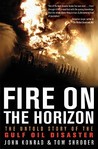
Fire On The Horizon: The Untold Story Of The Gulf Oil Disaster
A real-life thriller in the tradition of The Perfect Storm
In the spring of 2010 the world watched for weeks as more than 200 million gallons of crude oil billowed from a hole three miles deep in the Gulf of Mexico. Warnings of various and imminent environmental consequences dominated the news. Deepwater drilling—largely ignored or misunderstood to that point—exploded in the American consciousness in the worst way possible.
Fire on the Horizon, written by veteran oil rig captain John Konrad and longtime Washington Post journalist Tom Shroder, recounts in vivid detail the life of the rig itself, from its construction in South Korea in the year 2000 to its improbable journey around the world to its disastrous end, and reveals the day-to-day lives, struggles, and ambitions of those who called it home.
From the little-known maritime colleges to Transocean's training schools and Houston headquarters to the small towns all over the country where the wives and children of the Horizon's crew lived in the ever-present shadow of risk hundreds of miles away, Fire on the Horizon offers full-scale portraits of the Horizon's captain, its chief mate, its chief mechanic, and others.
What emerges is a white-knuckled chronicle of engineering hubris at odds with the earth itself, an unusual manifestation of corporate greed and the unforgettable heroism of the men and women on board the Deepwater Horizon. Here is the harrowing minute-by-minute account of the fateful day, April 20, 2010, when the half-billion-dollar rig blew up, taking with it the lives of eleven people and leaving behind a swath of unprecedented natural destruction.
270 pages, Hardcover
First published February 11, 2011
About the author
John Konrad
1 book27 followersJohn Konrad is a former U.S. Merchant Marine captain who has sailed around the world aboard some the world's largest ships. He is the founder and CEO of gCaptain, the world's most visited maritime news website.
John Konrad is the author of Fire on the Horizon The Untold Story of the Gulf Oil Disaster, which chronicles the initial construction, crewmembers' existence, and eventual disaster aboard the oil rig Deepwater Horizon. For the book, Konrad used his insight as an oil rig captain and his seven years of experience as an employee of Transocean, one of the world's largest offshore drilling contractors and owner of the Deepwater Horizon.
[John Konrad, Author | gCaptain ]
John Konrad is the author of Fire on the Horizon The Untold Story of the Gulf Oil Disaster, which chronicles the initial construction, crewmembers' existence, and eventual disaster aboard the oil rig Deepwater Horizon. For the book, Konrad used his insight as an oil rig captain and his seven years of experience as an employee of Transocean, one of the world's largest offshore drilling contractors and owner of the Deepwater Horizon.
[John Konrad, Author | gCaptain ]
Ratings & Reviews
Friends & Following
Create a free account to discover what your friends think of this book!
Community Reviews
Displaying 1 - 30 of 64 reviews

March 3, 2011
I finished reading
Fire on the Horizon
last night and in my attempt to sum up the events surrounding the sinking of the oil rig Deepwater Horizon I’ve chosen “complicated.” Don’t read that as my take on the book itself; no, this single word is aimed at undertaking the nearly impossible task of drilling some 3+ miles under the sea floor looking for oil all without “something” going wrong.
Fire on the Horizon is an awesome journey following the birth, and eventual death, of the oil rig Deepwater Horizon; it explores the complexities of finding, drilling, and extracting oil all while giving the reader a look into the lives of those who made/make it possible. John Konrad and Tom Shroder masterfully pull you inside the lives of the rig workers and their sacrifices to give you a personal understanding of how the Deepwater Horizon operated.
I admit my knowledge prior to- and even since- 20 April 2010, when the Deepwater Horizon caught fire, of how an oil rig works and its dangers eluded me. My positions in the Coast Guard thus far hadn’t afforded me the opportunity to go the path of understanding the “how” and “why” of a rig. Thus this book could be looked at as an introductory text-book of sort. The text is laden with just enough technical geekery to let you understand the drilling world without getting into the weeds and losing the reader.
I highly recommend this for anyone looking to better understand not only why the Deepwater Horizon sank but to also view the intricacies that go into each drilling operation.
Fire on the Horizon is an awesome journey following the birth, and eventual death, of the oil rig Deepwater Horizon; it explores the complexities of finding, drilling, and extracting oil all while giving the reader a look into the lives of those who made/make it possible. John Konrad and Tom Shroder masterfully pull you inside the lives of the rig workers and their sacrifices to give you a personal understanding of how the Deepwater Horizon operated.
I admit my knowledge prior to- and even since- 20 April 2010, when the Deepwater Horizon caught fire, of how an oil rig works and its dangers eluded me. My positions in the Coast Guard thus far hadn’t afforded me the opportunity to go the path of understanding the “how” and “why” of a rig. Thus this book could be looked at as an introductory text-book of sort. The text is laden with just enough technical geekery to let you understand the drilling world without getting into the weeds and losing the reader.
I highly recommend this for anyone looking to better understand not only why the Deepwater Horizon sank but to also view the intricacies that go into each drilling operation.
August 3, 2022
Two and a half stars rounded down to two. Points for the many detailed descriptions of the complex engineering that went into creating the Deepwater Horizon rig … but there wasn’t really any narrative to this book. The authors don’t develop the characters enough to give the reader an abiding interest in their outcomes, and the plot - which would seem to be almost a gimme because of how inherently interesting the saga was - just doesn’t really exist in this telling.
Quick but forgettable read. Would be interested in reading this tale told by a better storyteller.
Quick but forgettable read. Would be interested in reading this tale told by a better storyteller.
July 1, 2012
X-Posted @ Noladishu:
http://noladishu.blogspot.com/2012/07...
************
It's about 2 years since everyone was glued to their TV's watching ROV's try and plug a hole in the bottom of the sea. Since then, numerous books have been published chronicling the explosion and the spill. Here are just a few writups of the multitude of books:
9 Books - LA Times
Publishers have no shortage of books - NY Times
In Book Form - MoJo
Each book focuses on a slightly different aspect of the disaster. After reading a few reviews, I chose Fire On The Horizon: The Untold Story Of The Gulf Oil Disaster by John Konrad and Tom Schroder.
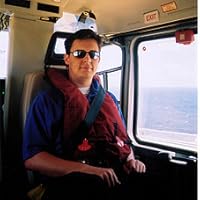
Konrad holds an Unlimited Master's licence and has worked for many years on oil rigs. In his off time, he started a Maritime site called GCaptain. It's actually how I first heard about the Deepwater Horizon fire (one of the reasons I picked the book; they beat everyone else to the punch).
The book gives excellent background to the leadup to the disaster. I particularly enjoyed the chapter on the rig's construction in a South Korean shipyard. The maritime background of Konrad helps out a lot. The book nails the maritime aspects of the disaster. Konrad also knew some of the members of the crew, since he worked for Transocean for a time and graduated CUNY Maritime at about the same time as some of the maritime crew.
The cultural aspects of life onboard a rig, while probably not telling 100% true stories, does convey the culture pretty well. They do a good job in humanizing the crew of the rig.
I have two big criticisms of the book. First, the book is overly kind to the boots on the ground. Normally, I'd agree, but I'm not quite sure in this case. I think there is some blame that deserves to say with the field team. The book also really lets Captain Kutcha off light (although I believe Konrad was friends with Ktucha, so there's one explanation). The other criticism is when they get to the complicated petroleum engineering of the actual well construction, it's just a poorly written summary of David Hammer's writing. They lean on the Picayune's writing without giving anything new nor do they even properly summarize it. It takes them more than half of the book to even get to the drilling operations. Pages 128-130 really needs some editing because it's clunky and if I didn't know exactly what they were trying to explain before I read a sentence, I'd be lost. That was pretty disappointing. I'll hunt for another book to compliment that part.* There's also very little coverage of the oil spill (the first half is background, then 1/3 is the actual Macondo well and fire, then the balance is aftermath, spill, widows, etc.).
There's also one thing that I knew about, but didn't realize. What did the Titanic and the Deepwater Horizon have in common? Not enough lifeboat space. A major problem with current lifeboat standards is IMO rules on dictate lifeboat design based off "50th-percentile" standards. In other words, the lifeboat design is only meant to accommodate the average member of the public (~160 lbs.), not the average rig hand. On a Gulf of Mexico rig, almost everyone weighs at least 180 lbs. and there's guaranteed to be at least a few 280-300 lbs workers. The Deepwater Horizon only tested its full lifeboat capacity once in Korea, and that was with 110-lb. Koreans. Once in the Gulf of Mexico, given the larger crew, the Deepwater Horizon couldn't actually conduct a full evacuation without resorting to the use of inflatable rafts. If you also had any seriously injured personnel on a stretcher, you'd lose another 6 seats per stretcher on top of that!
This isn't something new. I heard about this years ago. Here's an International Association of Drilling Contractors (IADC) notice from before the Deepwater Horizon incident:
Anthropomorphic compatibility. Most SOLAS-approved lifeboats have been approved on the basis of an
assumed occupant mass of 75 kg (≈ 165 lb). The IMO has recently revised its requirements to increase the
assumed occupant mass for lifeboats on most new installations to 82.5 kg (≈ 182 lb). IMO did not alter
the associated seat width standard, which remains 430 mm (≈ 17 in), when increasing the assumed
occupant mass to 82.5 kg. A so-called “Gulf of Mexico standard” is being used by some that assumes an
occupant weight of 210 lbs (≈ 95 kg) with a corresponding seat width of 21 in (≈ 530 mm). This matter is
also being addressed by coastal State authorities in the North Sea.
Every project I've worked on has used 220-240 lbs. as an average weight. A company I work for actually did a survey of their employees entitled "How Big is Bubba's Butt" that was the source of the higher figure. It's also common to leave room for one stretcher without compromising seating capacity. Also, davit-launched inflatable liferafts are unreasonably complicated to use in an emergency situation.
Every large Gulf of Mexico installation should be audited to ensure that they can actually conduct an evacuation in a realistic manner. Tests should be robust (a sign of a nice and rigorous test is failure, like this one). Not leaving enough margin for actual crew weight or overly complicated launching isn't sufficient.
_____________
* Debating between Bob Cavnar's book and Achenbach's book. Anyone read either?
http://noladishu.blogspot.com/2012/07...
************
It's about 2 years since everyone was glued to their TV's watching ROV's try and plug a hole in the bottom of the sea. Since then, numerous books have been published chronicling the explosion and the spill. Here are just a few writups of the multitude of books:
9 Books - LA Times
Publishers have no shortage of books - NY Times
In Book Form - MoJo
Each book focuses on a slightly different aspect of the disaster. After reading a few reviews, I chose Fire On The Horizon: The Untold Story Of The Gulf Oil Disaster by John Konrad and Tom Schroder.
Konrad holds an Unlimited Master's licence and has worked for many years on oil rigs. In his off time, he started a Maritime site called GCaptain. It's actually how I first heard about the Deepwater Horizon fire (one of the reasons I picked the book; they beat everyone else to the punch).
The book gives excellent background to the leadup to the disaster. I particularly enjoyed the chapter on the rig's construction in a South Korean shipyard. The maritime background of Konrad helps out a lot. The book nails the maritime aspects of the disaster. Konrad also knew some of the members of the crew, since he worked for Transocean for a time and graduated CUNY Maritime at about the same time as some of the maritime crew.
The cultural aspects of life onboard a rig, while probably not telling 100% true stories, does convey the culture pretty well. They do a good job in humanizing the crew of the rig.
I have two big criticisms of the book. First, the book is overly kind to the boots on the ground. Normally, I'd agree, but I'm not quite sure in this case. I think there is some blame that deserves to say with the field team. The book also really lets Captain Kutcha off light (although I believe Konrad was friends with Ktucha, so there's one explanation). The other criticism is when they get to the complicated petroleum engineering of the actual well construction, it's just a poorly written summary of David Hammer's writing. They lean on the Picayune's writing without giving anything new nor do they even properly summarize it. It takes them more than half of the book to even get to the drilling operations. Pages 128-130 really needs some editing because it's clunky and if I didn't know exactly what they were trying to explain before I read a sentence, I'd be lost. That was pretty disappointing. I'll hunt for another book to compliment that part.* There's also very little coverage of the oil spill (the first half is background, then 1/3 is the actual Macondo well and fire, then the balance is aftermath, spill, widows, etc.).
There's also one thing that I knew about, but didn't realize. What did the Titanic and the Deepwater Horizon have in common? Not enough lifeboat space. A major problem with current lifeboat standards is IMO rules on dictate lifeboat design based off "50th-percentile" standards. In other words, the lifeboat design is only meant to accommodate the average member of the public (~160 lbs.), not the average rig hand. On a Gulf of Mexico rig, almost everyone weighs at least 180 lbs. and there's guaranteed to be at least a few 280-300 lbs workers. The Deepwater Horizon only tested its full lifeboat capacity once in Korea, and that was with 110-lb. Koreans. Once in the Gulf of Mexico, given the larger crew, the Deepwater Horizon couldn't actually conduct a full evacuation without resorting to the use of inflatable rafts. If you also had any seriously injured personnel on a stretcher, you'd lose another 6 seats per stretcher on top of that!
This isn't something new. I heard about this years ago. Here's an International Association of Drilling Contractors (IADC) notice from before the Deepwater Horizon incident:
Anthropomorphic compatibility. Most SOLAS-approved lifeboats have been approved on the basis of an
assumed occupant mass of 75 kg (≈ 165 lb). The IMO has recently revised its requirements to increase the
assumed occupant mass for lifeboats on most new installations to 82.5 kg (≈ 182 lb). IMO did not alter
the associated seat width standard, which remains 430 mm (≈ 17 in), when increasing the assumed
occupant mass to 82.5 kg. A so-called “Gulf of Mexico standard” is being used by some that assumes an
occupant weight of 210 lbs (≈ 95 kg) with a corresponding seat width of 21 in (≈ 530 mm). This matter is
also being addressed by coastal State authorities in the North Sea.
Every project I've worked on has used 220-240 lbs. as an average weight. A company I work for actually did a survey of their employees entitled "How Big is Bubba's Butt" that was the source of the higher figure. It's also common to leave room for one stretcher without compromising seating capacity. Also, davit-launched inflatable liferafts are unreasonably complicated to use in an emergency situation.
Every large Gulf of Mexico installation should be audited to ensure that they can actually conduct an evacuation in a realistic manner. Tests should be robust (a sign of a nice and rigorous test is failure, like this one). Not leaving enough margin for actual crew weight or overly complicated launching isn't sufficient.
_____________
* Debating between Bob Cavnar's book and Achenbach's book. Anyone read either?
December 5, 2021
Fire on the Horizon tells the story of the Deepwater Horizon disaster in the Gulf of Mexico. The story is a reasonably well-told account of what went wrong, leaning into the character-centric style of telling disaster stories. This, of course, helps to humanize the event... but I think it leads to some problems that make this particular account a little less useful and compelling than it otherwise could be.
Perhaps the biggest challenge with this book, for its compelling topic, is the authors' unwillingness to take much of a stand when it comes to the central question: why and how did the disaster occur. As the authors say in their prologue, "We did not want this book to be a political argument, or even a judgement on ultimate responsibility for the disaster" (p. XIV). But, at its core, I think this is an abdication of their investigative responsibility. The explosion of the Deepwater Horizon - and the resulting environmental disaster - isn't a lighthearted story without moral valence; it's a deeply tragic and catastrophic tale. How the story is told, what errors of judgement and engineering are foregrounded... these are not neutral stories, and if there's not a fundamental commitment to at least attempting that analysis, the authors are playing with fire.
This leads to a fairly muddled central portion of the book. We encounter fault after fault, attributable to engineering decisions and prioritizing 'getting the job done' by the 'company men.' Ultimately, this seems to be a story of haste leading to catastrophe as BP instructions and the presence of these 'company men' lead to the cutting of corners and a culture that incentivizes 'yes' over safety... but the authors don't seem willing to actually finish this argument out and make the critique. Moreover, we see an absolute litany of failures and profit-oriented decisions, but we never really know enough to know which of these decisions were acceptable given the reality they point out of working in a complex system where it's impossible to entirely eliminate risk, and which of these decisions was unfounded not just in hindsight.
To put this differently, I'm very amenable to an argument that the disaster arose through a chain of many errors compounding. And I'm very open to - and see, implicitly, here - an argument that culture (e.g., excessive power to the 'company men' on board; emphasis on cost and profit) is critical to understanding why the failures occurred. But merely pointing out these two factors isn't terribly insightful, as we knew both were likely true from the very first report. By not going further into the analysis, I'm not sure it does much more than shore up these characteristics that have always seemed incredibly likely in this situation.
I'd also note that while the authors attempt to simplify many of the procedures (e.g., the cementing of the well) into more approachable language, the lack of diagrams and the particular telling doesn't always lend to the clearest understanding.
Overall, though, I think this book does a decent job at capturing the human side of the crew's experience, which is lost in the various technical investigations. But, I'm not sure they do the crew a service by letting themselves off the hook of talking fault. Instead, they leave a viscus mire behind of relentless corner-cutting and profiteering, but little clarity about what was really to blame.
Perhaps the biggest challenge with this book, for its compelling topic, is the authors' unwillingness to take much of a stand when it comes to the central question: why and how did the disaster occur. As the authors say in their prologue, "We did not want this book to be a political argument, or even a judgement on ultimate responsibility for the disaster" (p. XIV). But, at its core, I think this is an abdication of their investigative responsibility. The explosion of the Deepwater Horizon - and the resulting environmental disaster - isn't a lighthearted story without moral valence; it's a deeply tragic and catastrophic tale. How the story is told, what errors of judgement and engineering are foregrounded... these are not neutral stories, and if there's not a fundamental commitment to at least attempting that analysis, the authors are playing with fire.
This leads to a fairly muddled central portion of the book. We encounter fault after fault, attributable to engineering decisions and prioritizing 'getting the job done' by the 'company men.' Ultimately, this seems to be a story of haste leading to catastrophe as BP instructions and the presence of these 'company men' lead to the cutting of corners and a culture that incentivizes 'yes' over safety... but the authors don't seem willing to actually finish this argument out and make the critique. Moreover, we see an absolute litany of failures and profit-oriented decisions, but we never really know enough to know which of these decisions were acceptable given the reality they point out of working in a complex system where it's impossible to entirely eliminate risk, and which of these decisions was unfounded not just in hindsight.
To put this differently, I'm very amenable to an argument that the disaster arose through a chain of many errors compounding. And I'm very open to - and see, implicitly, here - an argument that culture (e.g., excessive power to the 'company men' on board; emphasis on cost and profit) is critical to understanding why the failures occurred. But merely pointing out these two factors isn't terribly insightful, as we knew both were likely true from the very first report. By not going further into the analysis, I'm not sure it does much more than shore up these characteristics that have always seemed incredibly likely in this situation.
I'd also note that while the authors attempt to simplify many of the procedures (e.g., the cementing of the well) into more approachable language, the lack of diagrams and the particular telling doesn't always lend to the clearest understanding.
Overall, though, I think this book does a decent job at capturing the human side of the crew's experience, which is lost in the various technical investigations. But, I'm not sure they do the crew a service by letting themselves off the hook of talking fault. Instead, they leave a viscus mire behind of relentless corner-cutting and profiteering, but little clarity about what was really to blame.

March 18, 2026
I only lowered it to 4 stars because I anticipated more of the minute-by-minute narrative, but that ended up being less than half of the book! The major portion was dedicated to a ton of maritime and oil & gas engineering history and processes. While appreciated, this left me wondering when we would actually get to 2009, plus a lot of it went over my head.
My first ever job was an admin position working at one of Shell’s oil & chemical refineries on the Houston Shipping Channel. I got to work with a lot of operators and engineers while filing important ledgers and reports. My hometown is also home to a ton of oil & gas and rig workers, and I remember how devastating Deepwater Horizon was. The narrative in this book was intense and heartbreaking, and I’m glad I got to see a window into some of the victims’ lives.
When the movie came out, I was excited because (1) I love Dylan O’Brien and (2) I was eager to see how they would portray the people and the story. A great film, and now I’ve read a great book that was thorough to represent facts and lived experiences.
My first ever job was an admin position working at one of Shell’s oil & chemical refineries on the Houston Shipping Channel. I got to work with a lot of operators and engineers while filing important ledgers and reports. My hometown is also home to a ton of oil & gas and rig workers, and I remember how devastating Deepwater Horizon was. The narrative in this book was intense and heartbreaking, and I’m glad I got to see a window into some of the victims’ lives.
When the movie came out, I was excited because (1) I love Dylan O’Brien and (2) I was eager to see how they would portray the people and the story. A great film, and now I’ve read a great book that was thorough to represent facts and lived experiences.

February 25, 2017
This book had some very definite pros & cons. While the author was very obviously highly educated on the topic & had put in A TON of in-depth research, I found that some explanations of parts & how they worked were a bit long-winded, especially when it came to how important those detailed descriptions were to my understanding of what happened aboard the Event Horizon.
This story, like the other nonfiction book I've read this year, was super dedicated to sharing every detail, even when the details maybe weren't absolutely necessary.
As indicated by my status updates, the middle of this book was difficult for me to get through. I may have felt differently if I worked in the industry or was mechanically minded, but as a curious reader who just wanted to learn about the 2010 oil disaster, I was dazed, confused, & bored out of my mind.
That being said, the ending of this story was everything I'd hoped it would be: Fast-paced, sad, scary, & shocking. It didn't matter what the "mud" was made out of or what DROPS stood for, all that mattered was what went wrong, how it could have been prevented, & what happened as a result.
Condolences to the families still struggling in the aftermath of this horrible accident & much gratitude to the author for sharing with the world just how many failsafes failed in a row & allowed this to happen. When you put profits over maintenance & money over safety, your priorities are wrong & bad things happen.
This story, like the other nonfiction book I've read this year, was super dedicated to sharing every detail, even when the details maybe weren't absolutely necessary.
As indicated by my status updates, the middle of this book was difficult for me to get through. I may have felt differently if I worked in the industry or was mechanically minded, but as a curious reader who just wanted to learn about the 2010 oil disaster, I was dazed, confused, & bored out of my mind.
That being said, the ending of this story was everything I'd hoped it would be: Fast-paced, sad, scary, & shocking. It didn't matter what the "mud" was made out of or what DROPS stood for, all that mattered was what went wrong, how it could have been prevented, & what happened as a result.
Condolences to the families still struggling in the aftermath of this horrible accident & much gratitude to the author for sharing with the world just how many failsafes failed in a row & allowed this to happen. When you put profits over maintenance & money over safety, your priorities are wrong & bad things happen.

July 6, 2020
I believe that there is no ‘absolute truth’ when it comes to a book or a film about an event like this. It is well documented that many people, involved in the same horrific situation, will have different recollections of the same event. Therefore the truth for one will be different than that of the truth for another.
I have watched the film Deepwater Horizon and I have watched the 60 minutes interview (2010:Blowout:The Deepwater Horizon Disaster) with Mike Williams (plus other shorter interviews)
With that as my background information for comparison I have to say that that feel this book is pretty damned accurate. There are a few discrepancies towards the end between interview and movie, but nothing to get in a tiz about.
The author wasn’t on the Deepwater Horizon at the time, but is/was a veteran in his field and provided an in-depth account of how an oil rig is built and manoeuvred into position. Plus lovely little extras on how oil is formed. (Not by dinosaurs apparently, which is what I was taught)
There are lots of details for the lay person to deal with but the author explains them well.
The narrator is excellent and I recommend this audiobook.
I have watched the film Deepwater Horizon and I have watched the 60 minutes interview (2010:Blowout:The Deepwater Horizon Disaster) with Mike Williams (plus other shorter interviews)
With that as my background information for comparison I have to say that that feel this book is pretty damned accurate. There are a few discrepancies towards the end between interview and movie, but nothing to get in a tiz about.
The author wasn’t on the Deepwater Horizon at the time, but is/was a veteran in his field and provided an in-depth account of how an oil rig is built and manoeuvred into position. Plus lovely little extras on how oil is formed. (Not by dinosaurs apparently, which is what I was taught)
There are lots of details for the lay person to deal with but the author explains them well.
The narrator is excellent and I recommend this audiobook.

November 3, 2025
This book was exactly what I wanted. It broke down the mechanics of oil rig operations enough I could understand (mostly) where things failed. It developed the characters (who were/are real people) enough that I care/d about them. The only gripe I have is that it was written too soon after the disaster to have a decent conclusion/summary but its hardly the fault of the book or author that investigations and litigation take forever.

March 7, 2025
Solid research of the Deepwater Horizon from build to firey end. I appreciate the technical engineering and science being accessible to read. The details on the crew and their paths to the oil rig were interesting.

May 19, 2025
Rip to the 11

April 25, 2011
What often seemed forgotten were the eleven men who lost their lives during the explosion and fire on the Deepwater Horizon. In “Fire on the Horizon: The Untold Story of the Gulf Oil Disaster”, authors John Konrad and Tom Shroder make sure their stories, as well as the stories of the survivors, are told.
Konrad, an oil rig captain, worked for Transocean, the owner of the Deepwater Horizon, and knew many of the people who worked on Horizon. His blog, gCaptain.com, was an immediate source of information on the blast, as people working on a supply ship near the Horizon who witnessed the explosion sent photos and updates to his blog.
Konrad and Shroder, a former editor and writer at the Washington Post, teamed up to tell this incredible story, which will appeal to anyone who enjoyed Sebastian Junger’s “The Perfect Storm”. (Junger even contributes a blurb for the book.)
While both books put the reader right in the middle of the disasters, “Fire on the Horizon” has the advantage of the first-hand stories of the survivors. The section of the book that deals with the actual explosion is so harrowing, your heart will pound and your pulse will race as you read the minute-by-minute account from the people who survived it.
The writing is so intense, I could almost feel the unbearable heat and the confusion of the people on that rig as they raced to save themselves and their coworkers from this disaster.
Dave Young is one of the most interesting men on the rig. He graduated from the oldest maritime college in the country, SUNY Maritime College. He is “short and tough, supremely self-confident, (and) perfectly represented the scrappy, resourceful, unruly spirit of his college, little known even in its own southeastern Bronx neighborhood.”
Young was the chief mate on the ship, and among his responsibilities was to direct the emergency response and firefighting. He had to convince the captain it was time to abandon ship when all attempts to fight the fire were futile. He and a few others narrowly escaped on a life raft that was caught tethered to the rig, and their account of nearly being overcome by heat and fire is frightening.
The authors balance the technical aspects of oil rig drilling with the humanity of the people who work on them. They begin the book with the launching of the Deepwater Horizon from the place where it was built. We meet the crew in charge of sailing it from Korea in 2001, around the southern tip of Africa, a fifteen thousand mile trip to the Gulf of Mexico, before it even can begin to do the job for which it was designed.
The technical aspects of oil drilling are clearly explained, and there are excellent photos and drawings of the blowout preventer that failed and caused the explosion. The Deepwater Horizon was almost ten years old at the time of the accident, and the age of the rig contributed to accident, as did cuts in the maintenance and human resource budgets from BP and Transocean.
“Fire on the Horizon” is fascinating, explaining to the reader in understandable terms how this disaster happened, and bringing to life the people who worked on the rig. It successfully combines the technical and human aspects of the story, and the minute-by-minute retelling of the disaster itself, from the first-hand account of survivors, is as harrowing a story as you’ll ever read.
Konrad, an oil rig captain, worked for Transocean, the owner of the Deepwater Horizon, and knew many of the people who worked on Horizon. His blog, gCaptain.com, was an immediate source of information on the blast, as people working on a supply ship near the Horizon who witnessed the explosion sent photos and updates to his blog.
Konrad and Shroder, a former editor and writer at the Washington Post, teamed up to tell this incredible story, which will appeal to anyone who enjoyed Sebastian Junger’s “The Perfect Storm”. (Junger even contributes a blurb for the book.)
While both books put the reader right in the middle of the disasters, “Fire on the Horizon” has the advantage of the first-hand stories of the survivors. The section of the book that deals with the actual explosion is so harrowing, your heart will pound and your pulse will race as you read the minute-by-minute account from the people who survived it.
The writing is so intense, I could almost feel the unbearable heat and the confusion of the people on that rig as they raced to save themselves and their coworkers from this disaster.
Dave Young is one of the most interesting men on the rig. He graduated from the oldest maritime college in the country, SUNY Maritime College. He is “short and tough, supremely self-confident, (and) perfectly represented the scrappy, resourceful, unruly spirit of his college, little known even in its own southeastern Bronx neighborhood.”
Young was the chief mate on the ship, and among his responsibilities was to direct the emergency response and firefighting. He had to convince the captain it was time to abandon ship when all attempts to fight the fire were futile. He and a few others narrowly escaped on a life raft that was caught tethered to the rig, and their account of nearly being overcome by heat and fire is frightening.
The authors balance the technical aspects of oil rig drilling with the humanity of the people who work on them. They begin the book with the launching of the Deepwater Horizon from the place where it was built. We meet the crew in charge of sailing it from Korea in 2001, around the southern tip of Africa, a fifteen thousand mile trip to the Gulf of Mexico, before it even can begin to do the job for which it was designed.
The technical aspects of oil drilling are clearly explained, and there are excellent photos and drawings of the blowout preventer that failed and caused the explosion. The Deepwater Horizon was almost ten years old at the time of the accident, and the age of the rig contributed to accident, as did cuts in the maintenance and human resource budgets from BP and Transocean.
“Fire on the Horizon” is fascinating, explaining to the reader in understandable terms how this disaster happened, and bringing to life the people who worked on the rig. It successfully combines the technical and human aspects of the story, and the minute-by-minute retelling of the disaster itself, from the first-hand account of survivors, is as harrowing a story as you’ll ever read.

May 13, 2026
As much about the BP blowout as the process of deep sea oil drilling, this book made me realize in graphic detail how dangerous the work is and as always, how little I know. Fantastic everyman reporting!! So horrifying!

August 28, 2010
This book is amazing! I picked it up with the wary sense that it could be a bit dry, but man, was I pleasantly surprised! I tore through it in two nights, staying up much later than I should have because I just couldn't put it down.
I was drawn to the book with the voyeuristic intention of reading an insider's account of the gulf oil disaster, but came away with so much more. Konrad and Shroder have a unique ability to explain complex technical information in a way that is not only understandable, but interesting to the most uninformed and least technically-savvy of readers. Konrad's personal ties to members of the Deepwater Horizon's crew lends a fascinating personal touch.
The authors skillfully weave gripping personal background about the crew with technical explanations of drilling and information about the industry. The interplay of these elements not only gives the reader a deep understanding of the people and events involved, but fosters a very high level of reader interest.
I highly recommend this book for experts and laypeople alike!
I was drawn to the book with the voyeuristic intention of reading an insider's account of the gulf oil disaster, but came away with so much more. Konrad and Shroder have a unique ability to explain complex technical information in a way that is not only understandable, but interesting to the most uninformed and least technically-savvy of readers. Konrad's personal ties to members of the Deepwater Horizon's crew lends a fascinating personal touch.
The authors skillfully weave gripping personal background about the crew with technical explanations of drilling and information about the industry. The interplay of these elements not only gives the reader a deep understanding of the people and events involved, but fosters a very high level of reader interest.
I highly recommend this book for experts and laypeople alike!

April 15, 2018
This was a good book overall, but I have two non-trivial complaints.
1) While the book has a photographic insert, most of the photos are crew pictures, or shots of the rig on fire. This was a book that desperately cried out for frequent illustrations to clarify some of the activities being described in the text. The author makes a good effort, but some of well construction operations just aren't clearly conveyed in description, making it hard to understand what's happening.
2) While the title of the book refers to the Gulf oil disaster, the primary author is a former oil rig worker, and his focus is entirely on the Deepwater Horizon rig and crew, so the book effectively ends once the surviving crew are safely home. Little is said about the blowout apart from its effects on the rig, and the resulting oil spill and effort to control it is left almost completely unmentioned. While I acknowledge that for the rig's crew their main concern was probably their near-death at sea, the consequences of the accident extend so much further that it seems absurd not to cover them.
1) While the book has a photographic insert, most of the photos are crew pictures, or shots of the rig on fire. This was a book that desperately cried out for frequent illustrations to clarify some of the activities being described in the text. The author makes a good effort, but some of well construction operations just aren't clearly conveyed in description, making it hard to understand what's happening.
2) While the title of the book refers to the Gulf oil disaster, the primary author is a former oil rig worker, and his focus is entirely on the Deepwater Horizon rig and crew, so the book effectively ends once the surviving crew are safely home. Little is said about the blowout apart from its effects on the rig, and the resulting oil spill and effort to control it is left almost completely unmentioned. While I acknowledge that for the rig's crew their main concern was probably their near-death at sea, the consequences of the accident extend so much further that it seems absurd not to cover them.
May 11, 2014
Sebastian Junger of the Perfect Storm really liked it. It reads like a novel but you know the disastrous end. It doesn't preach about who is responsible but subtly points the finger at BP for wanting to finish out the tough well and save money with Transocean, the rig operator doing somwehat the same. It's a story of regular smart guys following procedure but bending analysis and rules to what they want the outcome to be. It's the story of the lives of several members of the crew from the SUNY Maritine Academy to Korea to where the Deepwater Horizon was built, to the home lives of these men who work three weeks on and three weeks off, and finally to the last day that went so wrong. Of heroism and stupidity. Good disaster story. Not surprised at all that it got a 4.28 on Goodreads.
January 17, 2012
Great book very imformative, I learned things about oil drilling that I had no idea about. Also details the lives of the drillers that lost their life's, makes them human instead of just a number or a statistic.
February 20, 2012
Wonderfully thrilling and informative. A must read!

May 28, 2013
A bit hard for me to read because I was drafted into working on the oil spill, but a great book.

May 17, 2021
A recollection of the Deepwater Horizon incident written tantalisingly in the form of a thriller novel, this book was difficult to put down once I started. For fans of the movie, this book covers the main incident towards the climax, but a large majority gives so much more background, from the rig's inception in Korea, to the personal lives of many of the crew members.
The writing style is what I appreciated most about this book, as it was laid out like a narrative-driven story rather than being a written formally like a report or a history book. Towards the middle, the book contains some high-quality images of the crew and the rig itself. It's split into short chapters, making it easy to pause and pick up later. As someone who works in the industry, I was able to identify with the characters, their personal lives, the sacrifices they had to make in the family lives because of the nature of their work, their safety concerns, but most of all their resiliency. This book helps shine a light on the heroes of the incident, and shows that it was much more than just an ecological disaster, which unfortunately is what the media occupied people's attention with.
However, I did have issue with some sections. Primarily, I didn't appreciate some of the attempts at explaining technical procedures, a good example being the rig's riser and hanger installation. I struggled to follow, and addition of simplified diagrams or pictures would've helped in such cases to help the layperson (even though I'm an engineer by degree). I also think the pictures included didn't have much thought put behind their placement, and it would've been better if they were added to relevant parts of the story rather than altogether arbitrarily in the middle of the book. Furthermore, the book would've benefited from a glossary of the technical terms that keep cropping up ("spider," "OIM," "MMS," "top drive," etc.), and more importantly a character sheet covering peoples' names and their roles, since several characters are introduced early on and then only referenced later on in the book.
The writing style is what I appreciated most about this book, as it was laid out like a narrative-driven story rather than being a written formally like a report or a history book. Towards the middle, the book contains some high-quality images of the crew and the rig itself. It's split into short chapters, making it easy to pause and pick up later. As someone who works in the industry, I was able to identify with the characters, their personal lives, the sacrifices they had to make in the family lives because of the nature of their work, their safety concerns, but most of all their resiliency. This book helps shine a light on the heroes of the incident, and shows that it was much more than just an ecological disaster, which unfortunately is what the media occupied people's attention with.
However, I did have issue with some sections. Primarily, I didn't appreciate some of the attempts at explaining technical procedures, a good example being the rig's riser and hanger installation. I struggled to follow, and addition of simplified diagrams or pictures would've helped in such cases to help the layperson (even though I'm an engineer by degree). I also think the pictures included didn't have much thought put behind their placement, and it would've been better if they were added to relevant parts of the story rather than altogether arbitrarily in the middle of the book. Furthermore, the book would've benefited from a glossary of the technical terms that keep cropping up ("spider," "OIM," "MMS," "top drive," etc.), and more importantly a character sheet covering peoples' names and their roles, since several characters are introduced early on and then only referenced later on in the book.

March 20, 2018
Having seen the movie Deepwater Horizon a couple of times, I became curious about how much the actual events in the movie were truly what happened or not during the BP oil spill back in 2010.
I was expecting a book that started and stopped when the movie did, but I was pleasantly surprised that nearly the first half of the book was spent setting up all of the failures that ultimately led to the disaster.
Sadly, a lot of the detailed research and explanation as to how the rig functioned was over my head, despite being written so well by the author. I just wasn't meant to understand deep water oil rigs. That being said, the level of detail offered by the author was fascinating and I thoroughly enjoyed trying to keep up.
The book was well researched, thought out, and explained. Even though this is not a topic that I would normally crave to read, I found it very important. Not just because it describes a mentality and culture that led to such a disaster, but because it was critical to remember the people that lost their lives just doing their job.
I was expecting a book that started and stopped when the movie did, but I was pleasantly surprised that nearly the first half of the book was spent setting up all of the failures that ultimately led to the disaster.
Sadly, a lot of the detailed research and explanation as to how the rig functioned was over my head, despite being written so well by the author. I just wasn't meant to understand deep water oil rigs. That being said, the level of detail offered by the author was fascinating and I thoroughly enjoyed trying to keep up.
The book was well researched, thought out, and explained. Even though this is not a topic that I would normally crave to read, I found it very important. Not just because it describes a mentality and culture that led to such a disaster, but because it was critical to remember the people that lost their lives just doing their job.

February 7, 2022
I'm conflicted about the book. If you want to know how and why the Gulf oil spill happened, there's tonnes of information in there, which for me at times was super helpful in understanding the event but at times dragged down the narrative because I couldn't visualize some of the technology. But the main focus of the book is humanizing the disaster through the lives of the crew because the authors felt the world forgot about the crew in the wake of the environmental disaster and I get it, it's horrific what they experienced and it's terrible that people died or were injured for life. But I could not find myself sympathizing with them beyond a certain point because maybe there is a fundamental moral question (as well as questions about corporate greed) about offshore drilling here and even though its discussion is not entirely absent from the book, it's definitely not as pressing as I would've liked and somehow that affected my reading experience. Should I just marvel at the engineering achievements and shrug away at the likelihood of accidents or extend the humanizing intent beyond the immediate crew to the ecosystem?

September 7, 2024
Interesting event but not a particularly interesting book. It felt like the author either didn't know what he was going for here, or was not technically knowledgeable enough to write it fully. This was seriously lacking in the details of how this event happened and how it was resolved, which was 75% of what I was reading this for. The other 25% was also honestly not done well, that being the human causes of the accident. Was the author uninformed? Was this rushed to publish? Was he just not willing to blame anyone? Like he fed us this opening that told us about how this guy, who eventually ends up on the rig, drives a monster truck to college and doesn't do his navigation homework, there was time to delve into who made the errors and where.
I don't know, this just wasn't a very good book.
I don't know, this just wasn't a very good book.

October 19, 2020
Written like a novel, authors John Konrad and Tom Shroder take readers through the birth and explosive death of the Deep Water Horizon oil rig. This disaster, which took the lives of 11 brave men is as heartbreaking today as it was a decade ago.
Konrad and Shroder have narrated this event through the seamen and their families who both love the work and the sea and deal with the harsh realities of the dangers.
The ensuing environmental calamity is still with us a decade later.
Deeply researched and expertly told, this story serves as a cautionary tale as the world's hunger for fossil fuels and corporations' hunger for revenues collide.
Konrad and Shroder have narrated this event through the seamen and their families who both love the work and the sea and deal with the harsh realities of the dangers.
The ensuing environmental calamity is still with us a decade later.
Deeply researched and expertly told, this story serves as a cautionary tale as the world's hunger for fossil fuels and corporations' hunger for revenues collide.
March 29, 2025
Having read this book, I must say it's a must read for anyone interested in crisis communication and risk management. The story it tells is heartbreaking and infuriating at the same time. It is a reminder of the human cost of neglecting safety protocols and prioritizing profits over people. The book takes us back to the events of April 20, 2010, and the devastating explosion on the Deepwater Horizon oil rig. Through the eyes of the crew, we experience the tragedy firsthand, and it's a sobering reminder of the importance of accountability and responsible leadership. It's a tough read at times, but it's an important one, and it's a reminder that we all have a responsibility to speak out against injustice and demand better from our leaders.

May 6, 2017
This book is something I usually do not read. But I enjoyed it, the book does get a bit bogged down in technical passages near the end. I wish there been an addition to the book (written in 2011) as to how the survivors and those left behind are doing now.
This book hit a heart string with me. Being from Louisiana and many high school and college friends worked as roughnecks summers and between school. Glad I read it.
This book hit a heart string with me. Being from Louisiana and many high school and college friends worked as roughnecks summers and between school. Glad I read it.

September 15, 2019
More than just a narration of events. It's about decision making in an unstable environment, often with limited information, and the well intentioned people who make them.
The combined experience and insights of authors Captain John Konrad and Tom Shroder make it a compelling read.
The complete book review can be found here: https://www.parani.org/index.php?opti...
The combined experience and insights of authors Captain John Konrad and Tom Shroder make it a compelling read.
The complete book review can be found here: https://www.parani.org/index.php?opti...

May 4, 2020
Надаас хол ертөнц, мэдэрч байгаагүй мэдрэмжийн тухайтөсөөлж уншив.
Тарьсан хохирол нь ч, үүссэн үр дагавар нь ч, ер нь өгүүлбэр бүр нь шинэ мэдрэмж байлаа.
Өдөр бүрийн хэвшмэл орчноосоо салж, далай дээрх нефт олборлолтын тухай technical талаас нь судлангаа, хүн төрлөхтөний түүхэн дахь хамгийн том экологийн гамшигийн шалтгаан нь нөгөө л зардал хэмнэх, арай илүү ашиг олох бизнесийн зорилго байсныг харахад гутмаар ч юм шиг...
Тарьсан хохирол нь ч, үүссэн үр дагавар нь ч, ер нь өгүүлбэр бүр нь шинэ мэдрэмж байлаа.
Өдөр бүрийн хэвшмэл орчноосоо салж, далай дээрх нефт олборлолтын тухай technical талаас нь судлангаа, хүн төрлөхтөний түүхэн дахь хамгийн том экологийн гамшигийн шалтгаан нь нөгөө л зардал хэмнэх, арай илүү ашиг олох бизнесийн зорилго байсныг харахад гутмаар ч юм шиг...
This entire review has been hidden because of spoilers.

June 16, 2020
3.5 stars
Spoiler alert, this is not like typical disaster books that I enjoy reading and gaining more knowledge about. The oil rig doesn't explode til near the end of the book and there is very little talk about the cover up, BPs response, cleanup, repercussions, etc. It gets bogged down in the middle talking about the various parts of the oil rig that were confusing and ultimately unnecessary.
Spoiler alert, this is not like typical disaster books that I enjoy reading and gaining more knowledge about. The oil rig doesn't explode til near the end of the book and there is very little talk about the cover up, BPs response, cleanup, repercussions, etc. It gets bogged down in the middle talking about the various parts of the oil rig that were confusing and ultimately unnecessary.

September 27, 2018
Found the book very readable, and a good mix of the experiences of a number of those involved and the technical aspects of offshore oil drilling.
The print edition was not available, so I read the Kindle version. Unfortunately that made the book’s illustrations near impossible to see well (not the authors’ fault!). The Internet filled in that gap for me.
The print edition was not available, so I read the Kindle version. Unfortunately that made the book’s illustrations near impossible to see well (not the authors’ fault!). The Internet filled in that gap for me.

August 12, 2025
The ship doesn't blow up until 73% of the way into the book, so get ready for LOTS of logistics. It was well written, but for me it was still confusing. So, I had to watch videos on how ocean oil rigs work.
Basically, every safety feature on Deepwater Horizon failed. Major companies failed these men and women (and sea life) and for that, I do not think they were fairly punished.
Basically, every safety feature on Deepwater Horizon failed. Major companies failed these men and women (and sea life) and for that, I do not think they were fairly punished.
Displaying 1 - 30 of 64 reviews