Jump to ratings and reviews
Rate this book

Biography of a Germ

Rate this book
Arno Karlen, author of Man and Microbes , focuses on a single bacterium in Biography of a Germ , giving us an intimate view of a life that has been shaped by and is in turn transforming our own.

Borrelia burgdorferi is the germ that causes Lyme disease. In existence for some hundred million years, it was discovered only recently. Exploring its evolution, its daily existence, and its journey from ticks to mice to deer to humans, Karlen lucidly examines the life and world of this recently prominent germ. He also describes how it attacks the human body, and how by changing the environment, people are now much more likely to come into contact with it. Charming and thorough and smart, this book is a wonderfully written biography of your not so typical biographical subject.

192 pages, Paperback

First published January 1, 2000

2 people are currently reading
187 people want to read

About the author

Arno Karlen

22 books2 followers

Ratings & Reviews

What do you think?
Rate this book

Friends & Following

Create a free account to discover what your friends think of this book!

Community Reviews

5 stars
31 (21%)
4 stars
57 (39%)
3 stars
37 (25%)
2 stars
16 (11%)
1 star
4 (2%)
Displaying 1 - 27 of 27 reviews
Profile Image for Left Coast Justin.
613 reviews199 followers
August 13, 2024
Ticks
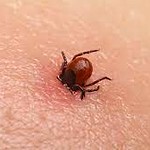
Few things in life are more viscerally repulsive than pulling off your shirt and seeing this:

description

A nasty little tick, head greedily buried under your skin, legs waving helplessly in the air around a blood-engorged belly, sucking out your blood and passing infections directly into your bloodstream. Yuck and double-yuck. This book is nominally about a spiral-shaped bacterium, but it is so closely tied up with ticks that the author can't avoid talking about them -- and, to be honest, talking about them without prejudice and maybe even with a little respect.
Gaia began as an ecological theory about mutual dependence of life-forms. Some dry-minded people reject it out of hand because it threatens to awaken their sense of awe. On the other hand, it has acquired a slightly ripe intellectual odor from some of its enthusiasts and popularizers, who confuse it with rapturous oneness with nature...I find the original, narrower form of Gaia warm and engaging enough, with the idea that we and small, relatively simple creatures like ticks are cousins under the skin.
For the purposes of this book, we need to keep in mind that deer ticks start life as eggs, then hatch into larvae about as big as this dot (.) that crawl onto mice, usually, for their first blood meal. That mouse might well harbor the spiral bacteria the book is about, from having been bitten earlier by a tick nymph, which is the next stage in a tick's life. So the larvae bites the mouse an ingests some bacteria, which remain on board while the larvae matures into a nymph.
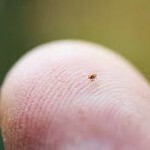
These nymphs are a little bigger but still tiny; and oddly, they have six rather than eight legs. It's these little bastards that actually spread the most Lyme disease:

description

Some fun stuff I learned in this book: Ticks do not actually suck blood. Instead, they use their mouth parts to cut a little pit in you skin whose walls keep oozing blood, which they lap up. They don't puncture you with their jaws, but instead have a special substance in their saliva that glues them to your skin. They appear to penetrate because the skin around the pit become inflamed and swells up around the beast's shoulders. Of course, sustained bloodflow requires them to inject anticlotting agents, also in their saliva, into your bloodstream for several days while they dine.

Are you finding this interesting? Then let's tackle the next topic:

Bacterium
Borrelia burgdorferi, the actual subject of this book, is a so-called 'spirochete,' a class of bacteria that are most notable to humans as the causal agent of both syphillis and Lyme disease. So closely related are these two diseases that Lyme sufferers have been known to test positive for syphillis. These are unusually adaptable members of the bacterial world, constantly changing their outer surface to deal with threats and temperature changes. (Until reading this book I was unaware of the existence of 'heat shock proteins,' necessary ingredients for bacteria that switch from warm-blooded to cold-blooded hosts -- a rare ability that spirochetes have made a specialty of.)

Physically, they are thin, loose spirals about as long as the width of three red blood cells laid side-by-side. The flagellum, unusually, does not poke out and allow the bacterium to 'swim'. Instead, it's tucked into the cell wall, wrapped around the central core like streamers around a Maypole, and by flexing and relaxing, they actually allow it to wriggle, snake-like, inside their environment.

If I mention all the cool stuff I learned, this review will be endless. Suffice to say that the bacterium itself emits no poison; instead, it triggers our immune systems to destroy our own tissues, resulting in the well-known symptoms of Lyme disease, including rashes, fever, arthritis, and worse. The book is short and does not waste words, and the author often writes with charm:
The study of microbial adhesion and infection has revealed an alphabet of outer surface proteins and given rise to an awkward poetry of molecular combat, replete with invasins, defensins, integrins, intimins and penetrins.

Highly recommended to my nerdier fellow readers and nerd wannabees.
Profile Image for Dennis Littrell.
1,081 reviews57 followers
August 12, 2019
Microbiology as literature

The germ is the bacterium Borrelia burgdorferi, and it causes among other things Lyme disease. Karlen is a psychoanalyst by trade and a historian of microbiology by inclination. He fell in love with the world of the very small when as a boy he was given a microscope. Karlen is also a fine prose stylist with a sharp sense of the ecological. In fact this book is really a kind of treatise on ecology, with a concentration on the environment of a bacterium. Borrelia burgdorferi is spread by ticks that bite small animals such as mice and squirrels and larger animals such as deer and sometimes humans. What Karlen accomplishes in this modest little book is to make vivid just what a "germ" is for a general readership. If you are in a fog about microbes and would like a painless, lively introduction, then this book may serve you very well.

I always imagined that bacteria split about every twenty minutes. Here I learned that some bacteria do split every twenty minutes or so, but others take hours and some even longer. I was also fuzzy about just how it is that microbes cause disease. Do they "eat" human flesh or destroy our cells with toxins or hog our nutrients for themselves? Turns out that some do one thing and some do another. Karlen emphasizes that sometimes what they do is cause symptoms: fever, muscle aches, fatigue, inflamation, etc., which are actually the result of our immune system's aggressive response to the presence of something foreign. Sometimes this can get so out of hand that our immune system continues to attack our own cells even after the microbe is gone, as is suspected in rheumatoid arthritis and possibly fibromyalgia (p. 160). And sometimes microbes commandeer some part of our system in order to better spread themselves around by making us sneeze or cough (cold viruses) or by giving us diarrhea (cholera).

There is a lot of other information in this little book, including such diverse facts as tumble weeds being native to southern Russia and not the western United States as I had always thought, or that the people of Lyme, Connecticut didn't appreciate having a disease named after their town. It is also interesting to know that microbes can "hide" in our bodies for years and then break out during times of overload or stress.

Karlen digresses nicely in spots, giving his opinion on the Gaia concept (he likes the "original, narrower version" p. 63), and how he feels about the deer population in the U.S. (he thinks there are too many). This last is directly relevant since it is on the deer that the ticks that are the vectors for Lyme disease mate and are able to reproduce. He recalls some history (the cholera epidemics in London in the nineteenth century, Spanish flu in America, etc.) and literature (Defoe's Journal of the Plague Year; the anonymous The Autobiography of a Flea), and in a footnote (p. 29) cites a story by Isaac Babel about syphilis (a bacterium related to Borrelia burgdorferi) entitled "Guy de Maupassant." A story by Isaac Babel about Guy de Maupassant is like a movie by Stephen Spielberg about Stanley Kubrick!

In summation, this is microbiology as literature, ecology as belles lettres seen in part from the perspective of a germ.

--Dennis Littrell, author of “The World Is Not as We Think It Is”
Profile Image for jrendocrine at least reading is good.
707 reviews55 followers
October 20, 2024
What a great title and a great concept, writing a biography of the spirochete that causes Lyme disease: Borrelia burgdorferi (Bb).

But. Arlo Karlen is a psychoanalyst by trade, and a microbiologist by interest. The first half of this 180 pager, which means 90 pages, barely touches on Bb. It's lots of feffing about, when finally getting to spirochete facts, the biology/bacteria is nothing novel, except for the feffing about. Which, if you come for broad ecological/philosophical thinking, is here in spades.

When he does get to the spirochete there are some details that are fun/fine - like how Bb survives in the tick, and how the tick passes Bb into the mammal. I got rather excited at one point, and even folded down a page, but Karlen never goes deep.

It's REALLY important to know that this book was published in 2000, and 24 years later we know a whole lot more about all this stuff.
Profile Image for Cheryl.
1,310 reviews70 followers
October 19, 2013
One of the most readable science-related books I have read -- not too much technical gobbledygook and a very clear and straightforward style. I learned things I never knew about ticks and germs and lizards, and they were actually quite interesting. The question of the source of a germ and whether it is new to science or somehow just overlooked despite its effects being well-known was fascinating to me. This discussion of the spirochetes germ that causes Lyme disease was definitely worth the read and is one I would recommend to anyone with an interest in science or medicine.
Profile Image for Karen.
23 reviews1 follower
November 20, 2018
Good read, definitely some fascinating info and food for thought. My only issue was the degree of meander present. I feel like this book could have been simply a collection of essays loosely held together by the presence of Bb.
3 reviews
November 23, 2015
Arno Karlen has created an amazing and delighful story of life told from a germs perspective. Biography of a Germ follows the story of Borrelia Burgdorferi, a germ carried by ticks. Through this story, the reader is able to view germs as something amazingly beautiful and intricate, rather than something to continuously avoid.

Borrelia Burgdorferi is a bacteria orginally contracted by animals. These animals are then fed on by ticks which then contract the bacteria as well. Over the life span of Borrelia Burgdorferi, it is told as an amzing intricate spirochete, that adapts to it's surroundings expertly. This book does not have much of a plot, more so different descriptions of stages in Borrelia Burgdorferi's journey as a germ and how it goes on to cause lyme disease. This book is packed with an abundance of information that would consume this whole review, but the main ideas of the book are what I have previously stated.

I would recommend this book to others who are interested in the study of life. I personally would recommend that everyone read a book similar to this one, as it gives an opportunity for others to see life from a point of view they would have never considered. I loved all the small details in this book on the measures Borrelia took to adapt and survive in the envrionment that has been consistently changing. I didn't dislike a single part of this book. I thoroughly enjoyed reading this book and would love to read it again.
3 reviews
November 21, 2014

 The Biography of a Germ by Arno Karlen is a good book. It is based on the germ Borrelia burgdorferi (Bb for short). Bb is very commonly spread through ticks as mentioned in the book. It also describes how Bb spreads, mutates, and the everyday life of the germ. The book also describes how hard it really is for bacteria to travel from one organism to another without being killed in the process. Last, Bb is the cause of the disease called Lyme disease. It causes rashes or even vomiting.

 I would highly recommend this book to anyone slightly interested in bacterial or cells. It is a very easy book to read and understand, as well as teaching the reader all about the germ. This was a very good and interesting book to read, and I think a lot of people will enjoy it as much as I have.

24 reviews
September 11, 2008
as the title says, this is a biography of a germ. not just any germ, it is the life history of the spirochete Borrelia burgdorferi, the cause of lyme disease. it provides a detailed look into the evolutionary history and current life cycles of Bb, as well as how and why it causes disease in people. while the book focuses exclusively on Bb, it also provides the big picture of how human impact on ecosystems has in the past and will continue in the future to provide new avenues for old germs.
Profile Image for Anna Banana.
49 reviews2 followers
April 26, 2009
You won't find a more alluring book about Lyme disease. Following this tick-borne illness from its origins to modern times, Karlen is able to show how humans' impact on their environments (in this case the destruction of and subsequent restoration of deer habitats) can have far-reaching effects in the world of microbic disease.

It will also have you checking your hairline after a walk in the woods.
Profile Image for Christine.
50 reviews
February 18, 2015
An enjoyable book, short and sweet. The medical aspects of Lyme disease were discussed, but the majority of the book was about the bacteria that cause the disease, a refreshing change from the majority of human-centered popular science books. I think the book would be accessible to anybody with a basic high school understanding of biology.
Profile Image for Lainey Monroe .
137 reviews2 followers
September 4, 2022
Borrelia burgdorferi is proof that if you want to see life afresh and be struck with all, you need only take a germ's eye view of the world.

In recent debates about incinerating the world's last known vials of smallpox virus, there has been much talk about the great military and medical implications, but little about the fact this would be the first time humans deliberately made another species extinct. The prospect inspires no angry placards, no demonstrations before television cameras. I do not or just save the virus movement, I merely point out that our mental bookkeeping tens to assign otters and owls to one page in the book of life, microorganisms to another. If some unenchanting little mollusk where that's threatened a passionate crowd would march to save it, if only because it might play an unknown role in nature's economy. Yet most people would laugh at the idea of protecting a germ. And that is what many microbes merit.

microbes are indispensable to all other forms of life. They help maintain the Earth's atmosphere, and Rich the soil, nourish plants, eight cows and digesting grass, give sea creatures luminescence, and manufacture vitamins in the human intestine. Most importantly, they destroy organic debris through decomposition. If they did not, every plant and animal that died would remain where it fell, and the surface of the Earth's advantage under heaps of corpses. The decay once thought to cause disease is the means by which microbes produce life to its elements, so it can recreate itself.

It's absurd to think we could or should keep germs out of our lives. Microorganisms... Bacteria, viruses, protozoa, yeasts and molds... Make up 80 to 90% of the Earth's biomass and we meet them by the millions every second.

Some germs should be treated wearily and others think, all should make us attentive. The variety and ingenuity of their survival mechanisms is awesome. It is natural that when speaking of microbes that make us sick, we fall into the rhetoric of warfare as if bacteria stocked Us in rabid rage. But that is just a metaphor for what it feels like to be on the other end of a natural balance. Pathogens lack malice, they are just trying to survive and sometimes they must do so at other creatures expense. The same could be said of humans.

Bacteria reproduce at quite different speeds. E coli splits in half every 20 minutes, leprosy divides every two weeks. BB divides every 8 to 12 hours.

Some writers love to declare that a discovery was inevitable. But many eureka's, large and small, follow no logical script.

Another view, held large group I researchers, is that many chronic symptoms are caused by the immune system pummeling the body after BB has vanished. They point out that this can happen in some other chronic bacterial infections. A post infection syndrome may result from the immune system not switching off, for reasons still unclear. Or perhaps BB ignites an autoimmune reactions so that the body's defenses attack the self. In support of the latter idea researchers note that some chronic Lyme disease symptoms resemble those of such autoimmune ills as lupus, rheumatoid arthritis and multiple sclerosis. They also resemble two other puzzling conditions that sometimes seem to follow Lyme disease, chronic fatigue syndrome and fibromyalgia. Perhaps BB can trigger autoimmune or other syndromes that are mistaken for continuing infection. And finally, some still undiscovered germs may cause lyme like symptoms which would explain why some people who apparently have Lyme disease test negative for antibodies against BB.
Profile Image for Timothy Riley.
289 reviews7 followers
December 2, 2020
This biography is on the bacteria that causes Lyme Disease. It is important because we lose sight of how many other living things share this planet with us, so I liked the concept. They go through adaptations, lows and highs just like any other living creature. The bacteria gets passed back and forth between ticks and other animals usually in mice at a younger age of the tick and then later the deer. Both are great reservoirs for the bacteria. The tick them sometimes latches onto a human, drinks the blood but has to discharge the water in the blood in order to collect the nutrients. It repeatedly drinks and, filters and then discharges the water from the blood back into the wound. If done for long enough it will discharge enough of the bacteria with it. The ecological consequences of humans' environmental destruction can be seen in lymes disease. An increase in rodents and deer due to either mass deforestation and then elimination of natural predators has made things incredibly easy for this bacteria to flourish. It is all our fault. And don't move to Lyme, Connecticut.
85 reviews1 follower
April 19, 2020
very interesting book about the microbe most famous for causing Lyme disease in humans.

early on in the book, Karlen talks about being a "respectful biographer" of Borrelia burgdorferi . by taking this sort of germ's-eye view of the bacteria he manages to weave an interesting story while avoiding anthropocentrism. a nice easy read and quite informative, i just wish the author hadn't been so quick to dismiss slightly more complicated topics as beyond the scope of the book.
Profile Image for Margo.
246 reviews3 followers
January 6, 2018
Fascinating look at the germ nicknames Bb that causes lyme disease. Everything you never realized you wanted to know until you picked up this book. Written for the most part in layman's terms, this is a fairly fast read with some interesting premises.
Profile Image for Colleen.
1,314 reviews14 followers
November 4, 2019
Enjoyed it. Wasn’t sure how he would get an entire book out of the biography of a germ, but he managed. Spends a greT deal of time explaining life on earth, evolution and germs in general before finally narrowing the focus to the Lyme disease germ. Interesting
111 reviews
March 12, 2019
A fascinating book: easy to read; informative; it takes the reader on a journey through the life of a bacterium (well, bacteria - the tiny lifeforms are very gregarious).
Profile Image for Yycdaisy.
414 reviews
August 3, 2020
The information about the Lyme disease bacteria, life cycle of ticks, and the manifestations of Lyme disease are excellent. The author rambles a bit, especially in the beginning, but the book is short. The good stuff starts in chapter 8. If you just want to learn about the disease and not read about all the sad stories and politics, this would be a good place to start.
Profile Image for Paul Thillen.
21 reviews1 follower
December 23, 2014
Damn interesting and informative, and even humorous at times. His writing allows a truly non scientist like myself to understand what he's saying, no small feat. Truly, it makes me want to read more science books.
Profile Image for Josh Phenicie.
10 reviews
Want to read
November 8, 2013
very interesting. I particularly liked the authors exhalation of other biographies and why he chose to write one about a germ, near the beginning of the book. very well written and engaging.
Profile Image for Shelly.
149 reviews2 followers
December 21, 2010
Some nice, fluid science writing but it was a little bit more elementary than I would have liked. A pleasant read, though.
Profile Image for Elizabeth.
19 reviews25 followers
January 23, 2011
I am not a big science person but this book was wonderful! The author is funny and puts science in terms that I understand.
Profile Image for Tim.
38 reviews
October 31, 2011
The book meanders, especially at the beginning, but all in all, it is a well-written, non-technical account of the life of the bacterium that causes Lyme disease.
Profile Image for John.
449 reviews6 followers
October 16, 2014
I learned a lot about bacteria in general, and Borrelia burgdorferi in particular. The book is also well written and very enjoyable to read.
27 reviews1 follower
February 28, 2015
Loves this book, great way to convey science, epidemiology and many other dos iPods in a wonderful story.
Displaying 1 - 27 of 27 reviews

Can't find what you're looking for?

Get help and learn more about the design.