La grande poesia di Ugo Foscolo, momento fondamentale nell'evoluzione della poesia italiana, riproposta in una nuova edizione, con un amplissimo, approfondito commento.
Foscolo was born on the Ionian island of Zakynthos. His father was Andrea Foscolo, an impoverished Venetian nobleman, and his mother Diamantina Spathis was Greek. In 1788, on the death of his father, who worked as a physician in Spalato, today Croatia (Split), the family removed to Venice, and at the University of Padua Foscolo completed the studies begun at the Dalmatian grammar school.
Amongst his Paduan teachers was the abbé Cesarotti, whose version of Ossian had made that work highly popular in Italy, and who influenced Foscolo's literary tastes; he knew both modern and Ancient Greek. His literary ambition revealed itself by the appearance in 1797 of his tragedy Tieste--a production which obtained a certain degree of success.
Foscolo, who, for causes not clearly explained, had changed his Christian name Niccolò to that of Ugo, now began to take an active part in the stormy political discussions which the fall of the republic of Venice had provoked. He was a prominent member of the national committees, and addressed an ode to Napoleon Bonaparte, expecting Napoleon to overthrow the Venetian oligarchy and create a free republic.
The Treaty of Campoformio (17 October 1797), by which Napoleon handed Venice over to the Austrians, gave a rude shock to Foscolo, but did not quite destroy his hopes. The state of mind produced by that shock is reflected in his novel Ultime lettere di Jacopo Ortis (The Last Letters of Jacopo Ortis) (1798), which was described by the 1911 Encyclopedia Britannica as a more politicized version of Goethe's The Sorrows of Young Werther, "for the hero of Foscolo embodies the mental sufferings and suicide of an undeceived Italian patriot just as the hero of Goethe places before us the too delicate sensitiveness embittering and at last cutting short the life of a private German scholar."
The story of Foscolo, like that of Goethe, had a groundwork of melancholy fact. Jacopo Ortis had been a real person; he was a young student of Padua, and committed suicide there under circumstances akin to those described by Foscolo.
Foscolo, like many of his contemporaries, had thought much about the topic of suicide. Cato and the many classical examples of self-destruction described in Plutarch's Lives appealed to the imaginations of young Italian patriots as they had done in France to those of the heroes and heroines of the Gironde. In the case of Foscolo, as in that of Goethe, the effect produced on the writer's mind by the composition of the work seems to have been beneficial. He had seen the ideal of a great national future rudely shattered; but he did not despair of his country, and sought relief in now turning to gaze on the ideal of a great national poet.
After the fall of Venice Foscolo moved to Milan, where he formed a friendship with the older poet Giuseppe Parini, whom he later remembered with admiration and gratitude. In Milan, he published a choice of 12 Sonnets, where he blends the passionate sentiments shown in Ortis with classical control of language and rhythm.
Still hoping that his country would be freed by Napoleon, he served as a volunteer in the French army, took part in the battle of the Trebbia and the siege of Genoa, was wounded and made prisoner. When released he returned to Milan, and there gave the last touches to his Ortis, published a translation of and commentary upon Callimachus, commenced a version of the Iliad and began his translation of Lawrence Sterne's Sentimental Journey. He also took part in a failed memorandum intended to present a new model of unified Italian government to Napoleon.
In 1807, Foscolo wrote his Carme Dei sepolcri, which may be described as a sublime effort to seek refuge in the past from the misery of the present and the darkness of the future. The mighty dead are summoned from their tombs, as ages before they had been in the masterpieces of Greek oratory, to fight again the battles of their country. The inaugural lecture On the origin and duty
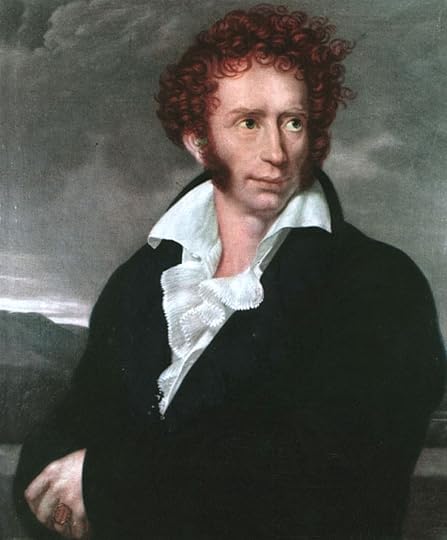
Autoritratto indimenticabile Solcata ho fronte, occhi incavati intenti, Crin fulvo, emunte guance, ardito aspetto, Labbro tumido acceso, e tersi denti, Capo chino, bel collo, e largo petto;
Giuste membra; vestir semplice eletto; Ratti i passi, i pensier, gli atti, gli accenti; Sobrio, umano, leal, prodigo, schietto;
Avverso al mondo, avversi a me gli eventi: Talor di lingua, e spesso di man prode; Mesto i più giorni e solo, ognor pensoso, Pronto, iracondo, inquieto, tenace:
Di vizj ricco e di virtù, do lode Alla ragion, ma corro ove al cor piace: Morte sol, mi darà fama e riposo.
Il libro è sicuramente interessante e fa comprendere bene la natura e il pensiero di Foscolo. Ci rivedo, però, troppo Alfieri. Quest’ultima figura risulta più interessante ai miei occhi rispetto a Foscolo. Peccato perché è sicuramente un personaggio affascinante e indiscutibilmente abile nel comporre.
Ho assaporato ogni verso rigirandolo tra le labbra. Non mi capita spesso di leggere ad alta voce, ma Foscolo va letteralmente pronunziato parola per parola. Questo libricino finisce dritto nello scaffale dei libri preferiti.