

What do you think?
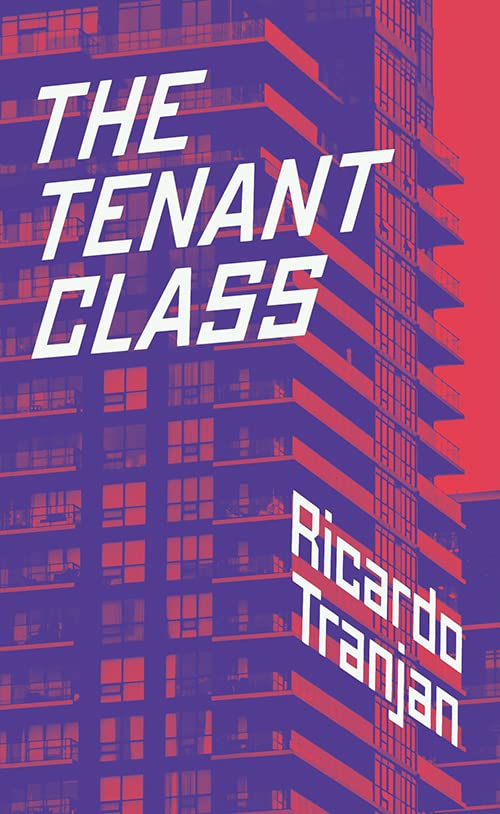
The Tenant Class
In this trailblazing manifesto, political economist Ricardo Tranjan places tenants and landlords on either side of the class divide that splits North American society.
What if there is no housing crisis, but instead a housing market working exactly as intended? What if rent hikes and eviction notices aren’t the work of the invisible hand of the market, but of a parasitic elite systematically funneling wealth away from working-class families? With clarity and precision, Tranjan breaks down pervasive myths about renters, mom-and-pop landlords, and housing affordability. In a society where home ownership is seen as the most important hallmark of a successful life, Tranjan refuses to absolve the landlords and governments that reap massive profits from the status quo.
The tenant class must face powerful systems of disinformation and exploitation to secure decent homes and fair rent. Drawing upon a long, inspiring history of collective action in Canada, Tranjan argues that organized tenants have the power to fight back.
What if there is no housing crisis, but instead a housing market working exactly as intended? What if rent hikes and eviction notices aren’t the work of the invisible hand of the market, but of a parasitic elite systematically funneling wealth away from working-class families? With clarity and precision, Tranjan breaks down pervasive myths about renters, mom-and-pop landlords, and housing affordability. In a society where home ownership is seen as the most important hallmark of a successful life, Tranjan refuses to absolve the landlords and governments that reap massive profits from the status quo.
The tenant class must face powerful systems of disinformation and exploitation to secure decent homes and fair rent. Drawing upon a long, inspiring history of collective action in Canada, Tranjan argues that organized tenants have the power to fight back.
135 pages, Paperback
Published May 16, 2023
About the author
Ricardo Tranjan
2 books15 followersI'm a political economist with the Canadian Centre for Policy Alternatives, a progressive think tank.
Previously, I managed the City of Toronto Poverty Reduction Strategy Office and briefly taught at universities in Ontario and Québec.
My academic work focused on Brazil, my native country, leading to my first (scholarly) book, Participatory Democracy in Brazil: Socioeconomic and Political Origins (2015).
Currently, my research focuses on Canadian social policy, especially housing. My second (non-academic) book, The Tenant Class (2023), has become a national bestseller.
I regularly write for online magazines and news outlets, especially the The Toronto Star.
Previously, I managed the City of Toronto Poverty Reduction Strategy Office and briefly taught at universities in Ontario and Québec.
My academic work focused on Brazil, my native country, leading to my first (scholarly) book, Participatory Democracy in Brazil: Socioeconomic and Political Origins (2015).
Currently, my research focuses on Canadian social policy, especially housing. My second (non-academic) book, The Tenant Class (2023), has become a national bestseller.
I regularly write for online magazines and news outlets, especially the The Toronto Star.
Ratings & Reviews
Friends & Following
Create a free account to discover what your friends think of this book!
Community Reviews
Displaying 1 - 30 of 83 reviews

July 3, 2023
A Marxist, class-based analysis of both the state of, and the history of, the "housing crisis" in Canada. The quotations around housing crisis are necessary, as for Tranjan, all elements of the housing crisis - perpetually rising rents and market prices; declining government intervention (social housing) into housing supply; new forms of, and increasing instances of, evictions such as 'renovictions' and 'demovictions;' increasing homelessness and dispossession - are determinate outcomes of market-based housing provisions which are strictly to the detriment of tenants and strictly to the benefit of homeowners, real estate agencies, property and land developers, and most of all, landlords. The housing crisis is not a crisis, it is programmatic and intended. It is a form class warfare.
Two highlights of the book are first, the historical persistence of the narrative of the housing crisis in Canada; and second, the historical organization and agitation of tenant unions, varied in focus and political programming, across Canada in the past and present.
The narrative of the housing crisis grounds The Tenant Class's thesis of the housing crisis being a feature of the capitalist provision of housing. It allows for the clear comparison of policy responses to the housing crisis in the past - urban renewal, social housing construction, restrictions on absentee ownership (in one rare case in P.E.I.) - versus those of the present, which amount to nothing more than trickle-down, supply-side economics which benefits real estate developers and investors. Build, build, build. If anything is lacking from The Tenant Class it is a well-researched takedown of this current policy response rooted in economic orthodoxy. If your framework postulates that a) supply creates its own demand; and b) a sufficient supply level will reduce prices, then there is a significant contradiction to resolve. There are, at least, references to historical policy analyses which argue against the market orthodoxy.
The focus on the history of tenant organizing occupies the final quarter of the book with specific examples of tenant union advocacy and agitation in the face of eviction, dispossession, and in one fascinating case in 1970s Montreal, authoritarianism. If anything, the richness and variation of the three tenant struggles examined closely leave the reader begging for more, such is the historical relevance of these cases to the book's central argument. The weight put on tenant organizing and the final chapter's call to pick a side gives this book a manifesto-like quality. It is a reasoned call for an intellectual and political struggle and spurs the imagination on the limits of the possible and how high it can be.
The manifesto-like quality of the book restricts its scope and leaves room for gaps to be filled, of which I have mentioned two: a structured dismantling of supply-side-economics-infected policy advocacy, and a more thorough look at tenant-landlord struggle. One would need to look elsewhere, in completely different literatures for analyses of each. On the second, Matthew Desmond's Evicted: Poverty and Profit in the American City , which is cited in the book, is a brilliant ethnography and examination of the utter immiseration of tenants, where brief insights into the history of landlord and tenant opposition in Milwaukee and other parts of the United States are complemented by an incredibly rich and specific recounting of poverty and conflict.
Two highlights of the book are first, the historical persistence of the narrative of the housing crisis in Canada; and second, the historical organization and agitation of tenant unions, varied in focus and political programming, across Canada in the past and present.
The narrative of the housing crisis grounds The Tenant Class's thesis of the housing crisis being a feature of the capitalist provision of housing. It allows for the clear comparison of policy responses to the housing crisis in the past - urban renewal, social housing construction, restrictions on absentee ownership (in one rare case in P.E.I.) - versus those of the present, which amount to nothing more than trickle-down, supply-side economics which benefits real estate developers and investors. Build, build, build. If anything is lacking from The Tenant Class it is a well-researched takedown of this current policy response rooted in economic orthodoxy. If your framework postulates that a) supply creates its own demand; and b) a sufficient supply level will reduce prices, then there is a significant contradiction to resolve. There are, at least, references to historical policy analyses which argue against the market orthodoxy.
[K]eeping units off the market is the only way to protect low-rent housing… there is nothing new in this observation.
[I]t would be foolish to imagine that the combined effect of all the known economies in production would be sufficient to invalidate the main conclusion at which we have arrived, namely that the economic market cannot by itself fulfill the housing needs of the Canadian people.
The focus on the history of tenant organizing occupies the final quarter of the book with specific examples of tenant union advocacy and agitation in the face of eviction, dispossession, and in one fascinating case in 1970s Montreal, authoritarianism. If anything, the richness and variation of the three tenant struggles examined closely leave the reader begging for more, such is the historical relevance of these cases to the book's central argument. The weight put on tenant organizing and the final chapter's call to pick a side gives this book a manifesto-like quality. It is a reasoned call for an intellectual and political struggle and spurs the imagination on the limits of the possible and how high it can be.
The manifesto-like quality of the book restricts its scope and leaves room for gaps to be filled, of which I have mentioned two: a structured dismantling of supply-side-economics-infected policy advocacy, and a more thorough look at tenant-landlord struggle. One would need to look elsewhere, in completely different literatures for analyses of each. On the second, Matthew Desmond's Evicted: Poverty and Profit in the American City , which is cited in the book, is a brilliant ethnography and examination of the utter immiseration of tenants, where brief insights into the history of landlord and tenant opposition in Milwaukee and other parts of the United States are complemented by an incredibly rich and specific recounting of poverty and conflict.

June 2, 2023
I thought this was pretty good. It's a short book that sketches out the place of renters in Canada, some of the myths of the 'housing debate' and a few of the ways that people fight back. The book quickly dismisses the standard parameters that policy experts and journalists use to judge rental markets, which makes it somewhat diagonal to those mainstream debates rather than a full reply. Instead, the basic idea is that you can't call it a 'housing crisis' if it's been going on for so long and if tenants are not simply all trying to scrounge for that big down payment. I think the book does its job of helping orient newer housing activists to the sorts of arguments they will encounter. And it's short enough that, say, an average person doesn't have to commit to a big tome to get the point.
That said, I don't know if I actually buy the idea that a 'housing crisis' is the wrong frame. Using a political economy framework and centering class struggle is right, I agree, but the book treats owner-occupied housing as essentially an alien world for well-off people. Which it sort of is, but if we're thinking radically, removing profit from rental housing is obviously going to have a large effect on how we think about typical middle-class homeowners and the 'property ladder'. But the more you broaden the discussion, the closer it gets to enemy territory of policy solutions, and the harder it is to keep this tenant-organizing focus. Which is fine, that's why I'll read on.
That said, I don't know if I actually buy the idea that a 'housing crisis' is the wrong frame. Using a political economy framework and centering class struggle is right, I agree, but the book treats owner-occupied housing as essentially an alien world for well-off people. Which it sort of is, but if we're thinking radically, removing profit from rental housing is obviously going to have a large effect on how we think about typical middle-class homeowners and the 'property ladder'. But the more you broaden the discussion, the closer it gets to enemy territory of policy solutions, and the harder it is to keep this tenant-organizing focus. Which is fine, that's why I'll read on.

November 7, 2025
good manifesto

June 2, 2023
I hate to give this a bad review because I was truly so excited to see a book on landlord and tenant issues/the housing crisis.
I was disappointed to find that this is a very cursory look at a very complicated issue. When I picked up this book I had expected to read more about individual tenants stories or a more nuanced exploration of how systemic barriers intersect to exacerbate housing insecurity.
While ‘The Tenant Class’ is touted as a provocative book, the revelation that landlords are exploiting tenants is not a new one, especially for those with lived experience.
We see a glimpse of something revelatory in the last chapter where Tranjan refers to more overarching and radical changes like the transition of housing from the private market to the public market. I truly wish this was explored in more depth.
Altogether, if you are coming to this book with absolutely no context or knowledge of the current housing crisis and rental rights issues, this might be informative, but for anyone who is aware of the situation or has actually lived through this, it will only reiterate the discouraging truths you already know.
On a more positive note, it is great to see how tenant initiatives and coalitions are effecting change from a grass-roots level and certainly an important (and hopeful) aspect of the issue.
This conversation is timely and deeply necessary. Be it for tenants who might not be fully aware of the extent of their rights and how to go about exercising them or for actors with the political power to create vital systemic change. Unfortunately, it might not reach the people profiting from this industry–those who need to hear it most.
Overall, I commend Tranjan for contributing to the discourse on this topic. I just wish it put more faces to the issue and delved deeper into the multitude of barriers to tenants realizing their rights (such as the unnecessary bureaucracy of the landlord and tenant board, the ways in which landlords circumvent proper procedural steps, and the personal consequences tenants face as a result).
I was disappointed to find that this is a very cursory look at a very complicated issue. When I picked up this book I had expected to read more about individual tenants stories or a more nuanced exploration of how systemic barriers intersect to exacerbate housing insecurity.
While ‘The Tenant Class’ is touted as a provocative book, the revelation that landlords are exploiting tenants is not a new one, especially for those with lived experience.
We see a glimpse of something revelatory in the last chapter where Tranjan refers to more overarching and radical changes like the transition of housing from the private market to the public market. I truly wish this was explored in more depth.
Altogether, if you are coming to this book with absolutely no context or knowledge of the current housing crisis and rental rights issues, this might be informative, but for anyone who is aware of the situation or has actually lived through this, it will only reiterate the discouraging truths you already know.
On a more positive note, it is great to see how tenant initiatives and coalitions are effecting change from a grass-roots level and certainly an important (and hopeful) aspect of the issue.
This conversation is timely and deeply necessary. Be it for tenants who might not be fully aware of the extent of their rights and how to go about exercising them or for actors with the political power to create vital systemic change. Unfortunately, it might not reach the people profiting from this industry–those who need to hear it most.
Overall, I commend Tranjan for contributing to the discourse on this topic. I just wish it put more faces to the issue and delved deeper into the multitude of barriers to tenants realizing their rights (such as the unnecessary bureaucracy of the landlord and tenant board, the ways in which landlords circumvent proper procedural steps, and the personal consequences tenants face as a result).
This entire review has been hidden because of spoilers.
May 22, 2023
What if there isn’t a housing crisis? What if everything happening with housing markets isn’t a mistake of a fluke but instead a natural consequence of a system designed to extract profit out of tenants, a system working as intended. That’s the question Ricardo Tranjan asks and answers in this short, but incredibly detailed manifesto on housing and rentals in Canada. A repudiation of the accepted dogma around housing that simply building more supply will fix the issue, instead proposing a mass movement by tenants for tenants that focusses on creating public not-for-profit housing, ending evictions, lowering rents, and reframing the debate between two classes: tenant, and landlords.

November 19, 2023
this was Very Good. really appreciated the clear eyed look at the so called housing crisis. I wish he had given us a bit more re step by step tactics of tenant organizing but maybe that will come in the next book. 5/5

March 19, 2025
Short but dense. Reframes the conversation around for-profit housing and discusses tenant class political action. Anti-landlord, anti-colonialism, anti-capitalist.
July 28, 2025
i already sort of knew a lot of this in my soul, but it was great to have figures and data and research to back it up

August 5, 2025
4.5 everybody should read !!

February 9, 2024
An argument that market rental housing can only exploit the less well off. I agree with the point but would have liked much more depth and nuance to the analysis. A few times, it felt like a story was started, about a specific battle or resistance against particularly egregious landlords, only for the thread to be dropped with a too-brief summary and generalization.

Read
November 25, 2024A short, blunt book (written not by an organizer but by a researcher who works in solidarity with organizers) that argues that the so-called "housing crisis" in Canada is not, in fact, a sudden and unexpected failure of an otherwise functional housing system that must be resolved by research, consultation, and technical measures, but rather a predictable and ongoing reality produced by a housing system that depends on exploitation and that can only be meaningfully undone through class struggle and building tenant power. A really useful antidote to the misleading way that housing usually gets talked about in mainstream contexts, and a useful tool for tenants and their allies who are trying to figure out what to do about it. Could've used more depth, in particular in its exploration of different tenant groups and struggles, but I also see the value in keeping it brief.
January 24, 2025
Tranjan does a great job at detailing a history of tenant activism throughout Canada’s legacy - often giving each organization the ability to speak for itself with their records of successes and failures in organizing.
The usefulness of this book lies directly in the data presented. I found that the arguments were not particularly new (especially given Tranjan’s admittance of similarity between tenant struggles and class struggle, Marxist theory, and indigenous landback) but at the very least, this work is great as an introduction to those looking for a starting point in the field or as a good repository of data on the housing situation in Canada and tenant unions.
The usefulness of this book lies directly in the data presented. I found that the arguments were not particularly new (especially given Tranjan’s admittance of similarity between tenant struggles and class struggle, Marxist theory, and indigenous landback) but at the very least, this work is great as an introduction to those looking for a starting point in the field or as a good repository of data on the housing situation in Canada and tenant unions.

September 8, 2024
This book grabbed me by the throat. I just wish it would have come out years ago, and not now in the middle of this housing catastrophe.
Tranjan does a good job of politicizing the so-called crisis by holding the landlord class and political class accountable and daring to call them out.
Our cowardly media insists that the lack of housing and resulting homelessness are simply the result of natural forces that cannot be stopped. The media and political class have raised their hands and said "Oh no, this is terrible! It's a shame that there is no one to blame and nothing to do. So we will just talk endlessly about housing unaffordability and homelessness as if they are perfectly natural events while holding no one accountable."
Written almost as a manifesto - this book is a good first step in politicizing Canadians. It's our job, however, to fight for ourselves as a social class and hold the landlord class and political class accountable to their profiteering, corruption, and greed.
Tranjan does a good job of politicizing the so-called crisis by holding the landlord class and political class accountable and daring to call them out.
Our cowardly media insists that the lack of housing and resulting homelessness are simply the result of natural forces that cannot be stopped. The media and political class have raised their hands and said "Oh no, this is terrible! It's a shame that there is no one to blame and nothing to do. So we will just talk endlessly about housing unaffordability and homelessness as if they are perfectly natural events while holding no one accountable."
Written almost as a manifesto - this book is a good first step in politicizing Canadians. It's our job, however, to fight for ourselves as a social class and hold the landlord class and political class accountable to their profiteering, corruption, and greed.

August 30, 2024
This review provides a good overview of crisis theory and its relevance to the housing crisis in Canada. However, the engagement with the topic is somewhat superficial and serves more as an introduction rather than a deep analysis. Additionally, Tranjan does not adequately address the criticisms of the so-called “Tenant Class.”
While he defines the tenant class based on their relationship to the means of social reproduction—similar to how orthodox Marxists define class by one's relationship to the means of industrial production—there is little exploration of why this distinction is necessary. Given that tenants are typically not owners of industrial capital, and vice versa, this new definition seems somewhat redundant without further justification or analysis.
While he defines the tenant class based on their relationship to the means of social reproduction—similar to how orthodox Marxists define class by one's relationship to the means of industrial production—there is little exploration of why this distinction is necessary. Given that tenants are typically not owners of industrial capital, and vice versa, this new definition seems somewhat redundant without further justification or analysis.

July 5, 2023
I’ll write a proper review of The Tenant Class, but Ricardo Tranjan’s book is simple and trenchant. The thesis is that Canada doesn’t have a housing crisis; it’s simply landlord exploitation of tenants working as it should. There is some good history of tenant struggles since the 1860s, and a summary of the political economy perspective on financialization of housing.

December 29, 2025
Trajan adapte ici son essai à la réalité québécoise/canadienne sur la « crise » du logement, l’accès à la propriété, les luttes communautaires ainsi que le privé vs le gouvernemental. C’est un sujet intéressant, mais j’ai solidement cogné des clous. Si l’on est moindrement au courant du sujet, ce livre ne sera pas très informatif. Ce n’est pas particulièrement poussé.

May 2, 2026
Great overview of the history and current state of the tenant movement in Canada. Writing was kind of shit and felt like long-form journalism but that is common to these pop politics type books. However I do think this book is potentially really useful in that you could get a normal person who is not already a freak about politics and theory to read it and it would help them politicize housing in class terms.

January 14, 2024
A book/essay rich with humanism. Tranjan starts out by empirically proving the greed motivation of the established landlord class and proceeds to spend the majority of the book reflecting on the tenant class' historical victories in canada. Book beautifully states the need for class-based organizing that rejects requests for 'fair' treatment by the economic ruling class.

September 19, 2023
Excellent. Read it. A concise and contemporary--with the right amount of history, though--analysis of the shitshow that is the Canadian housing market (with applicability to other jurisdictions too).

November 9, 2023
A solid examination of housing in Canada that provides a blueprint forward for making housing a human right
July 6, 2024
Worth reading but sometimes a bit vague and superficial.

January 23, 2025
❗️LANDLORDS ARE THE SCUM OF THE EARTH❗️
a straightforward and informative book on the Canadian "housing crisis" that could easily be applied to the UK too. wish it went into more detail on the tenant unions and name dropped the landlords so I can fight them 👊🏽👊🏽👊🏽👊🏽
a straightforward and informative book on the Canadian "housing crisis" that could easily be applied to the UK too. wish it went into more detail on the tenant unions and name dropped the landlords so I can fight them 👊🏽👊🏽👊🏽👊🏽

March 24, 2025
Lecture intéressante qui résume bien les enjeux autour de la location. J'ai bien aimé son approche pour présenter différemment la lutte des classes et les nombreuses histoires de lutte entre associations de locataires et propriétaires.

January 3, 2026
Très bon essai sur la lutte des classes (evidemment celle des locataire). Nombreux exemples actuels, illustrations historiques, récapitulatifs clairs à la fin des chapitres, bref, tout y est!

August 27, 2024
Each paragraph is packed with concise and well articulated information. It took me so long to read because I had to digest each sentence. It's a great resource to lend to friends and to quote at your weird uncle who doesn't understand why widening roads won't solve traffic

December 1, 2025
An informative description of housing in Canada from the tenant's perspective. Ricardo Tranjan's thesis is that any housing issues faced by the renting class are all a result of landlords trying to squeeze them for greater profit, rather than a supply issue. This description of the housing situation, as of 2023, was interesting. I was less interested in the history of tenant rights organizations in Canada in the final chapters. Tranjan proposes that housing needs to be a right rather than a commodity. He suggests reframing housing this way is a solution, but I would have liked to have this broken down into more steps and specific proposals. Overall, well-researched and inspiring.

February 23, 2024
3.5 rounded up

July 29, 2026
This is a short book at just over 100 pages but, honestly, it probably didn't need to be that long. The author writes with clarity and conviction about the "housing crisis" that isn't actually a crisis and the importance of using the right language and the right frame of thinking when discussing the problems around affordable housing within this country. Also, important to note, that "this country" for Tranjan is actually Canada, rather than the US, but all the points he makes still apply. Reading one of the more elongated reviews will give you the main points of this book, which center around the recognition that it's not a crisis or a problem if the housing market is working exactly as it was intended, which is to divert wealth from the lower income property renters to the high income property owners. Tranjan holds a magnifying glass over the uncomfortable ways we talk about home ownership and the American (or Canadian) Dream. We put a lot of effort and creative energy into coming up with solutions to housing shortages that exist specifically because market forces allow them to.
It's an interesting read and I'd recommend it for anyone looking to broaden their language and thinking around housing issues in North America.
It's an interesting read and I'd recommend it for anyone looking to broaden their language and thinking around housing issues in North America.

June 5, 2024
[☆3.5/5] this is short, though well edited -- an insightful look into myths surrounding the housing crisis. i appreciated the author's tone; direct, and much of it echoed marxist teachings. housing is a human right!!!

October 5, 2024
7/10
it's cool. serves as a history of many toronto tenant movements but i don't think its own contributions are particularly revelatory...
it's cool. serves as a history of many toronto tenant movements but i don't think its own contributions are particularly revelatory...
Displaying 1 - 30 of 83 reviews