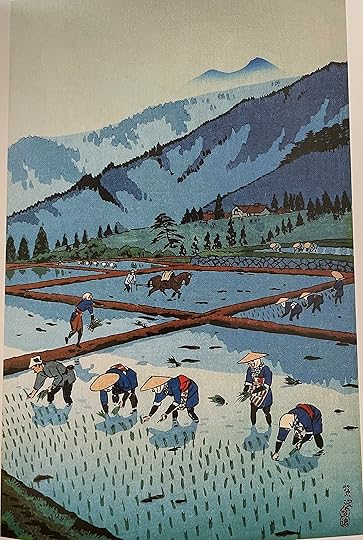
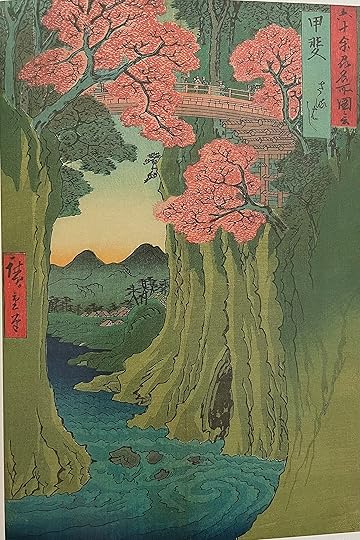
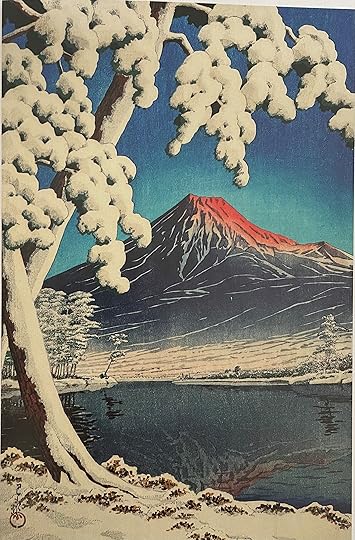
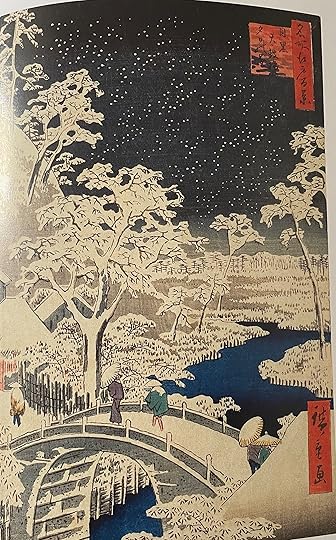
The graceful, evocative haiku featured here were composed by the renowned Japanese haiku masters of the past four hundred years, including Matsuo Bashō, Taniguchi Buson, and Kobayashi Issa. The deceptively simple poems rendered in English with Japanese calligraphy and transliteration are paired with exquisite eighteenth- or nineteenth-century paintings and ukiyo-e prints and twentieth-century shin hanga woodcuts from the Art Gallery of Greater Victoria, Canada. Haiku: Japanese Art and Poetry presents thirty-five pairs of poems and images, organized seasonally. The Introduction details the origin and development of haiku, the lives of the most famous poets, and the obstacles faced when translating the concise yet complex lines.
Again, as with the previous book, the introduction offered a very nice overview on the poetic form, the evolution of haikus as well as the lineage of haiku masters.
Now, a quick introduction to what a haiku actually is: A haiku is a type of poem and usually consists of 7 syllables in 3 units of 5-7-5 (hokku). Matsuo Basho (Japan's most famous poet who lived from 1644 to 1694) developed this style and he, Taniguchi Buson (1715 to 1783) and Kobayashi Issa (1763 to 1828) are considered the three greatest haiku poets of all time.
Over time, other styles developed and Basho himself perfected the technique or implemented more rules that he then made popular through gatherings with other poets (think poetry slams).
This book has 4 chapters: 1) Spring 2) Summer 3) Autumn 4) Winter
Thus, while the other book's haikus were about animals, the haikus in this book are about nature and the seasons.
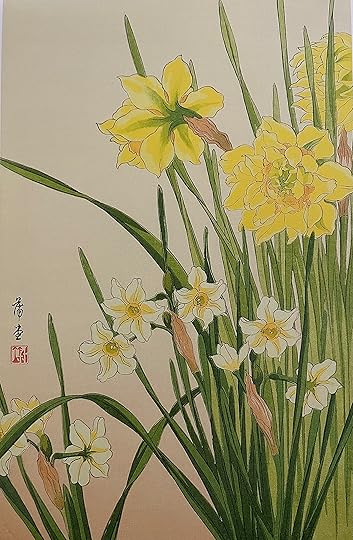
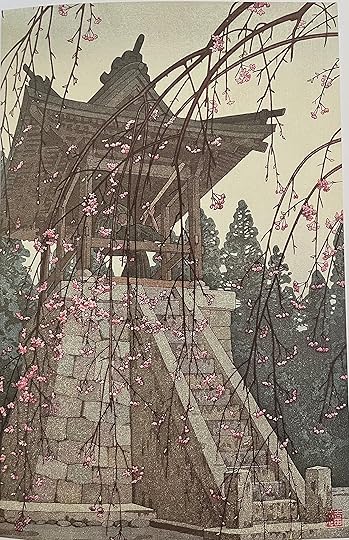
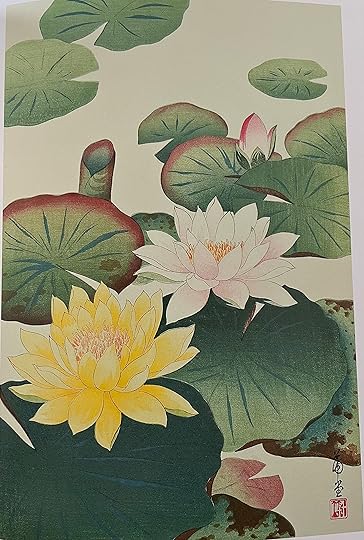
Interestingly, Japanese culture usually pairs haikus with art (paintings, tapestries, sculptures etc.) to depict what the poems describe. Therefore, this book not only had a collection of nice poems but also the artwork best associated with them. One was even the photograph of a fan, made from fabric, that was painted to depict one of the haikus.
Here are a few of my favorite examples:
A nice collection that complimented the one with the animals. Naturally, there were animal depictions here, too, but not as many and no haiku was found in both books (no repetition), which I was especially happy about.
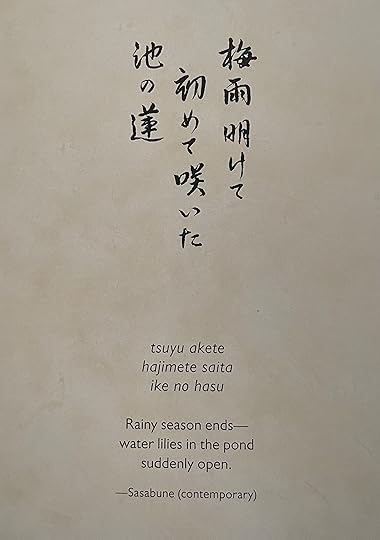
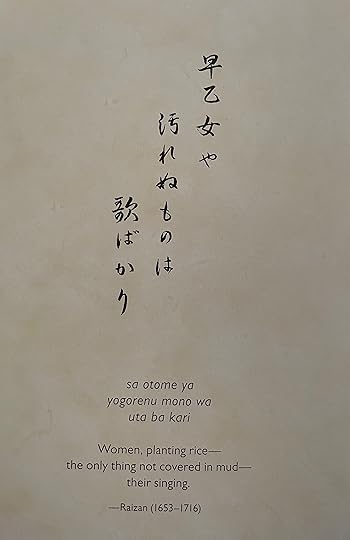
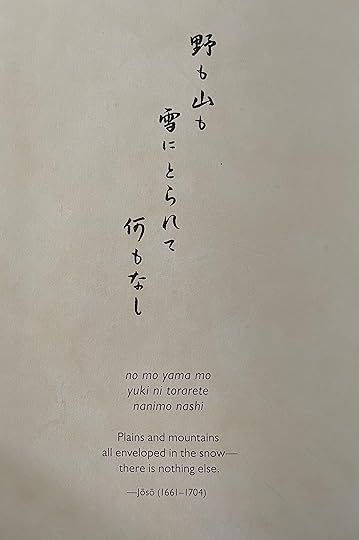
Thick, glossy pages with gorgeous full color art paired with thematically relevant haiku on the facing page. The art takes a full page or more, with the haiku on its own page in three forms: the original written in vertical calligraphy, followed by a transliteration and an English translation.
Not exactly sure who translated these, probably Patt and maybe Warkentyne. Till sounds like the art guy, going by the bookflap. According to the short introduction, the translations are as literal as possible, and based on what I know of haiku, include some extra linking words, possibly to fit the 5-7-5 syllable scheme or maybe just to smooth out the transitions between ideas. The introduction also gives brief bios of Buson, Issa, and Bashō, but spares not a word for any of the other poets or artists included in the book.
Organized by season, this contains the work of the old masters as well as some contemporary artists and poets, and it's lovely, especially Warkentyne's calligraphy. It's very nice to flip through, but the pairing of poetry and art is fairly basic and doesn't stretch the imagination or the critical mind. Probably best as a coffee table book.
Haiku: Japanese Art and Poetry is a lovely book that I discovered through an activity for adults during our public library summer reading challenge. After a brief introduction to haiku, the book is organized in four sections representing the four seasons. Each section contains a series of classic haiku and accompanying artwork . The haiku are presented in three forms: Japanese calligraphy, a phonetic translation and the English translation. The experience of reading each haiku and viewing the artwork is like a mini-meditation. Haiku: Japanese Art and Poetry is a book I may want to add to my own personal library.
A good introduction to haikus : a little bit of history, a short presentation of the main haiku masters, a good selection of poetry and beautiful art to meditate on the meaning of the haikus. For those who are learning to speak and read japanese, this edition allows you to practice and analyse the original meaning of the poetry!
Sadly, very few of these haikus moved me. I guess I'm not a fan of the masters, because I quite prefer their students.
Quite quite nice. The art is tops (I don't have familiarity with Japanese art). I haven't read a lot of haiku in part because some of the books I've considered have three, four poems per page and that's just rude and disrespectful. This, at most, has one per page. The haiku in the first section I'm sure could have been stronger. The other sections are better. The art and poetry together are quite nice, a nice introduction to both. This book should be on your bookshelf.
Lovely introduction to haiku. The accompanying art work totally compliments the poems. There is a brief introduction to the haiku masters and a brief history of the haiku form. Very meditative , if you let it be so.