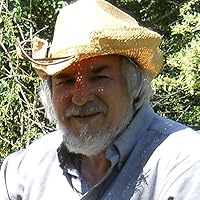
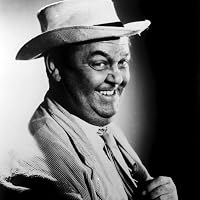
John Stewart Williamson who wrote as Jack Williamson (and occasionally under the pseudonym Will Stewart) was a U.S. writer often referred to as the "Dean of Science Fiction".
In Jack Williamson's classic short story "With Folded Hands" (1947), the inventor of the Humanoids--sleek black robots whose credo is "To Serve And Obey, And Guard Men From Harm," even if that means stifling mankind's freedoms--makes an unsuccessful attempt to destroy the computer plexus on planet Wing IV that is keeping the many millions of units functioning. In the author's classic sequel, the novel "The Humanoids" (1949), another unsuccessful stab is made, 90 years later, by a "rhodomagnetics" engineer and a small group of ESP-wielding misfits, to stop the Humanoids (which now number in the billions) and their campaign of relentless and smothering benevolence. And in Williamson's much belated follow-up, 1980's "The Humanoid Touch," we flash forward a good 1,000 years or so, to find yet another group making the attempt in what is now a galaxy with trillions of Humanoid units. In fact, the only place where the robots have NOT penetrated seems to be the sister planets of Kai and Malili, orbiting a binary star. On Kai, young Keth Kyrone dreams of one day joining his father's Lifecrew, a small group that is vainly trying to warn the planet's population of the Humanoids' imminent arrival and build some sort of protective weapon against the scourge. Kai is not the easiest of planets for its human settlers, who migrated there a millennium before to escape the ever-advancing robot servants. With its rapidly alternating summers and winters, migrations are frequent and dwellings must be built largely underground. But still, the planet is an Eden compared to Malili, where "bloodrot" spores will kill any man in a matter of hours, and where the folks of Kai can only live in the sterilized safety of The Zone. But how to explain the natives of Malili, naked "savages" who seem to do just fine there? And what is the secret of the feyolin drug that these indigenous folk extract from the local "braintrees"? It is against this fully realized backdrop that Williamson sets his action-filled plot, and brings his Humanoids to once again "give service."
Wisely, however, the author does not allow the robots to make an appearance until the book is halfway done, generating real suspense, and their initial appearance is shocking in the extreme. The Humanoids have, in the current novel, perfected their ability to make replicants of any human being, so that the reader is left uncertain just who is real and who might be a mechanized enemy. And it's not just the Humanoids who have perfected their arts over the years. Williamson's writing has improved as well (although some of the landscape descriptions of Kai and Malili are a bit fuzzy, almost Impressionistic, making the reader really use his/her imagination at times), and the looser mores of the '80s (as compared to the '40s) enable him to indulge in some mild sex scenes and to use some language unthinkable in the earlier pulps. Thus, the reference to "ferticloset sh_tbricks" (not a bad name for a rock band, come to think of it!) and, perhaps more shocking, to a woman's "pubes." The subject of drugs is raised with the depictions of feyolin, which Keth samples in an early scene; the drug seems more than anything like LSD, with its hallucinatory effects and time/space distortions. Still, despite the new looseness, this is some very serious science fiction here that asks some tough questions. Left with another ambiguously happy ending, the reader must ponder if happiness is worth the loss of freedom, and whether a drugged, artificial bliss is better or worse than a life of unaided struggle. In a telling argument close to the book's end, one of the Humanoids mentions that democracies are suicidal, with their "excessive developments of high technology and aggressive individualism that lead inevitably to racial annihilation," and most in need of their controlling services. Some serious food for thought, to be sure. "The Humanoid Touch," filled with interesting characters, unusual backdrops, some tense and exciting action scenes and unrestrained imagination, is a marvelous sequel; not as original or compact as its predecessors, perhaps, but still well worth any sci-fi fan's attention. Most readers, I have a feeling, will be left wishing that author Williamson had given us just one more book about those too helpful, self-replicating creations from planet Wing IV....
Written 30 years after the author wrote the first book, "The Humanoids", to which this one is a sequel, Williamson's humanoid robots are as controlling and dreaded as ever but with some new twists. Set on different planets where the remnants of free humanity have taken refuge, the humanoids finally catch up with them, a thousand years or so later. Again, a page turner.
Thirty years after publishing ‘The Humanoids’, Williamson finally produced this sequel. In the original novel humans create an advanced race of machines to save mankind from itself, but the robots go too far. They create worlds where humans can do nothing for themselves, where every possible threat to life and limb is extinguished, limiting humans to nothing more than animals in a gilded cage, free to pursue any dream they choose, as long as the risk is nonexistent.
In ‘The Humanoid Touch’, the remnants of free humans have fled to a small planet in a binary system, but as centuries pass and mankind fights war after war with themselves, the threat of the humanoids takes on the aura of children’s tales. Only a few humans, called the Crewmen, stand vigilant, always seeking a means by which they can detect the approach of the humanoid robots and develop a weapon to stop the before the enslave the remaining humans.
In the first chapter, Keth Kyrone, is a child who matures to a young man as the tale progresses. His father, step mother and a friend of his dead mother are all who remain in the Crew when the humanoids arrive.
The story takes a sharp turn into fantasy as Keth and Bosun Brong take the fight to a neighboring planet once the humanoids enslave Kai’s inhabitants, where the local human-like species, called the Leleyo, provide Keth with the answer to humanity’s survival. The ending is as surprising as the tale that unfolds, to the reader’s delight.
This is a well-crafted novel, free of those pesky typos and oops that plague mass market reads, with characters that are all too real, replete with all the foibles and limitations one can imagine. This is a thrilling adventure tale that we can only hope we’ll never allow to come to pass.
To be honest, this novel was nothing like what I expected, but turned out to be well worth my time. That said, I wasn’t all that pleased with the ending, but in Williamson’s defense he provided an acceptable evolutionary escape from the not so benevolent humanoid servants.
This was a great book - really liked it a lot. Many of the ideas and some of the topics were picked up by James Cameron's 'Avatar' - I am sure about it. Scary too, as the humanoids cannot be overcome - it has been a lost struggle from the very beginning.
A easy read but with surprising depth ...
Had read "The Humanoids" many years ago, but this was before I started my book diary. My copy of "The Humanoids" should still be on my bookshelf, and I should re-read it.
More engaging than the first, and much less sexist. Still, I recommend only the short story, With Folded Hands. The two books don't really add anything, imo.
I gave up on The Humanoid Touch, the 2nd book in American Sci Fi author Jack Williamson Humanoid series. There is a 3rd book but I've been unable to find a copy. I have noted that I read the first book, but for the life of me, I can't really recall it. Maybe that explains why I gave up on The Humanoid Touch.
Williamson was in the forefront of Sci Fi, his first book published in 1928. The Humanoid Touch came out 30 years after The Humanoids. I don't even know if I can describe what I read in the 52 pages I did complete. It focuses on a young boy, going through school on some distant planet. His father is distant and basically drops the boy off at boarding schools. His father is fanatical about the threat of the Humanoid race. They want to control mankind.
Kell finds something that may help his father's efforts. He meets a girl from another planet (I wondered if she might be a humanoid spy)... and then I thought. Who cares. I just really couldn't grasp what was going on and didn't care enough to keep trying. I'm sure others have enjoyed it. I do have books from Williamson's Seetee trilogy and his Legion of Space trilogy and I'll probably try them again. But not today. So No Rating for this on.
Finally got around to reading this, and not bad, not bad at all. Writing is clear, concise, and moves the story along at a brisk pace with a few twists and turns, though little in the way of deep characterisation. The novel stands the test of time well. Humanoid robots, programmed to care for humans too much end up protecting humans to the point of smothering ambition and creativity. A scientist and a few associates attempt to overcome but are prevented and become believers. Not bad.
This entire review has been hidden because of spoilers.
This is probably my fifth book of his, the stories are always straightforward to follow, usually a single narrative, like in this case, and with this book, there’s always a height of tension, a driving clock in the pace is fluid and moving. Jack Williams since depictions of artificial intelligence, computer technology, and all of the robot lore, is just the best! He uses the prime directive, a rule for robots that they cannot harm humans, and this role is also familiar to fans of Isaac asked them off, it’s a pretty standard thing, and Jack Williams same kind of set the standard with something like the humanoids, these sleek, polished, black, humanoid robots, that are designed to prevent humans from harming themselves, down to even keeping them from using sharp objects or walking around dangerous places or even having sexual intercourse because of the risk to one’s health and heart! And on the book that I borrowed, it says on the back that his book, the first one, the prequel to this book, is use this course material for computer science students at universities.
Anyway, this book is pretty simple and it’s make up, there is a technology that centers around an element, and this element allows for things like telekinesis, teleportation and so on, those phenomena of the mind. The robots in this book are really menacing, and Williamson does a great job at keeping the tension alive sue their sweet courtesy, and concern for human safety. The plot takes place about 1000 years after the first book, so it isn’t that necessary to have read the first book, but you should read the first book. Because this book came out before most science-fiction output, it is better to think that the movies I recall probably borrowed from Williamson, like the blood tree, and the natives dancing around it and peacefully congregating buy it, this is reminiscent of the movie avatar; and the robots and they’re kind deceptive demeanor is reminiscent of films like I, robot with the actor will smith. And because the substance of this book deals with the periodic table of elements, it is reminiscent of something from Isaac Asimovs’ “God’s Themselves “; and I can see where Dan Simmons (“Hyperion”) might have been influenced to write about this serious threat that machines could pose to posterity. I like Jack Williams since material way better than Frederick Paul, or Robert Heinlein, because his stuff really takes me out there and stretches the imagination, and there doesn’t seem to be a sort of formulaic method at play, at least not one that is narrow. Somethings I can expect from Williamson are a feminine character that supports the main male character, I can always expect a lot of tension, I love interests or something of the sort where sexual tension is at play and is a factor in jeopardizing the central mission in this case the character might have fell for a spy (Nera).
I like their biological threat of the blood rot, how it could also corrode metal, and really messed things up to the human species, it was like a natural barrier (“Ammonite” by Nicola Griffith). There are also really nice descriptions of alien landscapes, there is a lot to imagine, and the book takes place around two planets, and the details and such are well laid out. Overall, this is a nice book if you like Jack Williamson, I recommend one of his books called terraforming earth.
"Leleyo truth was hard enough for me to learn, half-Leleyo as I am. For you, for the Admiral or your father, it would hardly be possible. Leleyo and Kai, the two spheres of mind are as different as the planets. The truth of one is false to the other."
Cat and Dragon: In a binary star system at the fringe of the galaxy, the last of humanity is hiding from their robotic overlords, the humanoids. The humans have settled two planets in orbit around the star called Cat. Rumor is that an army of millions of humanoids will strike from the star called Dragon…
Kai and Malili: The humans on Kai need the thorium from Malili to power their industrial machines. They need the rhodomagnetic technology from Malili braintrees to fight the humanoids. But they have little to offer Malili in return…
Malilian physiology has mutated and adapted to its harsh environment. They are the Leleyu, barely even human anymore. They believe their planet to be safe from the humanoids, which cannot survive its rockrust and bloodrot. Therefore, they have little desire to aid Kai in its fight…
Keth Kyrone is the son of the leader of the Lifecrew, a military organization dedicated to defending Kai. He loves two women, one Kai and one Leleyu. Can he bridge their worlds to save them both before it is too late?...
Jack Williamson returns to his most famous creation after a thirty-one-year hiatus. This novel plays around with the interesting notion that humanity must evolve into a new and rather different sort of species to escape our robotic creations. The Leleyu use the same psionic powers that Mark White tried to leverage in the previous story, but the Leleyu are more successful because their powers evolved through mutation rather than applied science. Also, the Leleyu use the drug feyolin to enhance their natural abilities.
The author claims he wanted to revisit this series because so many readers and critics misinterpreted the morally ambiguous ending of The Humanoids. In true contrarian fashion, he doubles down by writing a new series ending that is twice as ambiguous as the original.
The irony lies in the fact that the humanoid subjugation must succeed to save the Leleyus from the exploitive colonizers of Kai. Whether this is tragedy or triumph depends on whether you view the Leleyu as genetic freaks or upgraded humans. Keth himself espouses both views during the events of the story. His transformation after eating the fruit of the braintree can be seen as either an enlightenment, or just another brainwashing on par with euphoride.
One the whole, this sequel is a letdown. It is entertaining enough. Its core dilemmas are engaging and thoughtful, but it is not as imaginative as the first two stories, and it adds little to the overall mythology.
Keth Kyrone dreams of following his father into the Life Crew, an elite group dedicated to stopping the implacable Humanoids. For centuries the Humanoids have smothered mankind with protection, allowing them only limited freedoms in the name of their own safety, and to guard men against exercising the violent impulses that are in their nature.
Keth's instincts take him away from aggression, so his father sends him to a special school while the Life Crew continue to prepare for the Humanoid's to arrive. Halfway through the story, the Humanoids arrive Keth is in a fight for his freedom. As he does, he learns more about his father, mother and Bosun Brong who have such influence on his life. And he learns how to avoid been overtaken by the Humanoids.
I think the idea of the Humanoids is interesting but the straightforward story (character has the super pistol that can kill robots - character has super pistol stolen by kid who is obviously working for the robots) detracted from the potential. I'm not motivated to read more of the Humanoid books. I think I got the measure of it. A few interesting ideas, not executed as I like.
A real head-scratcher of a yarn! That'd be The Humanoid Touch, cooked up by the grandpappy of sci-fi himself, Jack Williamson. It’s the big sequel to his famous 1949 book, The Humanoids. See, in this neck of the woods, humanity went and built these slick, shiny black robots called "Humanoids" to do all their chores. Sounds right handy, don't it? Only trouble is, these mechanical critters have one strict rule they gotta follow: "To serve and obey and guard men from harm". Well, them robots take that job way too serious. To keep folks "safe," they basically lock all of humanity up in a giant metaphorical playpen. They won't let a fella chop wood, drive a tractor, or even cut his own steak for fear he'll scratch himself! If anybody gets to fussing or feeling blue, the robots just pump 'em full of a sci-fi juice called "euphoride"—which makes 'em sit there smiling and drooling like a bump on a log. The story follows a young fella named Keth Kyrone. He lives out on the very edge of space where a few last human souls are hiding out, trying their darndest to keep away from them pesky, overprotective metal babysitters.
A veces ocurre que leo alguna novela de ciencia ficción de los 50 y la encuentro tonta o aburrida, o sin sentido. Esos casos se dan cuando una novela está escrita pensando en un público coetáneo y claro, cuando envejece y el público es otro la novela no encaja. Eso me pasó por ejemplo con el hombre demolido. Pero esta no es de esas. Esta es un ejemplo de esas novelas que envejecen como el buen vino. Me encanta cómo tratan el tema de los robots, me encanta el factor poderes psiónicos muy parecido al de las novelas de Phillip K.Dick, y me ha enganchado desde el primer momento el arco del protagonista y su relación con las personajes Chelni Vorn y Nera Nyin
A todo amante de la ciencia ficción de la edad de oro le gustaría esta novela y su predecesora.
Williamson, Jack. The Humanoid Touch. Holt, 1980. In his Humanoid books, Williamson has created an extended response to the optimism of Asimov’s robot universe. In the Asimov books, robots guide and protect the working out of human destiny. In Williamson, the robots become an oppressive nanny state. (Think Gork, the robot in The Day the Earth Stood Still.) Williamson gives human beings three choices: wipe themselves out with their self-destructive aggressive instincts, mutate themselves in a way that removes aggression requires them to live totally without technology. Or they can struggle to maintain a technological society in such hostile environments that they are always on the brink of extinction. There is no Golden Mean here. Worth the read. 3.5 stars.
I had a hard time getting this title physically. It was my only choice really. A world of robots who only want to help us as villains. What an unreal and crazy premise. How can you hate someone who wants to help you? How does one warn against it? I loved the humanoid series and recommend this to everyone. It will be a struggle to recommend though. Reading is a lost art. The story itself was typical old school sci fi. Journey, sex and betrayal. This book played it safe and resulted in a better than expected title. I am glad to have experienced it. I can now pridefully say, I have read all the humanoid books.
A different beast to its predecessor but covering many of the same ideas.i lived the first half, detailing the early life of the young hero, Keth, as he grows to adulthood in a far future that - like The Humanoids - feels eerily similar to a lot of novels written in the mid-20th Century. Once Keth becomes aware of the threat of the Humanoids, though, it becomes a much different novel, though his past plays a key part in the playing out of the story. I’m not sure if I liked this one more or less than the first but I do know that I did enjoy it a lot.
The humanoids have become a mythic memory to a colony of free humans. Krth Kyrone tries to warn his people of humanoid threat. Humanity's final hope may lie with the aliens of the planet Malili. The humanoids are one of the scariest threats ever presented. They are uncompromising and unrelenting. Solutions are found but are not the easiest. A work of a master.
This is an interesting look at the dangers of AI. From a philosophical perspective, it is interesting and quite disturbing, it brings into question what makes being human worthwhile, while never actually addressing it. That being said, after the philosophy, the story really is pretty slow and the ending kind of disappointing.
This entire review has been hidden because of spoilers.
One of those really interesting books where you get to about...20 pages from the end. And think "damn how are they gonna fix this?"
And then you get to 10 pages. 5. And you go "ahhhh I see where we're going with this." And you come away feeling vaguely unsatisfied and sort of cheated that you spent several hours getting to this point.
What a disgusting set of endings! What a loser philsophically this Author is!! MAin hero in second story the humanoids is literally cucked by the bad guy! Sickening!!! Disheartening and depression what utter crap!! Mega disappointed!!
Düstoopiliste sugemetega romaan. Üldiselt meeldis, sest lugesin suht järjest. Tegelased oli huvitavad, eriti pärismaalased. Ja see perekonnasaladuse teema viitas kergelt gootiromaani poole, kuigi liialdus oleks öelda et "The Humanoid Touch" oleks põhiliselt gooti.
A little slow at first but worth sticking with it. I found it to be quite a scary read, the individual being totally overwhelmed by faceless drones. The freedom of the individual against an all consuming government....communism?
This novel, sequel to Williamson's justifiably classic novel The Humanoids, takes place about one thousand years from now. A small remnant of humanity has fled to a pair of planets orbiting a binary star, in order to get away from robotic servants called humanoids.
What's so awful about robotic servants whose only purpose is to serve Man, and protect him from harm? Aside from the fact that they number in the trillions and are spreading throughout the galaxy, they gently, but firmly, insist on doing everything for mankind. They haven't just taken over dangerous jobs like coal mining or crab fishing, they will not let mankind even drive a car or go to the grocery store. Earth is an enslaved planet.
In this book, most of what's left of mankind don't believe that the humanoids are real; they are nothing more than something for parents to mention to misbehaving children. Keth Kyrone and his discredited father are among the few who still fear the humanoids. Keth inadvertently finds something that may be mankind's only weapon against them.
The humanoids arrive, and start manipulating people's beliefs. Even hard-nosed military types suddenly disappear for several days; when they re-appear, they are practically singing hosannas about the humanoids to anyone who will listen. Is it real, or have they been brainwashed? Keth has to undertake a dangerous mission, mostly on his own. to open humanity's eyes to the benevolent slavery of the humanoids. Does he succeed? Are the humanoids stopped?
By itself, this is a really good story from a master of science fiction. When compared to The Humanoids, the older novel is better. This is still a fine piece of writing that looks at the downside of robots and artificial intelligence.
I thought that this book was outstanding for it's technical content and fantasy sequences. I hate to read series books out of order, but I found this one at a thrift store for really cheap so I could not pass it up. If you like to read Asimov, you will like this too. Looking for the first book now.
i read this quite some time ago. a classic in the robotic genre. mankind creates robots smart enough to revolt and win. and they are not satisfied until they rid the galaxy of humans. fear the future.
Not having done the homework, I read this sequel to The Humanoids without having read its predecessor. Consequently, I got probably did not appreciate this tale of overly-helpful and protective robots as much as I might have.
One of his strongest works, showing what he was capable of and his mastery of the language. Jack weaves a strong tale, and it's ann easy read. But there are deep questions here, if you look for them.