

What do you think?

La Guerra de los mundos / La Máquina del tiempo
Herbert George Wells, considerado como el padre de la ciencia ficción moderna, tenía una inventiva maravillosa.
Fue conocido como escritor tan pronto como su más famosa y popular creación, La guerra de los mundos, y su principal trabajo de ficción, La máquina del tiempo, fueron publicados.
La guerra de los mundos —en la que su autor inventó diversos recursos literarios— puede ser considerada como una crítica social a la figura del colonialismo. En tanto que La máquina del tiempo es la narración de un viajero del tiempo. En esta obra se entrelazan la ciencia, la aventura y la política. Wells cuestiona las posibilidades de supervivencia del orden social en un mundo en el que los avances técnicos sobrepasan a los avances intelectuales.
Fue conocido como escritor tan pronto como su más famosa y popular creación, La guerra de los mundos, y su principal trabajo de ficción, La máquina del tiempo, fueron publicados.
La guerra de los mundos —en la que su autor inventó diversos recursos literarios— puede ser considerada como una crítica social a la figura del colonialismo. En tanto que La máquina del tiempo es la narración de un viajero del tiempo. En esta obra se entrelazan la ciencia, la aventura y la política. Wells cuestiona las posibilidades de supervivencia del orden social en un mundo en el que los avances técnicos sobrepasan a los avances intelectuales.
224 pages, Paperback
First published January 1, 1950
About the author
Various
1,360 followersVarious is the correct author for any book with multiple unknown authors, and is acceptable for books with multiple known authors, especially if not all are known or the list is very long (over 50).
If an editor is known, however, Various is not necessary. List the name of the editor as the primary author (with role "editor"). Contributing authors' names follow it.
Note: WorldCat is an excellent resource for finding author information and contents of anthologies.
If an editor is known, however, Various is not necessary. List the name of the editor as the primary author (with role "editor"). Contributing authors' names follow it.
Note: WorldCat is an excellent resource for finding author information and contents of anthologies.
Ratings & Reviews
Friends & Following
Create a free account to discover what your friends think of this book!
Community Reviews
Displaying 1 - 30 of 213 reviews

October 2, 2018
المورلوك =هم الصينيون
الغزاة المريخيون= هم الصينيون
Morlocks = the Chinese
Tripods= the Chinese
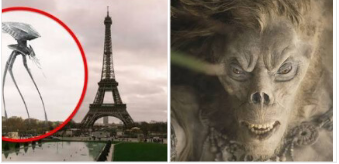
هم الصينيون المستمرون بنجاح تام في غزو بلدان العالم اجمع.. و مسيطرين على الوعى الجمعى للمليارات بمصنوعاتهم و سيارتهم و شاشاتهم و تحولنا جميعا في ربع قرن لمستهلكين ..مدجنين..متلقيين..منتظريين ..اخرتنا طين
هذا تفسير واقعي مرير حديث بعيد عن النقد الادبي ل لؤلؤتي الفيلسوف الاديب هربرت ويلز :الة الزمن..و حرب العوالم و نقدي ادبيا لهم بالتفصيل هنا
https://www.goodreads.com/review/show...
https://www.goodreads.com/review/show...
و على اختلاف المصير في الروايتين؛ فالصينيون مستغرقين في الانتاج و نحن في الاستهلاك و المنطق يؤكد منذ الازل ان : لكل شيء ثمنه
الغزاة المريخيون= هم الصينيون
Morlocks = the Chinese
Tripods= the Chinese
هم الصينيون المستمرون بنجاح تام في غزو بلدان العالم اجمع.. و مسيطرين على الوعى الجمعى للمليارات بمصنوعاتهم و سيارتهم و شاشاتهم و تحولنا جميعا في ربع قرن لمستهلكين ..مدجنين..متلقيين..منتظريين ..اخرتنا طين
هذا تفسير واقعي مرير حديث بعيد عن النقد الادبي ل لؤلؤتي الفيلسوف الاديب هربرت ويلز :الة الزمن..و حرب العوالم و نقدي ادبيا لهم بالتفصيل هنا
https://www.goodreads.com/review/show...
https://www.goodreads.com/review/show...
و على اختلاف المصير في الروايتين؛ فالصينيون مستغرقين في الانتاج و نحن في الاستهلاك و المنطق يؤكد منذ الازل ان : لكل شيء ثمنه

October 11, 2017
I know I keep barking on about these classics but, it is where imagination blooms. The time machine film with Rod Taylor was brilliant and the old 1950's film the War Of The Worlds too. The remakes not so much. The album by Jeff Wayne narrated by Richard Burton...Timeless.🐯👍

May 8, 2026
In the story The Time Machine, the narrator travels to a far far future, where humanity has diverted itself into two categories; terraneans and subterraneans. Capitalism had taken its full course and the outcome was a blissfully ignorant race on the surface of the planet Earth, and a devious, intelligent species below. The elite, rich and powerful had subjugated almost the entirety of the lower classes to factory work, delegating them underneath the planet. But after you become so wretchedly comfortable, the ones you’re controlling almost reverse and become the masterminds holding the reins.
The subterraneans learned that the elites were basically nothing without their service, so they uno reversed the narrative and basically treated the greedy ones as cattle, literally fattening them and later we find out… eating them. Our narrator has to figure all this out, and recover his stolen time machine before being hungrily convoluted, and masochized by the subterraneans.
I think this story has many routes of morality the reader could choose that ultimately lead to the authors same goal; a time filled warning. Do not let the state of the world become so set in stone that its properties inverts on itself, comfort is a one way ticket to self planetary implosion. 5 stars to this one, left me feeling precariously admonished, and overall warningly fulfilled.
The subterraneans learned that the elites were basically nothing without their service, so they uno reversed the narrative and basically treated the greedy ones as cattle, literally fattening them and later we find out… eating them. Our narrator has to figure all this out, and recover his stolen time machine before being hungrily convoluted, and masochized by the subterraneans.
I think this story has many routes of morality the reader could choose that ultimately lead to the authors same goal; a time filled warning. Do not let the state of the world become so set in stone that its properties inverts on itself, comfort is a one way ticket to self planetary implosion. 5 stars to this one, left me feeling precariously admonished, and overall warningly fulfilled.

May 9, 2016
I love this book. I love the story, the way it's told, and its ending. My only complaint is that I wish it were longer. But then, if it were, maybe its added length would ruin it.
I'm glad I read A Modern Utopia before I read this; many of the ideas in The Time Machine are more fleshed out in Wells's utopia. The narrator of TTM actually uses the term "utopia" several times, and I wondered while reading if his own book made Wells want to explore his own ideas further.
I highly recommend this book. And don't let its classification as "science fiction" keep you away. It's early sci fi, and it's not really a genre-d story. It's about science, love, humanity, progress, and mankind's future. I think those are all categories everyone can identify with and understand.
Oh, and the introduction by Asimov is a must-read. It reads more like a story than an introduction. Asimov's passion for science fiction and for Wells's work makes his own writing so compelling.
My classification of Wells (updated):
1. The Time Machine
2. The Island of Doctor Moreau
3. A Modern Utopia
4. The War of the Worlds
*****Commentary on film, viewed 12/30/17 and 1/2/18*****
I watched the 1960 film version of The Time Machine with Rod Taylor as "the time traveler," dubbed in the movie "H. George Wells" and referred to as George (clever, isn't it?).
I wanted to add to this review because I don't have a place where I review movies though there are some that I would love to write about. Since this is the film version of a book, I thought I'd add it here by way of comparison.
What I really liked about the movie was how the beginning was handled. Wells wrote the book in 1894, but the movie is set at the fin-de-siècle, which contributes to the tension of the time travelling and of what George discovers through his travels. It's fascinating that he leaves for his journey through time "on the eve" of the turn and comes back after the New Year has commenced. I also like the way that, because the movie was made in the 60s, George travels forward slowly at first and sees the results of both World Wars. There is also a strange predictive scene obviously not in the book where George visits 1966, and London is decimated by a nuclear bomb. I understand why the screenwriters imagined a nuclear bomb drop in the near future, but they only gave themselves six years before it happened! That blew me away (pun somewhat intended).
I also liked Rod Taylor's portrayal of George. He was a handsome actor with great facial reactions and expressions. He had a charisma about him that worked well with this character, who was willing to take risks and to fight for what he believed in. He's very believable in this role.
What was most interesting was the portrayal of the Eloi and the over simplification of the degeneration of the human race. The Eloi are all young, pretty blond people in the movie, which I understand--it's an artistic vision of what a leisure class would eventually look like. I found it, as a brown person, slightly offensive but also indicative of 1960s beauty culture. In the novel, the Eloi are the descendants of the upper classes, who become so complacent about life due to their reliance on the lower classes for all their needs, that they turn into beings who only care about leisure. They have no capacity for intellectual or analytical thought.
The lower classes, whom the bourgeoisie formerly tyrannized, have become the Morlocks, the people who live underground, taking all their technological innovations and discovered power with them. They've learned over time that the upper classes would be nothing without them. In other words, Wells shows what will happen if the class system intensifies and pushes itself to its furthest extensions. Degeneration in every way. In the movie, however, there's a brief mention through talking rings of a war between "the east" and "the west" and of how some people chose to live above ground, and some people chose to "take their chances" underground, and that's it. It doesn't explain anything, and it minimizes Wells' socio-economic moral.
The movie won an Oscar for special effects, and I can understand why. They're very well done, particularly the speeding forward and backward through time, where landscapes change before George's eyes, buildings appear and disappear, and the passing of time is made all too clear. The effects of the nuclear bomb falling on London are terribly done, but everything else is quality--much better than CGI, that's for sure.
Overall, the book is better, but the movie isn't bad. With a little more explanation of the degeneration of man and a better handling of the differences between the Morlocks and the Eloi, an emphasis on the inherit humanity in both types of people, the movie would have been great. But you can't beat good acting and the special effects of the 60s, one of my favorite time periods for effects in movies.
Read the book then see the movie. They're both worth it.
I'm glad I read A Modern Utopia before I read this; many of the ideas in The Time Machine are more fleshed out in Wells's utopia. The narrator of TTM actually uses the term "utopia" several times, and I wondered while reading if his own book made Wells want to explore his own ideas further.
I highly recommend this book. And don't let its classification as "science fiction" keep you away. It's early sci fi, and it's not really a genre-d story. It's about science, love, humanity, progress, and mankind's future. I think those are all categories everyone can identify with and understand.
Oh, and the introduction by Asimov is a must-read. It reads more like a story than an introduction. Asimov's passion for science fiction and for Wells's work makes his own writing so compelling.
My classification of Wells (updated):
1. The Time Machine
2. The Island of Doctor Moreau
3. A Modern Utopia
4. The War of the Worlds
*****Commentary on film, viewed 12/30/17 and 1/2/18*****
I watched the 1960 film version of The Time Machine with Rod Taylor as "the time traveler," dubbed in the movie "H. George Wells" and referred to as George (clever, isn't it?).
I wanted to add to this review because I don't have a place where I review movies though there are some that I would love to write about. Since this is the film version of a book, I thought I'd add it here by way of comparison.
What I really liked about the movie was how the beginning was handled. Wells wrote the book in 1894, but the movie is set at the fin-de-siècle, which contributes to the tension of the time travelling and of what George discovers through his travels. It's fascinating that he leaves for his journey through time "on the eve" of the turn and comes back after the New Year has commenced. I also like the way that, because the movie was made in the 60s, George travels forward slowly at first and sees the results of both World Wars. There is also a strange predictive scene obviously not in the book where George visits 1966, and London is decimated by a nuclear bomb. I understand why the screenwriters imagined a nuclear bomb drop in the near future, but they only gave themselves six years before it happened! That blew me away (pun somewhat intended).
I also liked Rod Taylor's portrayal of George. He was a handsome actor with great facial reactions and expressions. He had a charisma about him that worked well with this character, who was willing to take risks and to fight for what he believed in. He's very believable in this role.
What was most interesting was the portrayal of the Eloi and the over simplification of the degeneration of the human race. The Eloi are all young, pretty blond people in the movie, which I understand--it's an artistic vision of what a leisure class would eventually look like. I found it, as a brown person, slightly offensive but also indicative of 1960s beauty culture. In the novel, the Eloi are the descendants of the upper classes, who become so complacent about life due to their reliance on the lower classes for all their needs, that they turn into beings who only care about leisure. They have no capacity for intellectual or analytical thought.
The lower classes, whom the bourgeoisie formerly tyrannized, have become the Morlocks, the people who live underground, taking all their technological innovations and discovered power with them. They've learned over time that the upper classes would be nothing without them. In other words, Wells shows what will happen if the class system intensifies and pushes itself to its furthest extensions. Degeneration in every way. In the movie, however, there's a brief mention through talking rings of a war between "the east" and "the west" and of how some people chose to live above ground, and some people chose to "take their chances" underground, and that's it. It doesn't explain anything, and it minimizes Wells' socio-economic moral.
The movie won an Oscar for special effects, and I can understand why. They're very well done, particularly the speeding forward and backward through time, where landscapes change before George's eyes, buildings appear and disappear, and the passing of time is made all too clear. The effects of the nuclear bomb falling on London are terribly done, but everything else is quality--much better than CGI, that's for sure.
Overall, the book is better, but the movie isn't bad. With a little more explanation of the degeneration of man and a better handling of the differences between the Morlocks and the Eloi, an emphasis on the inherit humanity in both types of people, the movie would have been great. But you can't beat good acting and the special effects of the 60s, one of my favorite time periods for effects in movies.
Read the book then see the movie. They're both worth it.

November 12, 2020
I read The Time Machine in university before I began writing lengthy (rambling) reviews on Goodreads, but I may go back and write one yet. The War of the Worlds was my second book of this year, 2020, and my review is here. These are the two best Wells novels I've read so far.

June 23, 2020
Dos historias muy entretenidas y bien construidas. Todas las lecturas llegan en el tiempo que debe ser, sin embargo, me pregunto el porqué no habían llegado antes conociendo mi afinidad por el tema.

August 18, 2015
Okay I am biased I cannot praise this book enough for either story.
I think both have such deep roots in my past - from the first book I was able o convince my English teacher to allow the class to read, the growing up listening to my brother play the musical to death (literally) to all the various images artists through the years have tired to envisage what the Martian war machines would look like.
And then there was the time machine - I can almost word for word repeat the lines from that film (the original although the remake was not too shoddy) and how that machine has now passed in the legends of the genre. considering how it was described the version from the 1960 film still has massive influence even today with caricatures and impressions still finding their way in to popular culture even today.
Both books I can read and re-read (and have) but for now I wanted to read the time machine again in preparation for the Morlock Nights - so I will not dwell too long here but say I forgot how much I love these two stories.
I think both have such deep roots in my past - from the first book I was able o convince my English teacher to allow the class to read, the growing up listening to my brother play the musical to death (literally) to all the various images artists through the years have tired to envisage what the Martian war machines would look like.
And then there was the time machine - I can almost word for word repeat the lines from that film (the original although the remake was not too shoddy) and how that machine has now passed in the legends of the genre. considering how it was described the version from the 1960 film still has massive influence even today with caricatures and impressions still finding their way in to popular culture even today.
Both books I can read and re-read (and have) but for now I wanted to read the time machine again in preparation for the Morlock Nights - so I will not dwell too long here but say I forgot how much I love these two stories.

January 6, 2024
These two novels hardly need any review. They are classics in every sense. In terms of thought-provoking concepts, creation of a sense of wonder, notions about evolutionary anthropology, and looking at the idea of civilisation and empire through a different glass, these two novels had set the golden standards. Above all, they are hugely enjoyable thrillers, making the reader think effortlessly.
If you haven’t read them, you need to rectify the situation ASAP.
Highly Recommended.
If you haven’t read them, you need to rectify the situation ASAP.
Highly Recommended.

April 19, 2010
I really enjoyed The Time Machine. In a way, it was a very simple story. Wells didn't batshit around with science, he just went in, said 'he built a time machine', and you dealt with it. Don't worry about how, it just happened. I wish this happened more with modern sci-fi writers, but unfortunately, most nerdy people (unlike myself) don't like that. They want to know how the time machine was built. To hell with gamma rays, they don't do zip!
The War of the Worlds was similar. The narrator admitted he didn't know what was going on the black smoke, or how the Martians flew, or what the deal with the Heat Ray was. And at the end, the scientists didn't really know, either. There was a bit more sci in the sci-fi, but it was still easy to read.
Unfortunately, I didn't enjoy The War of the Worlds as much as The Time Machine. It dragged in places and at points I just wasn't sure what Wells was going on about. But still an easy, fun read.
The War of the Worlds was similar. The narrator admitted he didn't know what was going on the black smoke, or how the Martians flew, or what the deal with the Heat Ray was. And at the end, the scientists didn't really know, either. There was a bit more sci in the sci-fi, but it was still easy to read.
Unfortunately, I didn't enjoy The War of the Worlds as much as The Time Machine. It dragged in places and at points I just wasn't sure what Wells was going on about. But still an easy, fun read.

September 21, 2025
H.G. Wellsin "Aikakone - Maailmojen sota" (Kirjayhtymä, 1979) pistää samoihin kansiin englantilaisen kirjailijan tunnetuimpien teosten joukkoon kuuluvaa tieteiskertomusta, joiden vaikutus genrekirjallisuuteen ja populaarikulttuuriin on valtaisa.
Vuonna 1895 ilmestyneessä "Aikakoneessa" nimettömäksi jäävä aikamatkailija kertoo ystävilleen kokemistaan seikkailuista vuoden 802 701 maailmassa, jota kansoittavat maan päällä elävät kauniit eloit ja maan alla asustavat hirviömäiset morlokit. Lyhyehkö pienoisromaani antaa ymmärtää, että yläluokan nautinnonhalu ja alati kasvaneet luokkaerot ovat saaneet asiat tälle mallille.
Lopputulos on ihan mukiinmenevä, mutta odotukset taisivat olla vähän korkeammalla, aikamatkustus kun on teemana sieltä kiehtovammasta päästä.
Vuonna 1898 ilmestynyt "Maailmojen sota" kertoo vihamielisten marsilaisten hyökkäyksestä Englantiin. Jälleen nimettömäksi jäävä kertojahahmo seuraa vierestä, kuinka tappavat polttosäteet ja myrkkykaasupilvet tekevät vastarinnasta selvää. Lontoo kaatuu hyökkääjien edessä, pakolaisvirrat täyttävät maantiet ja yhteiskunta ajautuu täyteen kaaokseen.
Sävy kirjassa on ahdistava ja varsin realistinen, mitä ruohonjuuritasolla liikkuva kerronta vielä korostaa. Luomakunnan kruunujen ajautuminen teuraskarjan rooliin ei saa meistä ihmisistä esille parhaita puolia, pikemminkin päinvastoin. Sankaritarinoille ei jää juuri sijaa, ja vaikka pelastus lopulta koittaa, ei marsilaisten kukistuminen ole juuri meidän omaa ansioitamme.
Wellsin kertojahahmo mainitsee marsilaisten tekosia kuvatessaan, että "koskaan ennen koko historiassa ei sodan aiheuttama tuho ollut ollut näin valikoimatonta ja kaikkialle ulottuvaa". Ei varmaan kirjailija osannut aavistaa, millaisia kauhuja maapallolla tultaisiin seuraavien viidenkymmenen vuoden aikana tapahtumaan, ja vieläpä ilman avaruudesta tulevaa valloittajaa...
Lukukokemuksena ”Maailmojen sota” oli kiinnostavampi, ja taidan yrittää tarjota sitä myös kahdeksasluokkalaisten genrevinkkauksissa. Ja ehkäpä jatkan seuraavaksi vielä omaan kirjahyllyyn eksyneiden The Massacre of Mankindin pariin tai The Martian Warin pariin. Sarjakuvan ystävien kannattaa muistaa myös Ian Edgintonin Scarlet Traces.
Vuonna 1895 ilmestyneessä "Aikakoneessa" nimettömäksi jäävä aikamatkailija kertoo ystävilleen kokemistaan seikkailuista vuoden 802 701 maailmassa, jota kansoittavat maan päällä elävät kauniit eloit ja maan alla asustavat hirviömäiset morlokit. Lyhyehkö pienoisromaani antaa ymmärtää, että yläluokan nautinnonhalu ja alati kasvaneet luokkaerot ovat saaneet asiat tälle mallille.
Lopputulos on ihan mukiinmenevä, mutta odotukset taisivat olla vähän korkeammalla, aikamatkustus kun on teemana sieltä kiehtovammasta päästä.
Vuonna 1898 ilmestynyt "Maailmojen sota" kertoo vihamielisten marsilaisten hyökkäyksestä Englantiin. Jälleen nimettömäksi jäävä kertojahahmo seuraa vierestä, kuinka tappavat polttosäteet ja myrkkykaasupilvet tekevät vastarinnasta selvää. Lontoo kaatuu hyökkääjien edessä, pakolaisvirrat täyttävät maantiet ja yhteiskunta ajautuu täyteen kaaokseen.
Sävy kirjassa on ahdistava ja varsin realistinen, mitä ruohonjuuritasolla liikkuva kerronta vielä korostaa. Luomakunnan kruunujen ajautuminen teuraskarjan rooliin ei saa meistä ihmisistä esille parhaita puolia, pikemminkin päinvastoin. Sankaritarinoille ei jää juuri sijaa, ja vaikka pelastus lopulta koittaa, ei marsilaisten kukistuminen ole juuri meidän omaa ansioitamme.
Wellsin kertojahahmo mainitsee marsilaisten tekosia kuvatessaan, että "koskaan ennen koko historiassa ei sodan aiheuttama tuho ollut ollut näin valikoimatonta ja kaikkialle ulottuvaa". Ei varmaan kirjailija osannut aavistaa, millaisia kauhuja maapallolla tultaisiin seuraavien viidenkymmenen vuoden aikana tapahtumaan, ja vieläpä ilman avaruudesta tulevaa valloittajaa...
Lukukokemuksena ”Maailmojen sota” oli kiinnostavampi, ja taidan yrittää tarjota sitä myös kahdeksasluokkalaisten genrevinkkauksissa. Ja ehkäpä jatkan seuraavaksi vielä omaan kirjahyllyyn eksyneiden The Massacre of Mankindin pariin tai The Martian Warin pariin. Sarjakuvan ystävien kannattaa muistaa myös Ian Edgintonin Scarlet Traces.

October 3, 2017
I read a combined edition of these two books for the SF Masterworks Reading Challenge and the Science Fiction Masterworks Book Club here on Goodreads.
The Time Machine
Read for the Need to Reread Challenge.
I have, of course, read most of H.G. Wells before. He was one of my early introductions to science fiction. After we did the radio play The Invisible Man in school (I was eight or nine) I asked my school librarian about that novel. We didn't have The Invisible Man, but we did have The Time Machine, and he was only too happy to point me that way. And I, of course, devoured it.
From a retrospective, the Time Machine suffers from many of the problems that 19th century novels often do. The art form was new then, so no one really had an idea of how to do it, and thus, things that we would consider signs of poor writing now were a part of the landscape then. In particular, Wells uses long words and paragraphs when short ones would do, and he does not fully develop his one female character as anything more than a childlike figure that he must take care of. However, the book is action-packed and powerful, and it keeps you turning pages.
And obviously its images stay with you a long time. I remembered the Eloi and the Morlocks vividly (though I still have no idea where the Time Traveler learned their names). Strangely, I did not remember his brief sojourn to the end of the Earth at all. Perhaps that was just too big for me to grasp at such a young age. As an adult, it was both moving and terrifying. I see now that this book is, in part, an extended meditation on the futility of civilization and our efforts to immortalize ourselves. There was an extended scene in a museum that had gone to seed in the world of the Eloi that also drove home this message. Powerful stuff, and of course, a must read for every fan of science fiction, if not everyone in our culture, period.
The War of the Worlds
Read for the Need to Reread Challenge.
I've read this before, of course. It was one of my first introductions to the magical world of science fiction, and it helped to make me a lifelong convert. A lot of its images stayed in my mind, reinforced by the numerous adaptations in film and stage.
Rereading this as an adult was an experience I highly recommend for so many reasons!
First, it's just damn good writing. I had forgotten (or maybe never appreciated, when I was about nine or so) what a masterful writer Wells was. I noticed vast improvements even between War of the Worlds (1898) and The Time Machine (1895). In those three years he managed to abandon a lot of the conventions of early novels that modern readers find bothersome and regard as bad writing. His sense of dramatic timing is outstanding. He gives us cutaways, leaving us in suspense about the fate of his protagonist while describing what his protagonist's brother is experiencing in London. His pacing relaxes not in the least; it's an excellent action piece, even by a modern standard! He writes the first real example that I know about of great disaster fiction. His imagining of the disaster of the Martian invasion is reminiscent of World War I, which, as you will recall, is still almost twenty years away.
Which is also interesting. His "Black Smoke" looks a lot like mustard gas in its effect, the difference being that the Black Smoke of the Martians was black, while mustard gas is a sickly puke yellow. I understand that mustard gas had indeed been used in a few small conflicts at this point, and he must have been one of the first to visualize its deadly and horrific effects when used on a civilian population.
And his turns of phrase and choice of words are truly outstanding. I was struck in particular by this example. He described how "the stars mustered" at twilight, which directly preceded the first Martian attack. It was an elegantly chosen phrase for its subtle foreshadowing. That's good writing.
Finally, I know this line of critique has been advanced, and challenged, before, but it seems clear to me that Wells was doing what a good science fiction writer is supposed to do. He was looking at an aspect of technology, and another of sociology, that others may not have considered, and examining it in metaphor to a logical, if extreme, conclusion; asking us to confront "what if?" And one of the "what if's?" I think he was asking was "what if England were on the receiving end of colonial warfare? How do you think we'd like it?"
I think it stands up pretty well to the test of time. There were only a couple of things that might create issues for the modern reader. Aside from the obvious anachronism of the idea of life on Mars, one more stood out to me. That was that the description of the Earth from a distance as "green and grey." It struck me, because of course, no one would ever describe Earth that way, now that we've seen it as the "pale blue dot."
And I have to ask: why do we have yet to experience a screen adaptation of this story that actually sets it in the original time period? Because, seriously, the idea of fighting an advanced technological alien civilization with horse-drawn cannons is just frickken cool.
I think it's important that everyone read this book just because of the cultural influence that it's had on us. For instance, it's remarkable to me that Wells has the Martians land in an English village, and it's largely ignored by the military for a whole day. We've all seen enough movies now, probably sparked by the famous radio play of this story in the thirties that caused such a panic, that if something like that happened in the modern world, the local National Guard or other militia force would have it surrounded, and, hopefully, contained, within thirty minutes. We've all taken note of this cautionary tale. And as Stephen King observed in Danse Macabre, the many movies on the theme that were used to encourage anti-Communist propaganda in the Cold War, have reinforced it.
But, read it just because it's a a damn good book too.
The Time Machine
Read for the Need to Reread Challenge.
I have, of course, read most of H.G. Wells before. He was one of my early introductions to science fiction. After we did the radio play The Invisible Man in school (I was eight or nine) I asked my school librarian about that novel. We didn't have The Invisible Man, but we did have The Time Machine, and he was only too happy to point me that way. And I, of course, devoured it.
From a retrospective, the Time Machine suffers from many of the problems that 19th century novels often do. The art form was new then, so no one really had an idea of how to do it, and thus, things that we would consider signs of poor writing now were a part of the landscape then. In particular, Wells uses long words and paragraphs when short ones would do, and he does not fully develop his one female character as anything more than a childlike figure that he must take care of. However, the book is action-packed and powerful, and it keeps you turning pages.
And obviously its images stay with you a long time. I remembered the Eloi and the Morlocks vividly (though I still have no idea where the Time Traveler learned their names). Strangely, I did not remember his brief sojourn to the end of the Earth at all. Perhaps that was just too big for me to grasp at such a young age. As an adult, it was both moving and terrifying. I see now that this book is, in part, an extended meditation on the futility of civilization and our efforts to immortalize ourselves. There was an extended scene in a museum that had gone to seed in the world of the Eloi that also drove home this message. Powerful stuff, and of course, a must read for every fan of science fiction, if not everyone in our culture, period.
The War of the Worlds
Read for the Need to Reread Challenge.
I've read this before, of course. It was one of my first introductions to the magical world of science fiction, and it helped to make me a lifelong convert. A lot of its images stayed in my mind, reinforced by the numerous adaptations in film and stage.
Rereading this as an adult was an experience I highly recommend for so many reasons!
First, it's just damn good writing. I had forgotten (or maybe never appreciated, when I was about nine or so) what a masterful writer Wells was. I noticed vast improvements even between War of the Worlds (1898) and The Time Machine (1895). In those three years he managed to abandon a lot of the conventions of early novels that modern readers find bothersome and regard as bad writing. His sense of dramatic timing is outstanding. He gives us cutaways, leaving us in suspense about the fate of his protagonist while describing what his protagonist's brother is experiencing in London. His pacing relaxes not in the least; it's an excellent action piece, even by a modern standard! He writes the first real example that I know about of great disaster fiction. His imagining of the disaster of the Martian invasion is reminiscent of World War I, which, as you will recall, is still almost twenty years away.
Which is also interesting. His "Black Smoke" looks a lot like mustard gas in its effect, the difference being that the Black Smoke of the Martians was black, while mustard gas is a sickly puke yellow. I understand that mustard gas had indeed been used in a few small conflicts at this point, and he must have been one of the first to visualize its deadly and horrific effects when used on a civilian population.
And his turns of phrase and choice of words are truly outstanding. I was struck in particular by this example. He described how "the stars mustered" at twilight, which directly preceded the first Martian attack. It was an elegantly chosen phrase for its subtle foreshadowing. That's good writing.
Finally, I know this line of critique has been advanced, and challenged, before, but it seems clear to me that Wells was doing what a good science fiction writer is supposed to do. He was looking at an aspect of technology, and another of sociology, that others may not have considered, and examining it in metaphor to a logical, if extreme, conclusion; asking us to confront "what if?" And one of the "what if's?" I think he was asking was "what if England were on the receiving end of colonial warfare? How do you think we'd like it?"
I think it stands up pretty well to the test of time. There were only a couple of things that might create issues for the modern reader. Aside from the obvious anachronism of the idea of life on Mars, one more stood out to me. That was that the description of the Earth from a distance as "green and grey." It struck me, because of course, no one would ever describe Earth that way, now that we've seen it as the "pale blue dot."
And I have to ask: why do we have yet to experience a screen adaptation of this story that actually sets it in the original time period? Because, seriously, the idea of fighting an advanced technological alien civilization with horse-drawn cannons is just frickken cool.
I think it's important that everyone read this book just because of the cultural influence that it's had on us. For instance, it's remarkable to me that Wells has the Martians land in an English village, and it's largely ignored by the military for a whole day. We've all seen enough movies now, probably sparked by the famous radio play of this story in the thirties that caused such a panic, that if something like that happened in the modern world, the local National Guard or other militia force would have it surrounded, and, hopefully, contained, within thirty minutes. We've all taken note of this cautionary tale. And as Stephen King observed in Danse Macabre, the many movies on the theme that were used to encourage anti-Communist propaganda in the Cold War, have reinforced it.
But, read it just because it's a a damn good book too.

November 16, 2016
Za početak, prizanjem, Wells me apsolutno zaludio.
Neograničenost njegove mašte i ideja je fantastična, ali ono što me najviše oduševilo u obje ove knjige (u ovom izdanju nalazi se i Vremenski stroj i Rat svjetova) je ta nada da će sve na kraju ispasti dobro, da će ljudi i ono ljudsko u njima uvijek pobijediti ( u Vremenskom stroju ljudima budućnosti nije preostalo gotovo ništa od ljudskih osjećaja, ali jedna je djevojka pokazala osjećaj zahvalnosti, dok u Ratu svjetova nakon uništenja ipak dolazi ponovno rađanje).
Neograničenost njegove mašte i ideja je fantastična, ali ono što me najviše oduševilo u obje ove knjige (u ovom izdanju nalazi se i Vremenski stroj i Rat svjetova) je ta nada da će sve na kraju ispasti dobro, da će ljudi i ono ljudsko u njima uvijek pobijediti ( u Vremenskom stroju ljudima budućnosti nije preostalo gotovo ništa od ljudskih osjećaja, ali jedna je djevojka pokazala osjećaj zahvalnosti, dok u Ratu svjetova nakon uništenja ipak dolazi ponovno rađanje).
December 20, 2021
I found both novellas to be quite underwhelming, although War of the Worlds did have at least one excellent and somewhat redeeming chapter in "The Man on Putney Hill".
The Island of Doctor Moreau outstrips both of these novellas by a significant margin. I'm left wondering whether I might just like that one work, and not so much the rest of Wells' catalogue.
On a happier note, I'm looking forward to figuring out my (tentative) reading list for 2021. Onward!
The Island of Doctor Moreau outstrips both of these novellas by a significant margin. I'm left wondering whether I might just like that one work, and not so much the rest of Wells' catalogue.
On a happier note, I'm looking forward to figuring out my (tentative) reading list for 2021. Onward!

April 18, 2026
Nie przepadam za science-fiction, mam wrażenie, że mój humanistyczny umysł nie dźwignie tematu i formy. Są jednak takie pozycje, których wstyd nie znać (oczywiście moim zdaniem!). Dzięki @wydawnictwo_wab miałam okazję zapoznać się z klasykami autorstwa Herberta George'a Wellsa. Trochę bałam się odbicia od ściany, ale - jak się okazało - niepotrzebnie. Ani język, ani forma nie są tu hermetyczne, a ich wymowa jest głęboko humanistyczna. I smutna.
I "Wojna światów", i "Wehikuł czasu", mimo że napisane u schyłku XIX wieku, są zaskakująco aktualne i uczące pokory.
Pierwszy tytuł to przejmująca relacja z inwazji Marsjan na Ziemię. Bezradność ludzi, bezrefleksyjne okrucieństwo najeźdźców - budzą pytania o zasadność naszego przeświadczenia o byciu jedyną rozwiniętą cywilizacją we Wszechświecie. Ludzie giną, wokół chaos, świat nie ma narzędzi, by bronić się przed czymś, czego nie rozumie... Nie dziwię się histerii, która wybuchła, gdy radio nadało audycję Orsona Wellesa na podstawie "Wojny światów". Tyle w niej było emocji, że ludzie faktycznie w nią uwierzyli.
Z kolei "Wehikuł czasu" to podróż do dalekiej przyszłości. Tu też nie jest wesoło, bo Wells pokazuje, że lata mijają, a ludzkość nie uczy się na błędach. Wykorzystywanie innych, wyzysk, lepsi i gorsi - och, znamy to, znamy.
Może więc wcale nie jesteśmy tacy wyjątkowi? Trudno przełknąć taką prawdę...
I "Wojna światów", i "Wehikuł czasu", mimo że napisane u schyłku XIX wieku, są zaskakująco aktualne i uczące pokory.
Pierwszy tytuł to przejmująca relacja z inwazji Marsjan na Ziemię. Bezradność ludzi, bezrefleksyjne okrucieństwo najeźdźców - budzą pytania o zasadność naszego przeświadczenia o byciu jedyną rozwiniętą cywilizacją we Wszechświecie. Ludzie giną, wokół chaos, świat nie ma narzędzi, by bronić się przed czymś, czego nie rozumie... Nie dziwię się histerii, która wybuchła, gdy radio nadało audycję Orsona Wellesa na podstawie "Wojny światów". Tyle w niej było emocji, że ludzie faktycznie w nią uwierzyli.
Z kolei "Wehikuł czasu" to podróż do dalekiej przyszłości. Tu też nie jest wesoło, bo Wells pokazuje, że lata mijają, a ludzkość nie uczy się na błędach. Wykorzystywanie innych, wyzysk, lepsi i gorsi - och, znamy to, znamy.
Może więc wcale nie jesteśmy tacy wyjątkowi? Trudno przełknąć taką prawdę...
December 7, 2023
3.5
Durch "Der Krieg der Welten" musste ich mich leider irgendwie durchquälen. Woran es lag, kann ich gar nicht so recht sagen. Vielleicht der Schreibstil, vielleicht aber auch die Kapitel, in denen für meinen Geschmack zu wenig passierte. Dafür hat mir "Die Zeitmaschine" besser gefallen, auch den Schreibstil fand ich da nicht so anstrengend. Ich mochte die Beschreibungen aus der Zukunft und hätte da gerne noch mehr gelesen.
Durch "Der Krieg der Welten" musste ich mich leider irgendwie durchquälen. Woran es lag, kann ich gar nicht so recht sagen. Vielleicht der Schreibstil, vielleicht aber auch die Kapitel, in denen für meinen Geschmack zu wenig passierte. Dafür hat mir "Die Zeitmaschine" besser gefallen, auch den Schreibstil fand ich da nicht so anstrengend. Ich mochte die Beschreibungen aus der Zukunft und hätte da gerne noch mehr gelesen.
March 5, 2022
Aunque terminé hace ya bastante tiempo este libro aun quiero decir algunas cosas por las que considero una obra muy interesante en la historia de la ciencia ficción. Esta edición de Porrúa me parece muy buena ya que nos ofrece a un precio bastante accesible dos obras de Wells y aunque me gustaría leer la obra en inglés para disfrutarla de otra manera, me agrado bastante, personalmente me gustó más La máquina del tiempo.
La guerra de los mundos es la primera obra literaria que introduce el tópico de una invasión marciana (los seres vienen de Marte), y de aquí extiende el tópico de una invasión alienígena a otras áreas. En esta obra se introduce la ficción combinándose con la realidad; nuestro protagonista es un personaje anónimo y nos presenta paisajes diversos, desde lo hermoso, a lo desconocido y aterrador. En la obra se nos presenta de forma muy clara la otredad, desde la indiferencia de los ingleses hacia los marcianos al suponer una superioridad racial hasta cuando sienten la derrota total, se vuelven seres inferiores. Es pues una crítica al imperialismo de la época victoriana que vivió el autor:

Por su parte La máquina del tiempo también desarrolla una historia bastante conocida, la del viaje del tiempo, no conozco si alguien había desarrollado este tópico con anterioridad o Wells es el primero. Un viajero se traslada al futuro, en específico al año 802,701 d.C. en una realidad totalmente aterradora, no sólo para el protagonista, sino también para el lector, debe recuperar la máquina para regresar a su época, las palabras al final se vuelven rápidas y aplastan al lector.
Mientras que la guerra juzga el pasado y presente del siglo del autor, la Máquina teme al porvenir que use desmedidamente la tecnología. Ambas novelas son totalmente disfrutables, Wells domina totalmente la construcción de mundos literarios.
[image error]
Wells, H.G. (2021) La guerra de los mundos. Ciudad de México, México: Editorial Porrúa, "Sepan cuantos..."
La guerra de los mundos es la primera obra literaria que introduce el tópico de una invasión marciana (los seres vienen de Marte), y de aquí extiende el tópico de una invasión alienígena a otras áreas. En esta obra se introduce la ficción combinándose con la realidad; nuestro protagonista es un personaje anónimo y nos presenta paisajes diversos, desde lo hermoso, a lo desconocido y aterrador. En la obra se nos presenta de forma muy clara la otredad, desde la indiferencia de los ingleses hacia los marcianos al suponer una superioridad racial hasta cuando sienten la derrota total, se vuelven seres inferiores. Es pues una crítica al imperialismo de la época victoriana que vivió el autor:
"Antes de juzgarlos [a los marcianos] con demasiada severidad, recordemos las bárbaras destrucciones efectuadas por nuestra propia raza, no solamente de especies animales, como el bisonte y el dodo, sino también de razas humanas inferiores. [...] ¡Somos acaso apóstoles de misericordia para que podamos quejarnos de que los marcianos hayan hecho la guerra con idéntico espíritu?" (p.7)
Por su parte La máquina del tiempo también desarrolla una historia bastante conocida, la del viaje del tiempo, no conozco si alguien había desarrollado este tópico con anterioridad o Wells es el primero. Un viajero se traslada al futuro, en específico al año 802,701 d.C. en una realidad totalmente aterradora, no sólo para el protagonista, sino también para el lector, debe recuperar la máquina para regresar a su época, las palabras al final se vuelven rápidas y aplastan al lector.
Mientras que la guerra juzga el pasado y presente del siglo del autor, la Máquina teme al porvenir que use desmedidamente la tecnología. Ambas novelas son totalmente disfrutables, Wells domina totalmente la construcción de mundos literarios.
[image error]
Wells, H.G. (2021) La guerra de los mundos. Ciudad de México, México: Editorial Porrúa, "Sepan cuantos..."

November 5, 2012
I often wonder if HG Wells really did have a time machine. It is astounding that he wrote such great science fiction in the 1800s that you'd expect to read in the pulp fiction popularization of the 1960s! Mentions of things like lasers (though not named as such) are impressive.
Moreover Wells's works are just great reads and the opening to The War of the Worlds is second to none! So chilling - I recommend listening to an audiobook version where these lines are read out:
"...across the gulf of space, minds that are to our minds as ours are to those of the beasts that perish, intellects vast and cool and unsympathetic, regarded this earth with envious eyes, and slowly and surely drew their plans against us."
Moreover Wells's works are just great reads and the opening to The War of the Worlds is second to none! So chilling - I recommend listening to an audiobook version where these lines are read out:
"...across the gulf of space, minds that are to our minds as ours are to those of the beasts that perish, intellects vast and cool and unsympathetic, regarded this earth with envious eyes, and slowly and surely drew their plans against us."
Want to Read
September 12, 2018Synopsis: two of the greatest science fiction novels of all time. Time Machine was published in 1895, and War of the Worlds came out in 1898.

Read
November 10, 2023I will not rate this one, as I do recall the end of The Time Machine fairly vividly, but also recall being rather disappointed with the ending, and so I should certainly go back and read it again. As for War of The Worlds, I remember feeling absolutely horrified by this, and imagining that if I were listening on the radio to such a broadcast, I would also have taken it for reality, and might even have acted in consequence. I remember it as a rather frightening presentation, but will, nevertheless, look on Project Gutenberg for copies of both, and read them again so that I can update this review properly and then rate the set.

March 20, 2021
LA GUERRA DE LOS MUNDOS ⭐⭐⭐⭐
Esta historia me gustó mucho, se me hizo interesante y disfruté mucho del contraste de la época en la que está ubicada la historia y la tecnología que poseen los marcianos.
LA MAQUINA DEL TIEMPO ⭐⭐⭐
A Diferencia de la historia anterior ésta me pareció un poco lenta aunque debo decir que la construcción del mundo me encantó, los Elio y los Morlocks me parecieron increíbles, mi problema principal fue con EL VIAJERO DEL TIEMPO, no logré empatizar con él a diferencia del protsgonista de la Guerra de los Mundos.
Esta historia me gustó mucho, se me hizo interesante y disfruté mucho del contraste de la época en la que está ubicada la historia y la tecnología que poseen los marcianos.
LA MAQUINA DEL TIEMPO ⭐⭐⭐
A Diferencia de la historia anterior ésta me pareció un poco lenta aunque debo decir que la construcción del mundo me encantó, los Elio y los Morlocks me parecieron increíbles, mi problema principal fue con EL VIAJERO DEL TIEMPO, no logré empatizar con él a diferencia del protsgonista de la Guerra de los Mundos.

August 21, 2018
Iako su mnogi čuli za Herberta Georga Wellsa i njegove romane ˝Vremenski stroj˝, ˝Rat svjetova˝(itd.), rijetko tko je zaista i čitao njegova djela. Naime, Wellsa svakako treba istaknuti kao jednoga od začetnika znanstveno-fantastičnih romana te s njegovim romanima započeti put u tajanstveni svijet znanstvene-fantastike.
Roman ˝Vremenski stroj˝ je podijeljen na 12 glava + epilog. Prve dvije glave su uvod kroz koji se javlja Ja-pripovjedač kao komentator, ali i jedan od slušatelja fantastičnih događaja vezanih uz putovanje dok u ostalih poglavljima Vremenski Putnik iznosi svoju verziju putovanja. U zadnjem poglavlju kao i u Epilogu ponovno se pojavljuje pripovjedač-slušatelj. Sam sadržaj ne treba prepričavati jer je iz samoga naslova sasvim jasno kako se radi o putovanju kroz vrijeme. Vremenski Putnik (nema pravih imena nego su nadimci u skladu sa zanimanjem, dobi ili izgledu likova) putuje u daleku budućnost i to u vrijeme kada ,,čitava se zemlja pretvorila u vrt”. Dakle, došlo je do nazadovanja u tehnologiji, gospodarstvu te su ljudi nazadovali i po pitanju njihovih intelektualnih sposobnosti dok s druge strane dolazi do sklada između čovjeka i prirode.
Čitajući druga djela iste tematike, vrlo lako se da uočiti kako su mnogi pisci crpili inspiraciju iz ovoga djela. Tako primjerice iznimno poznata Margaret Atwood je očito inspiraciju pri stvaranju Koščića (˝Gazela i Kosac˝) pronašla u Gornjacima dok žaleri iz romana Jamesa Dashnera, ˝Labirint˝ imaju poveznice sa podzemnim ljudima. No, kod Wellsa prikaz preživljenika ima drugu funkciju. Naime, književnika još od djetinstva prati osjećaj socijalne nepravde te je stoga u svoja brojna djela integrirao borbu za maloga čovjeka - radnika.
Iako Vremenski putnik pri prvom pogledu na budući svijet pomisli kako je uređen komunistički jer svi žive u zajednicama, odnosno u zajedničkom kućanstvu, ako bismo uopće njihov život mogli tako nazvati. No, s vremenom otkriva kako su ti ,,dražesni ljudi” zapravo neka vrsta preživljele aristokracije, koja i dalje uživa u svojim privilegijama te dane provodi u lijenčarenju. Naravno, roman ne bi bio zanimljiv kad bi sve teklo idilično te tako Wells ubacuje još jednu skupinu preživljelih stvorenja. Između ove dvije skupine preživljenika postoji niz binarnih opreka od samoga načina života preko hrane do izgleda. Naime, ova druga skupina ljudi – krtica ili kako ih pisac naziva ,,Marlocki” živi ispod površine zemlje. Ovi blijedi ljudi su slijepi na danje svijetlo, a njihov život u podzemlju je radnički odnosno oni su manualne sluge Gornjacima. Međutim, kada padne noć odnos između sluga i gospodara se mijenja.
Dok je roman ˝˝Vremenski stroj˝ ostavio na mene pozitivan utisak, roman˝Rat svjetova˝ me razočarao. Ovaj roman je nešto duži od prvoga romana odnosno ima nekih dvjestotinjak stranica, ali vjeruj te mi i sto bi bilo više nego dovoljno. Sasvim je dosta pročitati koje uvodno poglavlje i zadnje, ali i epilog dok je sve ostalo suvišno.
Tema (napad Marsijanaca) jest zaista inovacija za tadašnje vrijeme i jest zanimljiva, a rekla bih i moguća, međutim Wellsov način njezinoga prikaza je zamoran. Nema nikakvih većih dijaloga nego samo prikaz svih događaja iz perspektive glavnoga junaka koji šeta/trči od jednoga mjesta do drugoga te pritom slučajno sretne nekoga (doslovno tako teče roman!). Stoga je moja velika zamjerka što je sve svedeno na parafraziranje i prepričavanje jer se s time stvara osjećaj jednoličnost, zamora, ali i sumornosti atmosfere
Ocjena:
˝Vremenski stroj˝ 5
˝Rat svjetova˝ 2
Roman ˝Vremenski stroj˝ je podijeljen na 12 glava + epilog. Prve dvije glave su uvod kroz koji se javlja Ja-pripovjedač kao komentator, ali i jedan od slušatelja fantastičnih događaja vezanih uz putovanje dok u ostalih poglavljima Vremenski Putnik iznosi svoju verziju putovanja. U zadnjem poglavlju kao i u Epilogu ponovno se pojavljuje pripovjedač-slušatelj. Sam sadržaj ne treba prepričavati jer je iz samoga naslova sasvim jasno kako se radi o putovanju kroz vrijeme. Vremenski Putnik (nema pravih imena nego su nadimci u skladu sa zanimanjem, dobi ili izgledu likova) putuje u daleku budućnost i to u vrijeme kada ,,čitava se zemlja pretvorila u vrt”. Dakle, došlo je do nazadovanja u tehnologiji, gospodarstvu te su ljudi nazadovali i po pitanju njihovih intelektualnih sposobnosti dok s druge strane dolazi do sklada između čovjeka i prirode.
Čitajući druga djela iste tematike, vrlo lako se da uočiti kako su mnogi pisci crpili inspiraciju iz ovoga djela. Tako primjerice iznimno poznata Margaret Atwood je očito inspiraciju pri stvaranju Koščića (˝Gazela i Kosac˝) pronašla u Gornjacima dok žaleri iz romana Jamesa Dashnera, ˝Labirint˝ imaju poveznice sa podzemnim ljudima. No, kod Wellsa prikaz preživljenika ima drugu funkciju. Naime, književnika još od djetinstva prati osjećaj socijalne nepravde te je stoga u svoja brojna djela integrirao borbu za maloga čovjeka - radnika.
Iako Vremenski putnik pri prvom pogledu na budući svijet pomisli kako je uređen komunistički jer svi žive u zajednicama, odnosno u zajedničkom kućanstvu, ako bismo uopće njihov život mogli tako nazvati. No, s vremenom otkriva kako su ti ,,dražesni ljudi” zapravo neka vrsta preživljele aristokracije, koja i dalje uživa u svojim privilegijama te dane provodi u lijenčarenju. Naravno, roman ne bi bio zanimljiv kad bi sve teklo idilično te tako Wells ubacuje još jednu skupinu preživljelih stvorenja. Između ove dvije skupine preživljenika postoji niz binarnih opreka od samoga načina života preko hrane do izgleda. Naime, ova druga skupina ljudi – krtica ili kako ih pisac naziva ,,Marlocki” živi ispod površine zemlje. Ovi blijedi ljudi su slijepi na danje svijetlo, a njihov život u podzemlju je radnički odnosno oni su manualne sluge Gornjacima. Međutim, kada padne noć odnos između sluga i gospodara se mijenja.
Dok je roman ˝˝Vremenski stroj˝ ostavio na mene pozitivan utisak, roman˝Rat svjetova˝ me razočarao. Ovaj roman je nešto duži od prvoga romana odnosno ima nekih dvjestotinjak stranica, ali vjeruj te mi i sto bi bilo više nego dovoljno. Sasvim je dosta pročitati koje uvodno poglavlje i zadnje, ali i epilog dok je sve ostalo suvišno.
Tema (napad Marsijanaca) jest zaista inovacija za tadašnje vrijeme i jest zanimljiva, a rekla bih i moguća, međutim Wellsov način njezinoga prikaza je zamoran. Nema nikakvih većih dijaloga nego samo prikaz svih događaja iz perspektive glavnoga junaka koji šeta/trči od jednoga mjesta do drugoga te pritom slučajno sretne nekoga (doslovno tako teče roman!). Stoga je moja velika zamjerka što je sve svedeno na parafraziranje i prepričavanje jer se s time stvara osjećaj jednoličnost, zamora, ali i sumornosti atmosfere
Ocjena:
˝Vremenski stroj˝ 5
˝Rat svjetova˝ 2

January 29, 2016
It had been a long time since I'd read The Time Machine and I'd never read War of the Worlds. One of the really good things about both of these stories was the way that Wells didn't try to explain everything. He used the perspective of someone who didn't have all the details and would openly admit that they had no idea what was going on. That way, he could tell the story that he wanted to without worrying about the nitty gritty details.
Something I didn't expect in War of the Worlds is that it isn't a story about defeating the invaders. Not only is the first person narrator not a part of the military resistance, and he spends most of his time hiding and running, but the final downfall of the Martians has nothing to do with human efforts at all. In essence, the people of Earth are completely incapable of resisting the invasion at all and they lose the war spectacularly. I don't think this would be allowed in books now. There would have to be a hero and a final satisfying battle. I haven't seen the movies based on this book, but I have a feeling that they added a hero that actively was involved in the defeat of the Martians. I like this different outlook of a truly average man in this situation. Not everybody is the hero no matter how much everybody thinks it would be them. This was about the quest for survival and the effects on all sorts of different people. There are the different reactions of the main character as well as his brother, the two women that the brother runs into, and the two men that become short time companions of the narrator. They all behave in different extreme ways to the emergency situation and that is the true story. I really enjoyed it much more than I expected.
Something I didn't expect in War of the Worlds is that it isn't a story about defeating the invaders. Not only is the first person narrator not a part of the military resistance, and he spends most of his time hiding and running, but the final downfall of the Martians has nothing to do with human efforts at all. In essence, the people of Earth are completely incapable of resisting the invasion at all and they lose the war spectacularly. I don't think this would be allowed in books now. There would have to be a hero and a final satisfying battle. I haven't seen the movies based on this book, but I have a feeling that they added a hero that actively was involved in the defeat of the Martians. I like this different outlook of a truly average man in this situation. Not everybody is the hero no matter how much everybody thinks it would be them. This was about the quest for survival and the effects on all sorts of different people. There are the different reactions of the main character as well as his brother, the two women that the brother runs into, and the two men that become short time companions of the narrator. They all behave in different extreme ways to the emergency situation and that is the true story. I really enjoyed it much more than I expected.

October 22, 2017
I had read The Time Machine some years ago and found it just as enjoyable on a second read.
The War of the Worlds is my favorite between these two stories. It's science-fiction set in our past, rather than our future, and as such presents all sorts of interesting asymmetries (the Victorian era didn't have firepower that could compete with the Martians' firepower, etc.). But more than that, Wells simply tells us a good story against the backdrop of bellicose planetary neighbors, fired at us by some giant gun. It's a classic with good reason.
"At the time there was a strong feeling in the streets that the authorities were to blame for their incapacity to dispose of the invaders without all this inconvenience." (p. 87)
The War of the Worlds is my favorite between these two stories. It's science-fiction set in our past, rather than our future, and as such presents all sorts of interesting asymmetries (the Victorian era didn't have firepower that could compete with the Martians' firepower, etc.). But more than that, Wells simply tells us a good story against the backdrop of bellicose planetary neighbors, fired at us by some giant gun. It's a classic with good reason.
"At the time there was a strong feeling in the streets that the authorities were to blame for their incapacity to dispose of the invaders without all this inconvenience." (p. 87)
August 17, 2008
I love these two stories. Reading them is a lot more rewarding than watching them as movies, only because of the visions others have sometimes don't gel with mine. The recent War of the Worlds came close to the way the planet ended up looking like in my mind. I love creating the picture and scene myself. That is in a good book. The Time Machine is one of my favorites and I have had many a child I tutored read it also! War of the Worlds too, though it is pretty gruesome the way Wells wrote it!

June 24, 2013
A great two in one science novel. The Time Machine is the best time travel story I've ever read, plus it leaves few to none headaches. The War of the Worlds is the first alien invasion story, and is the finest of the era. If you haven't read either of those I would highly recommend it. H.G Wells is one of the best science fiction authors out there. So if you are wary of science fiction dispel those woes, H.G Wells is the best writer to start reading science fiction from.

Read
September 8, 2012Finally heard the original. Wish I had read it decades ago. The book is so much better than the films that have attempted to bring this classic to life. Mr. Wells' social commentary is definitely lost in the screen adaptations. A must read/listen.
September 5, 2013
In the book there was really only three characters, there were other characters but they didn't have a big role and were barely mentioned in the story.
1) The Time Traveller: 5- This character was described more that another character in the book, "His grey eyes shone and twinkled, and his usually pale face was flushed and animated"(Wells 1). We are never told what his name is because the narrator of the story wants to keep his identy a secret, "Where's ---?" said I, naming our host" (Wells 13).This is really the only description of the Time Traveller that we get except for this following quote, after his journey through time, "He was amazing plight. His coat was dusty and dirty, and smeared with green down the sleeves; his hair disordered, and as it seemed to me greyer-either with dust and dirt or because its color had actually faded. His face was ghastly pale; his chin had a brown cut on it-a cut half healed; his expression was haggard and drawn, as by intense suffering" (Well 13). I really like this character even though there wasn't a lot of information about him the mystery behind him is so intriguing and made me want to keep reading. The Time Traveller is seen as crazy or a liar to some of the unimportant characters but he is extremely intelligent, "The fact is, the Time Traveller was one of those men who are too clever to believed" (Wells 12). The Time Traveller is somewhat believable, I mean it is a science fiction novel but just the dialogue of this character makes me want to believe every word. The Time Traveller does stay true to himself even when no one believes in him he continues and he ends up successful because he was able to enter that fourth dimension of time.
2) Mr. Hillyer (the narrator): 5- Mr. Hillyer was a dinner guest at the Time Travelller's house. He wasn't really given a description about how he looks. I think he wasn't given a good description because this entire book is really imagination based it just depends on how the reader interprets and imagines the characters. I liked his character because he kept the Time Traveller a mystery this really interested me. I also like the fact that he was the only one who believed in the a Time Traveller because he was still interested in visiting the Time Traveller's house again. At first though Mr. Hillyer admits to not believing but something still made him feel interested in what the Time Traveller had to say, "I think at that time none of us quite believed in the Time Machine. The fact is, the Time Traveller was one of those men who are too clever to be believed: you never felt that you saw all round him" (Well 12). The narrator is a believable character, he just a man whose wildest dreams where brought up by the Time Traveller's invention. Mr. Hillyer stayed true to himself he continued to believe in the Time Traveller and support him even while others opposed him.
3) Weena: 5- Weena is an Eloi. When the Time Traveller takes the the Time Machine to the future he ends up in the Eloi's society. The Time Traveller claims that Weena is a female even though the Eloi don't have a distinct way of telling what gender they are. The description of Weena is the same as the rest of the Eloi's because they all look the same "Their hair, which was uniformly curly, came to a sharp end at the neck and cheek; there was not the faintest suggestion of it on the face, and their ears were singularly minute. The mouths were small, with bright red, rather thin lips, and the little chins ran to a point. The eyes were large and mild" (Wells 24-25). I like this character because she is so small and fragile and kind. The Time Traveller even refers her and the other Elois to children because they possess child like qualities. This character isn't believable to me because she is a human who has evolved in the future. I think Weena stayed true to herself till then end.
Setting: 5- the beginning setting isn't as important as to the story as the second where the Time Traveller is in the Eloi's society because this was the Time Traveller's goal to travel into the fourth dimension. The author kind of drags time but also quickly passes over time at parts. The author drags the most important parts and sped through the unimportant parts. The settings in the book are in different places and different times because the Time Traveller travels into the future and past and wanders around different places, "I am afraid I cannot convey the peculiar sensations of time travelling. They are excessively unpleasant. There is a feeling exactly like that one has upon a switchback- of helpless headlong motions! I felt the same horrible anticipation, too, of an imminent smash. As I put on pace, night followed day like the flapping of a black wing... the sun hopping swiftly across the sky, leaping it every minute" (Wells 19).
Plot: 5- I really liked the plot. The story was told in an unusual way the narrator was talking about the Time Traveller "The Time Traveller (for so it will be convenient to speak of him" (Wells 1). I did not see the ending coming what so ever it really caught me off guard. I can't really talk about because I don't want to spoil it.
Theme: 4- the theme of the story was hard for me figure out. I think there are multiple theme one being the concern of time. I think the story was trying to say to not dwell on the past or dream of the future or else you'll just get lost, rather live in the present. Another theme is man and the natural world, how we see the world to come.
Personal response: I really did like this book it was fun to read and had lots of interesting scenes. The only part I disliked was some of the dialogue was harder to read and would drag on. I would recommend this book to other people because it is a great book and it really allows your mind to take over.
Overall rating: 5
War of Worlds
-Characters: 4
The characters in the story were not described very well, except for the Martians, "A big greyish rounded bulk, the size, perhaps, of a bear, was rising slowly and painfully out of the cylinder. As it bulged up and caught the light, it glistened like wet leather... Two large dark-colored eyes were regarding me steadfastly. The mass that framed them, the head of the thing, it was rounded and had, one might say, a face. There was a mouth under the eyes, the lipless brim of which quivered and panted, and dropped saliva" (Wells 112). I do like the characters they each have so type of quality that I found amusing, for example, the narrator is very curious, he even goes back to Maybury to see the action unfold, " For my own part, I had been feverishly excited all day. Something very like the war fever that occasionally runs through a cilivised community had got into my blood, and in my heart I was not so very sorry that I had to return to Maybury that night" (Wells 136). The human characters are believable except for the narrator in my opinion, because I mean why would you want to go back to war, and even more worse, a war with aliens. I don't think the Martians are very believable characters, but then again October of 1938, a radio station broadcasted an adaption of the story and people thought it was an actual report so they all panicked and fled, so maybe they could be believable. I do think that the main character stayed true to himself because he wanted to go back and he did go back, but he also realized the war was far more dangerous than he had anticipated.
-Setting: 3
I don't think that the setting was important in the story, it takes place in England. At the beginning of the story I felt like time was passing really slow because the narrator was just giving background information "The planet Mars, I scarcely need to remind the reader, revolves about the sun at a mean distance of 140,000,000 miles, and the light and heat it receives from the sun is barely half of that received by this world" (Wells 98). After that time was still slow but it didn't really bother me because there was so much going on in that time. There are two different settings because we get the narrator's thoughts in Maybury and his brother's thoughts in London. If the story took place in another place and/or time the plot would be the same but the outcome could have been different, if it was in place where they didn't have the military power that this story did, the Martians could have easily conquered Earth, but if it was in the future, the Martians would be defenseless to the new technology.
-Plot: 5
The story began with, "No one would have believed that in the last years of the nineteenth century that this world was being watched keenly and closely by intelligences greater than man's and yet as mortal as his own" (Wells 97). So it kind of jumps from the middle to then regular order or events. I did not predict the ending I thought something completely different was going to happen and when it didn't I was very surprised. The entire plot is basically, creature from Mars, Martians, are looking for a new planet to inhabit because theirs is coming to an end. After studying Earth for years they decide it's the perfect place, they invade the Earth and begin a war with the British military (not sure if this happened in other areas or just England, but the story is told in England). I really loved the plot of this book.
-Theme: 5
There are a lot of themes in this story: power, exile, foolishness, community, fear, forgiveness, technology, but the main theme or overall theme is rethinking, because not everything is as it seems. The people in the story didn't think it was possible for Martians to crash into Earth and try to take over, so I think the other is trying to say that we shouldn't assume, because we don't know everything, we are ignorant.
-Personal response:
I really liked this book, I found it interesting and fun to read. If you have seen the movie "War of Worlds" with Tom Crusie, it is the not the same as the book. I would recommend this book to other people because it was interesting and it just makes you ask the question, what if?
-Overall rating: 5
my overall rating is a 5 because I really did enjoy this book.
1) The Time Traveller: 5- This character was described more that another character in the book, "His grey eyes shone and twinkled, and his usually pale face was flushed and animated"(Wells 1). We are never told what his name is because the narrator of the story wants to keep his identy a secret, "Where's ---?" said I, naming our host" (Wells 13).This is really the only description of the Time Traveller that we get except for this following quote, after his journey through time, "He was amazing plight. His coat was dusty and dirty, and smeared with green down the sleeves; his hair disordered, and as it seemed to me greyer-either with dust and dirt or because its color had actually faded. His face was ghastly pale; his chin had a brown cut on it-a cut half healed; his expression was haggard and drawn, as by intense suffering" (Well 13). I really like this character even though there wasn't a lot of information about him the mystery behind him is so intriguing and made me want to keep reading. The Time Traveller is seen as crazy or a liar to some of the unimportant characters but he is extremely intelligent, "The fact is, the Time Traveller was one of those men who are too clever to believed" (Wells 12). The Time Traveller is somewhat believable, I mean it is a science fiction novel but just the dialogue of this character makes me want to believe every word. The Time Traveller does stay true to himself even when no one believes in him he continues and he ends up successful because he was able to enter that fourth dimension of time.
2) Mr. Hillyer (the narrator): 5- Mr. Hillyer was a dinner guest at the Time Travelller's house. He wasn't really given a description about how he looks. I think he wasn't given a good description because this entire book is really imagination based it just depends on how the reader interprets and imagines the characters. I liked his character because he kept the Time Traveller a mystery this really interested me. I also like the fact that he was the only one who believed in the a Time Traveller because he was still interested in visiting the Time Traveller's house again. At first though Mr. Hillyer admits to not believing but something still made him feel interested in what the Time Traveller had to say, "I think at that time none of us quite believed in the Time Machine. The fact is, the Time Traveller was one of those men who are too clever to be believed: you never felt that you saw all round him" (Well 12). The narrator is a believable character, he just a man whose wildest dreams where brought up by the Time Traveller's invention. Mr. Hillyer stayed true to himself he continued to believe in the Time Traveller and support him even while others opposed him.
3) Weena: 5- Weena is an Eloi. When the Time Traveller takes the the Time Machine to the future he ends up in the Eloi's society. The Time Traveller claims that Weena is a female even though the Eloi don't have a distinct way of telling what gender they are. The description of Weena is the same as the rest of the Eloi's because they all look the same "Their hair, which was uniformly curly, came to a sharp end at the neck and cheek; there was not the faintest suggestion of it on the face, and their ears were singularly minute. The mouths were small, with bright red, rather thin lips, and the little chins ran to a point. The eyes were large and mild" (Wells 24-25). I like this character because she is so small and fragile and kind. The Time Traveller even refers her and the other Elois to children because they possess child like qualities. This character isn't believable to me because she is a human who has evolved in the future. I think Weena stayed true to herself till then end.
Setting: 5- the beginning setting isn't as important as to the story as the second where the Time Traveller is in the Eloi's society because this was the Time Traveller's goal to travel into the fourth dimension. The author kind of drags time but also quickly passes over time at parts. The author drags the most important parts and sped through the unimportant parts. The settings in the book are in different places and different times because the Time Traveller travels into the future and past and wanders around different places, "I am afraid I cannot convey the peculiar sensations of time travelling. They are excessively unpleasant. There is a feeling exactly like that one has upon a switchback- of helpless headlong motions! I felt the same horrible anticipation, too, of an imminent smash. As I put on pace, night followed day like the flapping of a black wing... the sun hopping swiftly across the sky, leaping it every minute" (Wells 19).
Plot: 5- I really liked the plot. The story was told in an unusual way the narrator was talking about the Time Traveller "The Time Traveller (for so it will be convenient to speak of him" (Wells 1). I did not see the ending coming what so ever it really caught me off guard. I can't really talk about because I don't want to spoil it.
Theme: 4- the theme of the story was hard for me figure out. I think there are multiple theme one being the concern of time. I think the story was trying to say to not dwell on the past or dream of the future or else you'll just get lost, rather live in the present. Another theme is man and the natural world, how we see the world to come.
Personal response: I really did like this book it was fun to read and had lots of interesting scenes. The only part I disliked was some of the dialogue was harder to read and would drag on. I would recommend this book to other people because it is a great book and it really allows your mind to take over.
Overall rating: 5
War of Worlds
-Characters: 4
The characters in the story were not described very well, except for the Martians, "A big greyish rounded bulk, the size, perhaps, of a bear, was rising slowly and painfully out of the cylinder. As it bulged up and caught the light, it glistened like wet leather... Two large dark-colored eyes were regarding me steadfastly. The mass that framed them, the head of the thing, it was rounded and had, one might say, a face. There was a mouth under the eyes, the lipless brim of which quivered and panted, and dropped saliva" (Wells 112). I do like the characters they each have so type of quality that I found amusing, for example, the narrator is very curious, he even goes back to Maybury to see the action unfold, " For my own part, I had been feverishly excited all day. Something very like the war fever that occasionally runs through a cilivised community had got into my blood, and in my heart I was not so very sorry that I had to return to Maybury that night" (Wells 136). The human characters are believable except for the narrator in my opinion, because I mean why would you want to go back to war, and even more worse, a war with aliens. I don't think the Martians are very believable characters, but then again October of 1938, a radio station broadcasted an adaption of the story and people thought it was an actual report so they all panicked and fled, so maybe they could be believable. I do think that the main character stayed true to himself because he wanted to go back and he did go back, but he also realized the war was far more dangerous than he had anticipated.
-Setting: 3
I don't think that the setting was important in the story, it takes place in England. At the beginning of the story I felt like time was passing really slow because the narrator was just giving background information "The planet Mars, I scarcely need to remind the reader, revolves about the sun at a mean distance of 140,000,000 miles, and the light and heat it receives from the sun is barely half of that received by this world" (Wells 98). After that time was still slow but it didn't really bother me because there was so much going on in that time. There are two different settings because we get the narrator's thoughts in Maybury and his brother's thoughts in London. If the story took place in another place and/or time the plot would be the same but the outcome could have been different, if it was in place where they didn't have the military power that this story did, the Martians could have easily conquered Earth, but if it was in the future, the Martians would be defenseless to the new technology.
-Plot: 5
The story began with, "No one would have believed that in the last years of the nineteenth century that this world was being watched keenly and closely by intelligences greater than man's and yet as mortal as his own" (Wells 97). So it kind of jumps from the middle to then regular order or events. I did not predict the ending I thought something completely different was going to happen and when it didn't I was very surprised. The entire plot is basically, creature from Mars, Martians, are looking for a new planet to inhabit because theirs is coming to an end. After studying Earth for years they decide it's the perfect place, they invade the Earth and begin a war with the British military (not sure if this happened in other areas or just England, but the story is told in England). I really loved the plot of this book.
-Theme: 5
There are a lot of themes in this story: power, exile, foolishness, community, fear, forgiveness, technology, but the main theme or overall theme is rethinking, because not everything is as it seems. The people in the story didn't think it was possible for Martians to crash into Earth and try to take over, so I think the other is trying to say that we shouldn't assume, because we don't know everything, we are ignorant.
-Personal response:
I really liked this book, I found it interesting and fun to read. If you have seen the movie "War of Worlds" with Tom Crusie, it is the not the same as the book. I would recommend this book to other people because it was interesting and it just makes you ask the question, what if?
-Overall rating: 5
my overall rating is a 5 because I really did enjoy this book.

March 26, 2019
The Time Machine/The War of the Worlds - H.G. Wells | 288 páginas, Del Rey Books 1986 | Nota 9 em 10 |
RESENHA
GUERRA DOS MUNDOS - Eles vieram do espaço. Eles vieram de Marte. Com tripés biomecânicos gigantes, querem conquistar a Terra e manter os humanos como escravos. Nenhuma tecnologia terrestre parece ser capaz de conter a expansão do terror pelo planeta. É o começo da guerra mais importante da história. Como a humanidade poderá resistir à investida de um potencial bélico tão superior? Publicado pela primeira vez em 1898, A guerra dos mundos aterrorizou e divertiu muitas gerações de leitores. Esta edição especial contém as ilustrações originais criadas em 1906 por Henrique Alvim Corrêa, brasileiro radicado na Bélgica. Conta também com um prefácio escrito por Braulio Tavares, uma introdução de Brian Aldiss, membro da H. G. Wells Society, e uma entrevista com H. G. Wells e o famoso cineasta Orson Welles - responsável pelo sucesso radiofônico de A guerra dos mundos em 1938 -, que fazem desta a edição definitiva para fãs de Wells.
A MÁQUINA DO TEMPO - O primeiro e mais famoso livro sobre viagem no tempo chega em edição especial, com ilustrações inéditas, tradução primorosa e extras. Ao contar a história de um cientista inglês que embarca em uma fabulosa jornada a um mundo futuro, desconhecido e cheio de mistérios, H. G. Wells inaugura um dos principais temas da ficção científica.
A bordo de sua Máquina do Tempo, o cientista que narra esta história parte do século XIX para o ano de 802701. Nesse futuro distante, ele descobre que o sofrimento da humanidade foi transformado em beleza, felicidade e paz. A Terra é habitada pelos dóceis Eloi, uma espécie que descende dos seres humanos e já formou uma antiga e enorme civilização. Mas os Eloi parecem ter medo do escuro, e têm todos os motivos para isso: em túneis subterrâneos vivem os Morlocks, seus maiores inimigos. Quando a Máquina do Tempo que levou o Viajante some, ele é obrigado a descer às profundezas para recuperá-la e voltar ao presente.
Misturando uma imaginação singular, um tema inovador e muitas reviravoltas, A Máquina do Tempo foi o primeiro romance publicado por H. G. Wells, em 1895. Chamado de gênio e considerado um pioneiro, Wells abriu caminho não só para seus livros e sua visão de mundo, mas para novas possibilidades na literatura.
RESENHA
Mergulhando tanto no universo Steampunk quanto nos clássicos vitorianos que inspiraram o movimento, releio essas duas obras primas da ficção especulativa, “A Guerra dos Mundos” e “A Máquina do Tempo”.
H.G. Wells é um monstro, um dos gênios literários que, no final do século 19, praticamente sedimentou os tropos narrativos da literatura de especulação, criando as bases que se desenvolveriam até hoje. Ou seja, sem Wells não teríamos quadrinhos de super-herói e nem os mega-blockbusters da Marvel dos dias de hoje!
“Guerra dos Mundos” é um catálogo das ansiedades vitorianas, uma espécie de visão sombria do colonialismo inglês, com Wells colocando a Inglaterra como os colonizados por aterrorizantes marcianos. Essa visão crítica ainda é combinada com a aplicação das teorias darwinianas, outra fonte de ansiedade no final do século 19 (e até hoje!). Os Marcianos demonstram ser superiores em tudo, biologiamente mais avançados e dotados de uma tecnologia imbatível e incomparável.
A história é narrada em primeira pessoa, com um narrador tecendo os acontecimentos através de notícias e de relatos de outros personagens, além, como era de praxe dos textos da época, de fazer comentários e filosofar sobre os acontecimentos.
“A Máquina do Tempo” é outra história sensacional, escrita em uma prosa elegante e imersiva. Como Guerra dos Mundos, Wells trata aqui de um dos grandes medos e ansiedades da era Vitoriana, o Darwinismo social, ou seja, as mudanças até mesmo físicas nas sociedades humanas feitas através de uma espécie de seleção natural da era industrial. Esse medo vitoriano é representado pelos Eloi e Morlocs, as duas castas de seres fisicamente diferentes que se desenvolveram em um futuro distante da sociedade humana.
Wells mistura com grande habilidade speculação científica, parábola social, aventura e reflexões filosóficas, mantendo a narrativa em um suspense que leva o leitor até o final! Fiquei também supreso com a qualidade cinematográfica, o foco na criação gráfica de cenas na mente do leitor, de um texto do século 19!
Recomendadíssimo!
RESENHA
GUERRA DOS MUNDOS - Eles vieram do espaço. Eles vieram de Marte. Com tripés biomecânicos gigantes, querem conquistar a Terra e manter os humanos como escravos. Nenhuma tecnologia terrestre parece ser capaz de conter a expansão do terror pelo planeta. É o começo da guerra mais importante da história. Como a humanidade poderá resistir à investida de um potencial bélico tão superior? Publicado pela primeira vez em 1898, A guerra dos mundos aterrorizou e divertiu muitas gerações de leitores. Esta edição especial contém as ilustrações originais criadas em 1906 por Henrique Alvim Corrêa, brasileiro radicado na Bélgica. Conta também com um prefácio escrito por Braulio Tavares, uma introdução de Brian Aldiss, membro da H. G. Wells Society, e uma entrevista com H. G. Wells e o famoso cineasta Orson Welles - responsável pelo sucesso radiofônico de A guerra dos mundos em 1938 -, que fazem desta a edição definitiva para fãs de Wells.
A MÁQUINA DO TEMPO - O primeiro e mais famoso livro sobre viagem no tempo chega em edição especial, com ilustrações inéditas, tradução primorosa e extras. Ao contar a história de um cientista inglês que embarca em uma fabulosa jornada a um mundo futuro, desconhecido e cheio de mistérios, H. G. Wells inaugura um dos principais temas da ficção científica.
A bordo de sua Máquina do Tempo, o cientista que narra esta história parte do século XIX para o ano de 802701. Nesse futuro distante, ele descobre que o sofrimento da humanidade foi transformado em beleza, felicidade e paz. A Terra é habitada pelos dóceis Eloi, uma espécie que descende dos seres humanos e já formou uma antiga e enorme civilização. Mas os Eloi parecem ter medo do escuro, e têm todos os motivos para isso: em túneis subterrâneos vivem os Morlocks, seus maiores inimigos. Quando a Máquina do Tempo que levou o Viajante some, ele é obrigado a descer às profundezas para recuperá-la e voltar ao presente.
Misturando uma imaginação singular, um tema inovador e muitas reviravoltas, A Máquina do Tempo foi o primeiro romance publicado por H. G. Wells, em 1895. Chamado de gênio e considerado um pioneiro, Wells abriu caminho não só para seus livros e sua visão de mundo, mas para novas possibilidades na literatura.
RESENHA
Mergulhando tanto no universo Steampunk quanto nos clássicos vitorianos que inspiraram o movimento, releio essas duas obras primas da ficção especulativa, “A Guerra dos Mundos” e “A Máquina do Tempo”.
H.G. Wells é um monstro, um dos gênios literários que, no final do século 19, praticamente sedimentou os tropos narrativos da literatura de especulação, criando as bases que se desenvolveriam até hoje. Ou seja, sem Wells não teríamos quadrinhos de super-herói e nem os mega-blockbusters da Marvel dos dias de hoje!
“Guerra dos Mundos” é um catálogo das ansiedades vitorianas, uma espécie de visão sombria do colonialismo inglês, com Wells colocando a Inglaterra como os colonizados por aterrorizantes marcianos. Essa visão crítica ainda é combinada com a aplicação das teorias darwinianas, outra fonte de ansiedade no final do século 19 (e até hoje!). Os Marcianos demonstram ser superiores em tudo, biologiamente mais avançados e dotados de uma tecnologia imbatível e incomparável.
A história é narrada em primeira pessoa, com um narrador tecendo os acontecimentos através de notícias e de relatos de outros personagens, além, como era de praxe dos textos da época, de fazer comentários e filosofar sobre os acontecimentos.
“A Máquina do Tempo” é outra história sensacional, escrita em uma prosa elegante e imersiva. Como Guerra dos Mundos, Wells trata aqui de um dos grandes medos e ansiedades da era Vitoriana, o Darwinismo social, ou seja, as mudanças até mesmo físicas nas sociedades humanas feitas através de uma espécie de seleção natural da era industrial. Esse medo vitoriano é representado pelos Eloi e Morlocs, as duas castas de seres fisicamente diferentes que se desenvolveram em um futuro distante da sociedade humana.
Wells mistura com grande habilidade speculação científica, parábola social, aventura e reflexões filosóficas, mantendo a narrativa em um suspense que leva o leitor até o final! Fiquei também supreso com a qualidade cinematográfica, o foco na criação gráfica de cenas na mente do leitor, de um texto do século 19!
Recomendadíssimo!

May 23, 2018
I liked it. I felt like it could have been fleshed out a bit more. There are bigger concepts that could have been weaved into the storyline. Maybe he didn't want to go that route and instead just stick on the science fiction path story without going into social commentary or what it all could mean.
I thought the plot played out in an interesting way, how the wave of hysteria began to spread. Feelings of disbelief to terror over the course of a day. I felt a bit let down by the ending, I mean it was a bit different way of ending it than I expected. I'm glad it wasn't a guns blazing sort of thing. What happened back at his house? Too Hollywood happy ending for me too. I actually felt instead of ending the book where he did he could have written just as many pages about what happened with the aliens here and in control. But the plot that was there I really enjoyed and wanted to know what was going to happen.
I actually thought for a book published in 1898, the technology in the book was quite forward thinking. I guess thats what makes good science fiction. I'm sure at that time fear of alien beings from Mars coming was pretty powerful. That's not to say it wouldn't be scary now. But I think one could make the jump in modern day to technology we create wiping us out or enslaving us (as in super intelligent AI). I think the concept is the same, we are used to ruling the roost and this book touches on that fact. He compared their plight to what the "beasts" must feel towards us at times. In the same way we without much thought or effort kick over an anthill, some other beings may be able to do the same to us. They "kick over" London or New York while we scream for our lives and trample each other to blindly escape.
The more I think about the book the more I like it. Maybe he just laid the groundwork for getting the reader thinking and left it to us to ponder the social issues or our place in this universe and didn't want to feed us the answers or his take.
I thought the plot played out in an interesting way, how the wave of hysteria began to spread. Feelings of disbelief to terror over the course of a day. I felt a bit let down by the ending, I mean it was a bit different way of ending it than I expected. I'm glad it wasn't a guns blazing sort of thing. What happened back at his house? Too Hollywood happy ending for me too. I actually felt instead of ending the book where he did he could have written just as many pages about what happened with the aliens here and in control. But the plot that was there I really enjoyed and wanted to know what was going to happen.
I actually thought for a book published in 1898, the technology in the book was quite forward thinking. I guess thats what makes good science fiction. I'm sure at that time fear of alien beings from Mars coming was pretty powerful. That's not to say it wouldn't be scary now. But I think one could make the jump in modern day to technology we create wiping us out or enslaving us (as in super intelligent AI). I think the concept is the same, we are used to ruling the roost and this book touches on that fact. He compared their plight to what the "beasts" must feel towards us at times. In the same way we without much thought or effort kick over an anthill, some other beings may be able to do the same to us. They "kick over" London or New York while we scream for our lives and trample each other to blindly escape.
The more I think about the book the more I like it. Maybe he just laid the groundwork for getting the reader thinking and left it to us to ponder the social issues or our place in this universe and didn't want to feed us the answers or his take.

August 19, 2021
Very mysterious and thrilling. In the Time Machine I don't know if I like the ending or not. I haven't decided if it feels like it gives the story enough feeling of closure. It definitely leaves the reader wondering. Interesting reading this in 2021, "the future" so to speak. We still are no where near this level of technology but it's fun to think about and imagine what that would look like in today's society if these things actually existed. I enjoyed this book a good quick read.
This entire review has been hidden because of spoilers.
Displaying 1 - 30 of 213 reviews