Jump to ratings and reviews
Rate this book

David Lydyard #1

The Werewolves of London

Rate this book
Finding themselves suddenly possessed of uncanny visionary powers, David Lydard and Gabriel Gill are gradually drawn into a deadly contest between forces of godlike power and must seek help from a renegade werewolf

467 pages, Paperback

First published January 1, 1990

Loading...
Loading...

About the author

Brian M. Stableford

859 books140 followers
Brian Michael Stableford was a British science fiction writer who published more than 70 novels. His earlier books were published under the name Brian M. Stableford, but more recent ones have dropped the middle initial and appeared under the name Brian Stableford. He also used the pseudonym Brian Craig for a couple of very early works, and again for a few more recent works. The pseudonym derives from the first names of himself and of a school friend from the 1960s, Craig A. Mackintosh, with whom he jointly published some very early work.

Ratings & Reviews

What do you think?
Rate this book

Friends & Following

Create a free account to discover what your friends think of this book!

Community Reviews

5 stars
27 (17%)
4 stars
58 (36%)
3 stars
47 (29%)
2 stars
20 (12%)
1 star
5 (3%)
Displaying 1 - 15 of 15 reviews
Profile Image for Jeanette Greaves.
Author 8 books15 followers
July 4, 2023
I picked this one up from the charity bookstall in a local supermarket. This copy is falling to bits, is very, very foxed, and has some tears in it, leading me to realise just how long ago 1990 was for a cheap paperback book, and also to decide that this read is its last one, it's going to the great Pulper in the Sky (or in the paper recycling plant, one or the other). I decided to take a break from 'Babel' because I was taking a charity stall to a local craft fair and didn't want to take a hardback book to read. 'The Werewolves of London' was on the top of my tbr pile.

It's a slow paced novel that meanders around the question of Creationism, but not in the Christian sense; dipping into the nature of humanity, reality and individuality. The eponymous Werewolves of London take something of a back seat in the book, with the main characters being somewhat unsympathetic. I admit, I struggled to finish this book, but I was interested enough in the plot to battle through to the end. Another couple of co-incidences leapt out from this book. Firstly, the last book that I finished was King's 'IT', which featured a werewolf and a monstrous spider, as did this one. Secondly, the dedication mentioned the film 'Clash of the Titans' which I just watched all the way through for the first time ever.
Profile Image for Sheen.
23 reviews
October 26, 2026
The first half was very interesting. The rest... it was fine.
Profile Image for Dan.
205 reviews
November 19, 2026
This novel touches upon many esoteric and metaphysical concepts and represents an ambitious phase in Stableford’s career, and itself seems to be an outlet for these interests he had as an academic as well as a science fiction and fantasy writer. Hermeticism, Syncretism and general Theology are all themes and ideas to expect be explored in this book. As for examples of other works to compare it to, I would broadly put it alongside John Crowley’s Ægypt Cycle or Susanna Clarke’s Jonathan Strange & Mr Norrell. The opening section, additionally, has a whiff of Tim Powers’ The Anubis Gates and the concept of Ancient Egyptian divinity trying to insert themselves into Victorian London only adds to the similarities. Outside of literature, fans of the TV series Penny Dreadful may also find something to like here.

Stableford makes the ‘werewolves’ in this novel his own and are far removed from the pop culture perception of ‘traditional lycanthropy’. They are instead more like semi-divine Promethean beings, referenced and alluded to in texts throughout time and approached more like a science than a fantastical phenomenon. That these supernatural forces are impinging on the mortal world creates an interesting challenge for the character of Tallentyre and other thinkers of his like in an age where Rationalism is the more predominant and Darwin has published his On The Origin of Species. The novel’s structure is marked by its interspersal with letters, documents and esoteric in-universe texts.

The narrative essentially takes the shape of two young, supernaturally gifted boys who are used as vessels in a larger spiritual and cosmic battle. The main protagonist is David Lydyard, a young man on a trip to Egypt in 1872 with his guardian Sir Edward Tallentyre and their companion De Lancy, along with a Jesuit priest called Father Mallorn. Tallentyre is portrayed as a polymathic, Richard Francis Burton-esque academic and adventurer with an atheistic and Rationalist worldview. While Lydyard’s influence from Mallorn does manifest in his adherence to some Jesuit doctrine, Tallentyre regardless is clearly fulfilling the role of mentor and father-figure to Lydyard. While there, Lydyard is experiencing unsettling dreams of a tormented Satan after suffering from the effects of a snake-bite.

While camped out by some tombs in the desert, De Lancy encounters a mysterious entity that drags him away. Tallentyre and Mallorn go to investigate his disappearance only to be set upon by a chimeric creature that ends up killing the priest. A large wolf then pounces on it and saves Tallentyre, and an investigation the following day reveals that the man lying unconscious by a rock is not De Lancy, but the wolf which attacked the chimera the previous night. When awoken, he appears out of his wits and this compels Lydyard and Tallentyre to discern the mystery of who this man is. His real name is revealed to be Pelorus, and he is outcast from the so-called Werewolves of London of the title. While Lydyard struggles with the visions of his ‘inner eye’, an ability that allows him to inhabit the minds and see through the eyes of others. The experience with the creature in Egypt has developed a link between Lydyard and ‘the Sphinx’ and becomes its instrument to counter the werewolves.

The second protagonist that we follow in this dual arc is Gabriel Gill, a young boy with supernatural abilities that are presented as also being the result of possession. He is also portrayed as being able to communicate with and command spiders. He is staying with the nuns of the Sisters of Syncletica after being left there by his mysterious guardian Jacob Harkender. Harkender, rumoured to dabble in the occult and having left Gabriel with the Sisters ostensibly to educate him in matters of God, is set up as an antithesis of Tallentyre in this broader theme of duality that permeates the novel. We are introduced to Gabriel as Harkender attempts to claim him from the Sisters, however he is instead whisked away from it by the beautiful Morwenna on behalf of her ‘leader’, Mandorla. Upon meeting Mandorla, Gabriel learns that he is in the presence – albeit the human forms – of the Werewolves of London. Here, Mandorla tries to recruit Gabriel in her plans to conquer humanity.

The supernatural elements aside, Stableford does a competent job of observing the social mores of the Victorian era with all its respective suspicions, moral attitudes, and manner of speech. The tangents and digressions of its multitude of ideas does sometimes come at the cost of momentum at times, however Stableford does punctuate it with a handful of action set-pieces that do border on horror; indeed, some of the descriptions of other planes and immortal beings did seem to gesture towards cosmic horror on occasion. It is a dense and indulgent work both in its concepts and in its fittingly maximalist descriptive prose characteristic of the Gothic:

It was a world which had soil but no sky; whose coiling mists shone with an eerie radiance which surely did not come from any sun or starry firmament; whose trees were all broken-boughed and bare of leaves, white and skeletal; whose paths were strewn with pearly shells and bleached bones and jawless skulls; where nothing moved but languorous grave-worms and decrepit toads; where the faintest of wayward breezes stirred nothing but the mist and yet drew forth from the landscape a faint and heartfelt sighing sound, like the soft lamentations of ghosts which were denied the joys of Heaven and the tortures of Hell.


With that in mind, I do think the larger effect Stableford was going for with this novel does succeed overall, as like Jonathan Strange & Mr Norrell, despite my more mixed reaction to that novel, the research and intricate period detail does create the feeling like you are holding an old, esoteric text.
49 reviews
September 28, 2013
I did read every page but unfortunately all I recall was a sense of disappointment and perhaps having to labour a little through it.

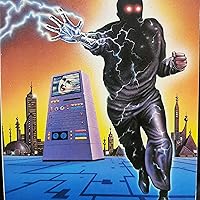
I thought it would feature a lot of London and a lot of Werewolves for some reason ... and I just do not remember either as I look at the cover.
Profile Image for Victoria.
129 reviews
October 8, 2021
Boring and way too "retro" for my taste, I found myself speed reading (meaning skipping over florid and tedious description) to finish this book.
Profile Image for Tom.
516 reviews6 followers
December 3, 2024
I really wanted to like this book more, because I met Brian Stableford about twenty years ago, and he's a really nice man. There are also some beautiful sections of writing in this, some real scenes of tension and some fascinating ideas.

But...

What this needed was a stern editor with an extensive blue pencil. A lot of the scenes go on too long and don't really go anywhere, and then you have a conflagration at the end that doesn't seem to be set up.

And all of the characters seem to have no hinterland: the only conversations they have are about belief or unbelief, which means I'm afraid I don't really know them any better at the end than I do at the start, and therefore I don't really care.

In horror books, mythology has to be earned, or it has to be simple enough that we can all follow: this has angels, werewolves, a sphinx, demonic possession, Satan as a good guy, a gnostic demiurge, a deistic uninvolved God, a reconstituted Adam, I mean for Christ's sake....

So, sorry, Brian, this really isn't very good. The annoying thing is: it could have been, if an editor had just sat down with him and said "Focus on this, lose that...."
Profile Image for Judas Machina.
Author 6 books1 follower
June 4, 2023
This book is for people who have a wealth of books under their belt, as well as an understanding of history, mythology, and psychology, with a penchant for the "weird".
Anyone who says its "boring" reveals themselves to be a dullard, or were raised on R.L. Stein and don't have an ounce of wonder regarding our place in the universe.
In my own dumbing down explanation, this book is not for people who think Tarantino makes good movies.
179 reviews
July 11, 2023
Too much philosophy, long extracts from other (in universe) books, not enough action. Confusing and disappointing. Probably only 1.5 stars really. If it had been half as long with the same ideas it would have been ok.
Profile Image for George.
627 reviews38 followers
January 31, 2024
Minus two stars for being too blamed long, much of it being philosophy based on the contrary-to-fact story of the novel. But note the extract I've placed as a quote here.

I see from the back of my paperback that there are two more in a trilogy. Even had this one ended on a strong cliffhanger (what it ends on is hardly more than one among several hooks), I would refuse to commit to them. That much more cannot possibly be worth it either.
Profile Image for Metagion.
498 reviews4 followers
July 26, 2011
I really did try to follow this book, but I failed miserably. I mean, it's great if you like to read literary prose-style books in which a lot of words are used but nothing is really said, and this is one of them. Great for those that are used to authors of the 1800s style of writing.
Profile Image for Christine.
7,386 reviews600 followers
April 1, 2011
I like the fact that the werewolves have teeth, yet I fail to see why I should care about any of the characters.

And it didn't feel like London. It didn't feel like anything really.
Profile Image for Ewa.
69 reviews4 followers
April 3, 2015
It was soo boring I have decided not to finish it.
Profile Image for Monica.
551 reviews38 followers
October 19, 2016
Entirely too tedious. Didn't care about the characters, and nothing happened. Just talk, talk, talk.
Profile Image for Sudhakar.
28 reviews
May 6, 2012
Great writing and story. I did read it many years ago so my memory might be false.
Displaying 1 - 15 of 15 reviews