Edith, a young epileptic, must learn to cope with her illness while, at the same time, trying to come to terms with her loneliness, fear, and unhappiness
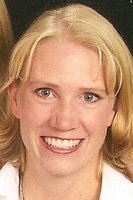
Children sometimes ask, "Do you write about your own life?" I have to answer that I do not. The reason is simple: My own life is boring. Yet I would not trade it for anyone else's.
I grew up in a large and loving family--parents, grandparents, and three children all under the same roof, a big white house in Portland, Oregon. At school, I was able, but not brilliant. I liked to draw. I liked to play pretend. I liked dolls, too, right through eighth grade, and only fear of what others would say made me give them up then.
Most of all, I loved to read! And I dreamed of a time when, a grown-up married lady with thirteen children, I would write books.
But childhood dreams have a way of getting lost. It was not until I was in my mid-thirties, after marriage, a child, divorce, and remarriage, that I was able to complete college. By then, my family included not only my daughter Beth, but my husband's daughters, Cynthia, Laurie, and Shaley.
It was in college that an important thing happened. I rediscovered stories and remembered my dream of writing them. My first published book was a story for children (CIRCLE OF GIVING, 1984).
Since then, our daughters have grown up. Now we have seven grandchildren. I work at home, writing. I speak at schools. I teach writing. I give speeches to teachers, librarians, and others. But most of the time, I am at home, gardening, cooking, washing, and ironing . . . and writing.
I know my life sounds boring, but for me it is filled with all the adventure, excitement and drama I can find and make in books. To me it is the best kind of life!
late 1800s rural US. Edith has always been the baby of the family and she likes it that way. When her mother dies, Edith is sent to live with her sister Alena and her stern husband John. One day, she has a fit (epileptic seizure) and falls unconscious on the floor. Everyone has a different idea about the cause, but no one is really sure what is it or why it is happening. Alena is convinced that Edith is sick and can't possibly begin to attend school. John is sure that it is because everyone babies Edith and that she needs to go to school. Edith wants to go to school, but what if she has a fit? What will all the children say?
I think this was a great story that shows how first impressions can be misleading. I think this story would appeal to readers who enjoyed The Little House on the Prairie or The All of Kind Family.
A nice enough story, similar in setting to the Little House on the Prairie books, but focusing on an orphaned girl with epilepsy who is taken in by her older sister and her husband.
The portrayal of Edith's epilepsy is interesting, and not overblown, and I would imagine life for a child with epilepsy in the 1800's might have been very similar to how it is described in this book, since this was a time before medications to control seizures became well used, and epilepsy (call "fits" repeatedly by characters in this story) was not well understood.
The book has a strong religious undertone, but it fits with the story and setting. Edith is also a strong girl, who receives support from several fronts in dealing with people's reactions to her seizures. All in all, it is decently done, and an interesting story for any young person wanting to read about others with epilepsy.
Cute little book about a young girl growing up in the late 1800's who has epilepsy. I read this to celebrate Epilepsy Awareness Month and Purple Day, which is March 26th.
Focusing on a young orphan with epilepsy in the 1800s, Edith Herself was a unique children’s historical fiction novel. I have never read a book in this genre with an emphasis on epilepsy and seizures. I did struggle to identify exactly what was happening with her medical issues though. Until the last chapter when the word seizure was used multiple times, they were only referred to as “fits” or “spells”. Blacking out was described as the primary symptom and so it was hard to tell what she was experiencing. Was she fainting? Having a seizure? Dissociating, which was my thought given the recent loss of her mother. I wish her experience had been clearer so that I knew earlier on that the book was about epilepsy. I also struggled with Alena and John’s relationship. John was not a likable character in any way until the very end. There was no reason for the change. He was extremely controlling of his wife and that did not seem to change. I did not see any redemption or hope for Alena in the story at all which was concerning to me. She remained under the control of her husband and in-laws without any indication that that would change. The story in itself was sweet and classic. A young girl growing to accept her medical condition and faith after tragic circumstances. I think apart from Edith (herself!!) there should have been more character growth for the other characters. Enjoyable and quick read! Parents be advised that the word damnation is used 4 times in a scene toward the end.
This entire review has been hidden because of spoilers.
This is the third book I have read by this author, and I’m noticing a pattern. She writes about children who are experiencing difficult family circumstances, set in the 1800s. In this book, Edith loses her parents, and then, while living with an older sister and her overbearing husband, she starts having seizures. Not only does she have to adjust to a new living situation and people she struggles to get along with, she must live with the children at school giving her a hard time. Through it all, she finds love and care from a few people. This is a good book for children to read to understand the hardships that others experience.