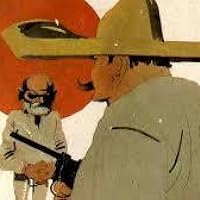
Exeter, 1195. Renovations at the new school in Smythen Street are disrupted by the shocking discovery of a partially mummified corpse hidden in the rafters - and Sir John de Wolfe, the county coroner is called to investigate. Richard de Revelle, Sir John's brother-in-law and founder of the school, immediately tries to blame Nicholas de Arundell, a young outlawed knight living rough on Dartmoor. As Sir John discovers, Nicholas has good reason to bear a grudge against the unscrupulous de Revelle. But is he really a killer? With the victim's identity unknown and the motive a mystery, the murder remains unsolved. But then comes news of a second violent death - and Sir John is forced to track down the 'noble outlaw' in order to find the answers.
Professor Bernard Knight, CBE, (born 1931) became a Home Office pathologist in 1965 and was appointed Professor of Forensic Pathology, University of Wales College of Medicine, in 1980. He has been writing since before 1963, when his first crime novel was published. Since then, he has written about thirty books, including contemporary crime fiction, historical novels about Wales, biography, non-fiction popular works on forensic medicine, twelve medico-legal textbooks and the Crowner John Mysteries series of 12th-century historical mysteries.
In addition, he has written scripts for radio and television dramas and documentaries, including the forensic series The Expert starring Marius Goring, in the 1970s. He has contributed to many other textbooks and has edited several medical journals - he was Managing Editor of Elsevier's Forensic Science International, the leading international publication in the field.
Currently, he is a founder member of The Medieval Murderers, a select group of historical crime-writers within the Crime Writers' Association, who give presentations at literary festivals, libraries and bookshops, to promote their work amongst the public. He is also one of the non-fiction judges for the annual 'Dagger' Awards of the Crime Writers' Association and a regular reviewer of crime books for the Internet site Tangled Web.
He was born and lives in Cardiff and as well as being a doctor, he qualified as a barrister and was awarded the CBE in 1993 for services to forensic medicine. In the 1950s, he served as a Regular Army medical officer in Malaya during the terrorist campaign, in a military hospital which he compares with 'MASH'.
I enjoy Bernard Knight's medieval mysteries, as they are usually engaging and well thought-out and consistent with the period and setting. This book is no exception.
While I enjoy his mysteries, I find some faults with Knight's writing. There is a lot of exposition (some of which can be forgiven as he takes the time to explain some of the more foreign aspects of medieval law) which might be better shown than told. Worse, in the course of a single book, Knight repeats himself a great deal. Some aspects of character backstory are shared two or even three times when once was quite sufficient. He repeats many of his idioms as well (such as "drawn like iron filings to a lodestone") to the point of distraction.
Still, I always find I look forward to the next adventure of John de Wolfe, Sergeant Gwyn and Thomas the clerk.
Typically superb attention to detail. When you've read a number of these books, you find that your trips to Exeter take on a new dimension. While my wife is shopping on our next trip, I am going to slip away to find The Bush. The food sounds better than on offer in many places today !
This is the second Crowner John mystery that I have listened to. Now that I had become familiar with the characters and the background, I found that I was truly drawn into this story, more easily drawn into the plot and for more engaged in the story. I actually became more engaged and intrigued with Crowner John, his two side kicks and mentors. Each of these characters has plenty to contribute, though Crowner John is the main character. Then there is his lovely wife in whose eyes he can do absolutely nothing right, much less aid, improve, or advance their social status. But in all this, and especially in this story, they aid and respect one another, without Crowner John submitting to his usual violation of his marital vows he is more commonly known to due.
The narrator, with his english accent adds to the authenticity of the story. I am disappointed that I have only been able to find three of thirteen Crowner John stories in audio format. I believe if all thirteen were available, and being able to read from the character development, story plot, etc. from the very first book to the last, would greatly deepen the appreciation for these stories.
My favorite series, as usual, such a great read. Two more left but I now have them all for rereading. Bernard Knight is a great writer and accurately depicts this era.
I especially like that Richard de Revelle, John de Wolfe's brother in law, was forced out of his Sheriff of Devon's role some time ago. He continues to try to conspire with Prince John and other cohorts for purposes of rebellion and what we might now call "White collar crime"
Recommended for all Medieval Mystery fans as well as early Plantagenet novels.
I do like the Crowner John mysteries, but as said in previous reviews the author does seem to repeat the backstories of his characters quite a bit in each one - it gets to a point that you start to feel your intelligence is being insulted. I think most other series writers leave the reader to do their homework a little bit and if they are picking up a book in the middle of a series i think they generally hope the reader will enjoy it enough to find the beginnings of the series if they are going to read any more - and I feel that is the way it should be. However I did feel that this time round the author laid off the repetition a little bit - certainly didn't seem as annoying this time round. The story itself seemed a bit more varied than the previous installments with several murders which might be linked, outlaws, journeys to other parts of England, and even a small battle at one point. One of the better stories in the series!
I've recently reviewed this series by saying that I'm reading it mostly on inertia: I have the books, I'm planning on finishing them. I've not liked many of the books in the second half of the series. This was an exception: I quite liked The Noble Outlaw. The plot is very well paced and there is solid suspense. The characters are more dynamic than they have been in the previous three or four books, and it feels like the meta-plot got some actual advancement. The central mystery does what a good mystery novel should do: leave just enough clues to make you feel like you could have solved it. I would say that the last chapter is a bit rushed, and I'm growing tired of Richard de Reville being somehow involved in every crime in the series, but this was a good, fun, readable book.
This is the third Crowner John mystery I’ve read. I was hooked after the first & already to start the fourth! The action & intrigue are just so entertaining! I already disliked Richard de Reville & Henry de Pomeroy from their previous villainy, but had given up hope that they would ever answer for their crimes. Though the path to redemption & justice was twisted, finally, justice prevailed! And, old Brutus, John’s faithful hound, reminded the reader that every dog really does have his day!
A crusader returns to his manor and discovers he has been declared dead and his manor stolen. He is declared an outlaw. A body is found in an old forge being rebuilt as a school. The outlaw is blamed. The deceased man was a Guild master and soon other masters are murdered. Sir John needs to find the killer and need a to talk to the Outlaw. Can justice be found for the outlaw and the killer be found. John's wife is attacked by someone claiming to be the outlaw. He could have lied. John must determine the truth. Fun book.
If you are already pretty familiar with medieval historical fiction, this is a solid addition to the field. I would not recommend it for someone as an intro to medieval historical fiction; it's a bit heavy for that. As someone who has a pretty strong background in medieval history, I enjoyed it. Not sure I will seek out more, but I wouldn't turn it down if it fell in my lap.
Entertaining, straightforward medieval whodunnit, the plot of which I enjoyed.
The narration (especially the bits presenting the thoughts and background of the characters) is endlessly and hopelessly repetitive, though. Typos there, too.
Nice to see John's compassionate side and his strong commitment to integrity. I never tire of the relationship between the three some. Their deep affection is so subtly but affective lyrics portrayed by Knight.
Have always enjoyed the Crowner John stories but feel that it’s about time that he had a more comfortable place to work. His friend is now the Sheriff so why does he continue to make his great friend work in such appalling conditions?
This was a more enjoyable story than some of the installments in this series. John and Matilda didn't fight as much and were actually civil to each other for a change. An intriguing story about murdered guildsmen and a stolen manor. There were lots of typos, unfortunately.
I have read so many good reviews about books from this author that I keep giving his books a try but each time I come up short. Probably this is the last time I give one of his books a try. It won't matter, he has lots of loyal fans.
Another excellent Crowner John tale. I found there was much less exposition than in previous books and the story progressed at a good pace throughout. A great read (as ever).
Still a very enjoyable series but this one seemed a little disjointed. Murders and displaced knights with a tenuous connection. Plus, there were quite a few missing words that gave pause.
Once again, Bernard Knight has given us a real peek into 12th century life.
As rough as it was, he shows in this book how even a person considered beyond the pale, can find a voice, if needs be.
In this story, Nicholas de Arundell comes back from three years away at the Crusades, only to find his wife gone from their small Manor, and his neighbours occupying his home, and land.
When he tries to throw them off of his property, his neighbours, Henry de la Pomeroy, and Richard de Revelle, gather their men, and fight Nicholas and his few men, until one of their men is accidentally killed in the fight.
This gives Henry and Richard the opportunity to call Nicholas and his men murderers, and so they have no choice but to run away to the Moors, to live a precarious life there, for the next three years.
When this story begins, Crowner John and his men, are investigating the finding of a mummified body of a man, in the rafters of a building that Richard de Revelle had recently bought, to turn into one of the newfangled schools that have just become popular in the cities of England.
Richard denies knowing how the body got there, but when Crowner John discovers that the man was murdered by having an iron bolt shot through his neck, Richard accuses Nicholas de Arundell of being the murderer, and placing the body where it was found, in order to give Richard the blame.
As it's obvious to John and his men, Gwyn and Thomas, that the murdered man had been there for some time, then they disagree with Richard but, after some investigating, they discover that the body is that of a prominent Guildsman from the city.
Having no clue as to why the man was killed, Crowner John gets on with his work, but then a series of other deaths - which involve other prominent Guildsmen - and a serious attack on his wife, Matilda, as she was coming home from church, lead the Coroner's team to the realisation that it might, indeed, be the work, if not of Nicholas, then maybe one of his men.
As a Knight, and a Crusader, John can't believe that Nicholas would stoop to murder but, with what evidence he has, pointing towards Nicholas and his men, John and Gwyn leave Thomas behind, and journey onto Dartmoor, in search of Nicholas, and to find out the truth.
What they find there, is so shocking, that John and Gwyn travel all the way to Winchester, and then to London, in search of his good friend, Hubert Walter, the Chief Justiciar of England, King Richard's right hand man, in order to set matters straight.
While all of this is happening, Matilda becomes friends with a young Widowed lady at her church, Joan de Whiteford but, totally unlike her usual manner towards people, when she discovers that, rather than being a widow, Joan was actually the wife of Nicholas de Arundell, she is first angry with her but, once she hears her story, is then a staunch supporter of Joan and Nicholas, despite her brother, Richard, being involved, and so she urges John to find out the truth, and make things right for the younger couple.
When Crowner John gets back from his trip, the solution he and Henry have come to, will sort out, once and for all, the fate of the three neighbours.
In the meantime, through various clues, and lots of investigation, Crowner John discovers who the real murderer is, and does what he can to bring him to justice.
This was another book that I couldn't put down until the end. I'm just so sad that there are so few of these entertaining books left to read, but I'm looking forward to reading the next one: The Manor of Death.
I can always re-read them all, the next time I go around my bookshelves, though 😀
This entire review has been hidden because of spoilers.
#11 Crowner John historical mystery set in Devon, UK in the 1195. A desiccated corpse is found in an old forge being renovated into a school, and due to the length of time he's been dead, the only thing clear is that the man was murdered--a nail protrudes from his neck. Eventually the Coroner and his assistants track down his identity, but shortly thereafter, two other--fresher--bodies killed and displayed in gruesome ways, are found.
The men were all prominent tradesmen, leaders of their respective guilds. And then John's wife Matilda is brutally attacked on her way home from Christmas Mass, the attacker whispering to her that the killings were revenge killings against her brother, former Sheriff Richard de Revelle, and that he'll be getting his soon enough. The finger points most strongly to a man who was declared outlaw at the behest of Richard, who then seized his lands and property, but the Crowner wonders if someone is deliberately pointing him in that direction--and then he learns that the outlaw "Nick of the Moor" has a wife who's been staying with family in Exeter and that she is Matilda's new friend from church! Once the Crowner gets to meet the outlaw and hear his story, he is determined to bring his case before the King, or at least the Lord Justiciar.
This is the first of this series that I've listened to in audio format, and have quite enjoyed it. The reader is very good, skillfully telling the story and doing an excellent job with a myriad of different voices and accents. The series itself I always find enjoyable, and the author manages to impart a lot of historical detail and information such that I'm learning things without realizing it as the story goes on. Will listen to more of these if the library has them available for sure! A.
Knight has an interesting take on Medieval England: put in all the customs and politics, but use modern English to convey the characters' speech, albeit with an occasional vintage word such as 'lymer' (basically, a bloodhound) thrown in.
It may sound odd, coming from a fanatical fan of Howard Pyle's The Merry Adventures Of Robin Hood, but I find this approach effective, although I do wonder if, for example, the Cornishman, Gwyn, was that readily intelligible to his Norman boss, "Crowner" John de Wolfe. Still, the book has a certain charm, and even if the mystery is not all that gripping, it's interesting to see day-to-day life in the time close to that Pyle depicts depicted as, well, day-to-day life.
While I feel that the author writes a pretty darn good book, I had trouble connecting to the main character. I really love historical mysteries, and have been able to lose myself in them very easily. But I just couldn't relate Crowner John. And I know many people might say it is because the character is a man...but there have been many a good book with lead male characters who i related to very well. But this book, this character, was just not connecting to me. And so, despite this book being a very good story, I wont be reading anymore of this series (much to my disappointment, because I was really excited when I found this series).
The 11th in the Crowner John series by Bernard Knight has the 12th century coroner finding himself torn. By law at the time anyone could lop off an outlaw's head and claim a reward and it was the duty of law officers to do so. However John finds that a certain nobleman became an outlaw by default as to have kept to the letter of the law would have resulted in his death by unscrupulous land and property grabbers. John finds himself in the strange position of having to defend the outlaw and his men against a common foe who claims to have the law on his side. Easy to read and pulls you in. Loved the story.