

What do you think?
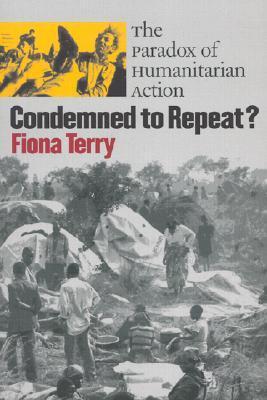
Condemned to Repeat?: The Paradox of Humanitarian Action
Humanitarian groups have failed, Fiona Terry believes, to face up to the core paradox of their activity: humanitarian action aims to alleviate suffering, but by inadvertently sustaining conflict it potentially prolongs suffering. In Condemned to Repeat?, Terry examines the side-effects of intervention by aid organizations and points out the need to acknowledge the political consequences of the choice to give aid. The author makes the controversial claim that aid agencies act as though the initial decision to supply aid satisfies any need for ethical discussion and are often blind to the moral quandaries of aid. Terry focuses on four historically relevant cases: Rwandan camps in Zaire, Afghan camps in Pakistan, Salvadoran and Nicaraguan camps in Honduras, and Cambodian camps in Thailand. Terry was the head of the French section of Medecins sans frontieres (Doctors Without Borders) when it withdrew from the Rwandan refugee camps in Zaire because aid intended for refugees actually strengthened those responsible for perpetrating genocide. This book contains documents from the former Rwandan army and government that were found in the refugee camps after they were attacked in late 1996. This material illustrates how combatants manipulate humanitarian action to their benefit. Condemned to Repeat? makes clear that the paradox of aid demands immediate attention by organizations and governments around the world. The author stresses that, if international agencies are to meet the needs of populations in crisis, their organizational behavior must adjust to the wider political and socioeconomic contexts in which aid occurs.
300 pages, Paperback
First published May 31, 2002
Ratings & Reviews
Friends & Following
Create a free account to discover what your friends think of this book!
Community Reviews
Displaying 1 - 6 of 6 reviews
May 15, 2020
This is more for my own memory but, a few things worth noting about this book.
A) it’s dense! I ended up taking extensive notes to be able to follow along the nuances of Terry’s arguments and each of the contexts. With limited historical knowledge of each of the case studies, I had a lot to learn. Still found the Cambodian refugee camps and political turmoil hardest to follow
B) Even if you don’t agree with every single statement Terry makes this is a a MUST-READ for anyone who wants to work in humanitarian aid or be a humanitarian.
C) I can tell Terry comes from a background where she has thought about these issues a lot and she references a lot of people who seem to be important in the field as well. The level of detail she goes into and the perspectives she captures are incredible.
Her central message about the humanitarian imperative being used to prioritize the technical delivery of aid rather than grappling with the potential consequences or holding states accountable to preventing such horrors is one that resonated with me.
A) it’s dense! I ended up taking extensive notes to be able to follow along the nuances of Terry’s arguments and each of the contexts. With limited historical knowledge of each of the case studies, I had a lot to learn. Still found the Cambodian refugee camps and political turmoil hardest to follow
B) Even if you don’t agree with every single statement Terry makes this is a a MUST-READ for anyone who wants to work in humanitarian aid or be a humanitarian.
C) I can tell Terry comes from a background where she has thought about these issues a lot and she references a lot of people who seem to be important in the field as well. The level of detail she goes into and the perspectives she captures are incredible.
Her central message about the humanitarian imperative being used to prioritize the technical delivery of aid rather than grappling with the potential consequences or holding states accountable to preventing such horrors is one that resonated with me.

January 7, 2016
Not a text to rush through. Terry makes her case with significant support. The case studies were a haunting reminder of the failures of humanitarian aid work. While she presents clearly the failures, what would have been helpful would be examples of humanitarianism in line with her conceptual framework of how situations should be handled.
October 31, 2019
In Condemned to Repeat? The Paradox of Humanitarian Action, Fiona Terry draws on her own personal experiences in her work in aid to address the negative consequences of humanitarian intervention. Much like Anderson, Terry describes how the humanitarian aid system, despite its good intentions, can contribute to warring factions and political dissent. While the intention is to help refugee camps and create safe spaces for the civilian population, international aid programs often are used as a resource to support militaries, resulting in “refugee-warrior” communities (Terry, Introduction). In the introduction and chapter one, the author immediately shares personal fieldwork experience specifically in Rwanda and Tanzania. Terry shares that ultimately the goal of this book is to address how humanitarian aid can fail to produce meaningful and consistent results that do not conflict with the needs of refugees. Ultimately, the work is to detail why several humantian projects eventually became corrupt, with aid programs unknowingly supporting combatants, thus contributing to the suffering of the intended recipients, victims of war.
Although Terry’s work is rich in knowledge and detail from personal experiences, the author details too much the historical, political and social contexts of these war zones. Instead, the reader almost loses the main point of the book. However, in the latter chapters, specifically chapter 5, Terry begins to move away from personal accounts to theoretical consideration and analysis. However she fails to create a well balanced analysis, using too many examples to ultimately bolster her main claims. Terry fails to take the necessary steps to detail if there are strategies to overcome “refugee-warrior” encampments and communities.
Terry differs from Anderson in that this author does not create a theoretical framework to combat the negative outcomes of humanitarian aid; instead, the purpose of this work seems to educate those who are not familiar with the aid system on the drawbacks of the programs and work. Though it is educational and informative, Terry pinpoints the paradox of humanitarian aid but fails to detail any preventative measures in the latter part of the book.
Although Terry’s work is rich in knowledge and detail from personal experiences, the author details too much the historical, political and social contexts of these war zones. Instead, the reader almost loses the main point of the book. However, in the latter chapters, specifically chapter 5, Terry begins to move away from personal accounts to theoretical consideration and analysis. However she fails to create a well balanced analysis, using too many examples to ultimately bolster her main claims. Terry fails to take the necessary steps to detail if there are strategies to overcome “refugee-warrior” encampments and communities.
Terry differs from Anderson in that this author does not create a theoretical framework to combat the negative outcomes of humanitarian aid; instead, the purpose of this work seems to educate those who are not familiar with the aid system on the drawbacks of the programs and work. Though it is educational and informative, Terry pinpoints the paradox of humanitarian aid but fails to detail any preventative measures in the latter part of the book.

August 26, 2023
[only read for the intro and first chapter on afghan refugees in pakistan]
raises an extremely important issue of the refugee policies that were enforced in pakistan and how they have compounded into other issues for afghan peace-building, but im docking a couple points for not being able to write about 'guerilla warfare' in a consistently nuanced way... sometimes terry would really hit the nail on the head and then go on and continue using very sweeping and general language that is counterintuitive to the entire point that she is raising. also- this is something that should be looked at as a context-dependant analysis of guerilla warfare and the rise of harmful ideologies in refugee camps, but not a logic that one should really apply to any situation of a refugee camp... i worry that it could easily be misconstrued into another neoliberal idea of 'dont fight back x'. other than that, a really phenomenal and informative read. if i had the time to finish it on the other case studies im sure it would continue to be really eye-opening.
raises an extremely important issue of the refugee policies that were enforced in pakistan and how they have compounded into other issues for afghan peace-building, but im docking a couple points for not being able to write about 'guerilla warfare' in a consistently nuanced way... sometimes terry would really hit the nail on the head and then go on and continue using very sweeping and general language that is counterintuitive to the entire point that she is raising. also- this is something that should be looked at as a context-dependant analysis of guerilla warfare and the rise of harmful ideologies in refugee camps, but not a logic that one should really apply to any situation of a refugee camp... i worry that it could easily be misconstrued into another neoliberal idea of 'dont fight back x'. other than that, a really phenomenal and informative read. if i had the time to finish it on the other case studies im sure it would continue to be really eye-opening.

May 16, 2007
terry's book is informative, but it is also frustrating and disappointing. terry, a bigwig at MSF, is frustrated at the failure of humanitarian aid to produce meaningful, consistent results. she writes that the nature of conflict and the attitudes toward refugees among state actors has changed, but humanitarian agencies have not adapted. they keep making the same mistakes because they have a knee-jerk pattern of action that ends up causing more problems. there is a lot of informtion here that i never knew, such as agencies' emphasis on repatriation to solve the 'refugee problem.' it's simple enough--make the refugees go back home, and there are no more refugees. humanitarian agencies (specifically UNHCR) have taken it one step further and cut off food to refugees so they'd be forced to go back, often getting killed on return or pushed back out of their home country yet gain.
the book is disappointing because terry never takes that necessary (but so often neglected) step and gives her own, well thought-out plan of action to overcome this paradox. there are a few pages of vague suggestions, such as "stop forced repatriation," but not much more than that. her background in research and her credibility as an insider in the humanitarian world makes her the perfect person to lay out a plan of action, but it isn't in this book. definitely worth reading, if only to become more aware of this serious problem. also, it is written in an academic style, so there is theory and some quantitative analysis involved.
the book is disappointing because terry never takes that necessary (but so often neglected) step and gives her own, well thought-out plan of action to overcome this paradox. there are a few pages of vague suggestions, such as "stop forced repatriation," but not much more than that. her background in research and her credibility as an insider in the humanitarian world makes her the perfect person to lay out a plan of action, but it isn't in this book. definitely worth reading, if only to become more aware of this serious problem. also, it is written in an academic style, so there is theory and some quantitative analysis involved.

July 7, 2008
How sometimes humanitarian efforts end up implictly supporting the creators of the very crises they have charged themselves with stopping.
Displaying 1 - 6 of 6 reviews