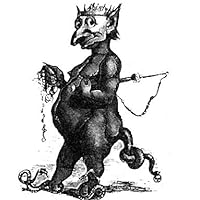
Arcana Mundi, título de este libro, puede traducirse como "los secretos del universo". No puede comprenderse realmente el mundo de los antiguos griegos y romanos sin el conocimiento de lo que se ha llamado, en sentido despectivo, superstición. Para el hombre antiguo la magia y la brujería, el miedo a daimones y fantasmas o el deseo de manipular los poderes invisibles determinaban, en gran medida, proyectos de futuro, relaciones personales, visión del mundo y vida cotidiana. Esta cara oculta de la cultura grecolatina, que habitualmente ha sido relegada por los estudiosos, se va desvelando de manera apasionante ante los ojos del magia demonología, adivinación, astrología, alquimia, son algunos de los temas que se presentan. La discusión se apoya en numerosas citas de textos clásicos cuidadosamente traducidos para los que, en algún caso, Luck propone una lectura personal.
Another solid entry in the "Where Did We Get The Category of Magic?" vein I am compelled to read. It's fascinating to read the primary sources, to study the linguistics, to know the history, and then compare it all to the New Age/Neo-Pagan pretenses and claims of people like Crowley. "Magic" came from the Greek "Magika" which was a later form of "Mageia", meaning "What Persian Priests Do"; it became a pejorative term for Persian religious practices (since the Greeks & Persians were enemies), then a pejorative term for all foreign, barbarian religious practices, and finally a term for all religious and supernatural practice that was unorthodox or unauthorized. This was such a broad category, that it became for the ancients analogous to "obscenity" in the 20th century -- something people knew when they saw, but couldn't specifically define. It was widely legislated against in the Greek city-states and the Roman Republic and Empire(as attested by Plato, Pliny, Apuleius, Ovid and the Twelve Tables of Roman Law), but the legislation could only target magic-use based on its effects and the intent behind it because ultimately those were the only aspects of magic upon which everyone could agree. And now we almost think of it as something distinct from religion, of something more like an areligious natural force which magic-users can manipulate! Crazy how much can change as time passes.
4 stars, glad I own a copy, and it has absolutely motivated me to read more primary sources and has impacted my own pursuits.
This book is an excellent introduction to primary sources. The introductory essays are a lovely primer, and the summaries written by Luck give you the a context and contemporary English framework with which to appreciate what you're reading.
The excerpts in the book are organised by subject - Magic, Religion, Daemonology, Astrology, Alchemy, etc. I preferred to go through the excerpts and read from one primary source at a time.
The alchemy section especially blew my mind as making a lot of connections and containing beautiful, inspiring works.
I was hoping for a little more original scholarship and insight into how occult practices and traditions influenced classical culture and society. Instead it's really more of an anthology of primary sources, excerpted and organized by category. It's alright as a reference book, just not what I was looking for.
Loved it. Note that it’s more of a collection of primary sources with brief introductions instead of lengthy scholarship. Because of that, though, it’s one of the best big picture glimpses of one of my favorite subjects: religion/magic/myth in the ancient world.
This book has lots of information i didn't know. Maybe for some people like philosophy scholars is a basic book, but it gave a big picture of how these arts were explored. Even though it gives you repetitive sources and of course there were more around, i enjoyed it alot.
(4,5/5) Su valor como clásico es evidente por la interesante y nutrida compilación de textos, los cuáles suponen fuentes fidedignas para las diversas temáticas tratadas. Ahora bien, mi sorpresa ha sido mayúscula al observar que cada una de las introducciones teóricas (a la magia, la adivinación, la mística, etcétera) supone una síntesis muy completa de las facetas que atañen a estas complicadas cuestiones.
Hay libros completamente dedicados a los sueños en la antigüedad (Patricia Cox Miller), al trance oracular griego (Peter Kingsley), al esoterismo (Hanegraaf), por no citar los ya afamados de Dodds o Burkhart. Sin embargo, esta pequeña enciclopedia de Georg Luck no tiene por qué envidiarlos. Aunque siempre aborda los tópicos con un carácter introductorio, la extensión total de estos "prólogos" supone, al unirlos, un ensayo en toda regla dada su extensión. Y, además, ofrece continuas pinceladas y matices sobre todas las perspectivas a tener en cuenta (incluyendo el cristianismo, el judaísmo, el zoroastrismo o la magia egipcia cuando es menester).
Todo aquel interesado no ya en el frikkismo ocultista, sino en los aspectos prácticos y teóricos del trance y la sanación oracular, ya sea desde una perspectiva filosófica (aparecen citados numerosos filósofos grecoromanos) o antropológica (donde creo que este ensayo alcanza su mayor interés), por no hablar de su valor psicológico, deben tener este libro y no subestimarlo.
Exactly what it says on the tin: a broad sourcebook of Greek and Latin texts on ancient magic, miracles, daemonology, divination, astrology and alchemy, with commentary on each excerpt and an introduction for each of the six themes.
ive got to page 274 of the 832 version of it and I cant go on for now at least. i might return to it when there will be nothing else to read but this is just too dense and very incohesive and badly formatted.
This book is marred by the author's frequent references to Castenada as a serious authority. But it still has some valuable information in it...I think...but how can I trust a scholar who relies on Castenada...ARGH!!!



![Profile Image for [Name Redacted].](https://i.gr-assets.com/images/S/compressed.photo.goodreads.com/users/1347082397i/287915._UY200_CR0,0,200,200_.jpg)