The French novelist offers evocative memories of his childhood and his family and discusses his own writings as well as the writings of others who have influenced him
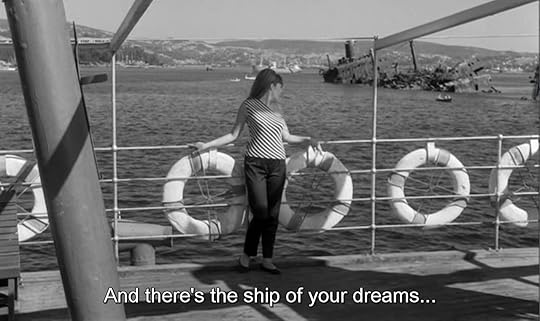
Screenplays and novels, such as The Erasers (1953), of French writer Alain Robbe-Grillet, affiliated with the New Wave movement in cinema, subordinate plot to the treatment of space and time; directors, such as Jean Luc Godard and François Truffaut, led this movement, which in the 1960s abandoned traditional narrative techniques in favor of greater use of symbolism and abstraction and dealt with themes of social alienation, psychopathology, and sexual love.
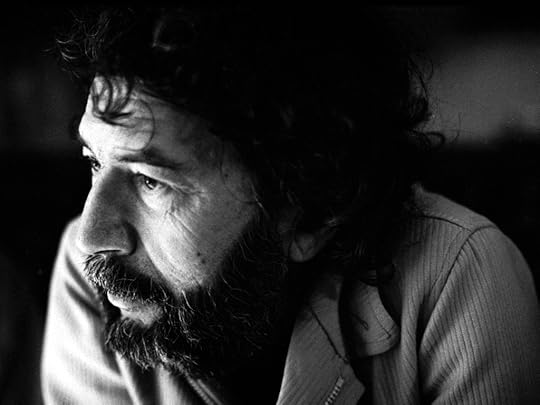
Alain Robbe-Grillet was a French writer and filmmaker. He was along with Nathalie Sarraute, Michel Butor and Claude Simon one of the figures most associated with the trend of the Nouveau Roman. Robbe-Grillet was elected a member of the Académie française on March 25, 2004, succeeding Maurice Rheims at seat #32.
Alain Robbe-Grillet was born in Brest (Finistère, France) into a family of engineers and scientists. He was trained as an agricultural engineer. In the years 1943-44 Robbe-Grillet participated in service du travail obligatoire in Nuremberg where he worked as a machinist. The initial few months were seen by Robbe-Grillet as something of a holiday, since in between the very rudimentary training he was given to operate the machinery he had free time to go to the theatre and the opera. In 1945, Robbe-Grillet completed his diploma at the National Institute of Agronomy. Later, his work as an agronomist took him to Martinique, French Guinea,Guadeloupe and Morocco.
His first novel The Erasers (Les Gommes) was published in 1953, after which he dedicated himself full-time to his new occupation. His early work was praised by eminent critics such as Roland Barthes and Maurice Blanchot. Around the time of his second novel he became a literary advisor for Les Editions de Minuit and occupied this position from 1955 until 1985. After publishing four novels, in 1961 he worked with Alain Renais, writing the script for Last Year at Marienbad (L'Année Dernière à Marienbad), and subsequently wrote and directed his own films. In 1963, Robbe-Grillet published For a New Novel (Pour un Nouveau Roman), a collection of previous published theoretical writings concerning the novel. From 1966 to 1968 he was a member of the High Committee for the Defense and Expansion of French (Haut comité pour la défense et l´expansion de la langue française). In addition Robbe-Grillet also led the Centre for Sociology of Literature (Centre de sociologie de la littérature) at the university of Bruxelles from 1980 to 1988. From 1971 to 1995 Robbe-Grillet was a professor at New York University, lecturing on his own novels.
In 2004 Robbe-Grillet was elected to the Académie française, but was never actually formally received by the Académie because of disputes regarding the Académie's reception procedures. Robbe-Grillet both refused to prepare and submit a welcome speech in advance, preferring to improvise his speech, as well as refusing to purchase and wear the Académie's famous green tails (habit vert) and sabre, which he considered as out-dated.
He died in Caen after succumbing to heart problems
Style
His writing style has been described as "realist" or "phenomenological" (in the Heideggerian sense) or "a theory of pure surface." Methodical, geometric, and often repetitive descriptions of objects replace the psychology and interiority of the character. Instead, one slowly pieces together the story and the emotional experience of jealousy in the repetition of descriptions, the attention to odd details, and the breaks in repetitions. Ironically, this method resembles the experience of psychoanalysis in which the deeper unconscious meanings are contained in the flow and disruptions of free associations. Timelines and plots are fractured and the resulting novel resembles the literary
Alain Robbe-Grillet (1922-2008) - French novelist and filmmaker
Part autobiography, part extended essay on literature, Alain Robbe-Grillet’s Ghosts in the Mirror - a Romanesque weaves family life and growing up in Brittany in the 1920s and 1930s with the author's seasoned philosophic reflections on life and writing, both his own writing and the writing of others. Since there are only a few review posted here, I think it’s fair to say many readers have overlooked this fine work written by the foremost spokesperson of the French Nouveau Roman. Unlike his novels, which are challenging and require a bit of effort to penetrate, this short autobiography is straightforward and readily accessible. As a way of a sampling the various subjects covered, below are several quotes with my brief comments:
Personal "I've never felt a murderous impulse toward or any sort of rivalry with the man who begot me, who nourished me, whose name I bear."
The author is open and honest about his likes and dislikes, his affinities and differences, his loves and fears both as the boy he was and as the man he is. Anybody looking for the very human person behind the author and filmmaker will not be disappointed reading these pages.
Family "My grandfather, an affectionate, kind, peaceable man with light blue eyes and a soft blond goatee, who sang "Cherry Blossom Time" in an emotional voice broken by emphysema, had spent all his active life on warships."
We’re given a clear picture of the author's father, mother, grandparents and family friends, each having their respective influence on the formation of his character and creative imagination.
On His Own Writing "I began writing novels to exorcise the ghosts I couldn't come to terms with and on the other hand, because it makes me see that the bias of fiction is, after all, much more personal than the so-called sincerity of confession."
What makes this account so fascinating is the author’s linking his background, his dreams, his nightmares as well as his day-to-day living with his development as an author of fiction.
On History and the Truth “The sinister face of the established order comes from my German (Nazi occupation) experience."
"Truth, in the final analysis, has always and only served oppression. Too many hopes, wretched disappointments, and blood-soaked paradises teach us in any case to be wary of it."
"In particular, a respect for order at all cost now made me profoundly suspicious, to say the least. . . . And if we really have to choose between that and disorder, there's no doubt I would choose disorder."
Reading these three statements, is it any wonder the author recoils at the suggestion novelists are bound by strict literary conventions or anything smacking of a fixed, "real" or "true" world?
On the Novel "Characters in novels or films are also kinds of phantoms: you see them or hear them, you can never grasp them, if you try you pass right through them. Their existence is suspect, insistent, like that of the unquiet dead forced by some evil spell or divine vengeance to live the same scenes from their tragic destiny over and over again. . . . as if they were desperately trying to gain access to a fleshly existence that is denied them . . . attempting to drag the other, all the others, including the innocent reader, into their impossible quest."
What a way to view the men and women we encounter in the pages of novels! To see them all, each and every one, as victims of a spell, forced to live their fleshless lives over and over again.
On Balzac "With Balzac the coherence of the world and the narrator's authority are both pushed to a limit that has never been reached since. The “realist" ideology is born: the world, closed and complete in a definite, weighty, unequivocal rigidity, is entirely permeable to meaning, novelistic elements are classified and put into a hierarchy, the linear plot unfolds according to the reassuring laws of reason, and the characters become types - the miserly old man, the ambitious young man, the devoted mother, etc."
Novelists of the New Novel unite, you have nothing to lose but the tyranny of tradition! Anybody familiar with the innovative Nouveau Roman will hear a familiar ring in this Robbe-Grillet quote.
On Jean-Paul Sartre's Nausea "As for the philosopher figure in La Nausée, he himself admits that it's the aggressive, viscous contingency of the things that make up the external world, the moment you tear away the thin layer of "utility" (or merely of meaning) protecting us and hiding them, that is at once the source of his metaphysical-visceral unease, the object of his passionate fascination, and the initial incentive to keep a diary of "events" (in other words, of his relation with the world) and so produce a narrative."
Robbe-Grillet goes on to explain how this philosophical figure in Sartre’s La Nausée, a man by the name of Roquentin, relates and compares to specific characters in the novels he himself has written.
On Albert Camus's The Stranger "And the book's power comes first of all from this amazing presence of the world through the words of a narrator who is outside himself, a tangible world in which we totally, unhesitatingly believe "as if we were there," or better still, so firmly that we can forget its lesson: the sudden, gratuitous appearance of things under the gaze of a blank consciousness strikes us with such crude violence that we hardly notice that it's the perfect, almost didactic representation of the phenomenological experience according to Husserl."
This quote is part of an eight page critique of Camus's famous novel -- most insightful and provocative. Highly recommended for anybody interested in taking a deeper plunge into this classic of existentialism.
Ghosts in the Mirror is an autobiographical piece by Alain Robbe-Grillet, a prominent member of the 1950s/1960s New Novel movement in France. The author, who died in 2008, prided himself on being an artistic revolutionary, but in this book he confounded expectations by abandoning his “objectivist” style and writing a more or less conventional narrative. He also faked readers out by revealing that his work is not the mere postmodernist mental masturbation the French are so fond of, but rather (or also) a desperate effort to fight off the personal demons that had given him nightmares since childhood: by describing the threatening world in intimate, objective (not to say, obsessive) detail, he could control it (and the “ghosts”)—at least for brief moments. R-G: “I write to destroy, by describing them exactly, the nocturnal monsters that threaten to invade my waking life.” I am reminded of Norman Mailer’s observation about Picasso: according to Mailer, during one period of his career the Spaniard fought off madness by literally painting over gaps on the canvas through which his demons might attack him. For Robbe-Grillet, truth (and terror—the demons and the Abyss) lay in the interstices of life, in the objects and actions that normally pass unnoticed; he claimed that the conventional narrative with its predictability misses the truth altogether—it expresses only stories, characters and ideas that are already known and readily recognizable within the culture—and therefore constitutes not original art but propaganda. Similarly the “received truth” or conventional wisdom of a culture he considered not truth but ideology that serves to bolster existing ideas and institutions. Robbe-Grillet felt that the “real” reality of both the external world and of the unconscious cannot be effectively captured by consciousness because the latter is totally dominated by words, which express the ideology of the culture.
Literature is, then, the pursuit of an impossible representation. Knowing this, what can I do? All I can do is organize stories, which are neither metaphors of reality nor analogues but act as working constructs. Then the ideology that governs our common consciousness and language structures will no longer be a constraint, a source of failure, since I’ve reduced it to the status of a material.
Robbe-Grillet’s life was quite interesting. He was raised by very independent anarchist parents who loved personal freedom but ironically also abhorred chaos and ardently supported the French far right which advocated law and order. Petainists, they almost welcomed the Nazis (with their Prussian discipline, their German passion for order) as uniters of Europe, and even after exposure of the Holocaust atrocities refused to back off their position (Robbe-Grillet’s mother simply considered the Holocaust a fabrication, while his father maintained that the winners of a war always make the losers look bad: if the Nazis had won, they could easily and justifiably have accused the Allies of war crimes). During the Nazi Occupation Robbe-Grillet himself worked for a year in a Bavarian labor camp, as a lathe operator turning out (so to speak) crankshafts for German Panther tanks. During this whole period he was well treated (though he worked long grueling hours) and considered himself a “tourist” in Germany. Another interesting experience: in 1961 Robbe-Grillet happened to be on the first ever crash of an Air France Boeing 707. The jet ran off the runway during takeoff and split into three parts. Fortunately, the passengers were few and though some were injured no one was killed. Robbe-Grillet and his wife walked away without a scratch. Two interesting observations: first, even before the survivors had been picked up, a little Air France van pulled up, a painter erected a ladder on the intact tail section of the plane and immediately began painting over the Air France logo. Second, Robbe-Grillet and his wife had very different reactions to the crash: for him, everything happened so fast he didn’t have time to be afraid and the crash had no lasting effect, but for his wife the scene played out in slow motion and seemed to take forever, and for the next ten years she feared to fly. In Ghosts in the Mirror, Robbe-Grillet makes many interesting observations about the relationship between art and reality, and also kicks out some pretty good anecdotes from a ghost-ridden childhood and from a young adulthood dominated by World War II and by the postwar existentialists, notably Sartre and Camus, who profoundly influenced his thinking.
130811: not exactly an autobiography. not exactly an essay on the new novel or other french writers. not exactly philosophy of art. makes one want to read his works again, read others, think. so it is worth reading for many reasons. i guess kind of a postmodern autobio fragment...
This book is really funny and quite easy to read. I was positively and pleasantly surprised to learn about Robbe-Grillet's humourous side. There are a few theoretical discussions interspersed with personal stories and some fictional elements characteristic of his genius. He talks about the glass breaking sound and the ocean waves but consciously avoids dissecting his work. He also comes off as very very humble and mature which is sometimes hard to convey over text. It's all very playful and génial and French.
Maybe I should have read some Robbe-Grillet novels or something before picking up his memoir. A lot of it seemed self-referential but without knowing his work I can't be sure. On the other hand, this is the only thing I've ever read by a French intellectual of his era that doesn't come from a leftist perspective. His matter-of-fact discussion of his family's conservativism and life under the Occupation, including his stint as a "guest laborer" in Nazi Germany, was riveting.
sadly, am putting aside to read later. One of my heroes though... born on my birthday (or I on his rather) and recently deceased. Famous for "Last Year at Marienbad,' my favorite film of all time.